
The Digestive System I Organs Food Passes Through
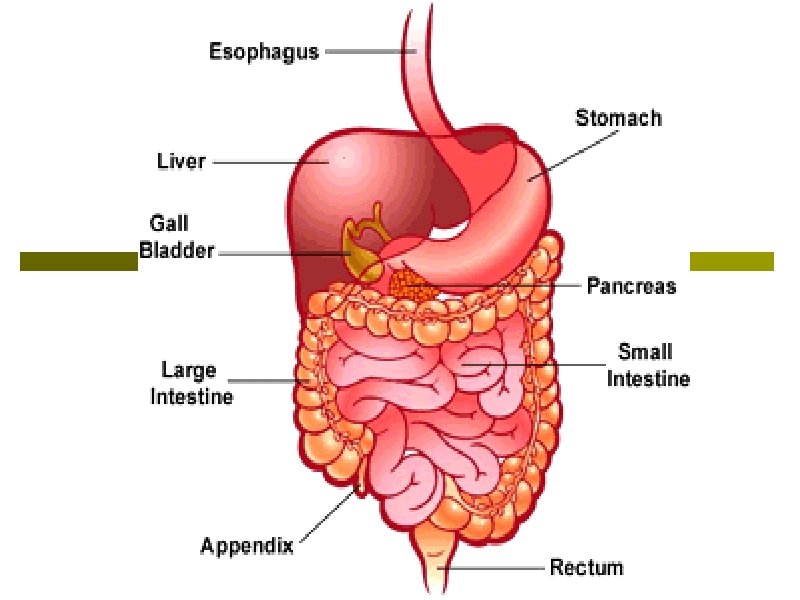
- Slides: 16
The Digestive System
I. Organs Food Passes Through
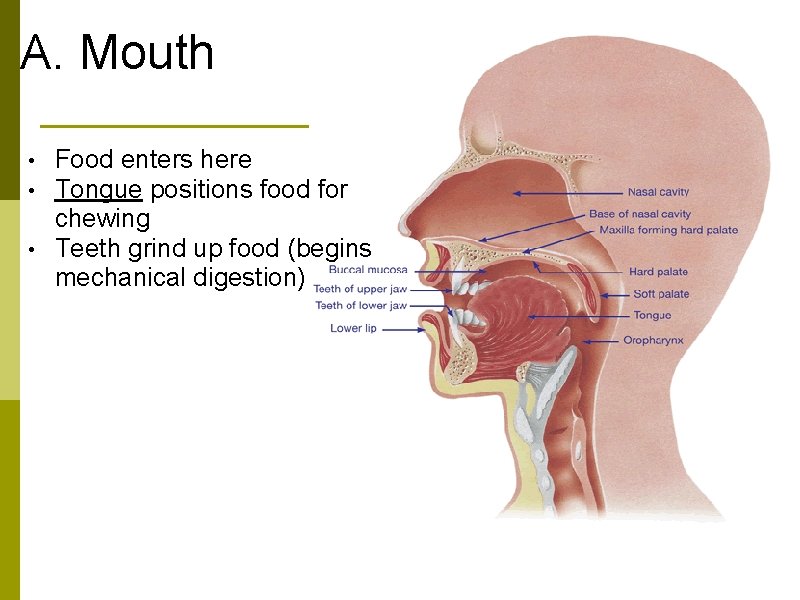
A. Mouth • • • Food enters here Tongue positions food for chewing Teeth grind up food (begins mechanical digestion)
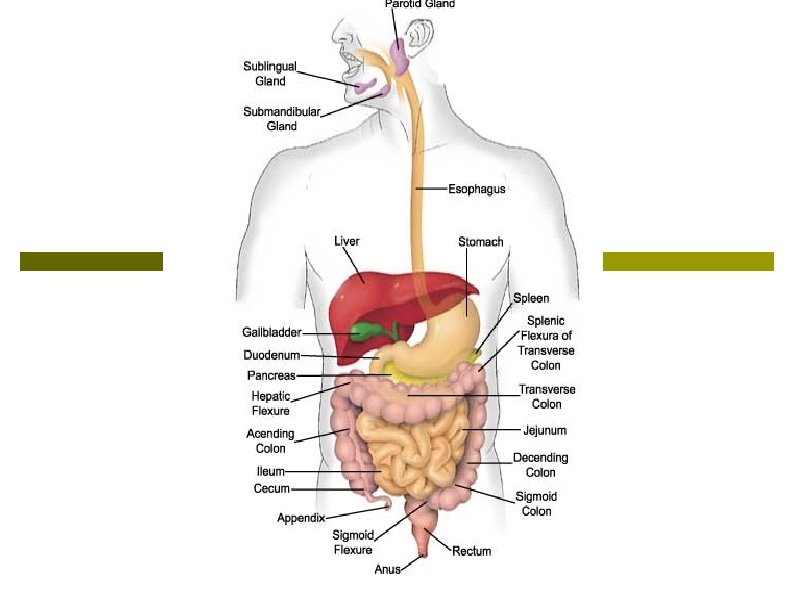
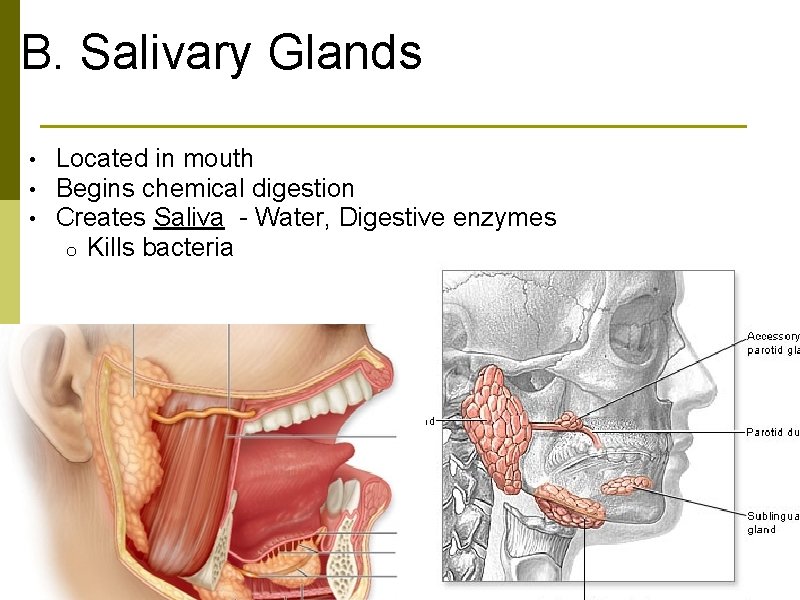
B. Salivary Glands • • • Located in mouth Begins chemical digestion Creates Saliva - Water, Digestive enzymes o Kills bacteria
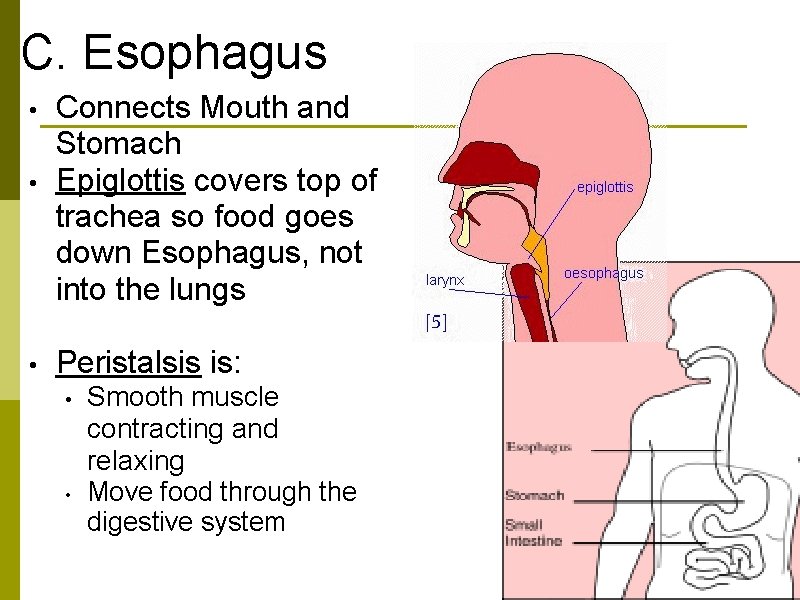
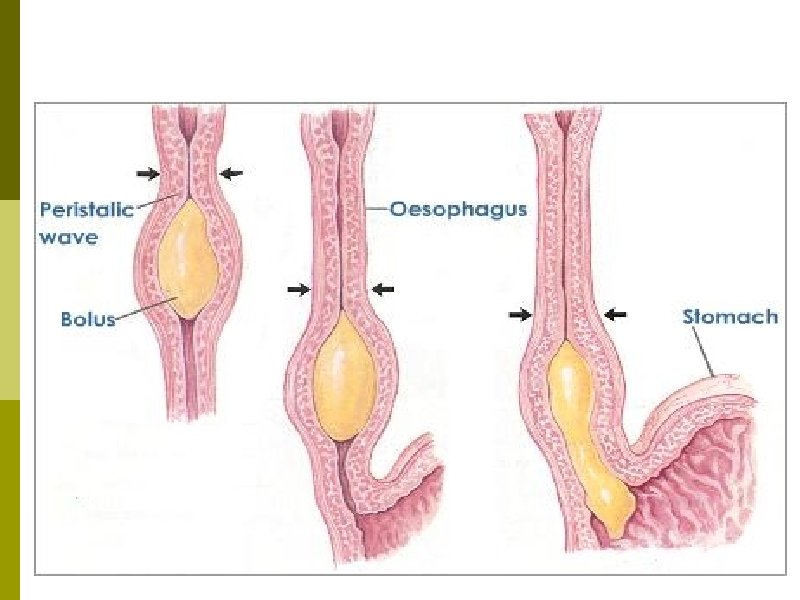
C. Esophagus • • • Connects Mouth and Stomach Epiglottis covers top of trachea so food goes down Esophagus, not into the lungs Peristalsis is: • • Smooth muscle contracting and relaxing Move food through the digestive system
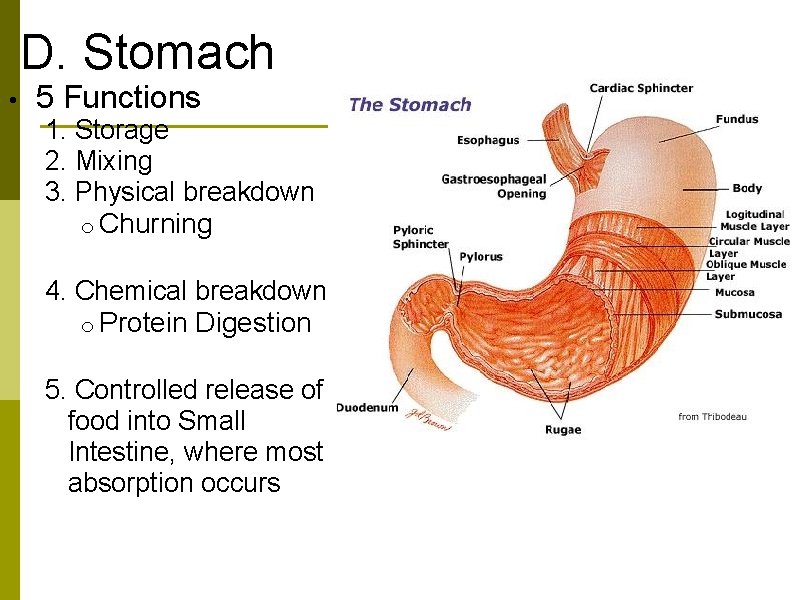
D. Stomach • 5 Functions 1. Storage 2. Mixing 3. Physical breakdown o Churning 4. Chemical breakdown o Protein Digestion 5. Controlled release of food into Small Intestine, where most absorption occurs
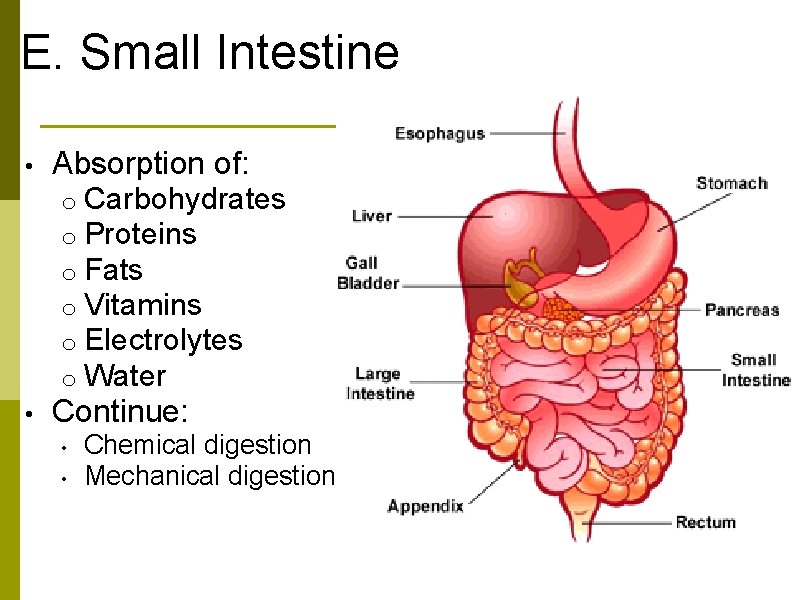
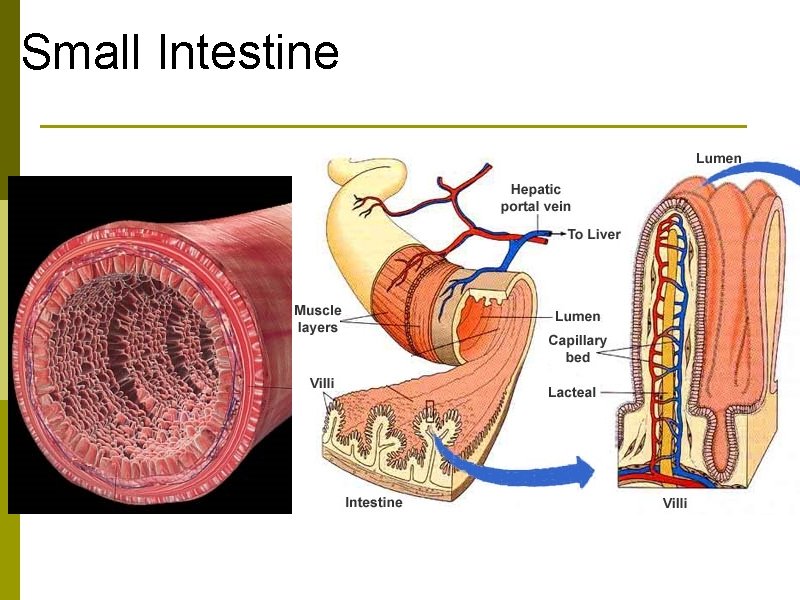
E. Small Intestine • • Absorption of: o Carbohydrates o Proteins o Fats o Vitamins o Electrolytes o Water Continue: • • Chemical digestion Mechanical digestion
Small Intestine
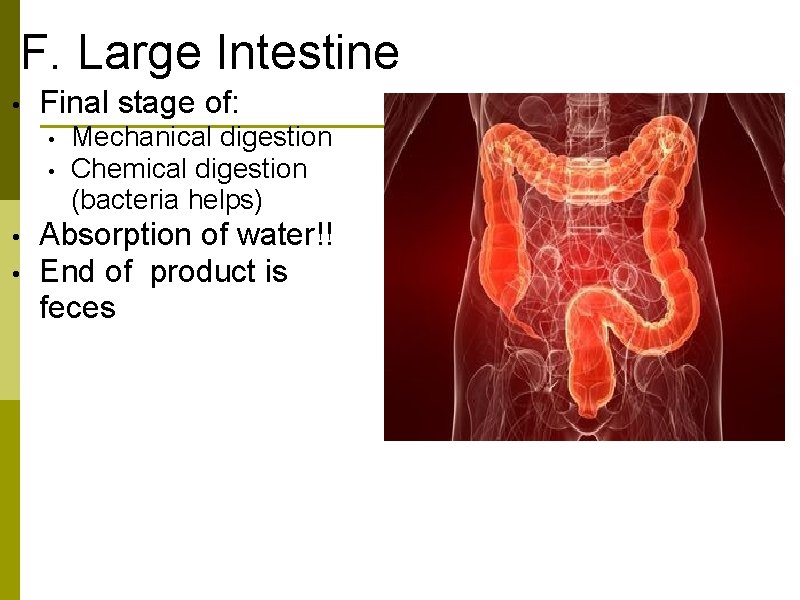
F. Large Intestine • Final stage of: • • Mechanical digestion Chemical digestion (bacteria helps) Absorption of water!! End of product is feces
II. Organs Food Does NOT Pass Through
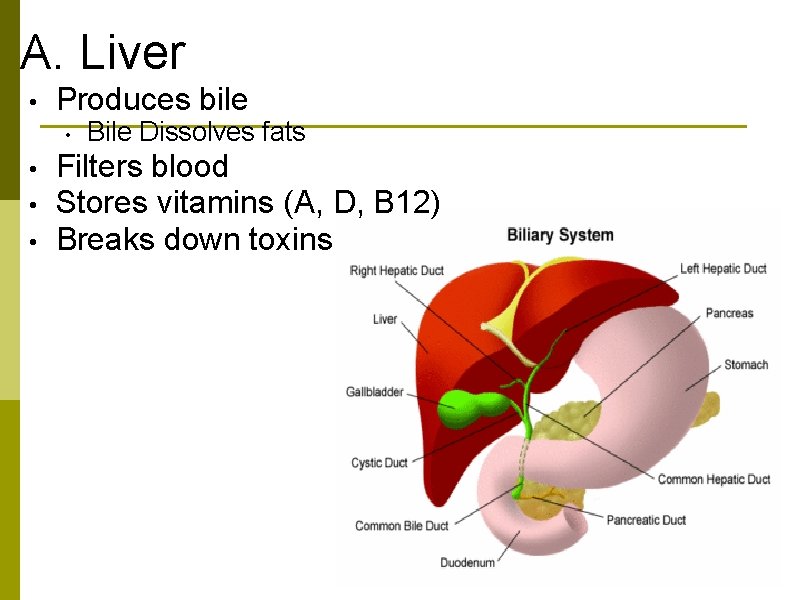
A. Liver • Produces bile • • Bile Dissolves fats Filters blood Stores vitamins (A, D, B 12) Breaks down toxins
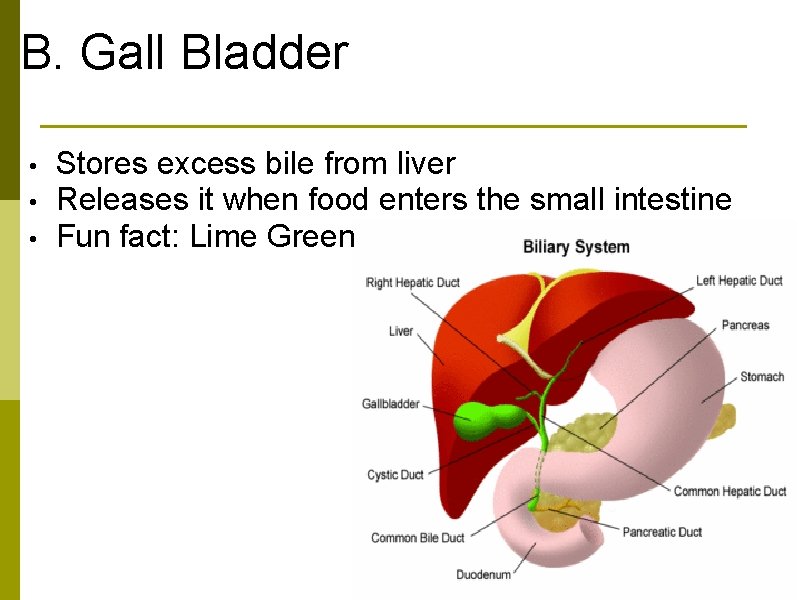
B. Gall Bladder • • • Stores excess bile from liver Releases it when food enters the small intestine Fun fact: Lime Green
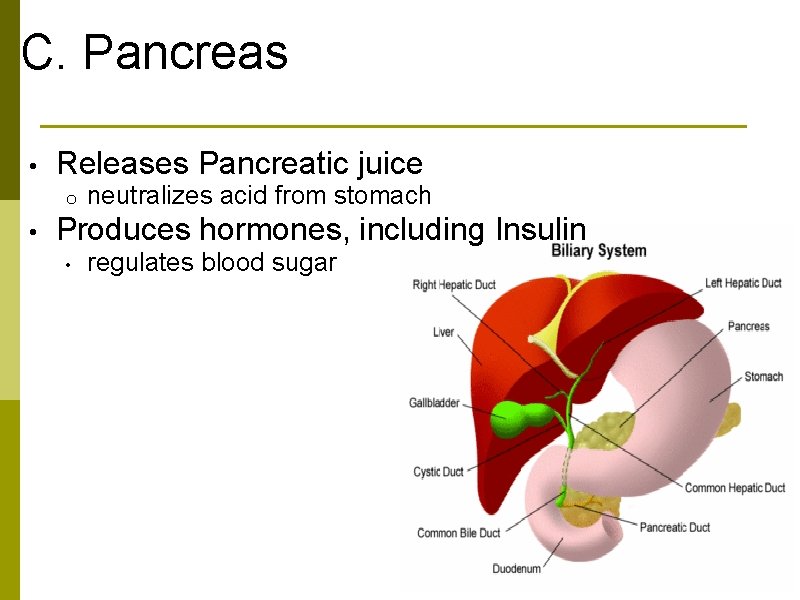
C. Pancreas • • Releases Pancreatic juice o neutralizes acid from stomach • regulates blood sugar Produces hormones, including Insulin