
THE DIGESTIVE SYSTEM https www brainpop comhealthbodysyste msdigestivesystem
THE DIGESTIVE SYSTEM https: //www. brainpop. com/health/bodysyste ms/digestivesystem/
• FUNCTIONS OF THE DIGESTIVE SYSTEM - helps the body obtain energy -consists of 11 organs, each with its own special function -these organs break down food into raw materials, energy and waste - energy is transported to all of the cells so that the cells can carry out basic bodily functions
- wastes leave the body after the digestive process is finished - raw materials are transport to cells and used to make compounds necessary for growth, maintenance and repair - 2 types of digestion: a) physical digestion = breaking of food particles into smaller pieces b) chemical digestion = breaking of chemical bonds within food molecules
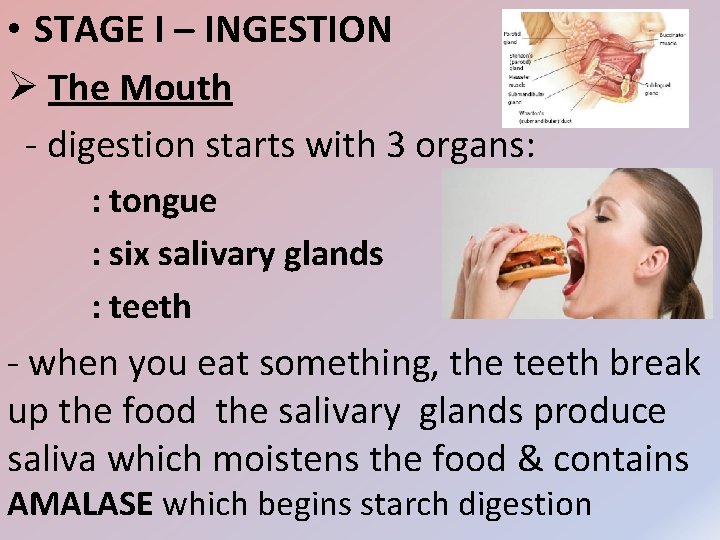
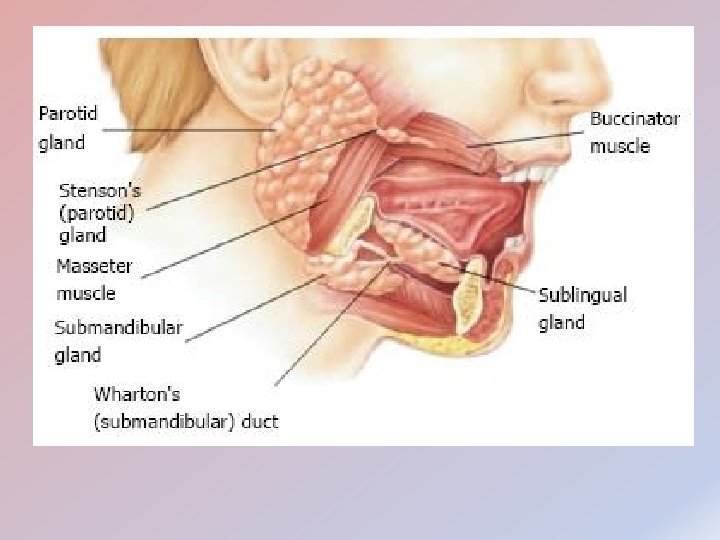
• STAGE I – INGESTION Ø The Mouth - digestion starts with 3 organs: : tongue : six salivary glands : teeth - when you eat something, the teeth break up the food the salivary glands produce saliva which moistens the food & contains AMALASE which begins starch digestion
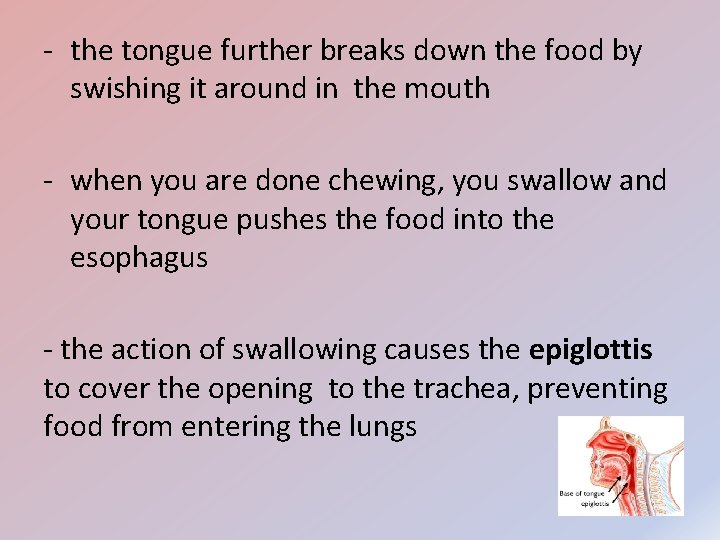
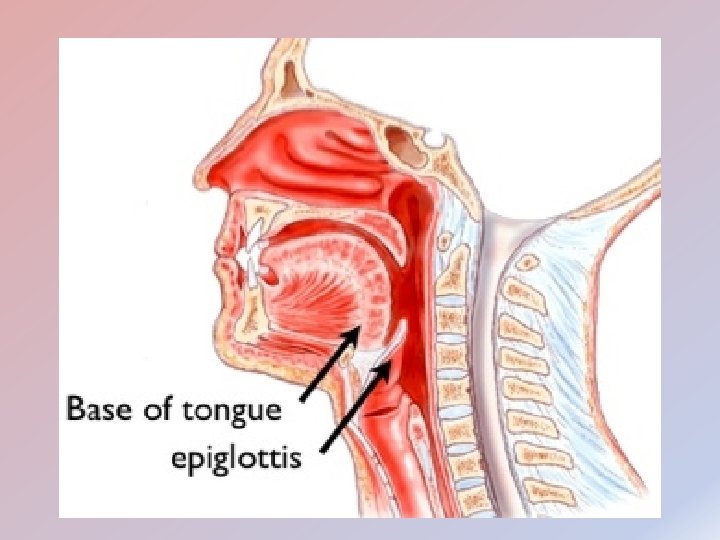
- the tongue further breaks down the food by swishing it around in the mouth - when you are done chewing, you swallow and your tongue pushes the food into the esophagus - the action of swallowing causes the epiglottis to cover the opening to the trachea, preventing food from entering the lungs
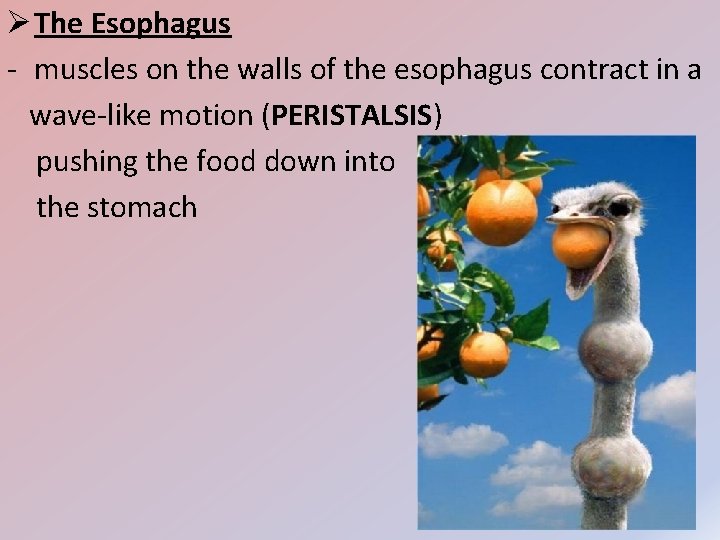
Ø The Esophagus - muscles on the walls of the esophagus contract in a wave-like motion (PERISTALSIS) pushing the food down into the stomach
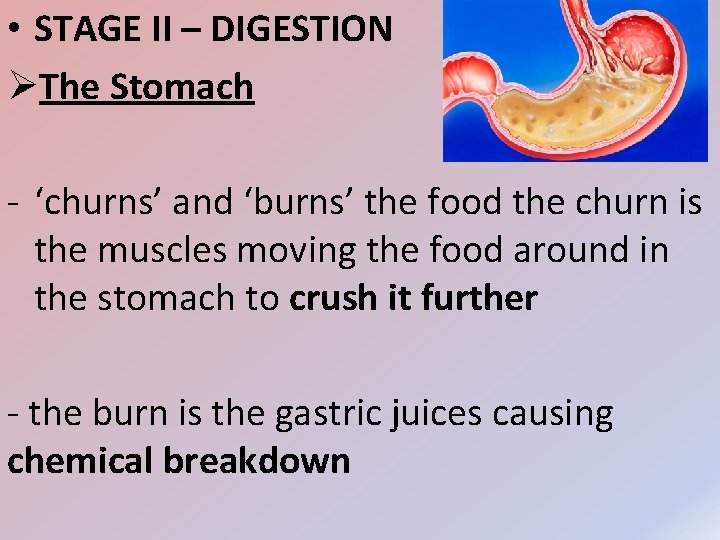
• STAGE II – DIGESTION ØThe Stomach - ‘churns’ and ‘burns’ the food the churn is the muscles moving the food around in the stomach to crush it further - the burn is the gastric juices causing chemical breakdown
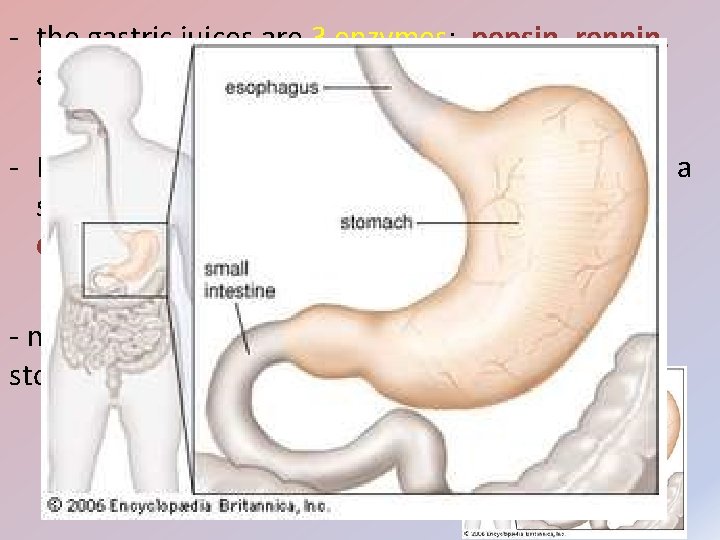
- the gastric juices are 3 enzymes: pepsin, rennin, and lipase - HCl is also present to lower p. H in the stomach to a sufficient level for fiber breakdown and protein digestion - muscular SPHINCTERS at the top and base of the stomach prevent backflow
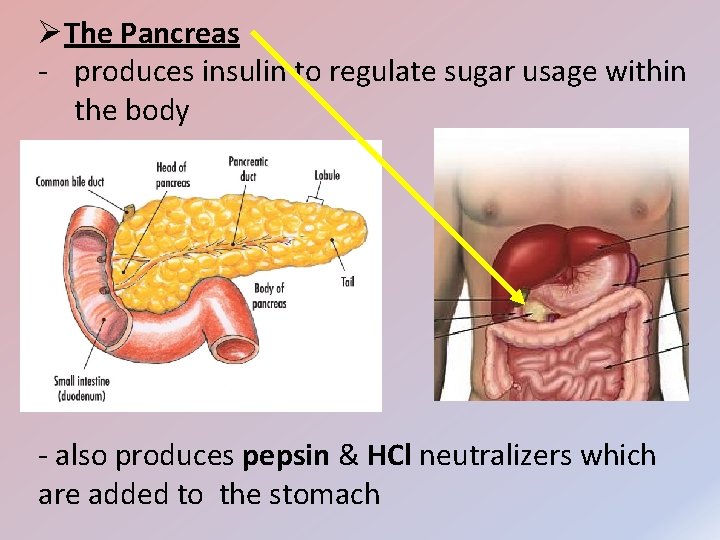
ØThe Pancreas - produces insulin to regulate sugar usage within the body - also produces pepsin & HCl neutralizers which are added to the stomach
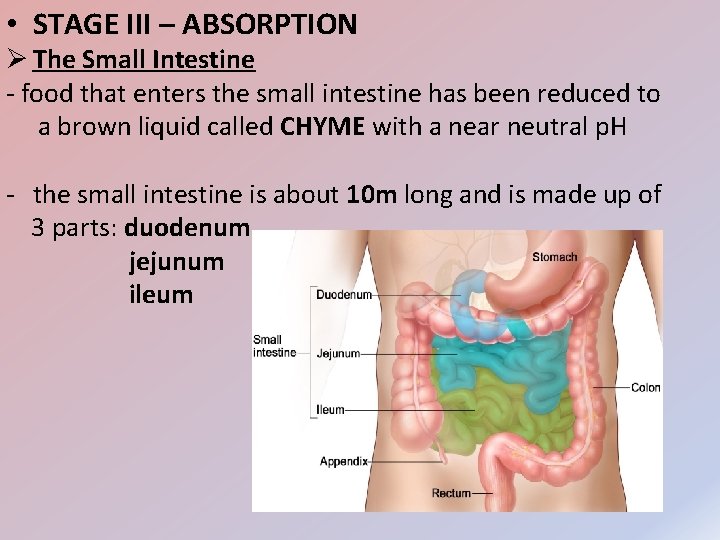
• STAGE III – ABSORPTION Ø The Small Intestine - food that enters the small intestine has been reduced to a brown liquid called CHYME with a near neutral p. H - the small intestine is about 10 m long and is made up of 3 parts: duodenum jejunum ileum
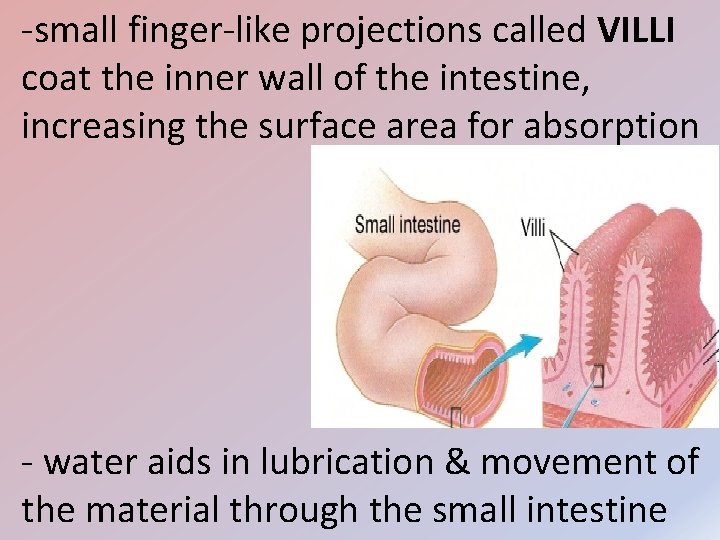
-small finger-like projections called VILLI coat the inner wall of the intestine, increasing the surface area for absorption - water aids in lubrication & movement of the material through the small intestine
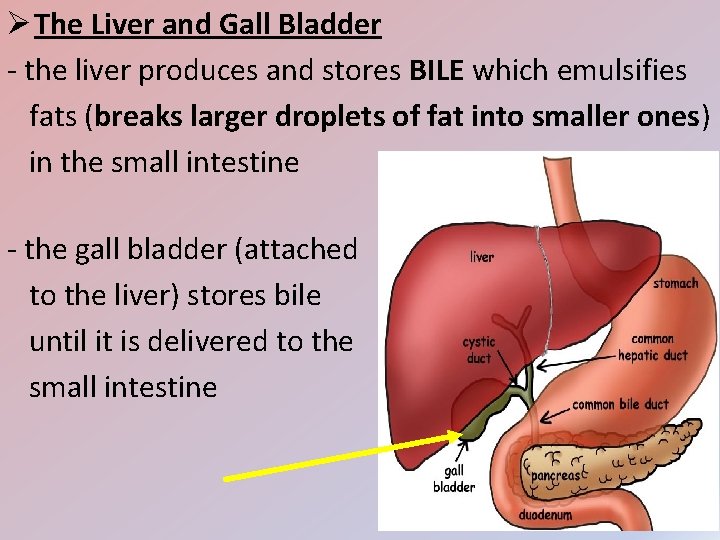
Ø The Liver and Gall Bladder - the liver produces and stores BILE which emulsifies fats (breaks larger droplets of fat into smaller ones) in the small intestine - the gall bladder (attached to the liver) stores bile until it is delivered to the small intestine
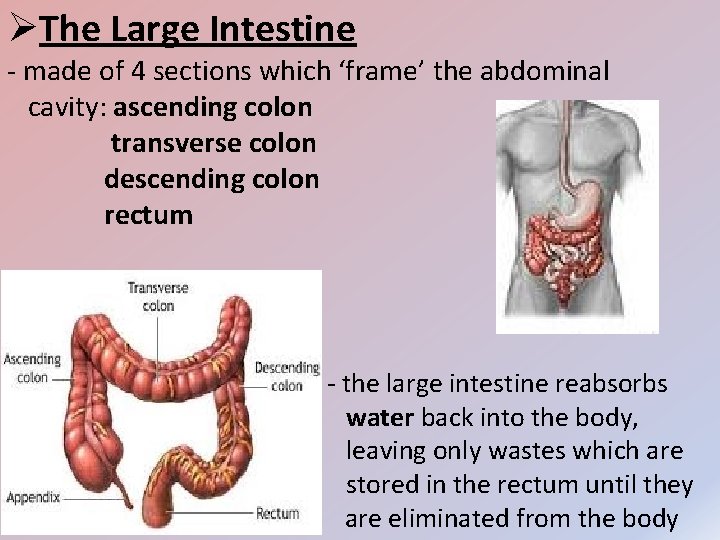
ØThe Large Intestine - made of 4 sections which ‘frame’ the abdominal cavity: ascending colon transverse colon descending colon rectum - the large intestine reabsorbs water back into the body, leaving only wastes which are stored in the rectum until they are eliminated from the body
• STAGE IV – EGESTION - the spent food and other wastes (dead cells) are called FECES and are excreted out of the body through the anus
** Note: The digestive system interacts mainly with 2 other systems: – the circulatory system – the excretory system
Assignment: 1. Label the digestive tract 2. Complete the textbook questions: due Monday. Mr W: https: //www. youtube. com/watch? v=p. Oyv. Eo. AZy. No
- Slides: 18