
THE DIGESTIVE SYSTEM FUNCTIONS BIOLOGY 12 THE MOUTH
THE DIGESTIVE SYSTEM FUNCTIONS BIOLOGY 12
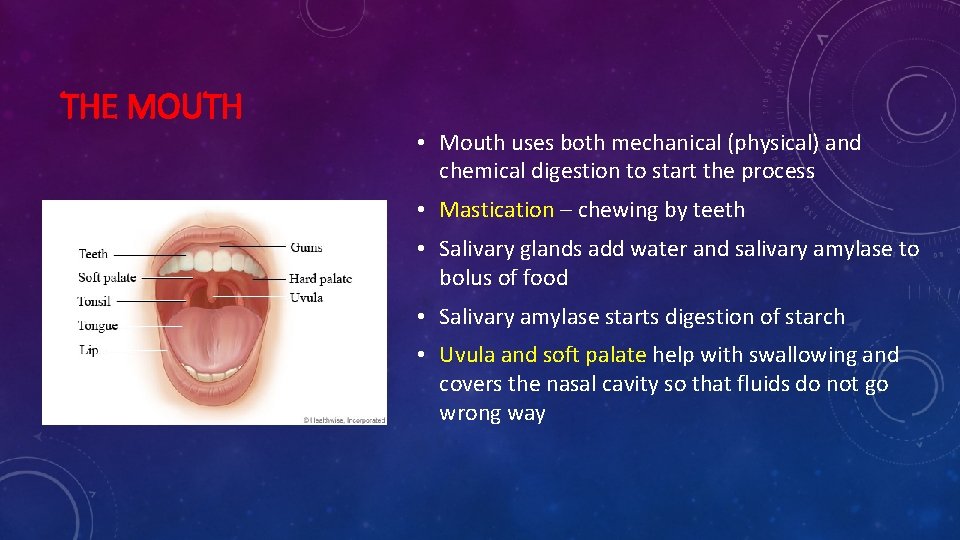
THE MOUTH • Mouth uses both mechanical (physical) and chemical digestion to start the process • Mastication – chewing by teeth • Salivary glands add water and salivary amylase to bolus of food • Salivary amylase starts digestion of starch • Uvula and soft palate help with swallowing and covers the nasal cavity so that fluids do not go wrong way
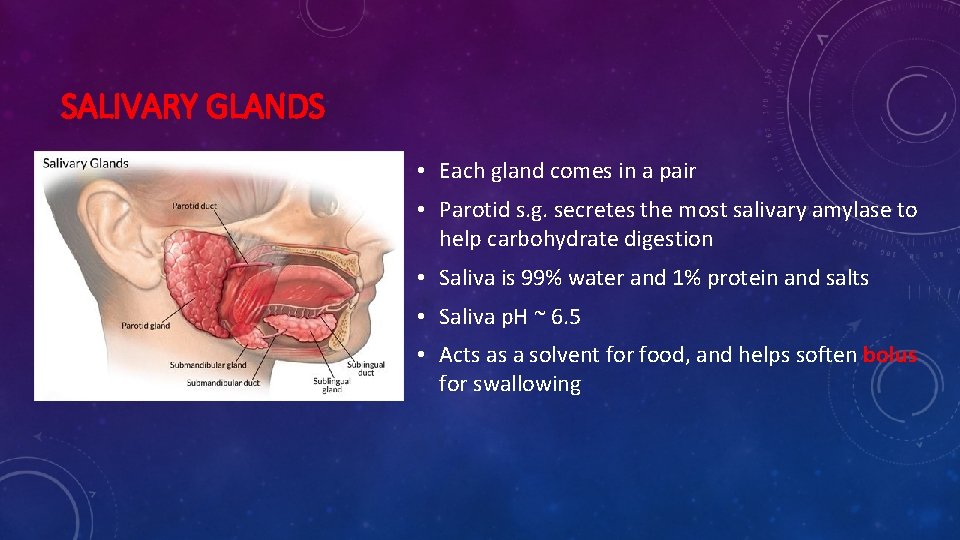
SALIVARY GLANDS • Each gland comes in a pair • Parotid s. g. secretes the most salivary amylase to help carbohydrate digestion • Saliva is 99% water and 1% protein and salts • Saliva p. H ~ 6. 5 • Acts as a solvent for food, and helps soften bolus for swallowing
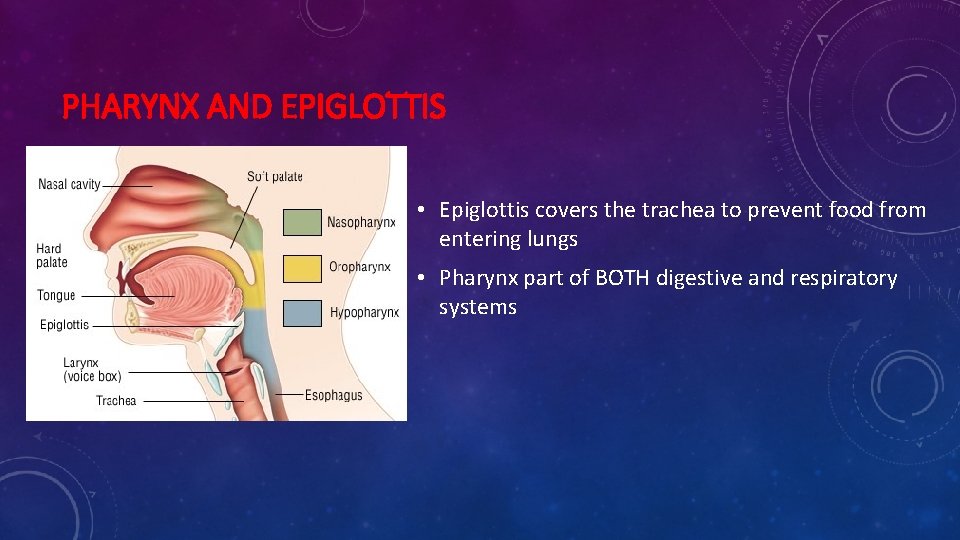
PHARYNX AND EPIGLOTTIS • Epiglottis covers the trachea to prevent food from entering lungs • Pharynx part of BOTH digestive and respiratory systems
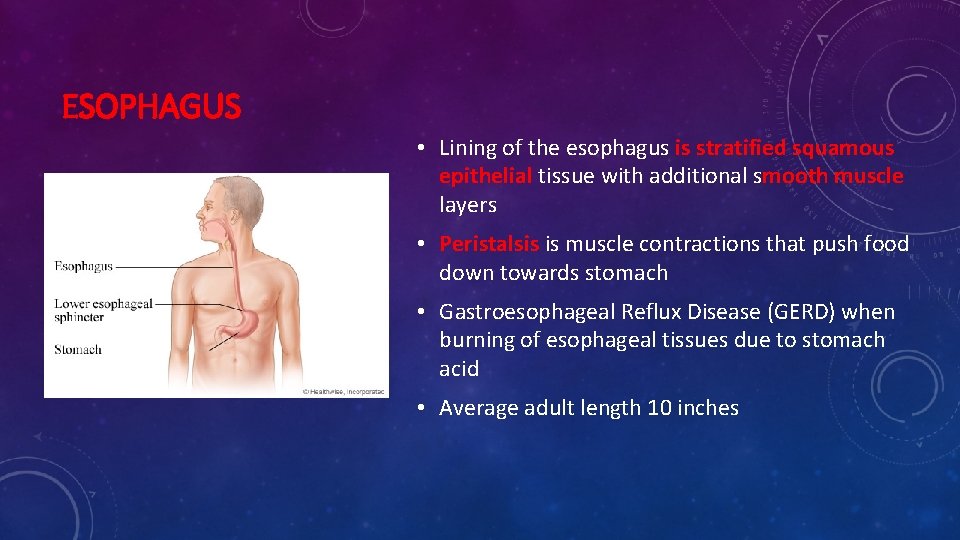
ESOPHAGUS • Lining of the esophagus is stratified squamous epithelial tissue with additional smooth muscle layers • Peristalsis is muscle contractions that push food down towards stomach • Gastroesophageal Reflux Disease (GERD) when burning of esophageal tissues due to stomach acid • Average adult length 10 inches
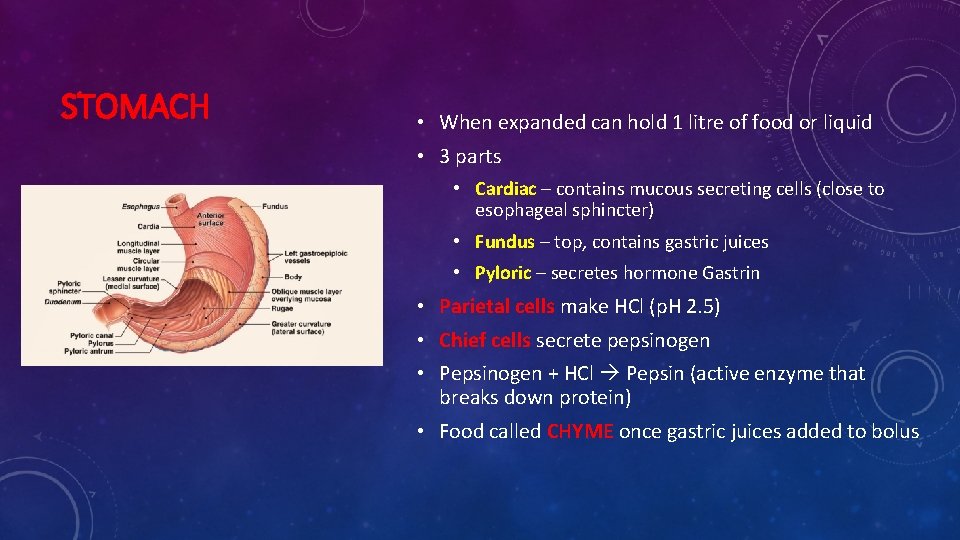
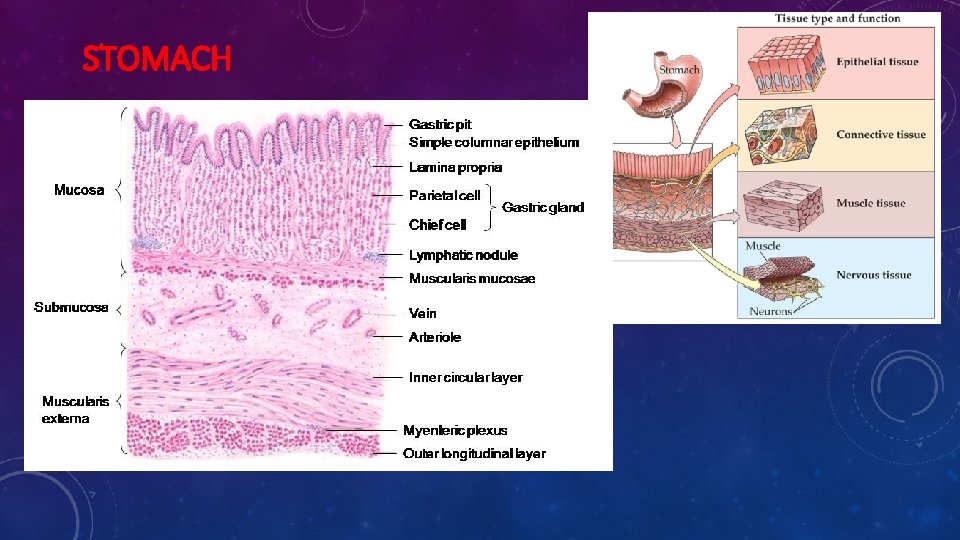
STOMACH • When expanded can hold 1 litre of food or liquid • 3 parts • Cardiac – contains mucous secreting cells (close to esophageal sphincter) • Fundus – top, contains gastric juices • Pyloric – secretes hormone Gastrin • Parietal cells make HCl (p. H 2. 5) • Chief cells secrete pepsinogen • Pepsinogen + HCl Pepsin (active enzyme that breaks down protein) • Food called CHYME once gastric juices added to bolus
STOMACH
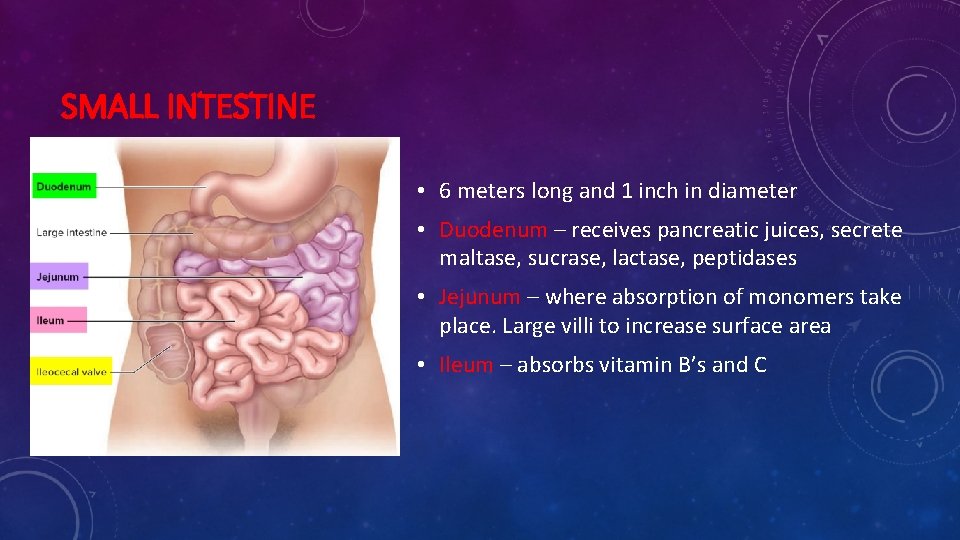
SMALL INTESTINE • 6 meters long and 1 inch in diameter • Duodenum – receives pancreatic juices, secrete maltase, sucrase, lactase, peptidases • Jejunum – where absorption of monomers take place. Large villi to increase surface area • Ileum – absorbs vitamin B’s and C
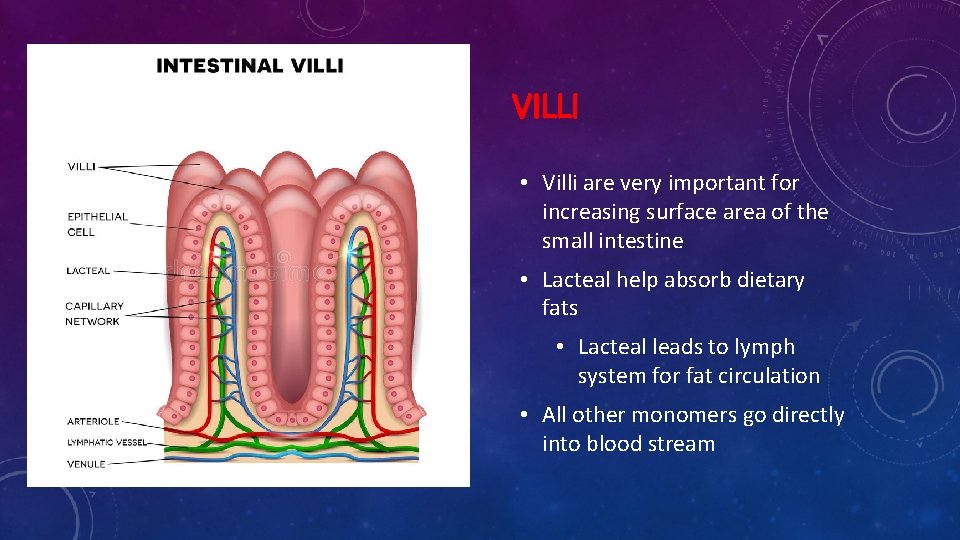
VILLI • Villi are very important for increasing surface area of the small intestine • Lacteal help absorb dietary fats • Lacteal leads to lymph system for fat circulation • All other monomers go directly into blood stream
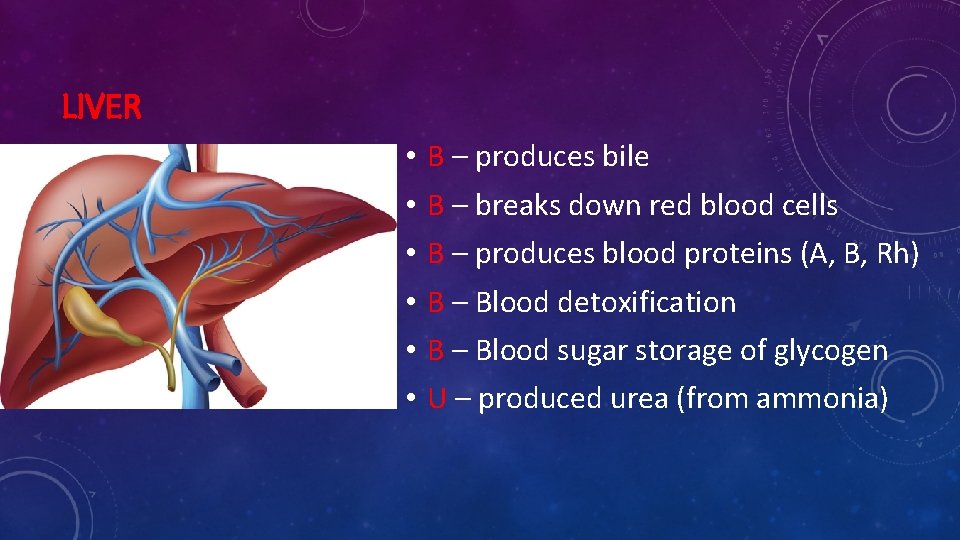
LIVER • • • B – produces bile B – breaks down red blood cells B – produces blood proteins (A, B, Rh) B – Blood detoxification B – Blood sugar storage of glycogen U – produced urea (from ammonia)
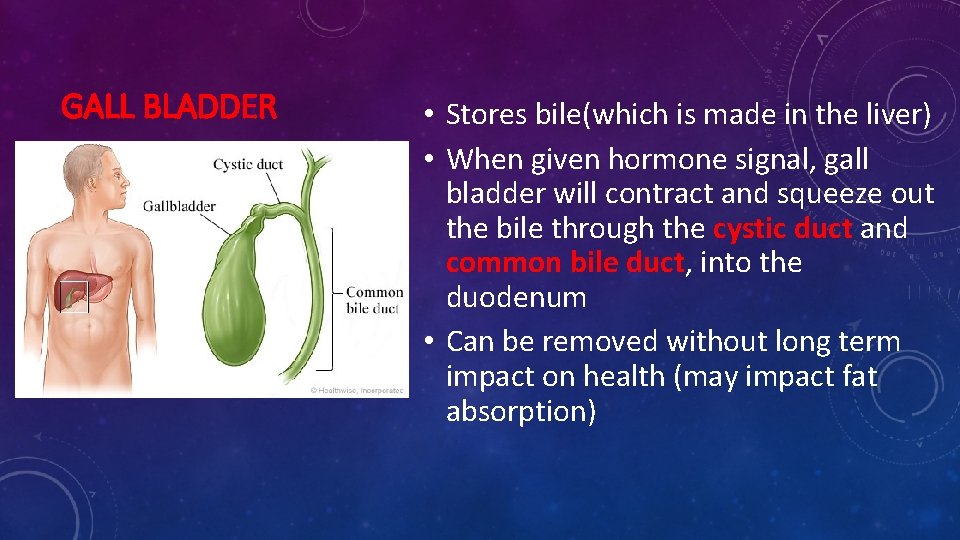
GALL BLADDER • Stores bile(which is made in the liver) • When given hormone signal, gall bladder will contract and squeeze out the bile through the cystic duct and common bile duct, into the duodenum • Can be removed without long term impact on health (may impact fat absorption)
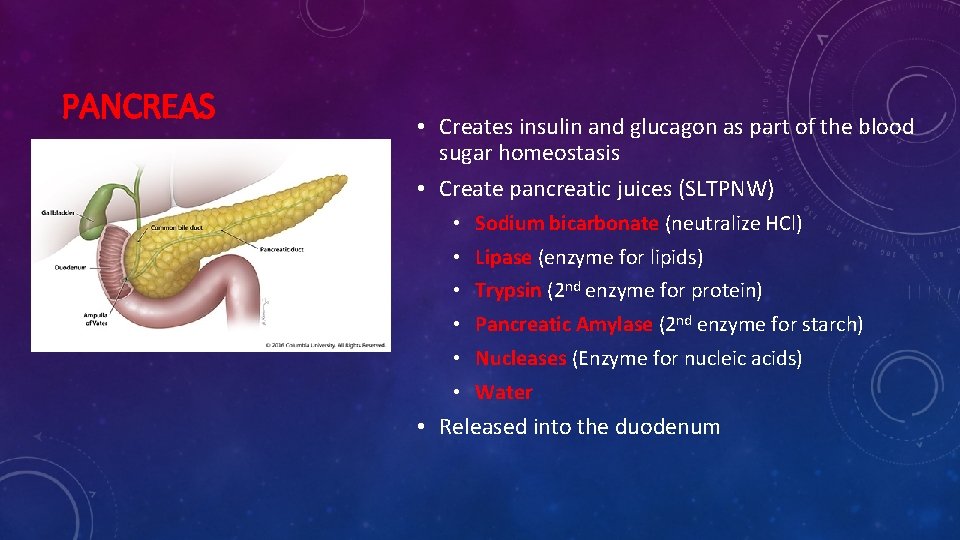
PANCREAS • Creates insulin and glucagon as part of the blood sugar homeostasis • Create pancreatic juices (SLTPNW) • Sodium bicarbonate (neutralize HCl) • Lipase (enzyme for lipids) • Trypsin (2 nd enzyme for protein) • Pancreatic Amylase (2 nd enzyme for starch) • Nucleases (Enzyme for nucleic acids) • Water • Released into the duodenum
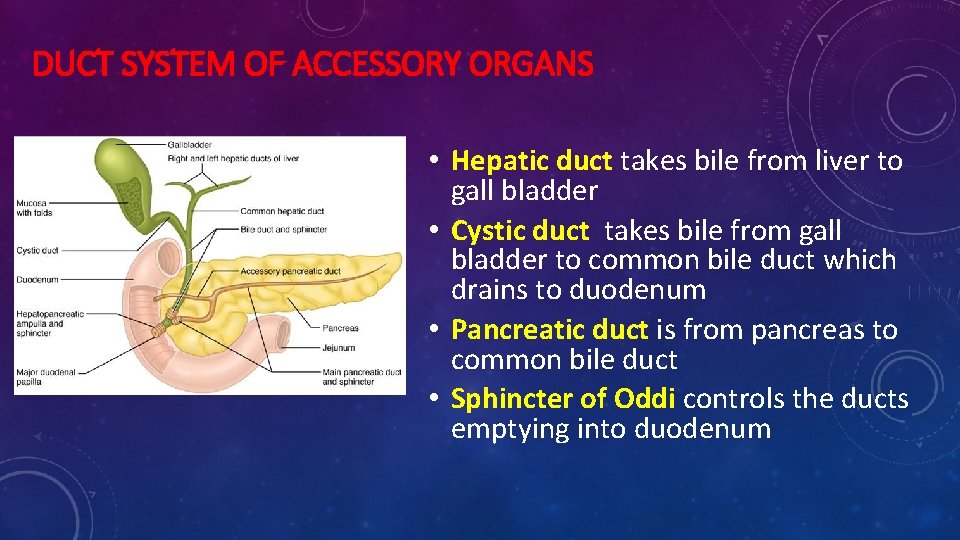
DUCT SYSTEM OF ACCESSORY ORGANS • Hepatic duct takes bile from liver to gall bladder • Cystic duct takes bile from gall bladder to common bile duct which drains to duodenum • Pancreatic duct is from pancreas to common bile duct • Sphincter of Oddi controls the ducts emptying into duodenum
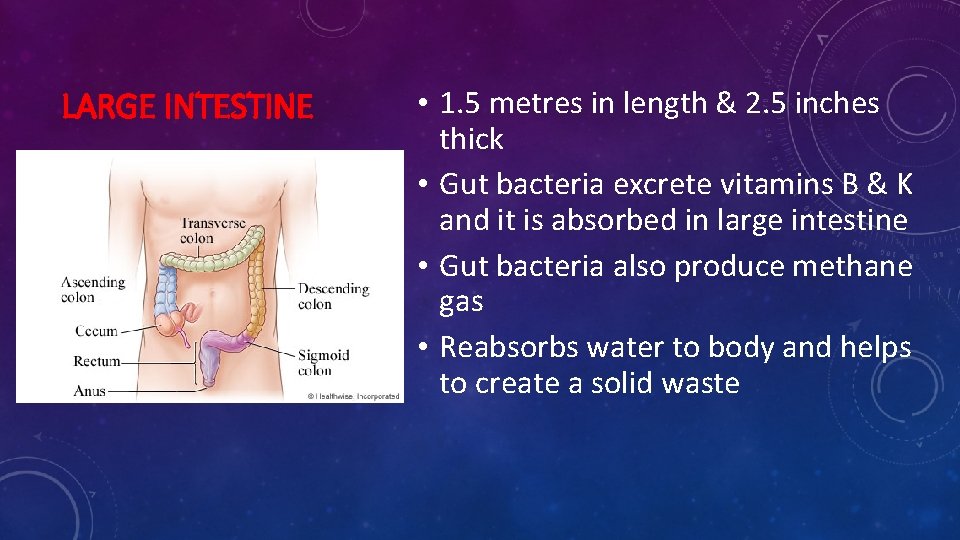
LARGE INTESTINE • 1. 5 metres in length & 2. 5 inches thick • Gut bacteria excrete vitamins B & K and it is absorbed in large intestine • Gut bacteria also produce methane gas • Reabsorbs water to body and helps to create a solid waste
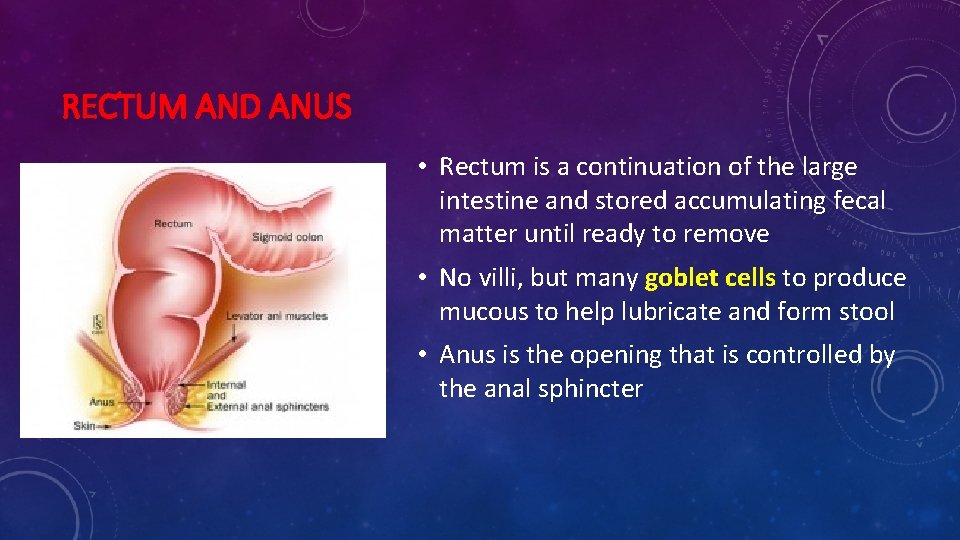
RECTUM AND ANUS • Rectum is a continuation of the large intestine and stored accumulating fecal matter until ready to remove • No villi, but many goblet cells to produce mucous to help lubricate and form stool • Anus is the opening that is controlled by the anal sphincter
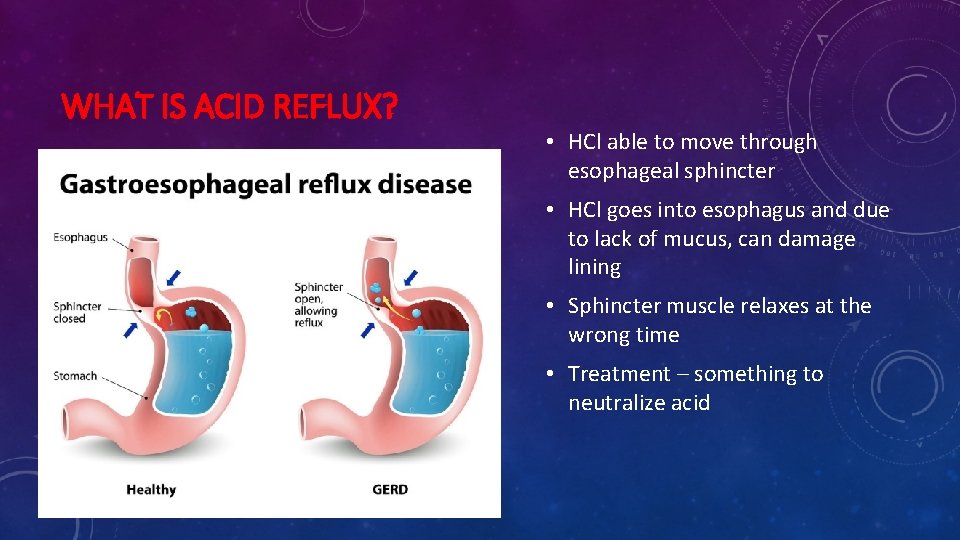
WHAT IS ACID REFLUX? • HCl able to move through esophageal sphincter • HCl goes into esophagus and due to lack of mucus, can damage lining • Sphincter muscle relaxes at the wrong time • Treatment – something to neutralize acid
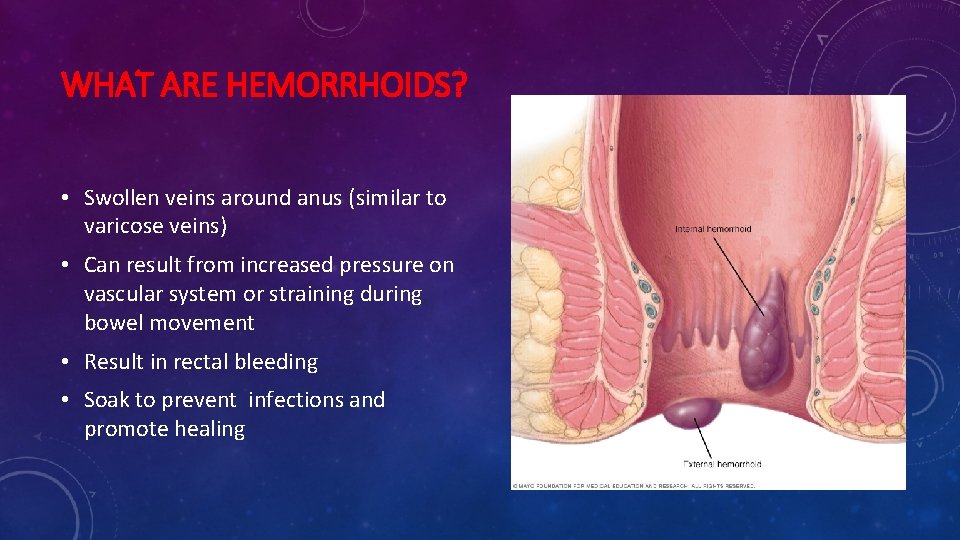
WHAT ARE HEMORRHOIDS? • Swollen veins around anus (similar to varicose veins) • Can result from increased pressure on vascular system or straining during bowel movement • Result in rectal bleeding • Soak to prevent infections and promote healing
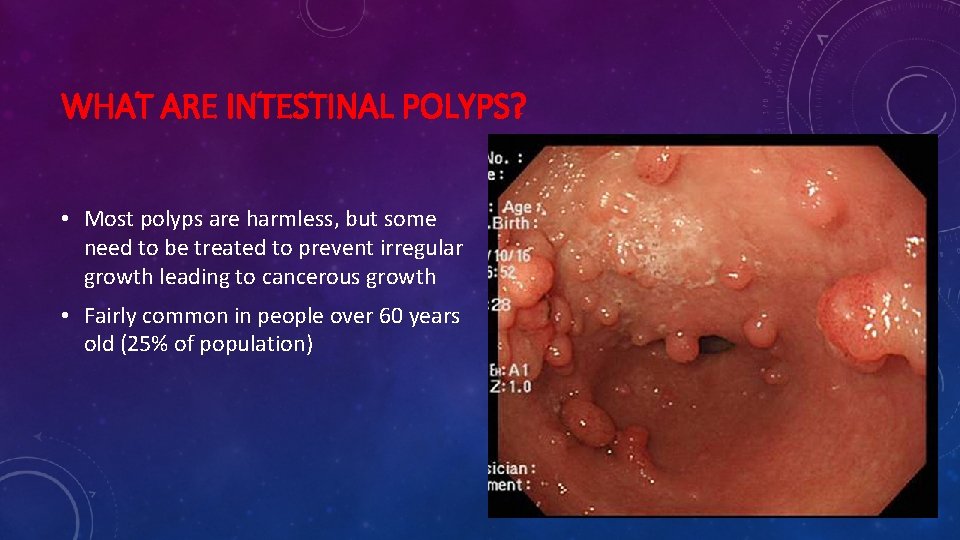
WHAT ARE INTESTINAL POLYPS? • Most polyps are harmless, but some need to be treated to prevent irregular growth leading to cancerous growth • Fairly common in people over 60 years old (25% of population)
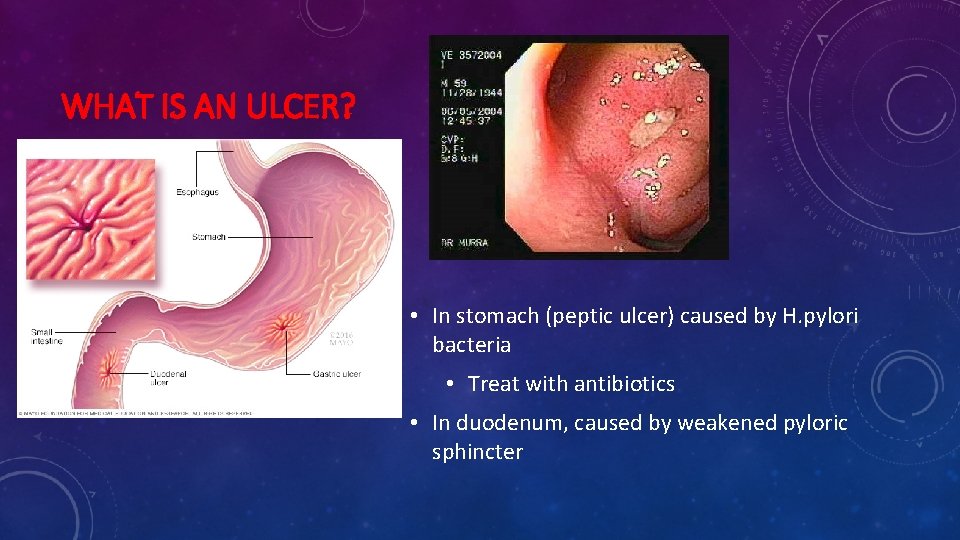
WHAT IS AN ULCER? • In stomach (peptic ulcer) caused by H. pylori bacteria • Treat with antibiotics • In duodenum, caused by weakened pyloric sphincter
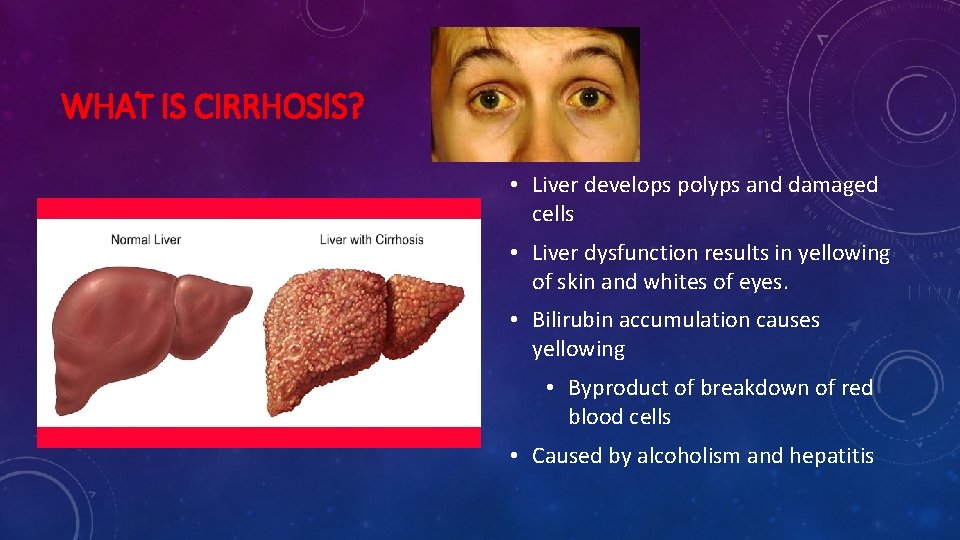
WHAT IS CIRRHOSIS? • Liver develops polyps and damaged cells • Liver dysfunction results in yellowing of skin and whites of eyes. • Bilirubin accumulation causes yellowing • Byproduct of breakdown of red blood cells • Caused by alcoholism and hepatitis
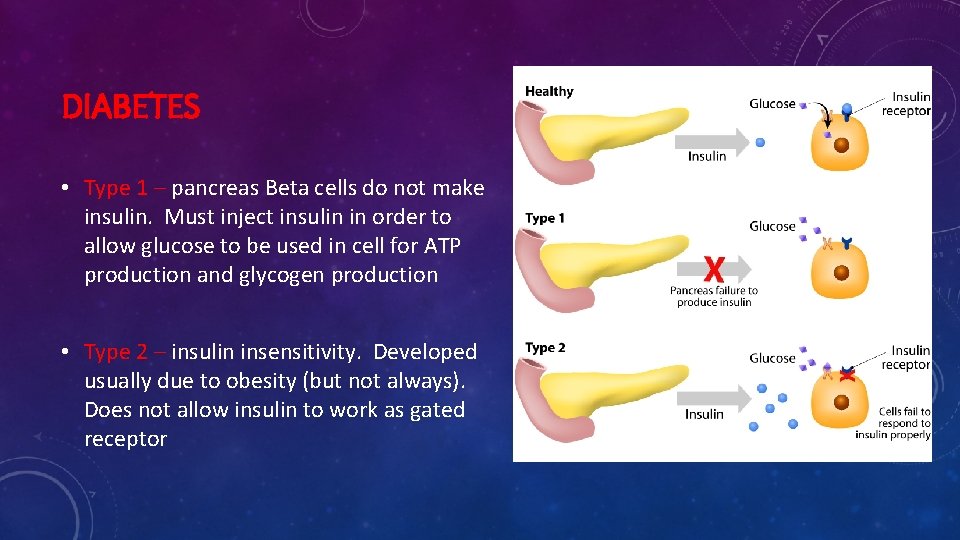
DIABETES • Type 1 – pancreas Beta cells do not make insulin. Must inject insulin in order to allow glucose to be used in cell for ATP production and glycogen production • Type 2 – insulin insensitivity. Developed usually due to obesity (but not always). Does not allow insulin to work as gated receptor
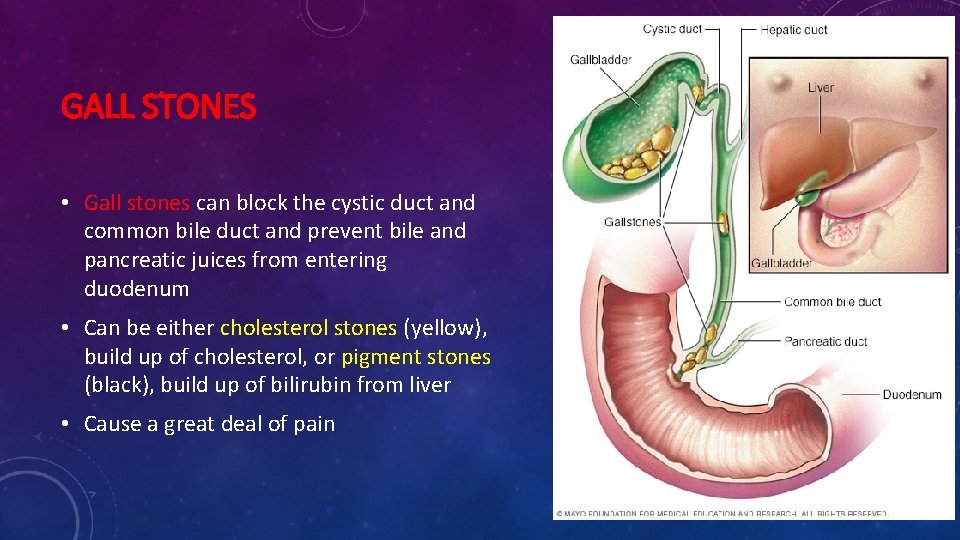
GALL STONES • Gall stones can block the cystic duct and common bile duct and prevent bile and pancreatic juices from entering duodenum • Can be either cholesterol stones (yellow), build up of cholesterol, or pigment stones (black), build up of bilirubin from liver • Cause a great deal of pain
- Slides: 22