
The Digestive System Function Break down the food
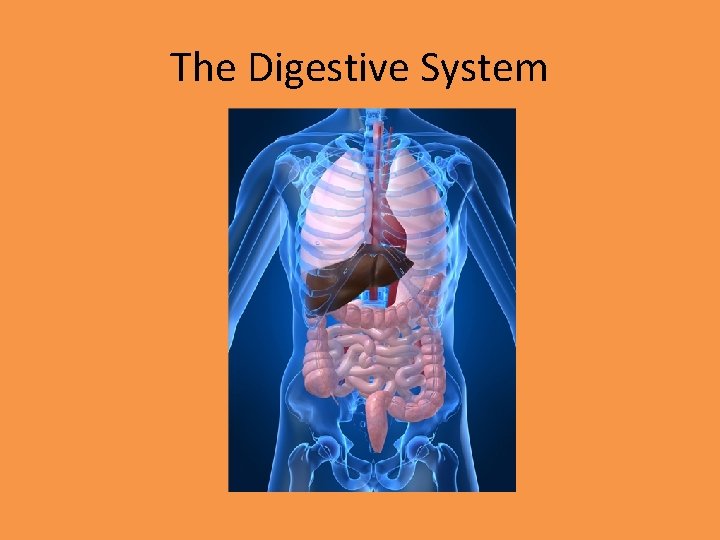
The Digestive System
Function • Break down the food you eat into nutrients that your body can absorb
Digestive tract • The path that food takes in your body • Includes: mouth, pharynx, esophagus, stomach, small intestine, large intestine, rectum, anus
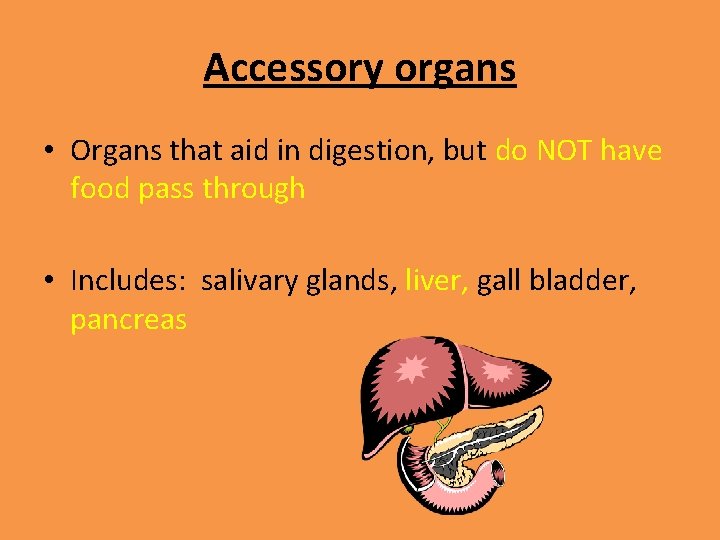
Accessory organs • Organs that aid in digestion, but do NOT have food pass through • Includes: salivary glands, liver, gall bladder, pancreas
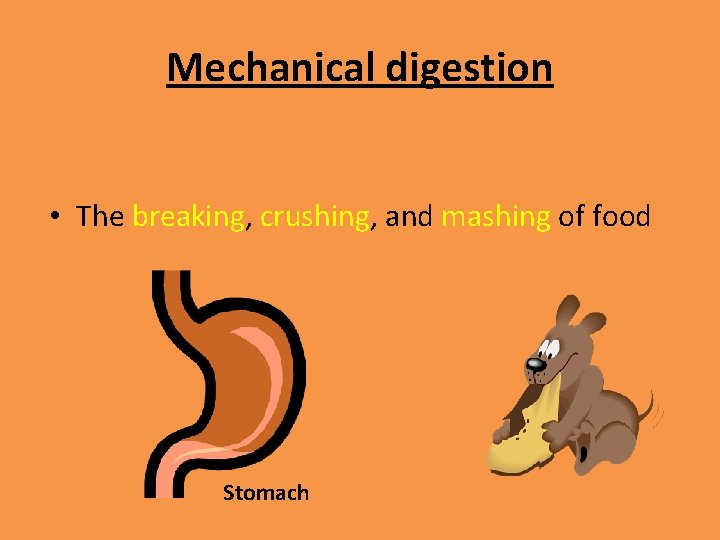
Mechanical digestion • The breaking, crushing, and mashing of food Stomach
Chemical digestion • Large molecules are broken down into nutrients
Enzymes • The chemical scissors that break some nutrients into smaller pieces
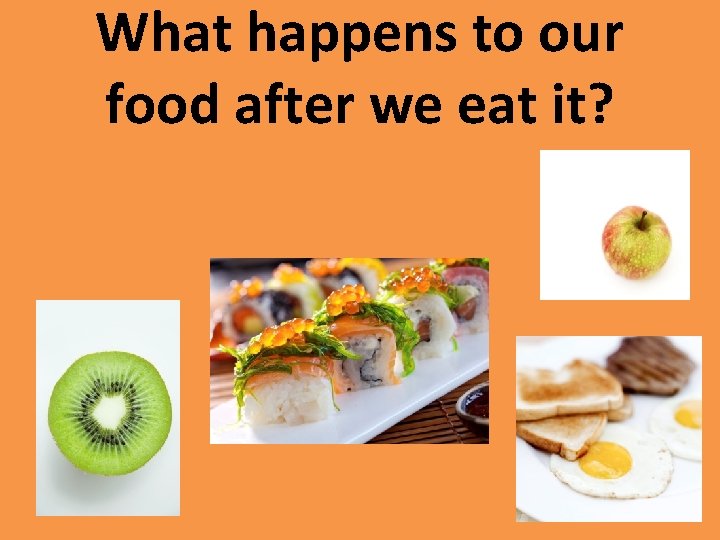
What happens to our food after we eat it?
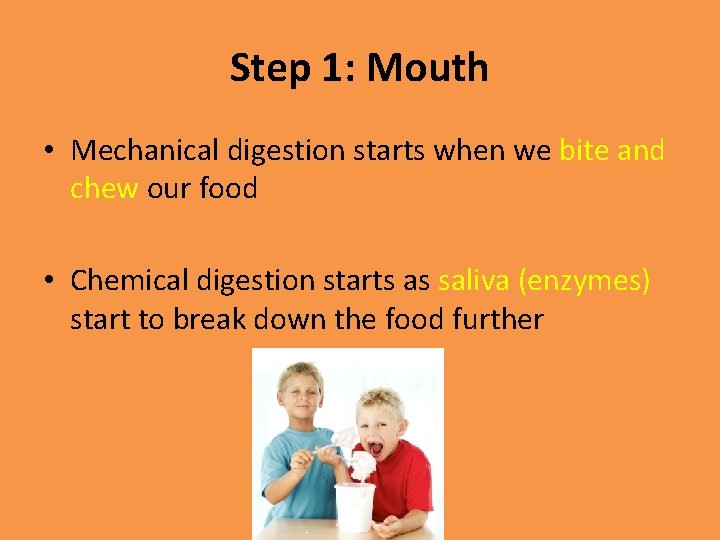
Step 1: Mouth • Mechanical digestion starts when we bite and chew our food • Chemical digestion starts as saliva (enzymes) start to break down the food further
Step 2: Stomach • After you swallow, the food travels down the pharynx and esophagus to the stomach. • Mechanical digestion happens as the stomach muscles contract and squeeze the food • Chemical digestion happens as stomach acid further breaks down the food into nutrients
Step 3: Small Intestine • The liquefied food (chyme) moves from the stomach into the small intestine. • It mixes with chemicals from the pancreas that make it less acidic (and safer).
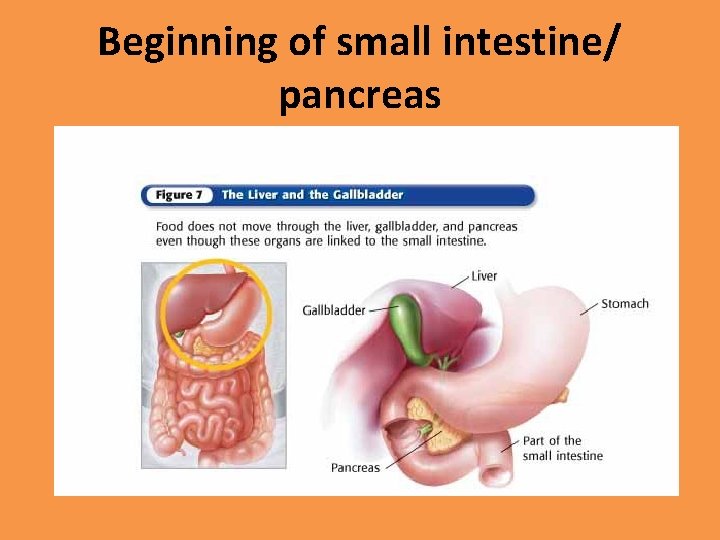
Beginning of small intestine/ pancreas
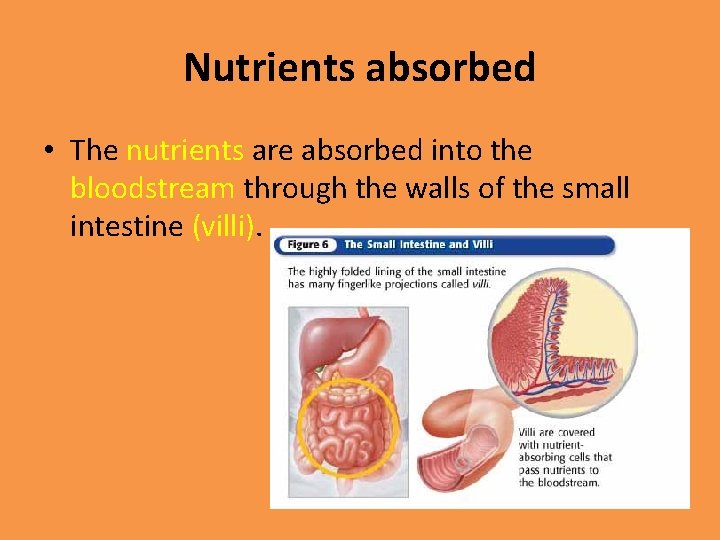
Nutrients absorbed • The nutrients are absorbed into the bloodstream through the walls of the small intestine (villi).
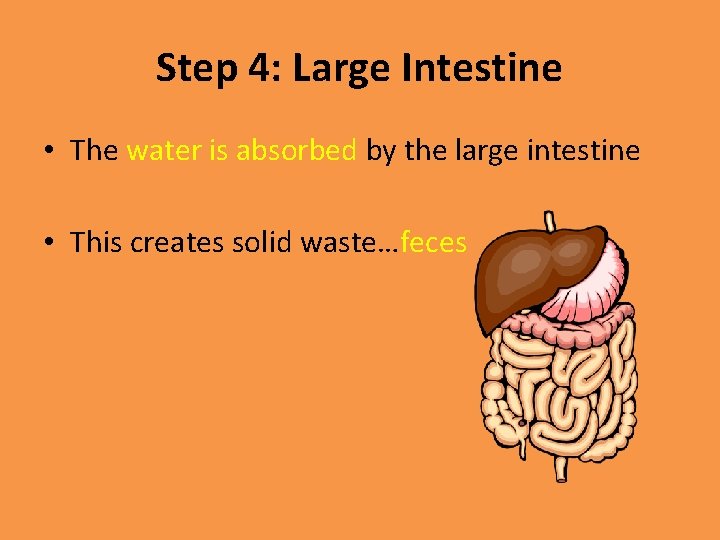
Step 4: Large Intestine • The water is absorbed by the large intestine • This creates solid waste…feces
Problems with the large intestine • Diarrhea: When the large intestine does not remove enough water from the waste • Constipation: When the large intestine removes too much water from the waste
- Slides: 15