
The Digestive System Forms of Digestion The Mouth
- Slides: 9
The Digestive System Forms of Digestion The Mouth
Function: • Converts food into smaller molecules that can be used by cells of the body • • • Food digested in 4 phases: 1. ingestion 2. digestion 3. absorption 4. elimination
• 1. ingestion- putting food into mouth (opening of dig tract) • 2. digestion- mechanical (physically breaking down large into small pieces that can be swallowed and acted upon by enzymes) and chemical (enzymes breaking food into small molecules body can use) • 3. absorption- small molecules absorbed by cells in small intestine, into blood, to rest of body • 4. elimination- some foods cannot be digested (e. g. cellulose)and enter large intestine, finally released as feces
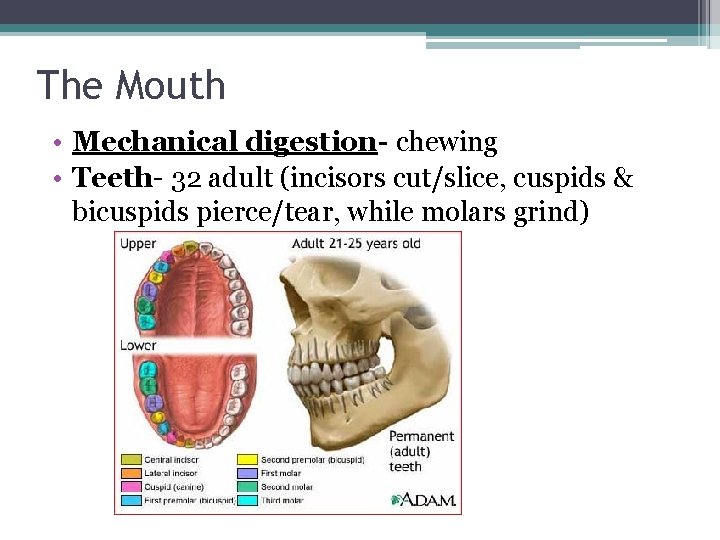
The Mouth • Mechanical digestion- chewing • Teeth- 32 adult (incisors cut/slice, cuspids & bicuspids pierce/tear, while molars grind)
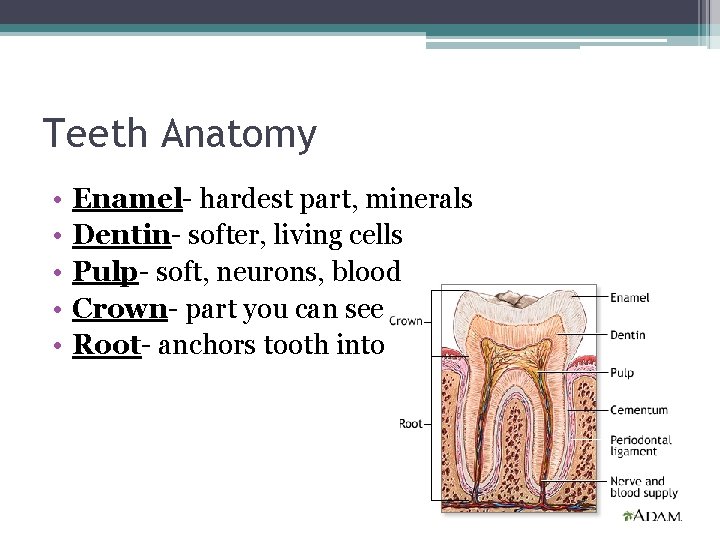
Teeth Anatomy • • • Enamel- hardest part, minerals Dentin- softer, living cells Pulp- soft, neurons, blood Crown- part you can see Root- anchors tooth into jawbone
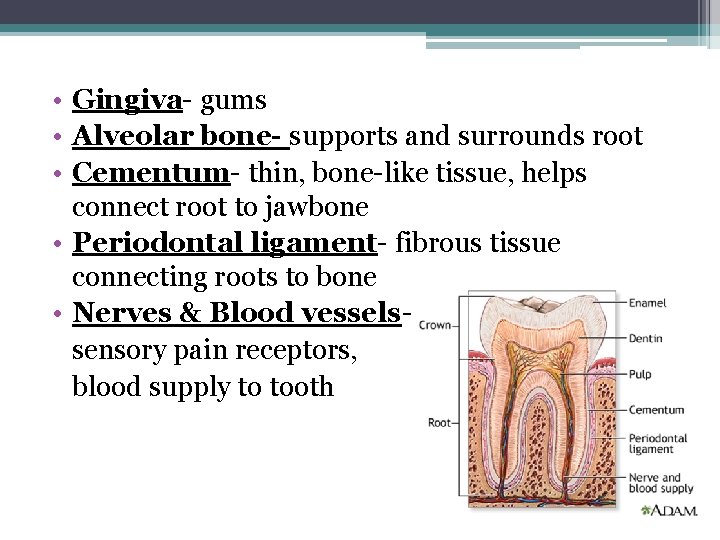
• Gingiva- gums • Alveolar bone- supports and surrounds root • Cementum- thin, bone-like tissue, helps connect root to jawbone • Periodontal ligament- fibrous tissue connecting roots to bone • Nerves & Blood vesselssensory pain receptors, blood supply to tooth
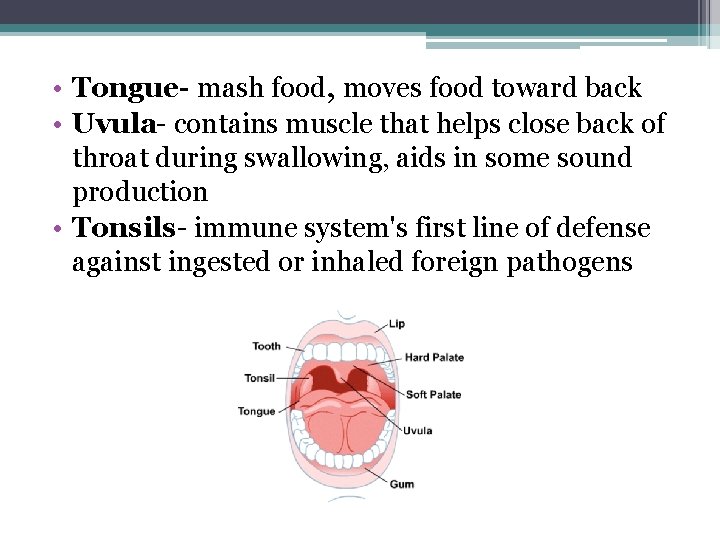
• Tongue- mash food, moves food toward back • Uvula- contains muscle that helps close back of throat during swallowing, aids in some sound production • Tonsils- immune system's first line of defense against ingested or inhaled foreign pathogens
Chemical digestion • Salivary glands secrete amylase- break down starches into sugars • Saliva- lysozyme enzyme breaks down cell walls of bacteria in mouth from food
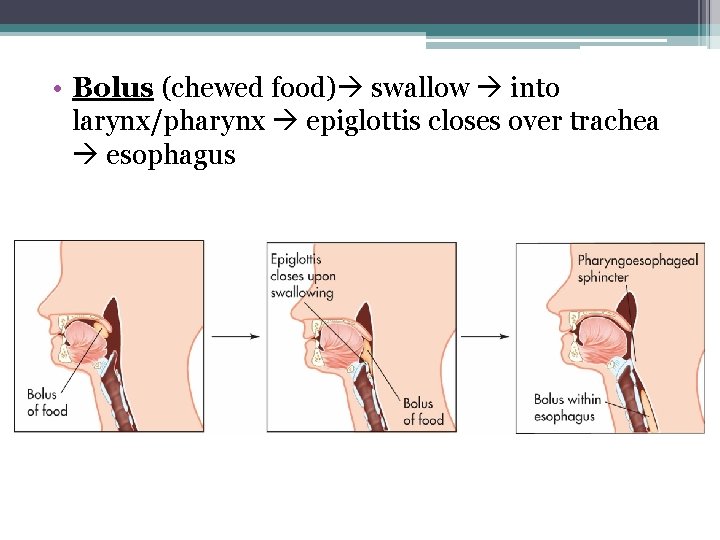
• Bolus (chewed food) swallow into larynx/pharynx epiglottis closes over trachea esophagus