
The Digestive System Digestion The process of breaking
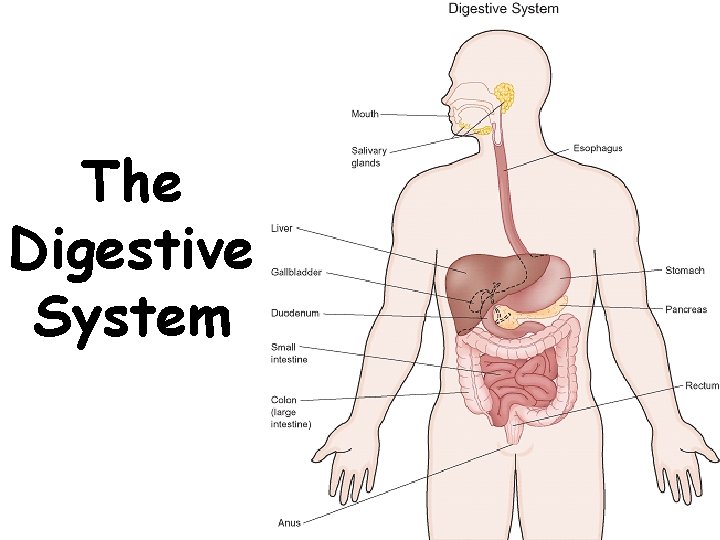
The Digestive System
Digestion The process of breaking food down into a form the body can use.
Mechanical Digestion The physical breaking down of food into smaller parts by chewing and churning. • Teeth = cut and crush food • Stomach muscles = squeeze and mix food
Chemical Digestion The breakdown of food into smaller parts using chemicals. • Saliva = in the mouth • Gastric juices = in the stomach

THE PATH OF THE DIGESTIVE TRACT mouth espohagus stomach small intestine large intestine anus
What happens in your mouth?
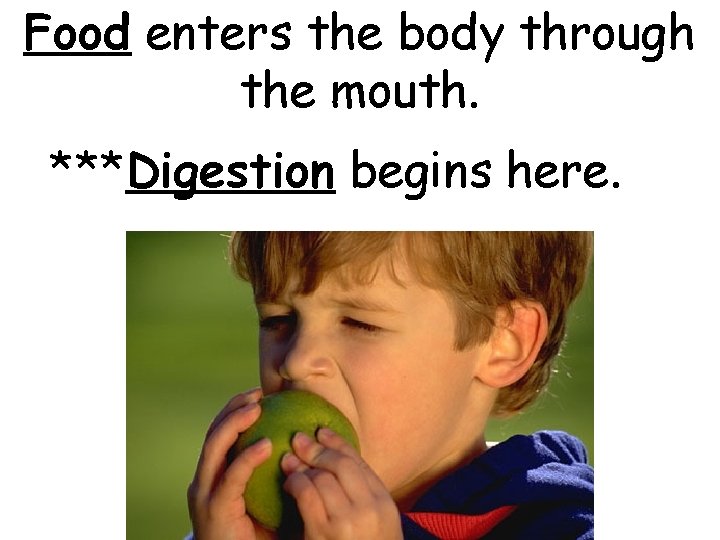
Food enters the body through the mouth. ***Digestion begins here.
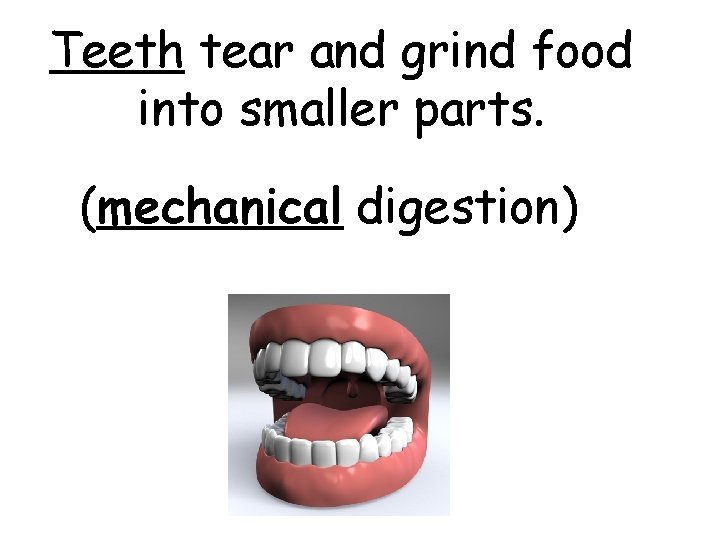
Teeth tear and grind food into smaller parts. (mechanical digestion)
The food mixes with a liquid called saliva. • The saliva moistens the food and makes it easier to swallow. (chemical digestion)
The tongue pushes food to the back of the mouth where it is swallowed.
What happens when the food leaves your mouth?
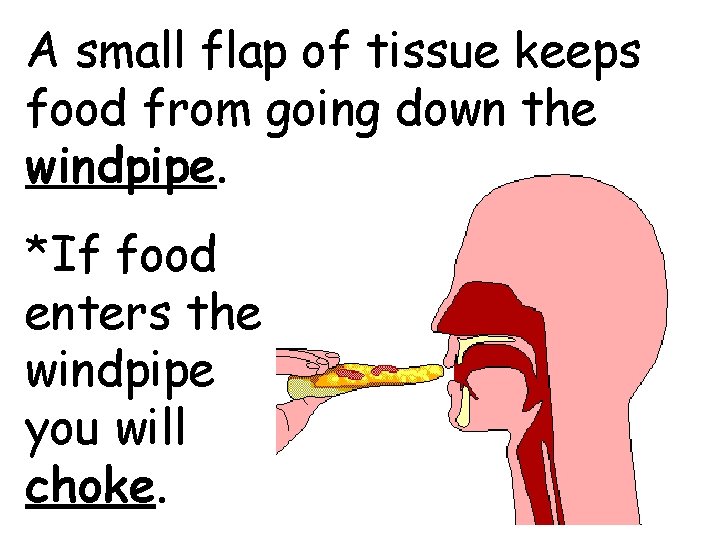
A small flap of tissue keeps food from going down the windpipe. *If food enters the windpipe you will choke.
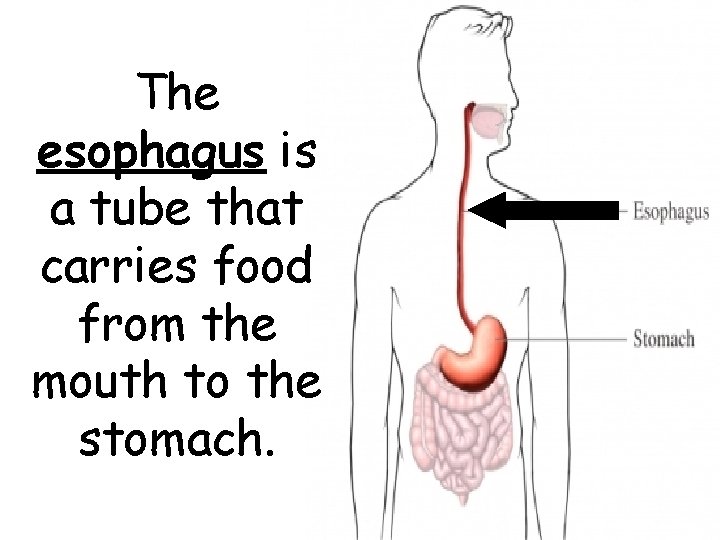
The esophagus is a tube that carries food from the mouth to the stomach.
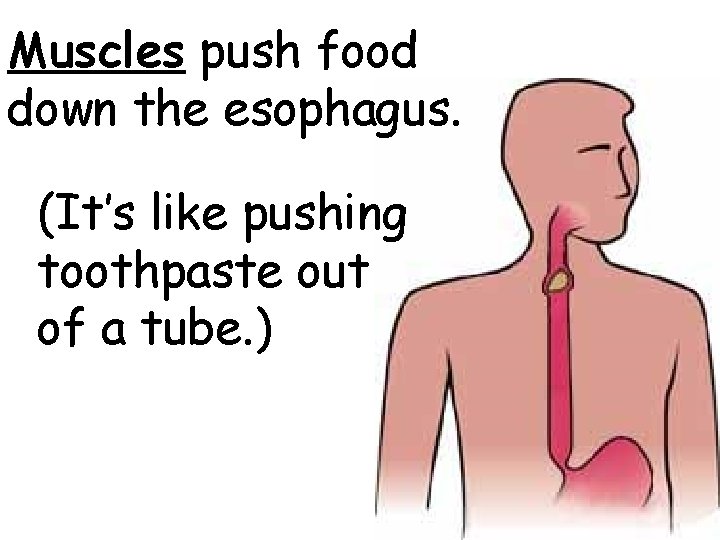
Muscles push food down the esophagus. (It’s like pushing toothpaste out of a tube. )
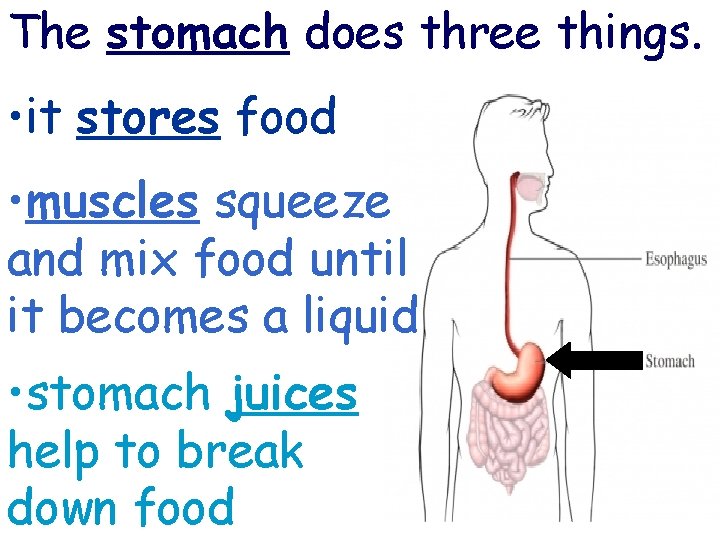
The stomach does three things. • it stores food • muscles squeeze and mix food until it becomes a liquid • stomach juices help to break down food
What happens liquefied food enters the small intestine?
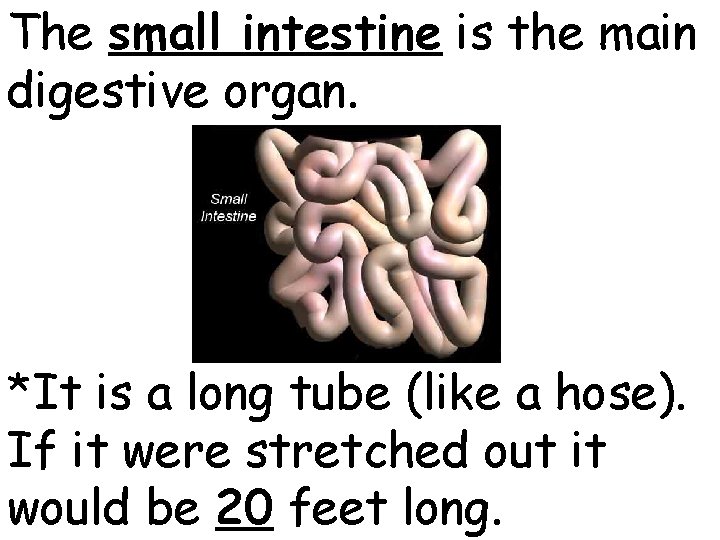
The small intestine is the main digestive organ. *It is a long tube (like a hose). If it were stretched out it would be 20 feet long.
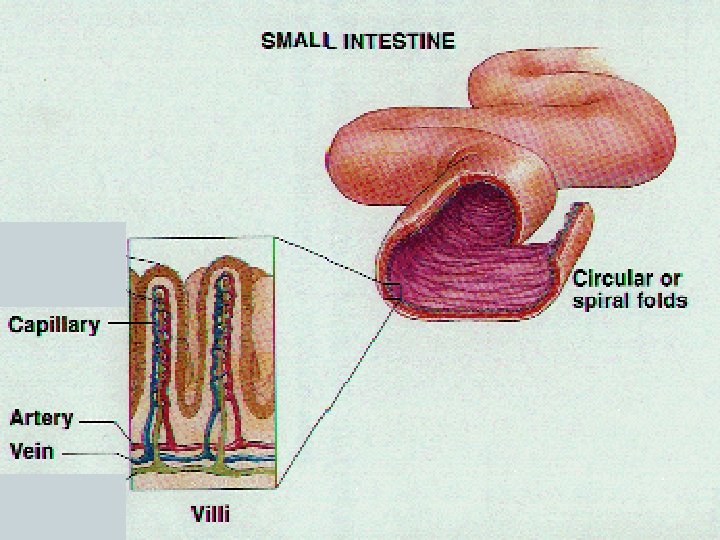
Nutrients (good stuff) go through the walls of the small intestine into the blood. The blood carries nutrients (good stuff) to every cell in the body and they are turned into energy.
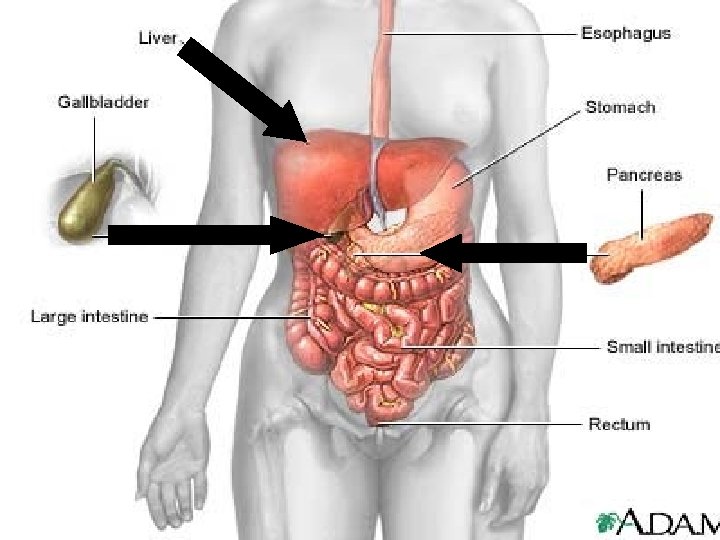
The liver, gall bladder and pancreas pump chemicals into the small intestine. They help breakdown food. They are called accessory organs because they give off chemicals to help digest food but food does not travel through them.
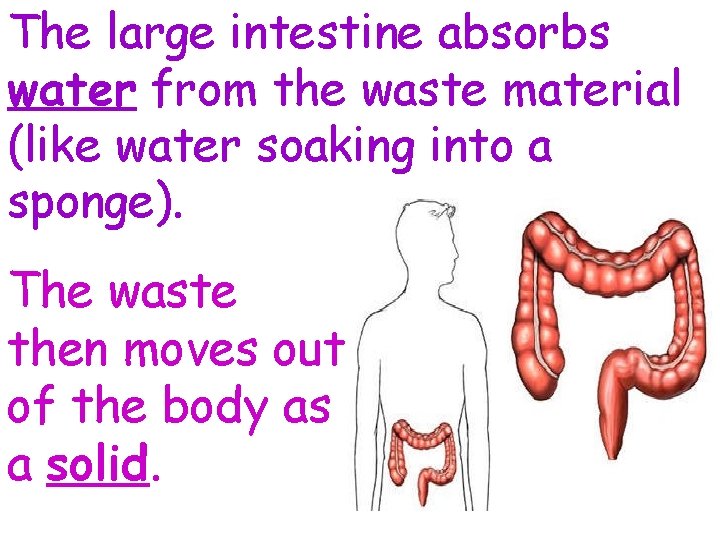
The large intestine absorbs water from the waste material (like water soaking into a sponge). The waste then moves out of the body as a solid.
- Slides: 22