
The Digestive System Chapter 3 Section 1 Digestive
- Slides: 9
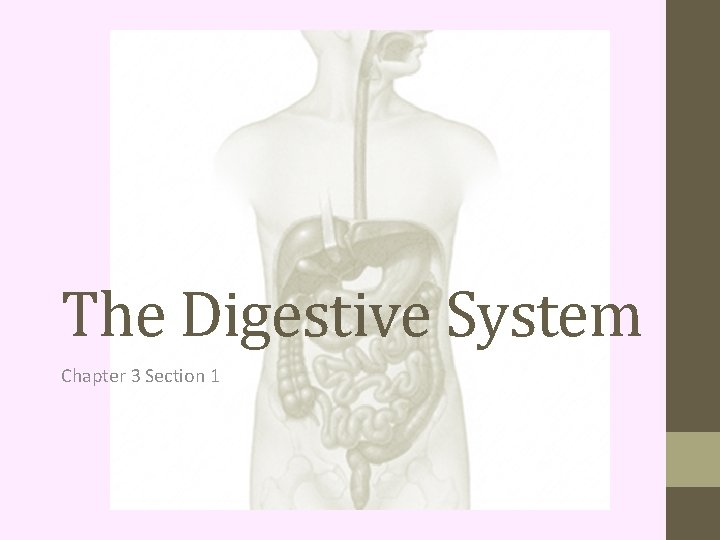
The Digestive System Chapter 3 Section 1
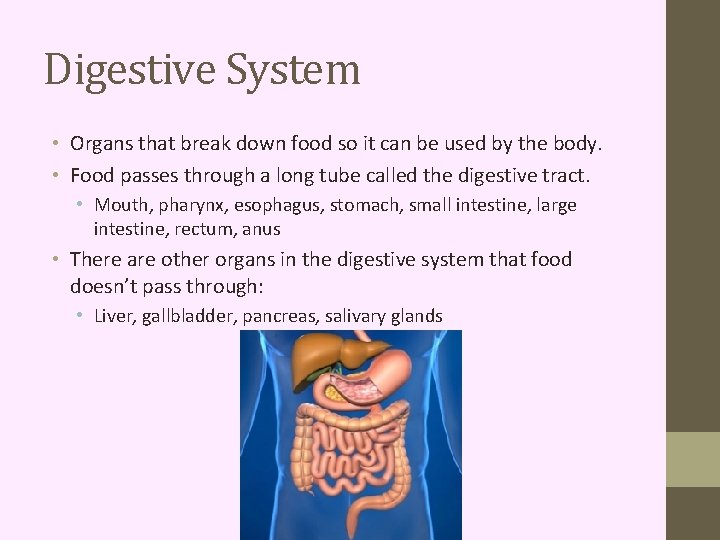
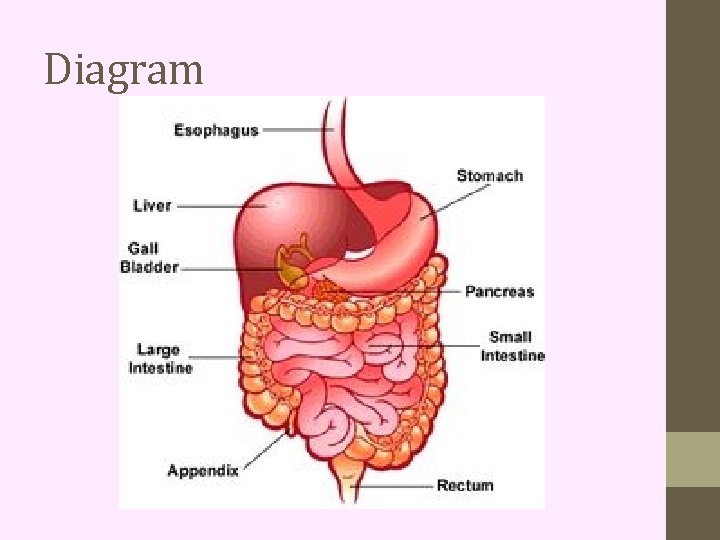
Digestive System • Organs that break down food so it can be used by the body. • Food passes through a long tube called the digestive tract. • Mouth, pharynx, esophagus, stomach, small intestine, large intestine, rectum, anus • There are other organs in the digestive system that food doesn’t pass through: • Liver, gallbladder, pancreas, salivary glands
Digestion • Breaking down food- 2 possible ways: • Mechanical digestion: breaking, crushing, mashing food. (smaller pieces) • Chemical digestion: breaking apart large molecules into smaller nutrient molecules. (chemically different molecule) • Enzymes help break apart large molecule chains into smaller nutrients • 3 types of nutrients • Carbohydrates sugar (glucose) • Proteins amino acids • Fats fatty acids & glycerol Energy Build body materials Storage, energy, insulation
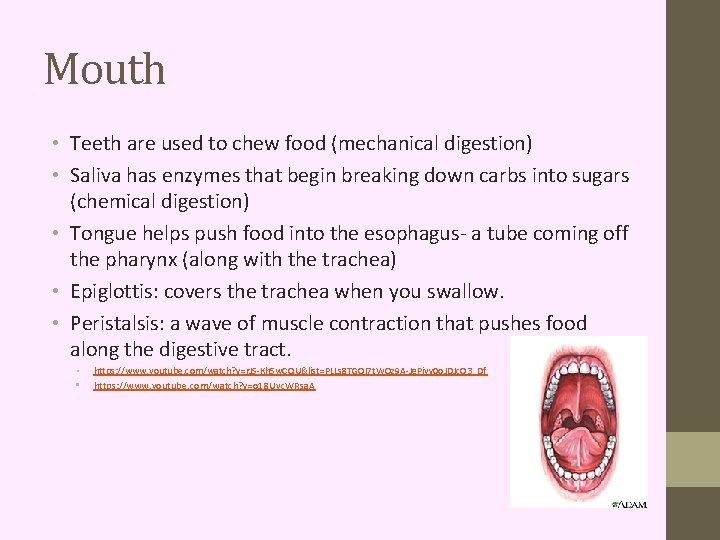
Mouth • Teeth are used to chew food (mechanical digestion) • Saliva has enzymes that begin breaking down carbs into sugars (chemical digestion) • Tongue helps push food into the esophagus- a tube coming off the pharynx (along with the trachea) • Epiglottis: covers the trachea when you swallow. • Peristalsis: a wave of muscle contraction that pushes food along the digestive tract. • • https: //www. youtube. com/watch? v=r. JS-Kh 5 w. CQU&list=PLLs 8 TGOI 7 t. WOz 9 A-Jg. Piyv 0 o. JDJc. O 3_Df https: //www. youtube. com/watch? v=o 18 Uyc. WRsa. A
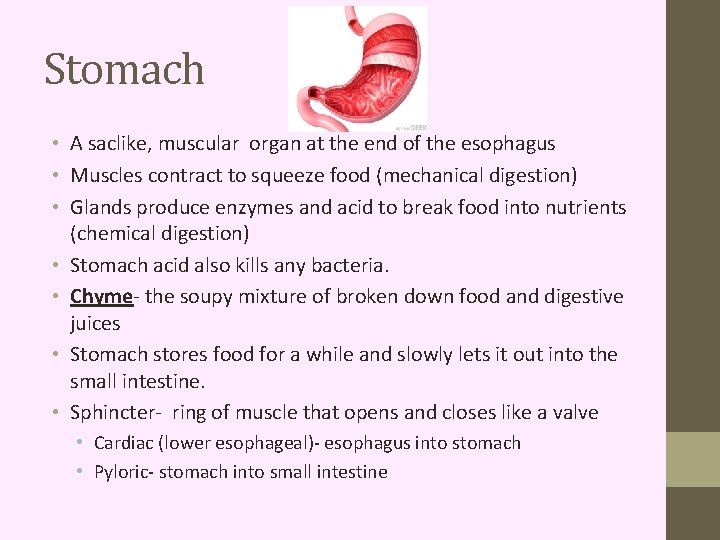
Stomach • A saclike, muscular organ at the end of the esophagus • Muscles contract to squeeze food (mechanical digestion) • Glands produce enzymes and acid to break food into nutrients (chemical digestion) • Stomach acid also kills any bacteria. • Chyme- the soupy mixture of broken down food and digestive juices • Stomach stores food for a while and slowly lets it out into the small intestine. • Sphincter- ring of muscle that opens and closes like a valve • Cardiac (lower esophageal)- esophagus into stomach • Pyloric- stomach into small intestine
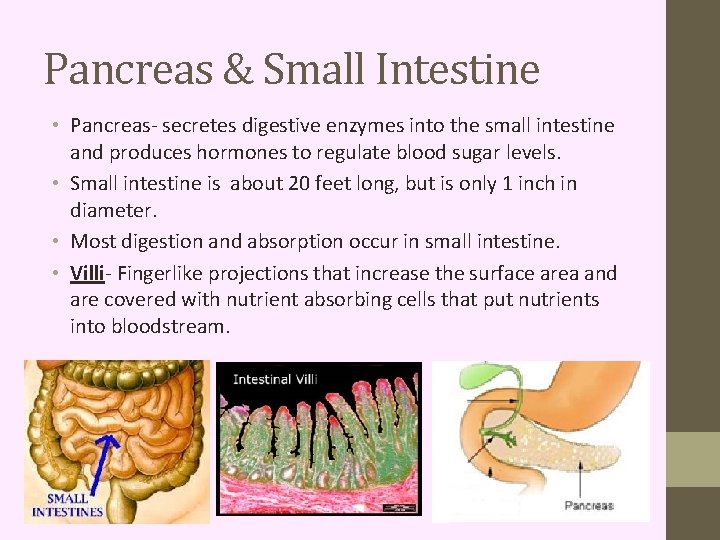
Pancreas & Small Intestine • Pancreas- secretes digestive enzymes into the small intestine and produces hormones to regulate blood sugar levels. • Small intestine is about 20 feet long, but is only 1 inch in diameter. • Most digestion and absorption occur in small intestine. • Villi- Fingerlike projections that increase the surface area and are covered with nutrient absorbing cells that put nutrients into bloodstream.
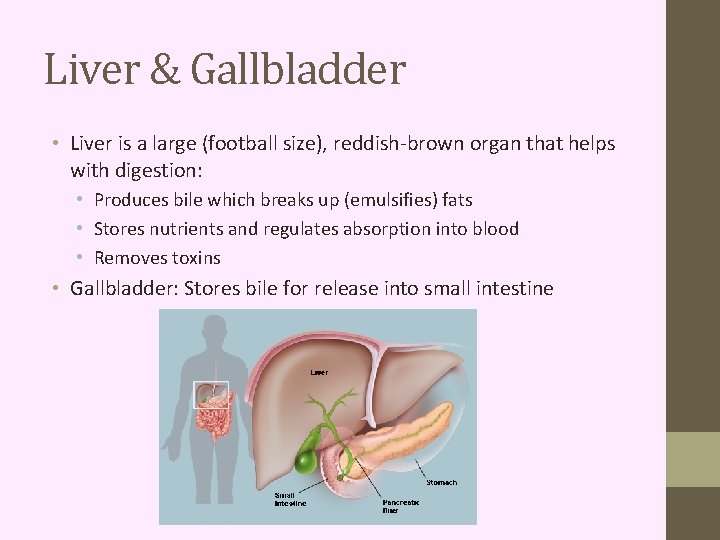
Liver & Gallbladder • Liver is a large (football size), reddish-brown organ that helps with digestion: • Produces bile which breaks up (emulsifies) fats • Stores nutrients and regulates absorption into blood • Removes toxins • Gallbladder: Stores bile for release into small intestine
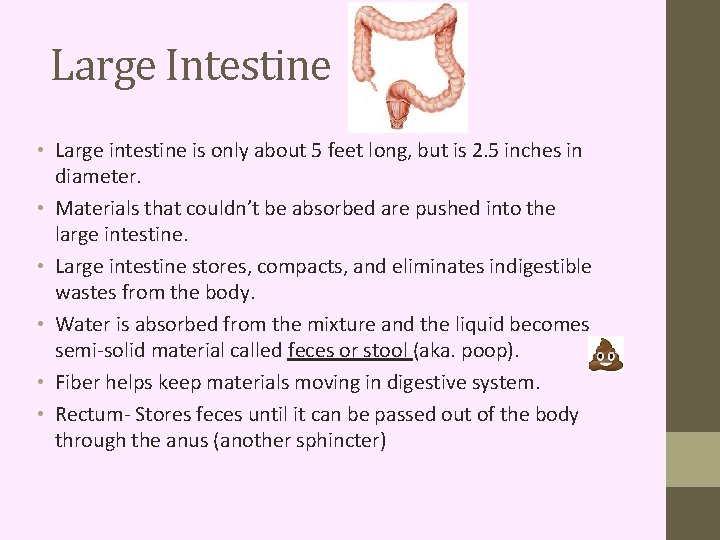
Large Intestine • Large intestine is only about 5 feet long, but is 2. 5 inches in diameter. • Materials that couldn’t be absorbed are pushed into the large intestine. • Large intestine stores, compacts, and eliminates indigestible wastes from the body. • Water is absorbed from the mixture and the liquid becomes semi-solid material called feces or stool (aka. poop). • Fiber helps keep materials moving in digestive system. • Rectum- Stores feces until it can be passed out of the body through the anus (another sphincter)
Diagram