
The Digestive System CHAPTER 22 Four stages of

- Slides: 20
The Digestive System CHAPTER 22
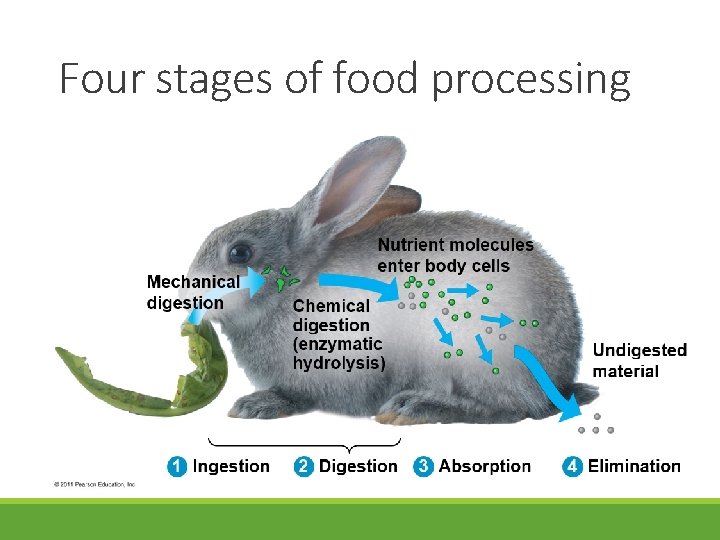
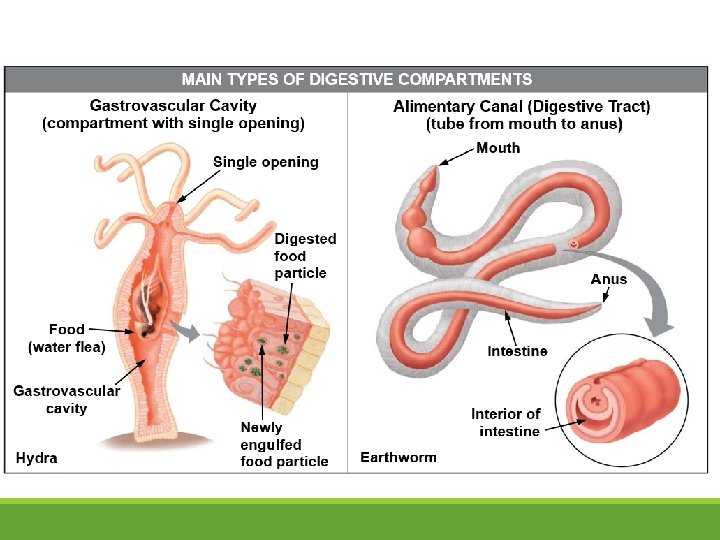
Four stages of food processing
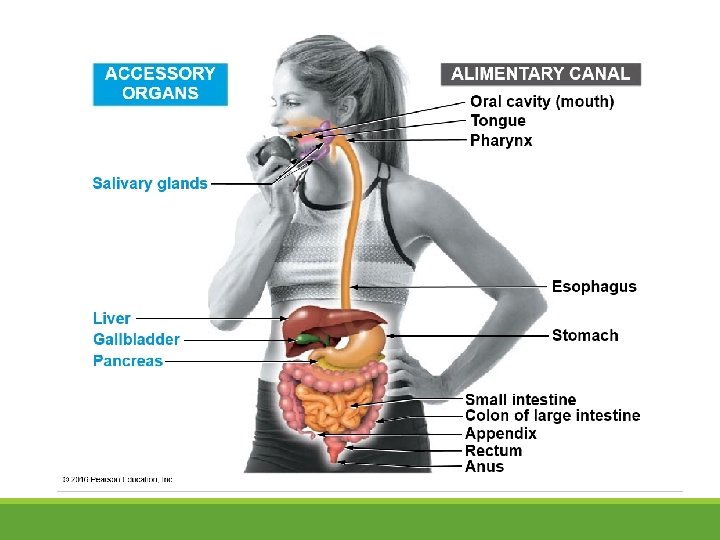
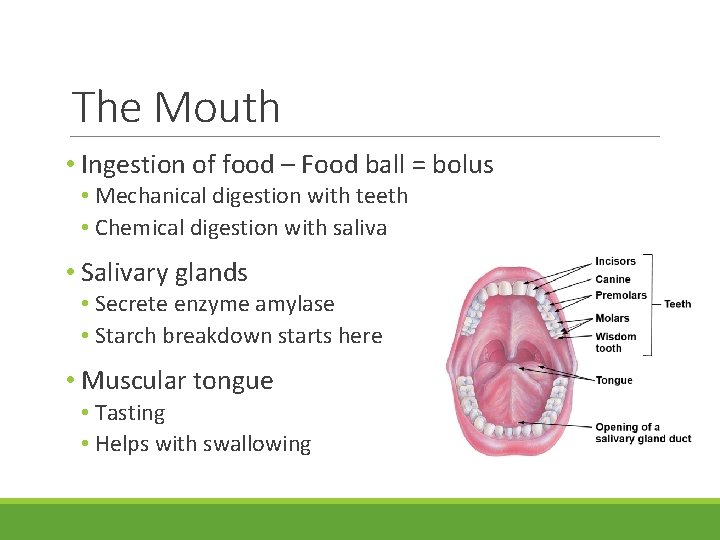
The Mouth • Ingestion of food – Food ball = bolus • Mechanical digestion with teeth • Chemical digestion with saliva • Salivary glands • Secrete enzyme amylase • Starch breakdown starts here • Muscular tongue • Tasting • Helps with swallowing
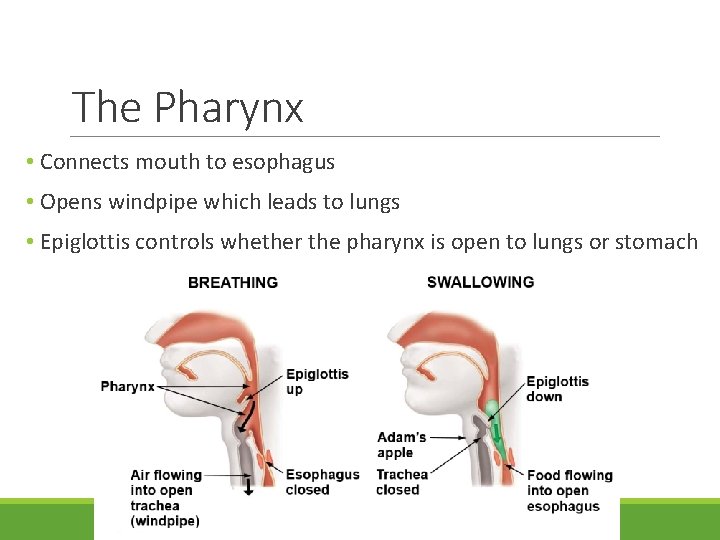
The Pharynx • Connects mouth to esophagus • Opens windpipe which leads to lungs • Epiglottis controls whether the pharynx is open to lungs or stomach
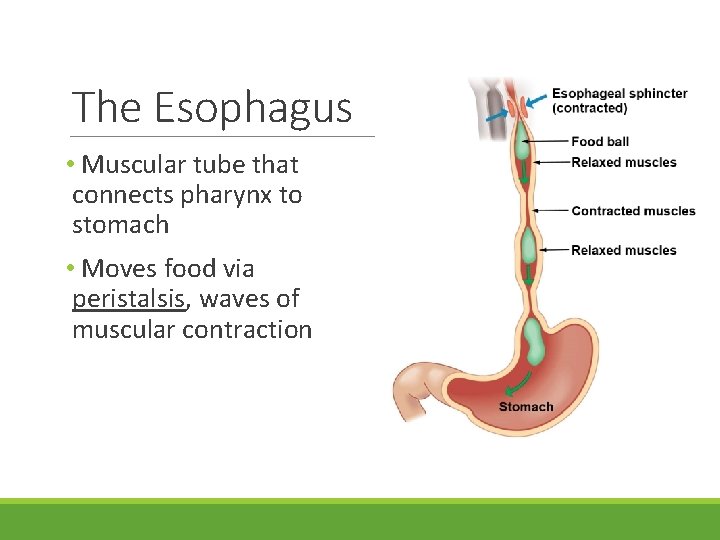
The Esophagus • Muscular tube that connects pharynx to stomach • Moves food via peristalsis, waves of muscular contraction
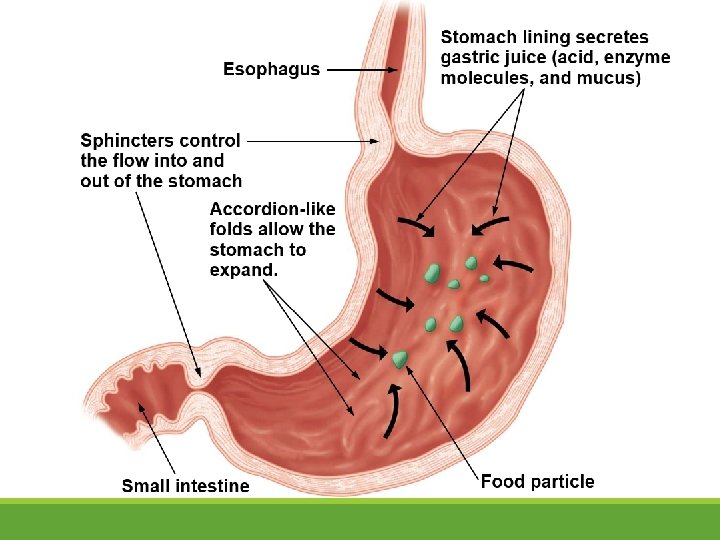
The Stomach • Large organ and functions as storage tank • Cells lining the stomach secrete gastric juice a fluid made up of • Hydrochloric acid • Digestive enzyme - pepsin for breaking down proteins into amino acids • Mucus – protects stomach • New product of stomach juices and food is now called chyme
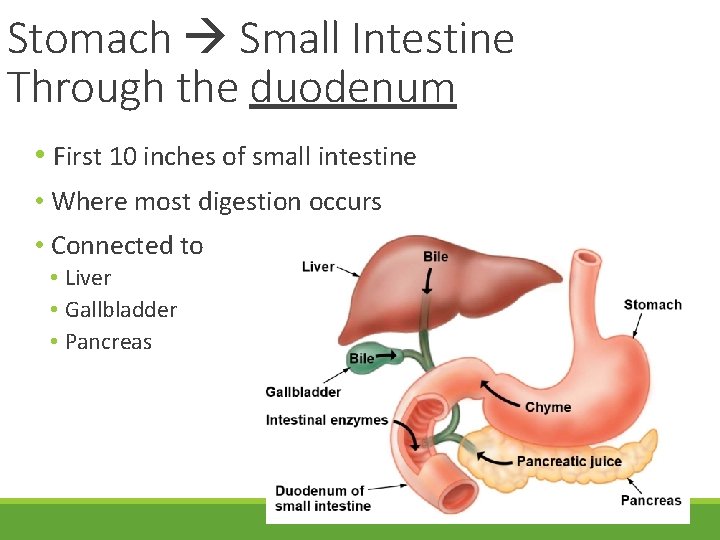
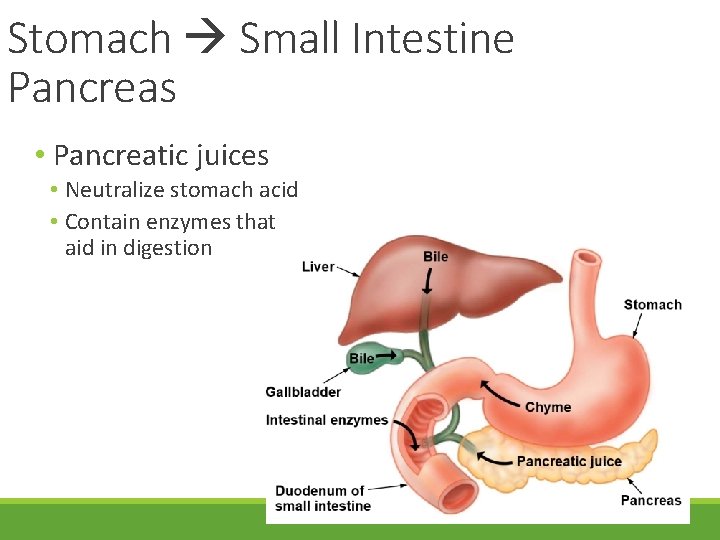
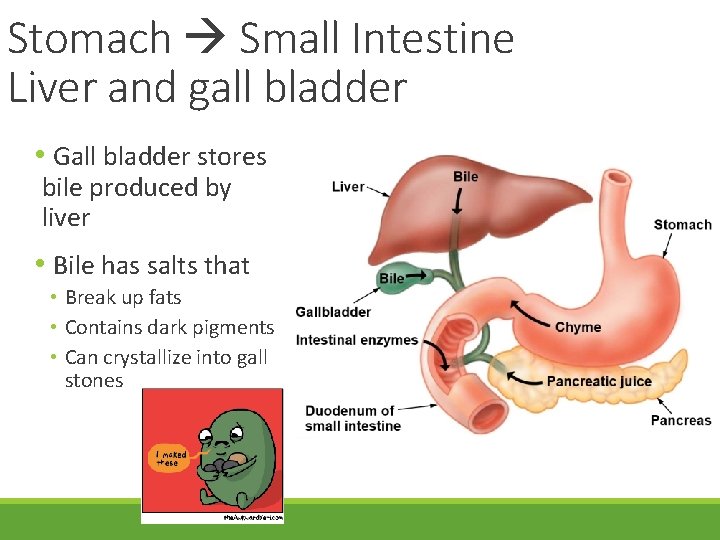
Stomach Small Intestine Through the duodenum • First 10 inches of small intestine • Where most digestion occurs • Connected to • Liver • Gallbladder • Pancreas
Stomach Small Intestine Pancreas • Pancreatic juices • Neutralize stomach acid • Contain enzymes that aid in digestion
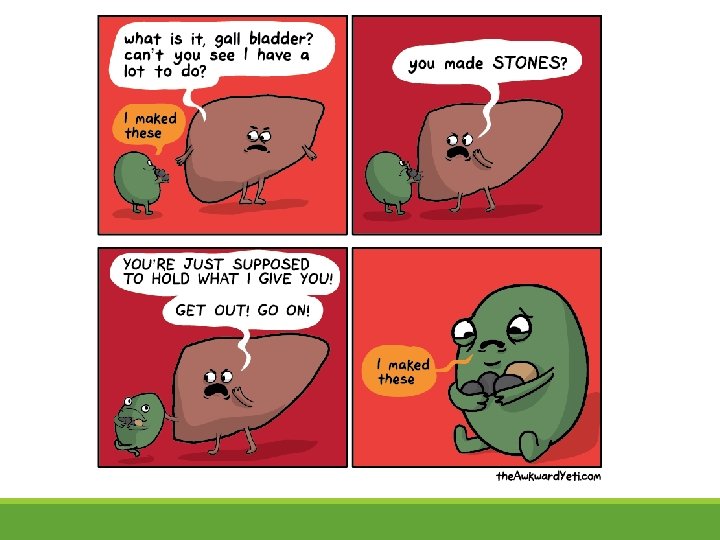
Stomach Small Intestine Liver and gall bladder • Gall bladder stores bile produced by liver • Bile has salts that • Break up fats • Contains dark pigments • Can crystallize into gall stones
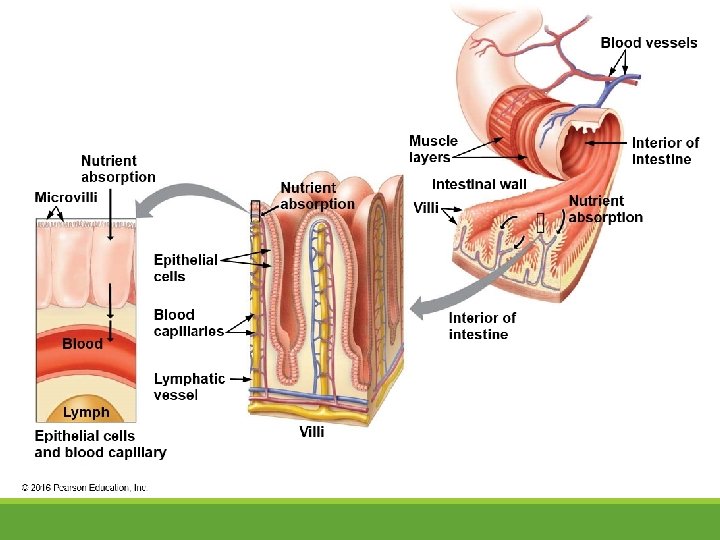
Nutrient Absorption The Small Intestine • Without nutrient absorption we would eat and still starve. • The structure of the intestinal lining, or epithelium, is specialized for nutrient absorption • Lots of surface area!! (20 ft. long) • Villi • Microvilli
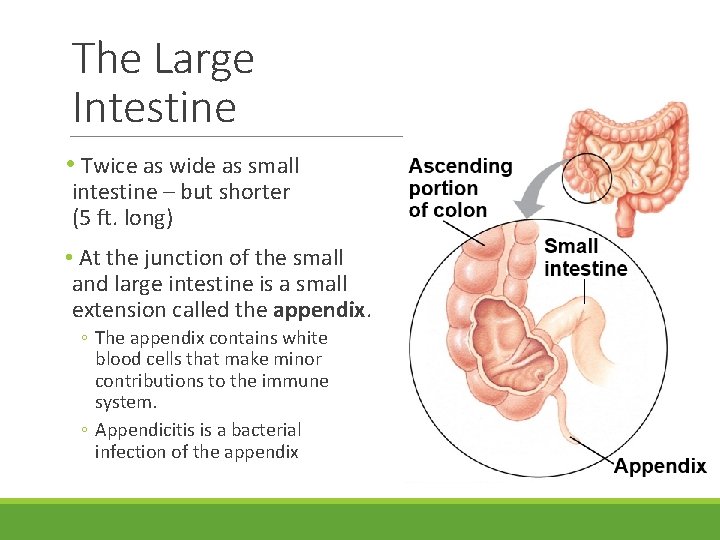
The Large Intestine • Twice as wide as small intestine – but shorter (5 ft. long) • At the junction of the small and large intestine is a small extension called the appendix. ◦ The appendix contains white blood cells that make minor contributions to the immune system. ◦ Appendicitis is a bacterial infection of the appendix
The Large Intestine – The colon • The colon ◦ forms the main portion of the large intestine ◦ absorbs water from the alimentary canal ◦ produces feces, consisting of undigested material • About one-third of the dry weight of feces consists of bacteria from the colon
The Large Intestine – The rectum • The rectum, the last 15 cm (6 inches) of the large intestine, stores feces until they can be eliminated. • Two rectal sphincters regulate the opening of the anus • one voluntary • one involuntary • Relaxing the voluntary sphincter expels feces
Helpful review videos https: //www. youtube. com/watch? v=s 06 Xza. Kq. ELk https: //www. youtube. com/watch? v=Og 5 x. Ad. C 8 EUI