
The Digestive System By Mrs Bourland Components Esophagus
The Digestive System By: Mrs. Bourland
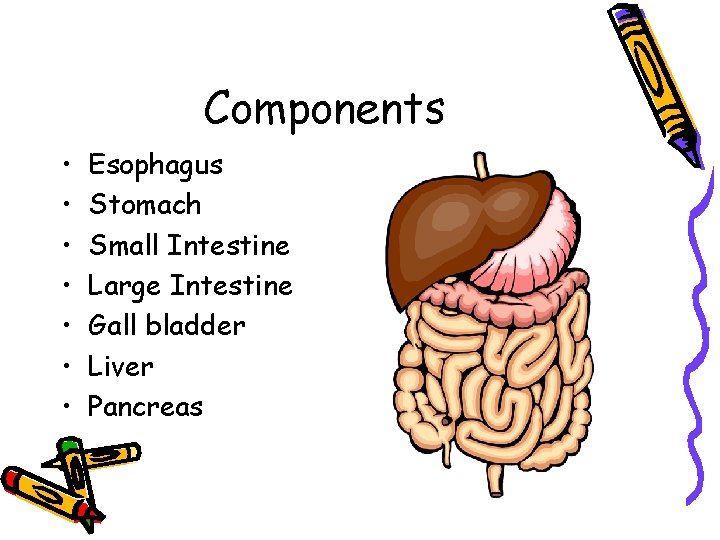
Components • • Esophagus Stomach Small Intestine Large Intestine Gall bladder Liver Pancreas
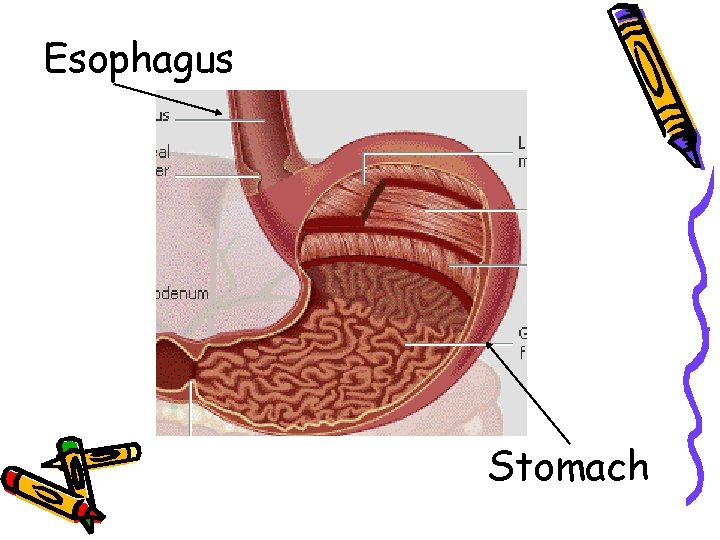
Esophagus • the tube that connects your mouth and your stomach

Stomach • A stretchy bag that holds your food after you eat • Helps to break food into smaller pieces so your body can use it for energy and nutrition
Esophagus Stomach
Small Intestine • Tube that is 20 feet long. • Continues to digest food • Food stays in your small intestine for 4 to 8 hours
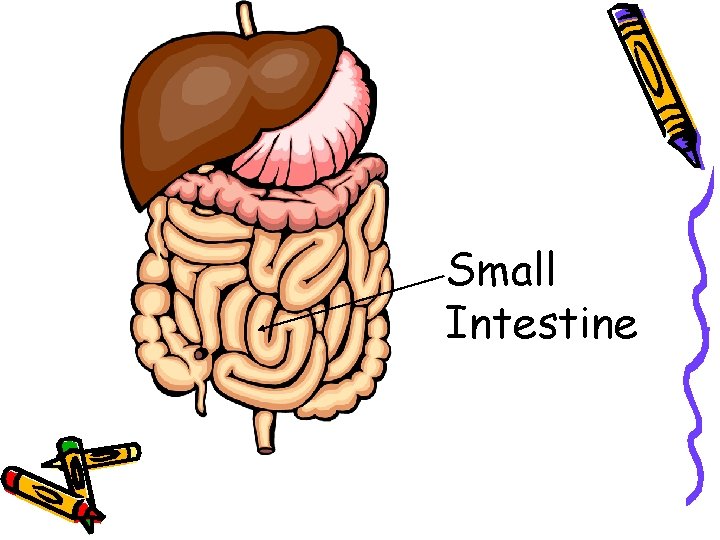
Small Intestine
Large Intestine • Tube that is 5 feet long • Gets waste from small intestine • Waste stays for 10 to 12 hours

Large Intestine
Gall Bladder • Storage tank for bile (a greenishyellow liquid) that helps your body break down and use fats • Located under your liver • Shaped like a pear
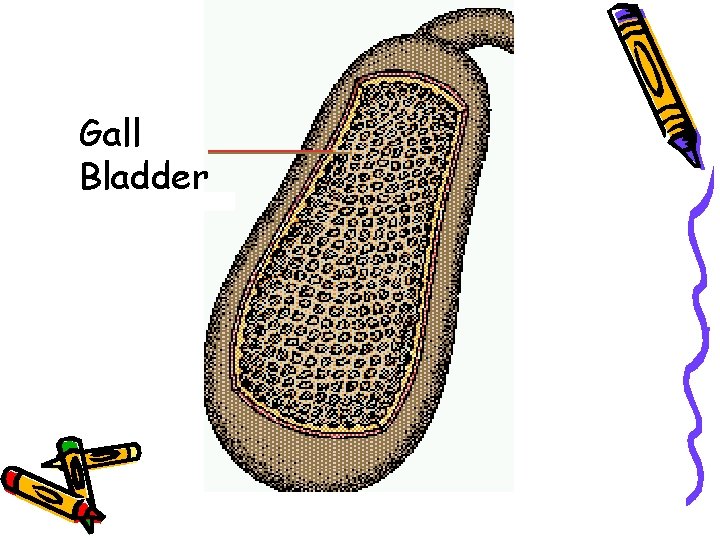
Gall Bladder
Liver • Factory for antibodies and bile • Stores vitamins and sugars until your body needs them
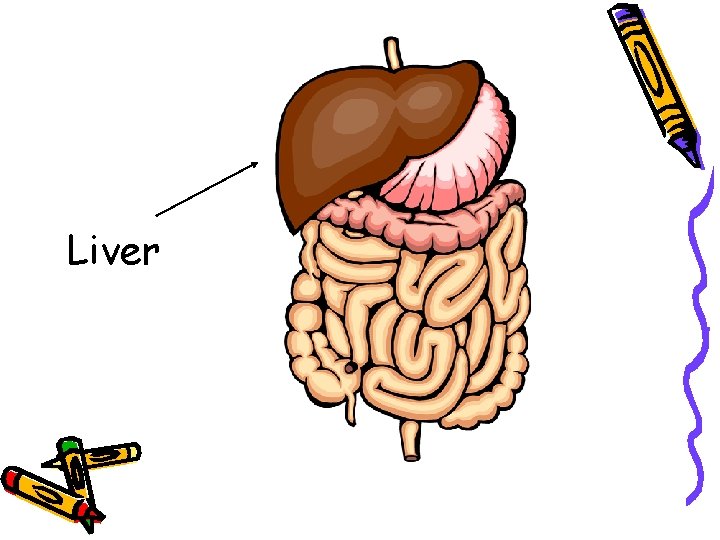
Liver
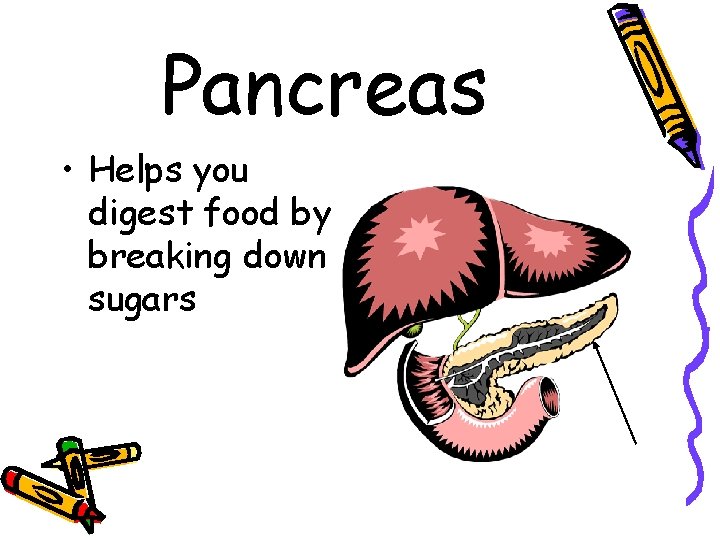
Pancreas • Helps you digest food by breaking down sugars
Functions • Digest the food we eat • Take the nutrients out of your food so your body can use it
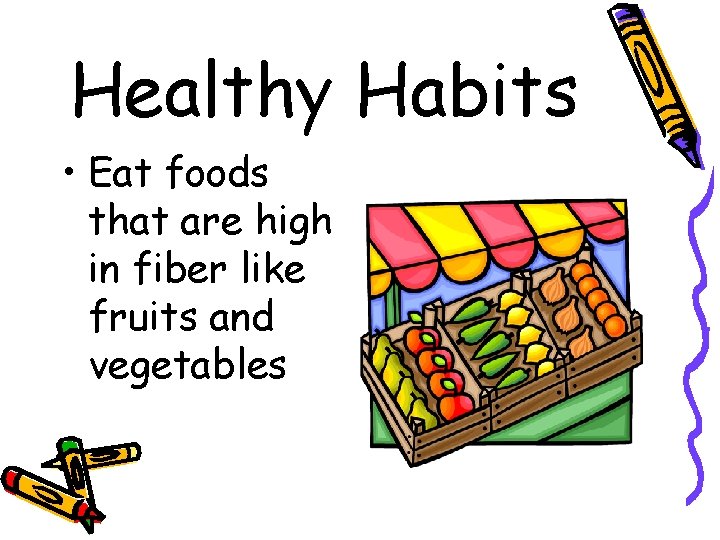
Healthy Habits • Eat foods that are high in fiber like fruits and vegetables
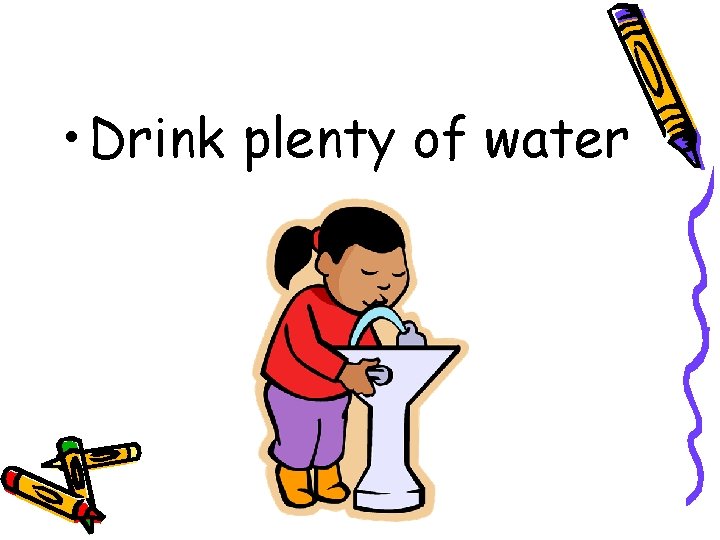
• Drink plenty of water
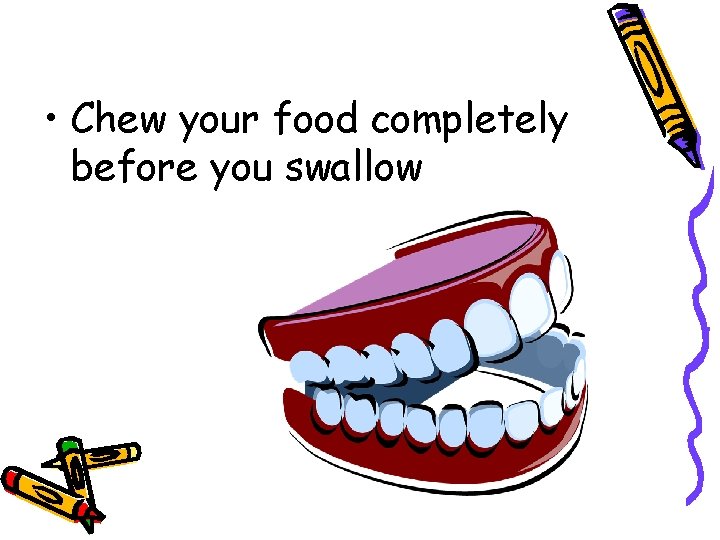
• Chew your food completely before you swallow
Avoid foods high in fat
Interesting Facts • Food is in your digestive system for about 24 hours
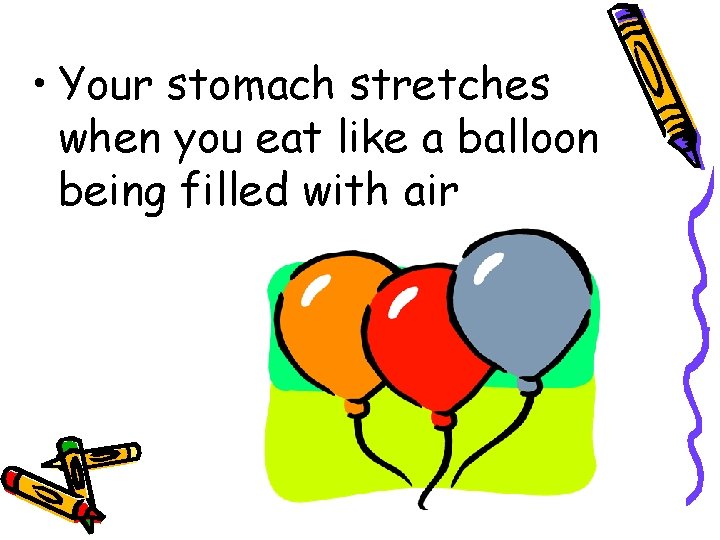
• Your stomach stretches when you eat like a balloon being filled with air
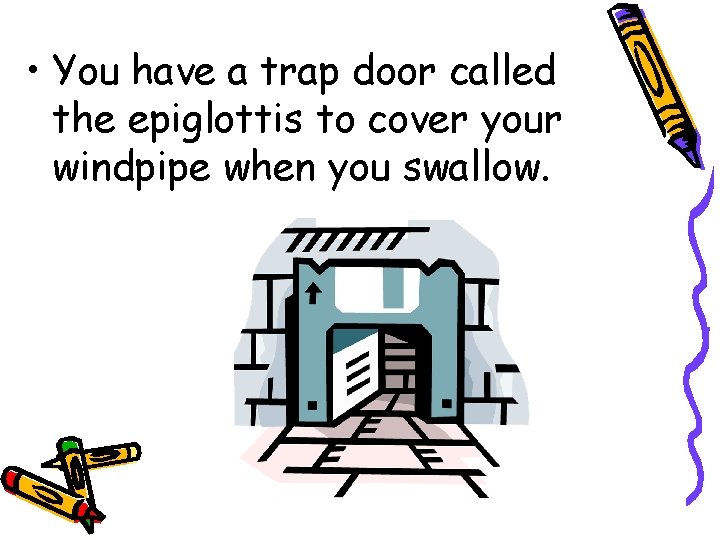
• You have a trap door called the epiglottis to cover your windpipe when you swallow.
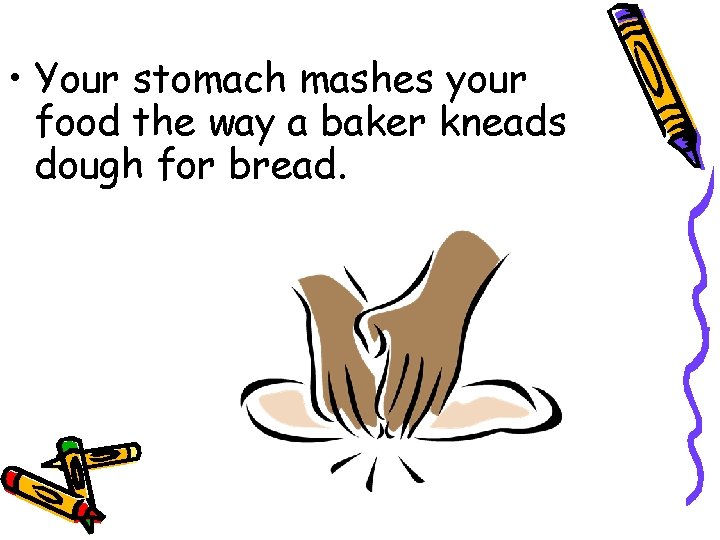
• Your stomach mashes your food the way a baker kneads dough for bread.
Summary Functions • Digests food • Absorbs nutrients for the body • • Components Esophagus Stomach Small intestine Large intestine Pancreas Liver Gall Bladder
Summary Healthy Habits • • Eat high fiber foods Drink lots of water Chew food well Avoid high-fat foods
Works Cited • Microsoft Clip. Art • Microsoft Encarta Encyclopedia • My Body: Teacher Created Materials
- Slides: 26