
The Digestive System Biology 2 Food Flow Chart
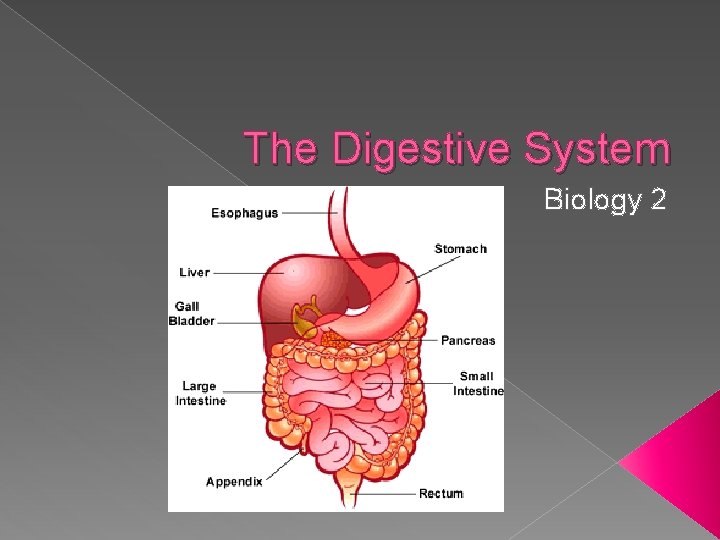
The Digestive System Biology 2
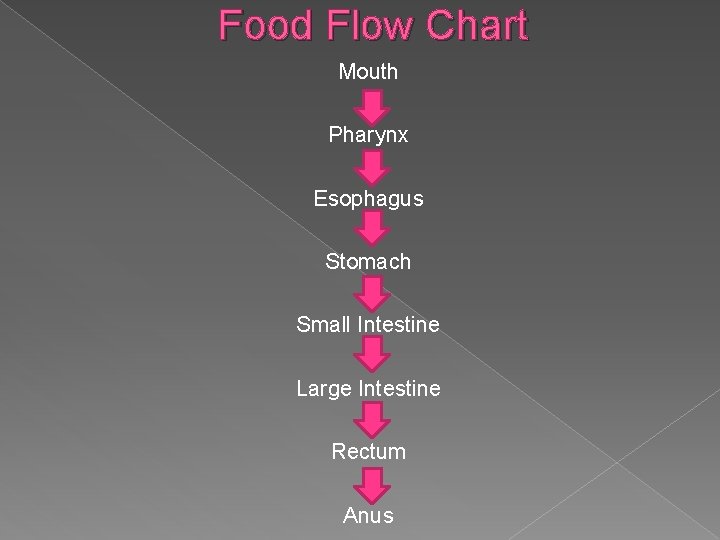
Food Flow Chart Mouth Pharynx Esophagus Stomach Small Intestine Large Intestine Rectum Anus
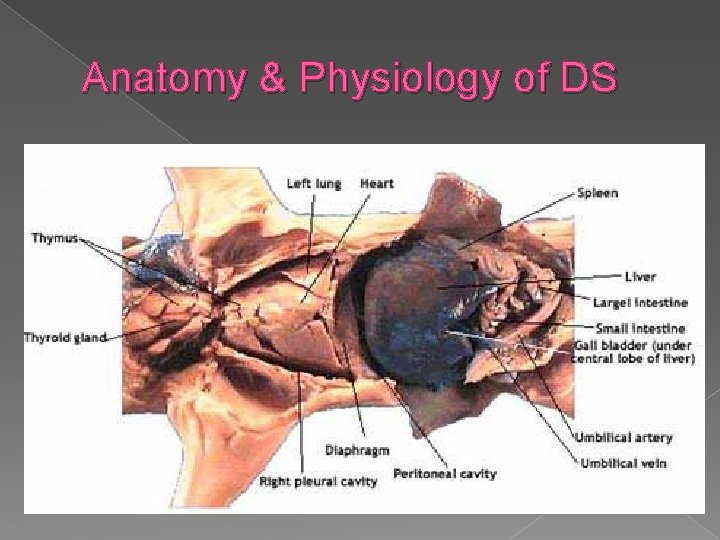
Anatomy & Physiology of DS
Mouth � Ingests food � Teeth physically break down food by chewing (Mastication) � Mastication occurs until bolus is formed � Saliva lubricates food � The enzyme, salivary amylase also called ptyalin, breaks down starch into simple sugar, glucose
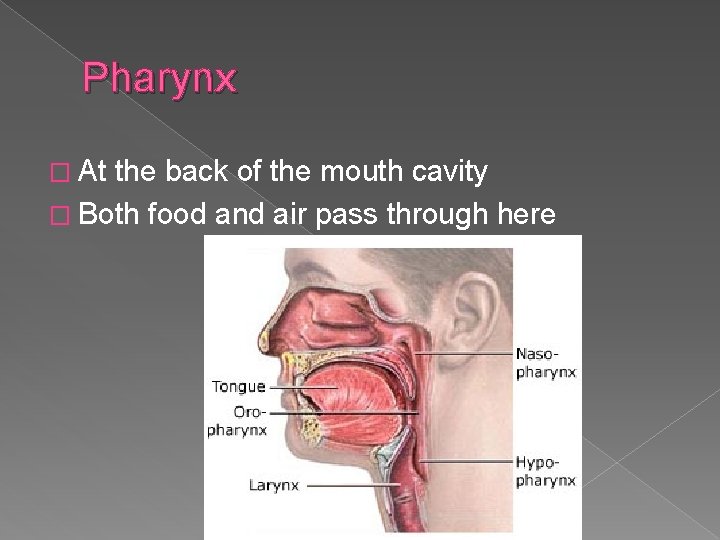
Pharynx � At the back of the mouth cavity � Both food and air pass through here
Esophagus � Tube between mouth and stomach � A flap called the epiglottis closes over the top of the windpipe or trachea when swallowing, so that food does not enter the respiratory tract � The walls of the digestive tract from the esophagus to the anus are muscular, and contract rhythmically to move food. The muscular contractions are called peristalsis.
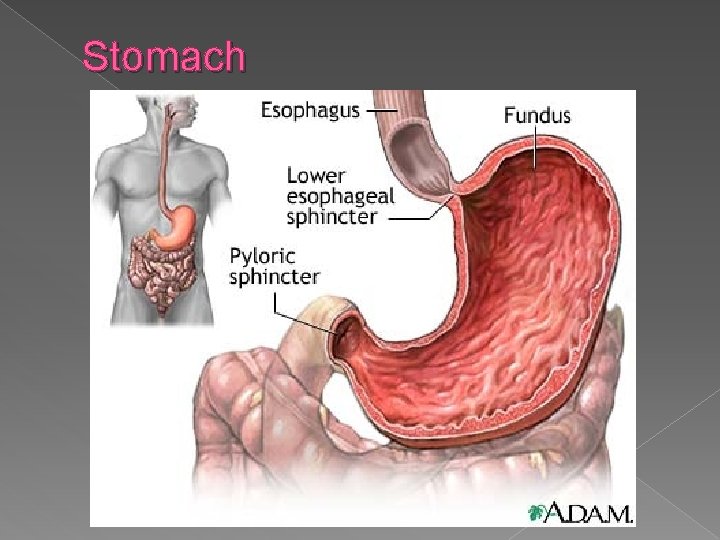
Stomach
Stomach � 2 circular muscles called sphincters surround the entry and exit of the stomach to control the flow of food � Food remains in the stomach for about 3 hours where it physically broken down by the churning muscular contractions of the stomach wall muscles � Gastric juice contains hydrochloric acid and has a p. H of 1 without food, and 3 with food.
Stomach �HCl helps to kill bacteria, and works in association with the enzyme, pepsin, to partially break down proteins. �The stomach lining contains mucus to prevent damage from the acid �Only alcohol and a few drugs can be absorbed through the stomach wall into the blood
Small Intestine Long tube that is about 7 meters long and 2. 5 cm in diameter � 3 parts of the small intestine are duodenum, jejunum and ileum � Most of digestion occurs in the small intestine � The enzymes of the small intestine do not function on the acidic stomach contents. First, an alkaline substance from the pancreas is secreted into the duodenum to neutralize the stomach acid. �
Small Intestine (Continued) A green substance called bile that is made in the liver and stored in the gall bladder is released into the duodenum to break the large fat particles into smaller fat particles � Enzymes from the pancreas also break down food chemically. Amylase breaks starch into simple sugars. Lipase breaks lipids into fatty acids and glycerol. Peptidases and Trypsin break down proteins into amino acids. � After the food into broken into smaller particles, it is absorbed through finger-like projections called villi on the walls of the small intestine into blood capillaries. �
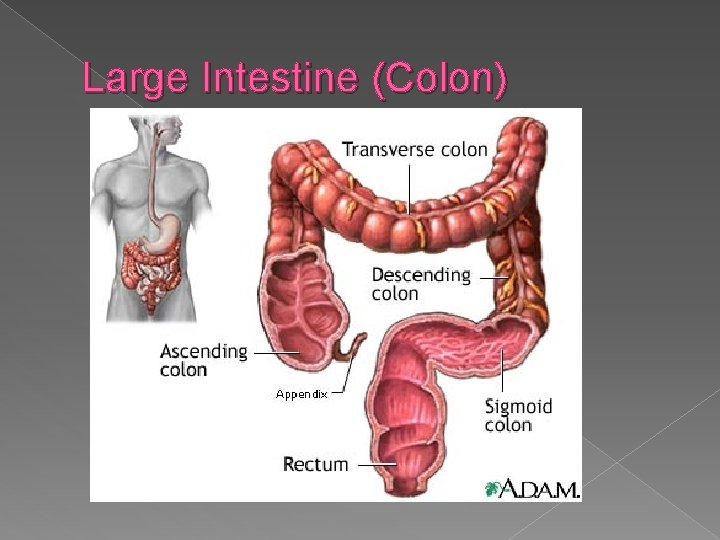
Large Intestine (Colon)
Large Intestine (Colon) Thicker in diameter than the small intestine � Water is absorbed from the remains of undigested food to make feces. Bacteria produce Vitamin B in the large intestine � Mucus lubricates the feces � The appendix is attached to part of the large intestine. It may be part of the body's immune system. � Diarrhea is the condition of more liquid feces when the large intestine is infected. �
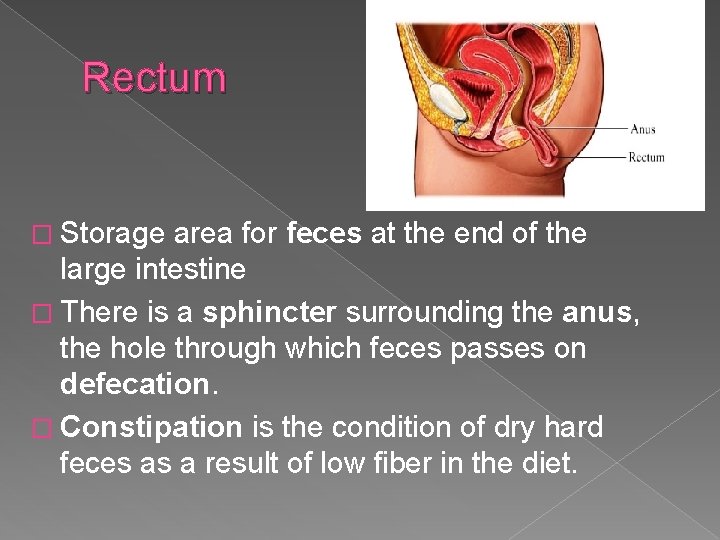
Rectum � Storage area for feces at the end of the large intestine � There is a sphincter surrounding the anus, the hole through which feces passes on defecation. � Constipation is the condition of dry hard feces as a result of low fiber in the diet.
The role of the Liver in Digestion Bile - The liver produces bile which is stored temporarily in the gall bladder, and then secreted into the duodenum (first part of the small intestine) for the emulsification of lipids. Bile is also alkaline and aids in the neutralisation of stomach acid in the small intestine. � Sugar Conversion - After a meal, excess simple sugars in the bloodstream pass to the liver and are converted and stored as glycogen. However, between meals, the glycogen is converted back to simple sugars and released into the bloodstream. In this way, the blood sugar remains constant. �
Food Nutrients
Food Nutrients � Carbohydrates � Proteins � Lipids � Vitamins � Mineral Ions
Carbohydrates � Examples are sugars, starches (pasta, potatoes, flour) and cellulose (fiber) � An immediate source of energy for the body � 3 forms of carbohydrates are: › Monosaccharides › Disaccharides › Polysaccharides � All carbohydrates are broken down to simple sugars (monosaccharides) by enzymes in the digestive tract
Proteins � Examples are meat, eggs, beans � Some body proteins are muscle, haemoglobin, hormones and enzymes � Used to repair and build body tissues, but can be used as a last source of energy � Digestive enzymes break down proteins into amino acids
Lipids (Fats & Oils) � Examples are butter and oils � Bile and digestive enzymes break down lipids into fatty acids and glycerol � Used as a source of energy, as a structural and an insulating material
Vitamins � Help to control chemical reactions in the body � Are only required in small amounts � Deficiencies and excesses of vitamins may cause disease
Minerals � Examples are salts containing sodium or calcium � Help build strong bones and teeth, needed for healthy nervous function, and used in the clotting of blood � Lack can cause disease
Digestion
Digestion 3 Processes in Digestion 1. Ingestion - the mechanical taking in of food, chewing and swallowing 2. Digestion - The breakdown of food into smaller particles by physical or chemical means 3. Absorption - the absorption of these smaller food particles from the digestive tract into the blood
Breaking Down Food
2 Types of Food Breakdown Physical or Mechanical Breakdown - e. g. chewing, mixing with bile 2. Chemical Breakdown - e. g. enzymes, hydrochloric acid 1.
- Slides: 26