
The Digestive System Before your body can use
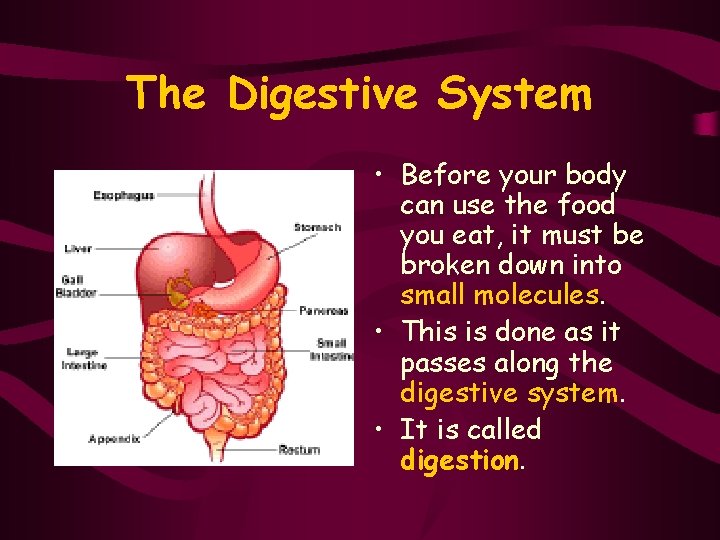
The Digestive System • Before your body can use the food you eat, it must be broken down into small molecules. • This is done as it passes along the digestive system. • It is called digestion.
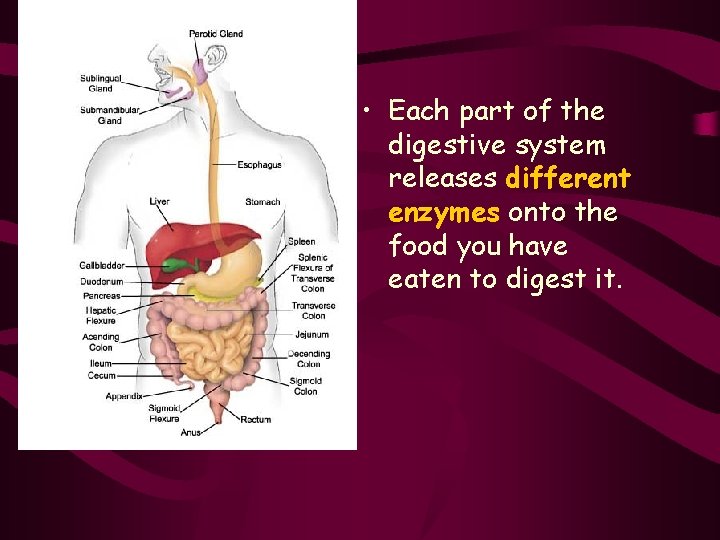
• Each part of the digestive system releases different enzymes onto the food you have eaten to digest it.
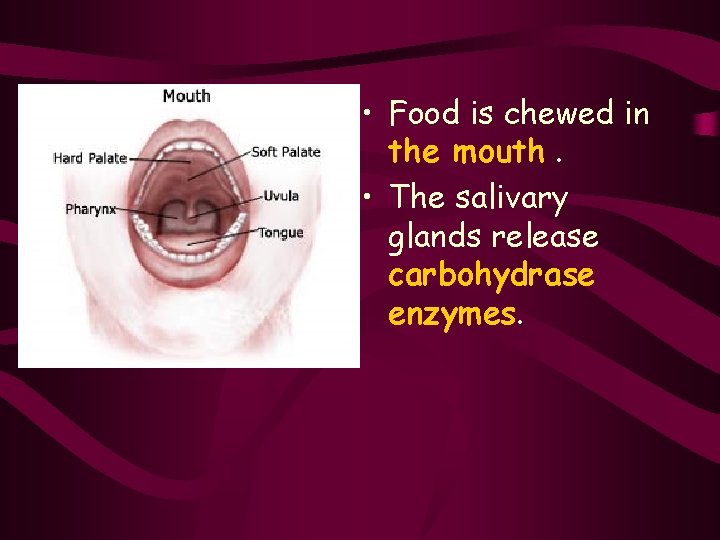
• Food is chewed in the mouth. • The salivary glands release carbohydrase enzymes.
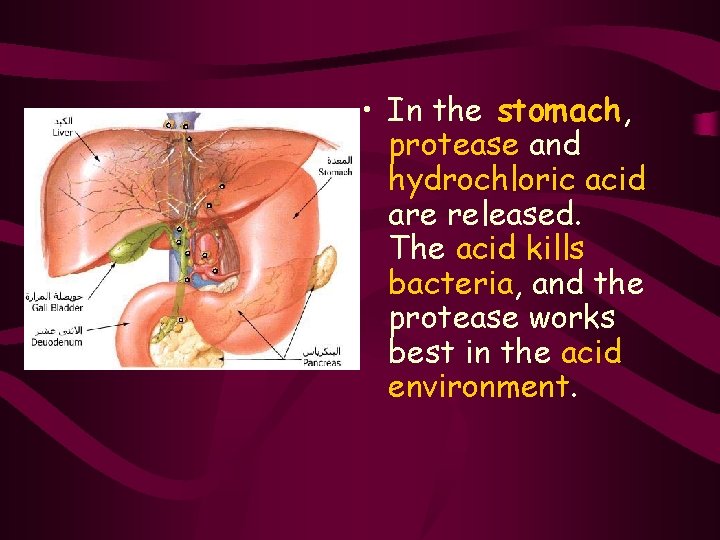
• In the stomach, protease and hydrochloric acid are released. The acid kills bacteria, and the protease works best in the acid environment.

• Bile is produced in the liver and stored in the gall bladder. • Bile neutralises the acid contents from the stomach. • The bile also helps to break down fats.

• The pancreas releases protease, carbohydrase and lipase enzymes into the small intestine.
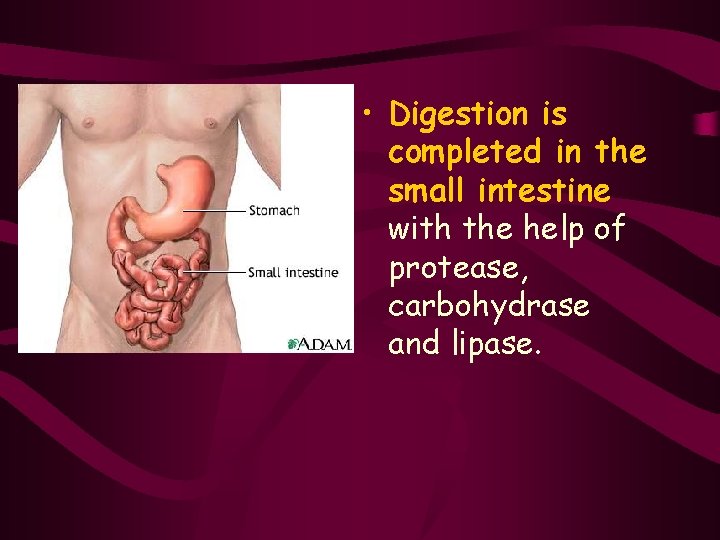
• Digestion is completed in the small intestine with the help of protease, carbohydrase and lipase.
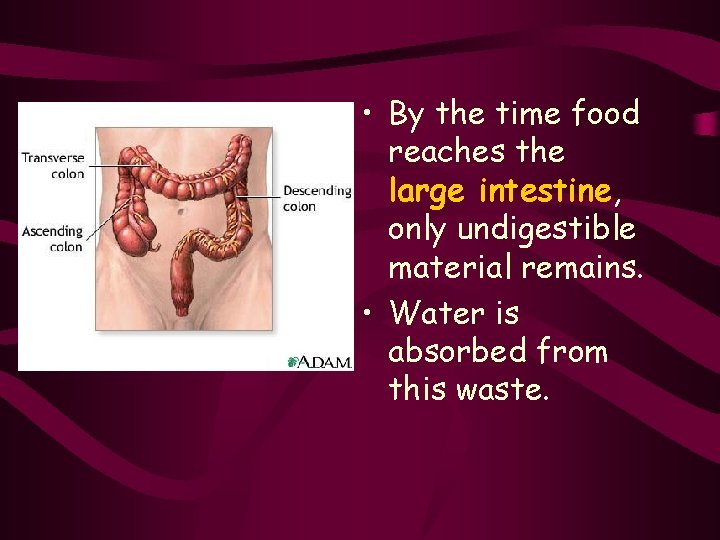
• By the time food reaches the large intestine, only undigestible material remains. • Water is absorbed from this waste.
Digesting Food • Each part of the digestive system releases different enzymes onto the food you have eaten to digest it. • Food is chewed in the mouth. • The salivary glands release carbohydrase enzymes. • In the stomach, protease and hydrochloric acid are released. The acid kills bacteria, and the protease works best in the acid environment. • Bile is produced in the liver and stored in the gall bladder. Bile neutralises the acid contents from the stomach. The bile also helps to break down fats. • The pancreas releases protease, carbohydrase and lipase enzymes into the small intestine. • Digestion is completed in the small intestine with the help of protease, carbohydrase and lipase. • By the time food reaches the large intestine, only undigestible material remains. Water is absorbed from this waste.
- Slides: 9