
The Digestive System Anatomy Digestion Upper GI Tract

- Slides: 15
The Digestive System Anatomy & Digestion
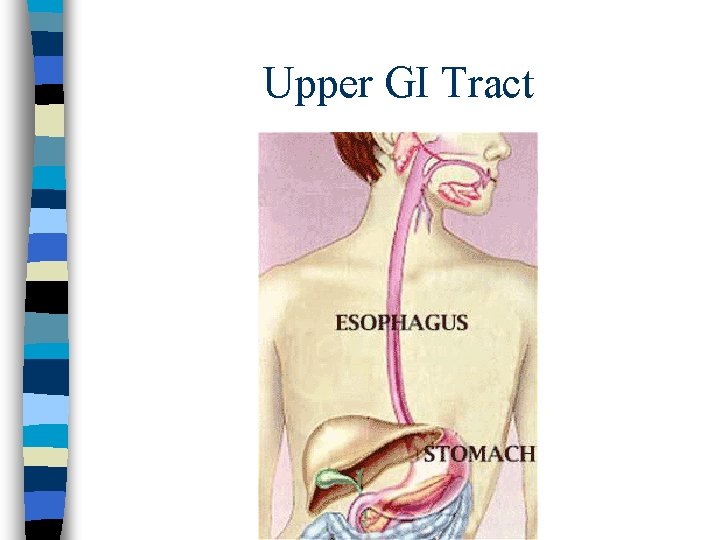
Upper GI Tract
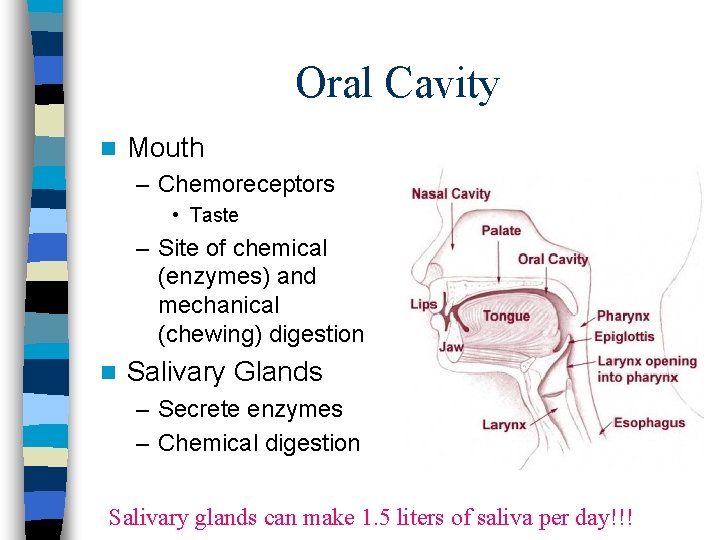
Oral Cavity n Mouth – Chemoreceptors • Taste – Site of chemical (enzymes) and mechanical (chewing) digestion n Salivary Glands – Secrete enzymes – Chemical digestion Salivary glands can make 1. 5 liters of saliva per day!!!
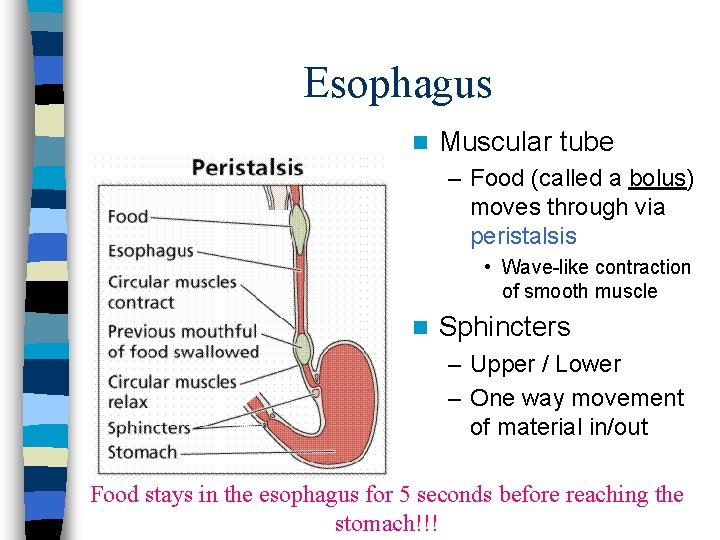
Esophagus n Muscular tube – Food (called a bolus) moves through via peristalsis • Wave-like contraction of smooth muscle n Sphincters – Upper / Lower – One way movement of material in/out Food stays in the esophagus for 5 seconds before reaching the stomach!!!
Swallowing n Tongue moves upward to prevent food back flow n Uvula (flap of tissue) moves upward to block nasal passages n Epiglottis covers trachea
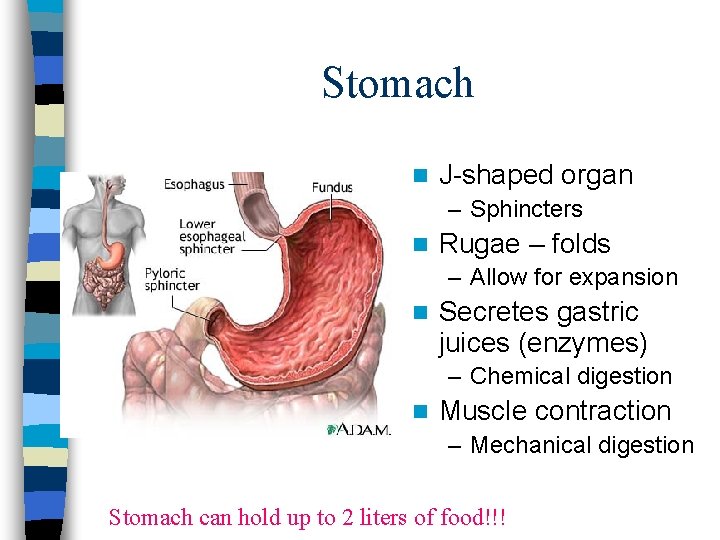
Stomach n J-shaped organ – Sphincters n Rugae – folds – Allow for expansion n Secretes gastric juices (enzymes) – Chemical digestion n Muscle contraction – Mechanical digestion Stomach can hold up to 2 liters of food!!!
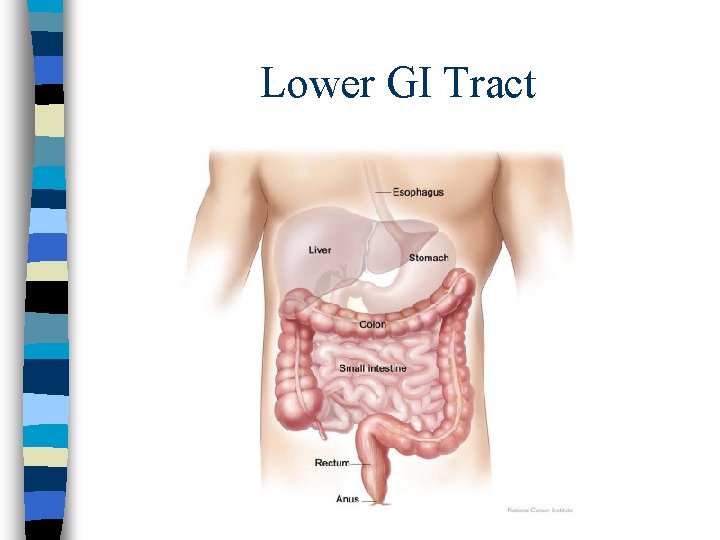
Lower GI Tract
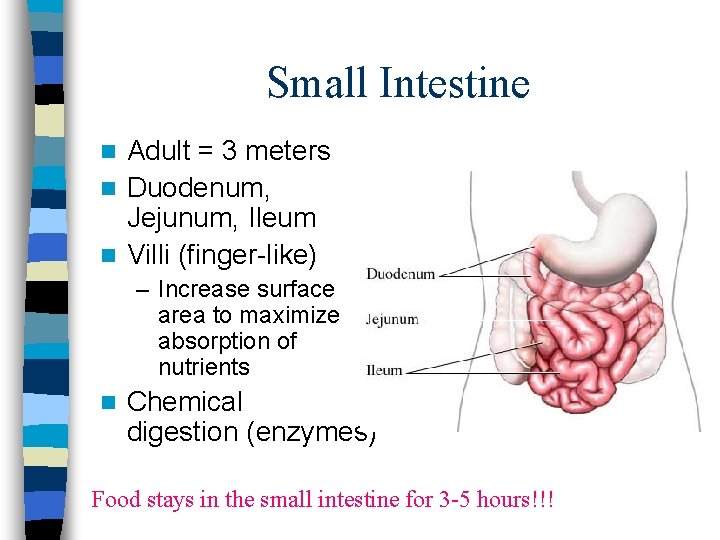
Small Intestine Adult = 3 meters n Duodenum, Jejunum, Ileum n Villi (finger-like) n – Increase surface area to maximize absorption of nutrients n Chemical digestion (enzymes) Food stays in the small intestine for 3 -5 hours!!!
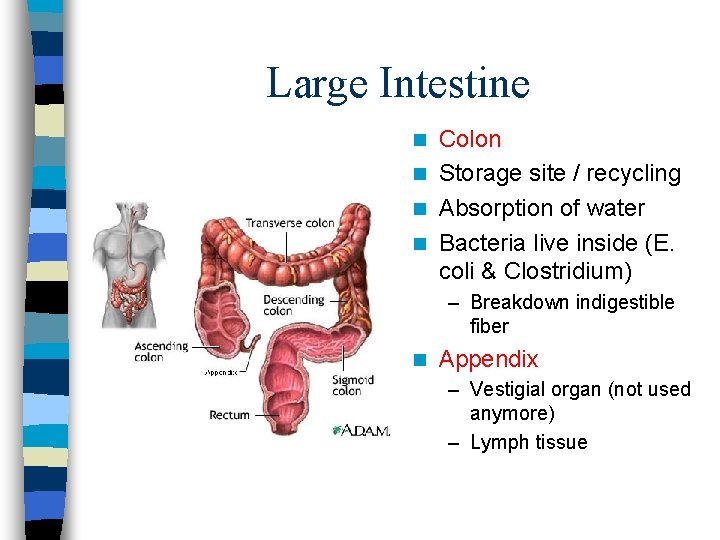
Large Intestine Colon n Storage site / recycling n Absorption of water n Bacteria live inside (E. coli & Clostridium) n – Breakdown indigestible fiber n Appendix – Vestigial organ (not used anymore) – Lymph tissue
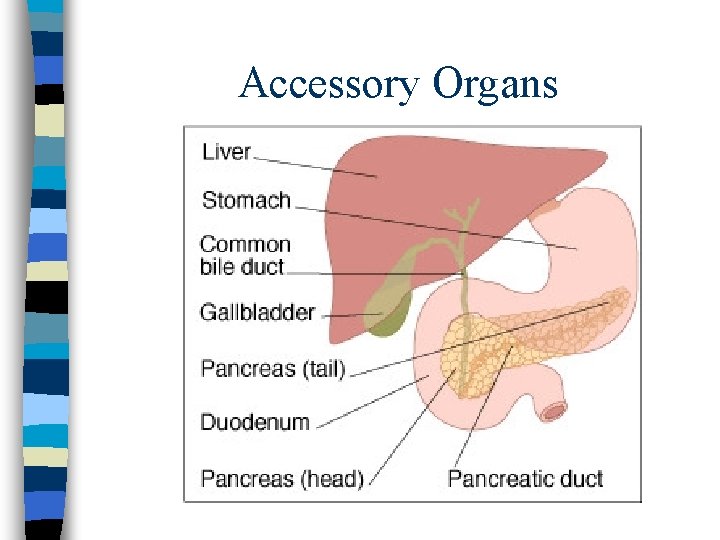
Accessory Organs
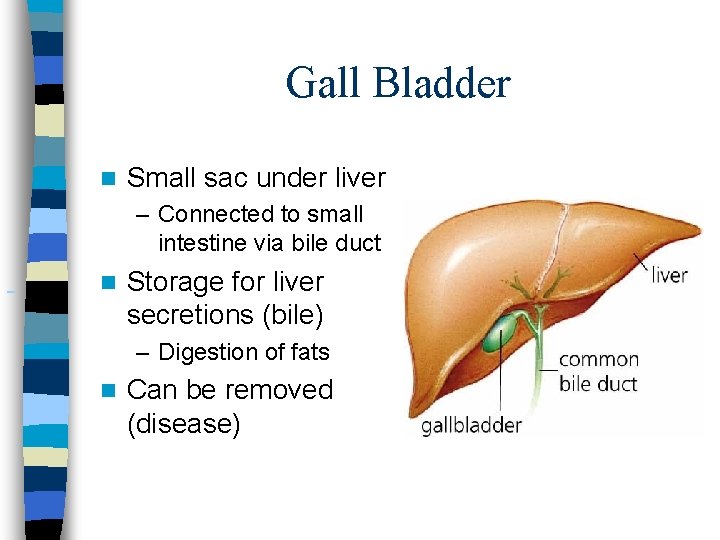
Gall Bladder n Small sac under liver – Connected to small intestine via bile duct n Storage for liver secretions (bile) – Digestion of fats n Can be removed (disease)
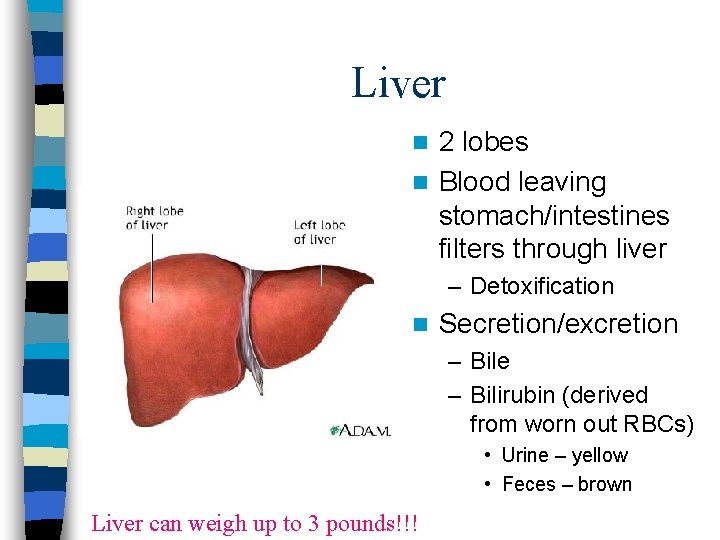
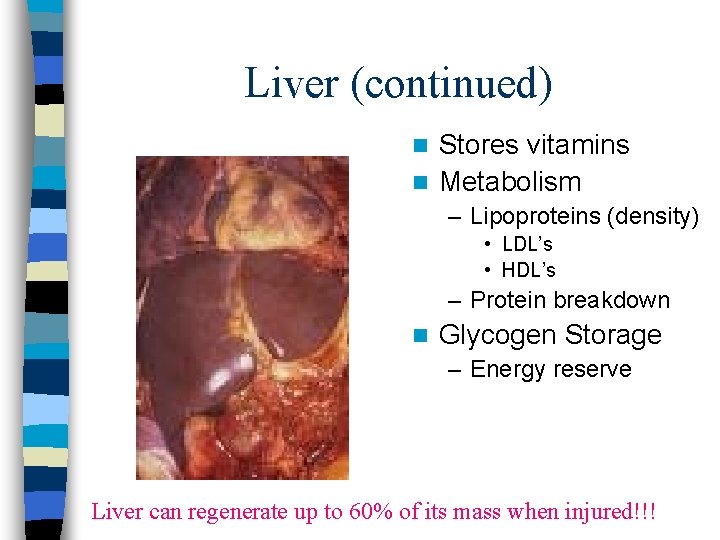
Liver 2 lobes n Blood leaving stomach/intestines filters through liver n – Detoxification n Secretion/excretion – Bile – Bilirubin (derived from worn out RBCs) • Urine – yellow • Feces – brown Liver can weigh up to 3 pounds!!!
Liver (continued) Stores vitamins n Metabolism n – Lipoproteins (density) • LDL’s • HDL’s – Protein breakdown n Glycogen Storage – Energy reserve Liver can regenerate up to 60% of its mass when injured!!!
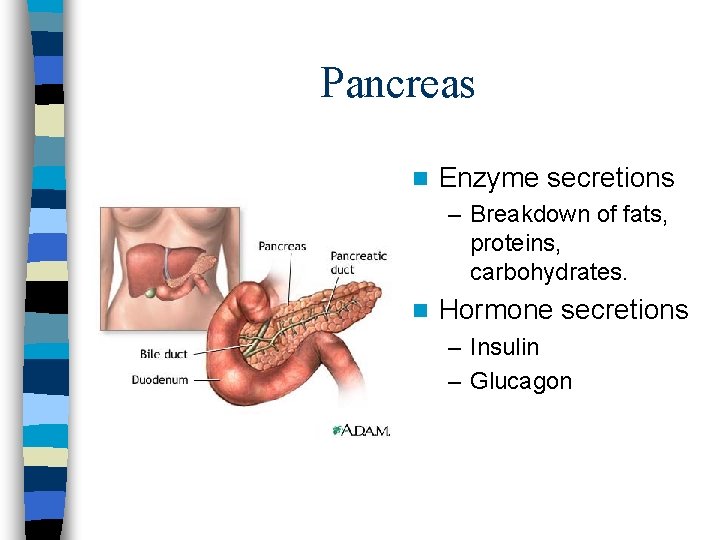
Pancreas n Enzyme secretions – Breakdown of fats, proteins, carbohydrates. n Hormone secretions – Insulin – Glucagon
THE END