
The Digestive System 1 Digestion Processing of food

- Slides: 39
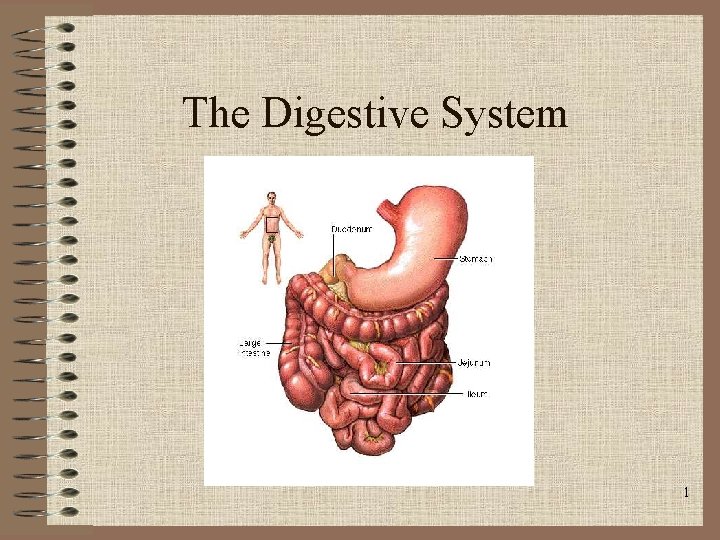
The Digestive System 1
Digestion • Processing of food • Types – Mechanical (physical) • • • Chew Tear Grind Mash Mix 2
Digestion • Processing of food • Types – Chemical • Catabolic reactions… – Catabolism refers to chemical reactions that result in the breakdown of more complex organic molecules into simpler substances. • Enzymatic hydrolysis – Carbohydrate – Protein – Lipid 3
Digestion • Phases – Ingestion – Digestion – Absorption – Elimination 4
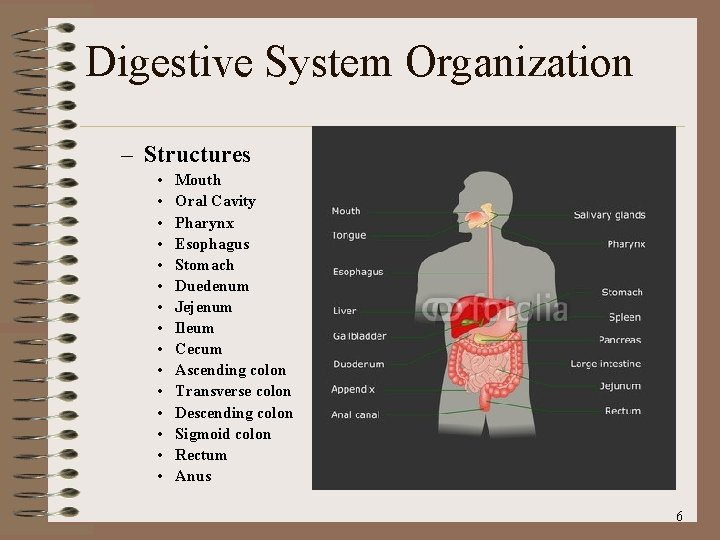
Digestive System Organization • Gastrointestinal (Gl) tract (Alimentary canal) – Tube – Direct link/path between organs- ducts 5
Digestive System Organization – Structures • • • • Mouth Oral Cavity Pharynx Esophagus Stomach Duedenum Jejenum Ileum Cecum Ascending colon Transverse colon Descending colon Sigmoid colon Rectum Anus 6
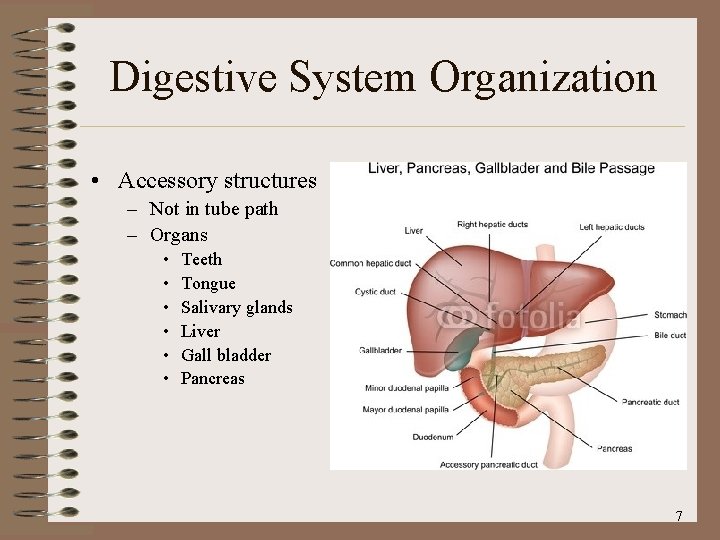
Digestive System Organization • Accessory structures – Not in tube path – Organs • • • Teeth Tongue Salivary glands Liver Gall bladder Pancreas 7
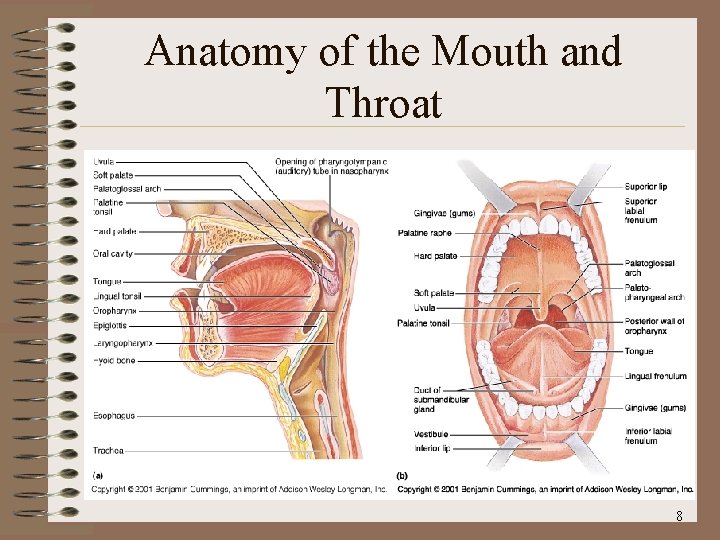
Anatomy of the Mouth and Throat 8
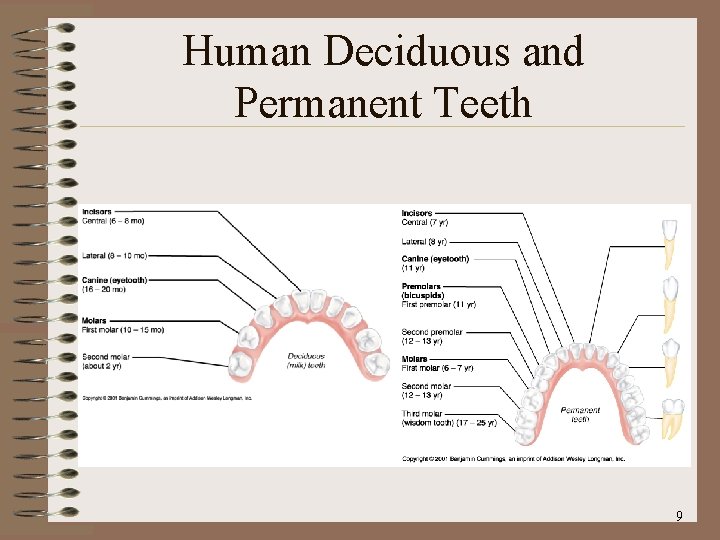
Human Deciduous and Permanent Teeth 9
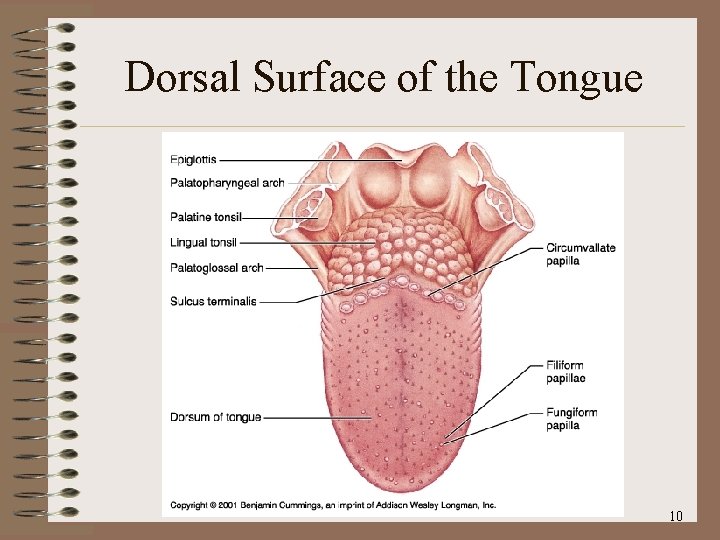
Dorsal Surface of the Tongue 10
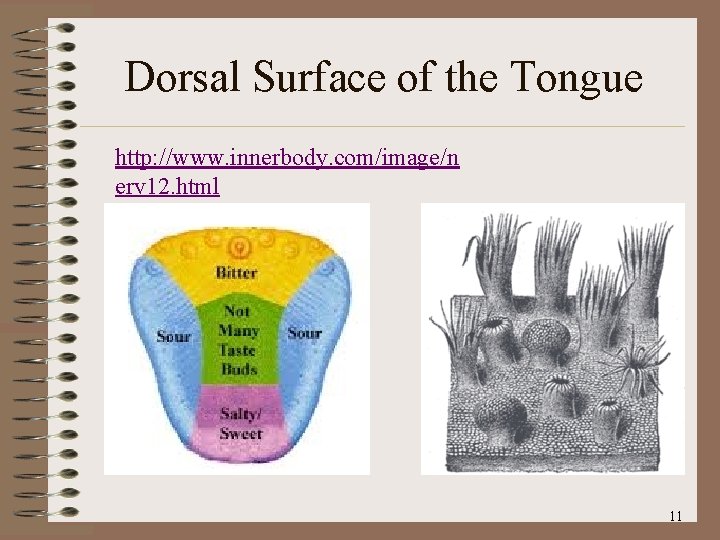
Dorsal Surface of the Tongue http: //www. innerbody. com/image/n erv 12. html 11
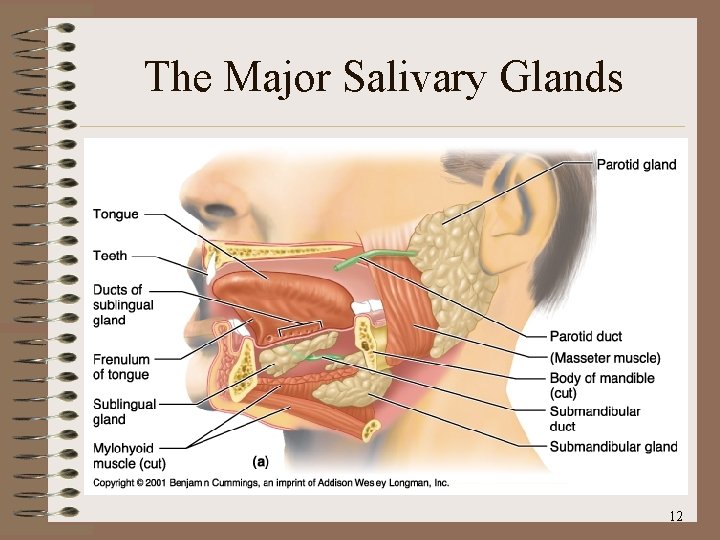
The Major Salivary Glands 12
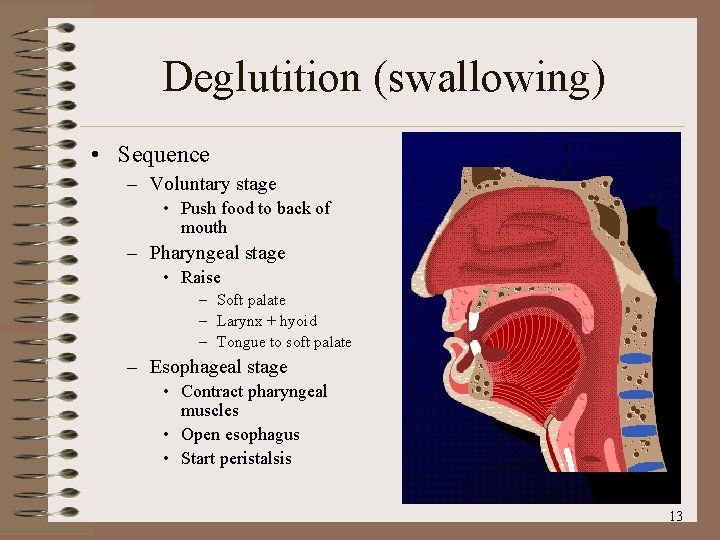
Deglutition (swallowing) • Sequence – Voluntary stage • Push food to back of mouth – Pharyngeal stage • Raise – Soft palate – Larynx + hyoid – Tongue to soft palate – Esophageal stage • Contract pharyngeal muscles • Open esophagus • Start peristalsis 13
Esophagus • Sphincters – Upper – Lower • Abnormalities – – – Achalasia Atresia Hernia Barret’s esophagus Esophageal varices 14
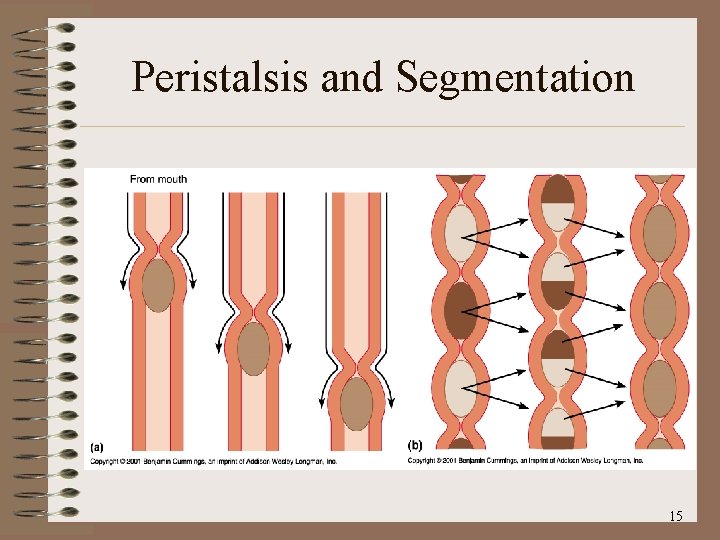
Peristalsis and Segmentation 15
Peristalsis and Segmentation http: //www. google. com/search? q=a nimation+swallowing+food&safe= active&rlz=1 C 1 CAFA_en. US 602 U S 603&es_sm=93&biw=792&bih=5 38&source=lnms&sa=X&ei=e. Bc 1 Va. Dj. Ip. Ksog. TOho. Fo&ved=0 CAU Q_AUo. AA&dpr=1 16
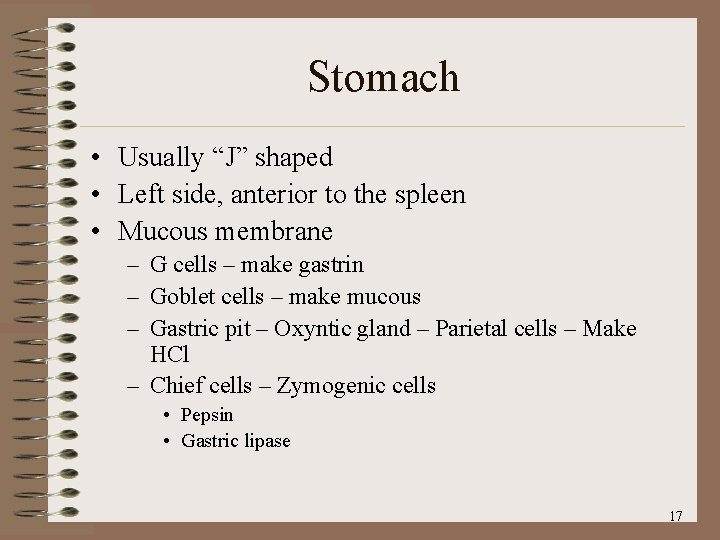
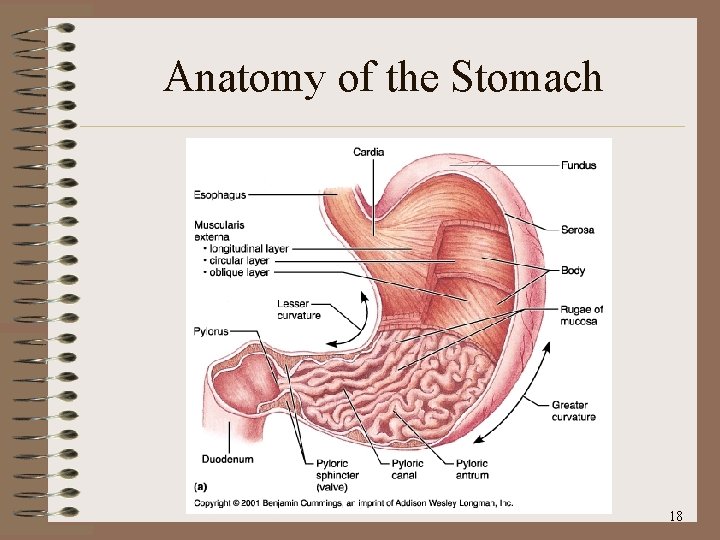
Stomach • Usually “J” shaped • Left side, anterior to the spleen • Mucous membrane – G cells – make gastrin – Goblet cells – make mucous – Gastric pit – Oxyntic gland – Parietal cells – Make HCl – Chief cells – Zymogenic cells • Pepsin • Gastric lipase 17
Anatomy of the Stomach 18
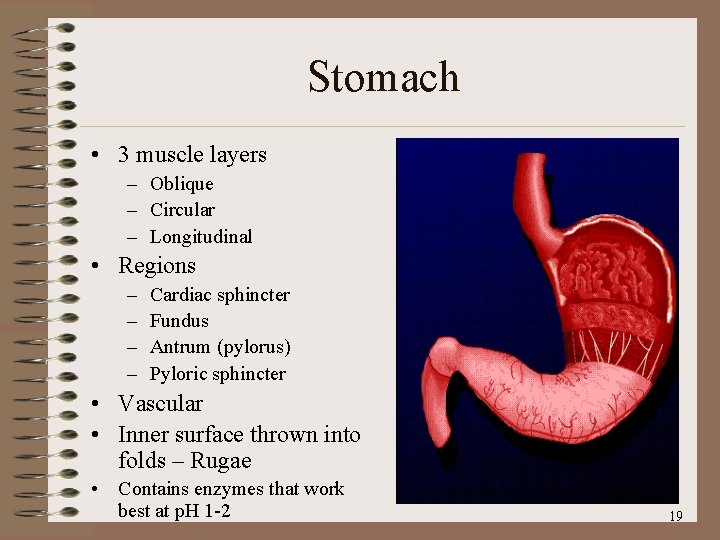
Stomach • 3 muscle layers – Oblique – Circular – Longitudinal • Regions – – Cardiac sphincter Fundus Antrum (pylorus) Pyloric sphincter • Vascular • Inner surface thrown into folds – Rugae • Contains enzymes that work best at p. H 1 -2 19
Stomach • Functions – Mix food – Reservoir – Start digestion of • Protein • Nucleic acids • Fats – Absorbs • • Alcohol Water Lipophilic acid B 12 – Activates some enzymes – Destroy some bacteria – Makes intrinsic factor – B 12 absorption – Destroys some bacteria 20
Stomach https: //www. youtube. co m/watch? v=9 bn. Iu. Ki. Hd DE https: //www. youtube. co m/watch? v=Mc. Xh. HJ 0 r Qug https: //www. youtube. co m/watch? v=5 m. D 4 c. W 71 s. Q 21
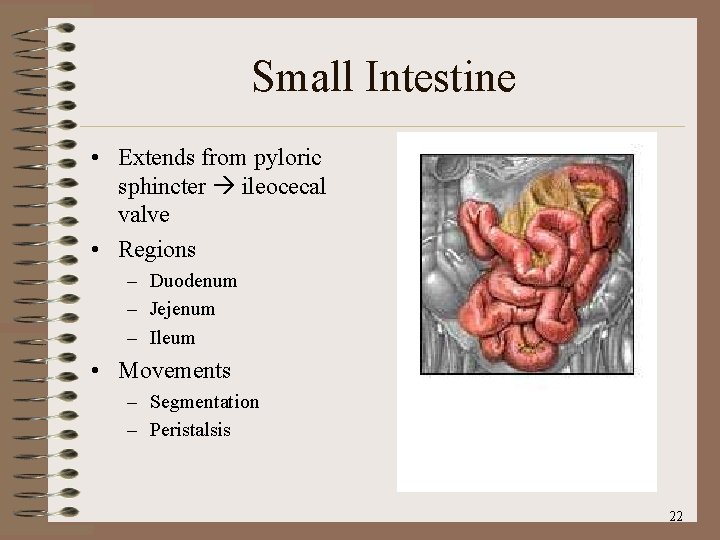
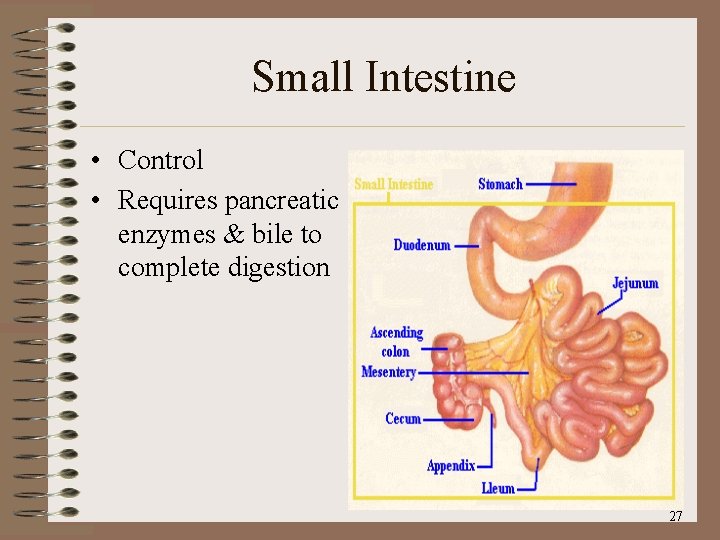
Small Intestine • Extends from pyloric sphincter ileocecal valve • Regions – Duodenum – Jejenum – Ileum • Movements – Segmentation – Peristalsis 22
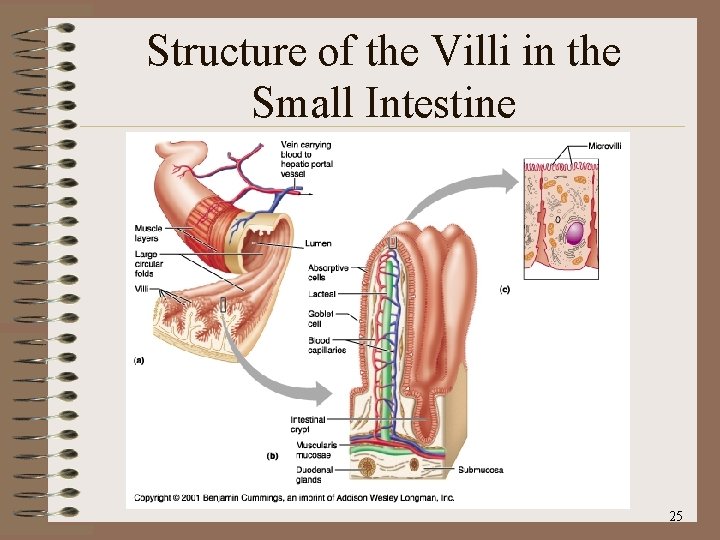
Small Intestine • Histology – – – – – Intestinal glands – Intestinal enzymes Duodenal glands – Alkaline mucous Paneth cells – Lysozyme Microvilli Lacteals Plica circularis Smooth muscle Lymphatic tissue – GALT Vascular 23
Small Intestine • Absorbs – – – 80% ingested water Electrolytes Vitamins Minerals Carbonates – Lipids • • Monoglycerides Fatty acids Micelles Chylomicrons • Active/facilitated transport • Monosaccharides – Proteins • Di-/tripeptides • Amino acids 24
Structure of the Villi in the Small Intestine 25
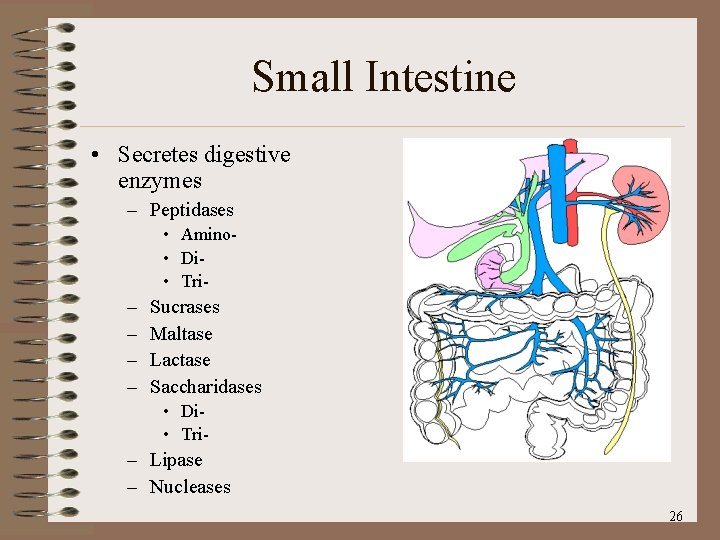
Small Intestine • Secretes digestive enzymes – Peptidases • Amino • Di • Tri- – – Sucrases Maltase Lactase Saccharidases • Di • Tri- – Lipase – Nucleases 26
Small Intestine • Control • Requires pancreatic enzymes & bile to complete digestion 27
Large Intestine • Extends from ileocecal valve to anus • Regions – Cecum – Appendix – Colon • Ascending • Transverse • Descending – Rectum – Anal canal 28
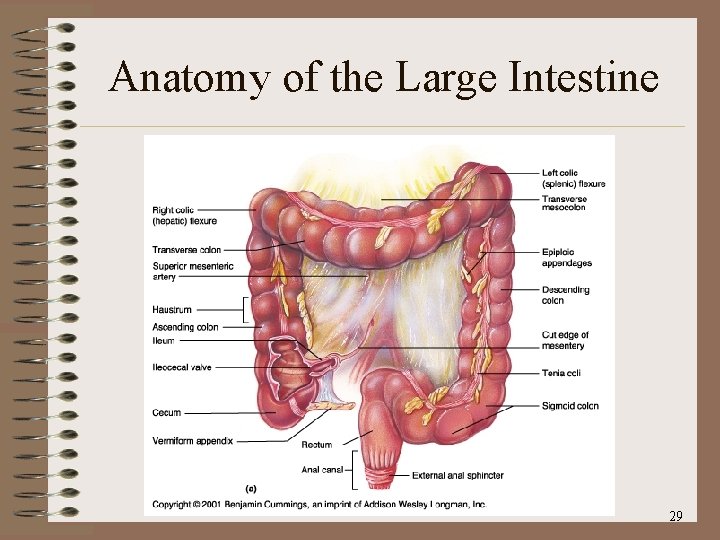
Anatomy of the Large Intestine 29
Large Intestine • Histology – No villi – No permanent circular folds – Smooth muscle • Taeniae coli • Haustra – Epiploic appendages – Otherwise like rest of Gl tract 30
Large Intestine • Functions – Mechanical digestion • Haustral churning • Peristalsis • Reflexes – Gastroileal – Gastrocolic – Chemical digestion – Bacterial digestion – Absorbs • More water • Vitamins –B –K – Concentrate/eliminate wastes • Ferment carbohydrates • Protein/amino acid breakdown 31
Feces Formation and Defecation • Chyme dehydrated to form feces • Feces composition – – – Water Inorganic salts Epithelial cells Bacteria Byproducts of digestion • Control – Parasympathetic – Voluntary • Defecation – Peristalsis pushes feces into rectum – Rectal walls stretch 32
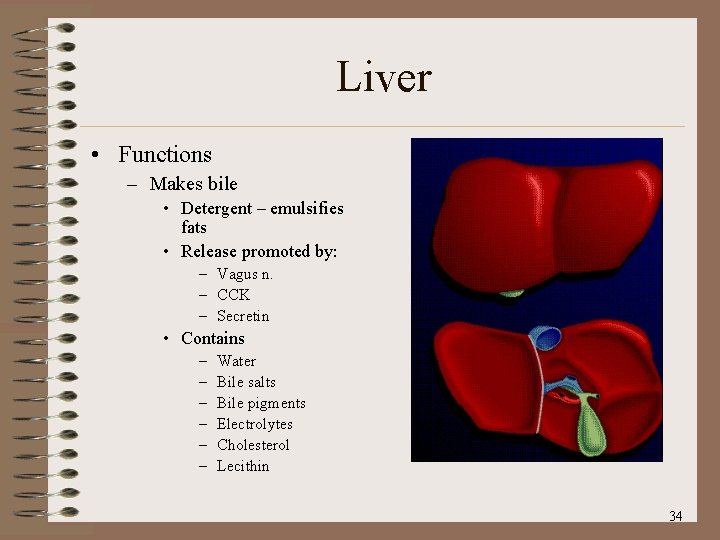
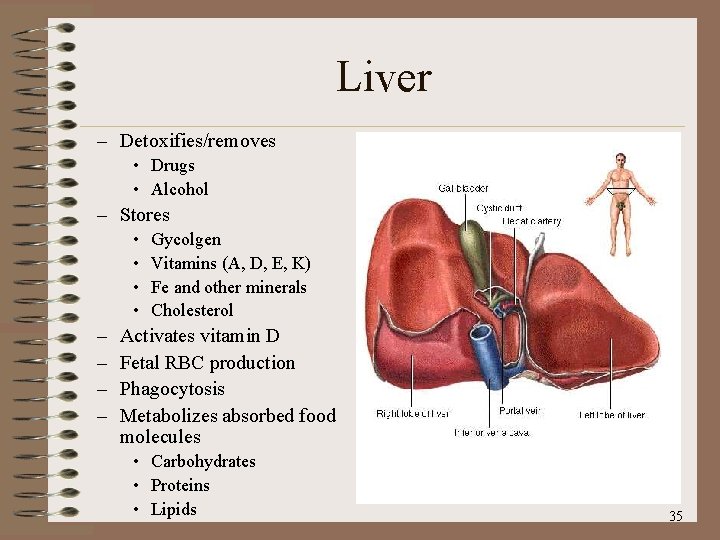
Liver • Location – R. Hypochondrium – Epigastric region • 4 Lobes – – Left Quadrate Caudate Right • Each lobe has lobules – Contains hepatocytes – Surround sinusoids – Feed into central vein 33
Liver • Functions – Makes bile • Detergent – emulsifies fats • Release promoted by: – Vagus n. – CCK – Secretin • Contains – – – Water Bile salts Bile pigments Electrolytes Cholesterol Lecithin 34
Liver – Detoxifies/removes • Drugs • Alcohol – Stores • • – – Gycolgen Vitamins (A, D, E, K) Fe and other minerals Cholesterol Activates vitamin D Fetal RBC production Phagocytosis Metabolizes absorbed food molecules • Carbohydrates • Proteins • Lipids 35
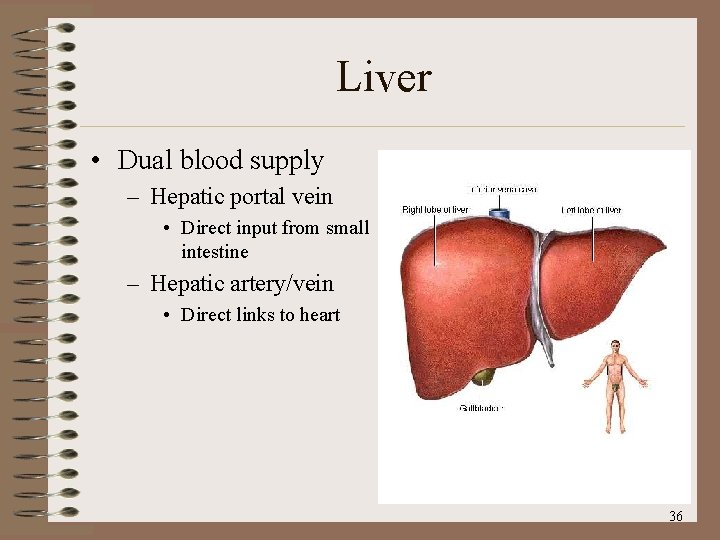
Liver • Dual blood supply – Hepatic portal vein • Direct input from small intestine – Hepatic artery/vein • Direct links to heart 36
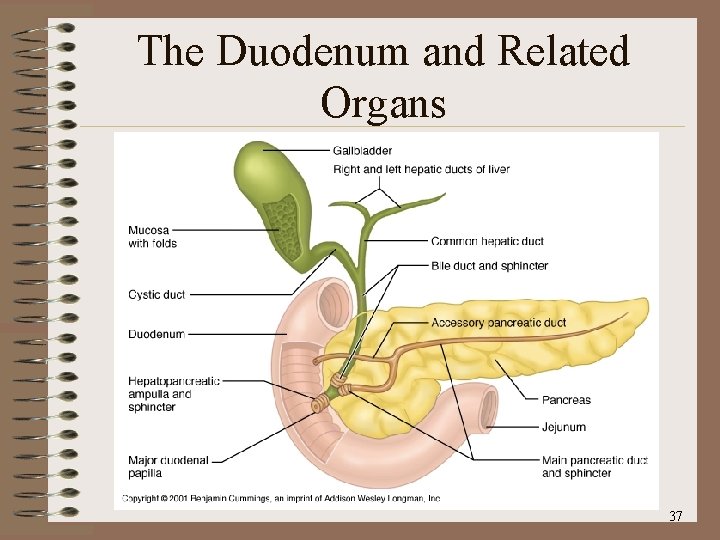
The Duodenum and Related Organs 37
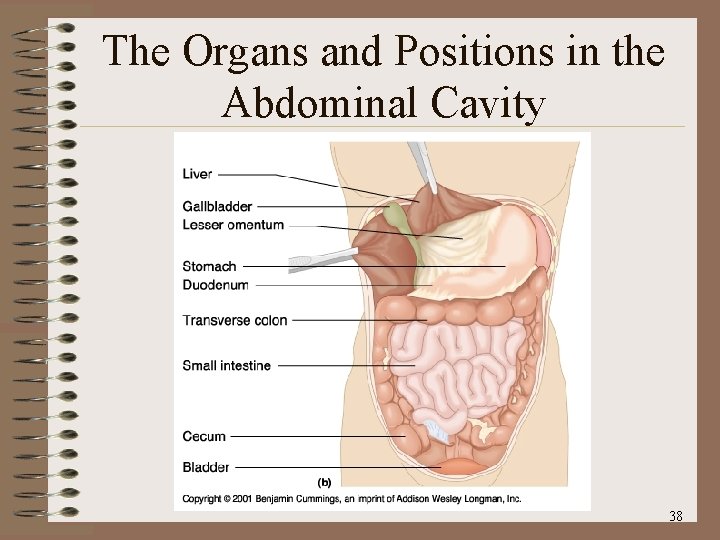
The Organs and Positions in the Abdominal Cavity 38
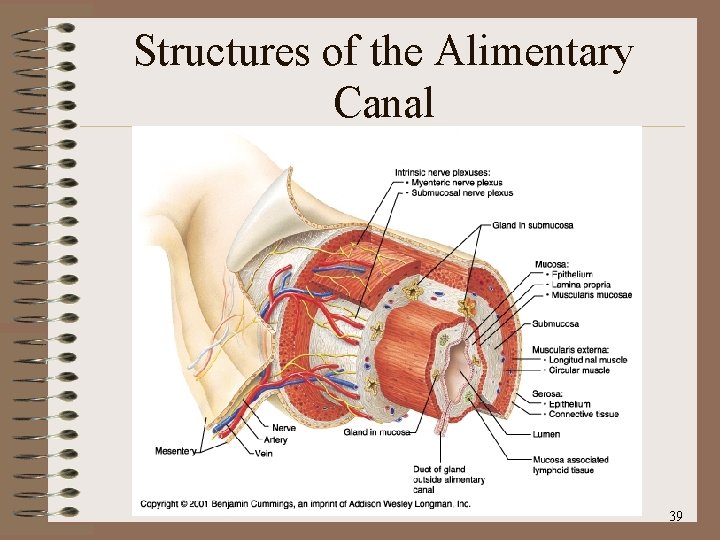
Structures of the Alimentary Canal 39