
The Development of the IBM Blood Cell Separator
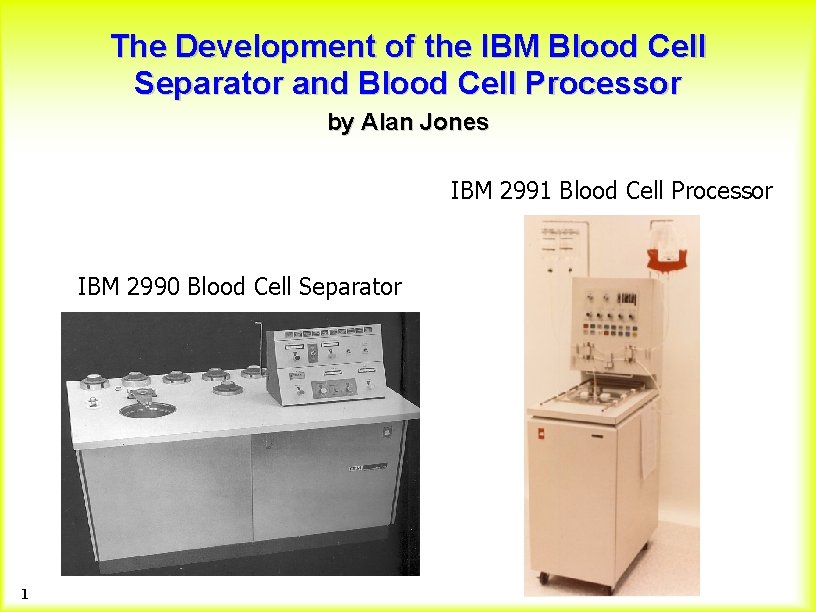
The Development of the IBM Blood Cell Separator and Blood Cell Processor by Alan Jones IBM 2991 Blood Cell Processor IBM 2990 Blood Cell Separator 1
Note: This presentation will run unattended. But, at any time, you can move forward and backwards using the mouse or the Page Up and Page Down keys. 2
The IBM blood cell project began when engineer George Judson's son, Tom, was diagnosed with leukemia in 1962. 3
The IBM blood cell project began when engineer George Judson's son, Tom, was diagnosed with leukemia in 1962. Tom was admitted as a patient at the National Institutes of Health. At the National Cancer Institute, which is one of the institutes of NIH, George saw a process for removing white cells from a patient. 4
The IBM blood cell project began when engineer George Judson's son, Tom, was diagnosed with leukemia in 1962. Tom was admitted as a patient at the National Institutes of Health. At the National Cancer Institute, which is one of the institutes of NIH, George saw a process for removing white cells from a patient. It was very laborious for the patient and the staff. He suggested that this could be done on a continuous flow basis. 5
The IBM blood cell project began when engineer George Judson's son, Tom, was diagnosed with leukemia in 1962. Tom was admitted as a patient at the National Institutes of Health. At the National Cancer Institute, which is one of the institutes of NIH, George saw a process for removing white cells from a patient. It was very laborious for the patient and the staff. He suggested that this could be done on a continuous flow basis. The doctor sent him upstairs to Dr. Emil J. Friedrich who thought this was a great idea. 6
The IBM blood cell project began when engineer George Judson's son, Tom, was diagnosed with leukemia in 1962. Tom was admitted as a patient at the National Institutes of Health. At the National Cancer Institute, which is one of the institutes of NIH, George saw a process for removing white cells from a patient. It was very laborious for the patient and the staff. He suggested that this could be done on a continuous flow basis. The doctor sent him upstairs to Dr. Emil J. Friedrich who thought this was a great idea. George returned to IBM and received permission to work on it. Lab Director Jim Troy also said he would provide engineering support. 7
Technical challenges facing George Judson A system for removing blood and returning to the patient. A centrifuge design to separate the components A rotating seal to allow the blood and components to enter and leave the bowl without damage. 8
And the REALLY big challenge: How to get a parking permit! The problem was that he did not have a title. The people at the National Institutes of Health created a new title “Guest Scientist. ” With this title, he was able to get a parking permit. 9
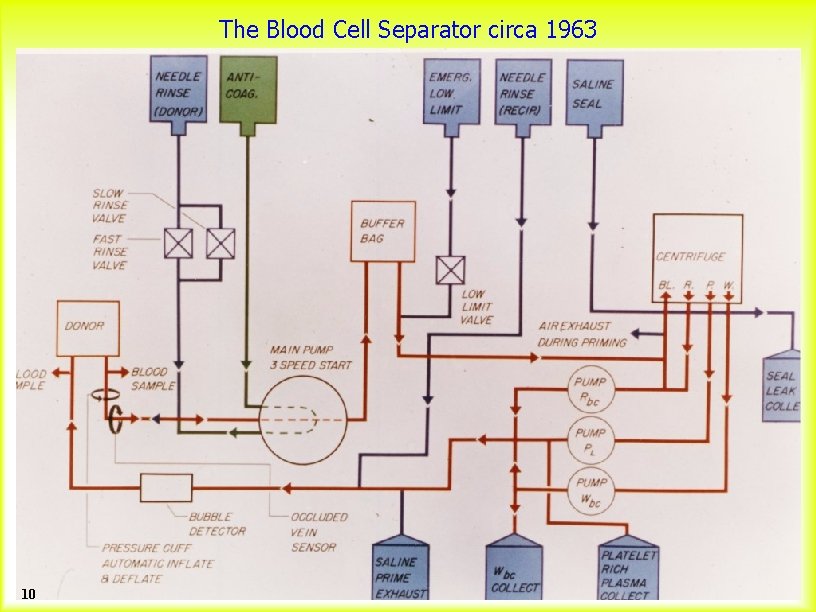
The Blood Cell Separator circa 1963 10
How George worked He would spend two weeks at a time at NIH in Bethesda. On his return, he would meet Harry Crampton in the parking lot and give him drawings. Harry would give him parts from the previous visit. George would return to DC and assemble his experimental equipment. 11
Some basic facts about blood Almost half of your blood is made up of red blood cells. They carry oxygen. Most of the rest is a clear, yellowish liquid: plasma. About 1% is white blood cells and platelets. White cells help you fight infection and reject foreign material. Platelets aid in clotting. 12
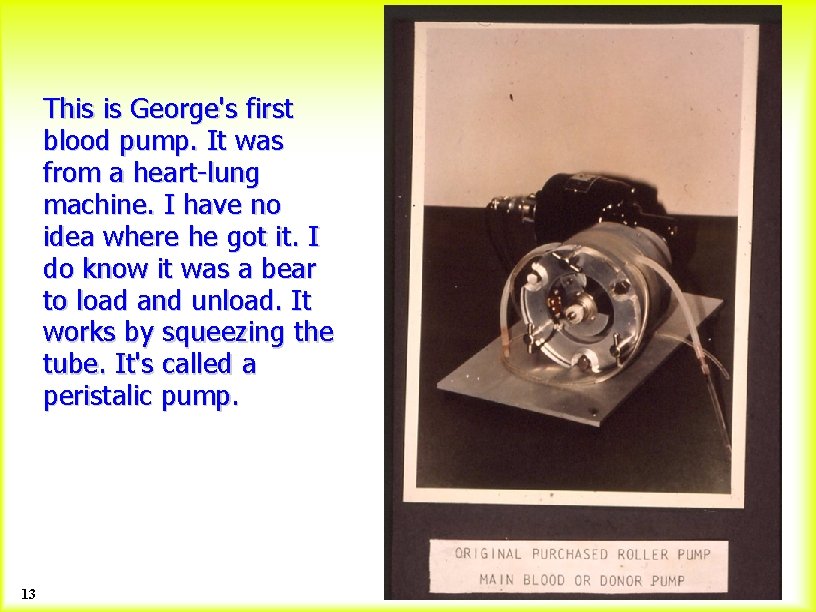
This is George's first blood pump. It was from a heart-lung machine. I have no idea where he got it. I do know it was a bear to load and unload. It works by squeezing the tube. It's called a peristalic pump. 13
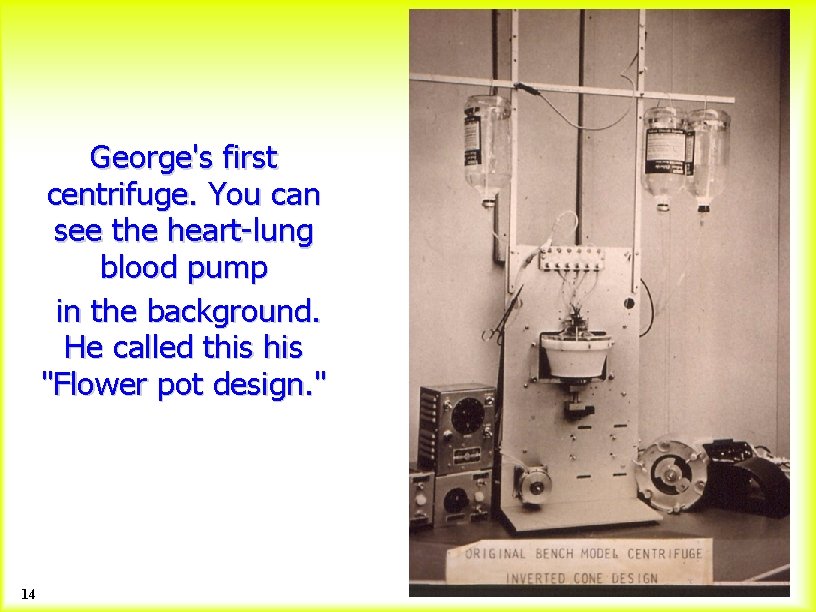
George's first centrifuge. You can see the heart-lung blood pump in the background. He called this "Flower pot design. " 14
After a year and a half of work: The results were so promising that the National Cancer Institute gave IBM a contract for development of a blood cell separator. The NCI contract started in January 1964. His machine had been run on patients 55 times. 15
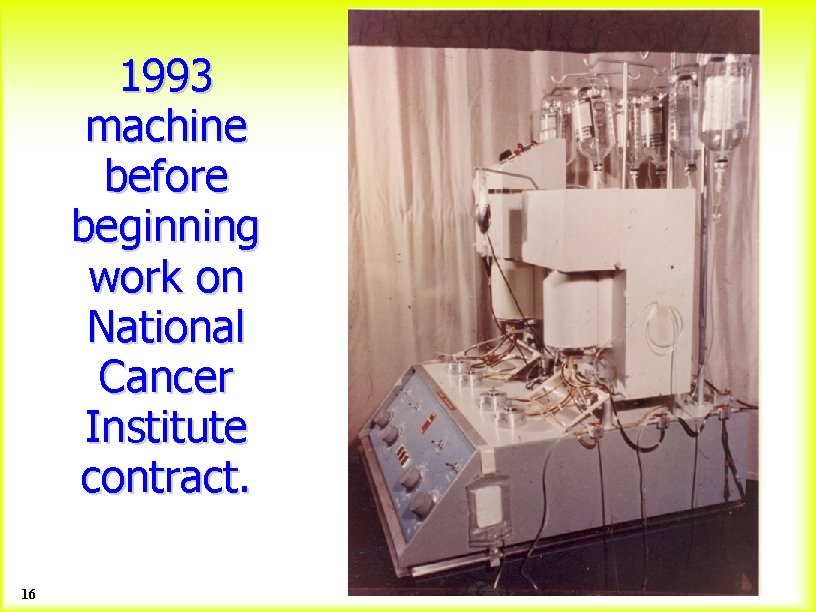
1993 machine before beginning work on National Cancer Institute contract. 16
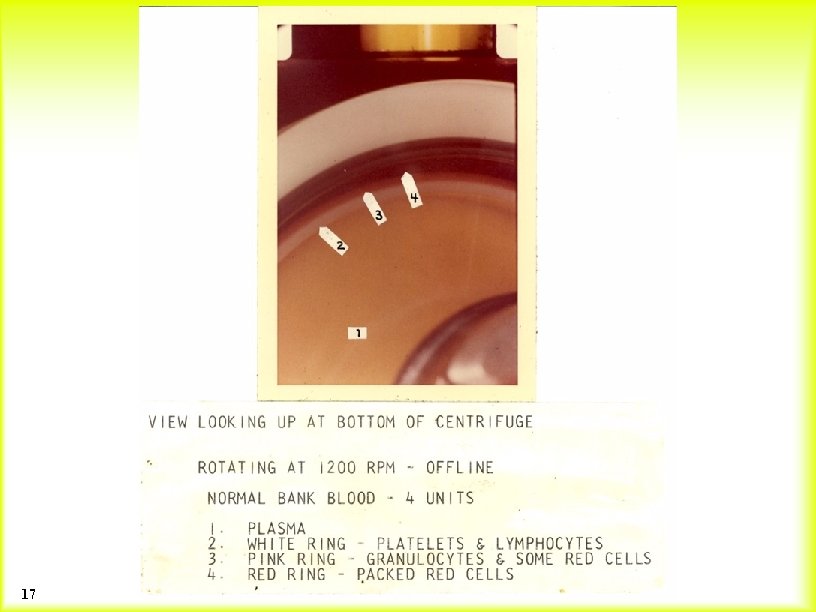
17
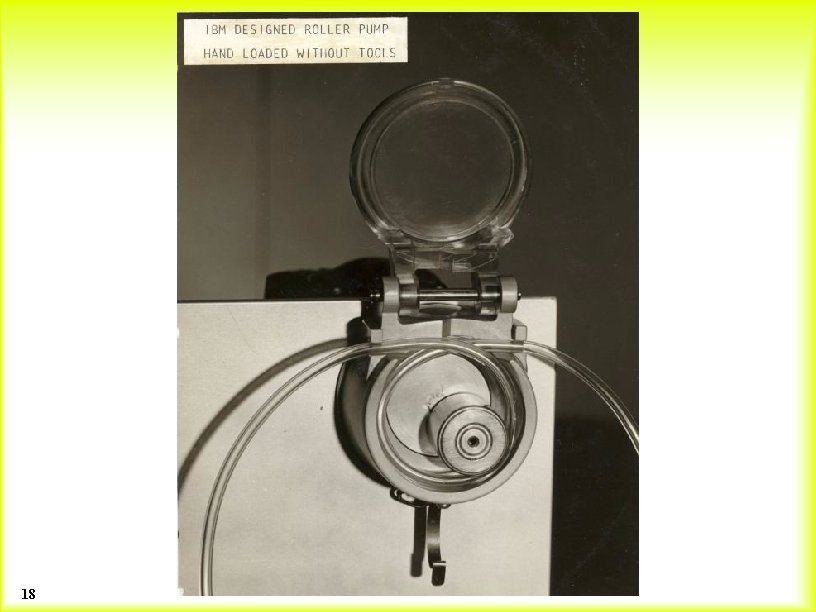
18
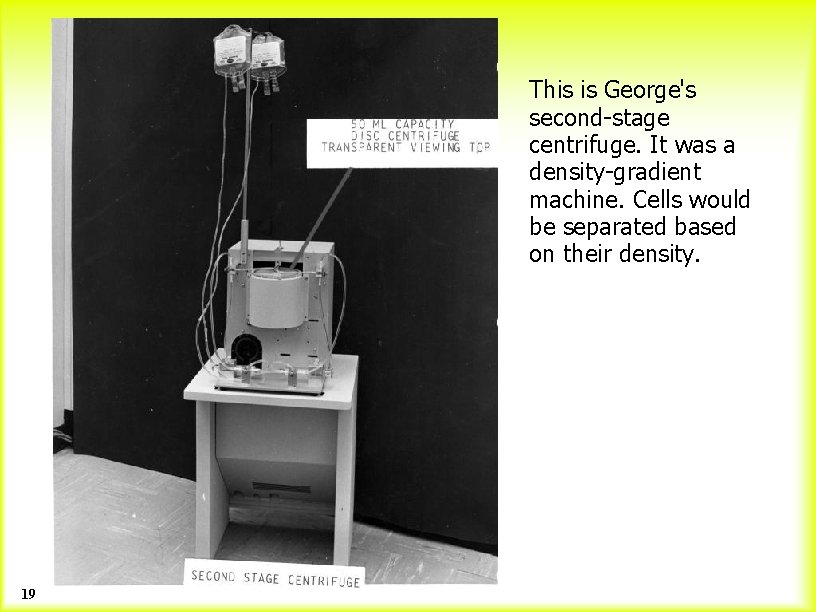
This is George's second-stage centrifuge. It was a density-gradient machine. Cells would be separated based on their density. 19
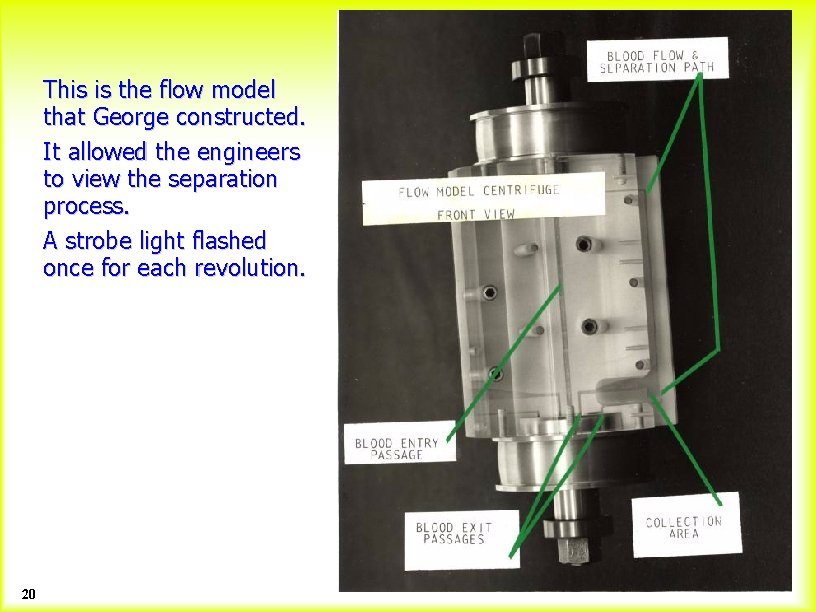
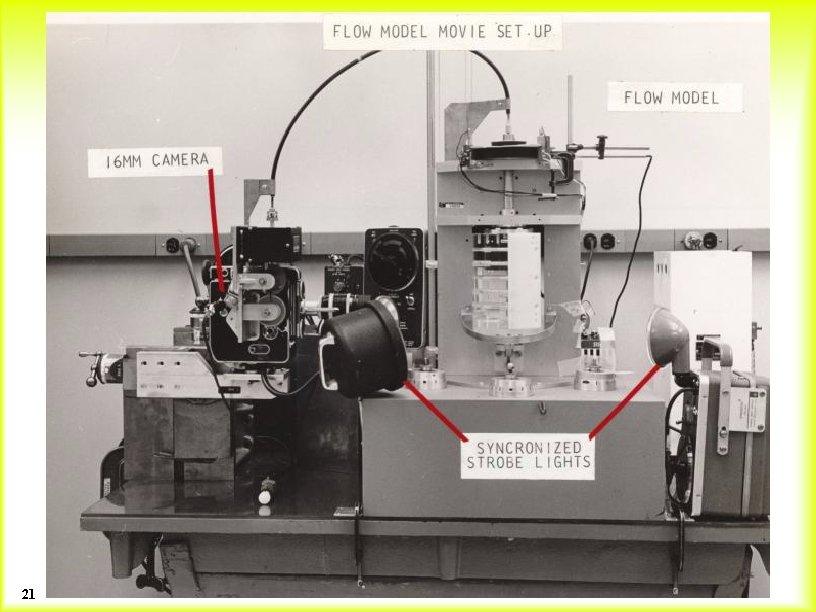
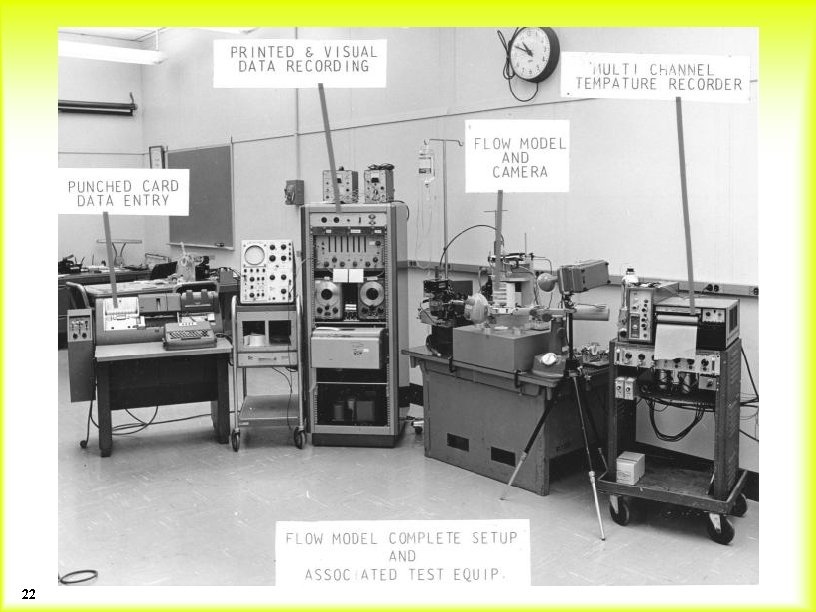
This is the flow model that George constructed. It allowed the engineers to view the separation process. A strobe light flashed once for each revolution. 20
21
22
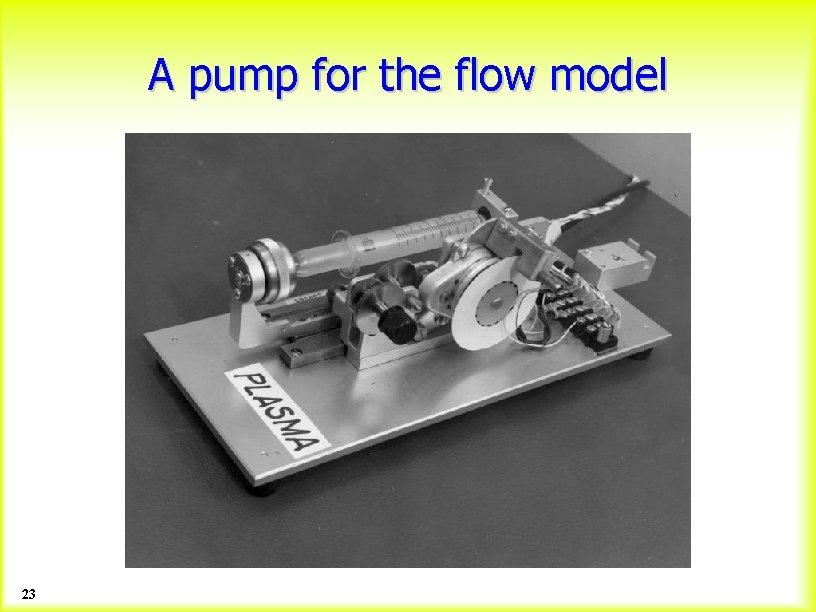
A pump for the flow model 23
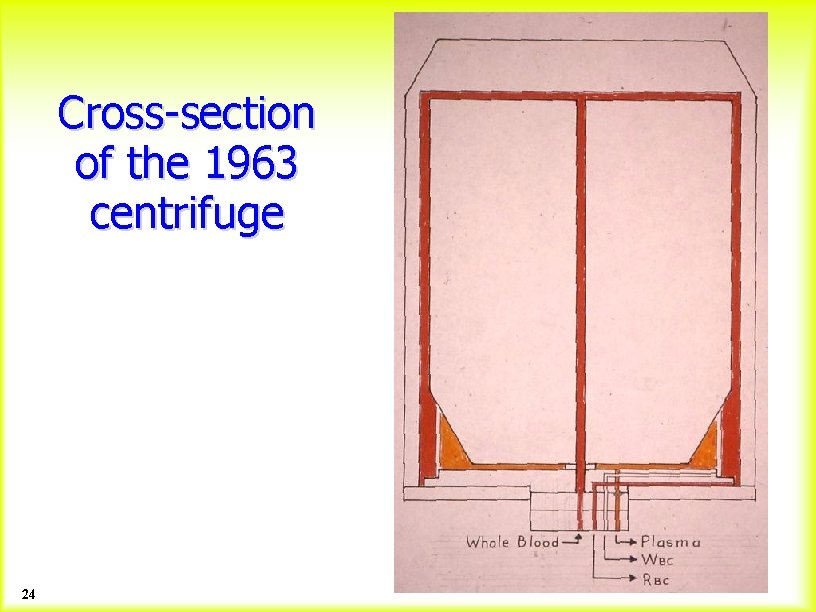
Cross-section of the 1963 centrifuge 24
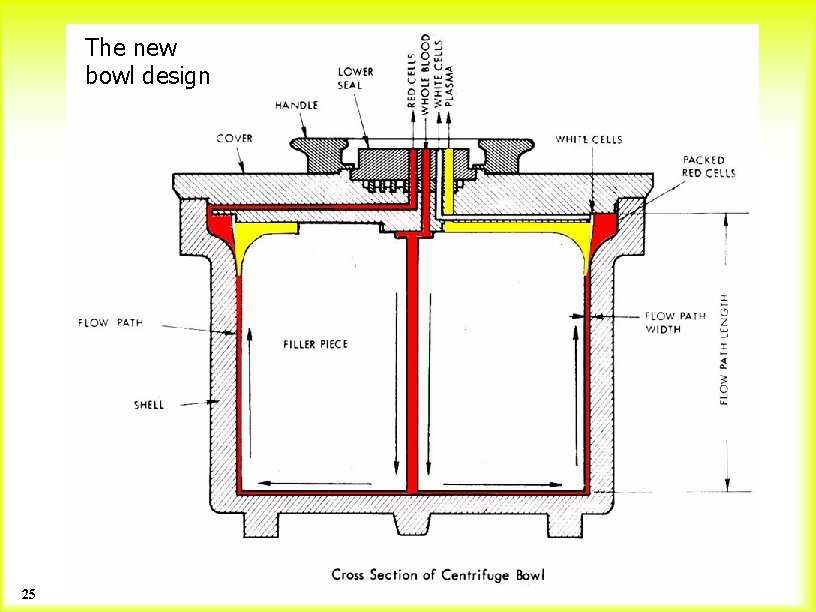
The new bowl design 25
Announcement of the National Cancer Institute Blood Cell Separator October 19, 1965 Met Dr. James Pert, Director of Research at the American Red Cross. He asked us if the machine could be used for deglyceroling red blood cells. We had never heard of this application. George assigned me the task of evaluating this. This led to the IBM 2991 Blood Cell Processor. More on this later. 26
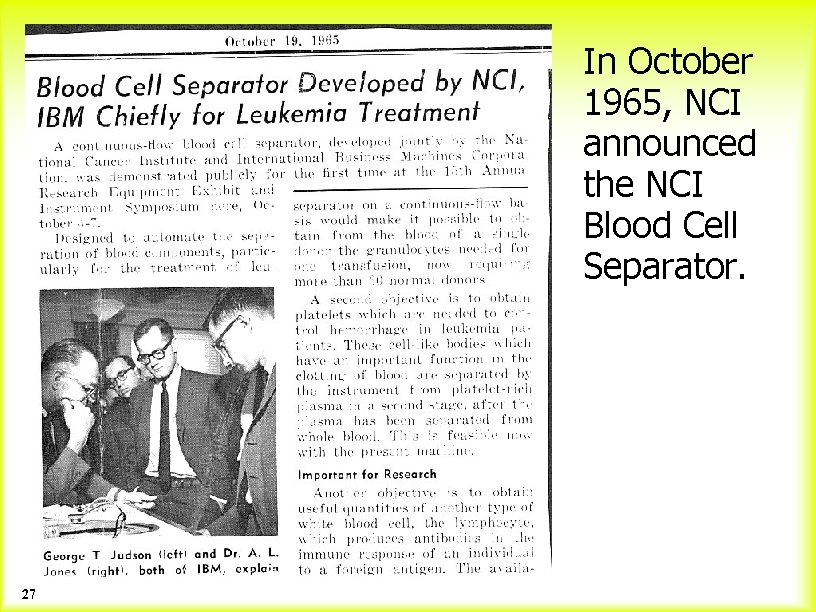
In October 1965, NCI announced the NCI Blood Cell Separator. 27
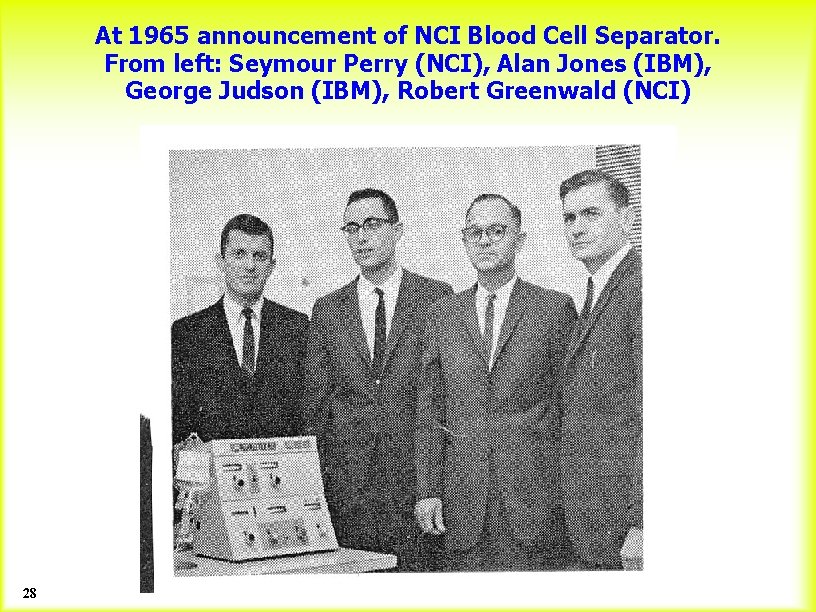
At 1965 announcement of NCI Blood Cell Separator. From left: Seymour Perry (NCI), Alan Jones (IBM), George Judson (IBM), Robert Greenwald (NCI) 28
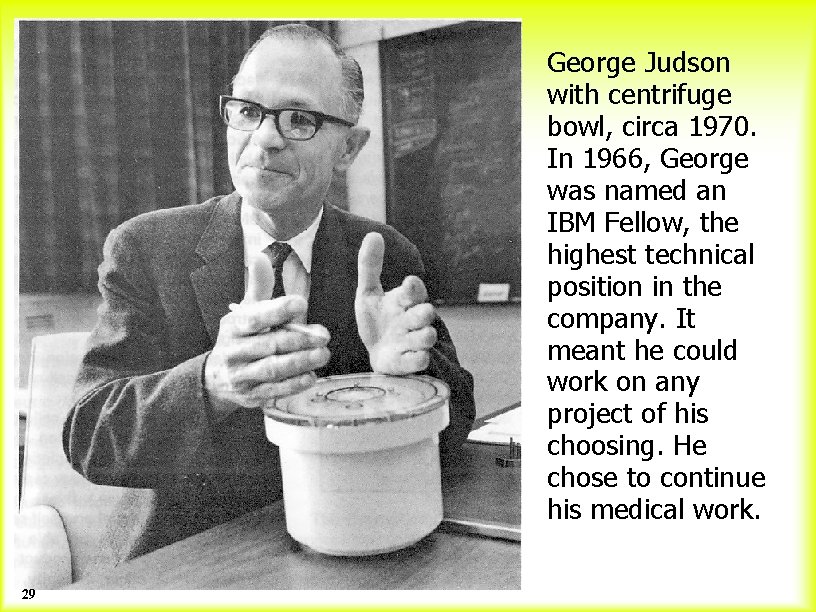
George Judson with centrifuge bowl, circa 1970. In 1966, George was named an IBM Fellow, the highest technical position in the company. It meant he could work on any project of his choosing. He chose to continue his medical work. 29
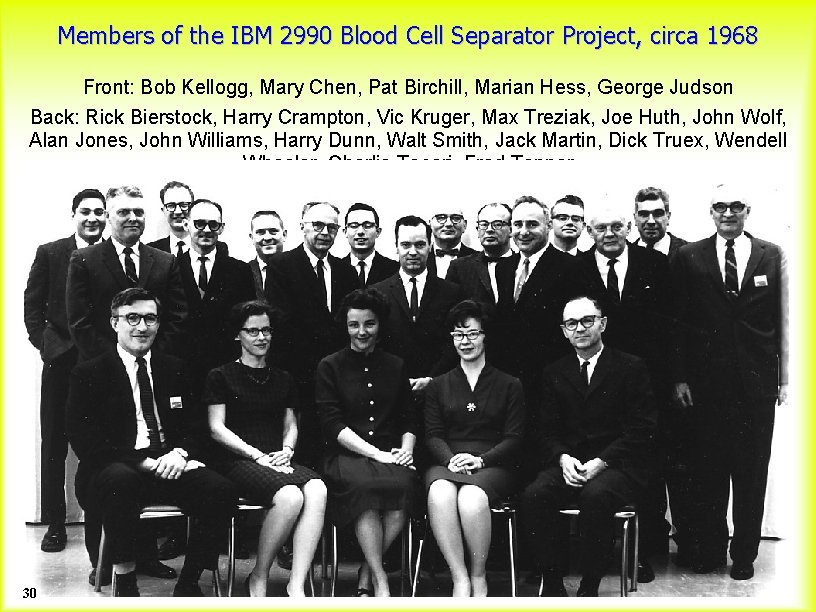
Members of the IBM 2990 Blood Cell Separator Project, circa 1968 Front: Bob Kellogg, Mary Chen, Pat Birchill, Marian Hess, George Judson Back: Rick Bierstock, Harry Crampton, Vic Kruger, Max Treziak, Joe Huth, John Wolf, Alan Jones, John Williams, Harry Dunn, Walt Smith, Jack Martin, Dick Truex, Wendell Wheeler, Charlie Tesori, Fred Tapner 30
The rotating seal remained a problem. Blood products would coat the lands which increased friction. Bob Kellogg returned from an IBM Resident Study program at Johns Hopkins with a Ph. D. in fluid flow. He designed a new seal which had a ceramic lower seal running against an upper stainless steel member. Saline, under pressure, lubricated the lands. 31
The IBM 2990 Blood Cell Separator A doctor in New York City asked IBM to build him a Blood Cell Separator. IBM replied that the doctor could obtain the plans since they were in the public domain and build one 90 himself. He was very unhappy and contacted Tom Watson told IBM Endicott to build the doctor a machine. An interesting note: The first two digits of the type number, '29' are the IBM Endicott RPQ number. RPQ means Request Price Quotation. In other words, a special product. 32
The IBM Blood Cell Separator "assembly line" IBM decided if one person wanted a Blood Cell Separator, maybe several did. A mini-market survey was done. It was determined that about 15 could be sold. Lee Bodie set up a production line to make machines. Eventually IBM made and sold about 60 of the IBM 2990 Blood Cell Separators. 33
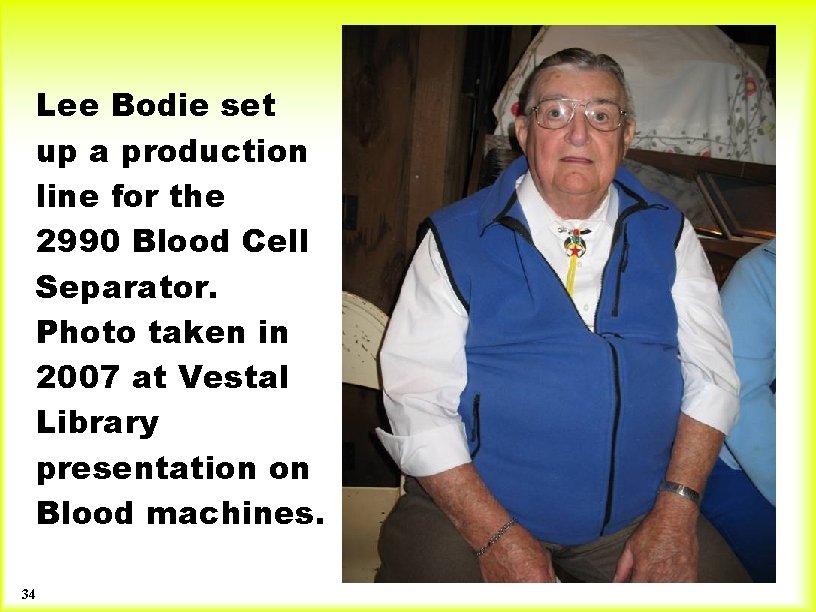
Lee Bodie set up a production line for the 2990 Blood Cell Separator. Photo taken in 2007 at Vestal Library presentation on Blood machines. 34
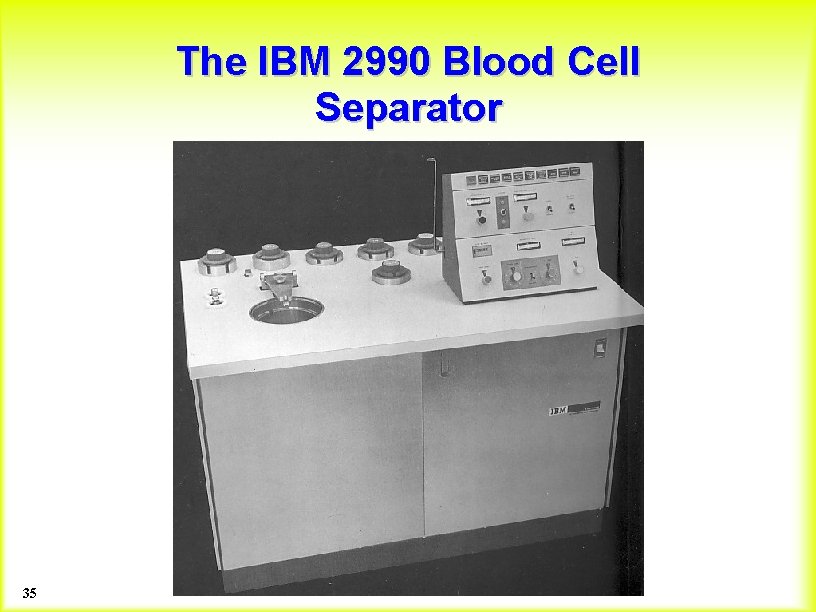
The IBM 2990 Blood Cell Separator 35
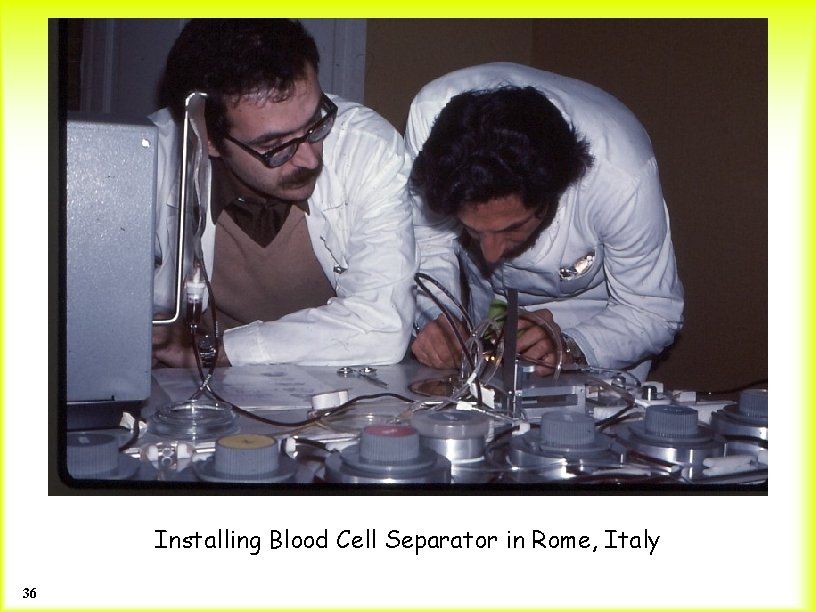
Installing Blood Cell Separator in Rome, Italy 36
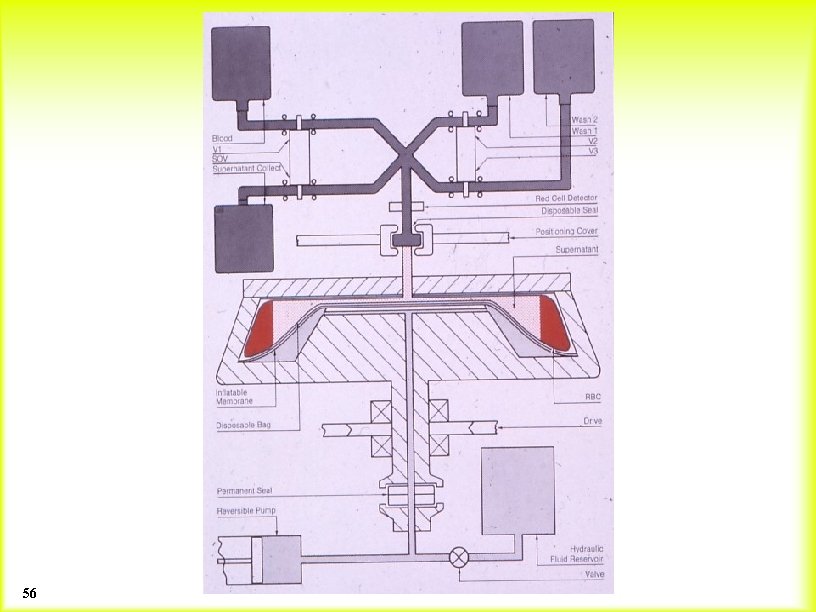
Development of the IBM 2991 Blood Cell Processor Exploratory work began in 1965 after Dr. Pert of the Red Cross asked if we could develop a machine to deglycerolize frozen/thawed red blood cells. After a lot of experimentation, we came up with the scheme shown on the next pages. 37
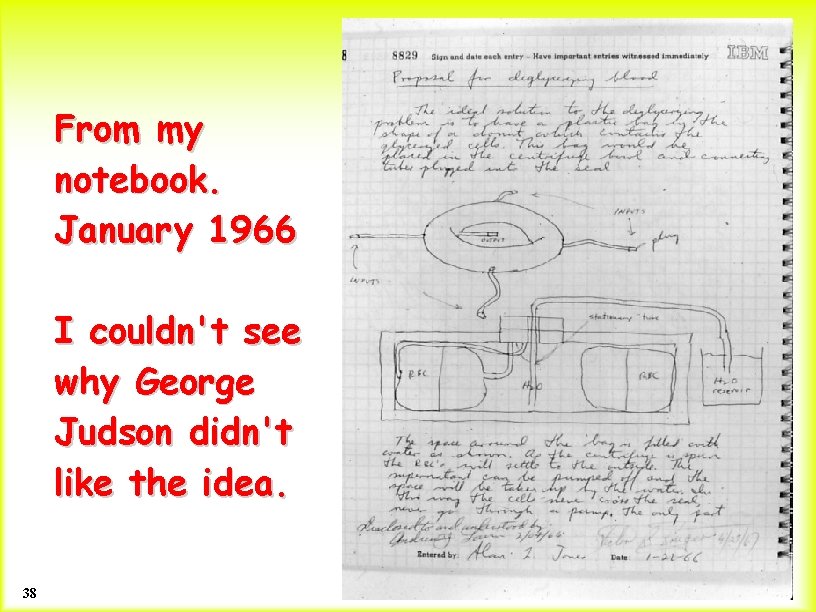
From my notebook. January 1966 I couldn't see why George Judson didn't like the idea. 38
It really was a lousy idea It didn't take long to realize we couldn't have the blood bag in a bucket of water. A flexible membrane would be used. But how could we simulate this? The rotating seal we had available didn't have enough ports. Someone suggested to use the same port for input and output and agitate in-between. The key ingredient was in place! 39
In 1969, George worked at the Dutch Red Cross for several months He wanted to see if the separator could be used in a blood bank environment. I reminded him of my idea. I brought him up-to-date about the fact that the blood bag would not be down in a bucket of water but would be laid on top of a rubber membrane. He asked me to make up parts and send to him. 40
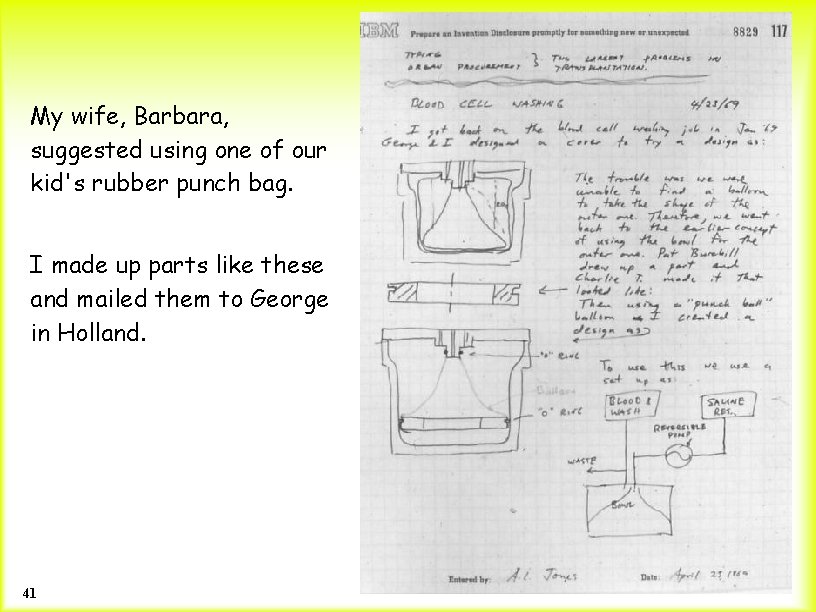
My wife, Barbara, suggested using one of our kid's rubber punch bag. I made up parts like these and mailed them to George in Holland. 41
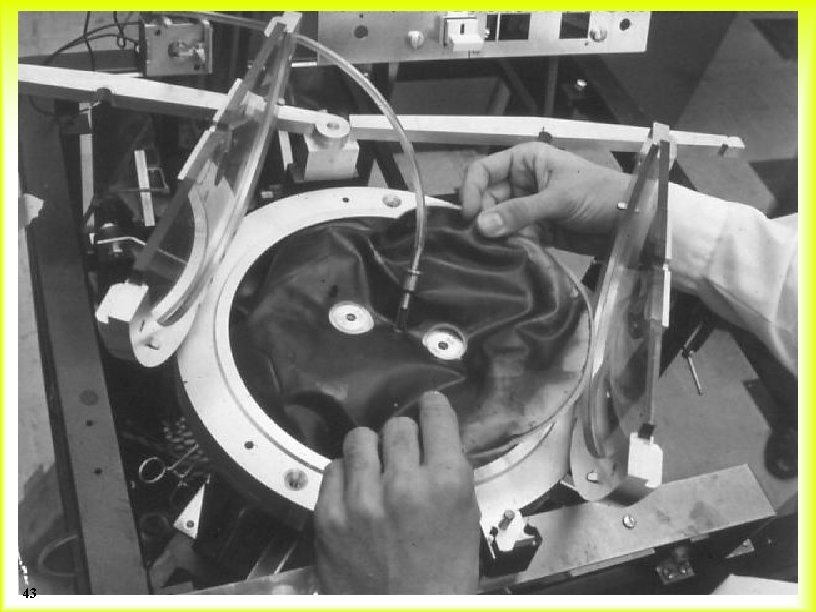
Development begins! 42 When George returned, he said the Dutch were excited about the idea. He then embarked on something new: An IBM Fellow planning on developing a product. We built a bench model.
43
We learned as we went along The split cover would open slightly allowing the bag to extrude under the hydrostatic g-forces. We found that our hydraulic fluid, oil, was lighter than blood and would move to the center thus pinching off the bag. The membrane we used at first was permeable to oil. In the morning it was covered with oil. 44
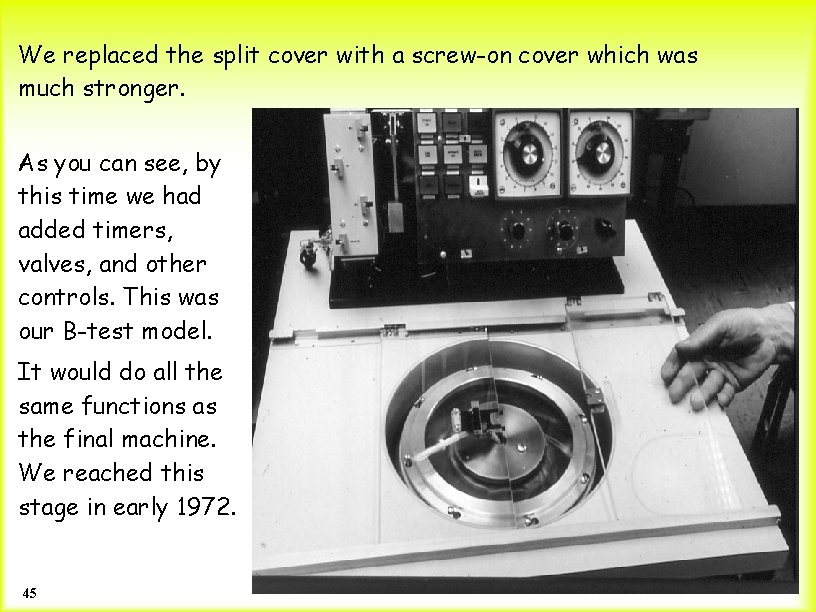
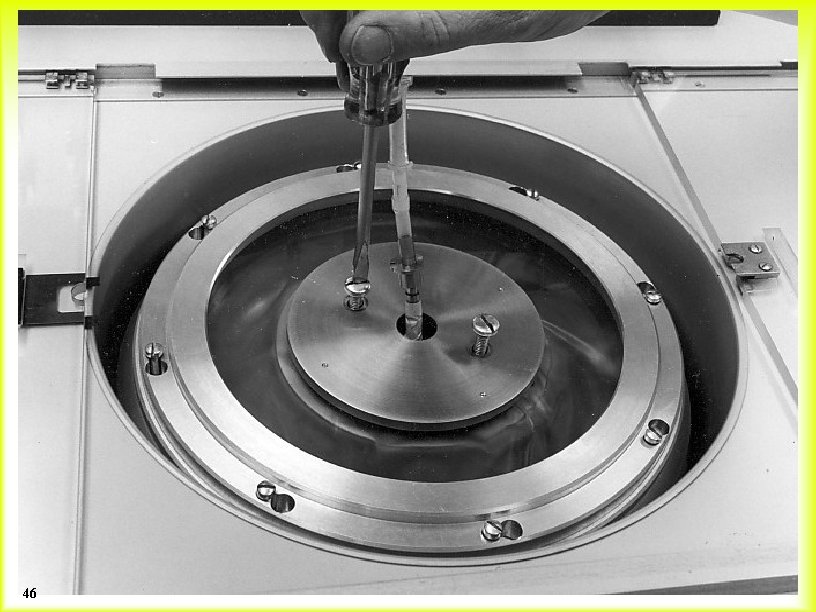
We replaced the split cover with a screw-on cover which was much stronger. As you can see, by this time we had added timers, valves, and other controls. This was our B-test model. It would do all the same functions as the final machine. We reached this stage in early 1972. 45
46
The big remaining problem was the seal! We were now in Product Test and they were about to throw us out if we couldn't fix it. George asked me to stay after work one night to do what he liked to call “scheming. ” In a few hours that evening and with refinements over the next week, we came up with the seal that is still being used today and being made by the millions. 47
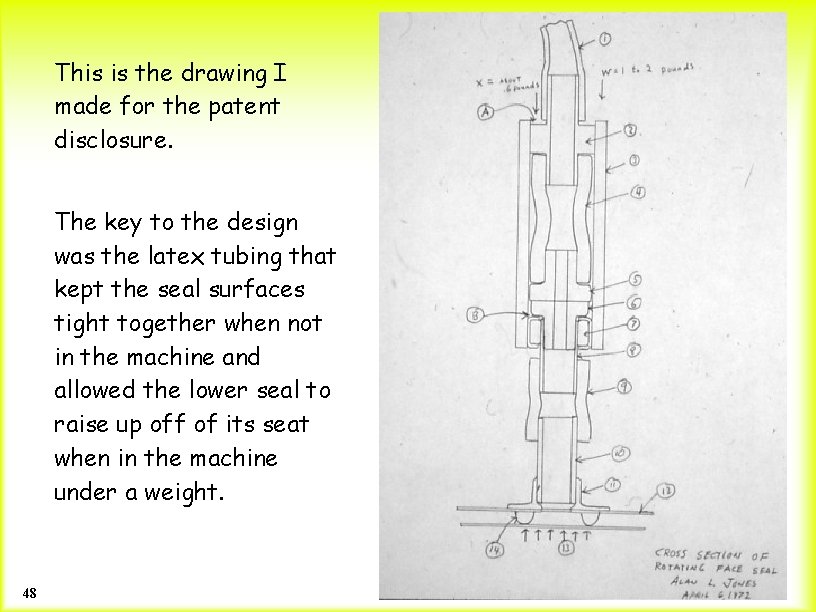
This is the drawing I made for the patent disclosure. The key to the design was the latex tubing that kept the seal surfaces tight together when not in the machine and allowed the lower seal to raise up off of its seat when in the machine under a weight. 48
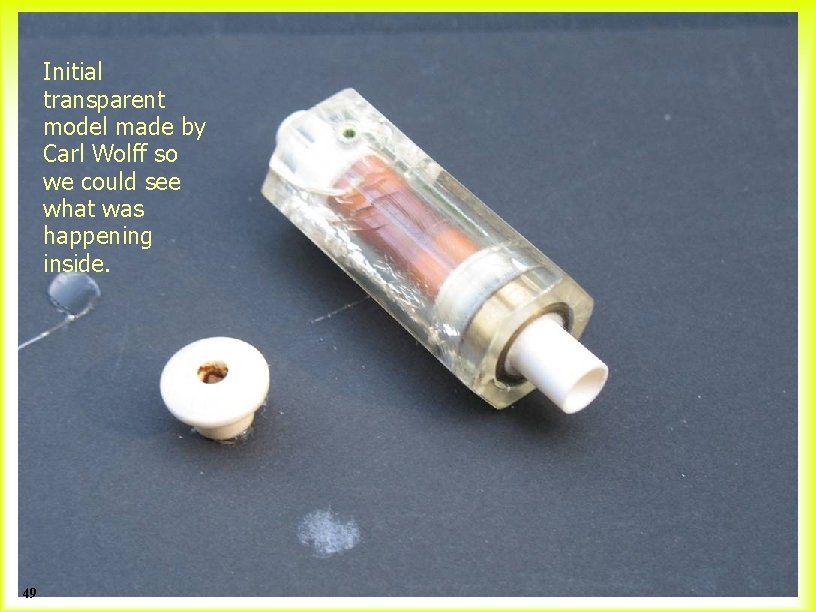
Initial transparent model made by Carl Wolff so we could see what was happening inside. 49
More on the seal As good as the seal was, there remained some problems. Techniques had to be developed to manufacture it in quantity. It had to be made for $1. 00. The seal was subject to occasional leaks due to the curvature of the latex. 50
The seal years later Many years later, after the project was sold to Cobe Labs, the president visited to obtain information to fight a civil case. He saw a remark in my notebook that the latex should be replaced by a molded silicon piece. He said, “Why didn't you do that. It would have saved us millions of dollars!? ” 51
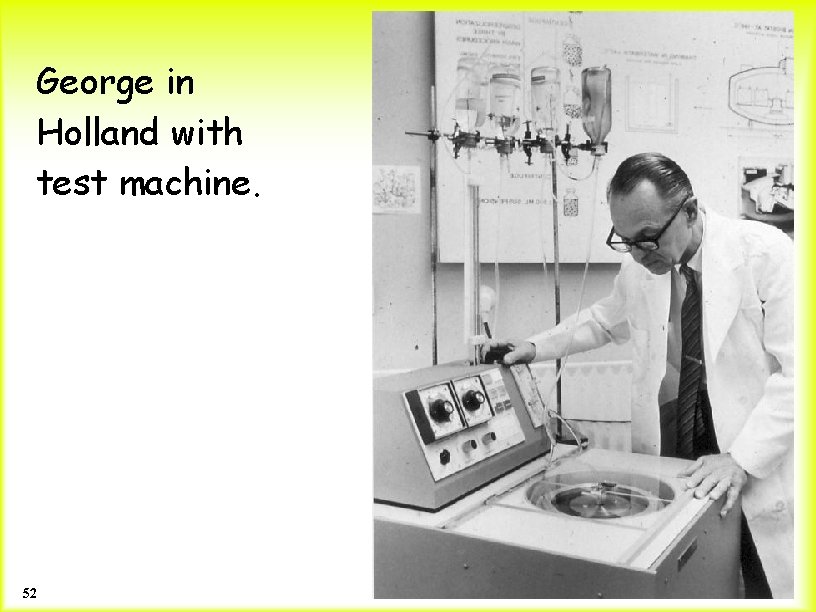
George in Holland with test machine. 52
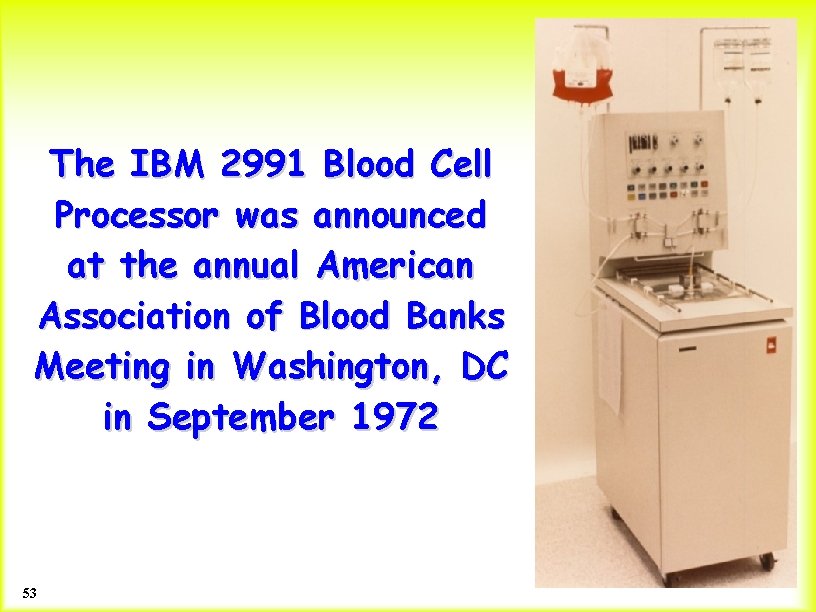
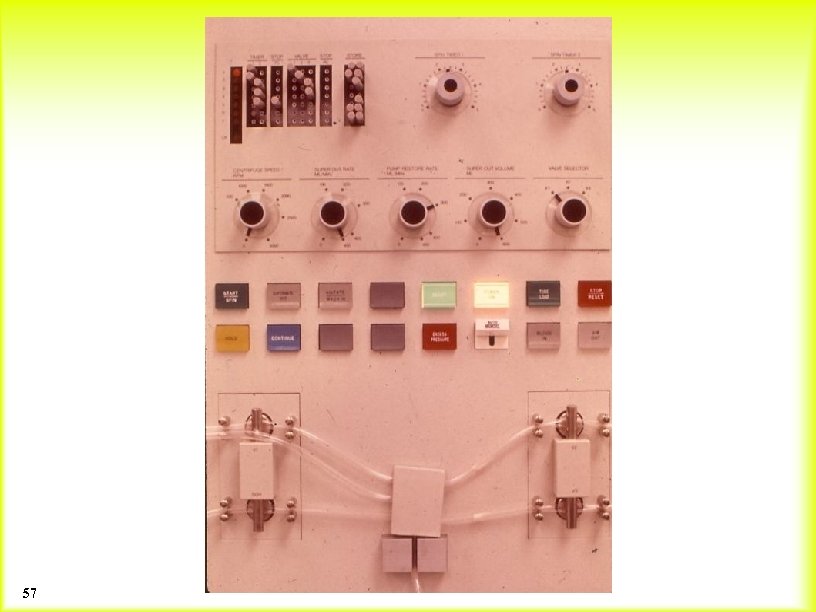
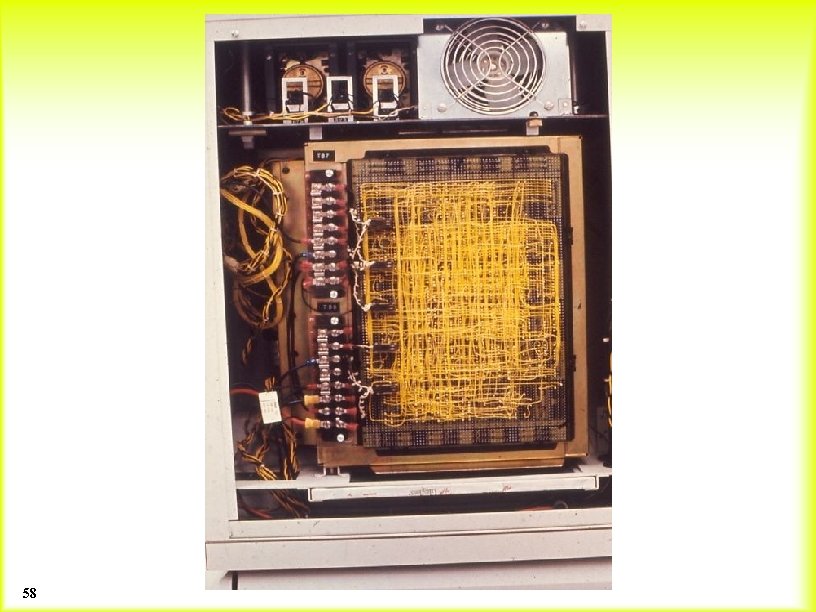
The IBM 2991 Blood Cell Processor was announced at the annual American Association of Blood Banks Meeting in Washington, DC in September 1972 53
IBM set up a marketing and manufacturing group at their former, Information Records Division location, in Princeton, NJ. The night before the opening of the AABB meeting, one IBM salesman offered the opinion to his manager that they shouldn't wear white shirts. The manager replied, “A white shirt never offended anyone. ” They all showed up in white shirts. 54
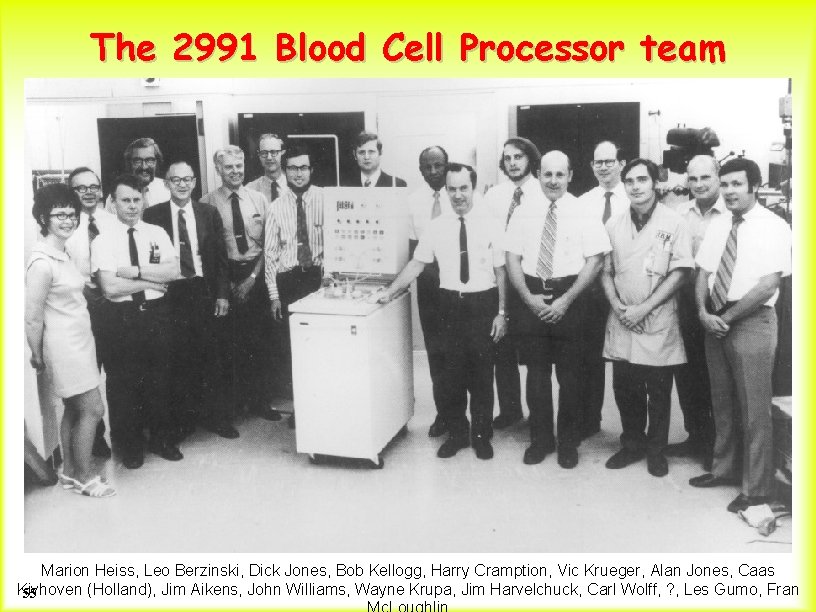
The 2991 Blood Cell Processor team Marion Heiss, Leo Berzinski, Dick Jones, Bob Kellogg, Harry Cramption, Vic Krueger, Alan Jones, Caas Kivhoven (Holland), Jim Aikens, John Williams, Wayne Krupa, Jim Harvelchuck, Carl Wolff, ? , Les Gumo, Fran 55
56
57
58
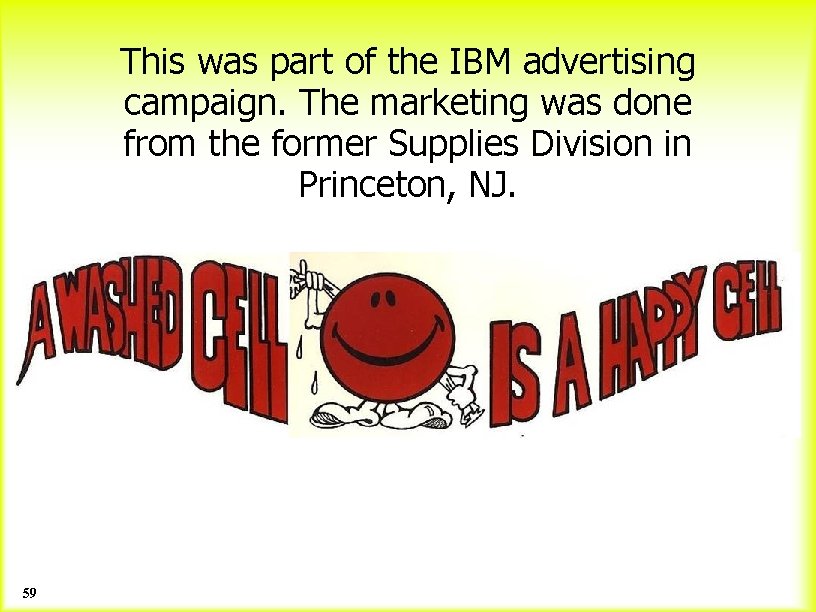
This was part of the IBM advertising campaign. The marketing was done from the former Supplies Division in Princeton, NJ. 59
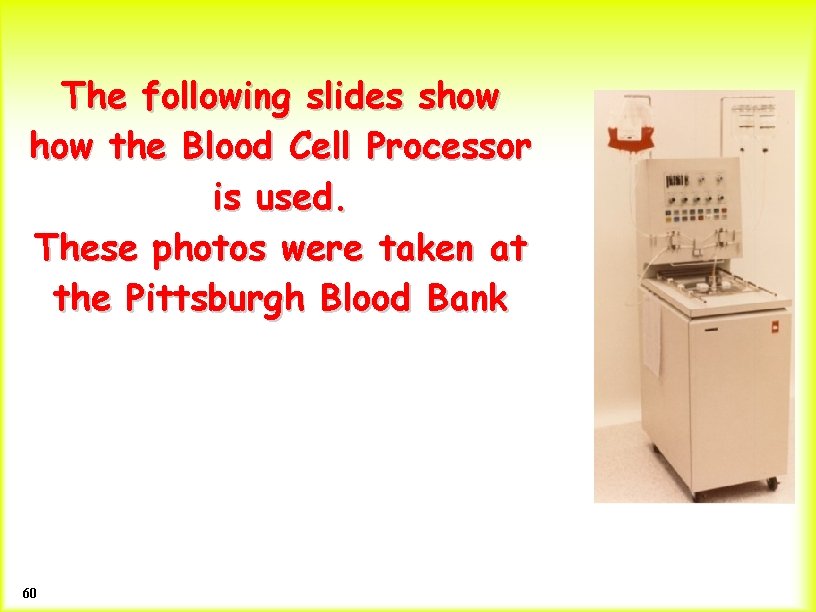
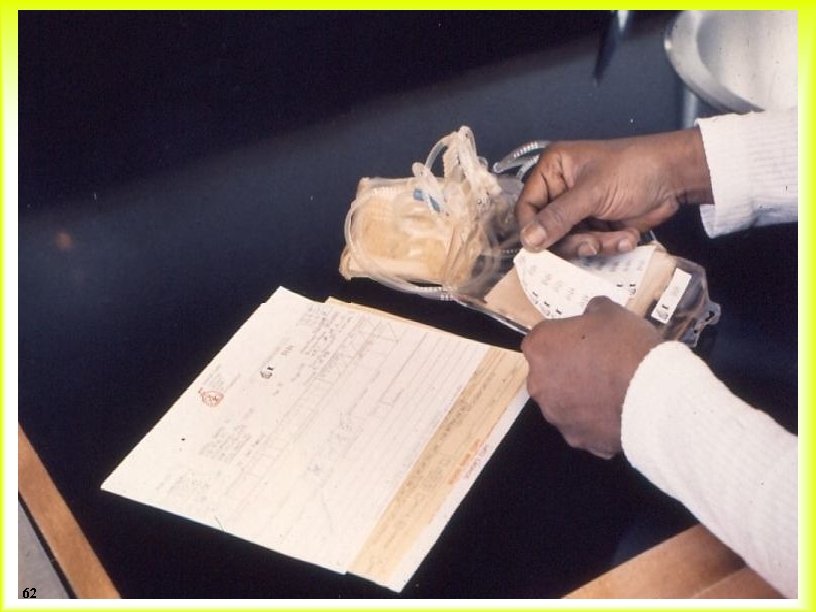
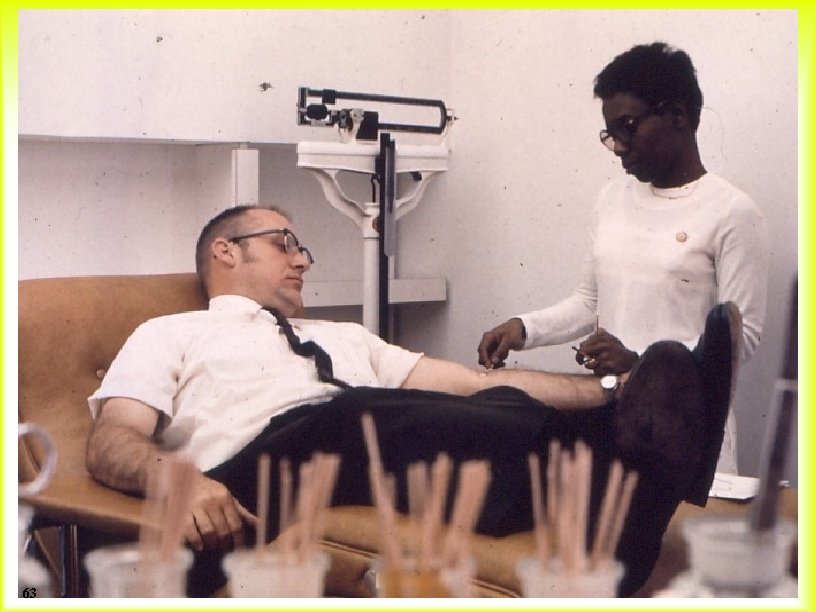
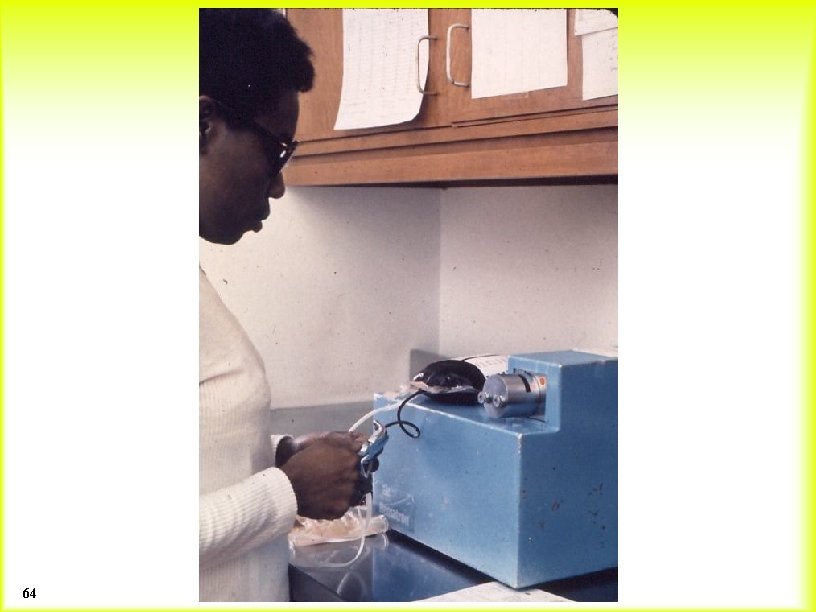
The following slides show the Blood Cell Processor is used. These photos were taken at the Pittsburgh Blood Bank 60
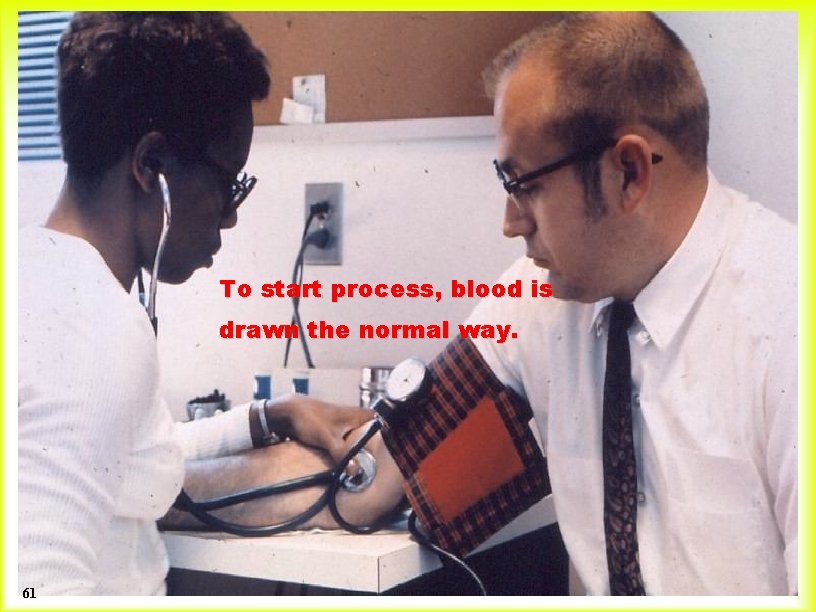
To start process, blood is drawn the normal way. 61
62
63
64
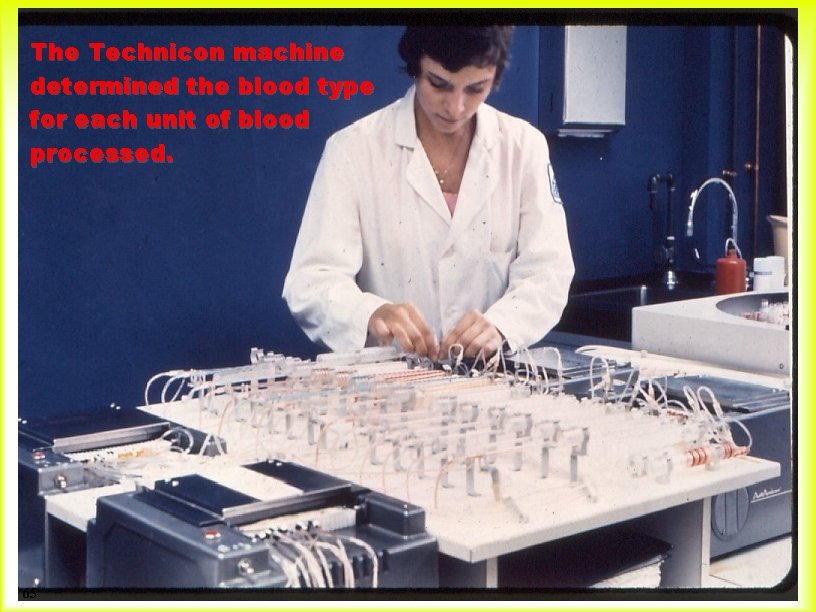
The Technicon machine determined the blood type for each unit of blood processed. 65
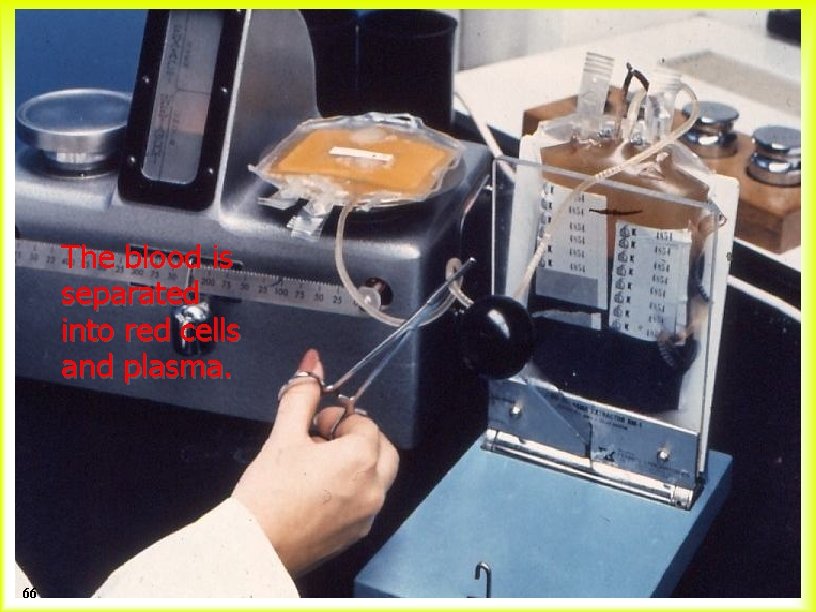
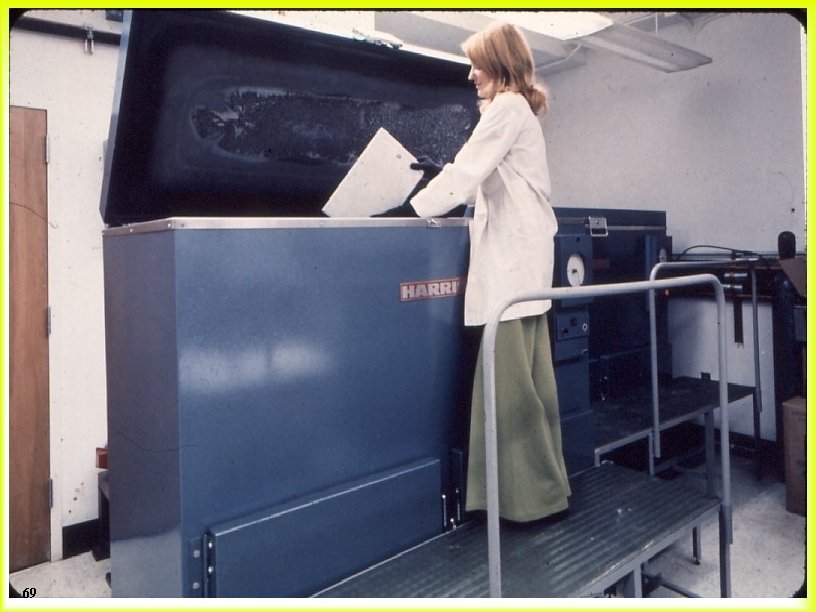
The blood is separated into red cells and plasma. 66
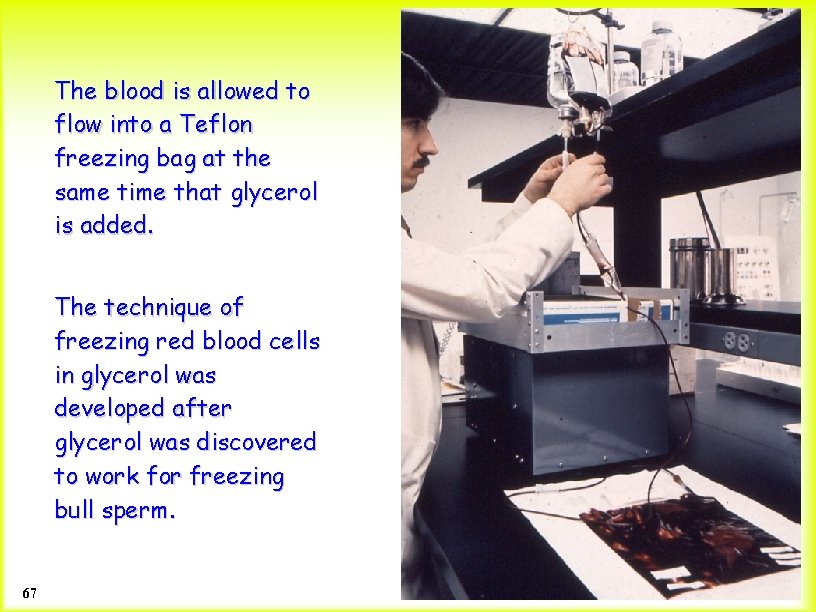
The blood is allowed to flow into a Teflon freezing bag at the same time that glycerol is added. The technique of freezing red blood cells in glycerol was developed after glycerol was discovered to work for freezing bull sperm. 67
68
69
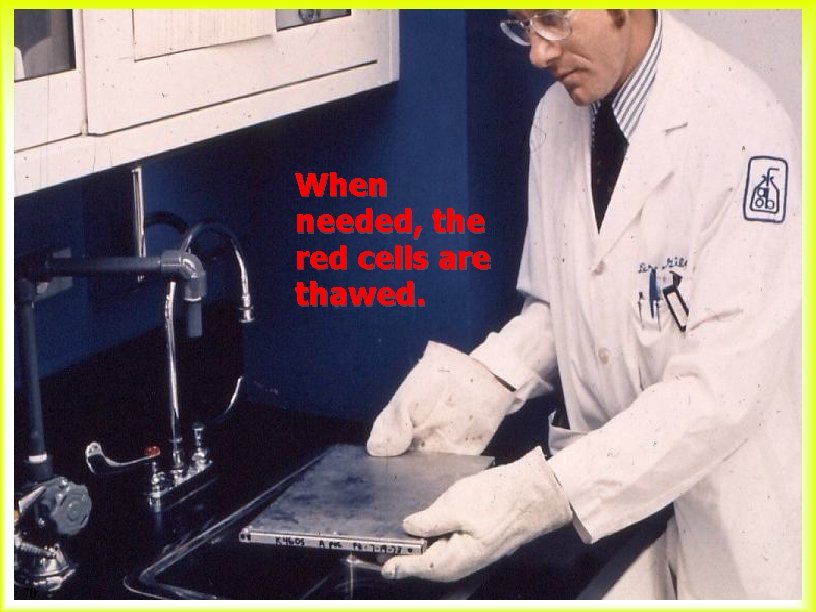
When needed, the red cells are thawed. 70
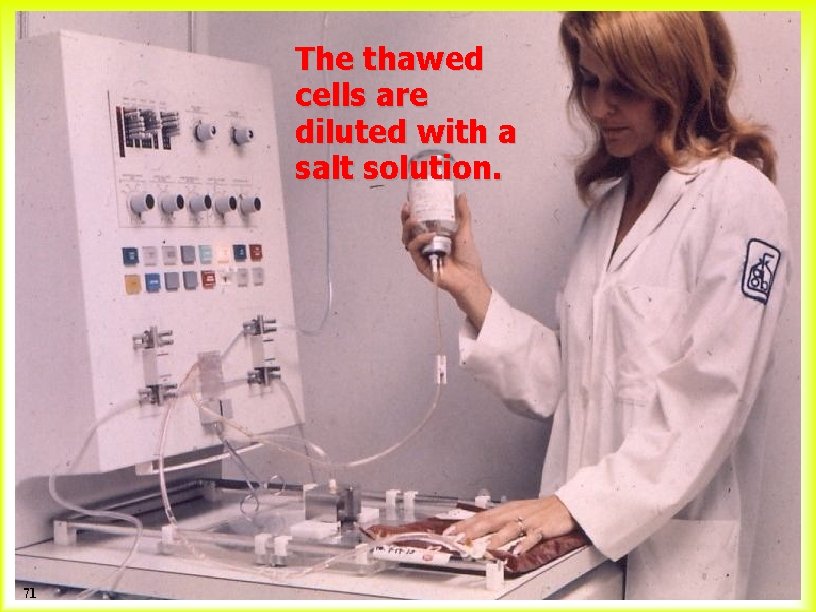
The thawed cells are diluted with a salt solution. 71
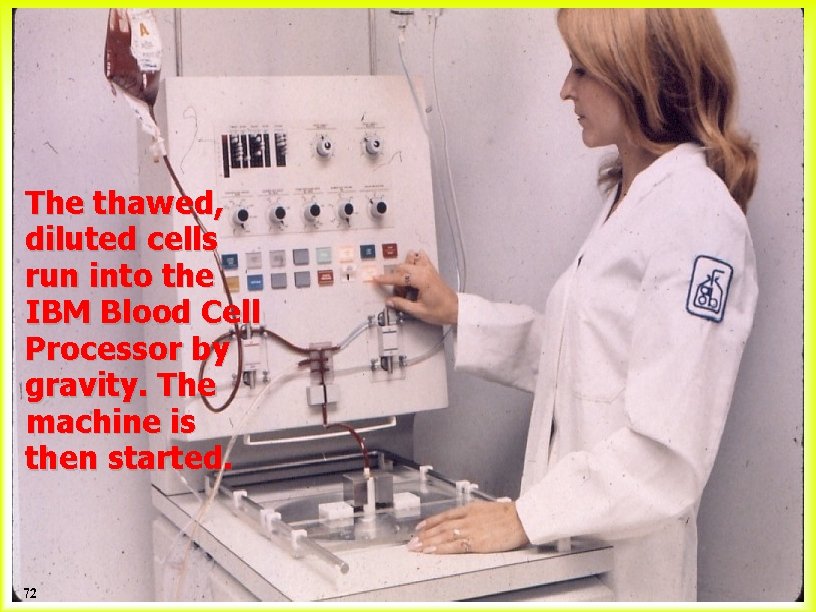
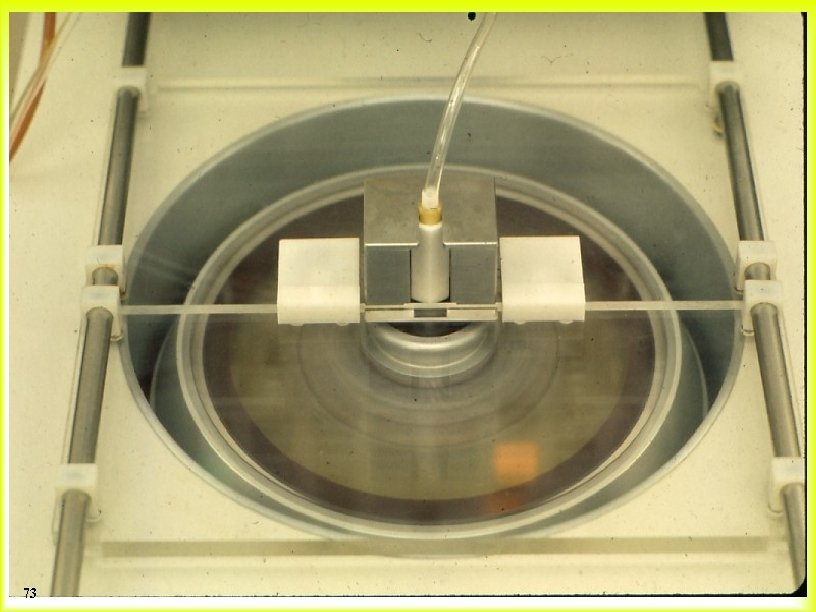
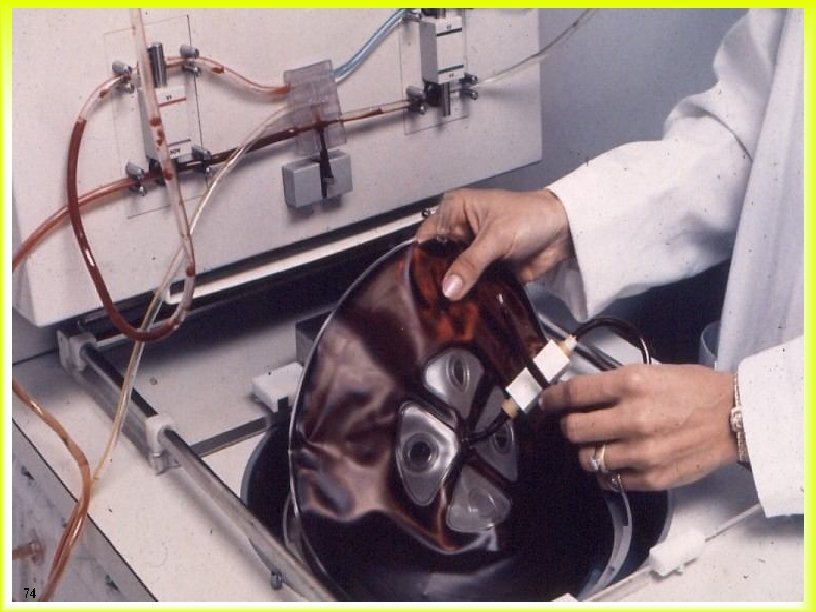
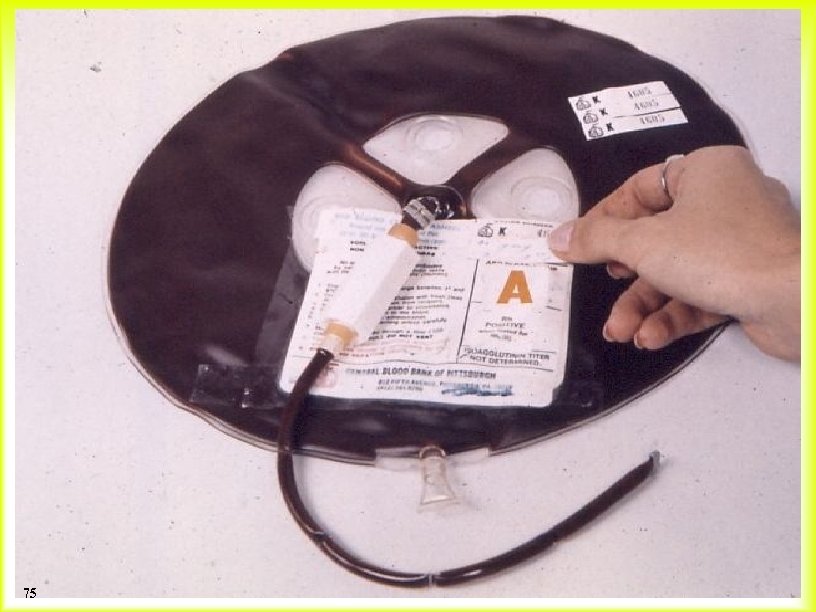
The thawed, diluted cells run into the IBM Blood Cell Processor by gravity. The machine is then started. 72
73
74
75
76
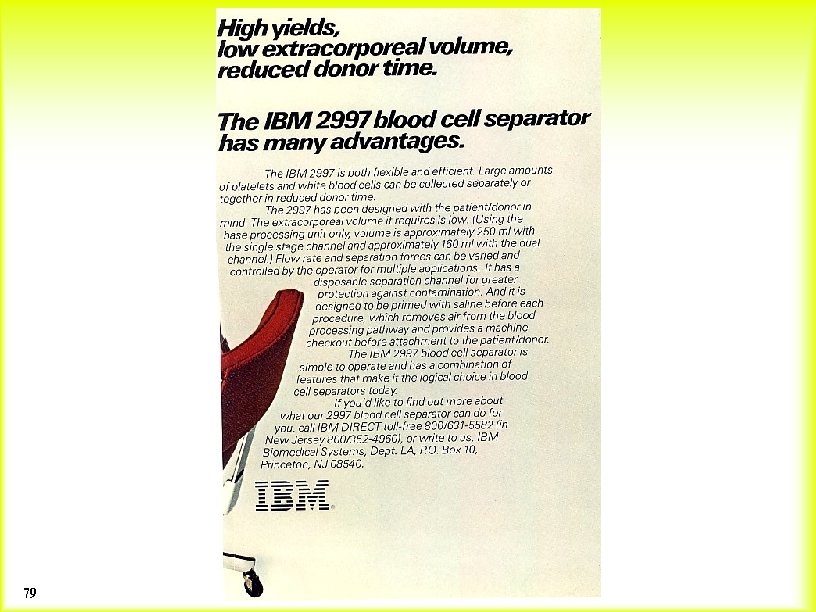
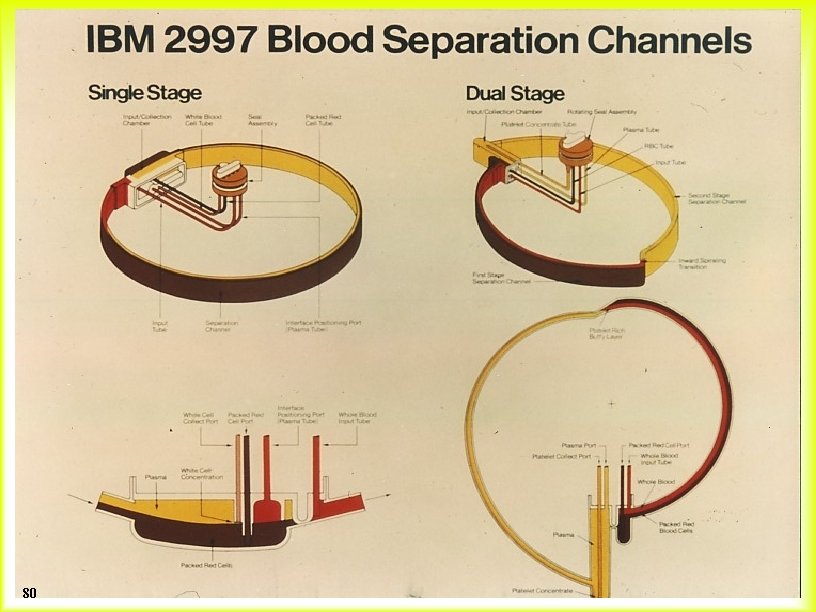
The IBM 2997 Blood Cell Separator The IBM Blood Cell Processor was now in the market and doing well. However, we knew that the Blood Cell Separator could be improved. It's main problem was that the bowl was not disposable. An effort was launched to provide a separator with all materials disposable that came in contact with Blood. 77
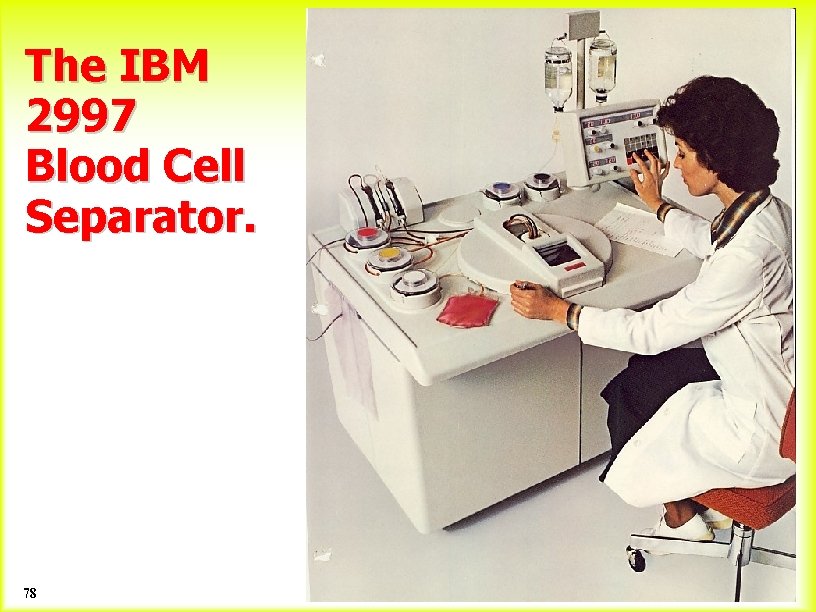
The IBM 2997 Blood Cell Separator. 78
79
80
Is a rotating seal necessary? You would think that the answer to this question is obvious. Not so! There is a way to get blood into a rotating centrifuge and its components out without crossing a rotating seal! Can you think how this can be done? Bob Kellogg and his team figured it out. They devised a harness that rotated like a cowboy's lariat so that the system was always sealed. 81
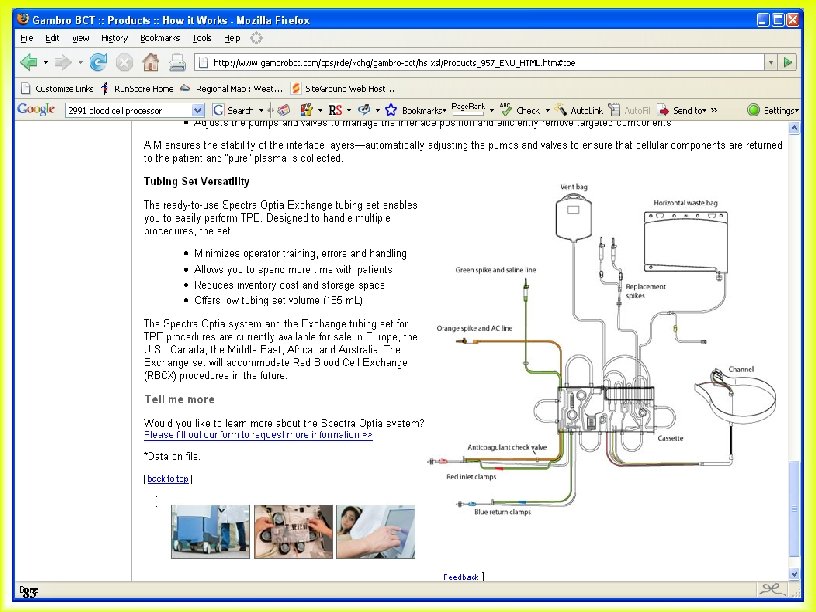
IBM sells its medical group An automatic ECG reading machine had been introduced that was developed at IBM Yorktown Height. The medical effort was not making “normal IBM profits” The entire group was sold to Cobe Labs in 1984. The next slides show the Cobe web sites advertising the machines. 82
83
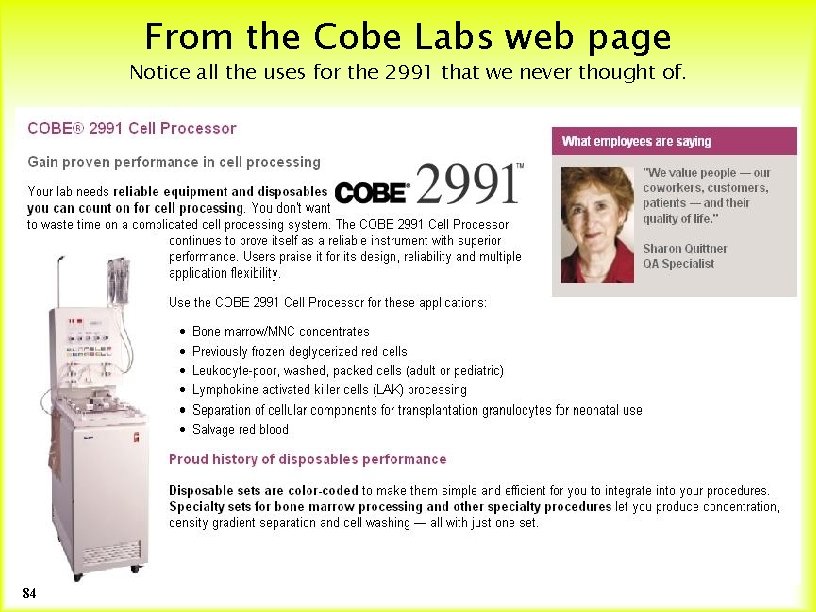
From the Cobe Labs web page Notice all the uses for the 2991 that we never thought of. 84
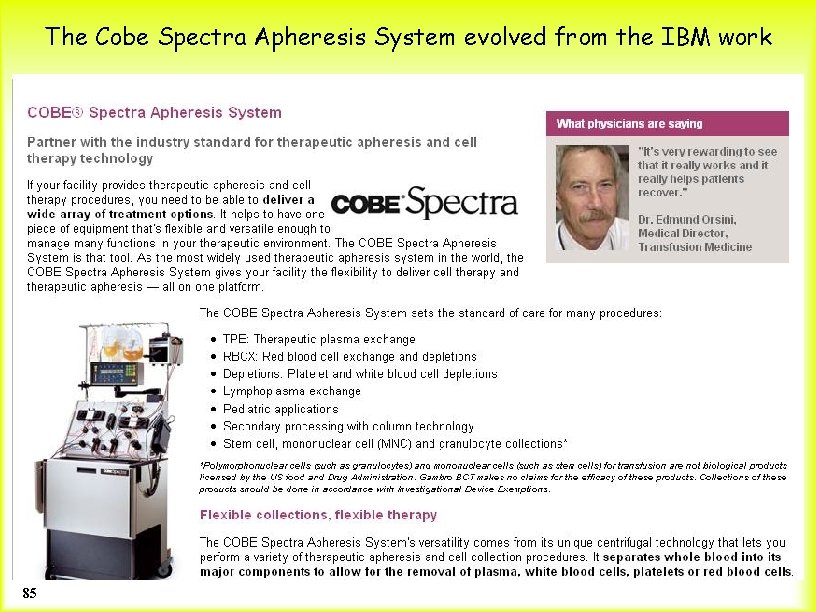
The Cobe Spectra Apheresis System evolved from the IBM work 85
And now for the rest of the story George Judson – Died in 1992. The Blood Cell Processor was used on him during an operation. Kay Judson, George's wife lives near Burlington , VT Son, Tom Judson died of leukemia, summer 1964 Son, Jim Judson, died in auto accident summer 1965 Daughter, Karen Judson – lives in Burlington, VT Daughter, Betsy Judson – lives in Cody, WY 86
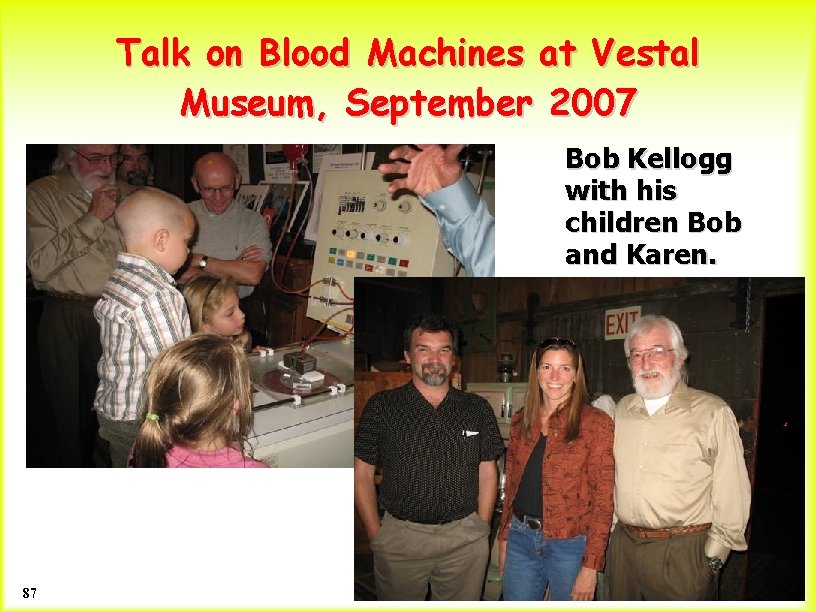
Talk on Blood Machines at Vestal Museum, September 2007 Bob Kellogg with his children Bob and Karen. 87
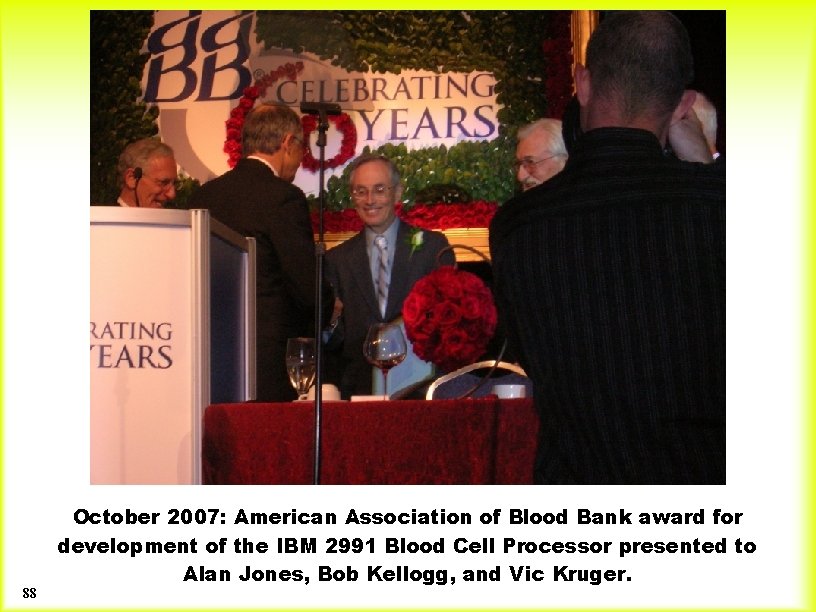
88 October 2007: American Association of Blood Bank award for development of the IBM 2991 Blood Cell Processor presented to Alan Jones, Bob Kellogg, and Vic Kruger.
What started out as a tragedy for a family, ended up helping many people with conditions very different from those for which George intended the machines. This is often the way that science advances. We should keep ourselves alert for those serendipity moments. 89
- Slides: 89