
The development of social adaptation Stress and resilience
- Slides: 32
The development of social adaptation Stress and resilience 17 th of January
Program Information about the course content, and lectures n Information about the seminars and exams n Introduction to resilience - What is resilience about? n Summary n
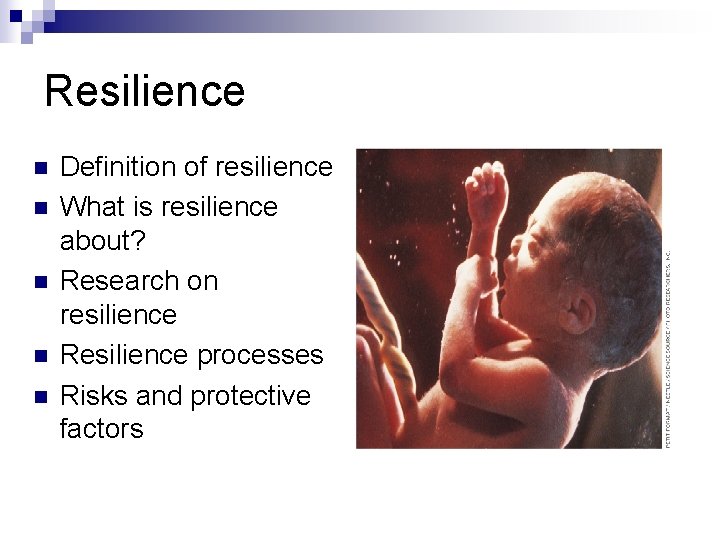
Resilience n n n Definition of resilience What is resilience about? Research on resilience Resilience processes Risks and protective factors
What is resilience?
Resilience are defined as: ……positive adaptation in the context of sigificant risk or adversity……… n ”Resiliens er prosesser som gjør at utviklingen når et tilfredsstillende resultat, til tross for at barn har hatt erfaringer med situasjoner som innebærer en relativt stor risiko for å utvikle problemer eller avvik” (Rutter 2000)
Understanding Resilience Two main components: 1) 2) There must be evidence for positive adaptation, and That there are or have been significant risk to overcome
What is positive adaptation? “doing okay” n Researchers have provided a variety of criteria’s. - Absence of mental health problems, or - Competence in developmental tasks n
Resilience is not a constant phenomenon, a person may be resilient at one time, but this does not mean that this person is invulnerable to other risks later in life. n Individuals may be resilient to some environmental hazards but not others; resilience cannot be identified as an individual trait. n
Research on resilience A new focus: From studying maladaptation to adaptation n The rise of a new research focus n Longitudinal research design n
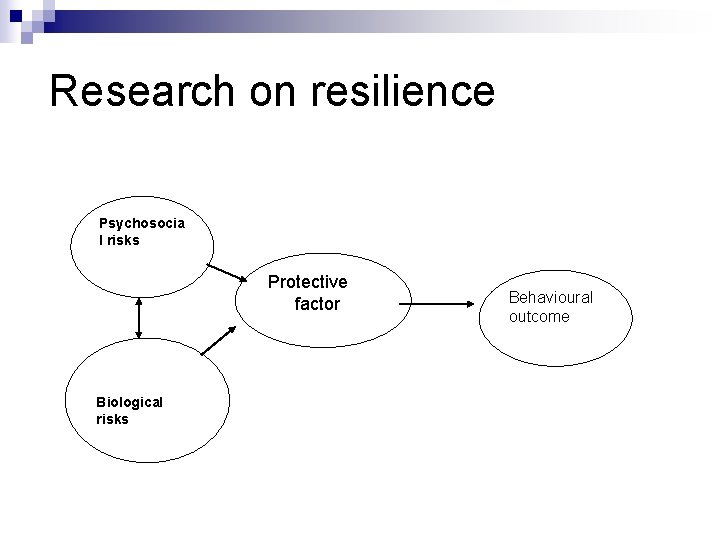
Research on resilience Psychosocia l risks Protective factor Biological risks Behavioural outcome
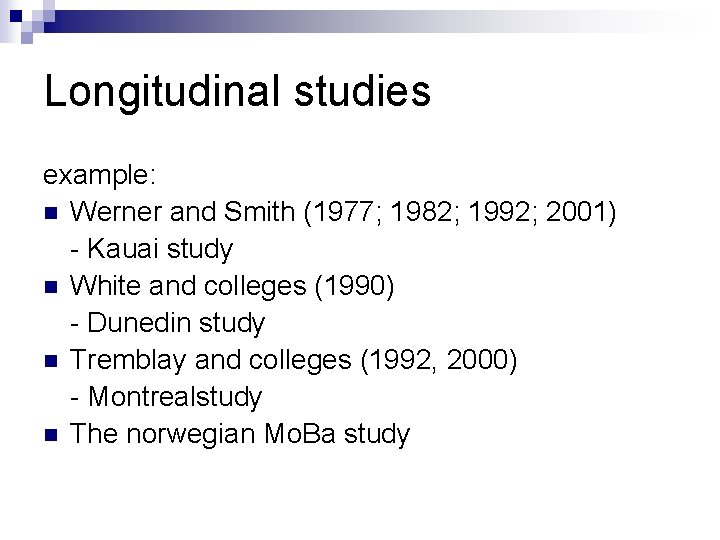
Longitudinal studies example: n Werner and Smith (1977; 1982; 1992; 2001) - Kauai study n White and colleges (1990) - Dunedin study n Tremblay and colleges (1992, 2000) - Montrealstudy n The norwegian Mo. Ba study
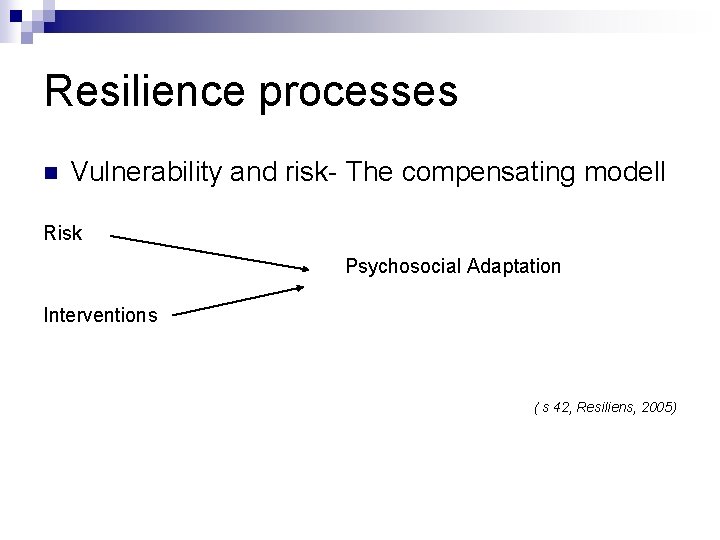
Resilience processes n Vulnerability and risk- The compensating modell Risk Psychosocial Adaptation Interventions ( s 42, Resiliens, 2005)
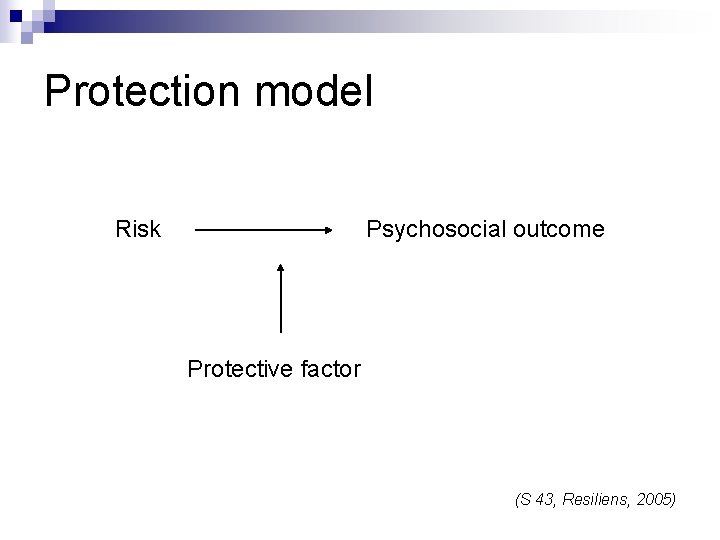
Protection model Risk Psychosocial outcome Protective factor (S 43, Resiliens, 2005)
Risk and protective factors Individual differences n Family characteristics n Community Resources n
Risk factors Research have identified factors or criteria’s to predict higher rates of negative outcomes, than others n Risks and stress does not necessary lead to difficulties n Risks should be characterized in relation to relevance, type and seriousness. n
Individual differences - Biological or genetic predispositions Premature birth IQ Gender Temperament Personality
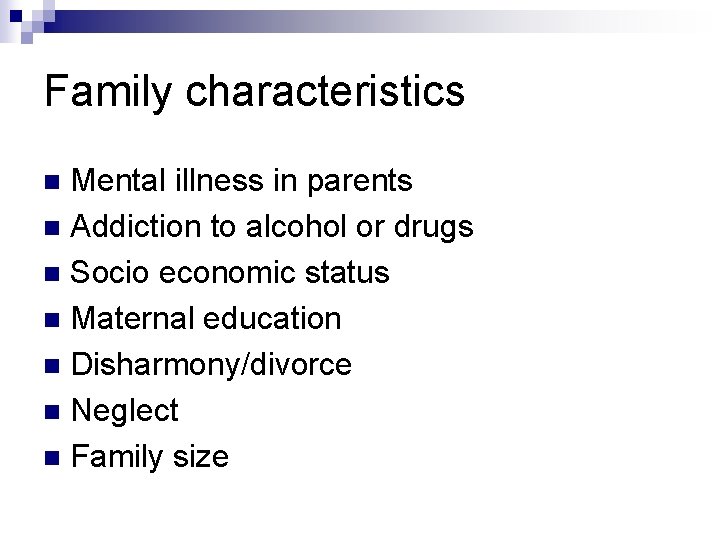
Family characteristics Mental illness in parents n Addiction to alcohol or drugs n Socio economic status n Maternal education n Disharmony/divorce n Neglect n Family size n
Divorce
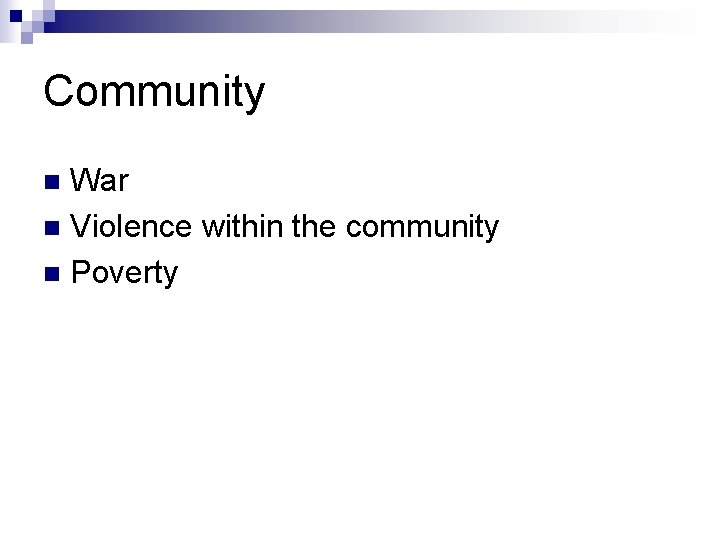
Community War n Violence within the community n Poverty n
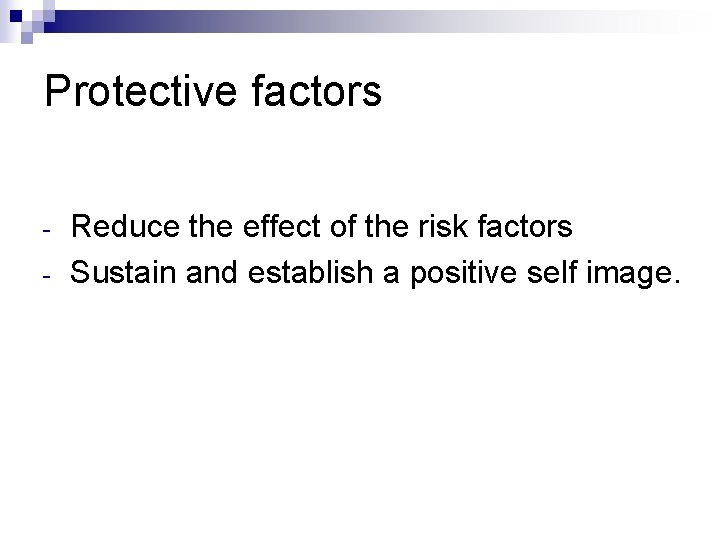
Protective factors - Reduce the effect of the risk factors Sustain and establish a positive self image.
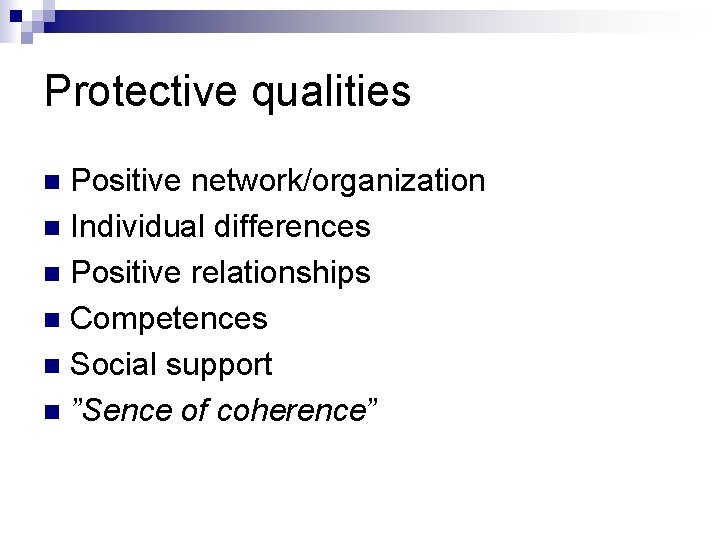
Protective qualities Positive network/organization n Individual differences n Positive relationships n Competences n Social support n ”Sence of coherence” n
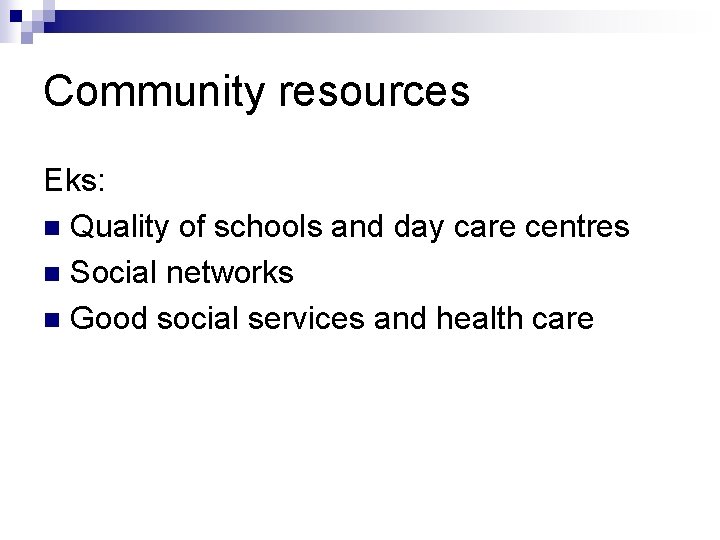
Community resources Eks: n Quality of schools and day care centres n Social networks n Good social services and health care
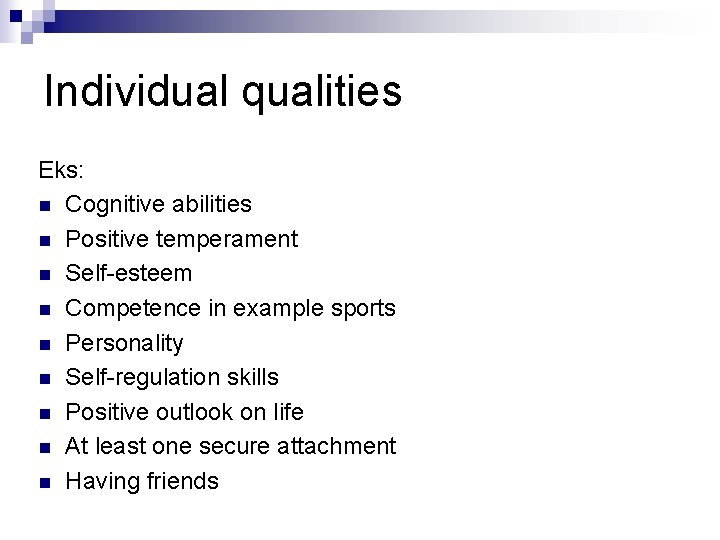
Individual qualities Eks: n Cognitive abilities n Positive temperament n Self-esteem n Competence in example sports n Personality n Self-regulation skills n Positive outlook on life n At least one secure attachment n Having friends
Self-esteem
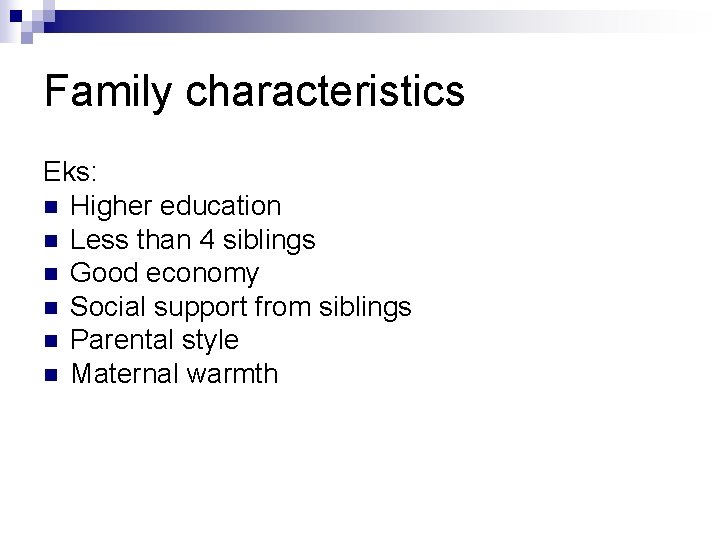
Family characteristics Eks: n Higher education n Less than 4 siblings n Good economy n Social support from siblings n Parental style n Maternal warmth
Parent-child relations
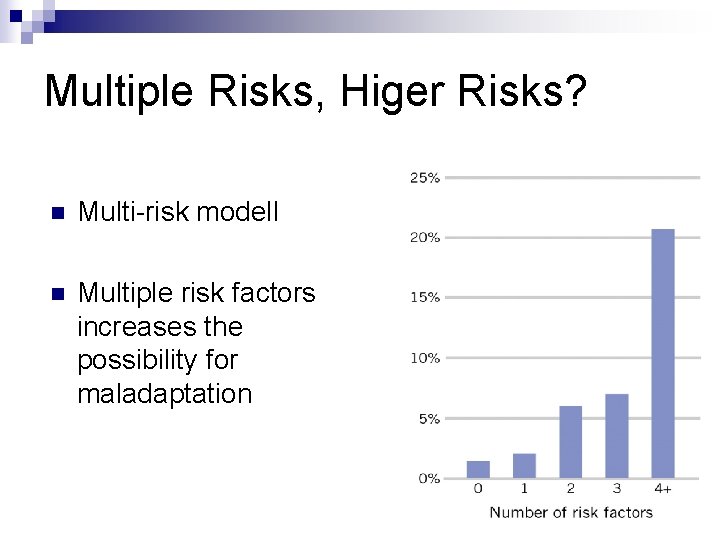
Multiple Risks, Higer Risks? n Multi-risk modell n Multiple risk factors increases the possibility for maladaptation
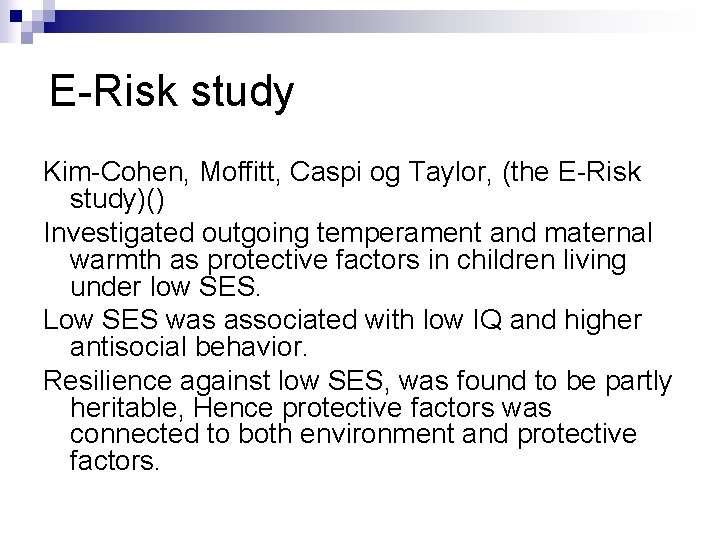
E-Risk study Kim-Cohen, Moffitt, Caspi og Taylor, (the E-Risk study)() Investigated outgoing temperament and maternal warmth as protective factors in children living under low SES. Low SES was associated with low IQ and higher antisocial behavior. Resilience against low SES, was found to be partly heritable, Hence protective factors was connected to both environment and protective factors.
Factors Resilience involves understanding underlying processes or mechanisms n There is a need to understand interaction between individual differences and the environment (nature/nurture) Thus: n Resilience is the study of individual differences in response to stress or adversity. n
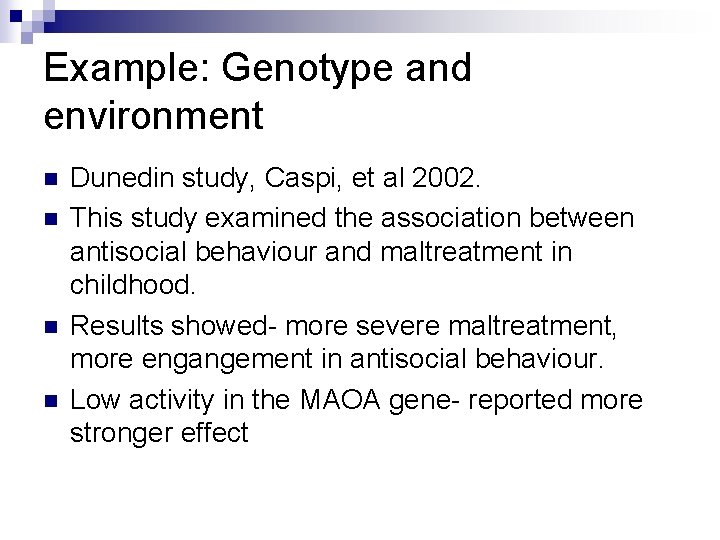
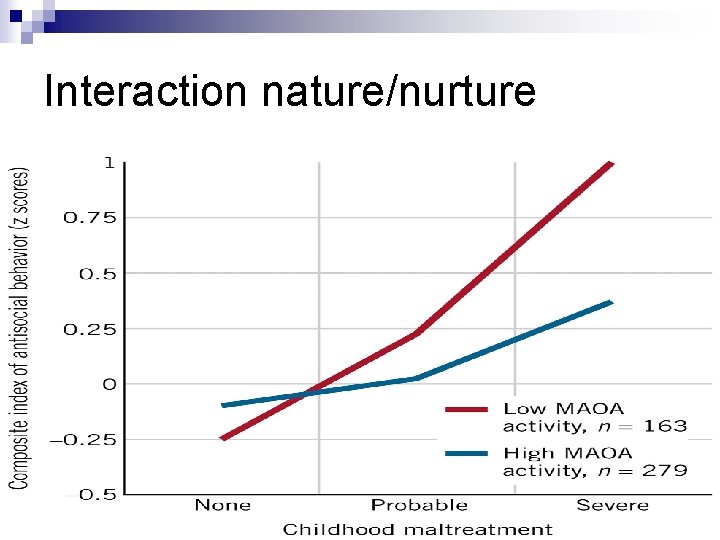
Example: Genotype and environment n n Dunedin study, Caspi, et al 2002. This study examined the association between antisocial behaviour and maltreatment in childhood. Results showed- more severe maltreatment, more engangement in antisocial behaviour. Low activity in the MAOA gene- reported more stronger effect
Interaction nature/nurture
Summary Resilience is a process in witch a person must be “doing okay” after overcoming severe risks n One must look at resilience indirectly examining underlying mechanisms in the environment and the person. n Risk and protective factors interact and can intervene or enhance each other. n