
The Development of Resilience Temperament Attachment and SelfAwareness
















- Slides: 37
The Development of Resilience: Temperament, Attachment and Self-Awareness Gene Beresin, MD, MA Executive Director, The Clay Center Steve Schlozman, MD Associate Director, The Clay Center
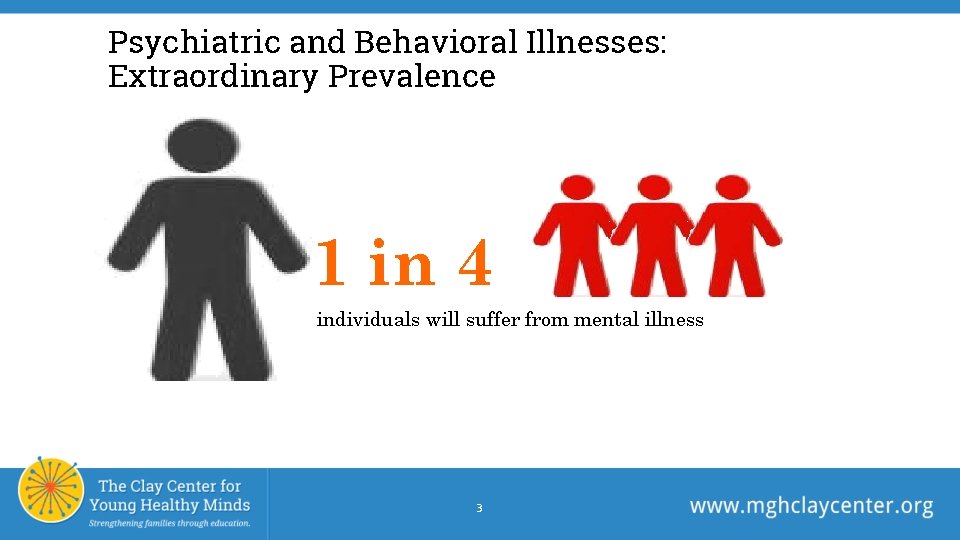
Psychiatric and Behavioral Illnesses: Extraordinary Prevalence 1 in 4 individuals will suffer from mental illness 3
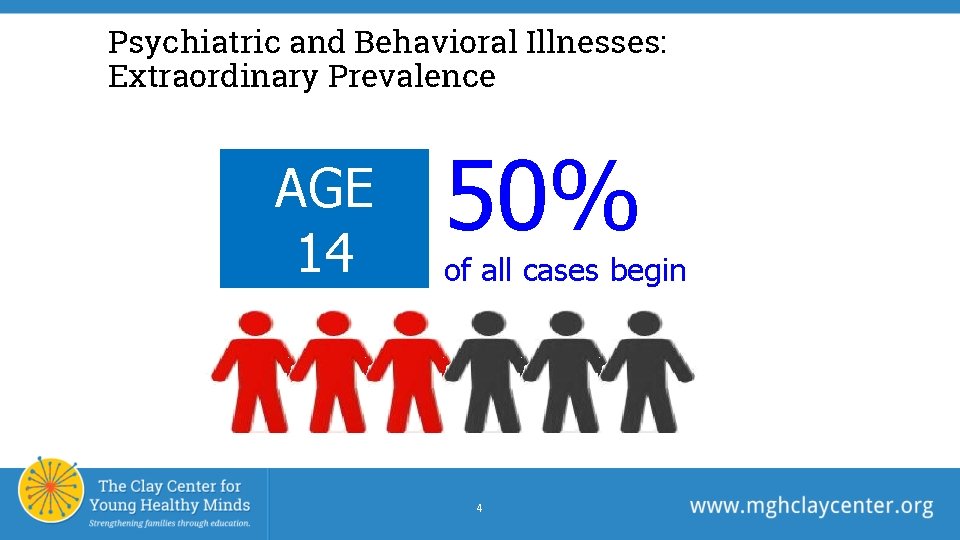
Psychiatric and Behavioral Illnesses: Extraordinary Prevalence AGE 14 50% of all cases begin 4
Psychiatric and Behavioral Illnesses: Extraordinary Prevalence SUICIDE Third leading cause of death among young people ages 10 -24 5
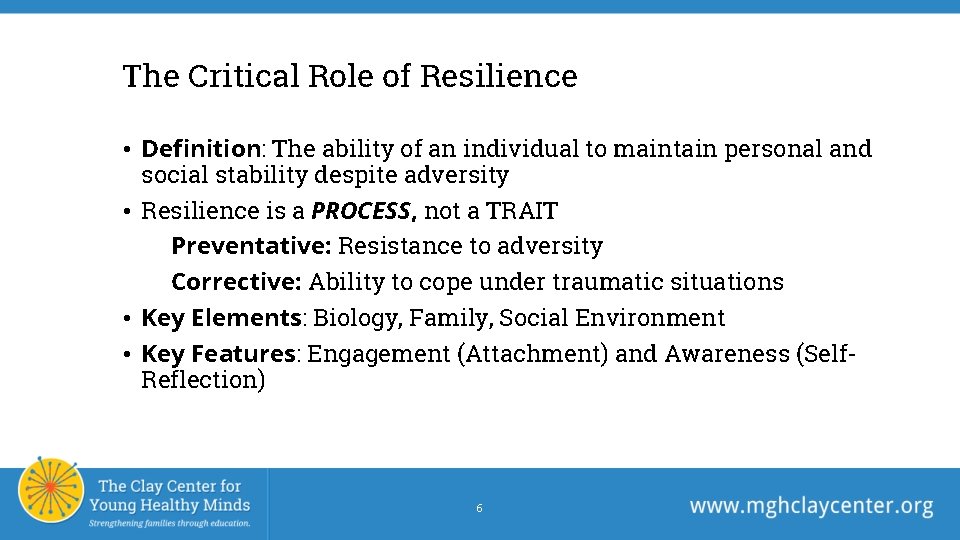
The Critical Role of Resilience • Definition: The ability of an individual to maintain personal and social stability despite adversity • Resilience is a PROCESS, not a TRAIT Preventative: Resistance to adversity Corrective: Ability to cope under traumatic situations • Key Elements: Biology, Family, Social Environment • Key Features: Engagement (Attachment) and Awareness (Self. Reflection) 6
Temperament 7
8
9
10
11
12
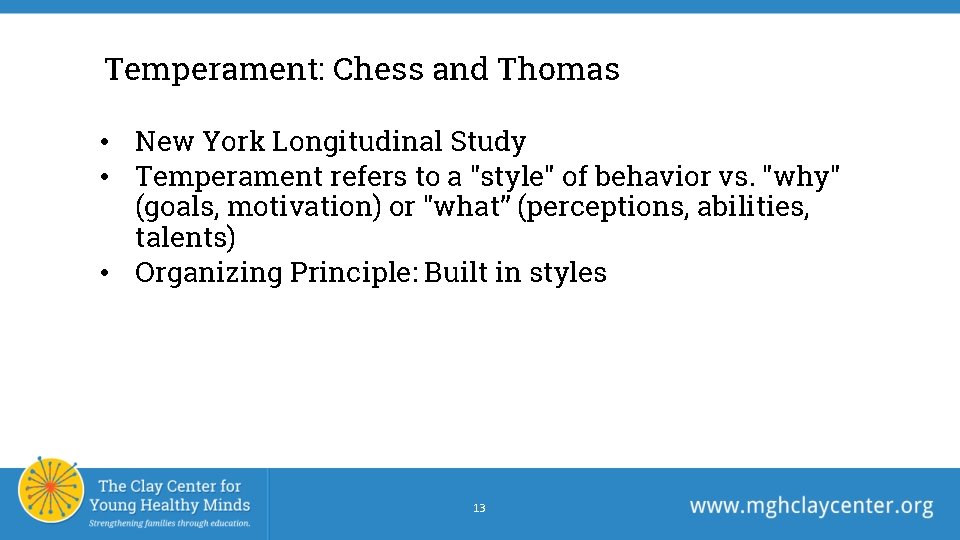
Temperament: Chess and Thomas • New York Longitudinal Study • Temperament refers to a "style" of behavior vs. "why" (goals, motivation) or "what” (perceptions, abilities, talents) • Organizing Principle: Built in styles 13
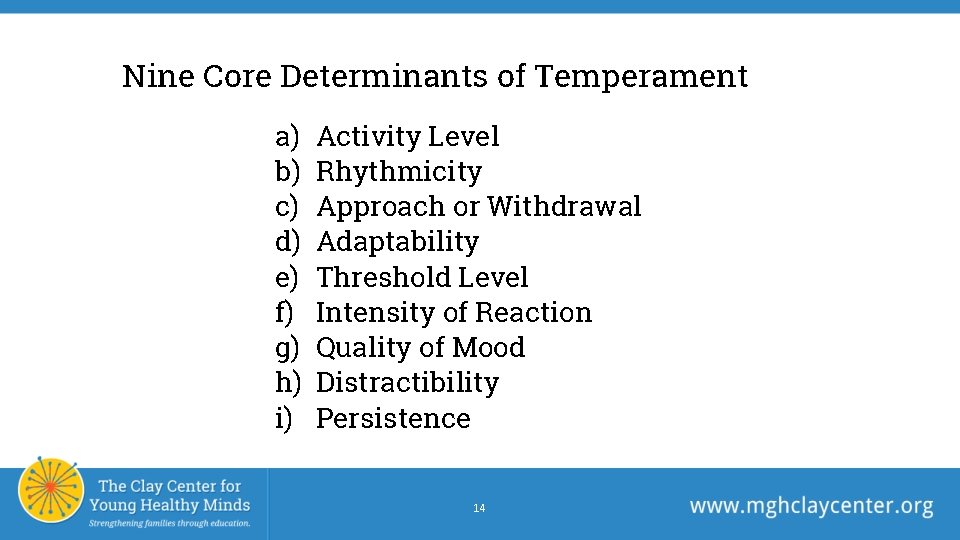
Nine Core Determinants of Temperament a) b) c) d) e) f) g) h) i) Activity Level Rhythmicity Approach or Withdrawal Adaptability Threshold Level Intensity of Reaction Quality of Mood Distractibility Persistence 14
Constellations: Based on Quantitative Analysis and Functional Significance • Easy Temperament • Difficult Temperament • Slow-To-Warm-Up Temperament 15
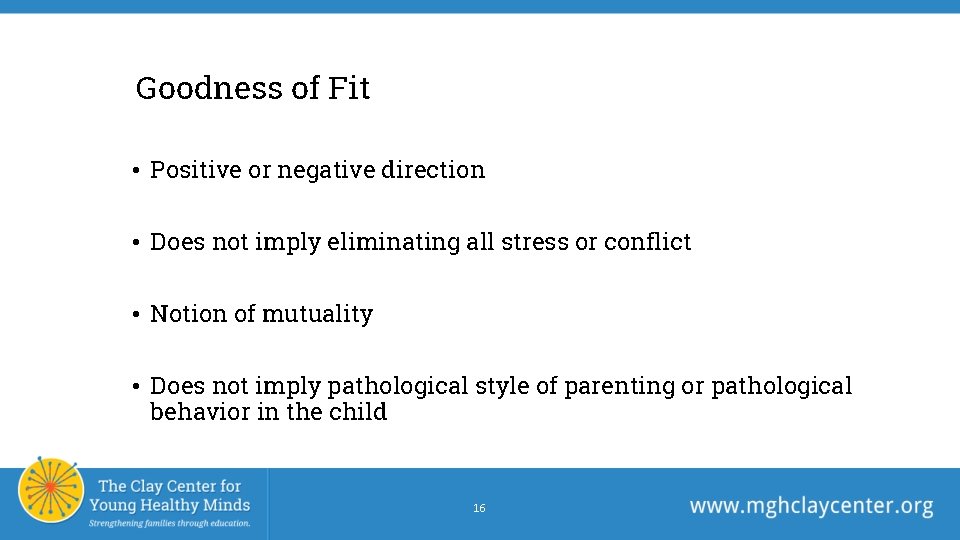
Goodness of Fit • Positive or negative direction • Does not imply eliminating all stress or conflict • Notion of mutuality • Does not imply pathological style of parenting or pathological behavior in the child 16
17
Continuity and Change in Temperament a) Seems stable for younger kids, but can change with time b) Change due to environmental interactions c) Change function of environmental influences and biological patterns of maturation (epigenetics) d) Clinical implications 18
Lessons from Attachment Theory: Establishing Secure Attachments Principles of Attachment Theory • Attachment is the basic way we as humans establish a safe, secure, and comforting relationship for our children. • Interactions with attachment figures are essential for proper biological, emotional and social development in childhood and throughout the life cycle 19
Lessons from Attachment Theory: Establishing Secure Attachments Principles of Attachment Theory cont. • Foundations from research in cognitive neuroscience, genetics and brain development—a dance between hard wiring, genetic predispositions and plasticity • Healthy attachments are crucial for: • Effective and accurate use of cognitive functions • Emotional flexibility • Enhancement of security • Assignment of meaning • Self-regulation • Integration of cognitive, emotional and social functions • Capacity for intimacy and healthy interpersonal relationships; empathy • Self-awareness and personal cohesion • Resilience 20
21
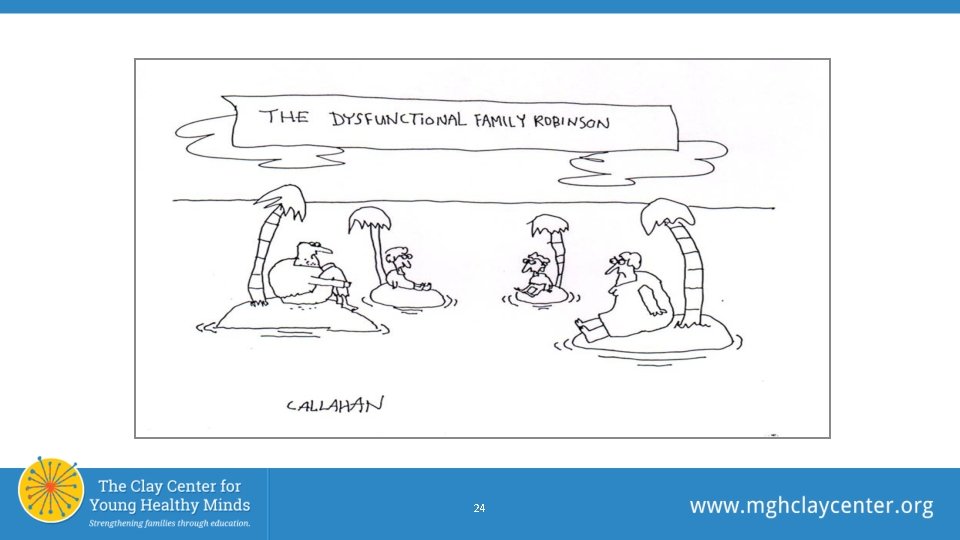
Foundation for Secure Attachment (Siegel) Collaboration • Collaborative, contingent communication • Attunement • Critical for making deep connections with others; narratives are cocreated by the teller and listener • Ability to reflect upon one’s own mental state and the mental state of another 22
Reflective Dialogue • Creates sense that subjective experience is important and can be shared • Allows “mindsight, ” the capacity to create a representation of the mind of others and of self • Corrects empathic failures • Being seen 23
24
Emotional Communication • Sharing feelings—amplifying the positive and mitigating the negative • Soothing essential for self-regulation 25
Coherent Narratives • Connection of the past and present in the creation of an autobiographical sense of self-awareness • Use of language to weave together thoughts, feelings, sensations and actions as a means of organizing and making sense of internal and external worlds • Provides the developing brain with fundamental means of integrating data from disparate sources • Storytelling requires sustained attention, memory, emotional responsiveness, non-verbal cues and responses, collaborative meaning making, attunement to the listener’s expectations (resonance) • Provides an ability for self-reflection and self-identity 26
27
Coherent Narratives cont. • Vehicle for explaining behavior—emotionally meaningful, causallylinked, serving as a means of education, understanding and change • Map that may be continually redefined to create new meaning and behavior • Stories and storytelling are pervasive in society as a means of conveying symbolic activity, history, communication and teaching 28
29
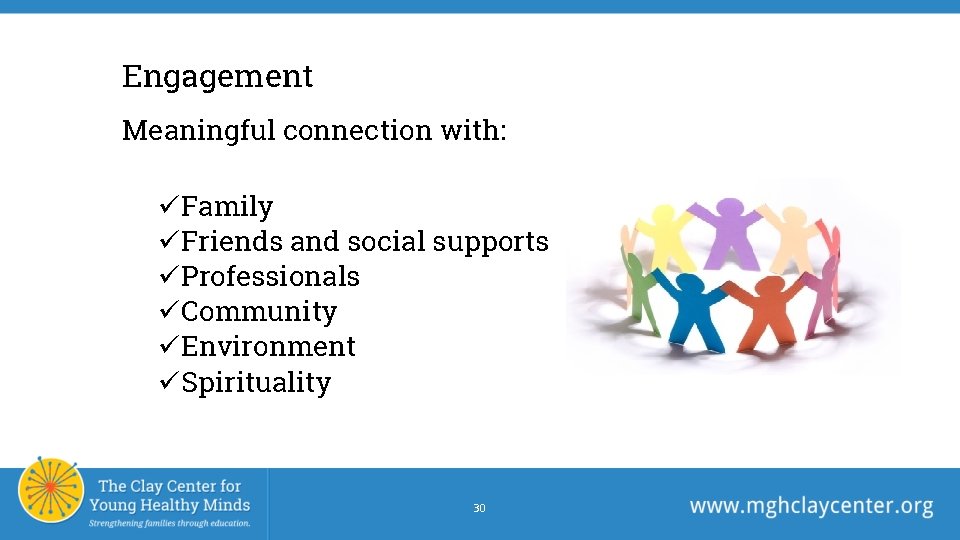
Engagement Meaningful connection with: üFamily üFriends and social supports üProfessionals üCommunity üEnvironment üSpirituality 30
Self-Awareness • Outcome: Ability to connect with others, to have a coherent sense of self • Awareness of one’s: • Emotional state • Motivations • Impulses • Behavior and its consequences on self and others • Ability to regulate and change one’s behavior 31
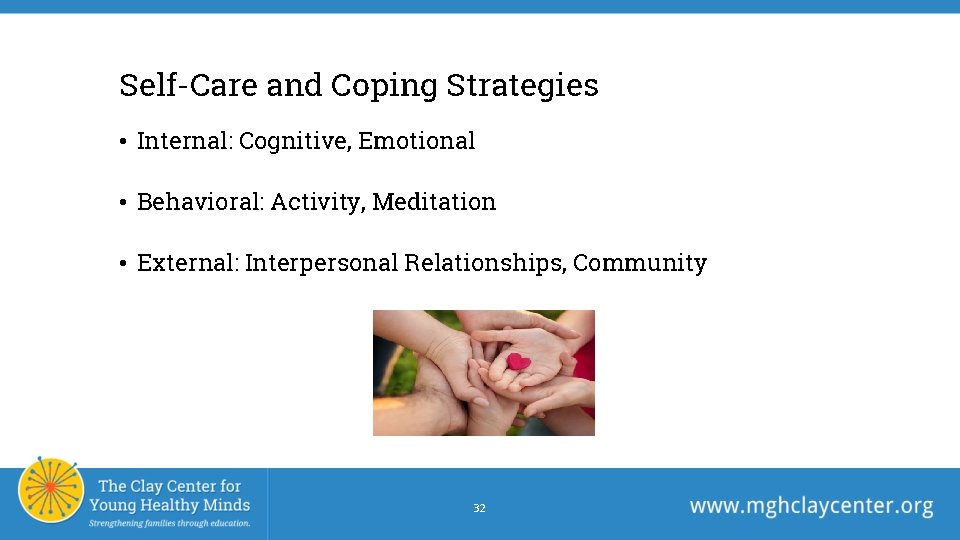
Self-Care and Coping Strategies • Internal: Cognitive, Emotional • Behavioral: Activity, Meditation • External: Interpersonal Relationships, Community 32
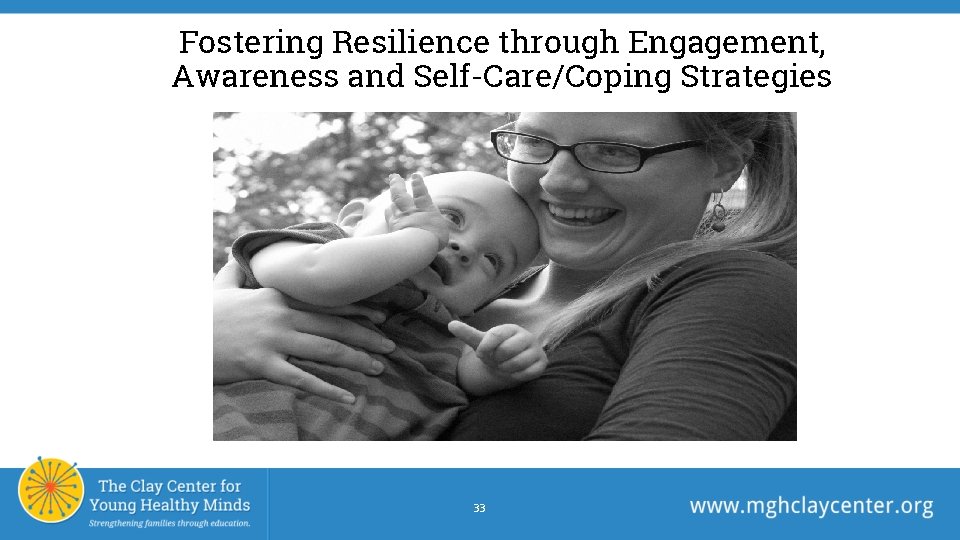
Fostering Resilience through Engagement, Awareness and Self-Care/Coping Strategies 33
34
35
Access all of the materials from this event here: www. mghclaycenter. org/partners-eap 36