
The Development of Plunger Device for Lifetime Measurements

- Slides: 23
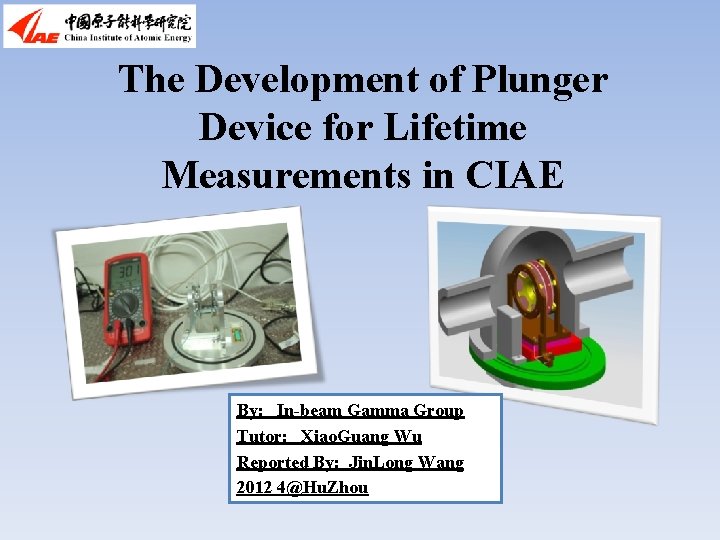
The Development of Plunger Device for Lifetime Measurements in CIAE By: In-beam Gamma Group Tutor: Xiao. Guang Wu Reported By: Jin. Long Wang 2012 4@Hu. Zhou
Contents 1 2 3 The Basis of The Plunger 1. 1 The Background 1. 2 Principle The Latest Work and Development 2. 1 Structure design and precise motion 2. 2 Flatten the foils 2. 3 Capacitance to measure the distance 2. 4 Closed cycle control Summary and Next Work 3. 1 The test experiment and result 3. 2 The work on calendar
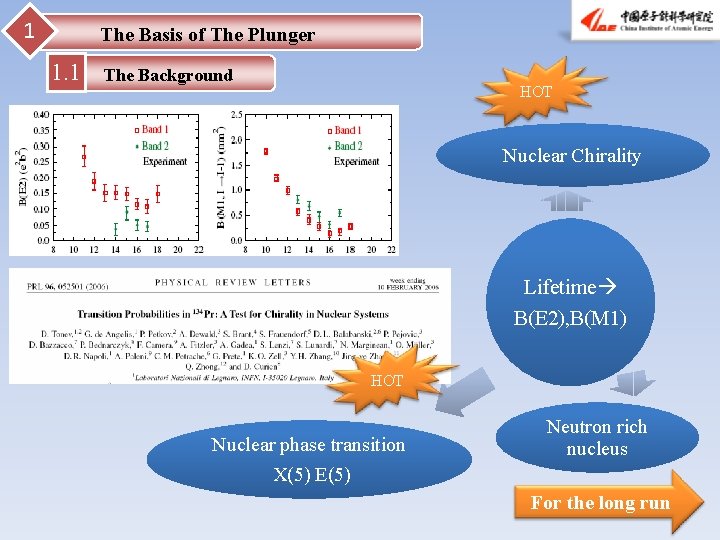
1 The Basis of The Plunger 1. 1 The Background HOT Nuclear Chirality Lifetime B(E 2), B(M 1) HOT Nuclear phase transition X(5) E(5) Neutron rich nucleus For the long run
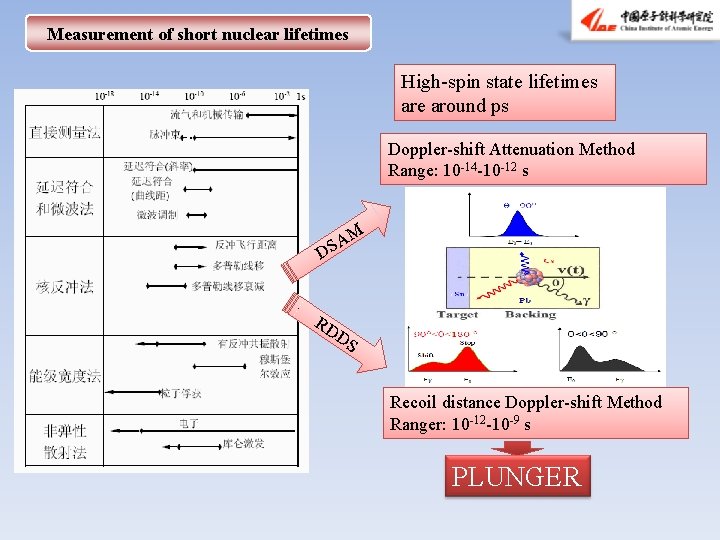
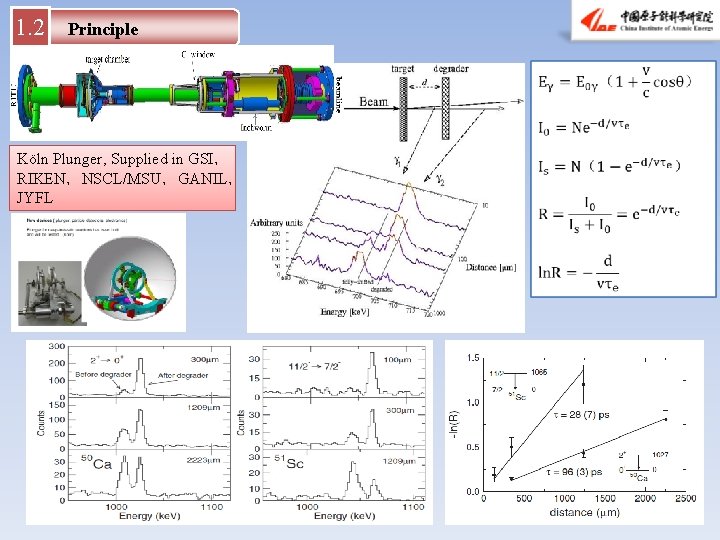
Measurement of short nuclear lifetimes High-spin state lifetimes are around ps Doppler-shift Attenuation Method Range: 10 -14 -10 -12 s AM S D RD DS Recoil distance Doppler-shift Method Ranger: 10 -12 -10 -9 s PLUNGER
1. 2 Principle Köln Plunger, Supplied in GSI, RIKEN,NSCL/MSU,GANIL, JYFL
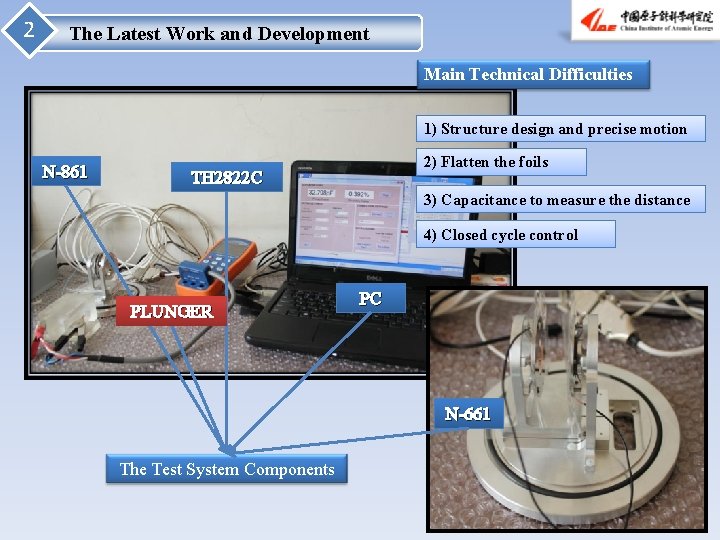
2 The Latest Work and Development Main Technical Difficulties 1) Structure design and precise motion N-861 2) Flatten the foils TH 2822 C 3) Capacitance to measure the distance 4) Closed cycle control PLUNGER PC N-661 The Test System Components
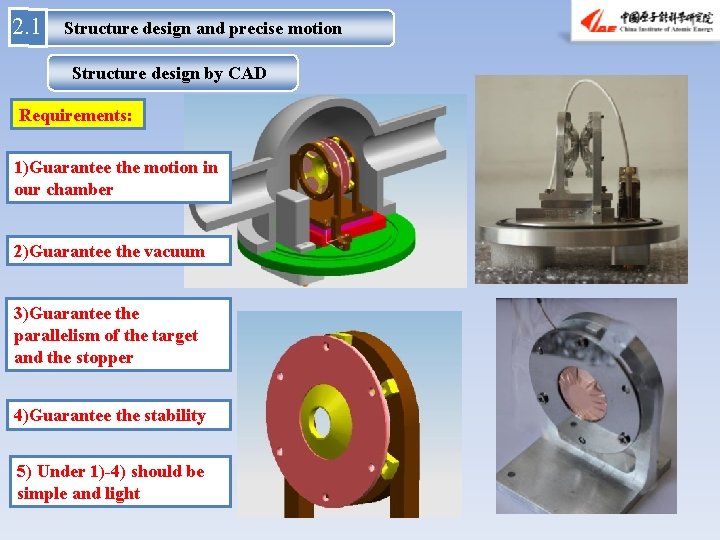
2. 1 Structure design and precise motion Structure design by CAD Requirements: 1)Guarantee the motion in our chamber 2)Guarantee the vacuum 3)Guarantee the parallelism of the target and the stopper 4)Guarantee the stability 5) Under 1)-4) should be simple and light
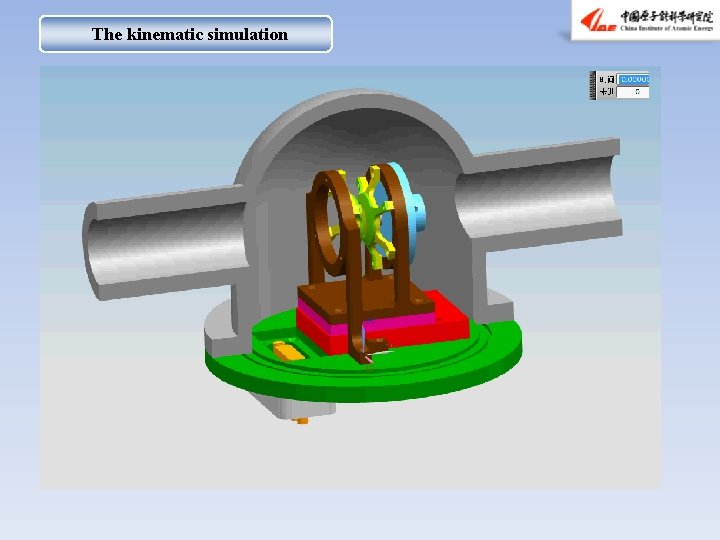
The kinematic simulation
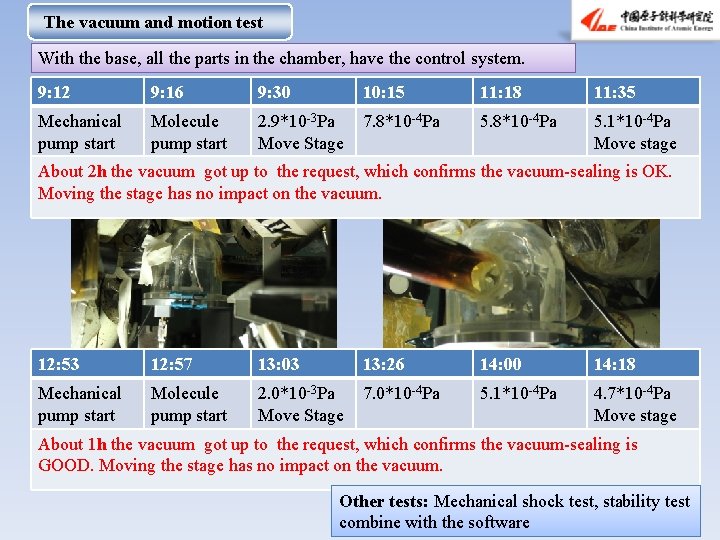
The vacuum and motion test With the base, all the parts in the chamber, have the control system. 9: 12 9: 16 9: 30 10: 15 11: 18 11: 35 Mechanical pump start Molecule pump start 2. 9*10 -3 Pa Move Stage 7. 8*10 -4 Pa 5. 1*10 -4 Pa Move stage About 2 h the vacuum got up to the request, which confirms the vacuum-sealing is OK. Moving the stage has no impact on the vacuum. 12: 53 12: 57 13: 03 13: 26 14: 00 14: 18 Mechanical pump start Molecule pump start 2. 0*10 -3 Pa Move Stage 7. 0*10 -4 Pa 5. 1*10 -4 Pa 4. 7*10 -4 Pa Move stage About 1 h the vacuum got up to the request, which confirms the vacuum-sealing is GOOD. Moving the stage has no impact on the vacuum. Other tests: Mechanical shock test, stability test combine with the software
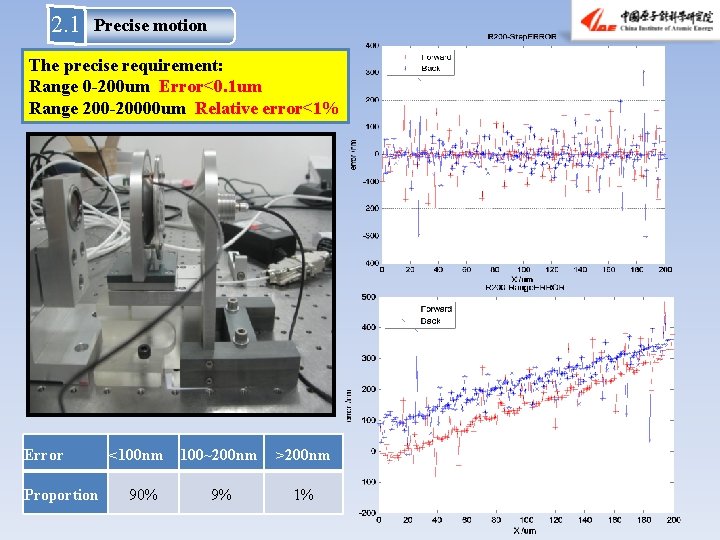
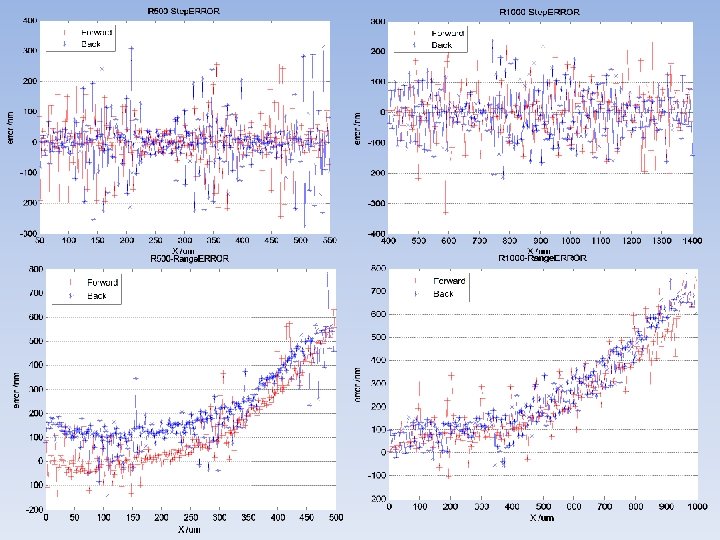
2. 1 Precise motion The precise requirement: Range 0 -200 um Error<0. 1 um Range 200 -20000 um Relative error<1% Error Proportion <100 nm 100~200 nm 90% 9% >200 nm 1%
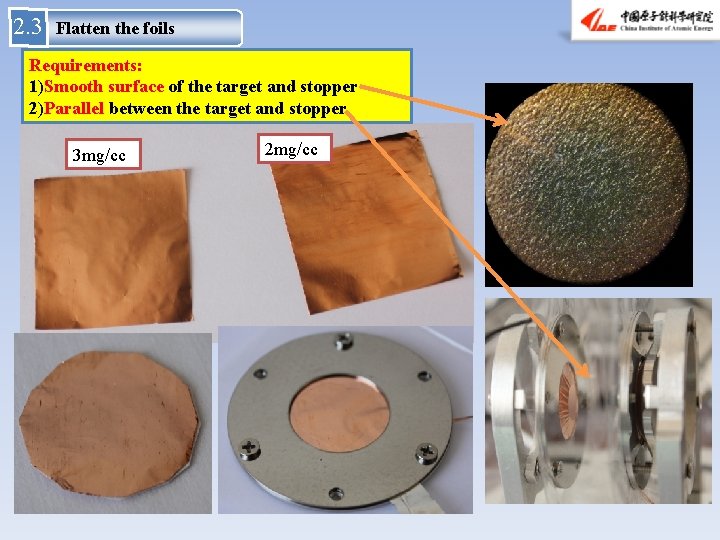
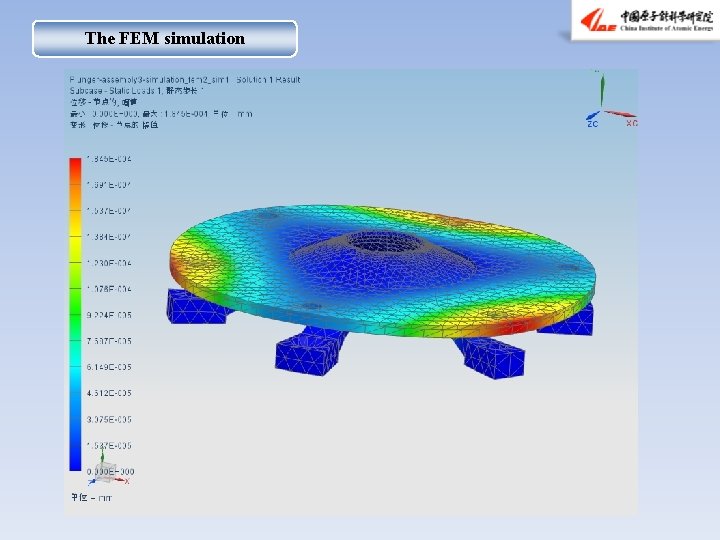
2. 3 Flatten the foils Requirements: 1)Smooth surface of the target and stopper 2)Parallel between the target and stopper 3 mg/cc 2 mg/cc
The FEM simulation
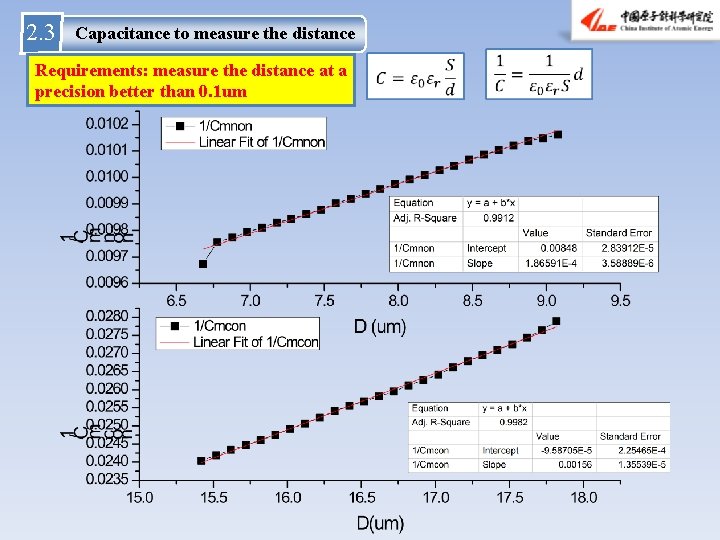
2. 3 Capacitance to measure the distance Requirements: measure the distance at a precision better than 0. 1 um
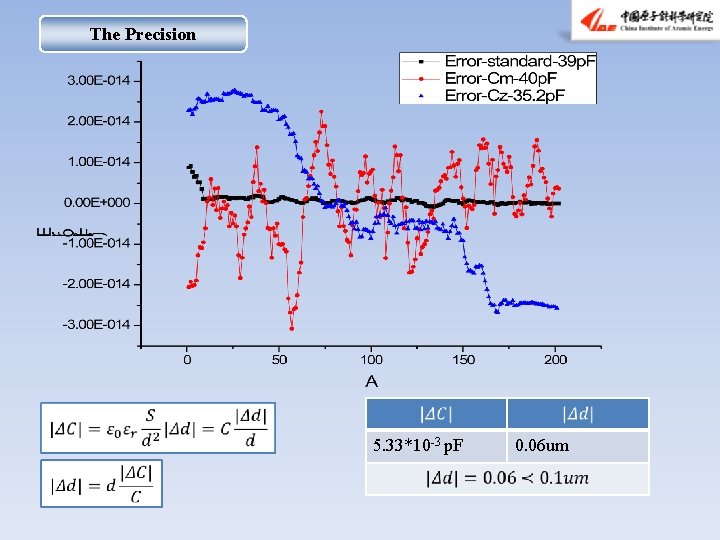
The Precision 5. 33*10 -3 p. F 0. 06 um
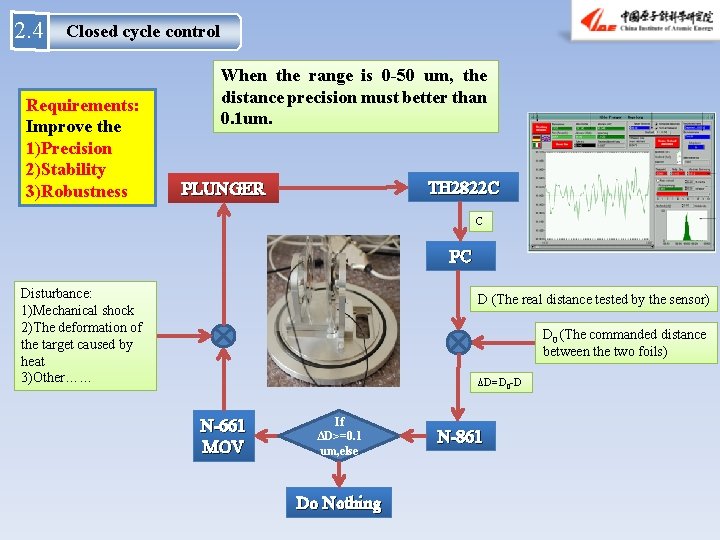
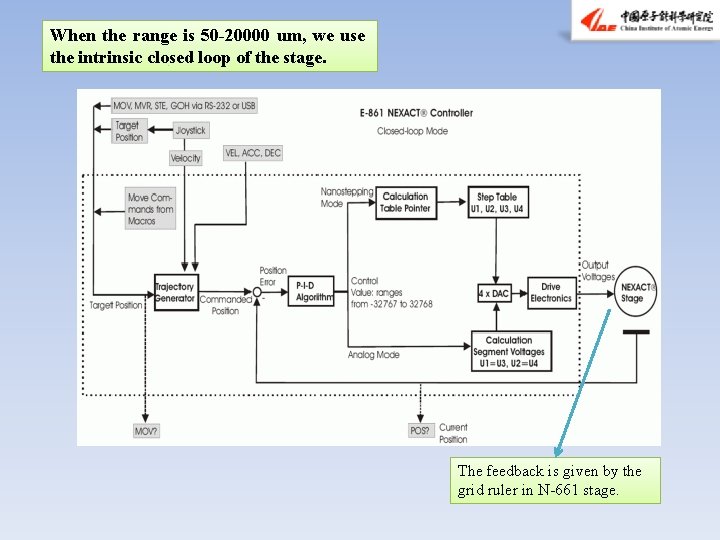
2. 4 Closed cycle control Requirements: Improve the 1)Precision 2)Stability 3)Robustness When the range is 0 -50 um, the distance precision must better than 0. 1 um. TH 2822 C PLUNGER C PC Disturbance: 1)Mechanical shock 2)The deformation of the target caused by heat 3)Other…… D (The real distance tested by the sensor) D 0 (The commanded distance between the two foils) ΔD=D 0 -D N-661 MOV If ΔD>=0. 1 um, else Do Nothing N-861
When the range is 50 -20000 um, we use the intrinsic closed loop of the stage. The feedback is given by the grid ruler in N-661 stage.
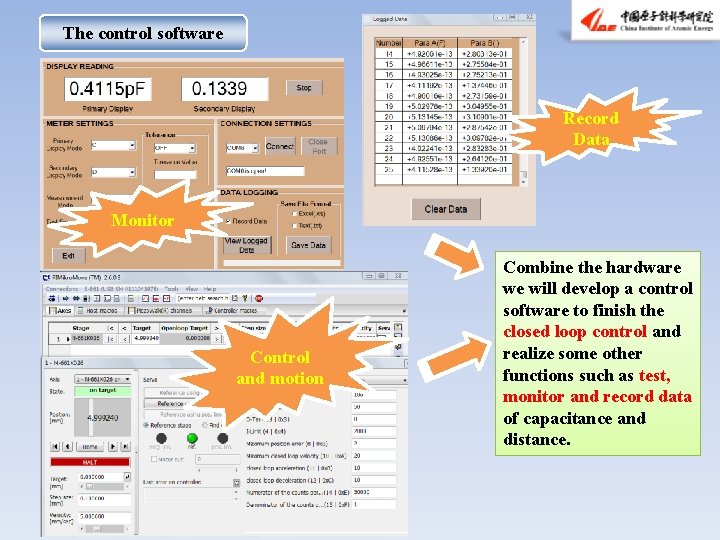
The control software Record Data Monitor Control and motion Combine the hardware we will develop a control software to finish the closed loop control and realize some other functions such as test, monitor and record data of capacitance and distance.
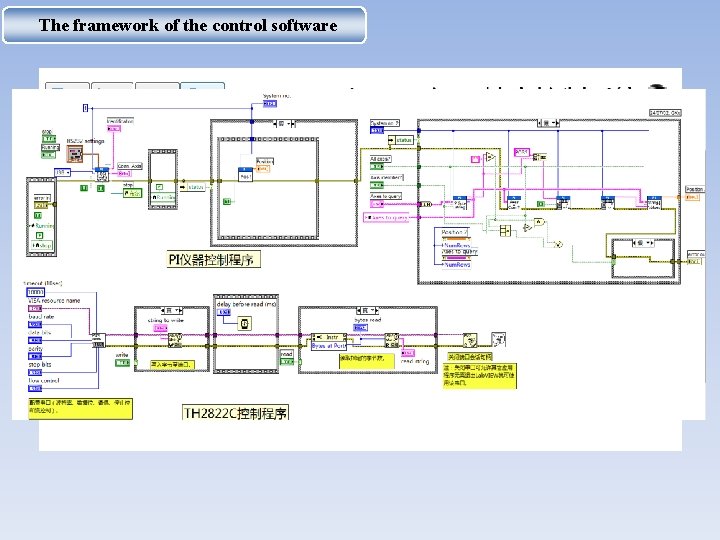
The framework of the control software
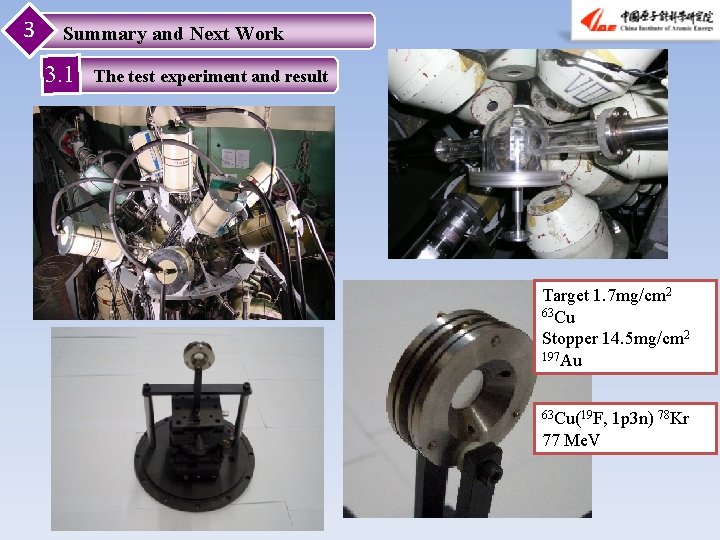
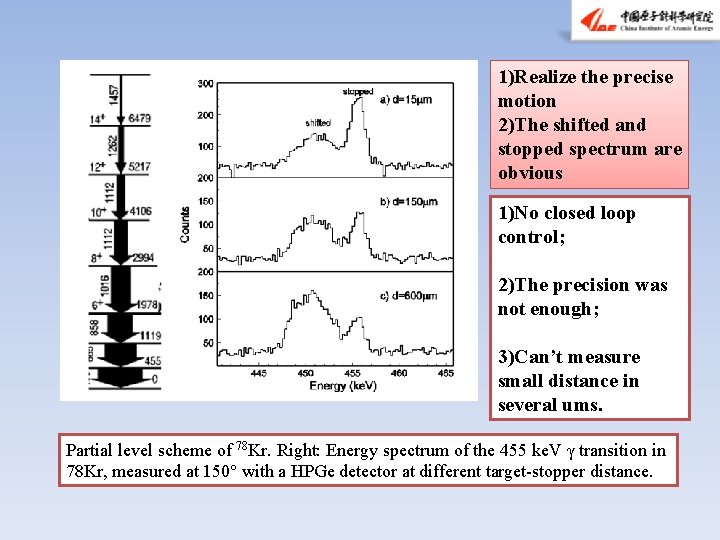
3 Summary and Next Work 3. 1 The test experiment and result Target 1. 7 mg/cm 2 63 Cu Stopper 14. 5 mg/cm 2 197 Au 63 Cu(19 F, 77 Me. V 1 p 3 n) 78 Kr
1)Realize the precise motion 2)The shifted and stopped spectrum are obvious 1)No closed loop control; 2)The precision was not enough; 3)Can’t measure small distance in several ums. Partial level scheme of 78 Kr. Right: Energy spectrum of the 455 ke. V γ transition in 78 Kr, measured at 150° with a HPGe detector at different target-stopper distance.
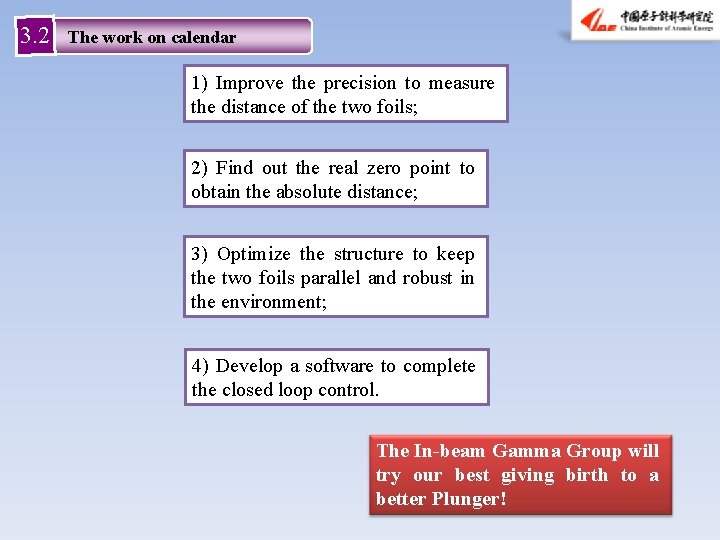
3. 2 The work on calendar 1) Improve the precision to measure the distance of the two foils; 2) Find out the real zero point to obtain the absolute distance; 3) Optimize the structure to keep the two foils parallel and robust in the environment; 4) Develop a software to complete the closed loop control. The In-beam Gamma Group will try our best giving birth to a better Plunger!