
The Development of Constitutional Monarchy in Great Britain
The Development of Constitutional Monarchy in Great Britain
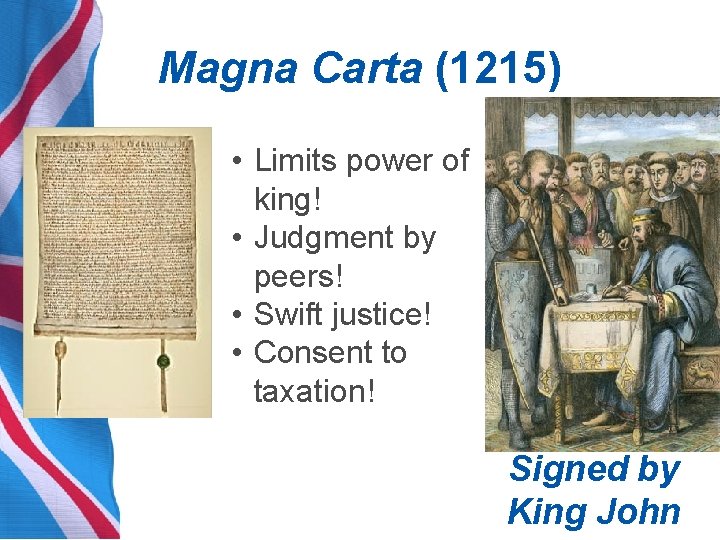
Magna Carta (1215) • Limits power of king! • Judgment by peers! • Swift justice! • Consent to taxation! Signed by King John
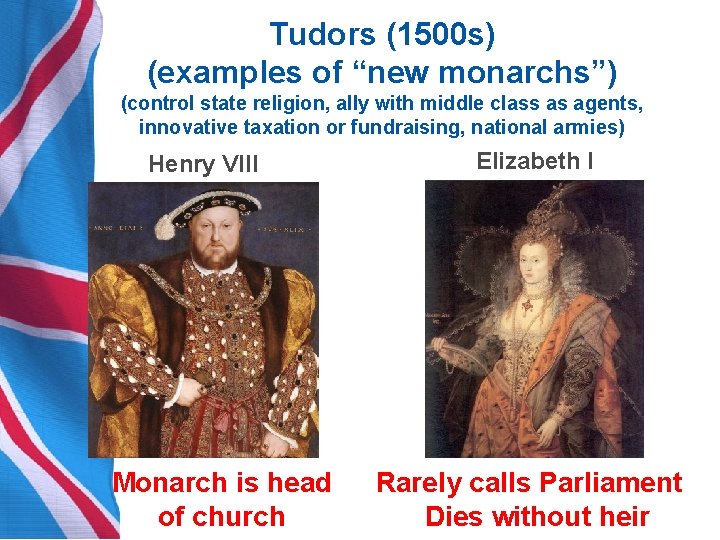
Tudors (1500 s) (examples of “new monarchs”) (control state religion, ally with middle class as agents, innovative taxation or fundraising, national armies) Henry VIII Monarch is head of church Elizabeth I Rarely calls Parliament Dies without heir
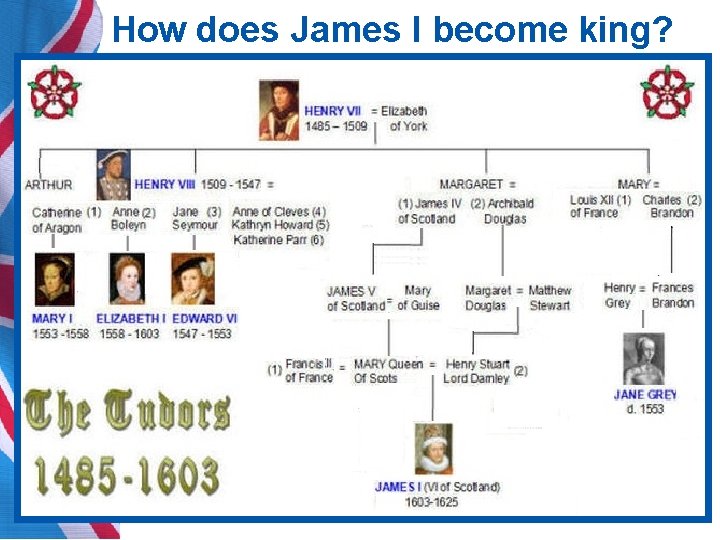
How does James I become king?
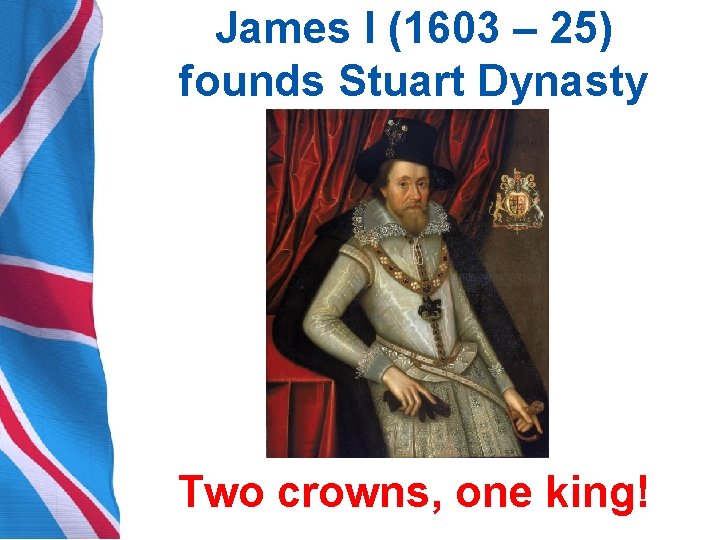
James I (1603 – 25) founds Stuart Dynasty Two crowns, one king!
James I • Strong believer in divine right of kings – seldom called Parliament – raised funds thru other means • established pattern for son, Charles I “Monarchy is the greatest thing on earth. Kings are rightly called gods since just like God they have power of life and death over all their subjects in all things. They are accountable to God only…so it is a crime for anyone to argue about what a king can do. ”
James I and religion • Relatively tolerant towards Catholics – Middle ground angers Puritans & Catholics – Disappoints Catholics who want more • James then denounces “ungrateful” Catholics – Catholics across Europe believe it is their right to eliminate “tyrants” (actually politiques) who don’t support the faith » Henry III of France, Henry IV of France both assassinated » Plots to poison Elizabeth I – Gunpowder Plot of 1605 » Guy Fawkes = Cersei Lannister
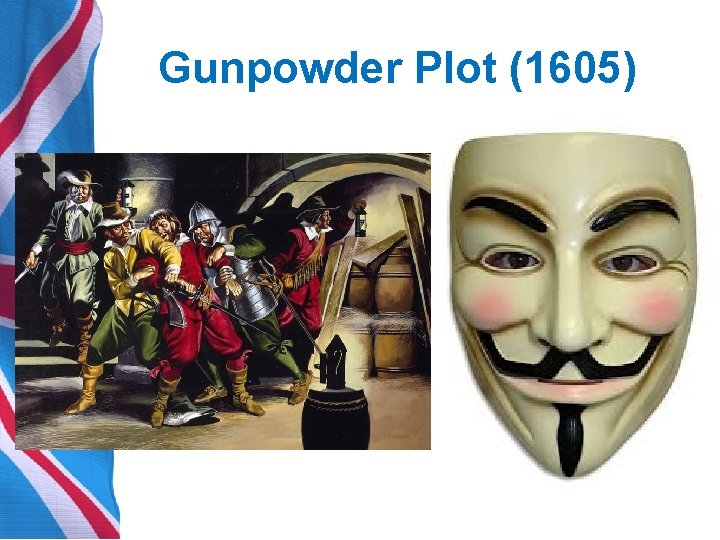
Gunpowder Plot (1605)
James I and religion • Main Puritan complaints: – Too much “popery” in Anglican church – James maintains Anglican episcopal system • Hierarchical church structure – bishops – American Anglicans = “Episcopalians” • Puritans prefer Scottish Calvinist model – Church run by presbyters – church elders – American Scottish Calvinists = “Presbyterians” – James “flirts” with Catholic kingdoms • tries to marry son to Spanish/French princesses. – consider James’ personal life scandalous. • Duke of Buckingham = court favorite – Puritan dissenters/separatists leave England • Plymouth and Massachusetts Bay colonies
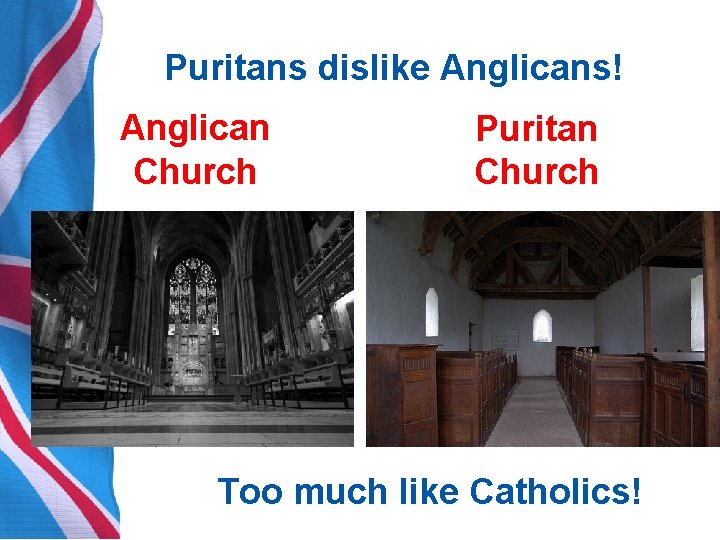
Puritans dislike Anglicans! Anglican Church Puritan Church Too much like Catholics!
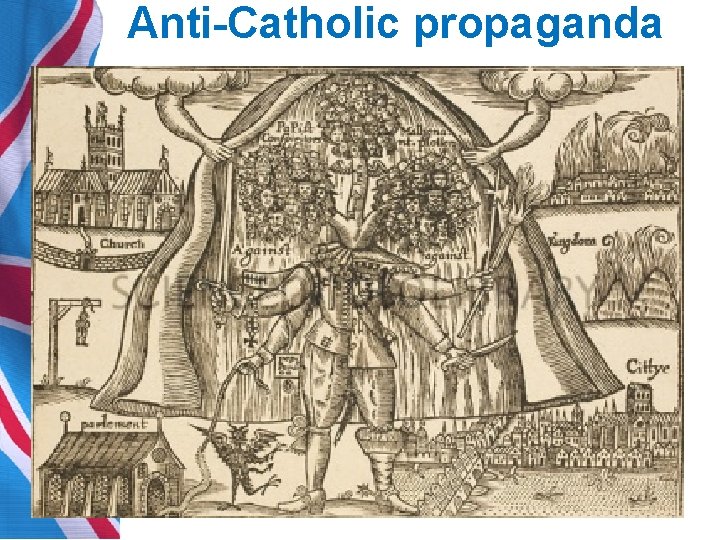
Anti-Catholic propaganda
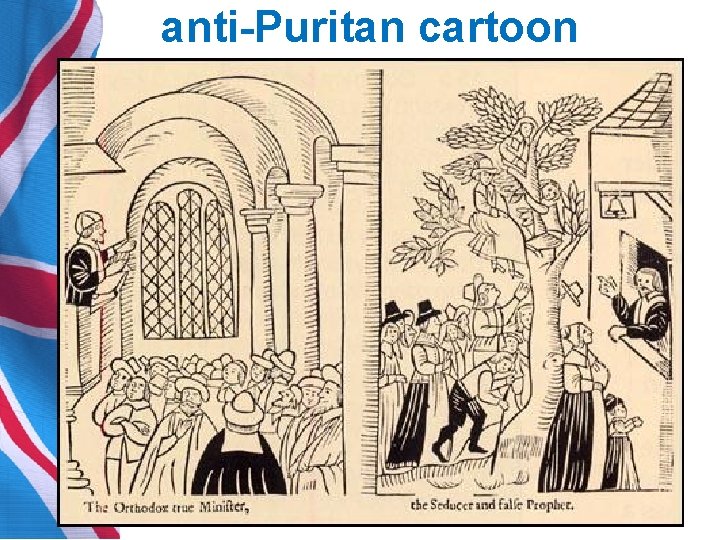
anti-Puritan cartoon
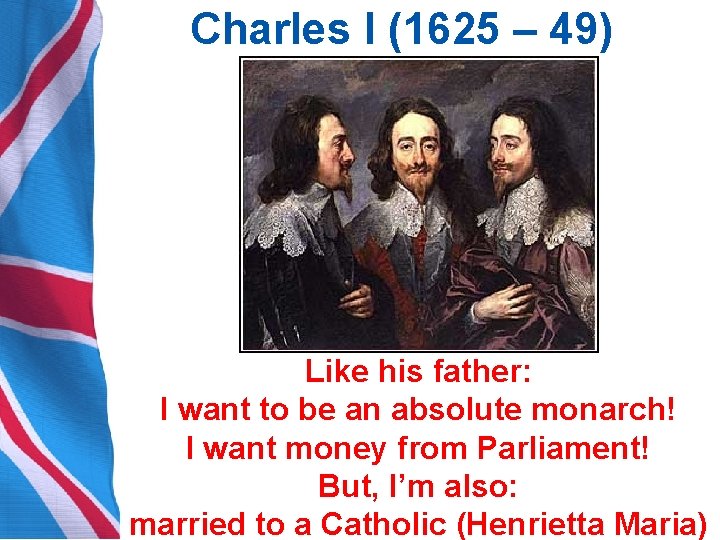
Charles I (1625 – 49) Like his father: I want to be an absolute monarch! I want money from Parliament! But, I’m also: married to a Catholic (Henrietta Maria)
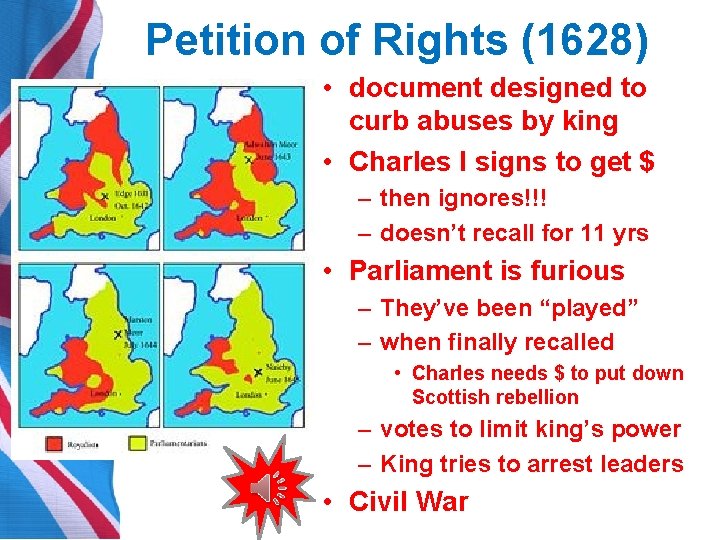
Petition of Rights (1628) • document designed to curb abuses by king • Charles I signs to get $ – then ignores!!! – doesn’t recall for 11 yrs • Parliament is furious – They’ve been “played” – when finally recalled • Charles needs $ to put down Scottish rebellion – votes to limit king’s power – King tries to arrest leaders • Civil War
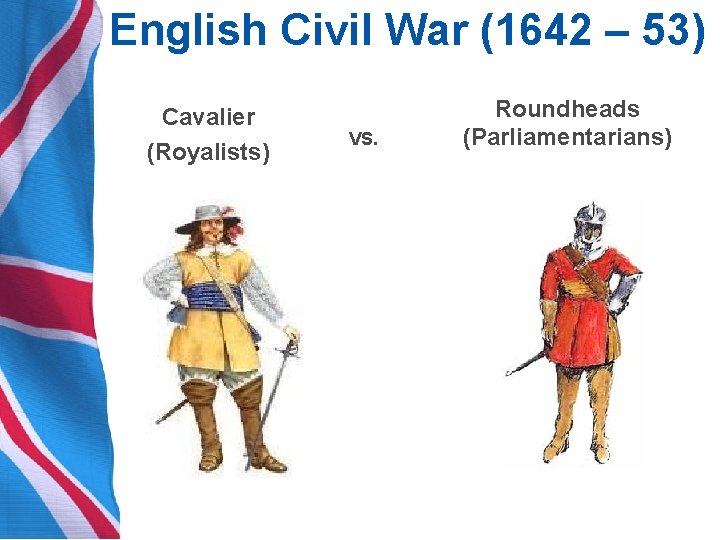
English Civil War (1642 – 53) Cavalier (Royalists) VS. Roundheads (Parliamentarians)
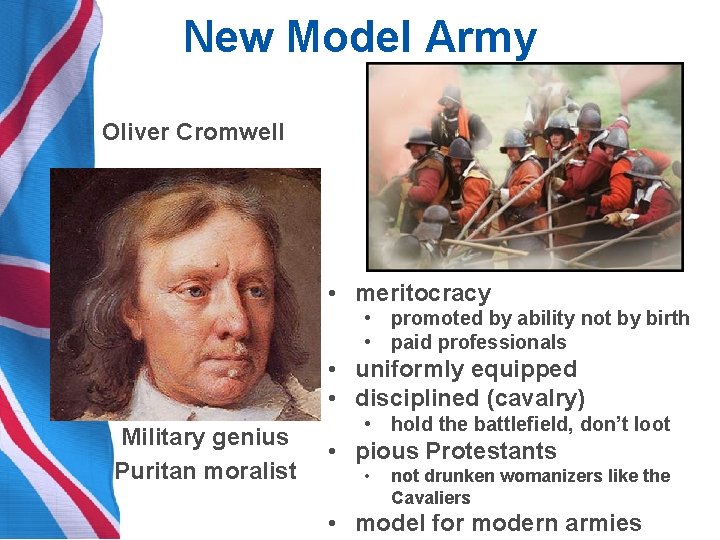
New Model Army Oliver Cromwell • meritocracy • promoted by ability not by birth • paid professionals • uniformly equipped • disciplined (cavalry) Military genius Puritan moralist • hold the battlefield, don’t loot • pious Protestants • not drunken womanizers like the Cavaliers • model for modern armies
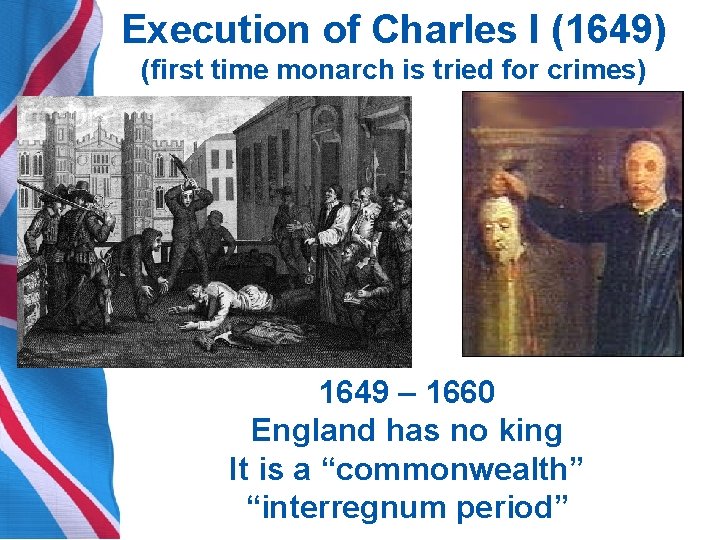
Execution of Charles I (1649) (first time monarch is tried for crimes) 1649 – 1660 England has no king It is a “commonwealth” “interregnum period”
Cromwell and the Irish • Cromwell pits down Catholic and proroyalist rebellion in Ireland – Passes anti-Catholic laws – Confiscates Catholic lands • Catholic land ownership during the Commonwealth period: – 1640 = 60% – 1660 = 8% – Population decline • Over 200, 000 deaths • 50, 000 deported as indentured servants
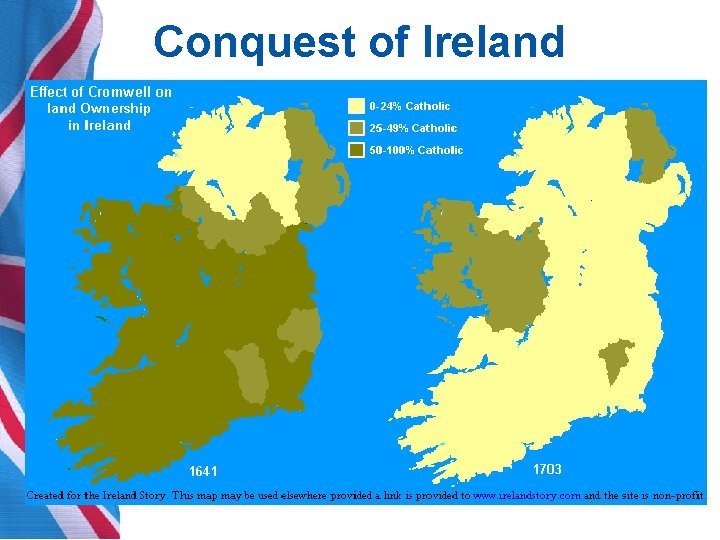
Conquest of Ireland
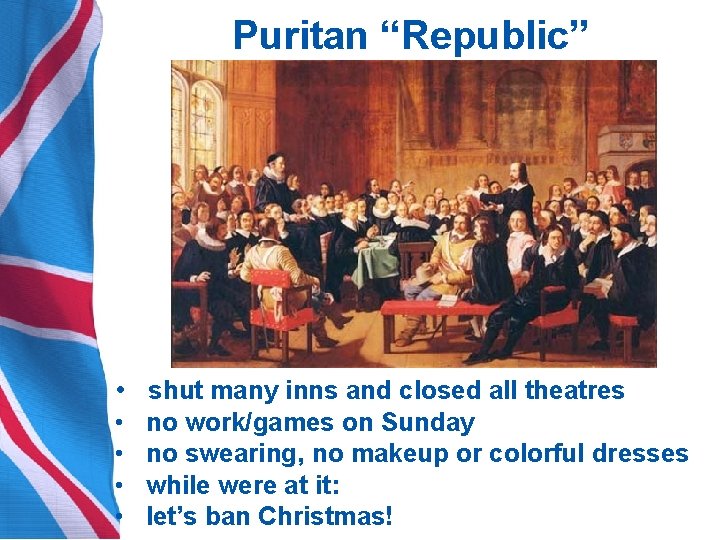
Puritan “Republic” • shut many inns and closed all theatres • • no work/games on Sunday no swearing, no makeup or colorful dresses while were at it: let’s ban Christmas!
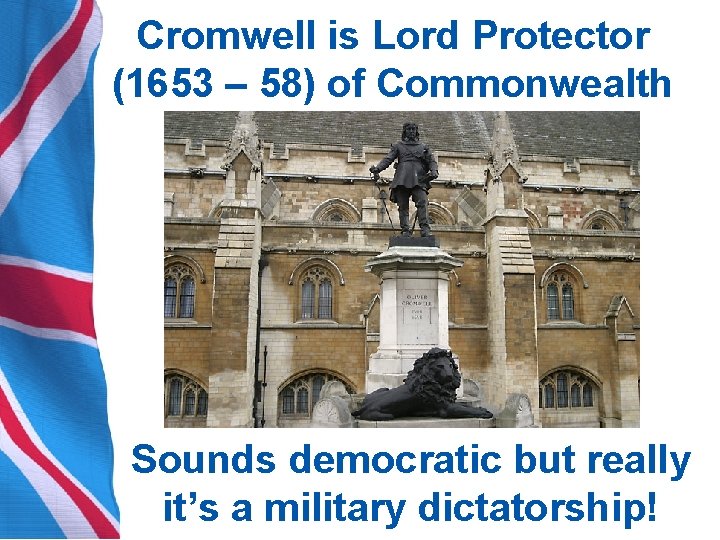
Cromwell is Lord Protector (1653 – 58) of Commonwealth Sounds democratic but really it’s a military dictatorship!
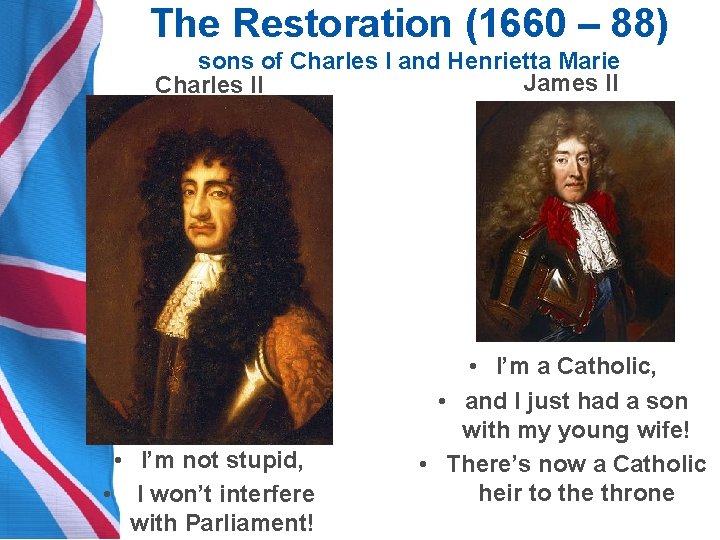
The Restoration (1660 – 88) sons of Charles I and Henrietta Marie James II Charles II • I’m not stupid, • I won’t interfere with Parliament! • I’m a Catholic, • and I just had a son with my young wife! • There’s now a Catholic heir to the throne
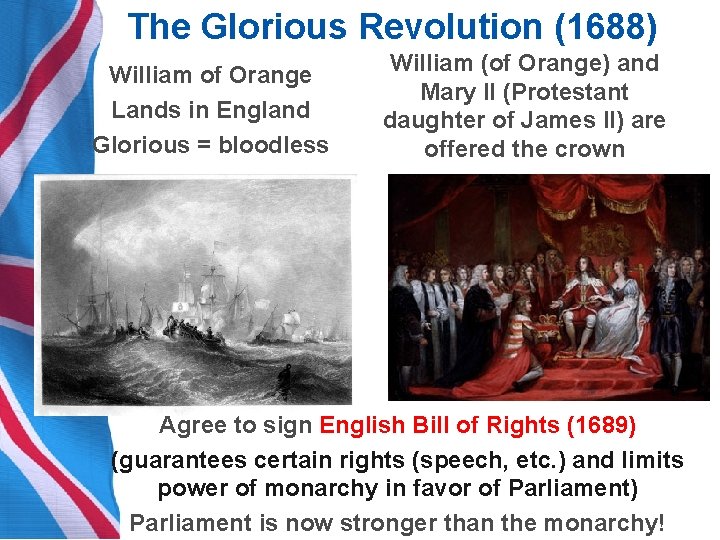
The Glorious Revolution (1688) William of Orange Lands in England Glorious = bloodless William (of Orange) and Mary II (Protestant daughter of James II) are offered the crown Agree to sign English Bill of Rights (1689) (guarantees certain rights (speech, etc. ) and limits power of monarchy in favor of Parliament) Parliament is now stronger than the monarchy!
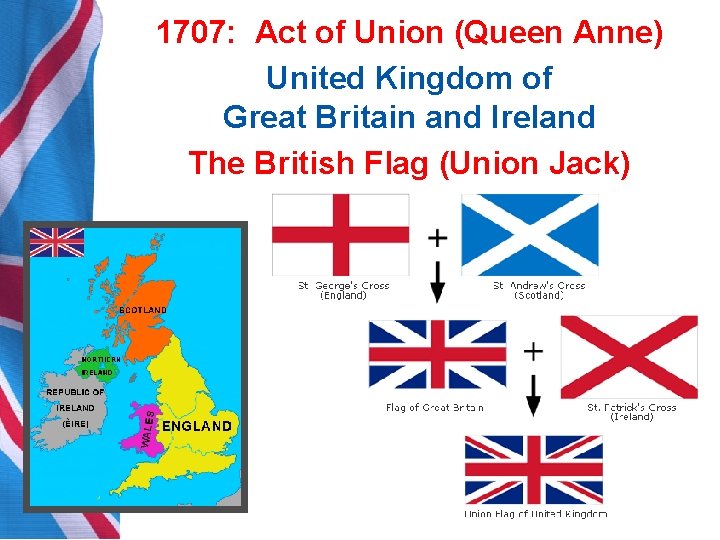
1707: Act of Union (Queen Anne) United Kingdom of Great Britain and Ireland The British Flag (Union Jack)
- Slides: 24