
The Development of a General Purpose Processing Unit

- Slides: 26
The Development of a General Purpose Processing Unit for the Upgraded Electronics of the ATLAS Tile. Cal MITC HE LL COX UNIVERSITY OF THE WITWATERSRAND, JOHANNESBURG SAI P 2014
Overview • ATLAS TILE CALORIMETER (TILECAL) • THE OFFLINE DATA PROBLEM • TILECAL READ-OUT ARCHITECTURE • Phase II Upgrades • ENERGY RECONSTRUCTION WITH HIGH PILE-UP • GENERAL PURPOSE PROCESSING UNIT
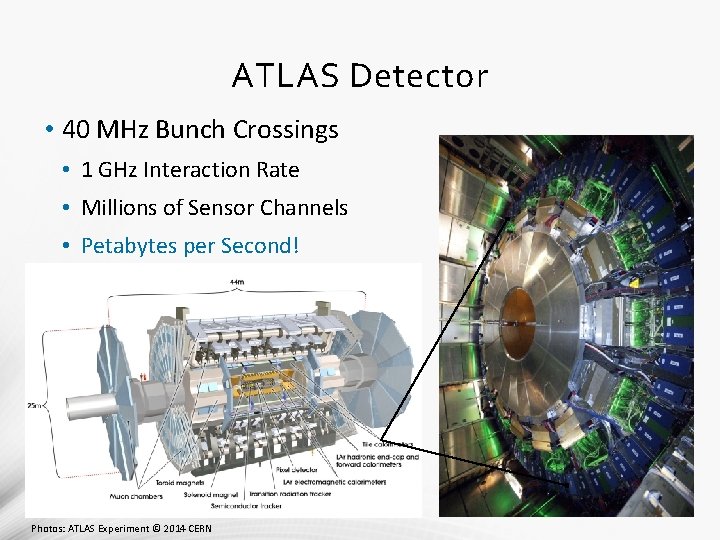
ATLAS Detector • 40 MHz Bunch Crossings • 1 GHz Interaction Rate • Millions of Sensor Channels • Petabytes per Second! Photos: ATLAS Experiment © 2014 CERN
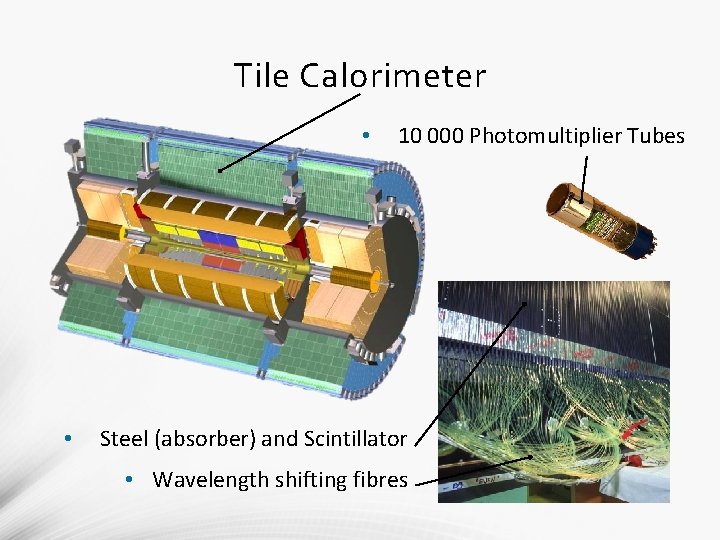
Tile Calorimeter • • 10 000 Photomultiplier Tubes Steel (absorber) and Scintillator • Wavelength shifting fibres
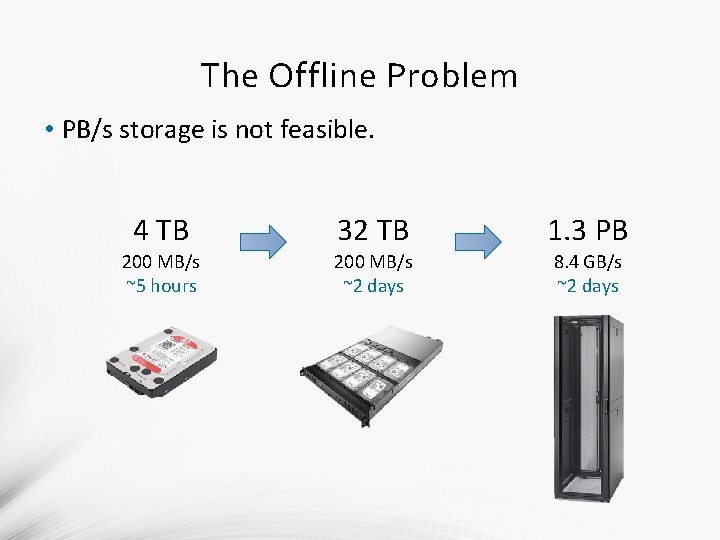
The Offline Problem • PB/s storage is not feasible. 4 TB 200 MB/s ~5 hours 32 TB 200 MB/s ~2 days 1. 3 PB 8. 4 GB/s ~2 days
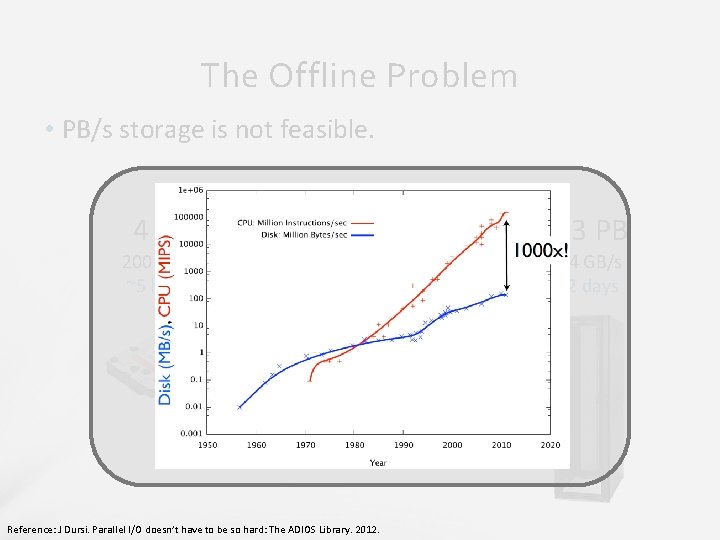
The Offline Problem • PB/s storage is not feasible. 4 TB 200 MB/s ~5 hours 32 TB 200 MB/s ~2 days Reference: J Dursi. Parallel I/O doesn’t have to be so hard: The ADIOS Library. 2012. 1. 3 PB 8. 4 GB/s ~2 days
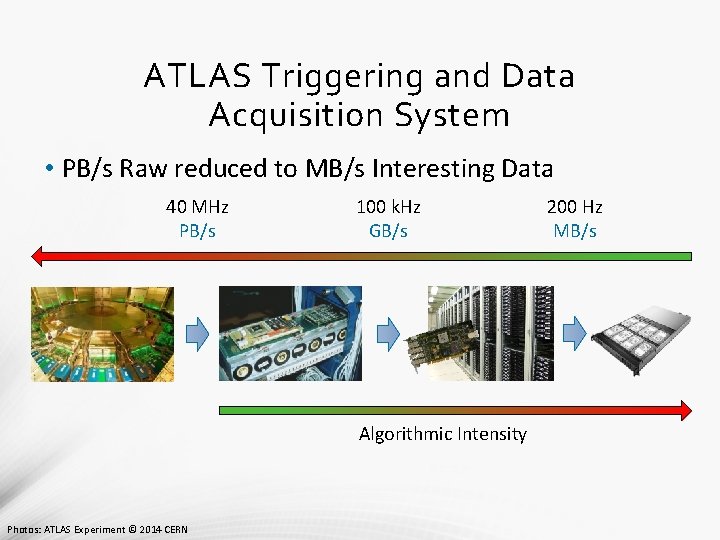
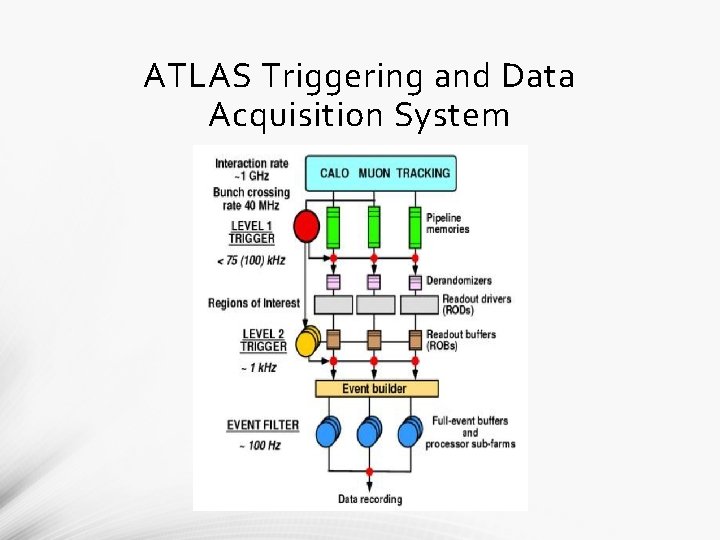
ATLAS Triggering and Data Acquisition System • PB/s Raw reduced to MB/s Interesting Data 40 MHz PB/s 100 k. Hz GB/s Algorithmic Intensity Photos: ATLAS Experiment © 2014 CERN 200 Hz MB/s
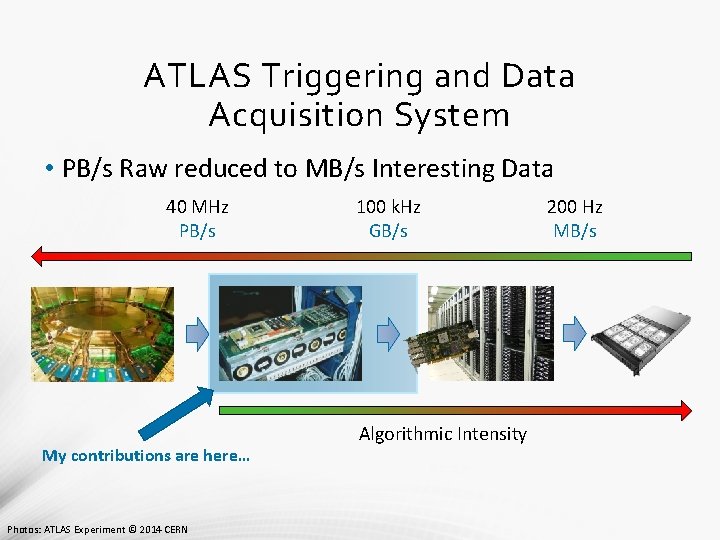
ATLAS Triggering and Data Acquisition System • PB/s Raw reduced to MB/s Interesting Data 40 MHz PB/s My contributions are here… Photos: ATLAS Experiment © 2014 CERN 100 k. Hz GB/s Algorithmic Intensity 200 Hz MB/s
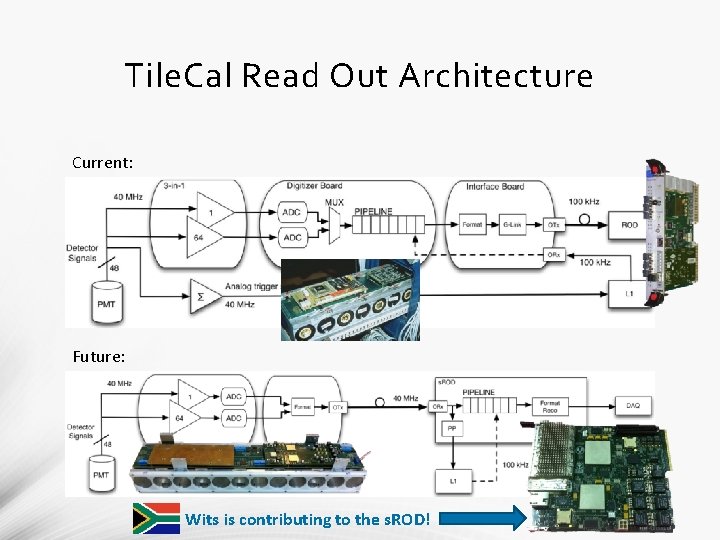
Tile. Cal Read Out Architecture Current: Future: Wits is contributing to the s. ROD!
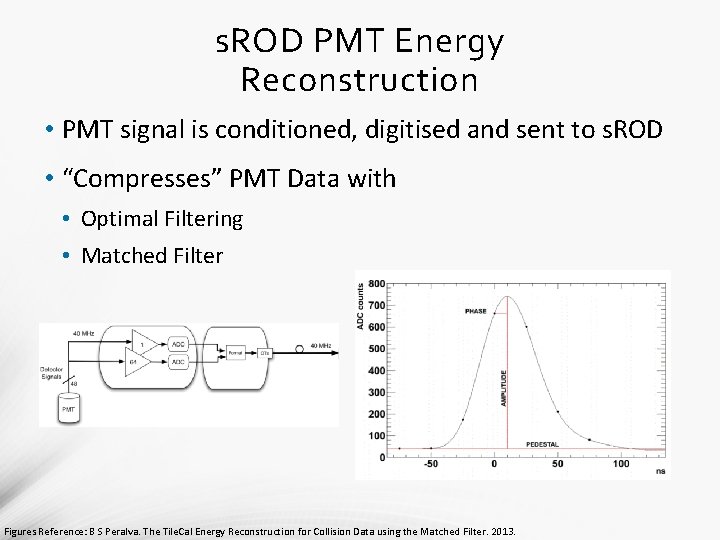
s. ROD PMT Energy Reconstruction • PMT signal is conditioned, digitised and sent to s. ROD • “Compresses” PMT Data with • Optimal Filtering • Matched Filter Figures Reference: B S Peralva. The Tile. Cal Energy Reconstruction for Collision Data using the Matched Filter. 2013.
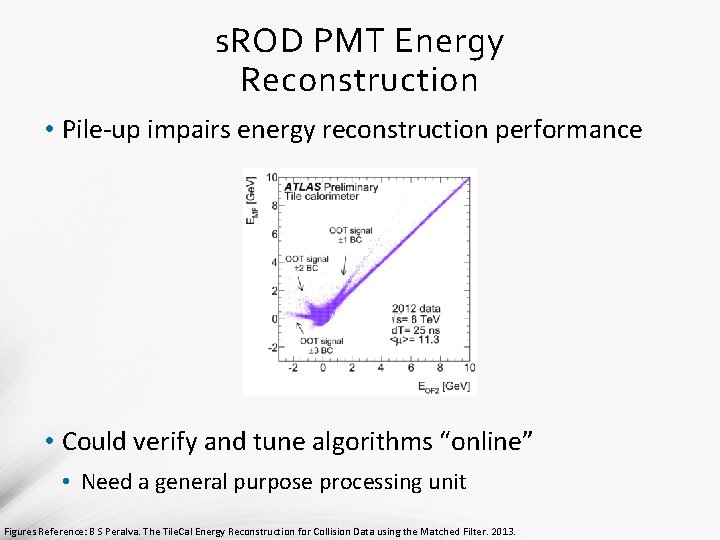
s. ROD PMT Energy Reconstruction • Pile-up impairs energy reconstruction performance • Could verify and tune algorithms “online” • Need a general purpose processing unit Figures Reference: B S Peralva. The Tile. Cal Energy Reconstruction for Collision Data using the Matched Filter. 2013.
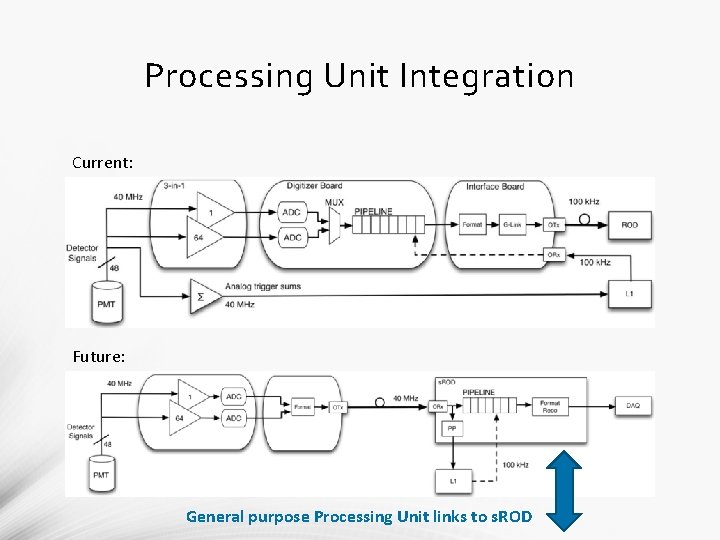
Processing Unit Integration Current: Future: General purpose Processing Unit links to s. ROD
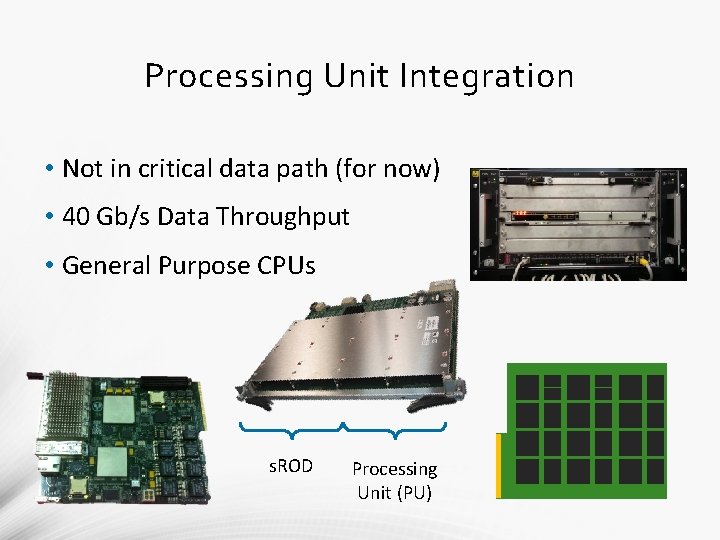
Processing Unit Integration • Not in critical data path (for now) • 40 Gb/s Data Throughput • General Purpose CPUs s. ROD Processing Unit (PU)
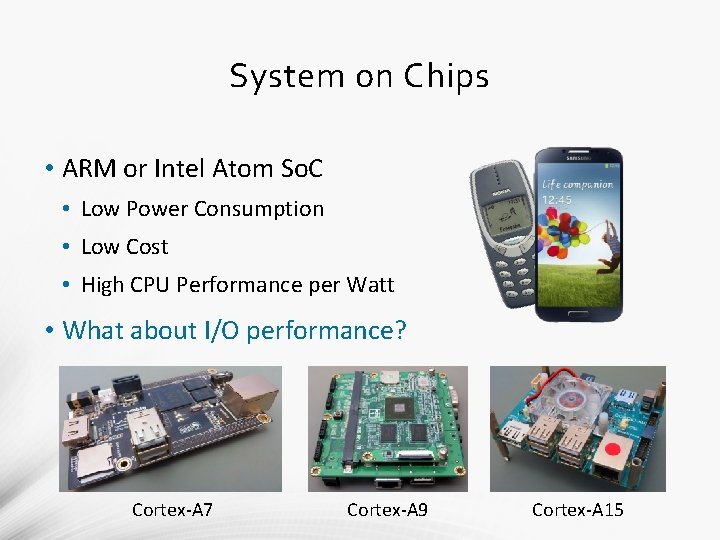
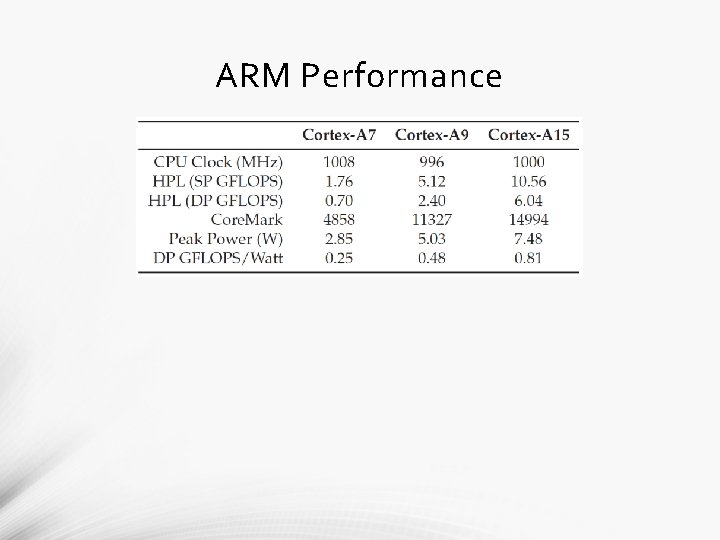
System on Chips • ARM or Intel Atom So. C • Low Power Consumption • Low Cost • High CPU Performance per Watt • What about I/O performance? Cortex-A 7 Cortex-A 9 Cortex-A 15
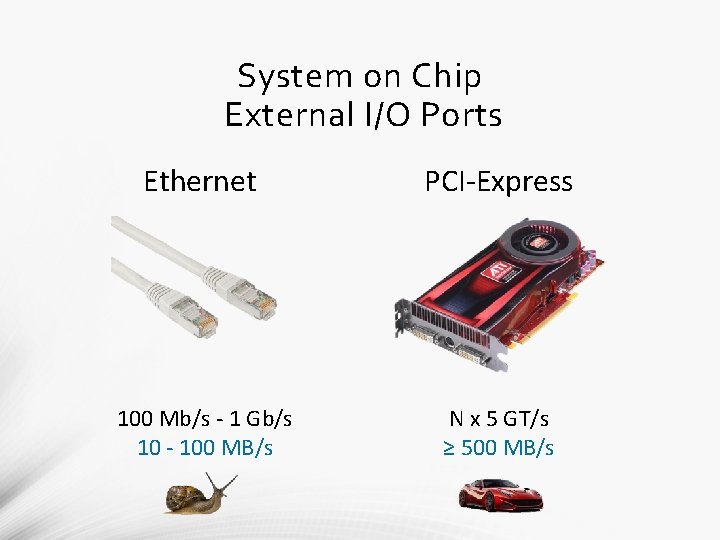
System on Chip External I/O Ports Ethernet PCI-Express 100 Mb/s - 1 Gb/s 10 - 100 MB/s N x 5 GT/s ≥ 500 MB/s
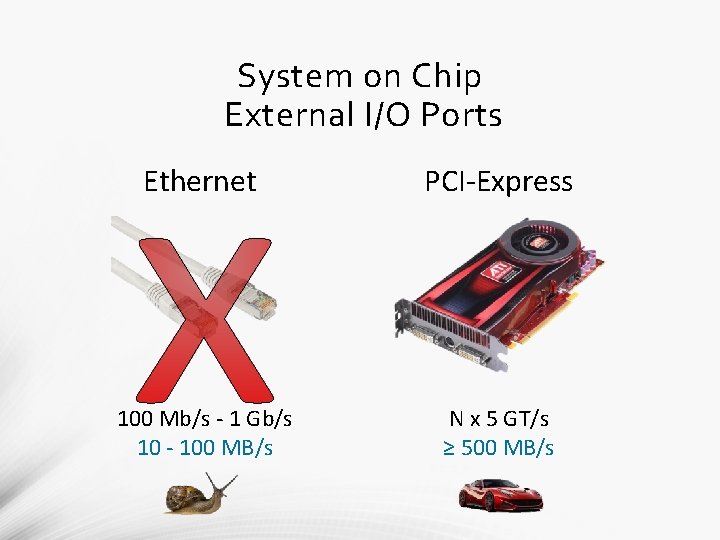
System on Chip External I/O Ports Ethernet PCI-Express 100 Mb/s - 1 Gb/s 10 - 100 MB/s N x 5 GT/s ≥ 500 MB/s
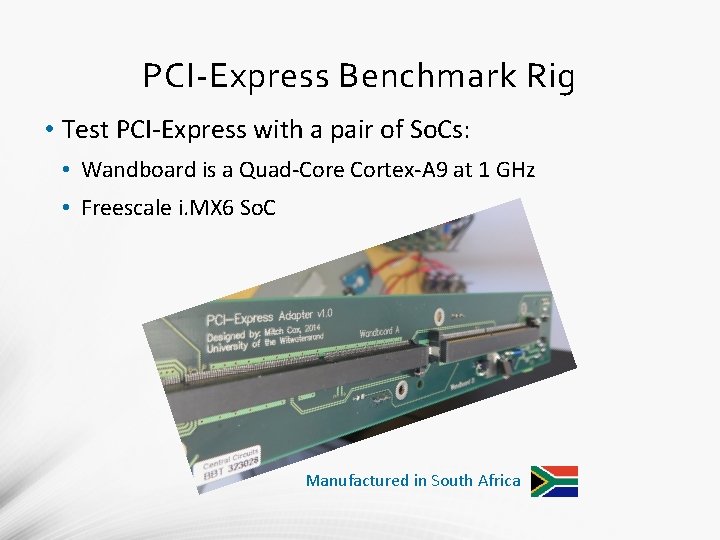
PCI-Express Benchmark Rig • Test PCI-Express with a pair of So. Cs: • Wandboard is a Quad-Core Cortex-A 9 at 1 GHz • Freescale i. MX 6 So. C Manufactured in South Africa
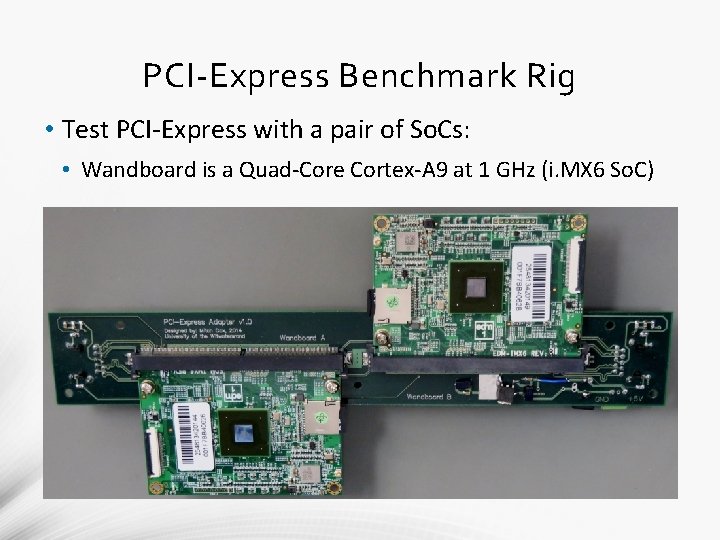
PCI-Express Benchmark Rig • Test PCI-Express with a pair of So. Cs: • Wandboard is a Quad-Core Cortex-A 9 at 1 GHz (i. MX 6 So. C)
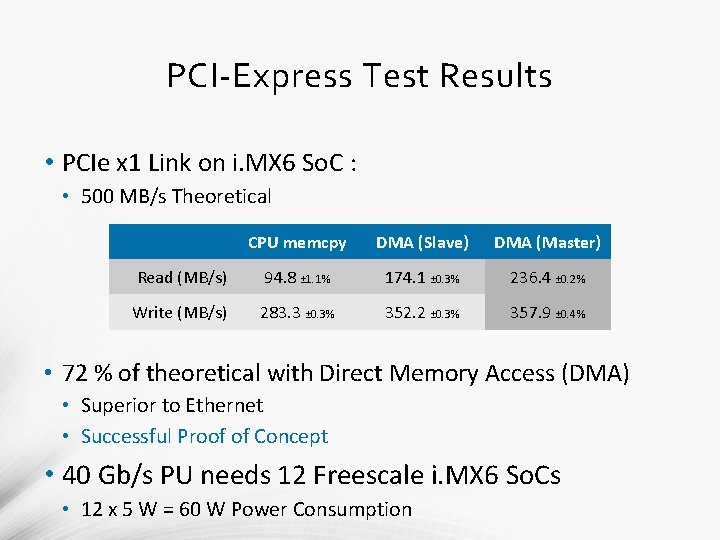
PCI-Express Test Results • PCIe x 1 Link on i. MX 6 So. C : • 500 MB/s Theoretical CPU memcpy DMA (Slave) DMA (Master) Read (MB/s) 94. 8 ± 1. 1% 174. 1 ± 0. 3% 236. 4 ± 0. 2% Write (MB/s) 283. 3 ± 0. 3% 352. 2 ± 0. 3% 357. 9 ± 0. 4% • 72 % of theoretical with Direct Memory Access (DMA) • Superior to Ethernet • Successful Proof of Concept • 40 Gb/s PU needs 12 Freescale i. MX 6 So. Cs • 12 x 5 W = 60 W Power Consumption
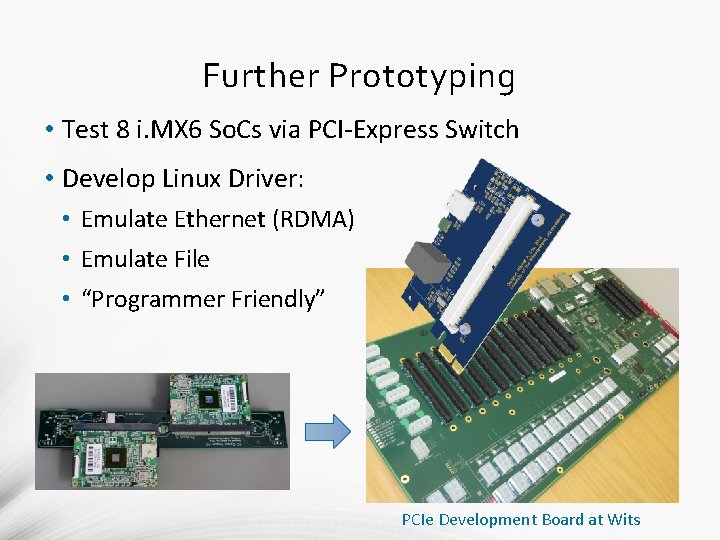
Further Prototyping • Test 8 i. MX 6 So. Cs via PCI-Express Switch • Develop Linux Driver: • Emulate Ethernet (RDMA) • Emulate File • “Programmer Friendly” PCIe Development Board at Wits
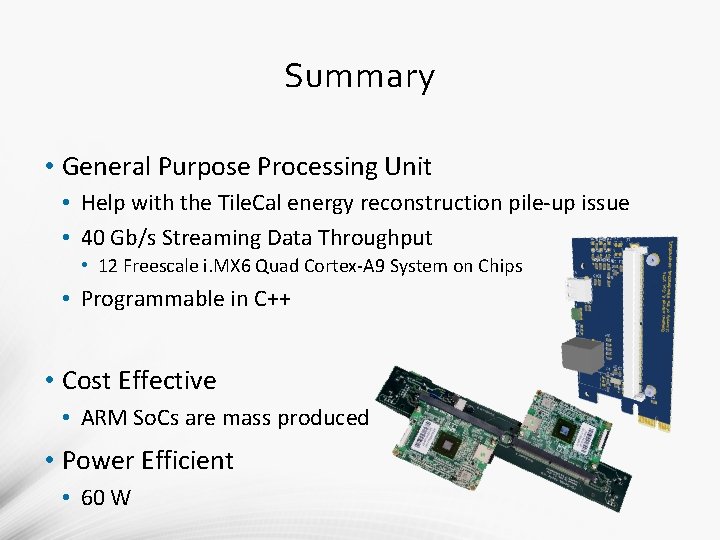
Summary • General Purpose Processing Unit • Help with the Tile. Cal energy reconstruction pile-up issue • 40 Gb/s Streaming Data Throughput • 12 Freescale i. MX 6 Quad Cortex-A 9 System on Chips • Programmable in C++ • Cost Effective • ARM So. Cs are mass produced • Power Efficient • 60 W
Questions or Comments? MITCHELL. COX@STUDENTS. WITS. AC. ZA
Acknowledgements • The “Massive Affordable Computing Project” team: • Robert Reed, Thomas Wrigley, Matthew Spoor (Physics) • Daniel O Kwofie, Ekow Etutu (Elec. Eng. ) • Carlos Solans Sanchez, Alberto Valero Biot (Valencia – CERN) • MSc Supervisors: Prof. Bruce Mellado, Prof. Ivan Hofsajer • The financial assistance of the National Research Foundation (NRF) towards this research is hereby acknowledged. Opinions expressed and conclusions arrived at, are those of the authors and are not necessarily to be attributed to the NRF. • I would also like to acknowledge the School of Physics, the Faculty of Science and the Research Office at the University of the Witwatersrand, Johannesburg.
Backup Slides
ATLAS Triggering and Data Acquisition System
ARM Performance