
THE DEVELOPMENT AND STRUCTURE OF INDICATORS FOR FINANCIAL
![THE DEVELOPMENT AND STRUCTURE OF INDICATORS FOR FINANCIAL REPORTING DASHBOARDS ] m. SCOA Vendor](https://slidetodoc.com/presentation_image_h2/97281bdabe10e05dbf83ee42733802ed/image-1.jpg "THE DEVELOPMENT AND STRUCTURE OF INDICATORS FOR FINANCIAL REPORTING DASHBOARDS ] m. SCOA Vendor")

- Slides: 26
THE DEVELOPMENT AND STRUCTURE OF INDICATORS FOR FINANCIAL REPORTING DASHBOARDS ] m. SCOA Vendor Forum: 18 May 2018 Presenter: [B. W. Shepherd , m. SCOA Advisor
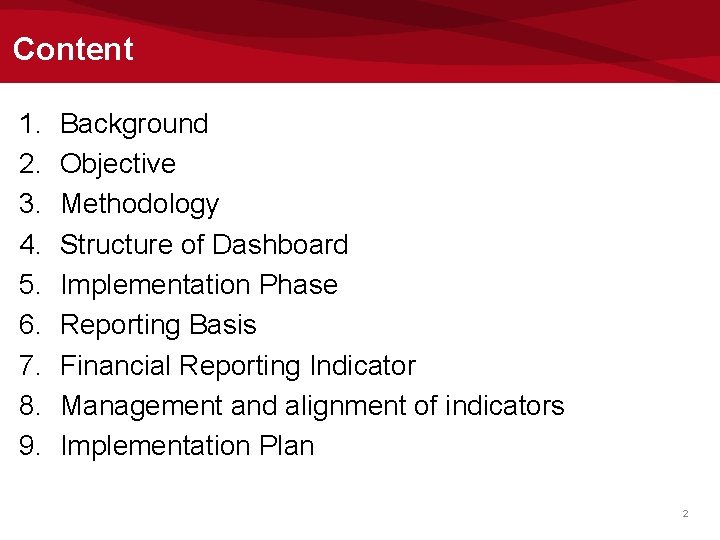
Content 1. 2. 3. 4. 5. 6. 7. 8. 9. Background Objective Methodology Structure of Dashboard Implementation Phase Reporting Basis Financial Reporting Indicator Management and alignment of indicators Implementation Plan 2
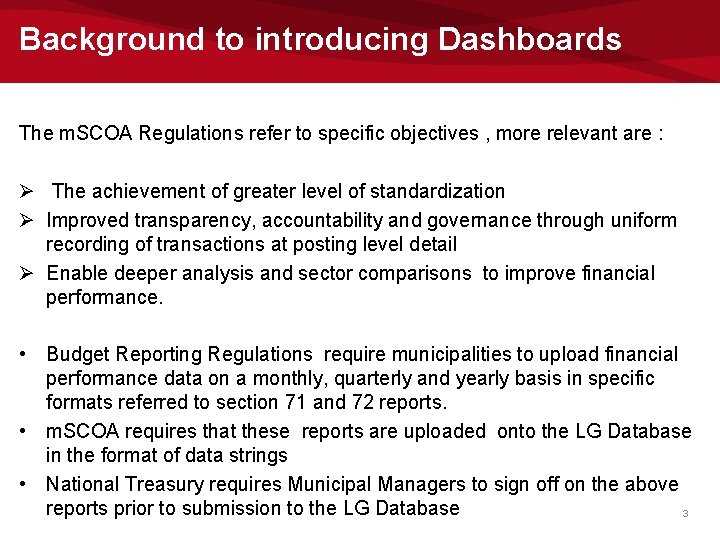
Background to introducing Dashboards The m. SCOA Regulations refer to specific objectives , more relevant are : Ø The achievement of greater level of standardization Ø Improved transparency, accountability and governance through uniform recording of transactions at posting level detail Ø Enable deeper analysis and sector comparisons to improve financial performance. • Budget Reporting Regulations require municipalities to upload financial performance data on a monthly, quarterly and yearly basis in specific formats referred to section 71 and 72 reports. • m. SCOA requires that these reports are uploaded onto the LG Database in the format of data strings • National Treasury requires Municipal Managers to sign off on the above reports prior to submission to the LG Database 3
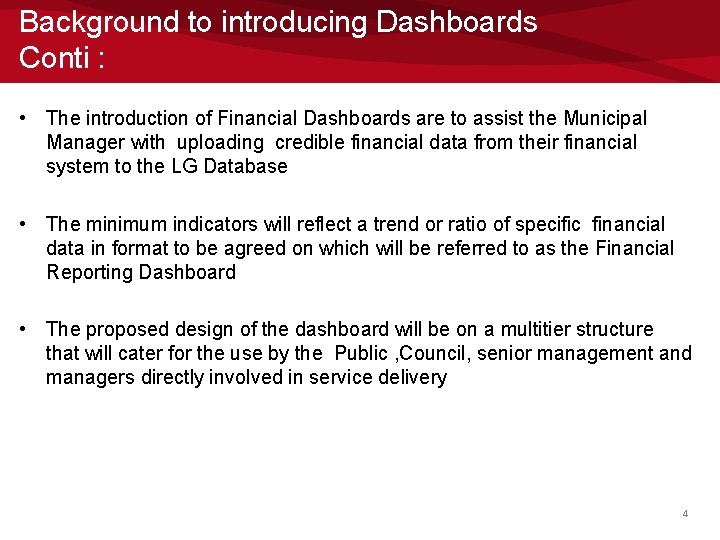
Background to introducing Dashboards Conti : • The introduction of Financial Dashboards are to assist the Municipal Manager with uploading credible financial data from their financial system to the LG Database • The minimum indicators will reflect a trend or ratio of specific financial data in format to be agreed on which will be referred to as the Financial Reporting Dashboard • The proposed design of the dashboard will be on a multitier structure that will cater for the use by the Public , Council, senior management and managers directly involved in service delivery 4
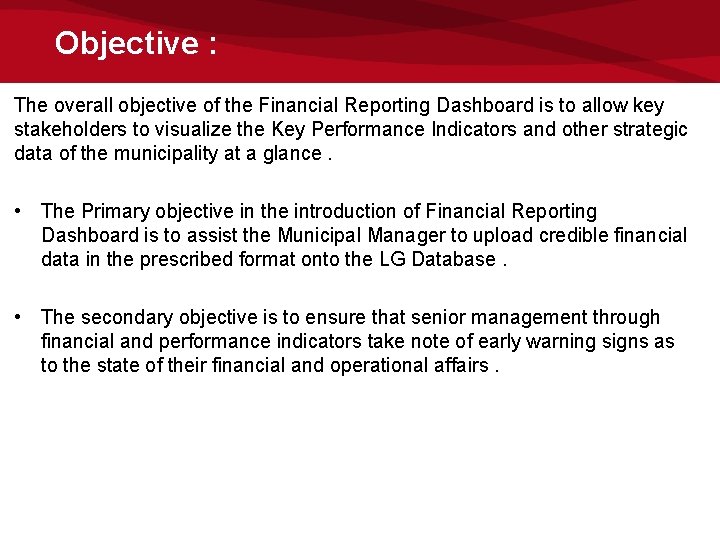
Objective : The overall objective of the Financial Reporting Dashboard is to allow key stakeholders to visualize the Key Performance Indicators and other strategic data of the municipality at a glance. • The Primary objective in the introduction of Financial Reporting Dashboard is to assist the Municipal Manager to upload credible financial data in the prescribed format onto the LG Database. • The secondary objective is to ensure that senior management through financial and performance indicators take note of early warning signs as to the state of their financial and operational affairs.
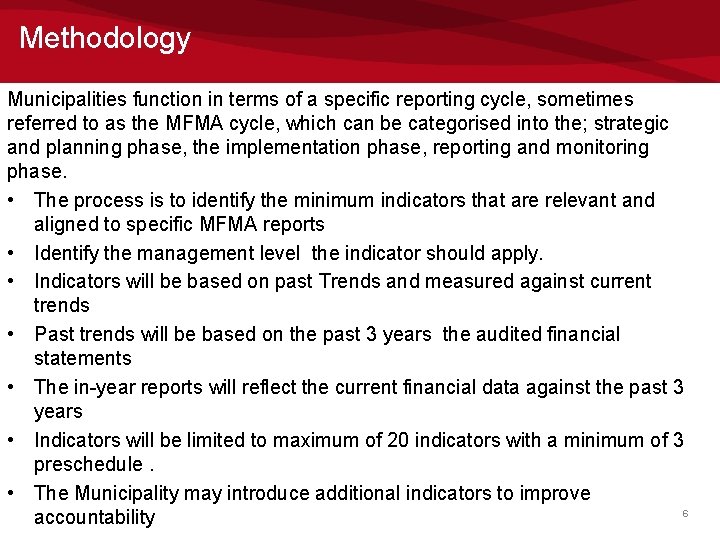
Methodology Municipalities function in terms of a specific reporting cycle, sometimes referred to as the MFMA cycle, which can be categorised into the; strategic and planning phase, the implementation phase, reporting and monitoring phase. • The process is to identify the minimum indicators that are relevant and aligned to specific MFMA reports • Identify the management level the indicator should apply. • Indicators will be based on past Trends and measured against current trends • Past trends will be based on the past 3 years the audited financial statements • The in-year reports will reflect the current financial data against the past 3 years • Indicators will be limited to maximum of 20 indicators with a minimum of 3 preschedule. • The Municipality may introduce additional indicators to improve 6 accountability
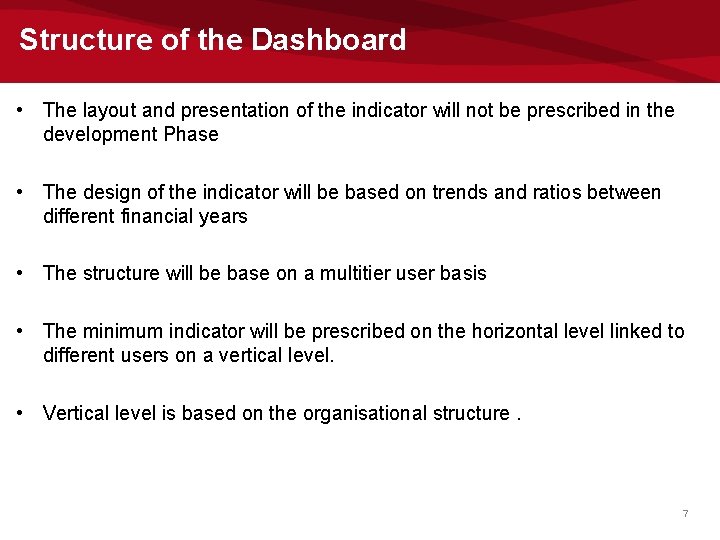
Structure of the Dashboard • The layout and presentation of the indicator will not be prescribed in the development Phase • The design of the indicator will be based on trends and ratios between different financial years • The structure will be base on a multitier user basis • The minimum indicator will be prescribed on the horizontal level linked to different users on a vertical level. • Vertical level is based on the organisational structure. 7
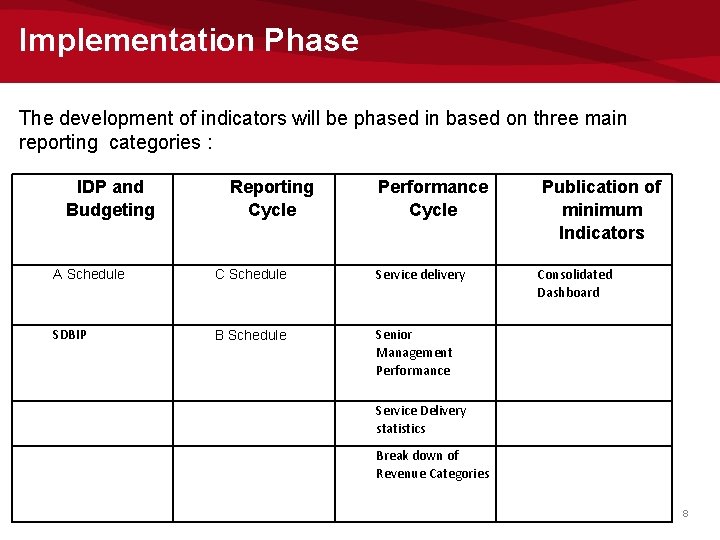
Implementation Phase The development of indicators will be phased in based on three main reporting categories : IDP and Budgeting Reporting Cycle Performance Cycle A Schedule C Schedule Service delivery SDBIP B Schedule Senior Management Performance Publication of minimum Indicators Consolidated Dashboard Service Delivery statistics Break down of Revenue Categories 8
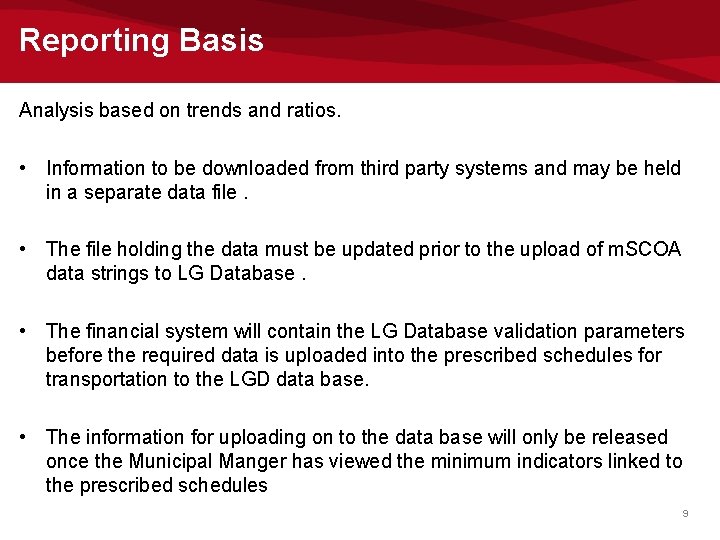
Reporting Basis Analysis based on trends and ratios. • Information to be downloaded from third party systems and may be held in a separate data file. • The file holding the data must be updated prior to the upload of m. SCOA data strings to LG Database. • The financial system will contain the LG Database validation parameters before the required data is uploaded into the prescribed schedules for transportation to the LGD data base. • The information for uploading on to the data base will only be released once the Municipal Manger has viewed the minimum indicators linked to the prescribed schedules 9
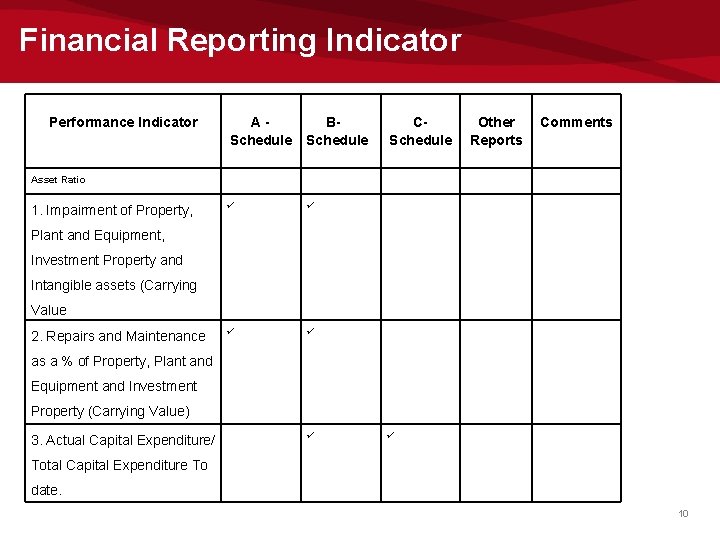
Financial Reporting Indicator Performance Indicator ASchedule BSchedule CSchedule Other Reports Comments Asset Ratio 1. Impairment of Property, Plant and Equipment, Investment Property and Intangible assets (Carrying Value 2. Repairs and Maintenance as a % of Property, Plant and Equipment and Investment Property (Carrying Value) 3. Actual Capital Expenditure/ Total Capital Expenditure To date. 10
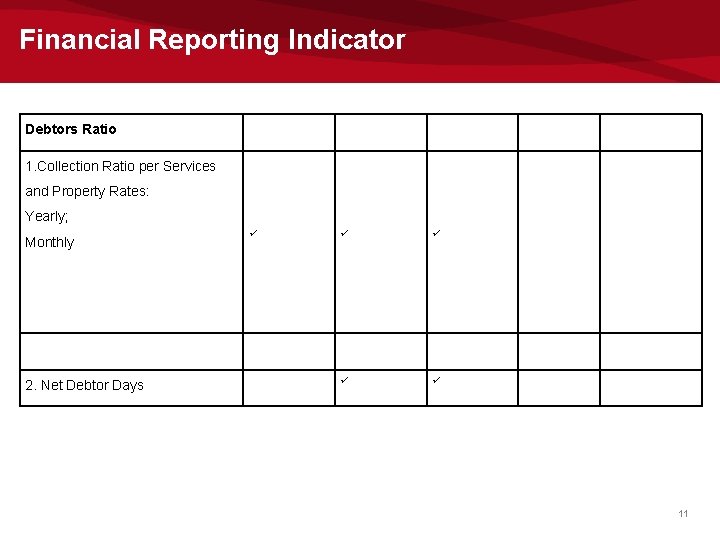
Financial Reporting Indicator Debtors Ratio 1. Collection Ratio per Services and Property Rates: Yearly; Monthly 2. Net Debtor Days 11
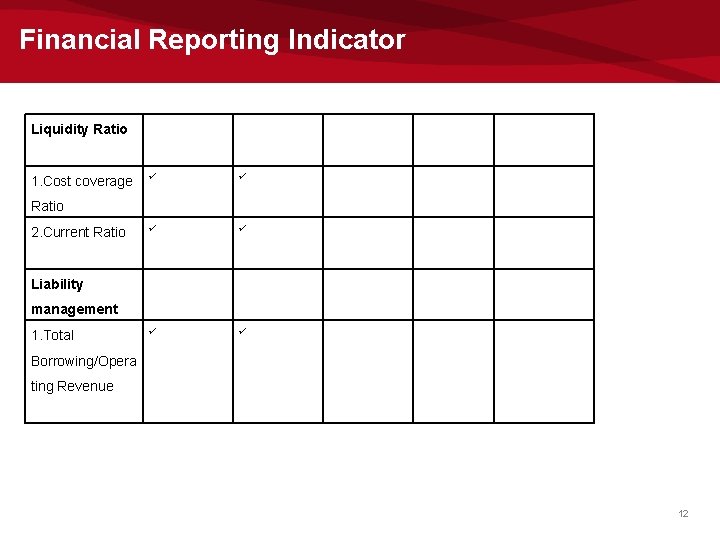
Financial Reporting Indicator Liquidity Ratio 1. Cost coverage Ratio 2. Current Ratio Liability management 1. Total Borrowing/Opera ting Revenue 12
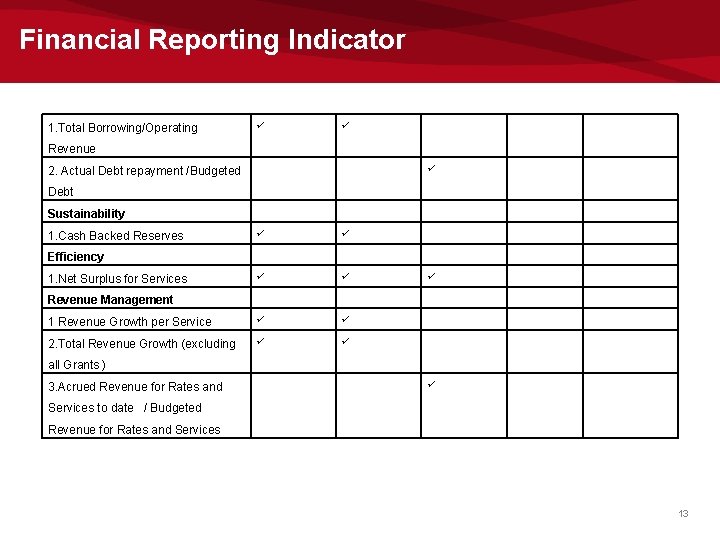
Financial Reporting Indicator 1. Total Borrowing/Operating Revenue 2. Actual Debt repayment /Budgeted Debt Sustainability 1 Revenue Growth per Service 2. Total Revenue Growth (excluding 1. Cash Backed Reserves Efficiency 1. Net Surplus for Services Revenue Management all Grants ) 3. Acrued Revenue for Rates and Services to date / Budgeted Revenue for Rates and Services 13
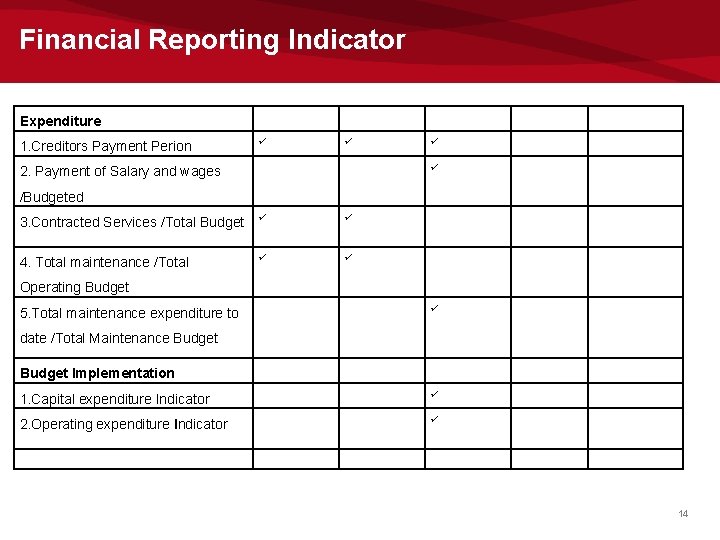
Financial Reporting Indicator Expenditure 1. Creditors Payment Perion 2. Payment of Salary and wages /Budgeted 3. Contracted Services /Total Budget 4. Total maintenance /Total Operating Budget 5. Total maintenance expenditure to date /Total Maintenance Budget Implementation 1. Capital expenditure Indicator 2. Operating expenditure Indicator 14
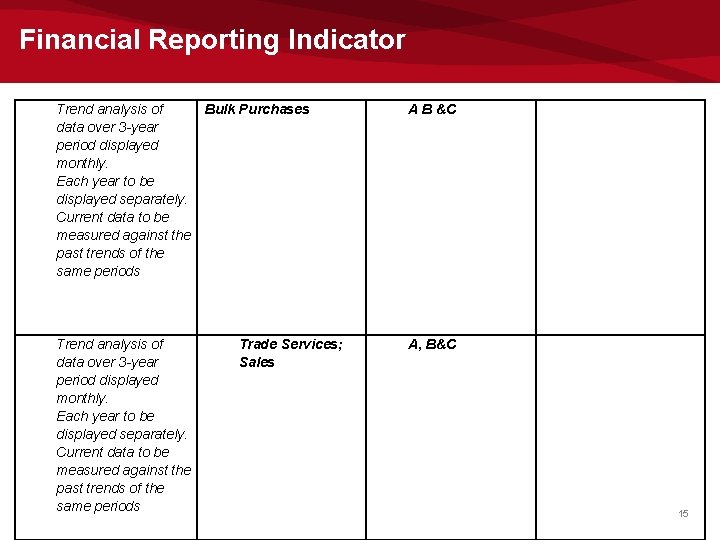
Financial Reporting Indicator Trend analysis of data over 3 -year period displayed monthly. Each year to be displayed separately. Current data to be measured against the past trends of the same periods Bulk Purchases Trade Services; Sales A B &C A, B&C 15
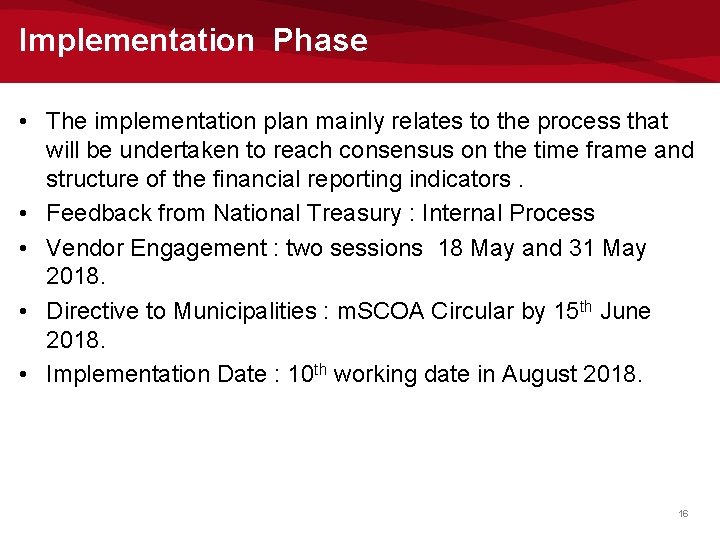
Implementation Phase • The implementation plan mainly relates to the process that will be undertaken to reach consensus on the time frame and structure of the financial reporting indicators. • Feedback from National Treasury : Internal Process • Vendor Engagement : two sessions 18 May and 31 May 2018. • Directive to Municipalities : m. SCOA Circular by 15 th June 2018. • Implementation Date : 10 th working date in August 2018. 16
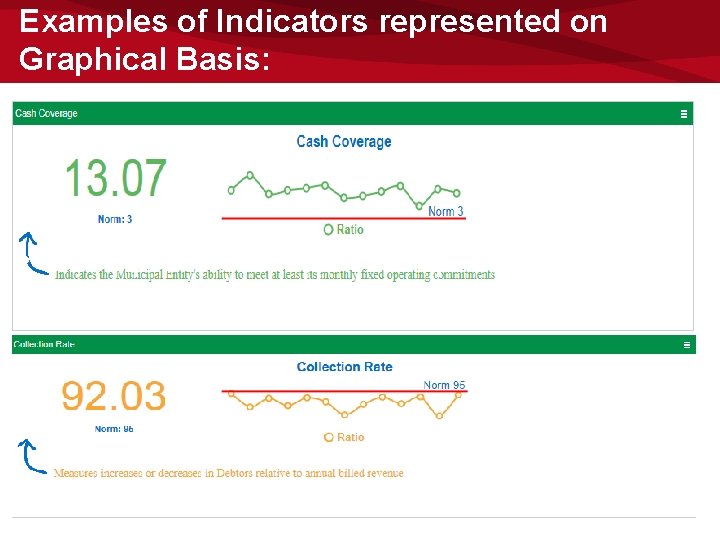
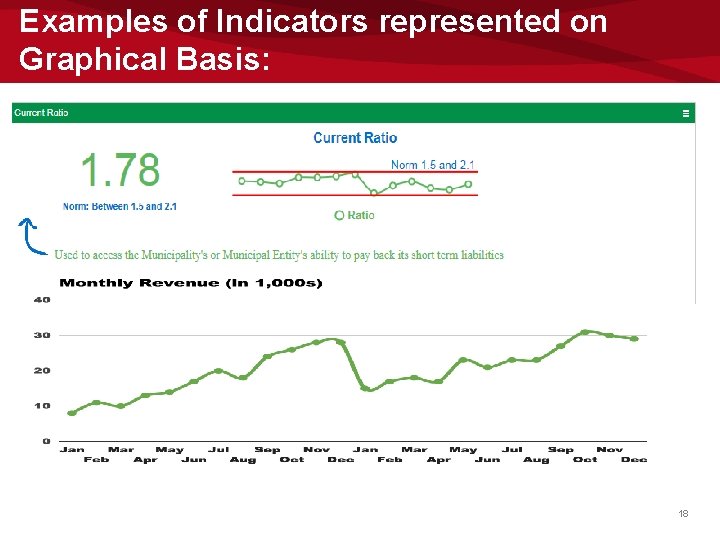
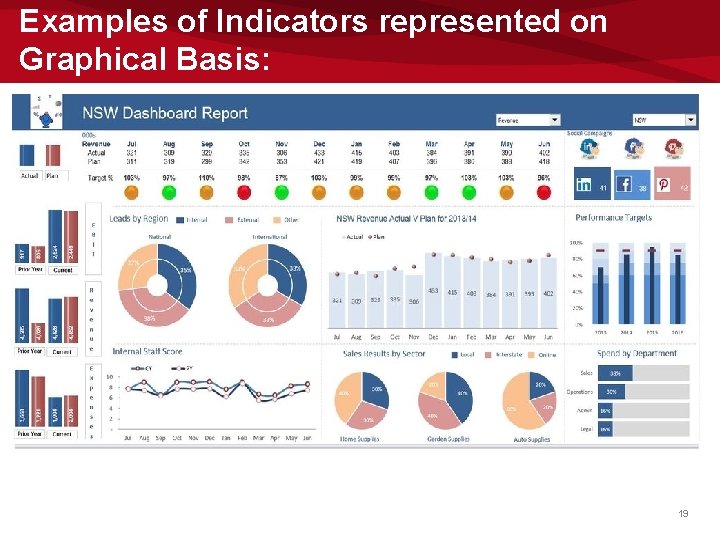
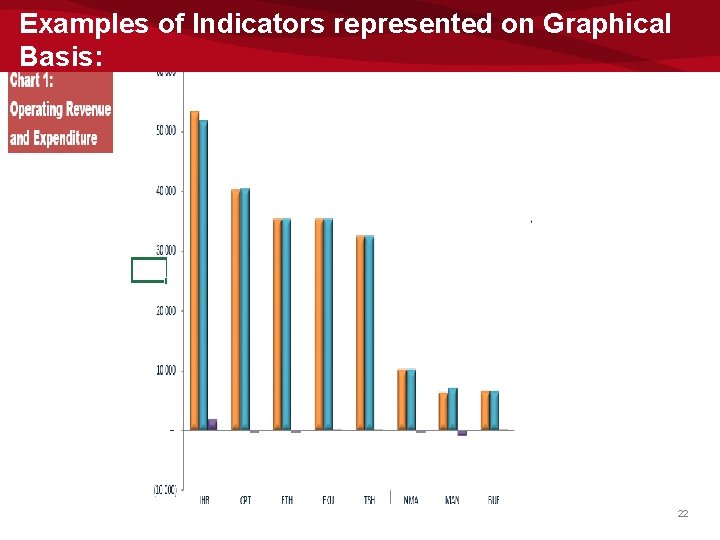
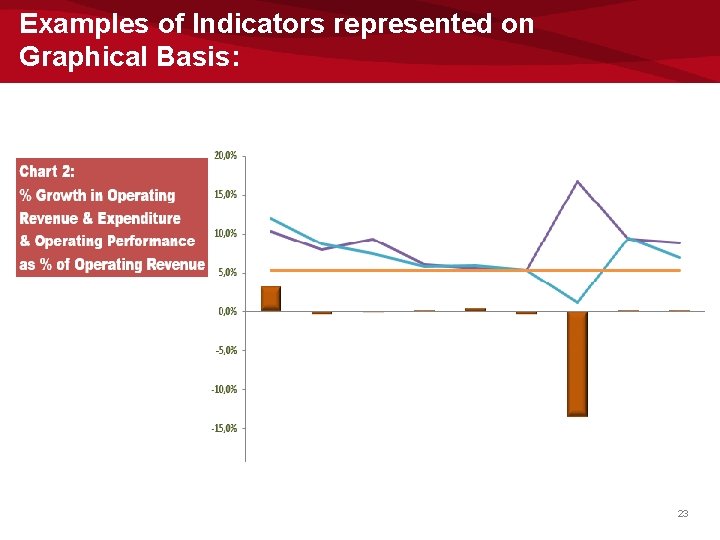
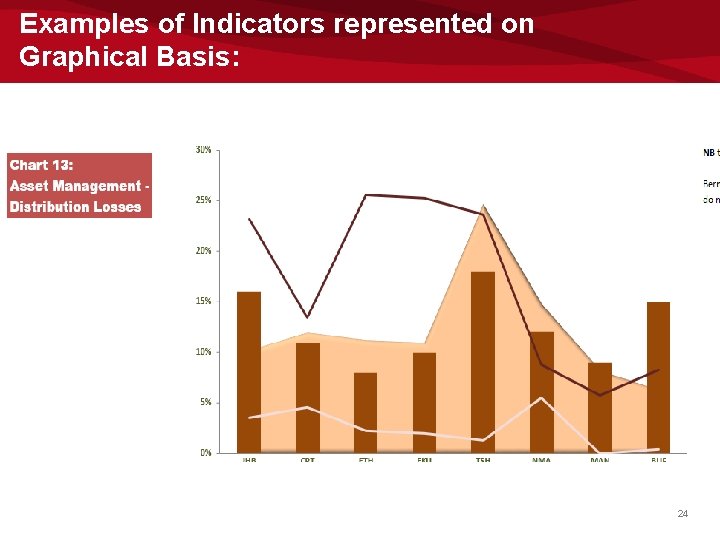
Examples of Indicators represented on Graphical Basis: • Examples of Indicators represented on Graphical Basis: 17
Examples of Indicators represented on Graphical Basis: 18
Examples of Indicators represented on Graphical Basis: 19
Examples of Indicators represented on Graphical Basis: 20
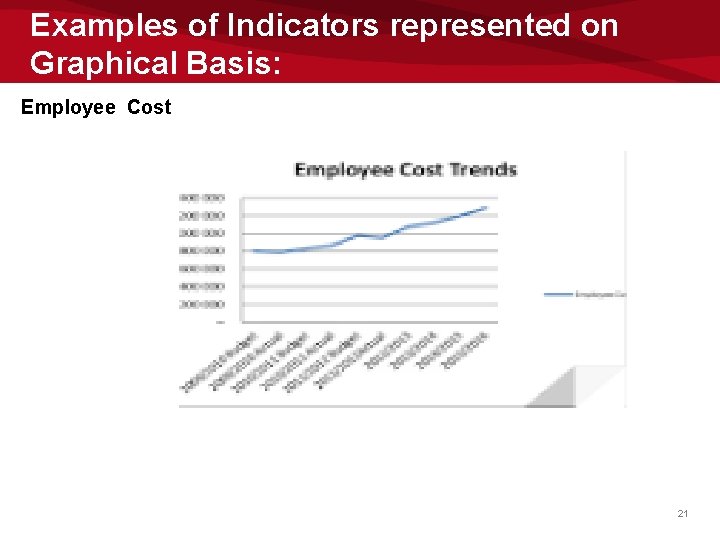
Examples of Indicators represented on Graphical Basis: Employee Cost 21
Examples of Indicators represented on Graphical Basis: 22
Examples of Indicators represented on Graphical Basis: 23
Examples of Indicators represented on Graphical Basis: 24
Conclusion Deliverables : • Vendor to link a successful submission of a monthly C - Schedule from one municipality to the minimum Trend and Ratio indicators • The Vendor may represent the indicator based on his own idea. • The Vendor must illustrate that if the indicator is not viewed by the MM the data file will not be submitted to The LG Database • The Vendor must illustrate to Treasury that the financial system will contain the validation processes that are currently undertaken by the LG Data base. • The Vendor will on an individual basis illustrate the above to Treasury. 25
THANK YOU