
The determinants of real exchange rates in transition


- Slides: 40
The determinants of real exchange rates in transition economies Peter Tabak Associate Director, Regional Lead Economist for Western Balkans Sarajevo, 7 November 2019
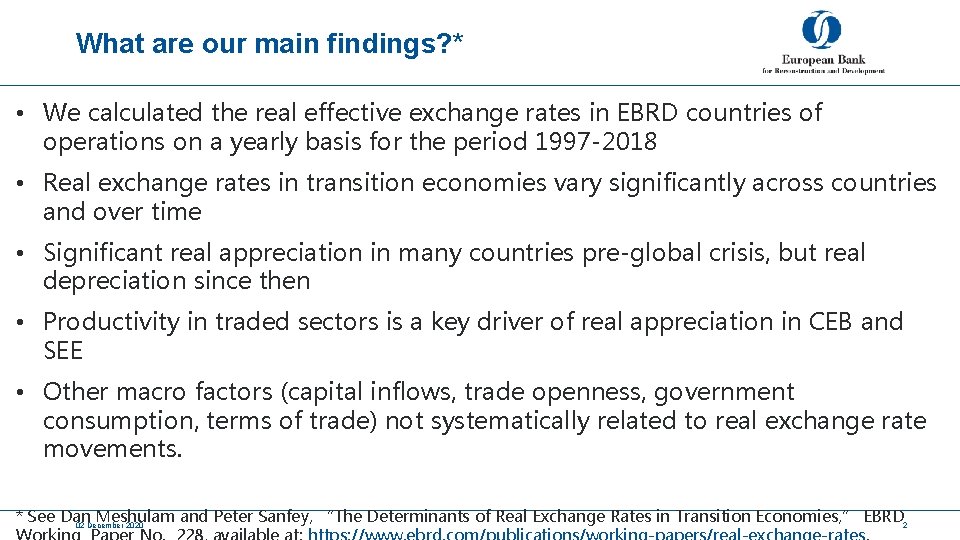
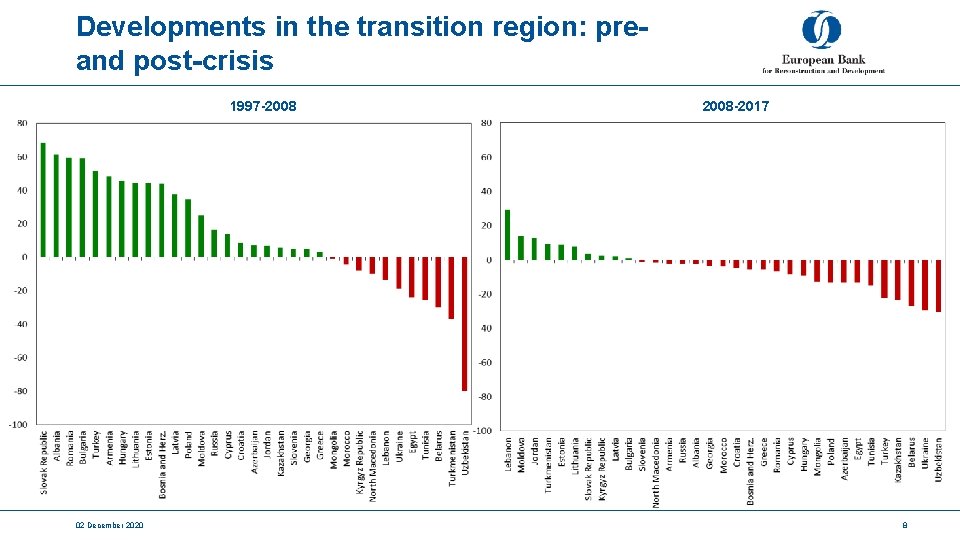
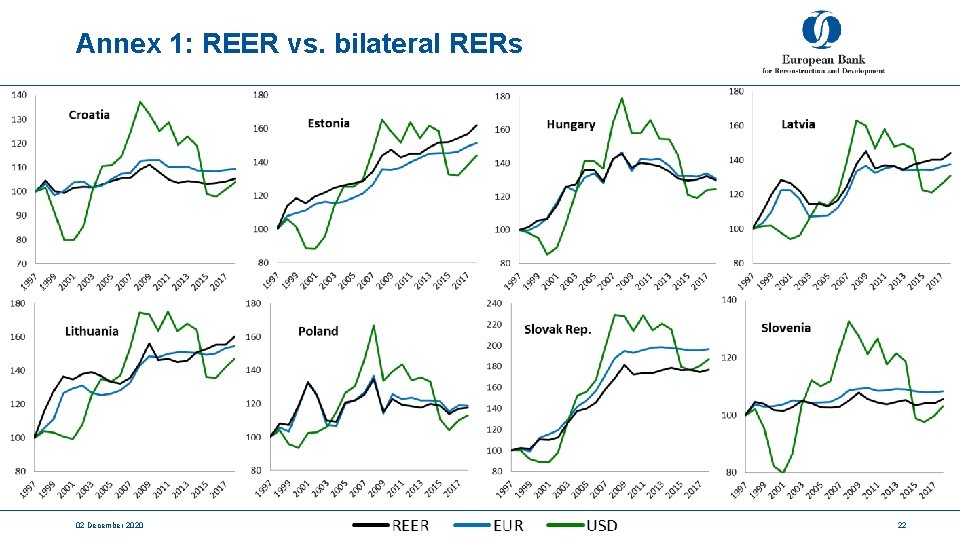
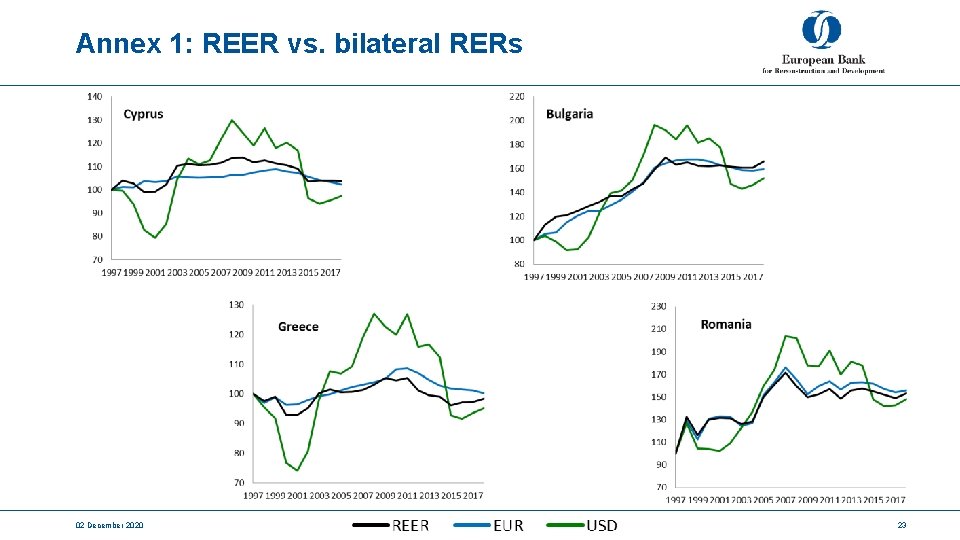
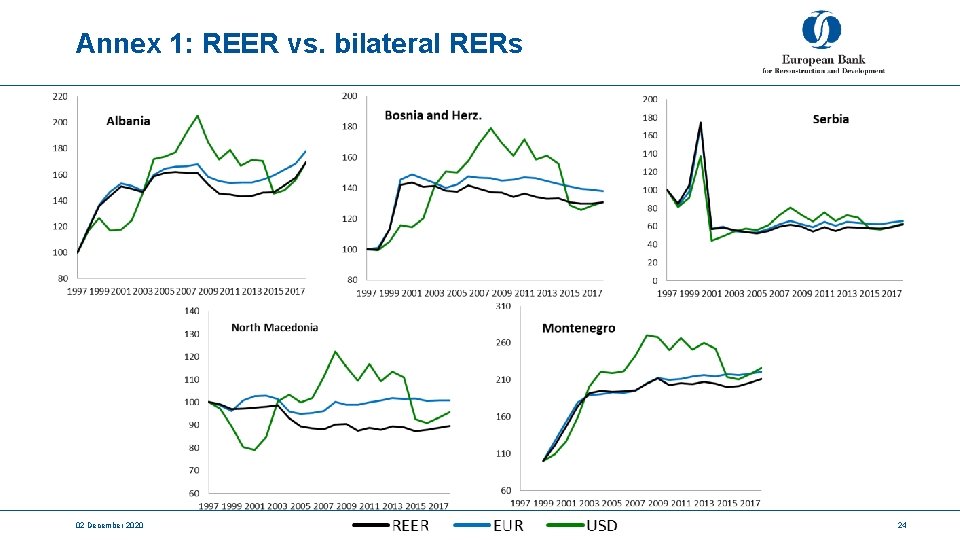
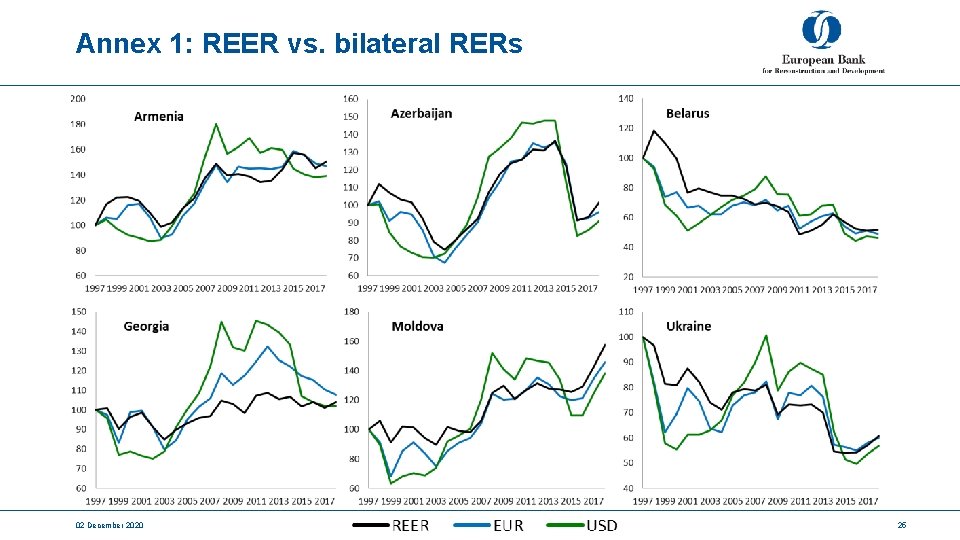
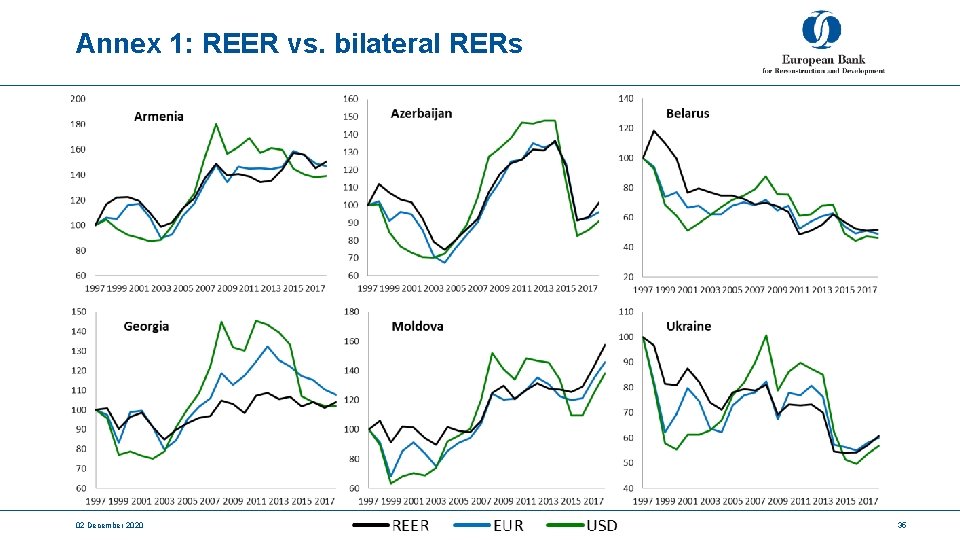
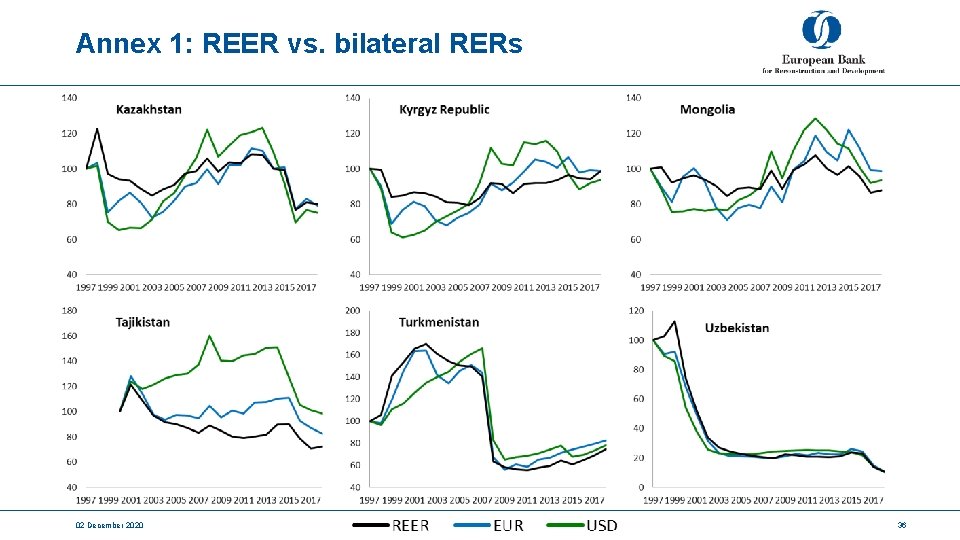
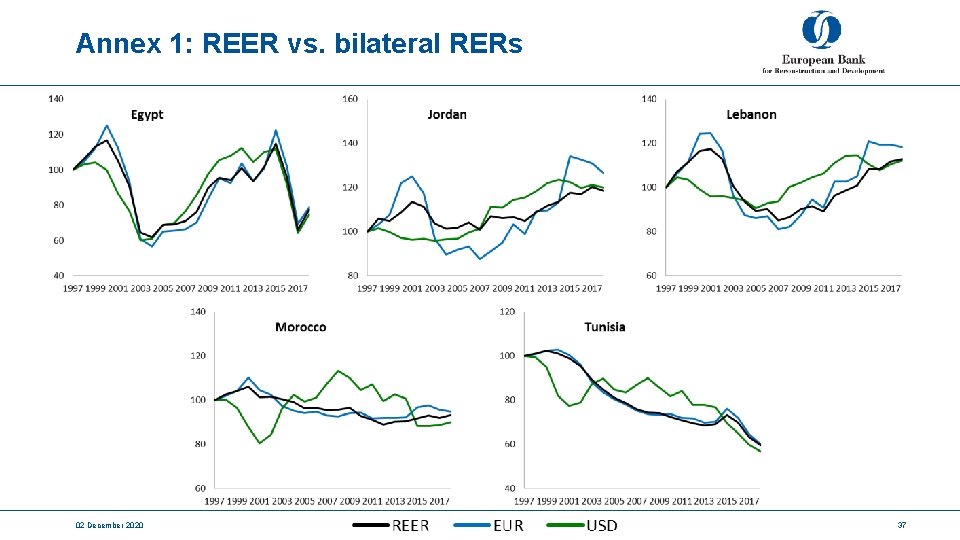
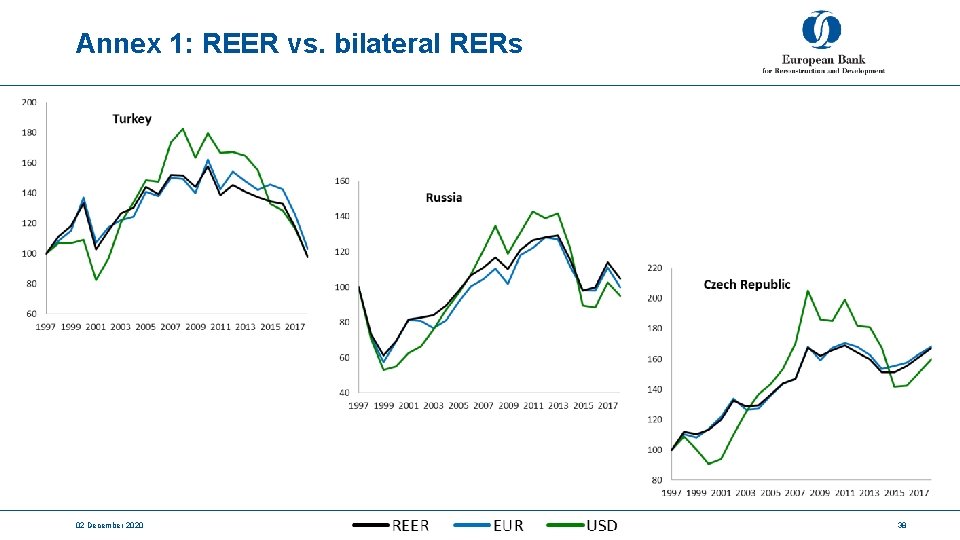
What are our main findings? * • We calculated the real effective exchange rates in EBRD countries of operations on a yearly basis for the period 1997 -2018 • Real exchange rates in transition economies vary significantly across countries and over time • Significant real appreciation in many countries pre-global crisis, but real depreciation since then • Productivity in traded sectors is a key driver of real appreciation in CEB and SEE • Other macro factors (capital inflows, trade openness, government consumption, terms of trade) not systematically related to real exchange rate movements. * See Dan Meshulam and Peter Sanfey, “The Determinants of Real Exchange Rates in Transition Economies, ” EBRD 2 02 December 2020
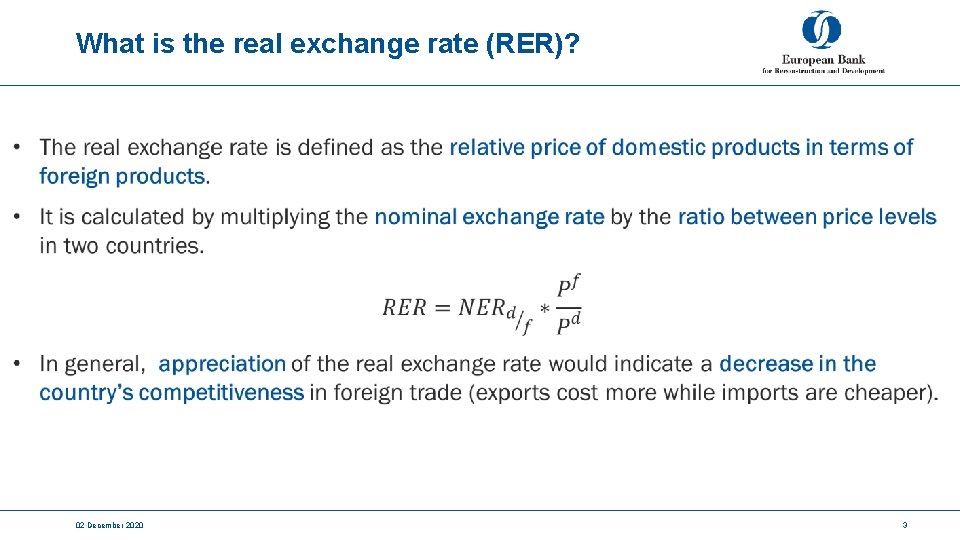
What is the real exchange rate (RER)? 02 December 2020 3
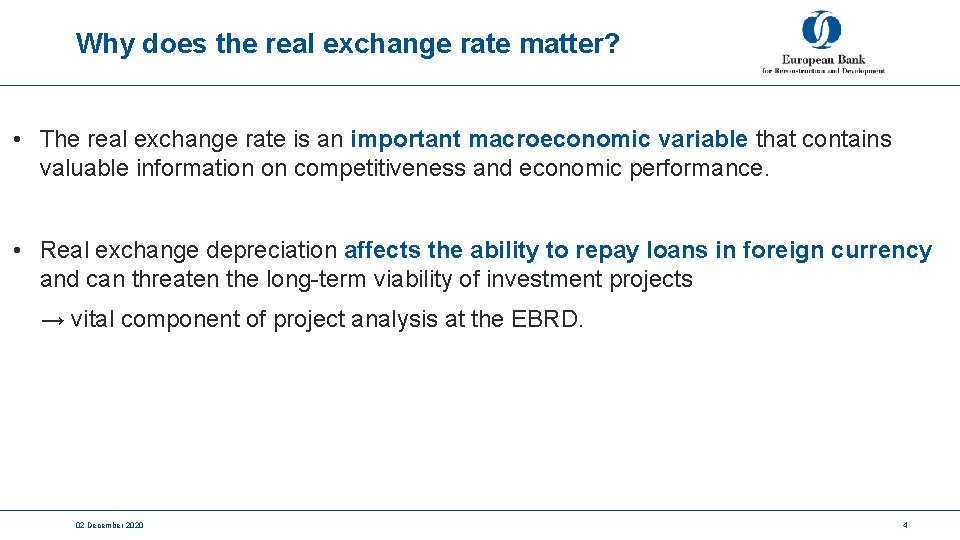
Why does the real exchange rate matter? • The real exchange rate is an important macroeconomic variable that contains valuable information on competitiveness and economic performance. • Real exchange depreciation affects the ability to repay loans in foreign currency and can threaten the long-term viability of investment projects → vital component of project analysis at the EBRD. 02 December 2020 4
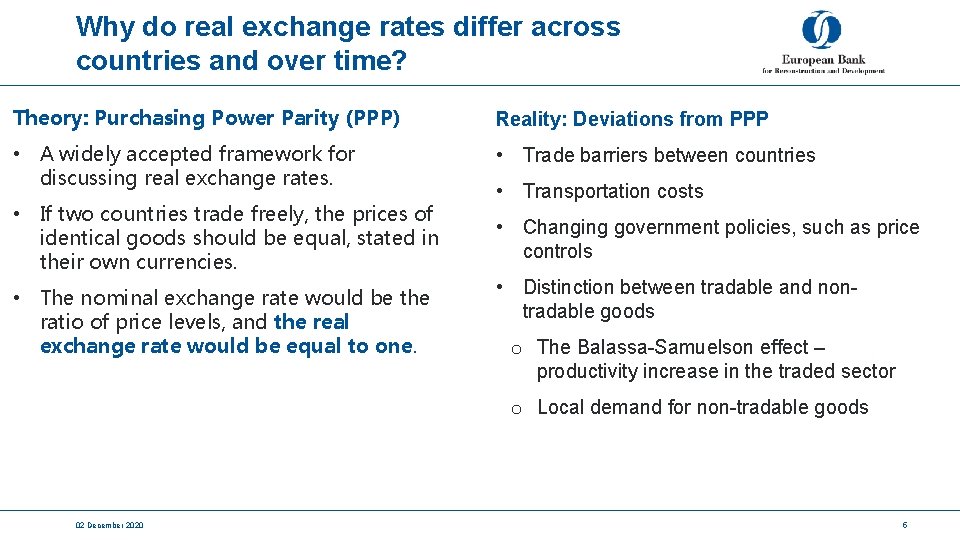
Why do real exchange rates differ across countries and over time? Theory: Purchasing Power Parity (PPP) Reality: Deviations from PPP • A widely accepted framework for discussing real exchange rates. • Trade barriers between countries • If two countries trade freely, the prices of identical goods should be equal, stated in their own currencies. • The nominal exchange rate would be the ratio of price levels, and the real exchange rate would be equal to one. • Transportation costs • Changing government policies, such as price controls • Distinction between tradable and nontradable goods o The Balassa-Samuelson effect – productivity increase in the traded sector o Local demand for non-tradable goods 02 December 2020 5
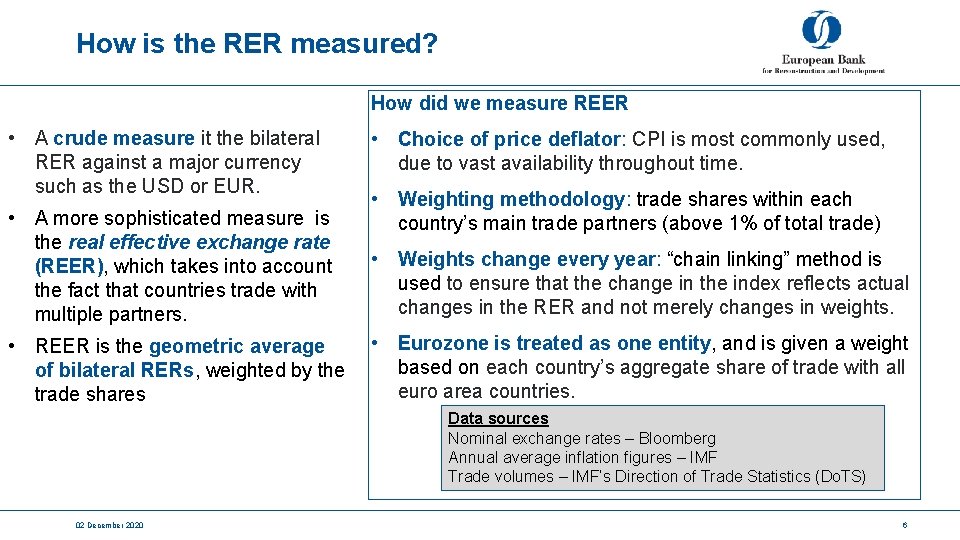
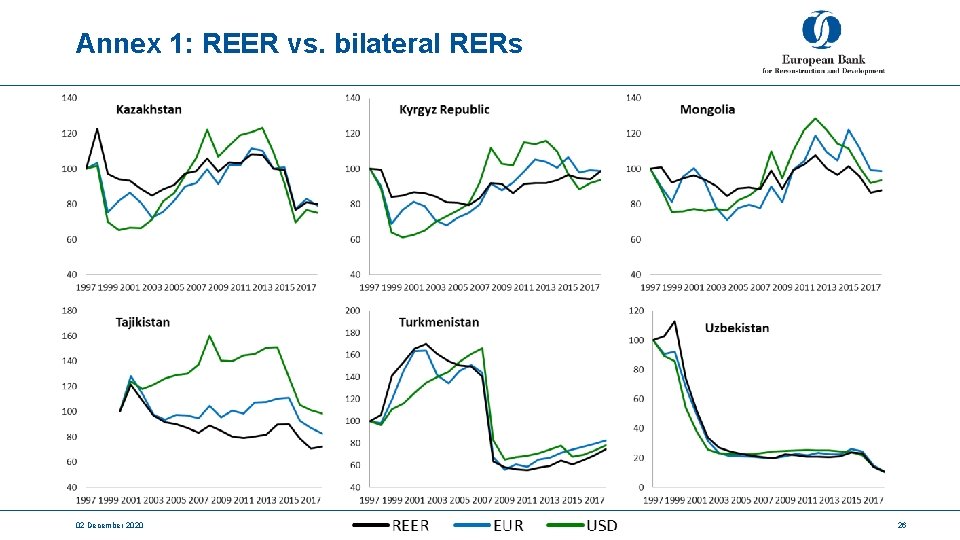
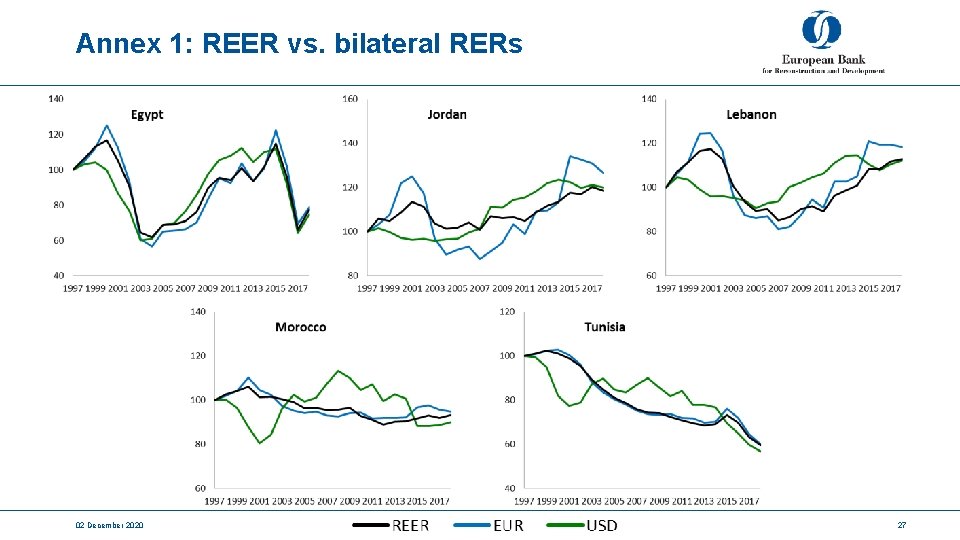
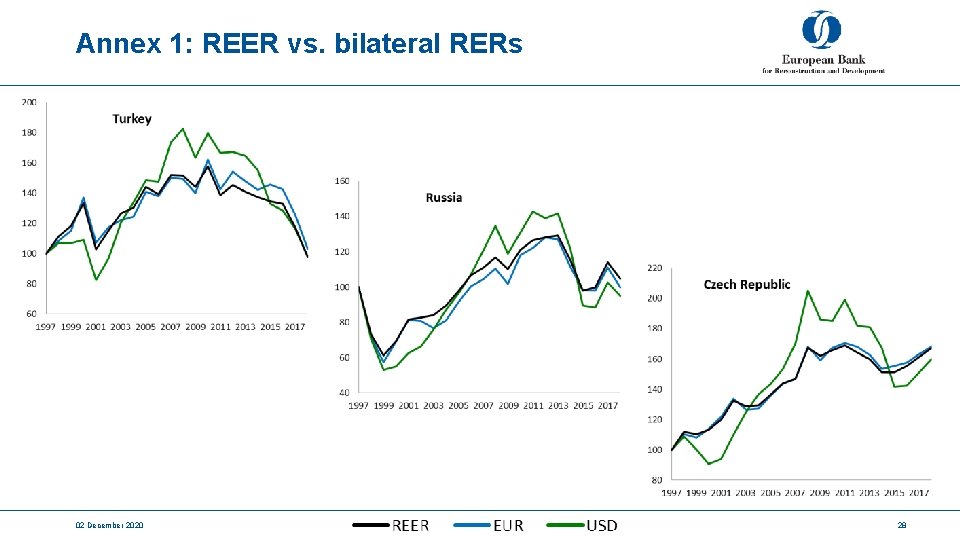
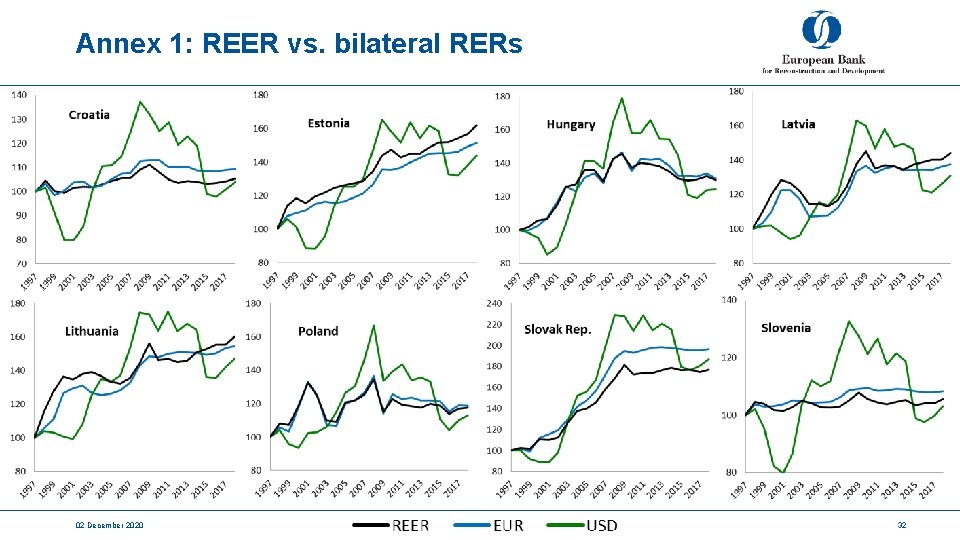
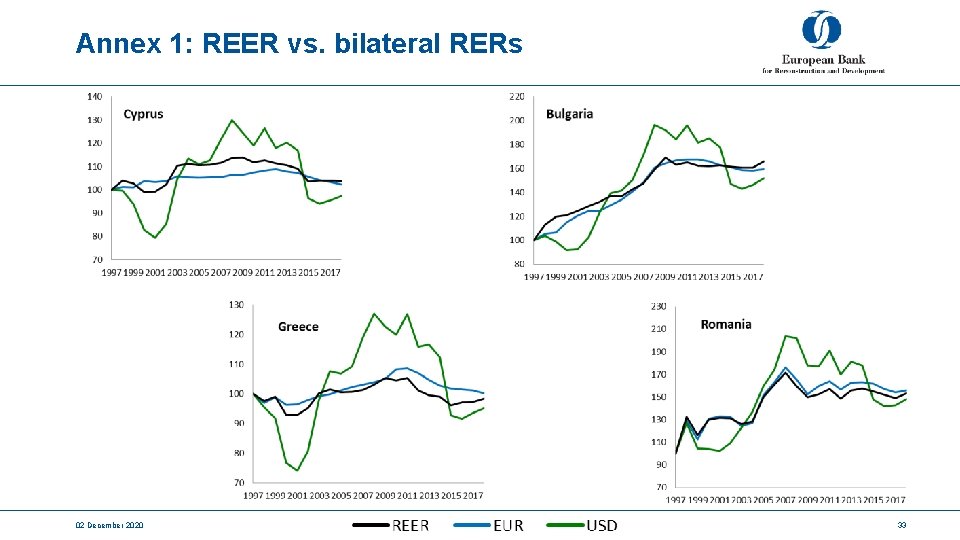
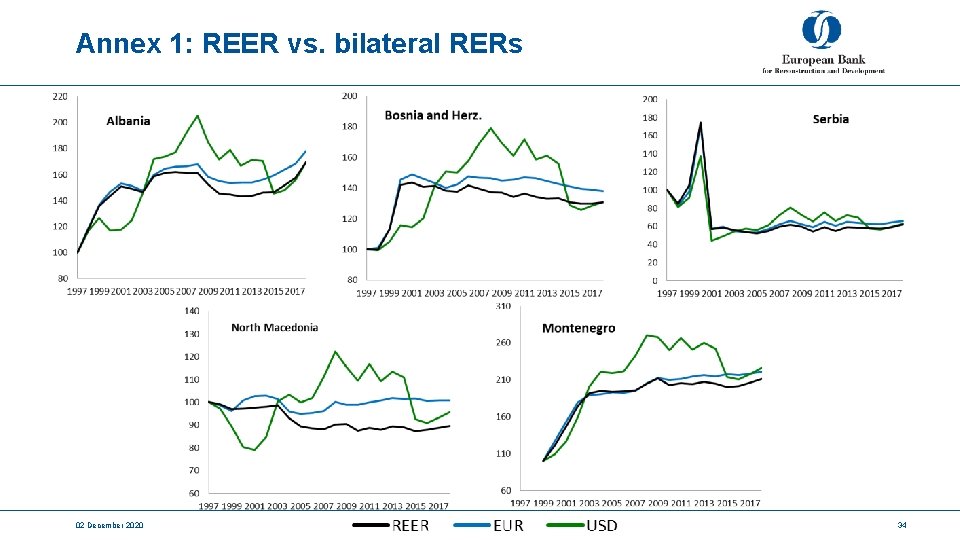
How is the RER measured? How did we measure REER • A crude measure it the bilateral RER against a major currency such as the USD or EUR. • A more sophisticated measure is the real effective exchange rate (REER), which takes into account the fact that countries trade with multiple partners. • Choice of price deflator: CPI is most commonly used, due to vast availability throughout time. • Weighting methodology: trade shares within each country’s main trade partners (above 1% of total trade) • Weights change every year: “chain linking” method is used to ensure that the change in the index reflects actual changes in the RER and not merely changes in weights. • Eurozone is treated as one entity, and is given a weight • REER is the geometric average based on each country’s aggregate share of trade with all of bilateral RERs, weighted by the euro area countries. trade shares Data sources Nominal exchange rates – Bloomberg Annual average inflation figures – IMF Trade volumes – IMF’s Direction of Trade Statistics (Do. TS) 02 December 2020 6
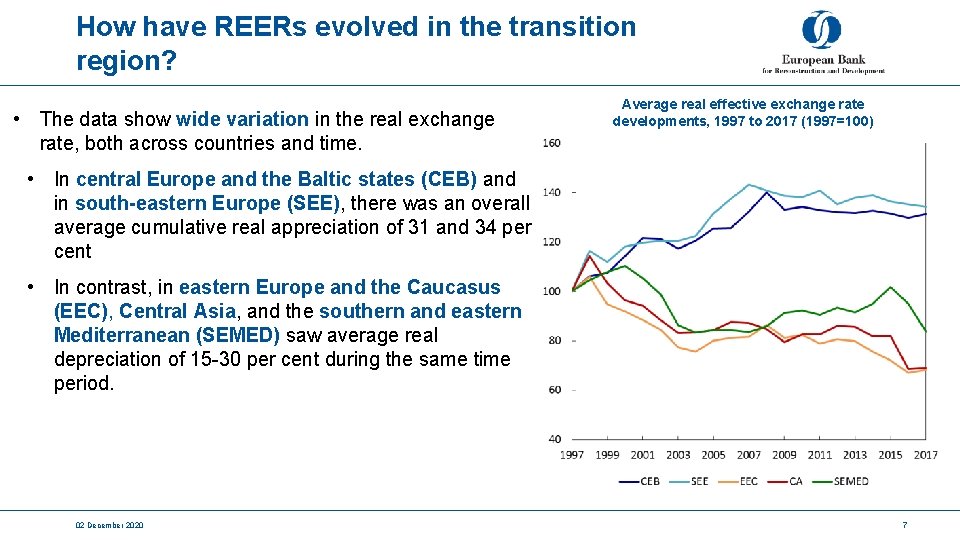
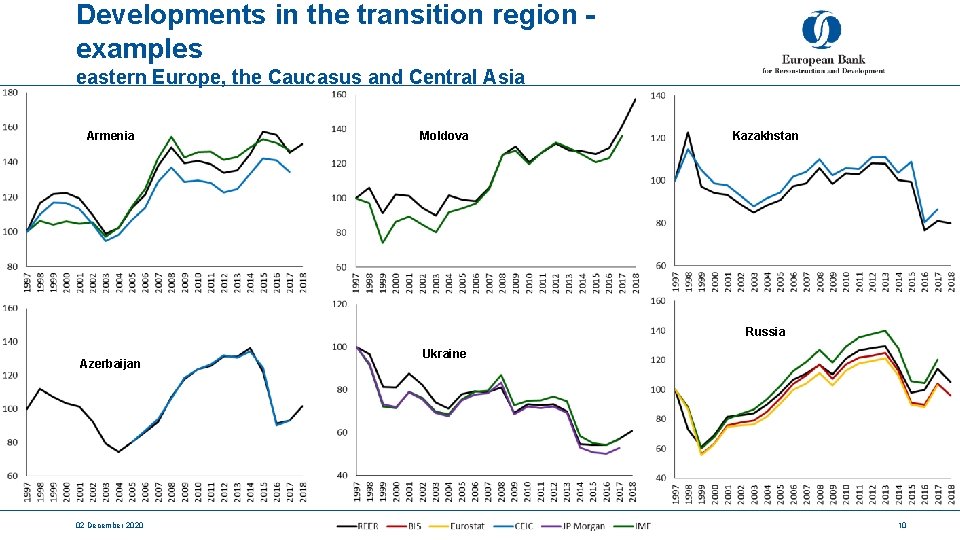
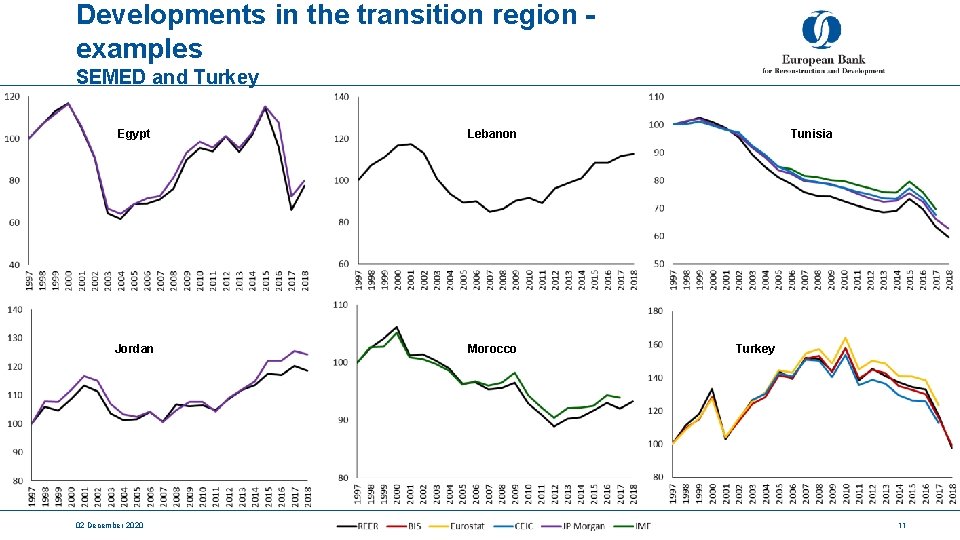
How have REERs evolved in the transition region? • The data show wide variation in the real exchange rate, both across countries and time. Average real effective exchange rate developments, 1997 to 2017 (1997=100) • In central Europe and the Baltic states (CEB) and in south-eastern Europe (SEE), there was an overall average cumulative real appreciation of 31 and 34 per cent • In contrast, in eastern Europe and the Caucasus (EEC), Central Asia, and the southern and eastern Mediterranean (SEMED) saw average real depreciation of 15 -30 per cent during the same time period. 02 December 2020 7
Developments in the transition region: preand post-crisis 1997 -2008 02 December 2020 2008 -2017 8
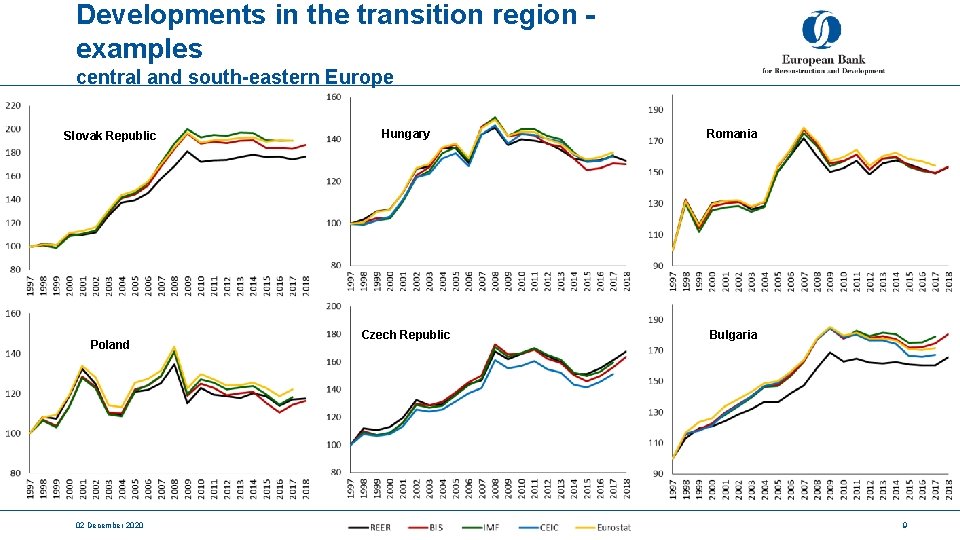
Developments in the transition region examples central and south-eastern Europe Slovak Republic Poland 02 December 2020 Hungary Romania Czech Republic Bulgaria 9
Developments in the transition region examples eastern Europe, the Caucasus and Central Asia Armenia Moldova Kazakhstan Russia Azerbaijan 02 December 2020 Ukraine 10
Developments in the transition region examples SEMED and Turkey Egypt Lebanon Jordan Morocco 02 December 2020 Tunisia Turkey 11
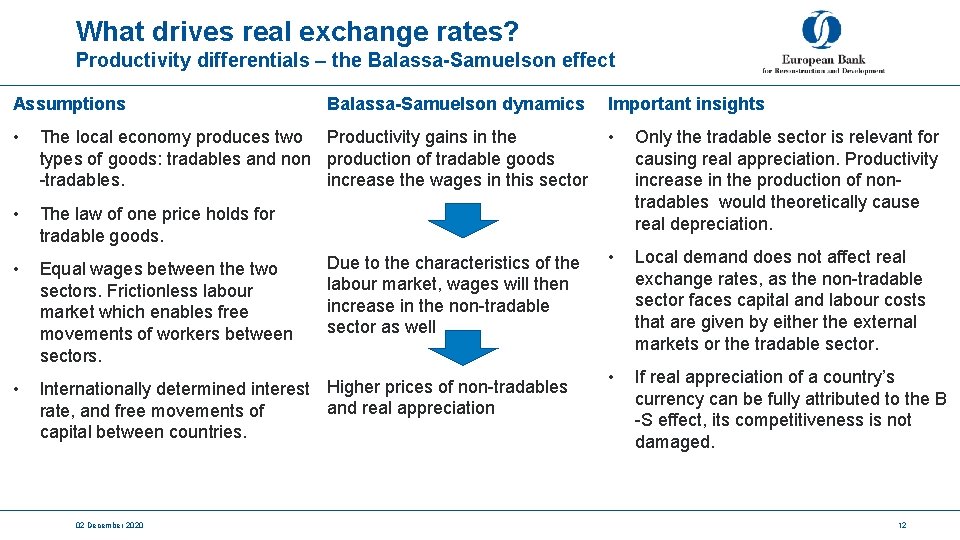
What drives real exchange rates? Productivity differentials – the Balassa-Samuelson effect Assumptions Balassa-Samuelson dynamics • The local economy produces two Productivity gains in the types of goods: tradables and non production of tradable goods -tradables. increase the wages in this sector • The law of one price holds for tradable goods. • Equal wages between the two sectors. Frictionless labour market which enables free movements of workers between sectors. • Internationally determined interest Higher prices of non-tradables and real appreciation rate, and free movements of capital between countries. 02 December 2020 Due to the characteristics of the labour market, wages will then increase in the non-tradable sector as well Important insights • Only the tradable sector is relevant for causing real appreciation. Productivity increase in the production of nontradables would theoretically cause real depreciation. • Local demand does not affect real exchange rates, as the non-tradable sector faces capital and labour costs that are given by either the external markets or the tradable sector. • If real appreciation of a country’s currency can be fully attributed to the B -S effect, its competitiveness is not damaged. 12
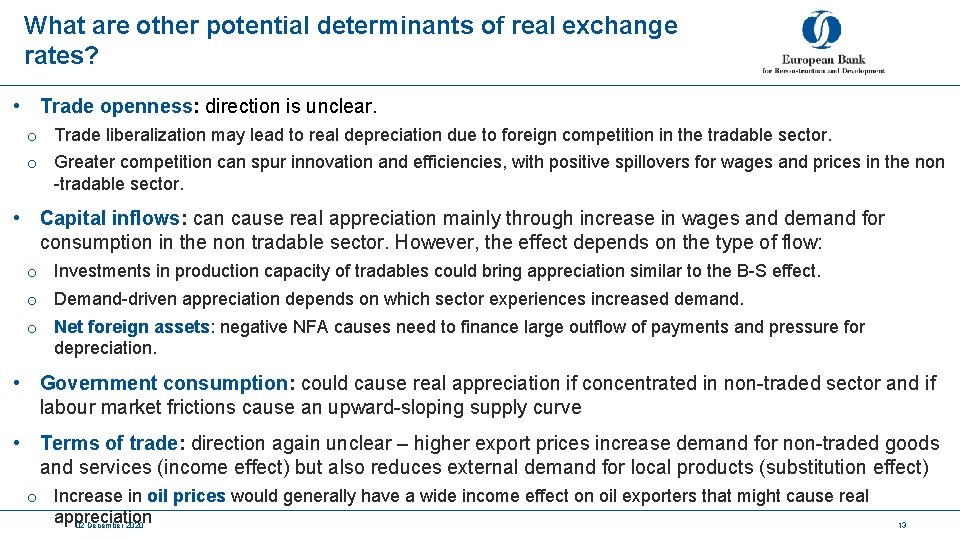
What are other potential determinants of real exchange rates? • Trade openness: direction is unclear. o Trade liberalization may lead to real depreciation due to foreign competition in the tradable sector. o Greater competition can spur innovation and efficiencies, with positive spillovers for wages and prices in the non -tradable sector. • Capital inflows: can cause real appreciation mainly through increase in wages and demand for consumption in the non tradable sector. However, the effect depends on the type of flow: o Investments in production capacity of tradables could bring appreciation similar to the B-S effect. o Demand-driven appreciation depends on which sector experiences increased demand. o Net foreign assets: negative NFA causes need to finance large outflow of payments and pressure for depreciation. • Government consumption: could cause real appreciation if concentrated in non-traded sector and if labour market frictions cause an upward-sloping supply curve • Terms of trade: direction again unclear – higher export prices increase demand for non-traded goods and services (income effect) but also reduces external demand for local products (substitution effect) o Increase in oil prices would generally have a wide income effect on oil exporters that might cause real appreciation 02 December 2020 13
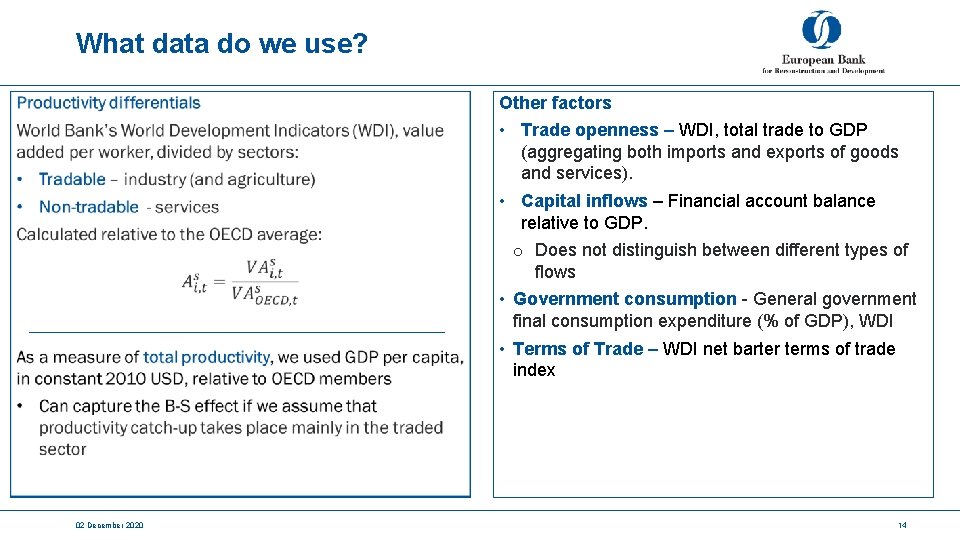
What data do we use? Other factors • Trade openness – WDI, total trade to GDP (aggregating both imports and exports of goods and services). • Capital inflows – Financial account balance relative to GDP. o Does not distinguish between different types of flows • Government consumption - General government final consumption expenditure (% of GDP), WDI • Terms of Trade – WDI net barter terms of trade index 02 December 2020 14
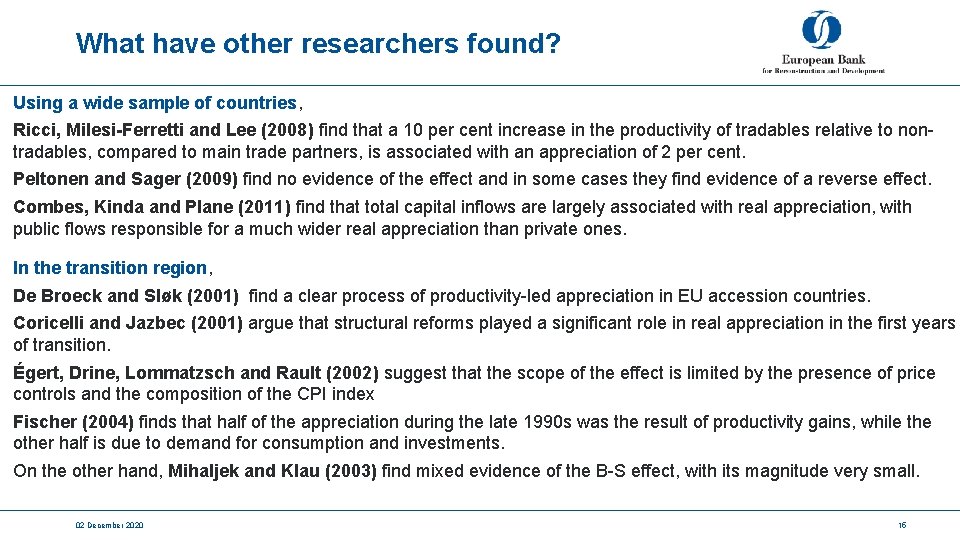
What have other researchers found? Using a wide sample of countries, Ricci, Milesi-Ferretti and Lee (2008) find that a 10 per cent increase in the productivity of tradables relative to nontradables, compared to main trade partners, is associated with an appreciation of 2 per cent. Peltonen and Sager (2009) find no evidence of the effect and in some cases they find evidence of a reverse effect. Combes, Kinda and Plane (2011) find that total capital inflows are largely associated with real appreciation, with public flows responsible for a much wider real appreciation than private ones. In the transition region, De Broeck and Sløk (2001) find a clear process of productivity-led appreciation in EU accession countries. Coricelli and Jazbec (2001) argue that structural reforms played a significant role in real appreciation in the first years of transition. Égert, Drine, Lommatzsch and Rault (2002) suggest that the scope of the effect is limited by the presence of price controls and the composition of the CPI index Fischer (2004) finds that half of the appreciation during the late 1990 s was the result of productivity gains, while the other half is due to demand for consumption and investments. On the other hand, Mihaljek and Klau (2003) find mixed evidence of the B-S effect, with its magnitude very small. 02 December 2020 15
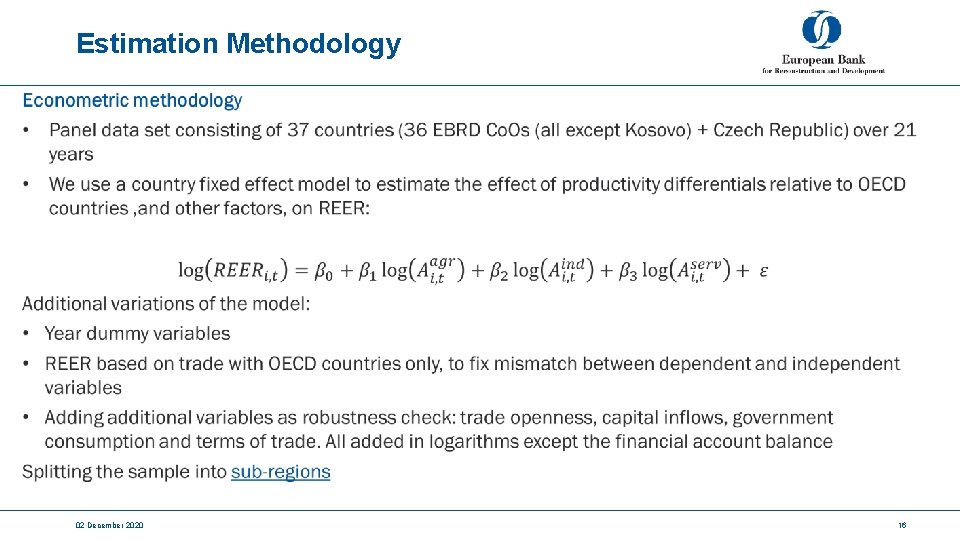
Estimation Methodology 02 December 2020 16
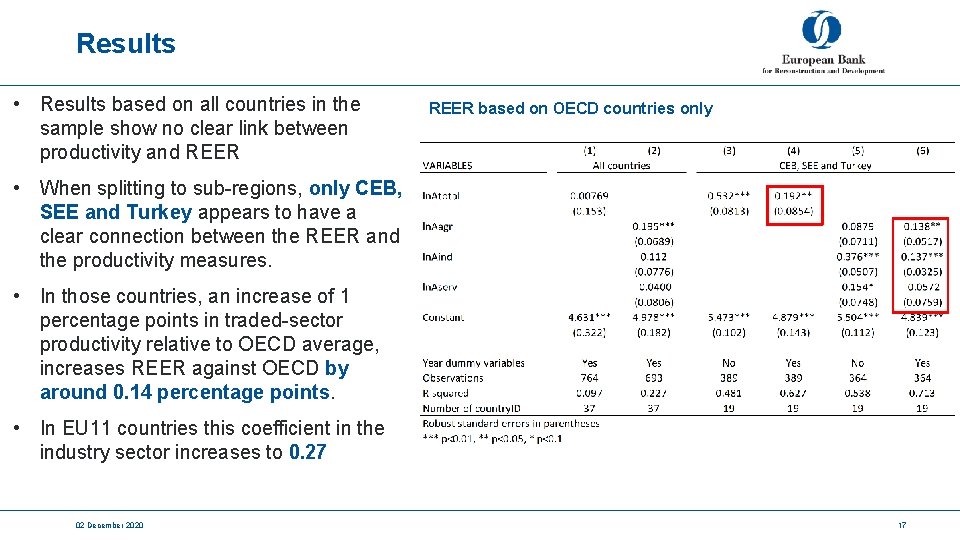
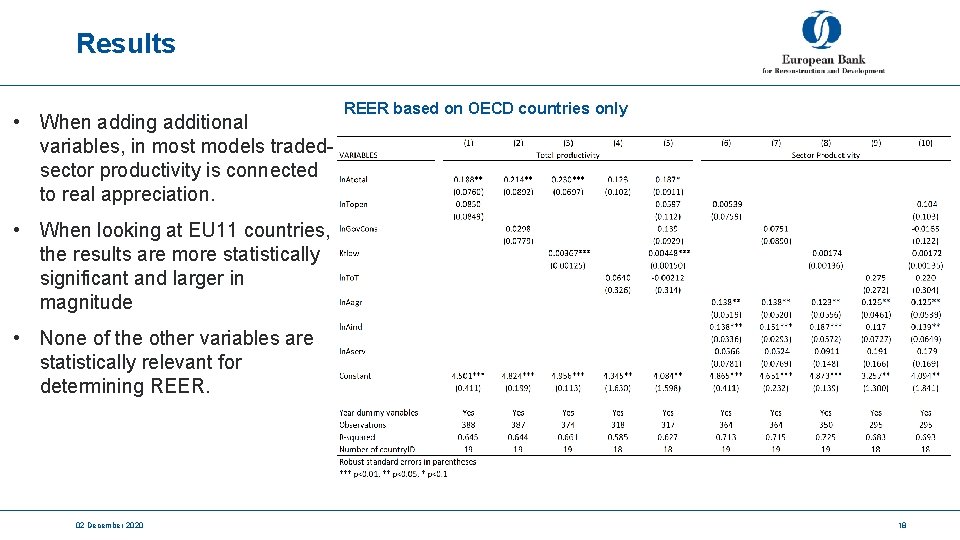
Results • Results based on all countries in the sample show no clear link between productivity and REER based on OECD countries only • When splitting to sub-regions, only CEB, SEE and Turkey appears to have a clear connection between the REER and the productivity measures. • In those countries, an increase of 1 percentage points in traded-sector productivity relative to OECD average, increases REER against OECD by around 0. 14 percentage points. • In EU 11 countries this coefficient in the industry sector increases to 0. 27 02 December 2020 17
Results • When adding additional variables, in most models tradedsector productivity is connected to real appreciation. REER based on OECD countries only • When looking at EU 11 countries, the results are more statistically significant and larger in magnitude • None of the other variables are statistically relevant for determining REER. 02 December 2020 18
Summing up: what have we found? • We understand better what has happened to real exchange rates in the past 20 years – first comprehensive set of REERs in the region • We presented a list of factors that are theoretically relevant for determining movements in real exchange rates • We find a measureable and statistically significant relationship between REERs and productivity in CEB/SEE/EU 11 countries. • We have not yet found a clear link with other variables, and in other regions → for further research… 02 December 2020 19
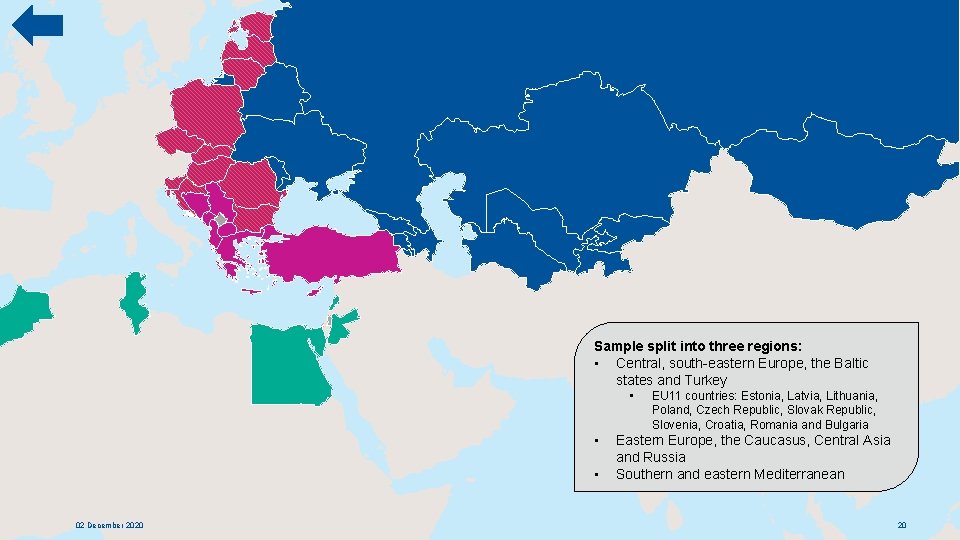
Sample split into three regions: • Central, south-eastern Europe, the Baltic states and Turkey • • • 02 December 2020 EU 11 countries: Estonia, Latvia, Lithuania, Poland, Czech Republic, Slovak Republic, Slovenia, Croatia, Romania and Bulgaria Eastern Europe, the Caucasus, Central Asia and Russia Southern and eastern Mediterranean 20
Annexes 02 December 2020 21
Annex 1: REER vs. bilateral RERs 02 December 2020 22
Annex 1: REER vs. bilateral RERs 02 December 2020 23
Annex 1: REER vs. bilateral RERs 02 December 2020 24
Annex 1: REER vs. bilateral RERs 02 December 2020 25
Annex 1: REER vs. bilateral RERs 02 December 2020 26
Annex 1: REER vs. bilateral RERs 02 December 2020 27
Annex 1: REER vs. bilateral RERs 02 December 2020 28
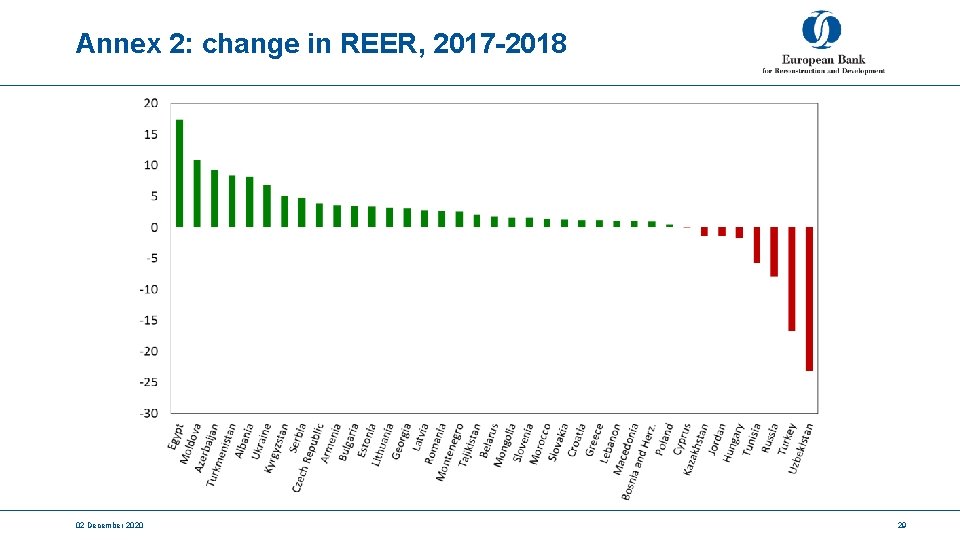
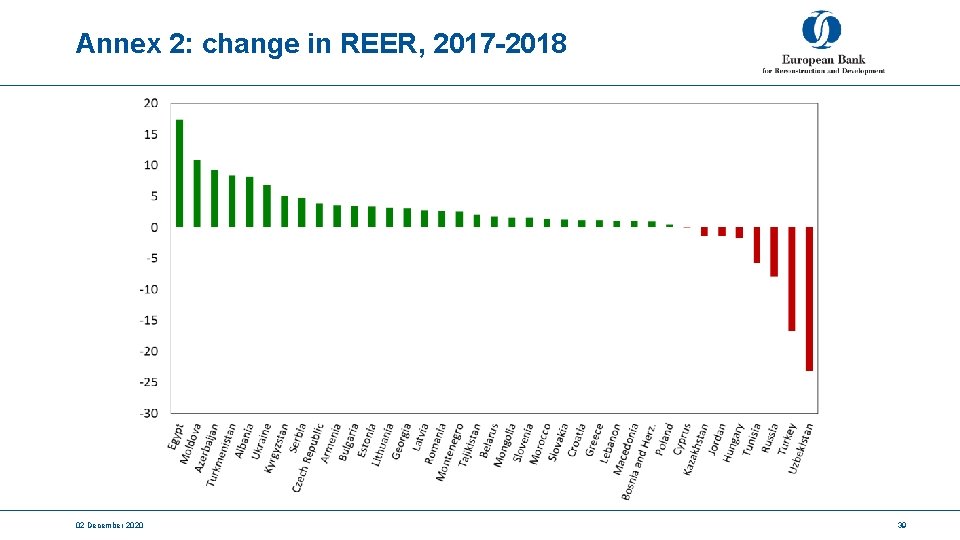
Annex 2: change in REER, 2017 -2018 02 December 2020 29
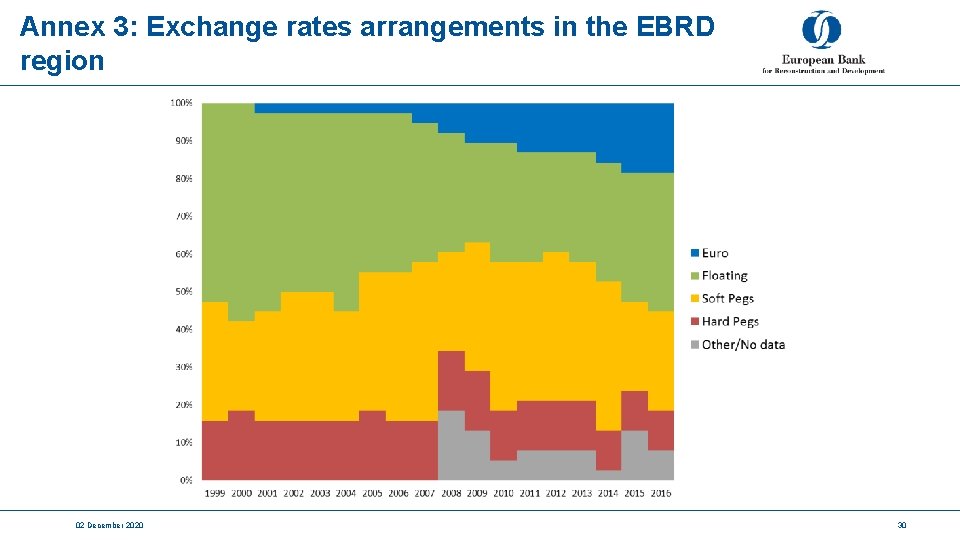
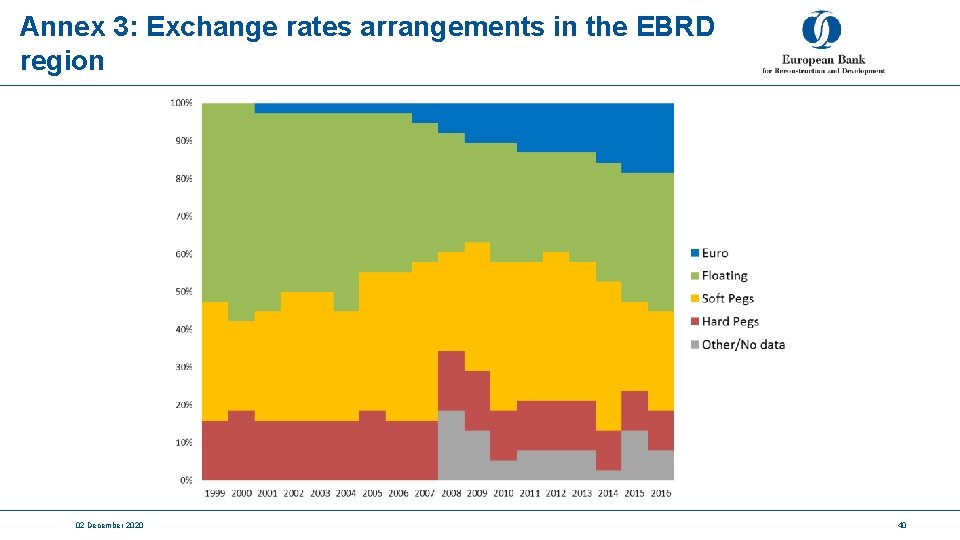
Annex 3: Exchange rates arrangements in the EBRD region 02 December 2020 30
Annexes 02 December 2020 31
Annex 1: REER vs. bilateral RERs 02 December 2020 32
Annex 1: REER vs. bilateral RERs 02 December 2020 33
Annex 1: REER vs. bilateral RERs 02 December 2020 34
Annex 1: REER vs. bilateral RERs 02 December 2020 35
Annex 1: REER vs. bilateral RERs 02 December 2020 36
Annex 1: REER vs. bilateral RERs 02 December 2020 37
Annex 1: REER vs. bilateral RERs 02 December 2020 38
Annex 2: change in REER, 2017 -2018 02 December 2020 39
Annex 3: Exchange rates arrangements in the EBRD region 02 December 2020 40