
The Details of Photosynthesis Introduction 1 Lesson Objectives
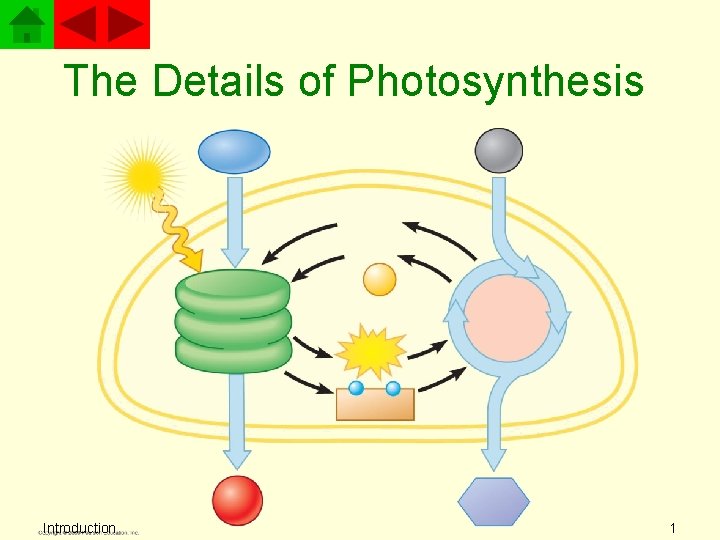
The Details of Photosynthesis Introduction 1
Lesson Objectives • You will be able to explain seven of the energy transformations that occur when storing solar energy in the chemical bonds of a carbohydrate. • You will be able to identify the purpose of both ATP and NADPH in the transfer of energy between the Light Reactions and the Calvin Cycle. • You will be able to identify which set of reactions each reactant is needed for, and which set of reactions each product is produced in. • You will be able to identify the purpose of oxygen in the light reactions. • You will be able to explain the process and purpose of carbon fixation. • You will be able to properly sequence the events that lead to the formation of: ATP, NADPH, Ru. BP, and the carbohydrate G 3 P. Introduction 2
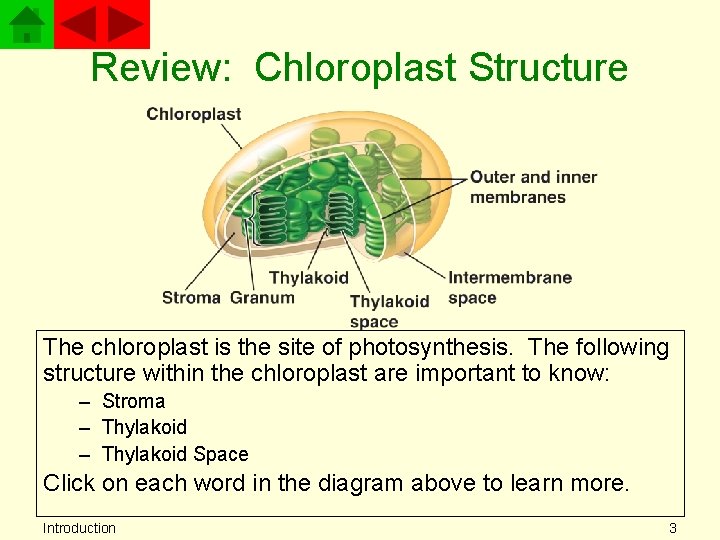
Review: Chloroplast Structure The chloroplast is the site of photosynthesis. The following structure within the chloroplast are important to know: – Stroma – Thylakoid Space Click on each word in the diagram above to learn more. Introduction 3
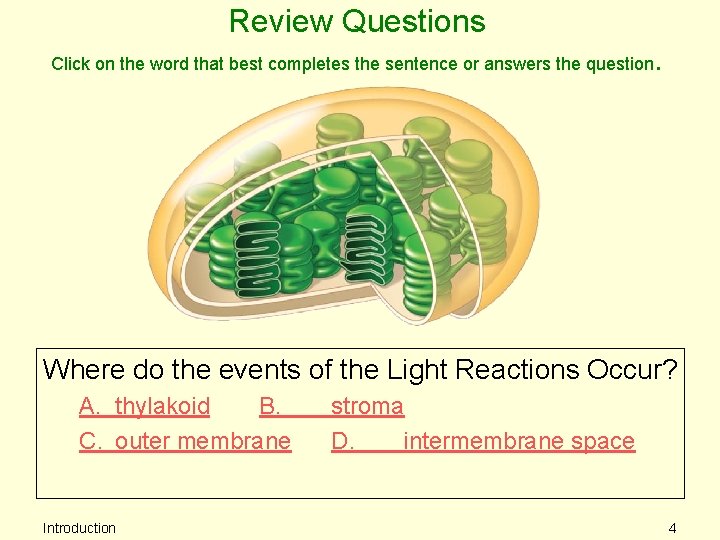
Review Questions Click on the word that best completes the sentence or answers the question . Where do the events of the Light Reactions Occur? A. thylakoid B. C. outer membrane Introduction stroma D. intermembrane space 4
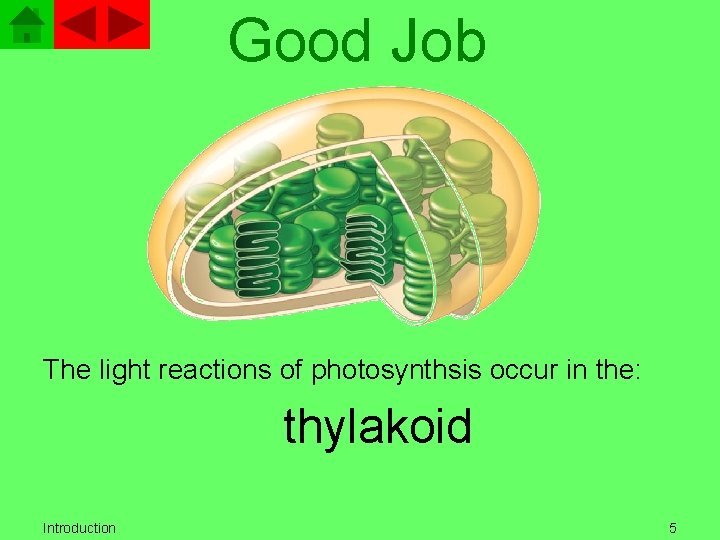
Good Job The light reactions of photosynthsis occur in the: thylakoid Introduction 5
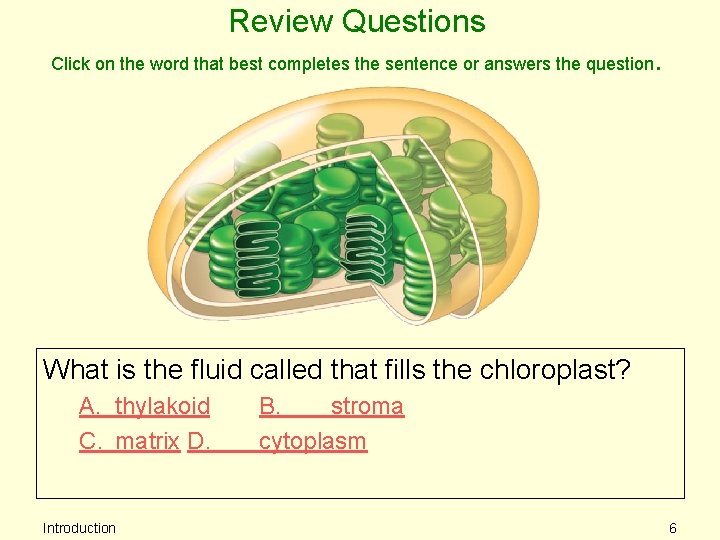
Review Questions Click on the word that best completes the sentence or answers the question . What is the fluid called that fills the chloroplast? A. thylakoid C. matrix D. Introduction B. stroma cytoplasm 6

Good Job The fluid that fills the chloroplast is called: stroma Introduction 7
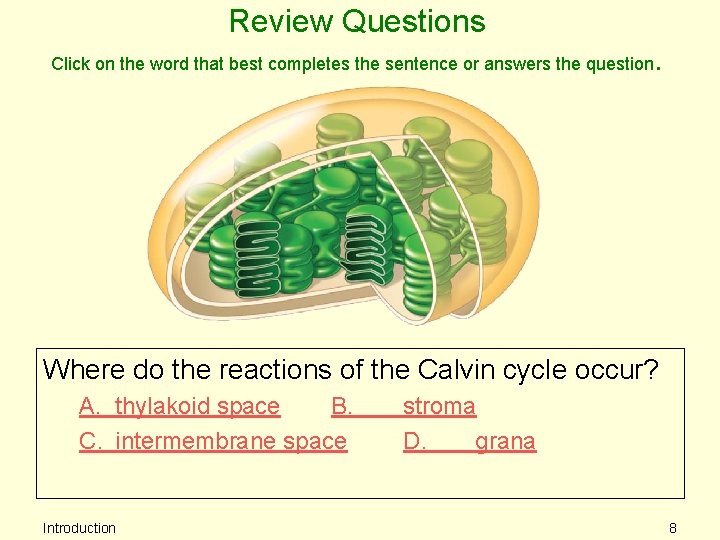
Review Questions Click on the word that best completes the sentence or answers the question . Where do the reactions of the Calvin cycle occur? A. thylakoid space B. C. intermembrane space Introduction stroma D. grana 8
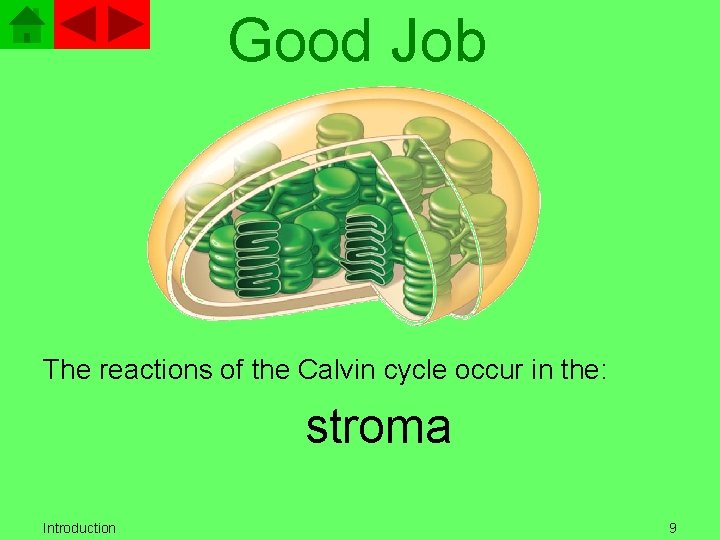
Good Job The reactions of the Calvin cycle occur in the: stroma Introduction 9
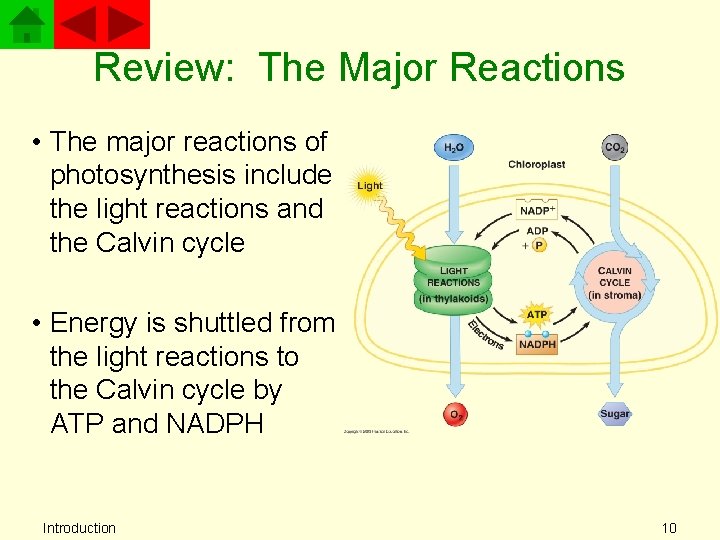
Review: The Major Reactions • The major reactions of photosynthesis include the light reactions and the Calvin cycle • Energy is shuttled from the light reactions to the Calvin cycle by ATP and NADPH Introduction 10
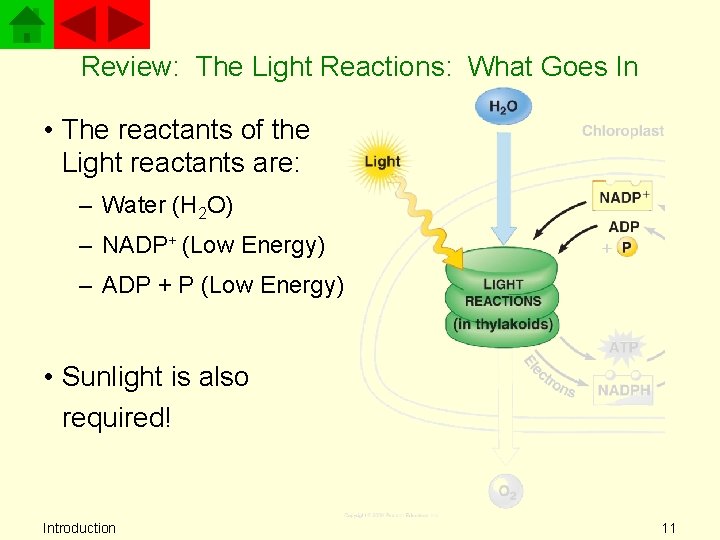
Review: The Light Reactions: What Goes In • The reactants of the Light reactants are: – Water (H 2 O) – NADP+ (Low Energy) – ADP + P (Low Energy) • Sunlight is also required! Introduction 11
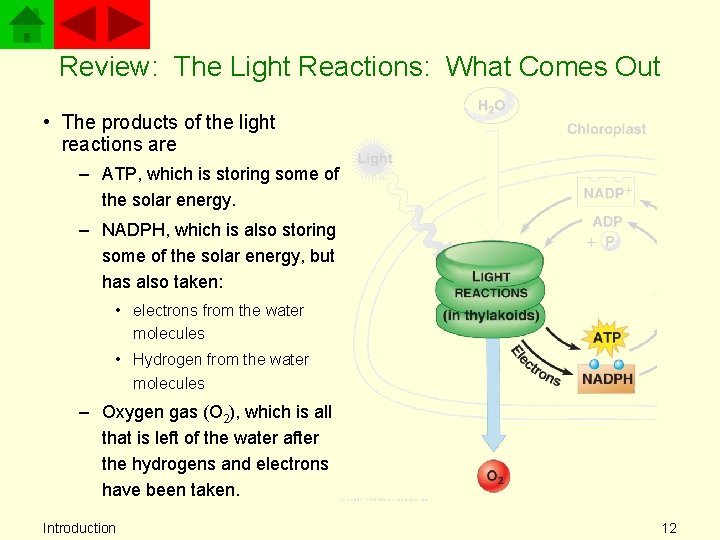
Review: The Light Reactions: What Comes Out • The products of the light reactions are – ATP, which is storing some of the solar energy. – NADPH, which is also storing some of the solar energy, but has also taken: • electrons from the water molecules • Hydrogen from the water molecules – Oxygen gas (O 2), which is all that is left of the water after the hydrogens and electrons have been taken. Introduction 12
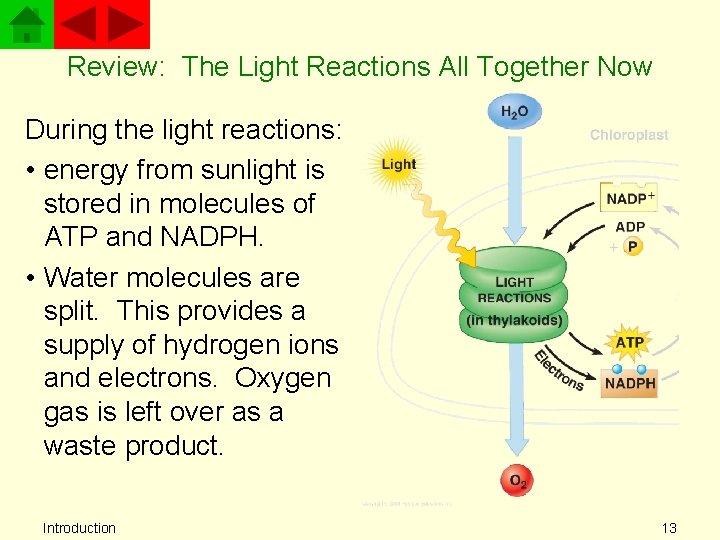
Review: The Light Reactions All Together Now During the light reactions: • energy from sunlight is stored in molecules of ATP and NADPH. • Water molecules are split. This provides a supply of hydrogen ions and electrons. Oxygen gas is left over as a waste product. Introduction 13
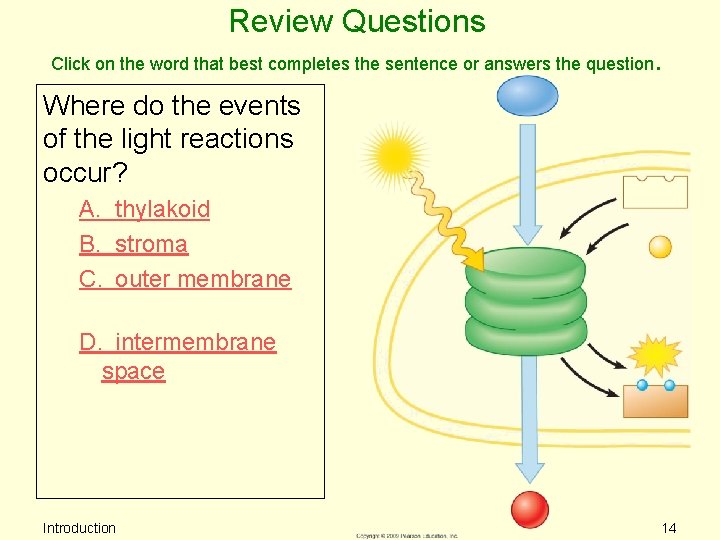
Review Questions Click on the word that best completes the sentence or answers the question . Where do the events of the light reactions occur? A. thylakoid B. stroma C. outer membrane D. intermembrane space Introduction 14
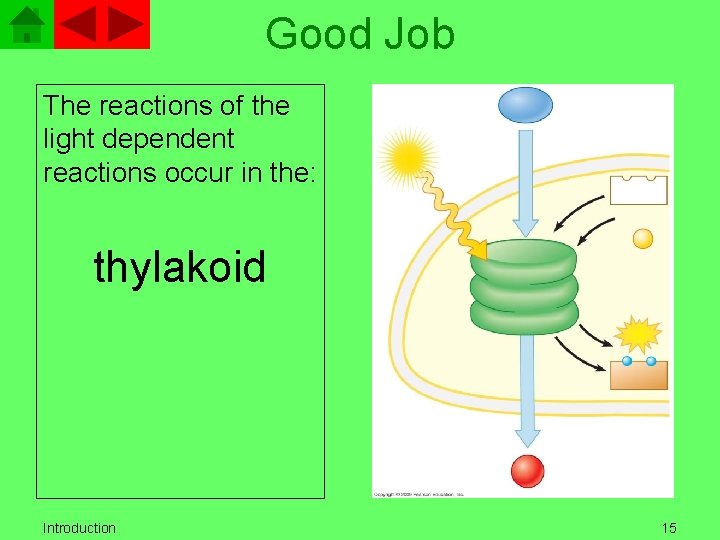
Good Job The reactions of the light dependent reactions occur in the: thylakoid Introduction 15
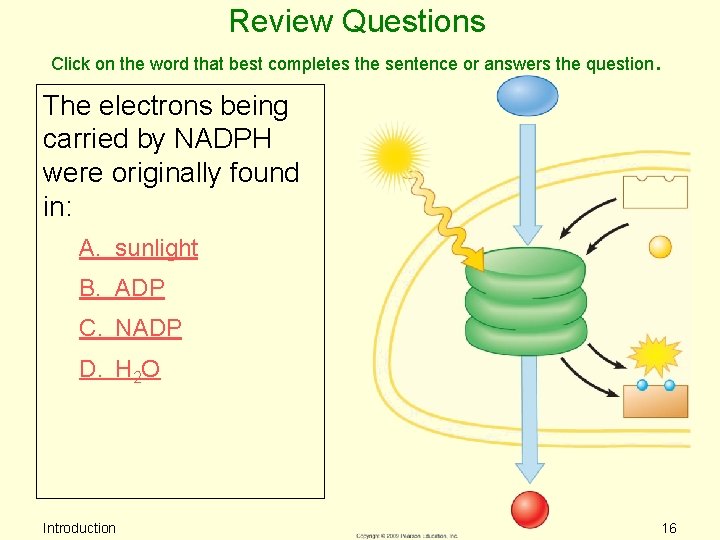
Review Questions Click on the word that best completes the sentence or answers the question . The electrons being carried by NADPH were originally found in: A. sunlight B. ADP C. NADP D. H 2 O Introduction 16
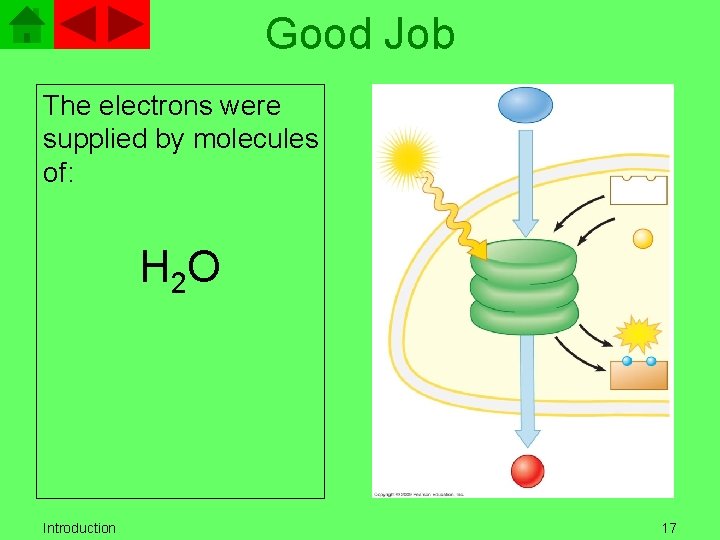
Good Job The electrons were supplied by molecules of: H 2 O Introduction 17
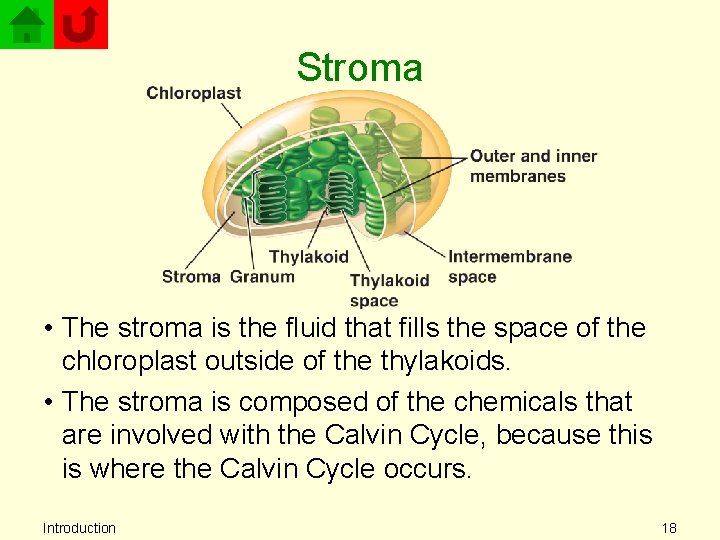
Stroma • The stroma is the fluid that fills the space of the chloroplast outside of the thylakoids. • The stroma is composed of the chemicals that are involved with the Calvin Cycle, because this is where the Calvin Cycle occurs. Introduction 18
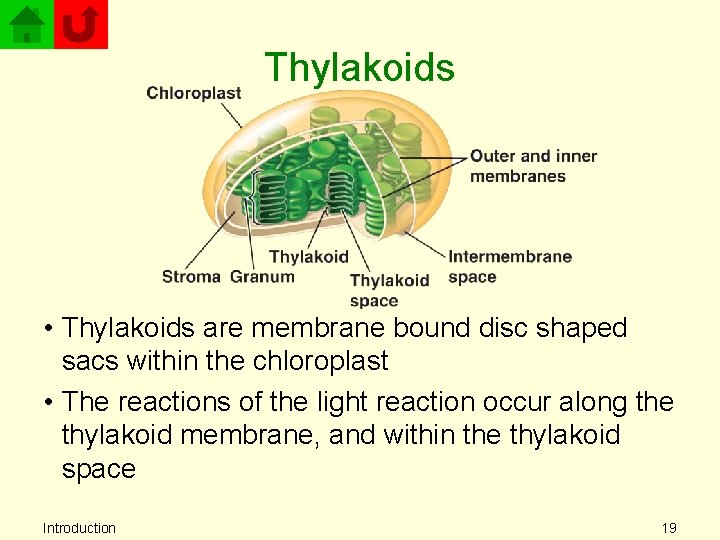
Thylakoids • Thylakoids are membrane bound disc shaped sacs within the chloroplast • The reactions of the light reaction occur along the thylakoid membrane, and within the thylakoid space Introduction 19

Sorry – Wrong Answer (click to continue) Introduction 20
- Slides: 20