
THE DESKTOP RADIATION PORTAL MONITOR The ultimate training
- Slides: 8
THE DESKTOP RADIATION PORTAL MONITOR The ultimate training aid for developing maintenance providers S. PEPER PACIFIC NORTHWEST NATIONAL LABORATORY Richland Washington, USA Email: Shane. Peper@pnnl. gov C. L. STINSON OAK RIDGE NATIONAL LABORATORY Oak Ridge Tennessee, USA Email: Craig. Stinson@IB 3 Global. com
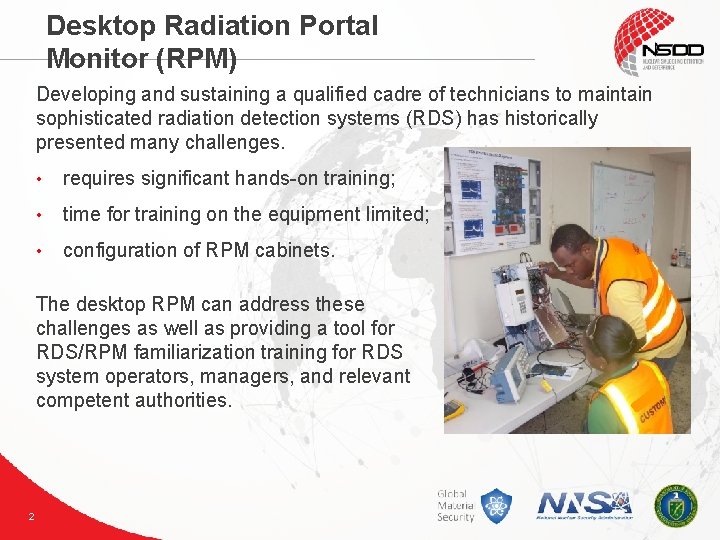
Desktop Radiation Portal Monitor (RPM) Developing and sustaining a qualified cadre of technicians to maintain sophisticated radiation detection systems (RDS) has historically presented many challenges. • requires significant hands-on training; • time for training on the equipment limited; • configuration of RPM cabinets. The desktop RPM can address these challenges as well as providing a tool for RDS/RPM familiarization training for RDS system operators, managers, and relevant competent authorities. 2
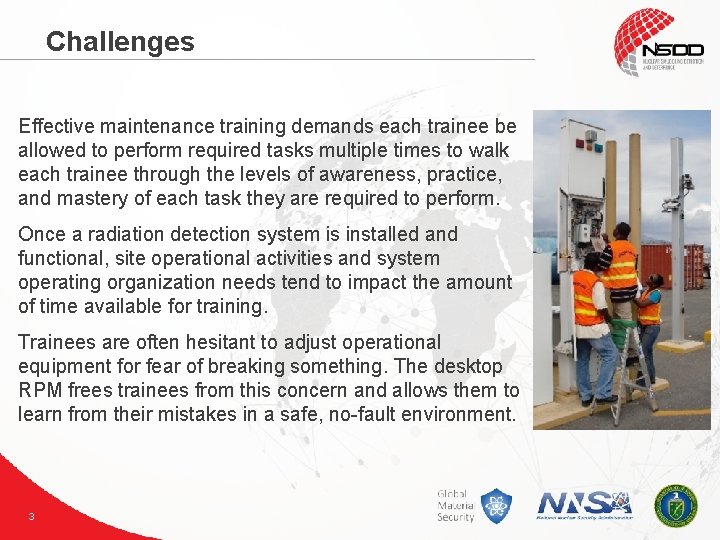
Challenges Effective maintenance training demands each trainee be allowed to perform required tasks multiple times to walk each trainee through the levels of awareness, practice, and mastery of each task they are required to perform. Once a radiation detection system is installed and functional, site operational activities and system operating organization needs tend to impact the amount of time available for training. Trainees are often hesitant to adjust operational equipment for fear of breaking something. The desktop RPM frees trainees from this concern and allows them to learn from their mistakes in a safe, no-fault environment. 3
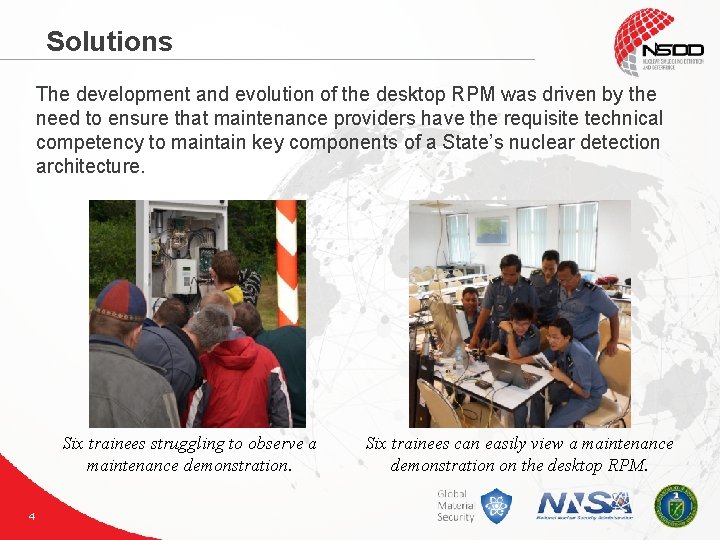
Solutions The development and evolution of the desktop RPM was driven by the need to ensure that maintenance providers have the requisite technical competency to maintain key components of a State’s nuclear detection architecture. Six trainees struggling to observe a maintenance demonstration. 4 Six trainees can easily view a maintenance demonstration on the desktop RPM.
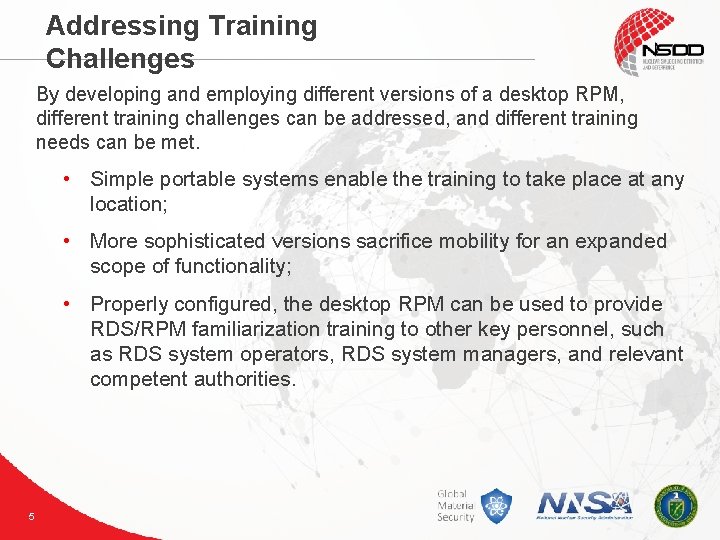
Addressing Training Challenges By developing and employing different versions of a desktop RPM, different training challenges can be addressed, and different training needs can be met. • Simple portable systems enable the training to take place at any location; • More sophisticated versions sacrifice mobility for an expanded scope of functionality; • Properly configured, the desktop RPM can be used to provide RDS/RPM familiarization training to other key personnel, such as RDS system operators, RDS system managers, and relevant competent authorities. 5
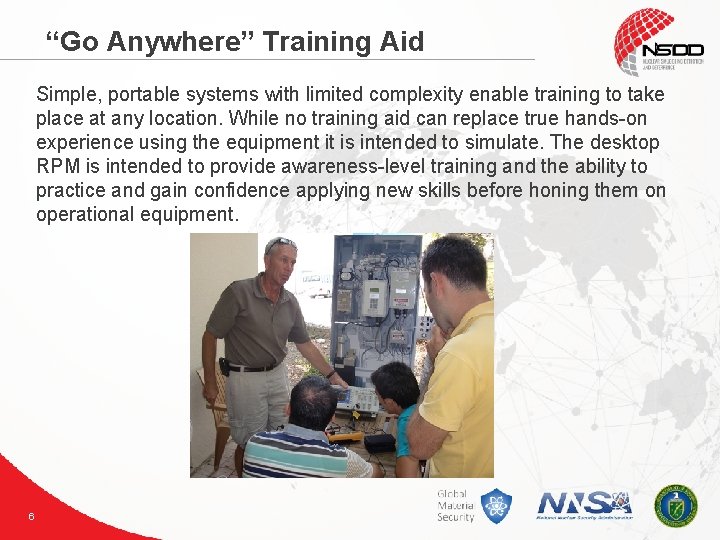
“Go Anywhere” Training Aid Simple, portable systems with limited complexity enable training to take place at any location. While no training aid can replace true hands-on experience using the equipment it is intended to simulate. The desktop RPM is intended to provide awareness-level training and the ability to practice and gain confidence applying new skills before honing them on operational equipment. 6
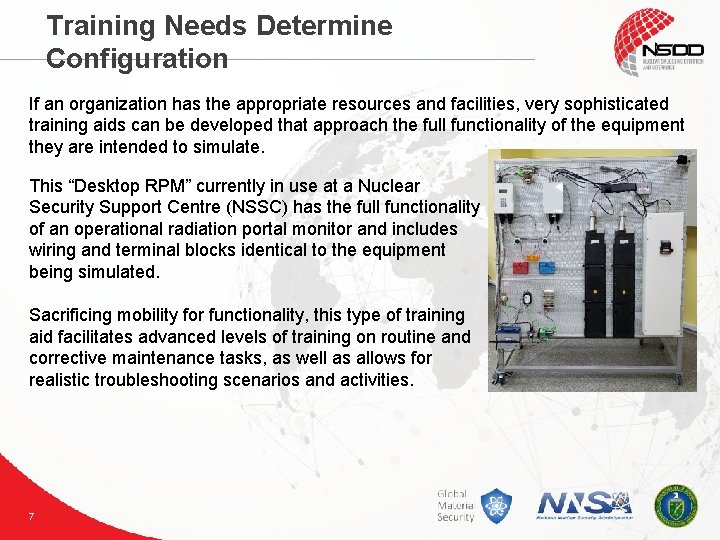
Training Needs Determine Configuration If an organization has the appropriate resources and facilities, very sophisticated training aids can be developed that approach the full functionality of the equipment they are intended to simulate. This “Desktop RPM” currently in use at a Nuclear Security Support Centre (NSSC) has the full functionality of an operational radiation portal monitor and includes wiring and terminal blocks identical to the equipment being simulated. Sacrificing mobility for functionality, this type of training aid facilitates advanced levels of training on routine and corrective maintenance tasks, as well as allows for realistic troubleshooting scenarios and activities. 7
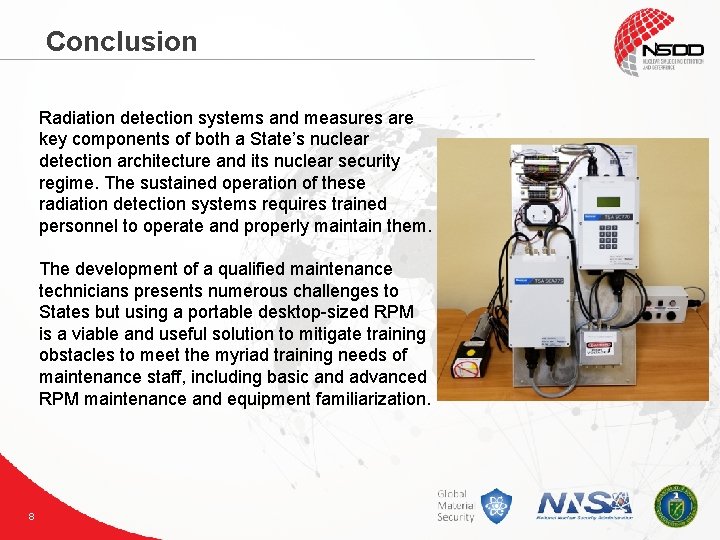
Conclusion Radiation detection systems and measures are key components of both a State’s nuclear detection architecture and its nuclear security regime. The sustained operation of these radiation detection systems requires trained personnel to operate and properly maintain them. The development of a qualified maintenance technicians presents numerous challenges to States but using a portable desktop-sized RPM is a viable and useful solution to mitigate training obstacles to meet the myriad training needs of maintenance staff, including basic and advanced RPM maintenance and equipment familiarization. 8