
THE DESIGN CRITERIA FOR WASTEWATER SYSTEMS 30 TAC









- Slides: 44
THE DESIGN CRITERIA FOR WASTEWATER SYSTEMS (30 TAC Chapter 217) Water Quality/Stormwater Seminar October 12, 2016
Presented By: Louis C. Herrin, III, P. E. Engineer, Water Quality Division louis. herrin@tceq. texas. gov 512 -239 -4552
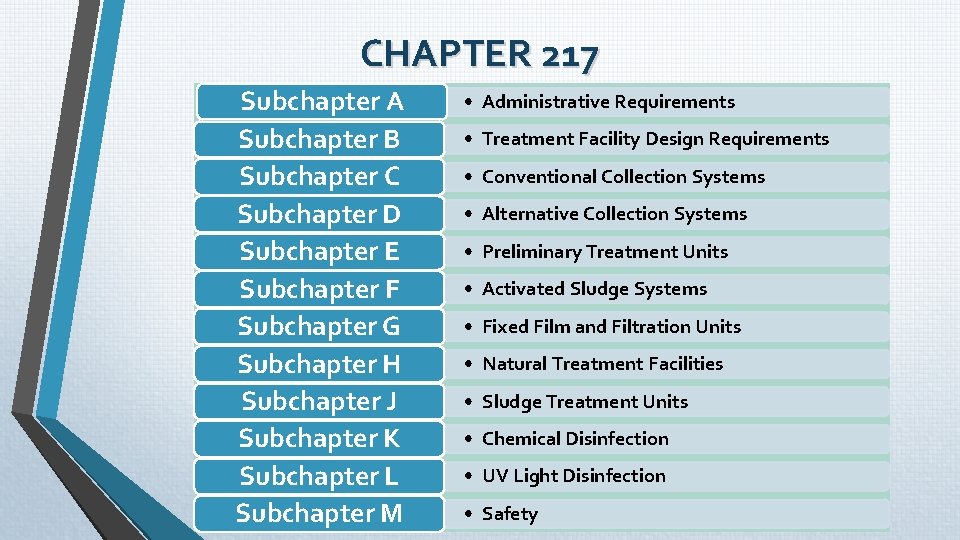
CHAPTER 217 Subchapter A Subchapter B Subchapter C Subchapter D Subchapter E Subchapter F Subchapter G Subchapter H Subchapter J Subchapter K Subchapter L Subchapter M • Administrative Requirements • Treatment Facility Design Requirements • Conventional Collection Systems • Alternative Collection Systems • Preliminary Treatment Units • Activated Sludge Systems • Fixed Film and Filtration Units • Natural Treatment Facilities • Sludge Treatment Units • Chemical Disinfection • UV Light Disinfection • Safety
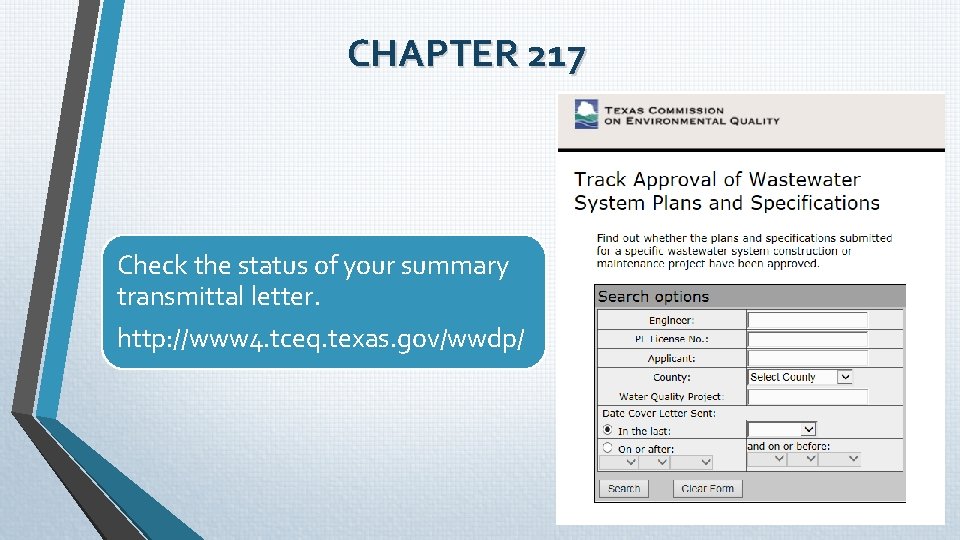
CHAPTER 217 Check the status of your summary transmittal letter. http: //www 4. tceq. texas. gov/wwdp/
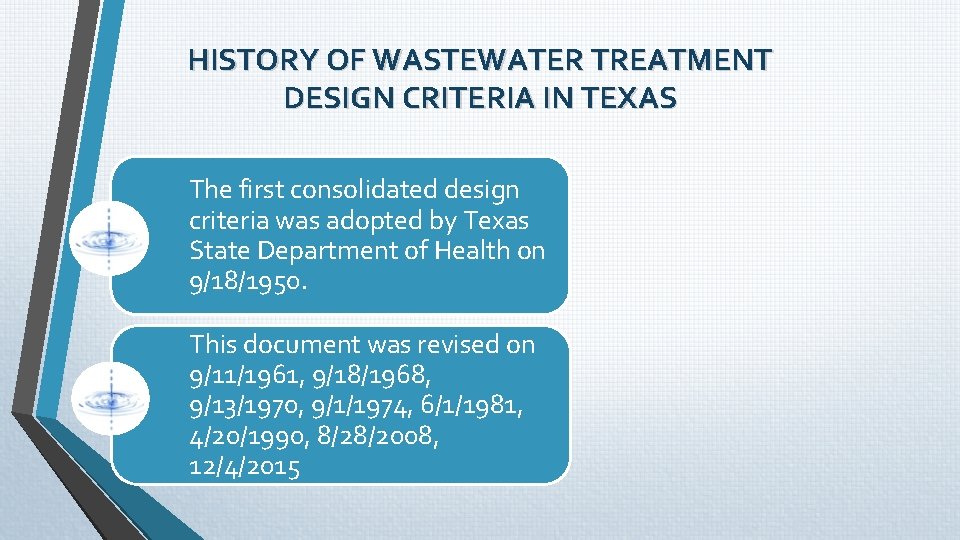
HISTORY OF WASTEWATER TREATMENT DESIGN CRITERIA IN TEXAS The first consolidated design criteria was adopted by Texas State Department of Health on 9/18/1950. This document was revised on 9/11/1961, 9/18/1968, 9/13/1970, 9/1/1974, 6/1/1981, 4/20/1990, 8/28/2008, 12/4/2015
SUBCHAPTER - A ADMINISTRATIVE REQUIREMENTS
PURPOSE AND APPLICABILITY Section 217. 1 (Applicability) The grandfathering clause: The existing wastewater treatment system is subject to the design requirements at the time of approval
Re-adoption of the Chapter 317
SOME IMPORTANT DEFINITIONS MAINTENANCE DESIGN FLOW REHABILITATE GRINDER PUMP ALTER or ALTERATION EQUALIZATION BASIN GRAVITY RELIEF SEWER INNOVATIVE TECHNOLOGIES
APPLICABILITY EXAMPLES FOR ALTER • Replace a treatment unit or a collection system unit. • Modify in a way that changes: • capacity; • function; • process; • mode of operation; • configuration; • a design parameter; • a major design assumption Example: Replaced a gravity thickener with a belt press and plan to use thickener as a digester instead.
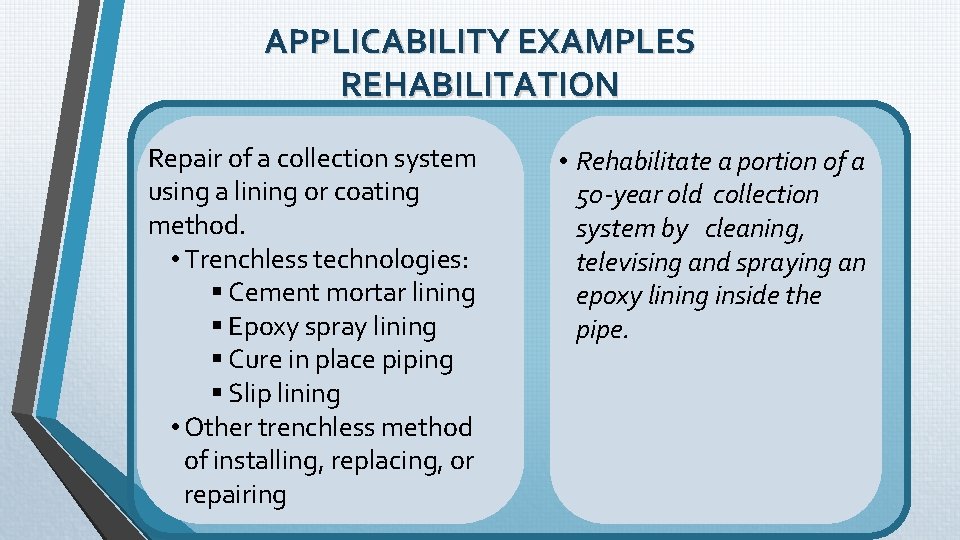
APPLICABILITY EXAMPLES REHABILITATION Repair of a collection system using a lining or coating method. • Trenchless technologies: § Cement mortar lining § Epoxy spray lining § Cure in place piping § Slip lining • Other trenchless method of installing, replacing, or repairing • Rehabilitate a portion of a 50 -year old collection system by cleaning, televising and spraying an epoxy lining inside the pipe.
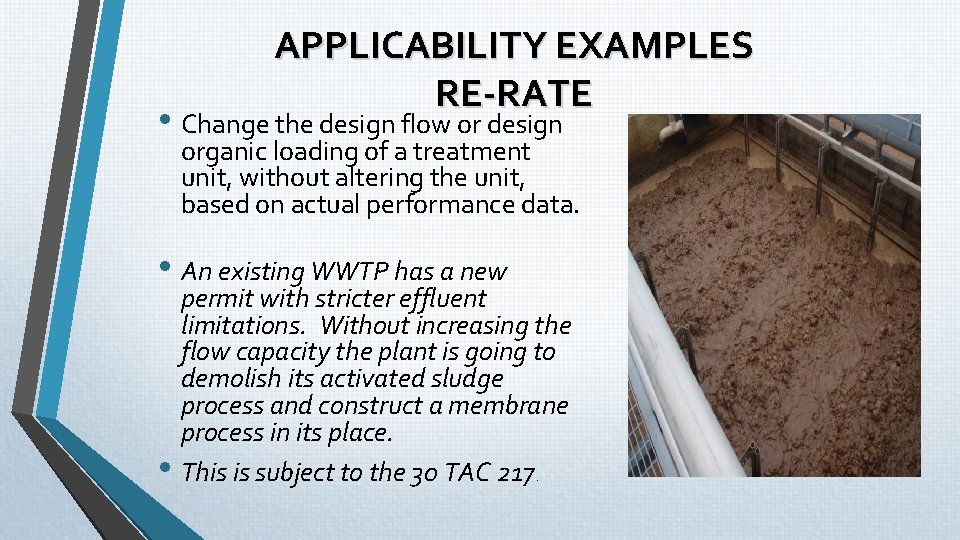
APPLICABILITY EXAMPLES RE-RATE • Change the design flow or design organic loading of a treatment unit, without altering the unit, based on actual performance data. • An existing WWTP has a new permit with stricter effluent limitations. Without increasing the flow capacity the plant is going to demolish its activated sludge process and construct a membrane process in its place. • This is subject to the 30 TAC 217.
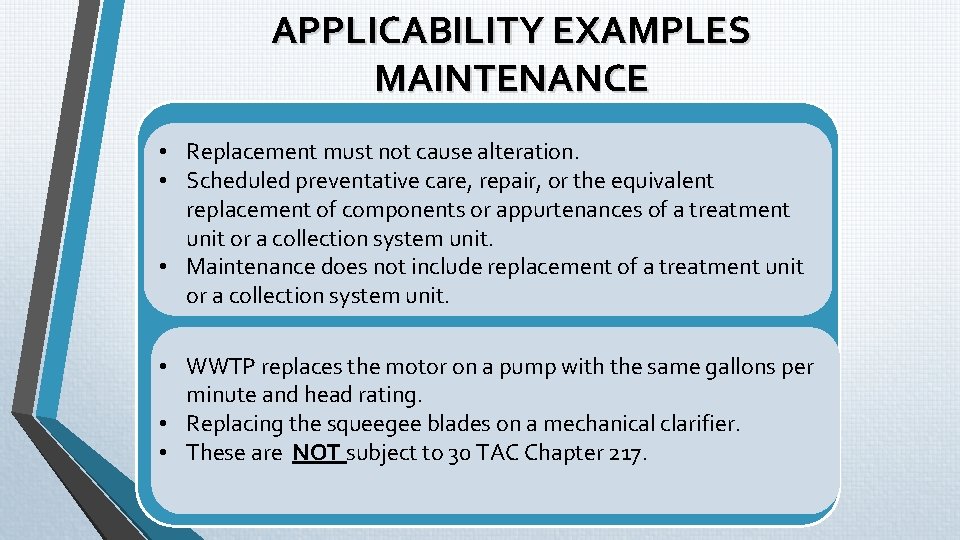
APPLICABILITY EXAMPLES MAINTENANCE • Replacement must not cause alteration. • Scheduled preventative care, repair, or the equivalent replacement of components or appurtenances of a treatment unit or a collection system unit. • Maintenance does not include replacement of a treatment unit or a collection system unit. • WWTP replaces the motor on a pump with the same gallons per minute and head rating. • Replacing the squeegee blades on a mechanical clarifier. • These are NOT subject to 30 TAC Chapter 217.
SUBCHAPTER - B TREATMENT FACILITY DESIGN REQUIREMENTS
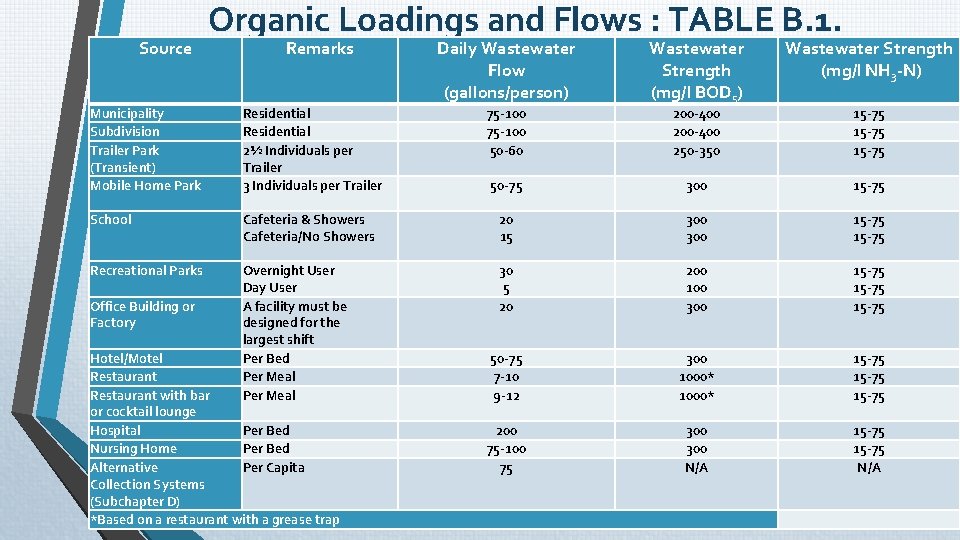
Source Organic Loadings and Flows : TABLE B. 1. Remarks Daily Wastewater Flow (gallons/person) Wastewater Strength (mg/l BOD 5) Wastewater Strength (mg/l NH 3 -N) 200 -400 250 -350 15 -75 Municipality Subdivision Trailer Park (Transient) Mobile Home Park Residential 2½ Individuals per Trailer 3 Individuals per Trailer 75 -100 50 -60 50 -75 300 15 -75 School Cafeteria & Showers Cafeteria/No Showers 20 15 300 15 -75 Recreational Parks Overnight User Day User A facility must be designed for the largest shift Per Bed Per Meal 30 5 20 200 100 300 15 -75 50 -75 7 -10 9 -12 300 1000* 15 -75 200 75 -100 75 300 N/A 15 -75 N/A Office Building or Factory Hotel/Motel Restaurant with bar or cocktail lounge Hospital Per Bed Nursing Home Per Bed Alternative Per Capita Collection Systems (Subchapter D) *Based on a restaurant with a grease trap
Some things to remember The differences between the permitted flow from max 30 day average and annual average The minimum information needed to rerate a wastewater treatment plant Emergency power requirements in 217. 36 and 217. 63 (Clarity & Consistency) Flow measurement weirs for small plants
Some things to remember One hundred-year flood plain requirements Buffer Zones and Odor Abatement Power reliability to be determined using records from past 60 consecutive months instead of past 24.
SUBCHAPTER - C CONVENTIONAL COLLECTION SYSTEMS
Pipe Design Bending of gravity and force main pipes is prohibited. Requirement for gaskets operate properly at atmospheric pressure Equation 217. 53(k)(4) to refer to the structural calculation in equation 217. 53(k)(2)
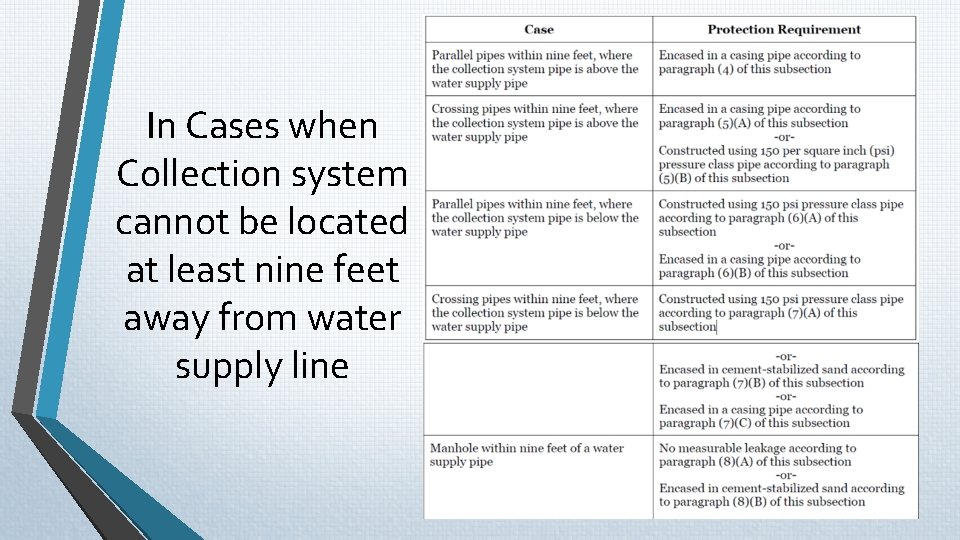
In Cases when Collection system cannot be located at least nine feet away from water supply line
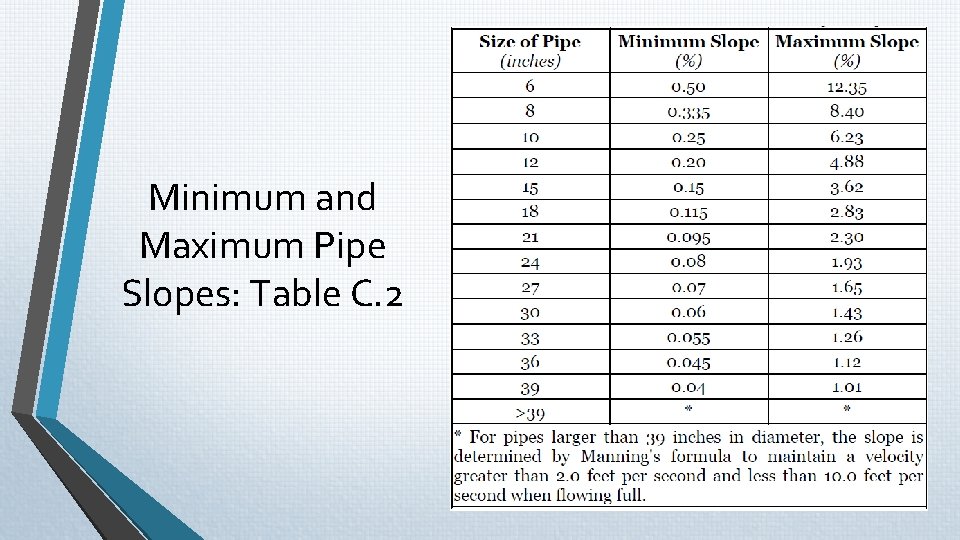
Minimum and Maximum Pipe Slopes: Table C. 2
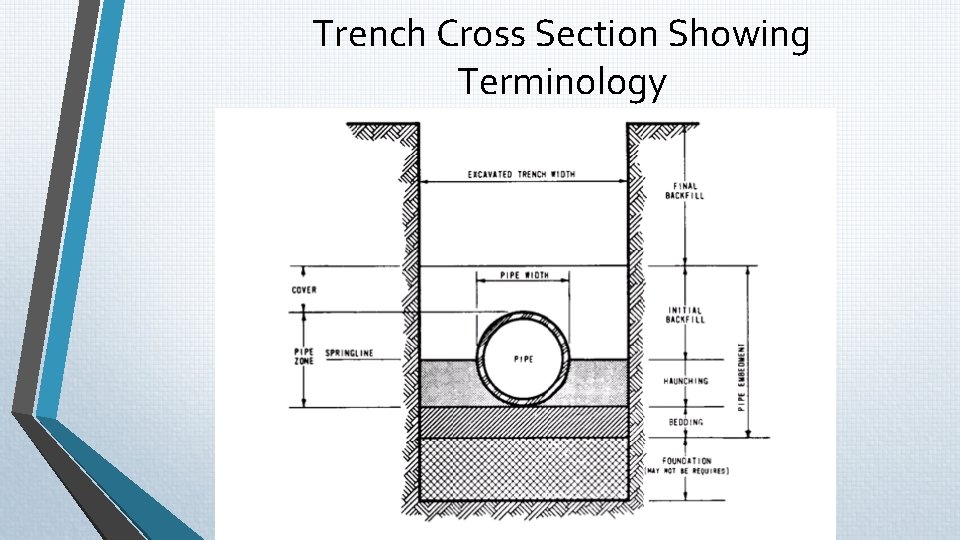
Trench Cross Section Showing Terminology
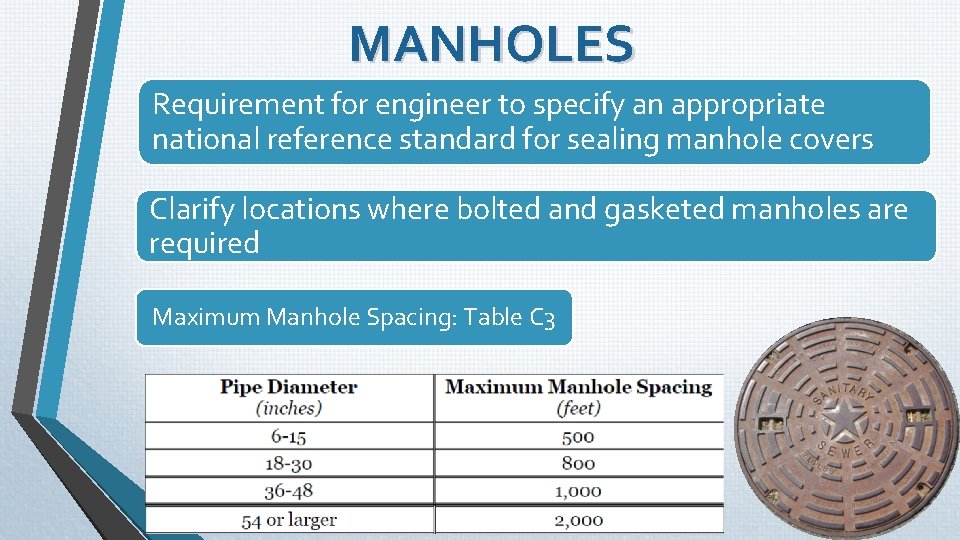
MANHOLES Requirement for engineer to specify an appropriate national reference standard for sealing manhole covers Clarify locations where bolted and gasketed manholes are required Maximum Manhole Spacing: Table C 3
TESTING REQUIREMENTS FOR MANHOLES Correct units in 217. 58(b)(2)(d), related to tightening external clamps on the vacuum testing cover Allow ASTM testing requirements for manholes
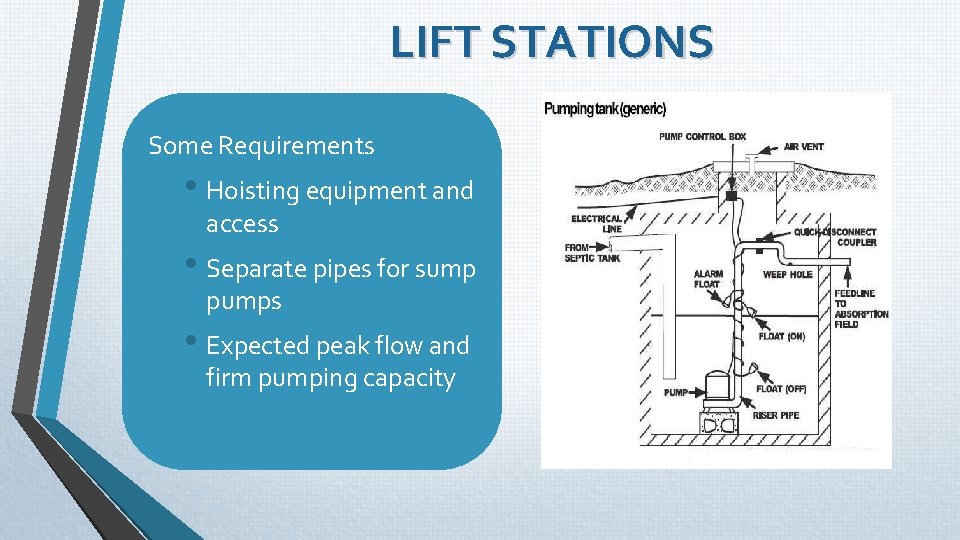
LIFT STATIONS Some Requirements • Hoisting equipment and access • Separate pipes for sump pumps • Expected peak flow and firm pumping capacity
LIFT STATIONS Some Other Requirements: • Add backup high water float requirement for wet well level detection • Control pad must be large enough for personnel to do electrical work safely • Ladders and access hatches must also meet OSHA • Non-corrosive vents for all lift stations • Explosion-proof equipment for all lift stations
EMERGENCY PROVISIONS FOR LIFT STATIONS Clarify that generators or auxiliary pumps may be used Add minimum fuel tank size requirements based on hours of fuel Use of collection system or spill containment as a sole system for preventing discharge to be prohibited Clarify quick connection design and generator electric loading design
FORCE MAINS Fatigue life calculation requirements Consider basing minimum velocities on the smallest pump operating at full speed Consider additional flushing requirement for variable speed pumps that normally operate below minimum velocities Clarify that air release valves must be noncorrosive
FORCE MAINS Materials for Force Main Pipes Force Main Pipe Joints Identification of Force Main Pipes Force Main Design Force Main Testing
Some other sections SECTION - § 217. 69: Requirements for inspecting and maintaining wastewater collection systems and post-installation inspections of collection system rehabilitation projects SECTION - § 217. 70: Collection system for Reclaimed Water Facilities
SUBCHAPTER - E PRELIMINARY TREATMENT UNITS
Some Important Sections • 217. 120 General Preliminary Treatment Requirements • Grinding devices vs screening devices • 217. 121 Coarse Screens and 217. 122 Fine Screens • 217. 124 Grit Removal Systems, 217. 124 Grit Chambers and 217. 126 Grit Handling
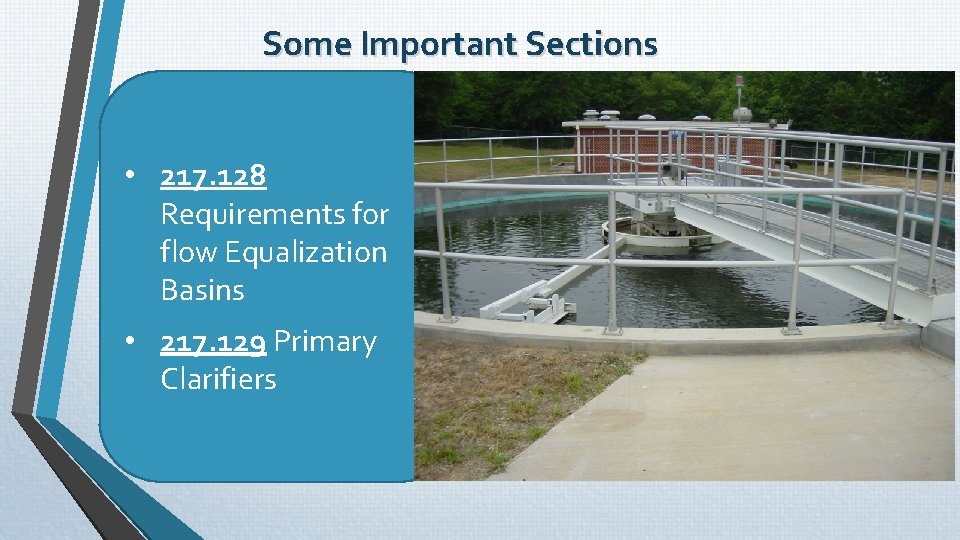
Some Important Sections • 217. 128 Requirements for flow Equalization Basins • 217. 129 Primary Clarifiers
SUBCHAPTER - F ACTIVATED SLUDGE SYSTEMS
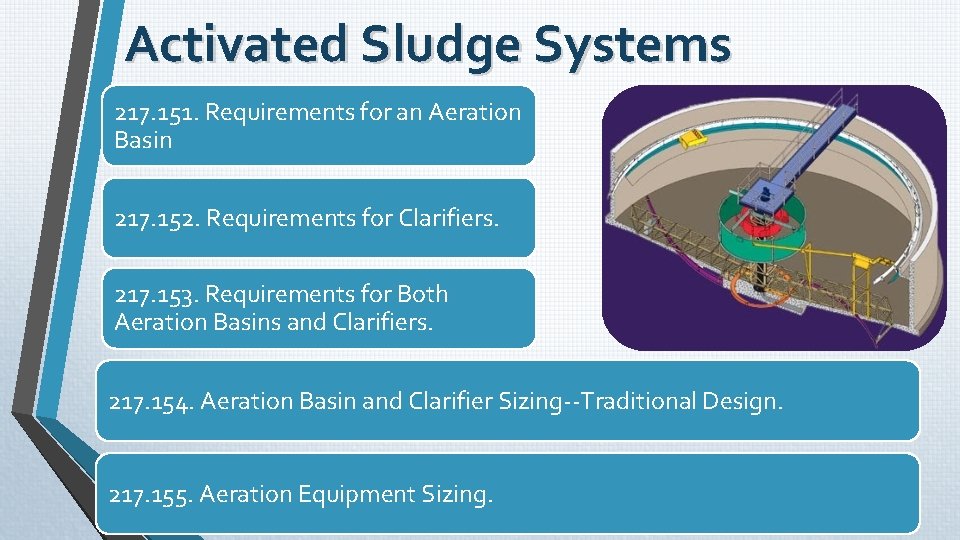
Activated Sludge Systems 217. 151. Requirements for an Aeration Basin 217. 152. Requirements for Clarifiers. 217. 153. Requirements for Both Aeration Basins and Clarifiers. 217. 154. Aeration Basin and Clarifier Sizing--Traditional Design. 217. 155. Aeration Equipment Sizing.
SUBCHAPTER - G FIXED FILM AND FILTRATION UNITS
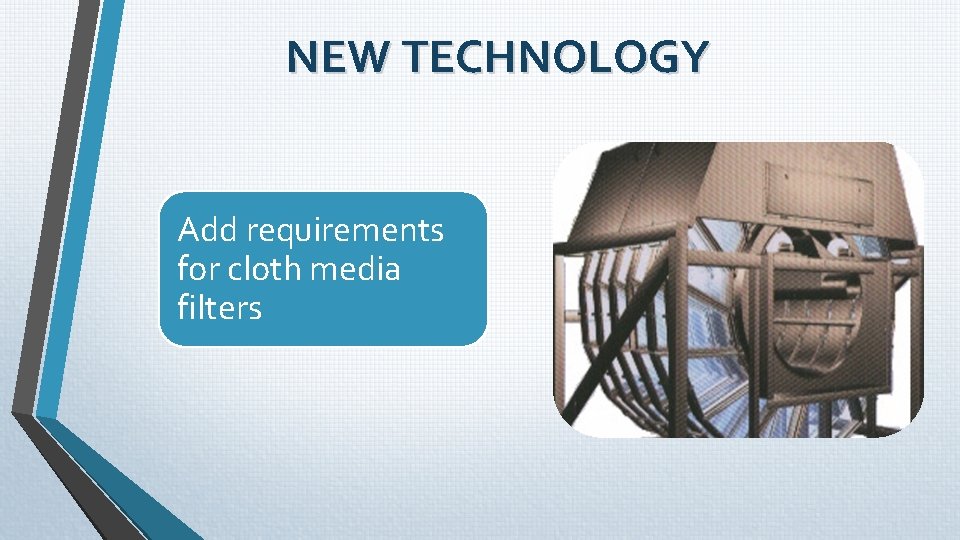
NEW TECHNOLOGY Add requirements for cloth media filters
SUBCHAPTER - H NATURAL TREATMENT FACILITIES
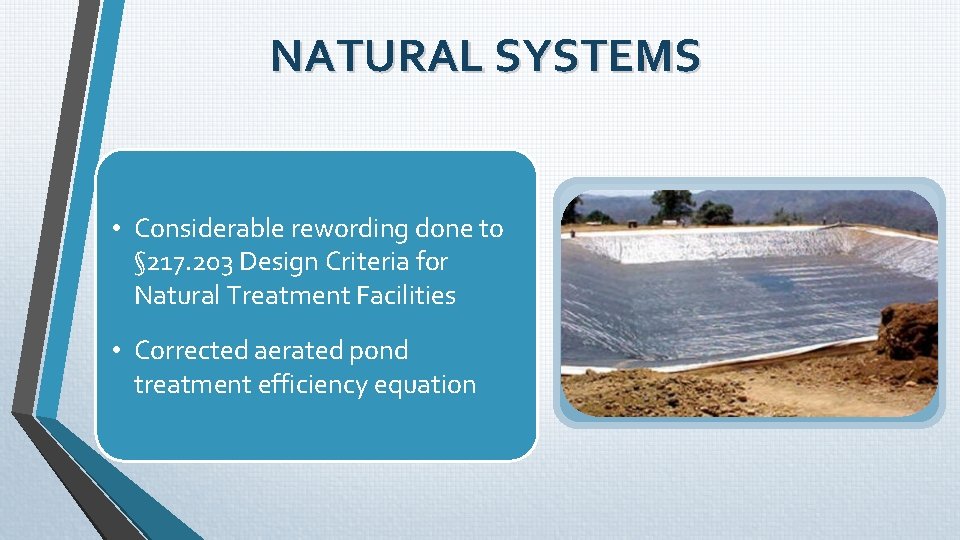
NATURAL SYSTEMS • Considerable rewording done to § 217. 203 Design Criteria for Natural Treatment Facilities • Corrected aerated pond treatment efficiency equation
SUBCHAPTER - K CHEMICAL DISINFECTION
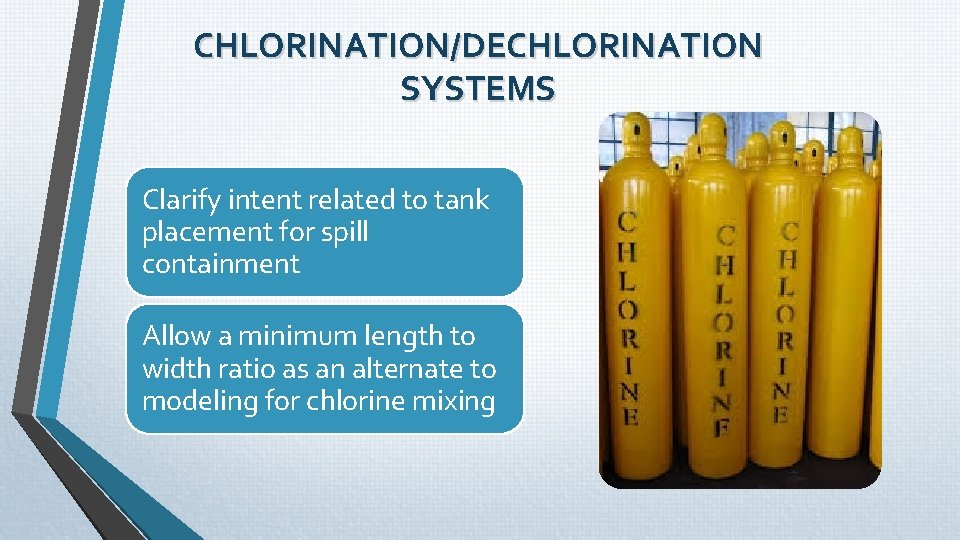
CHLORINATION/DECHLORINATION SYSTEMS Clarify intent related to tank placement for spill containment Allow a minimum length to width ratio as an alternate to modeling for chlorine mixing
SUBCHAPTER - M SAFETY
SAFETY AND SECURITY AUDITS Require the owner to conduct annual audits and to prepare and implement a corrective action plan.
QUESTIONS?