
The Dell Direct Model What it means for
- Slides: 12
The Dell Direct Model: What it means for customers(users) • PROS: – Perceived customization – Convenience – No sales pressure – No price comparisons/objections • CONS – No immediate delivery – No touch and feel
The Dell Direct Model: What it means for (corporate) customers • PROS: – Premier pages: approved configurations only – Reduces procurement cost – Reduced overshipment costs – E-support • CONS: – No immediate delivery
The Dell Direct Model: . . . for suppliers and complementors • PROS: – Rapid introduction of new technology – Rapid feedback on product problems – Good data forecasting – Increased switching costs • CONS: –?
The Dell Direct Model: . . . for Dell itself • PROS – Lower inventory and little product obsolescence – New technology to market faster – Quick feedback on problems – Ability to manage product shortage and demand by advertising and pricing – Dell gets paid early
The Dell Direct Model: . . . for Dell itself (2) • PROS (continued) – Lower component cost than indirect competitors – Creates real switching barriers for large customers – Customer database>>customer information, lowers cost of followup services and support • CONS – may not appeal to all segments
Dell’s core competencies • Core competencies are skills, knowledge, and collective learning that allow a company to execute some critical processes better than any of its competitors • • Supply Chain Management (SCM) Customer Relationship Management (CRM) E-service Demand Management
1: Indirect channel (with e-efficiency; pooling of inventory, etc. ) • PROS: – – Current strength Ally with major retailers (Comp. USA, Staples, etc. ) Touch and feel; local service and support Many competitors withdrawing • CONS – – Declining market High costs Lack of customization (for customer; for channel) Will channel members cooperate?
2: Direct Model • PROS: – Overall market trend – Lowest cost (commoditization of market; importance of price) • CONS: – Lack the core competencies (Lagger forever? ) – Loss of channel support? – More competition in the direct model?
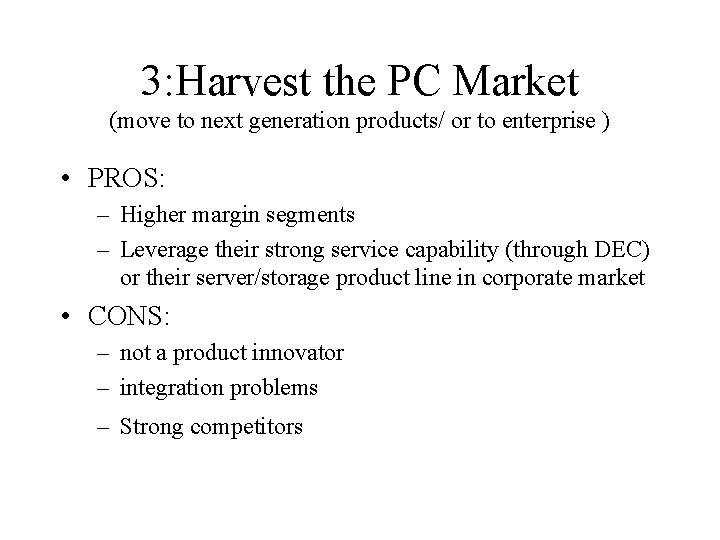
3: Harvest the PC Market (move to next generation products/ or to enterprise ) • PROS: – Higher margin segments – Leverage their strong service capability (through DEC) or their server/storage product line in corporate market • CONS: – not a product innovator – integration problems – Strong competitors
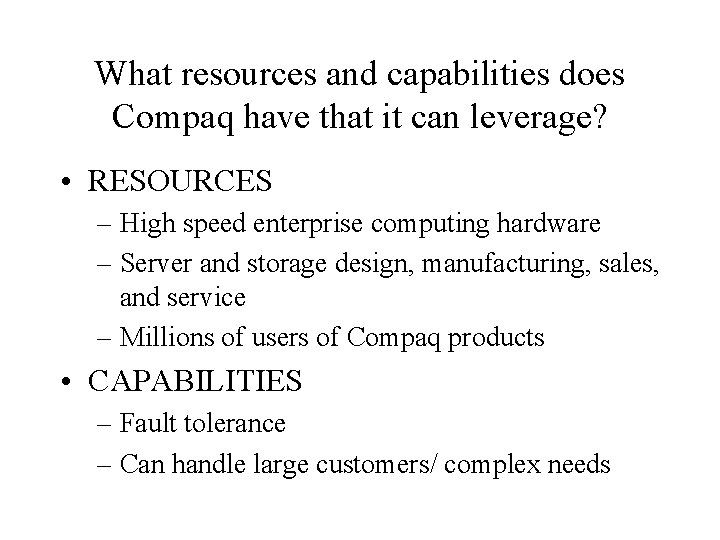
What resources and capabilities does Compaq have that it can leverage? • RESOURCES – High speed enterprise computing hardware – Server and storage design, manufacturing, sales, and service – Millions of users of Compaq products • CAPABILITIES – Fault tolerance – Can handle large customers/ complex needs
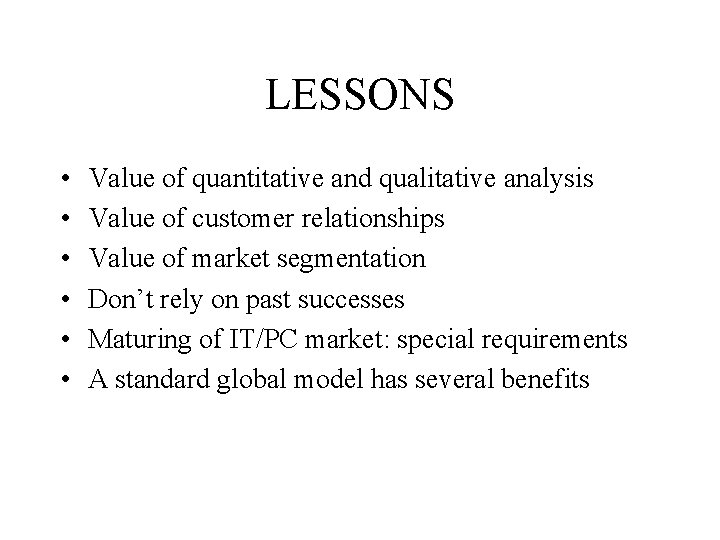
LESSONS • • • Value of quantitative and qualitative analysis Value of customer relationships Value of market segmentation Don’t rely on past successes Maturing of IT/PC market: special requirements A standard global model has several benefits
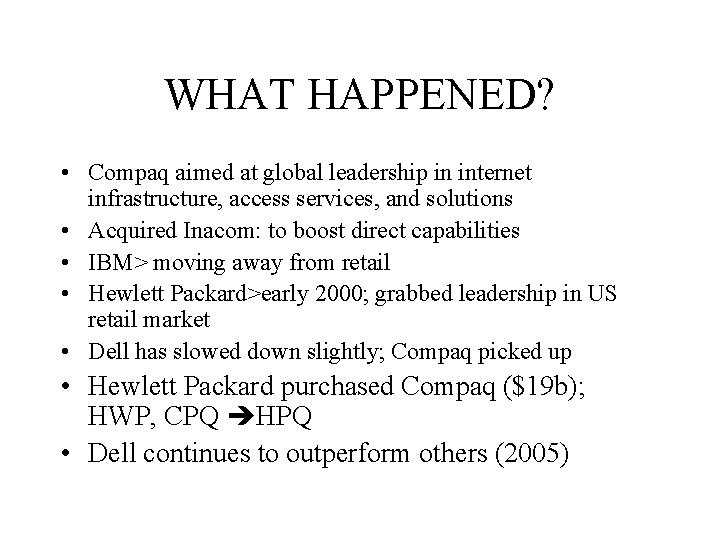
WHAT HAPPENED? • Compaq aimed at global leadership in internet infrastructure, access services, and solutions • Acquired Inacom: to boost direct capabilities • IBM> moving away from retail • Hewlett Packard>early 2000; grabbed leadership in US retail market • Dell has slowed down slightly; Compaq picked up • Hewlett Packard purchased Compaq ($19 b); HWP, CPQ HPQ • Dell continues to outperform others (2005)