
The Deep Learning Vision for Heterogeneous Network Traffic
- Slides: 18
The Deep Learning Vision for Heterogeneous Network Traffic Control Proposal, Challenges, and Future Perspective Author: Nei Kato, Zubair Md. Fadlullah, Bomin Mao, Fengxiao Tang, Osamu Akashi, Takeru Inoue, and Kimihiro Mizutani Publisher/Conf. : IEEE Wireless Communications, 2017 Presenter: 林鈺航 Date: 2019/3/27 Department of Computer Science and Information Engineering National Cheng Kung University, Taiwan R. O. C.
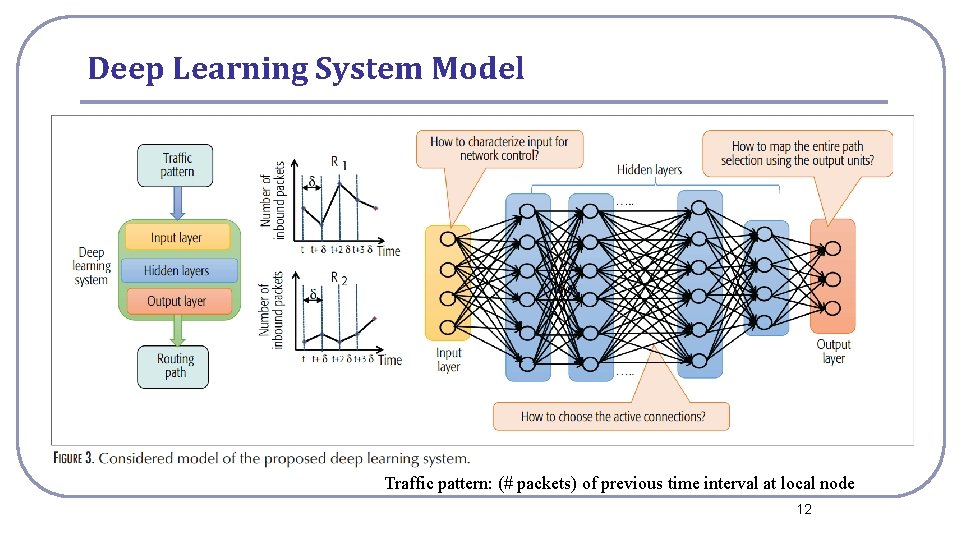
Introduction l Deep learning to improve heterogeneous network traffic control (which is an important and challenging area by its own merit) has yet to appear because of the difficult challenge in characterizing the appropriate input and output patterns for a deep learning system to correctly reflect the highly dynamic nature of large-scale heterogeneous networks. l We propose appropriate input and output characterizations of heterogeneous network traffic and propose a supervised deep neural network system. 3
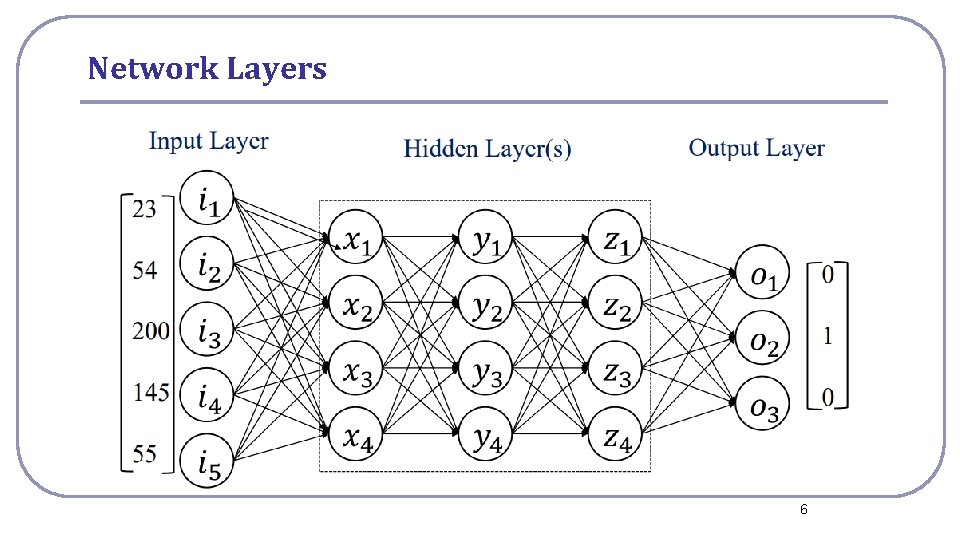
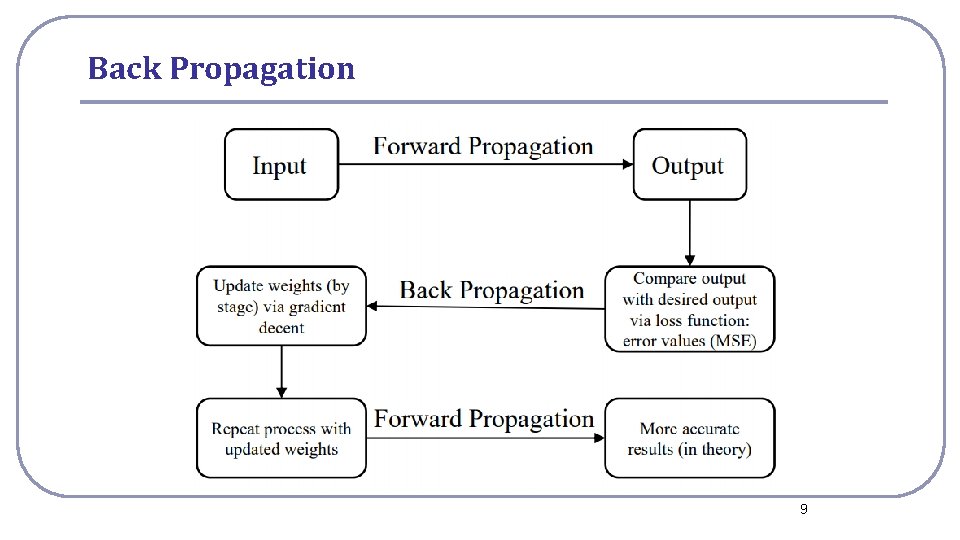
Introduction l We consider a deep learning system comprising multiple hidden layers, each of which computes a non-linear transformation of the previous layer. l In addition, we use the greedy layer-wise training method to initialize the deep learning system, and further use the backpropagation algorithm to fine-tune deep learning training. 4
Network Layers 6
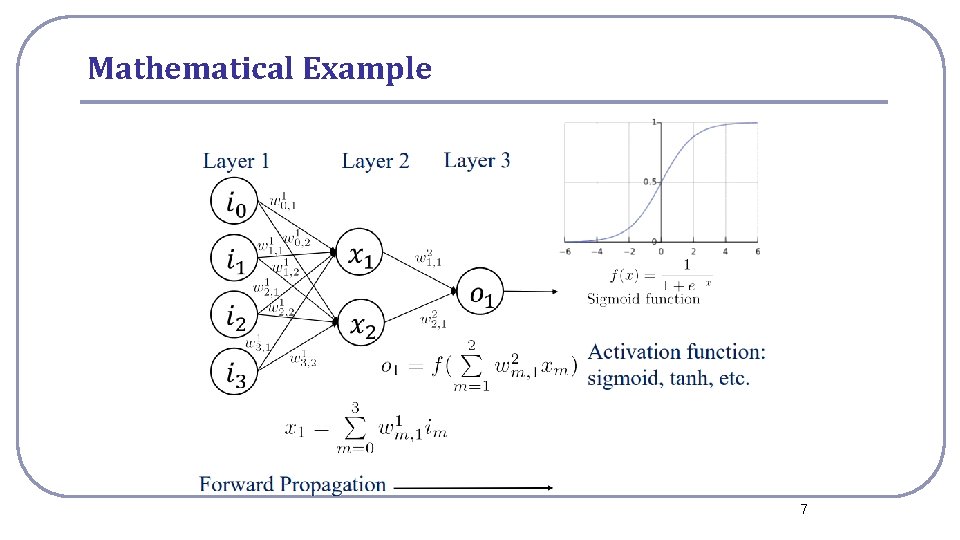
Mathematical Example 7
Back Propagation 9
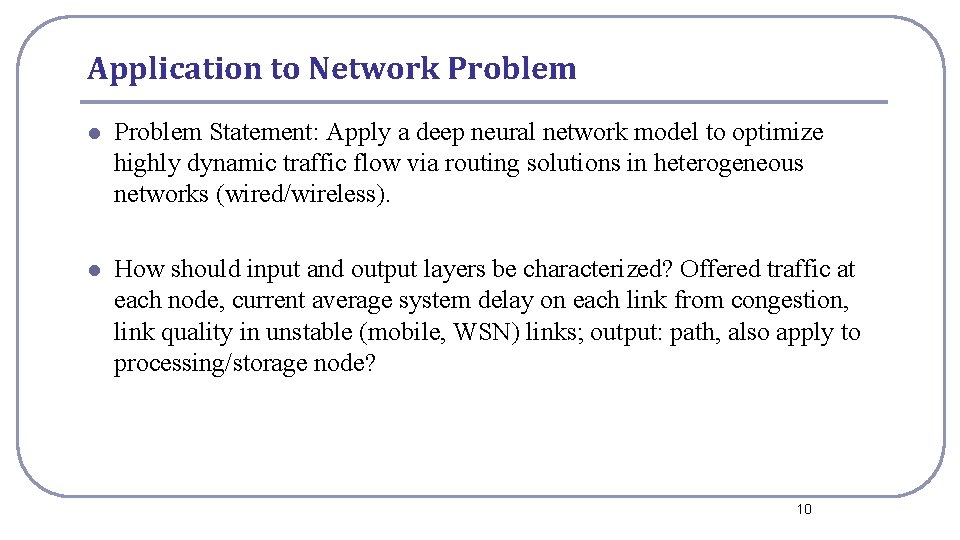
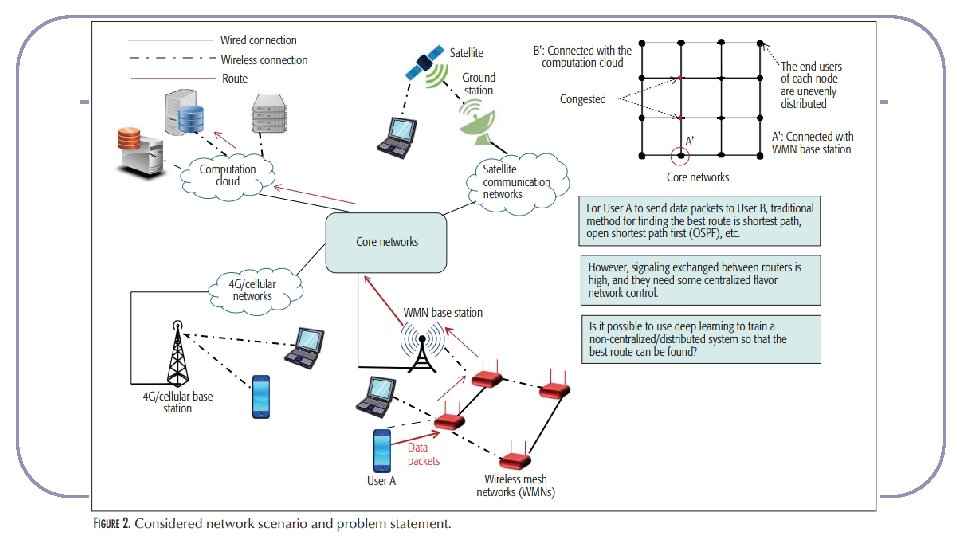
Application to Network Problem l Problem Statement: Apply a deep neural network model to optimize highly dynamic traffic flow via routing solutions in heterogeneous networks (wired/wireless). l How should input and output layers be characterized? Offered traffic at each node, current average system delay on each link from congestion, link quality in unstable (mobile, WSN) links; output: path, also apply to processing/storage node? 10
11
Deep Learning System Model Traffic pattern: (# packets) of previous time interval at local node 12
l The input layer consists of N input units, where N denotes the number of routers in the target (i. e. , considered) network. We use a vector of size N as the input to represent the traffic patterns of the routers in the network. l The output for network traffic control is the routing path indicating the next router along the path from the source router to the destination. 13
Initial Phase l The objective of the initial phase is to obtain the relevant data for training the deep learning system. l One way is to use the traditional routing strategies such as OSPF to simulate the communication between different routers under varying loads and conditions, and record the traffic patterns and paths to be used in the training phase. l Another approach is to extract the relevant traffic information from a number of available datasets to be utilized during the training phase. 14
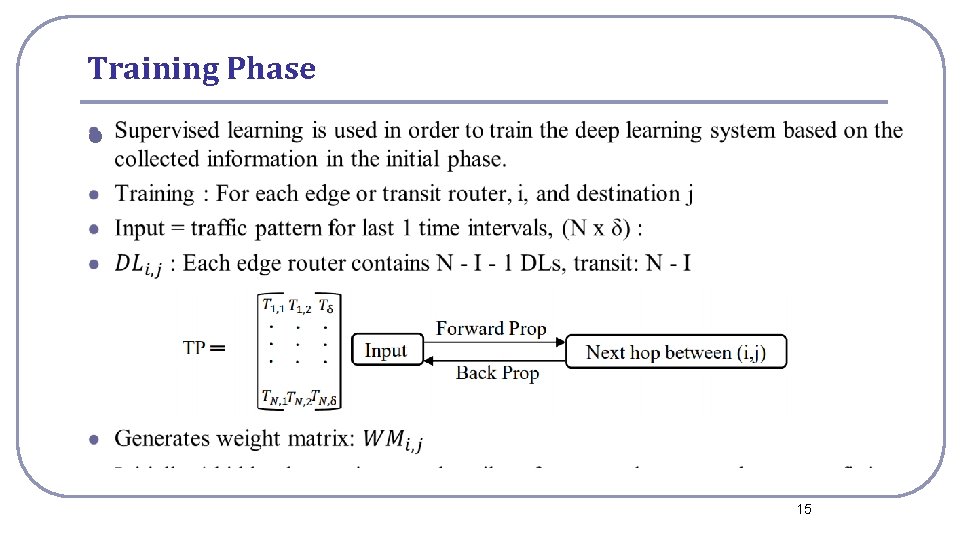
Training Phase l 15
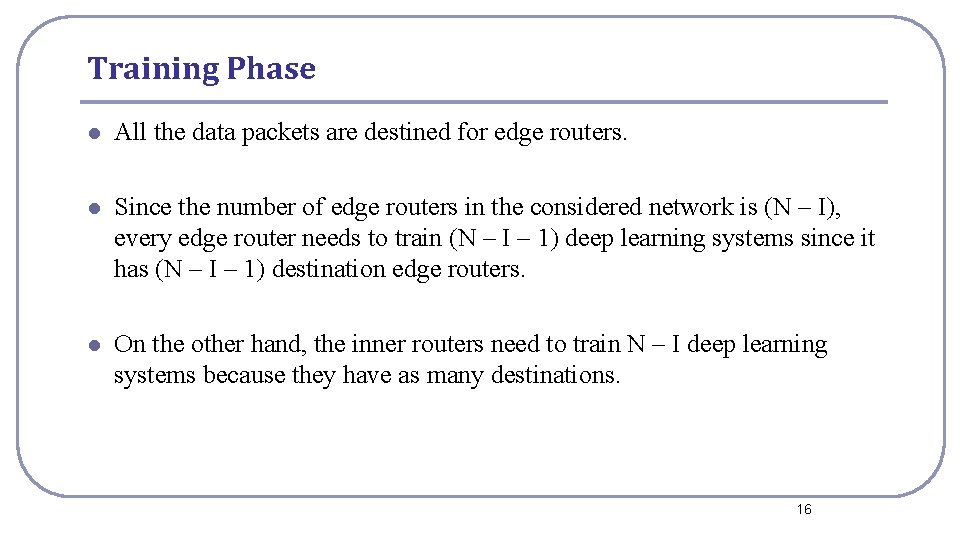
Training Phase l All the data packets are destined for edge routers. l Since the number of edge routers in the considered network is (N – I), every edge router needs to train (N – I – 1) deep learning systems since it has (N – I – 1) destination edge routers. l On the other hand, the inner routers need to train N – I deep learning systems because they have as many destinations. 16
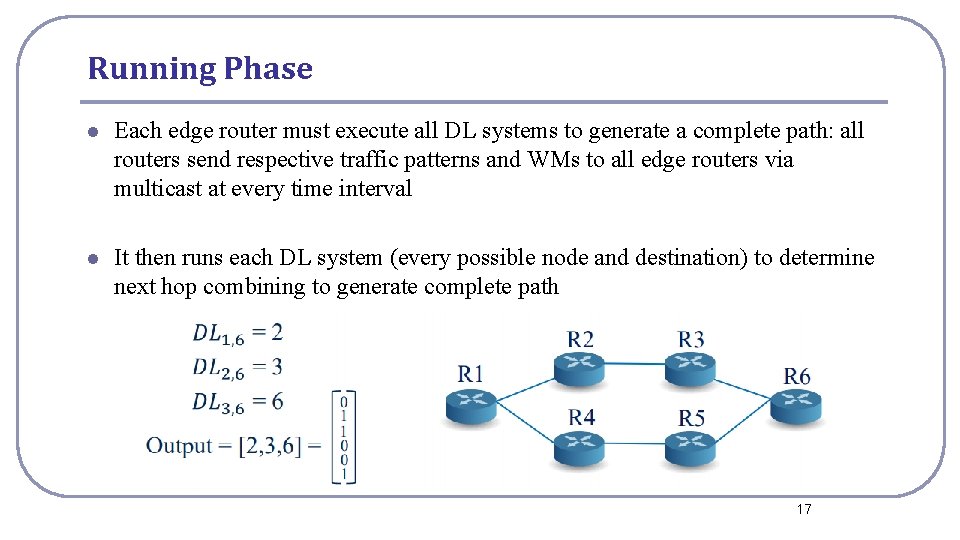
Running Phase l Each edge router must execute all DL systems to generate a complete path: all routers send respective traffic patterns and WMs to all edge routers via multicast at every time interval l It then runs each DL system (every possible node and destination) to determine next hop combining to generate complete path 17
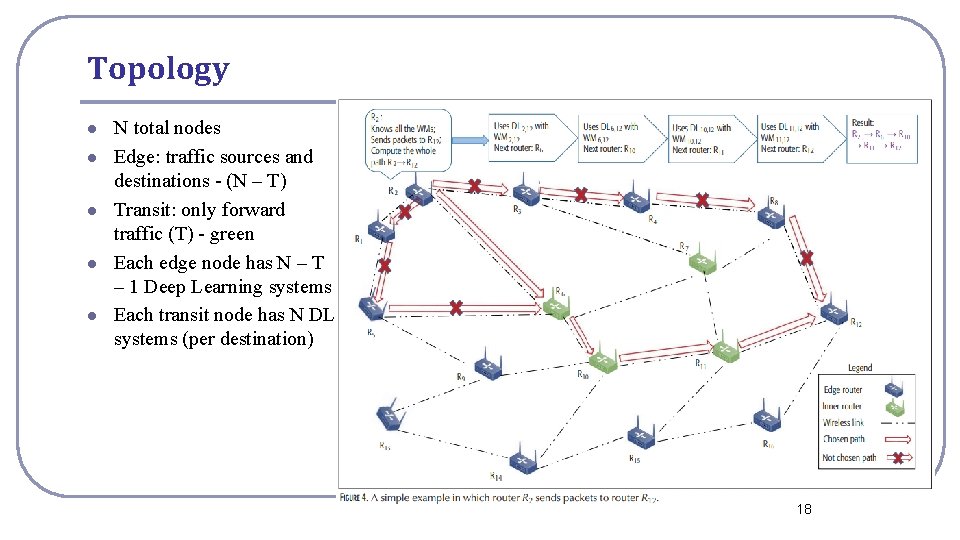
Topology l l l N total nodes Edge: traffic sources and destinations - (N – T) Transit: only forward traffic (T) - green Each edge node has N – T – 1 Deep Learning systems Each transit node has N DL systems (per destination) 18
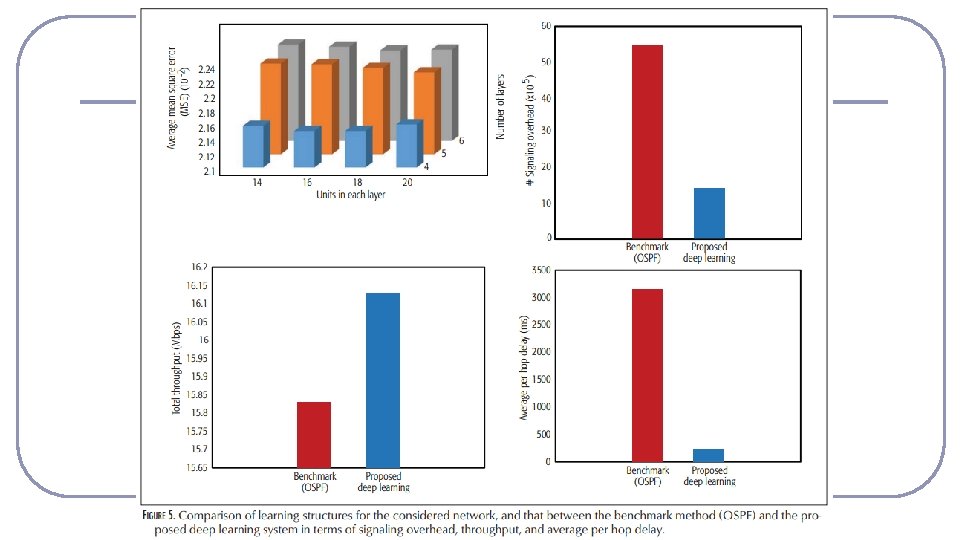
Performance Evaluation l In our conducted simulations based on C++/WILL, we conducted all the routers’ computations on a workstation with an Intel Core i 7 3. 60 GHz processor and 16 GB random access memory (RAM). l Because the computations of all the routers were outsourced to a single machine, the evaluation was restricted to a small size network. Therefore, we considered a medium scale wireless mesh backbone network with 16 routers rather than a full-scale wired/wireless heterogeneous core network topology. 19
Performance Evaluation l The data and control packet sizes are both set to 1 kb. The link bandwidths are set to 8 Mb/s, which is reasonable for this scale of wireless mesh backbone. l For comparison of the proposed deep learning system, OSPF is used as the benchmark method. In the conducted simulations, δ is set to 0. 25 s during which signaling is exchanged once. 20
21