
The Decomposition of Sugar Clues to a Chemical

- Slides: 16
The Decomposition of Sugar Clues to a Chemical Change By Joseph A. Castellano, Ph. D. TOPS of Santa Clara Valley 2017 Sugar Decomposition - 11 Sucrose Decomposition
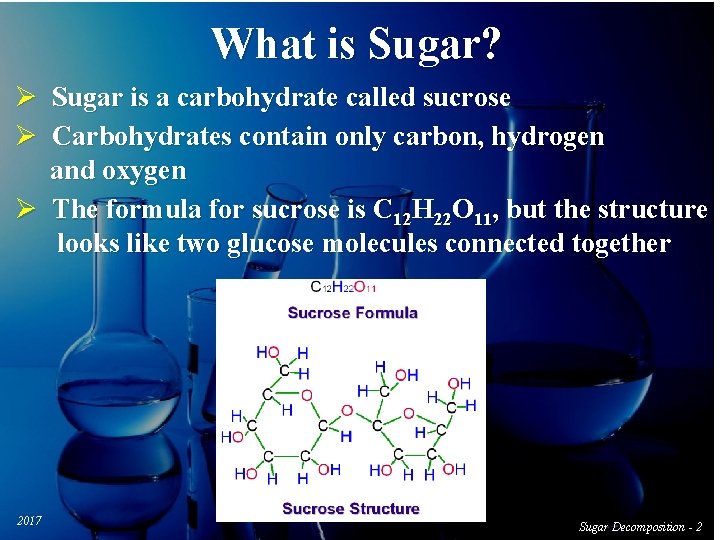
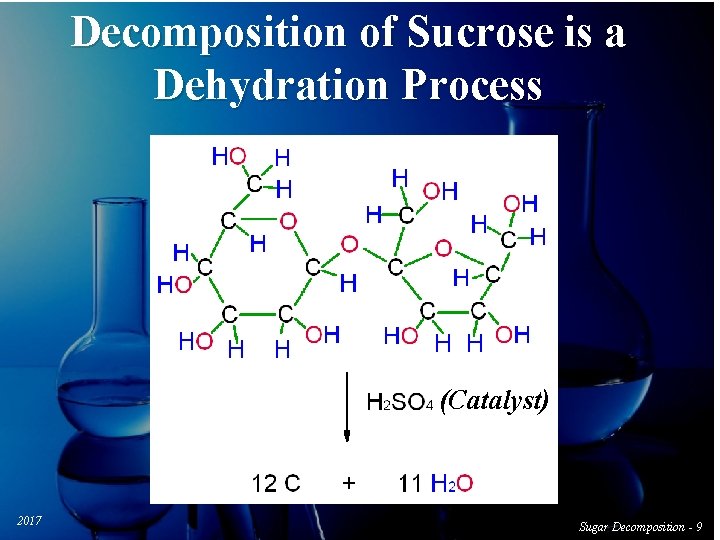
What is Sugar? Ø Sugar is a carbohydrate called sucrose Ø Carbohydrates contain only carbon, hydrogen and oxygen Ø The formula for sucrose is C 12 H 22 O 11, but the structure looks like two glucose molecules connected together 2017 Sugar Decomposition - 22 Sucrose Decomposition
Can Sugar be Decomposed? Ø Decomposition is a process that breaks down molecules into new substances or even individual atoms. Ø In the following demonstration, sugar will be decomposed into hydrogen and oxygen atoms in the form of water, leaving behind only carbon. Ø This demonstration shows five clues to a chemical change. 2017 Sugar Decomposition - 33 Sucrose Decomposition
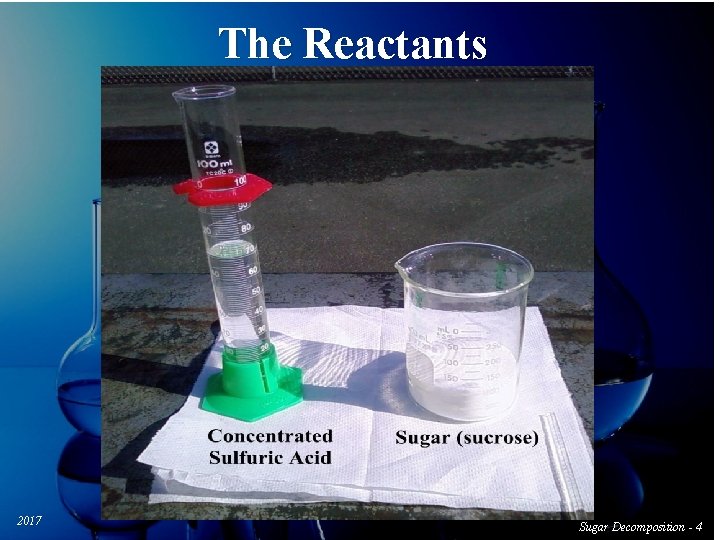
The Reactants 2017 Sugar Decomposition - 44 Sucrose Decomposition
The Reaction 2017 Sugar Decomposition - 55 Sucrose Decomposition
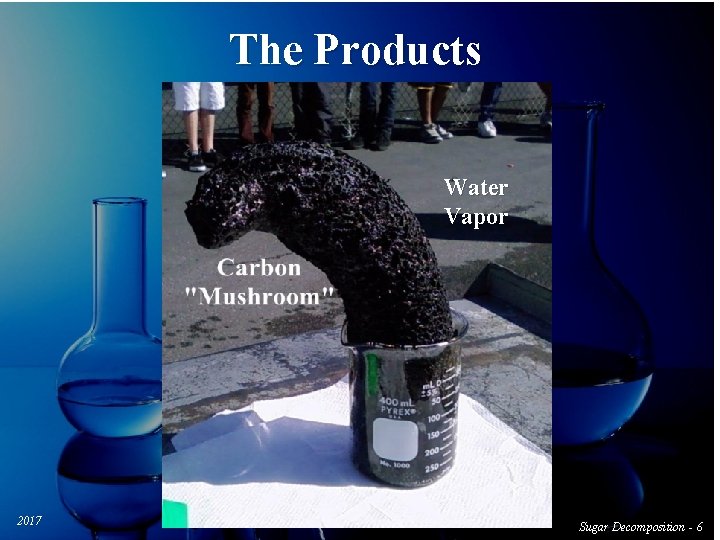
The Products Water Vapor 2017 Sugar Decomposition - 66 Sucrose Decomposition
Clues to a Chemical Change 1. Color change 2. Gas formation 3. Temperature increase (>150 o. C) 4. Creation of an odor 5. Formation of a new substance 2017 Sugar Decomposition - 77 Sucrose Decomposition
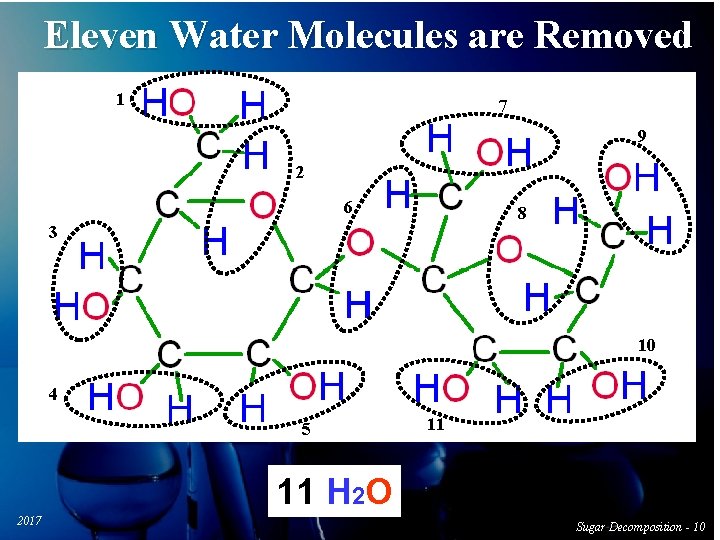
How the Chemical Change Works Ø The sulfuric acid is a catalyst that removes the hydrogen and oxygen atoms from sugar in the form of water vapor (steam). Ø As the sugar decomposes, only carbon is left behind and it grows like a mushroom. Ø The release of water causes the mass to swell so the carbon takes up more space than the original sugar. Ø The heat generated by the reaction causes some of the sulfuric acid to release dissolved sulfur trioxide, which has a foul odor. 2017 Sugar Decomposition - 88 Sucrose Decomposition
Decomposition of Sucrose is a Dehydration Process (Catalyst) 2017 Sugar Decomposition - 99 Sucrose Decomposition
Eleven Water Molecules are Removed 1 7 9 2 6 8 3 10 4 5 11 11 H 2 O 2017 Decomposition - 10 10 Sucrose. Sugar Decomposition
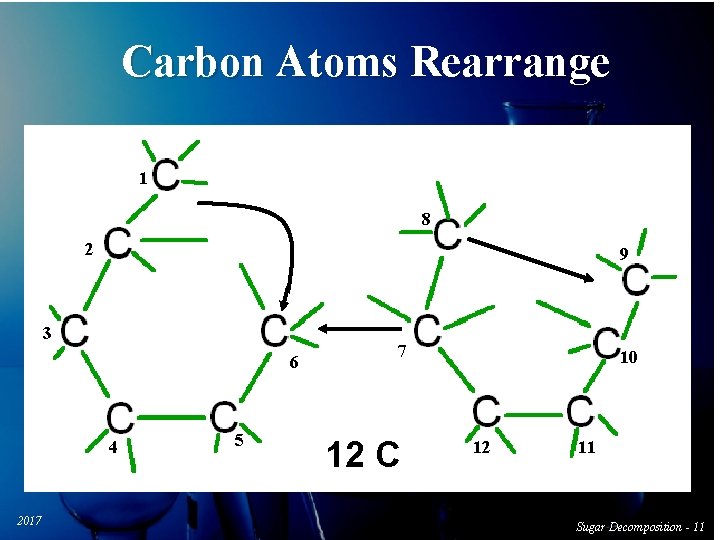
Carbon Atoms Rearrange 1 8 2 9 3 6 4 2017 5 7 12 C 10 12 11 Decomposition - 11 11 Sucrose. Sugar Decomposition
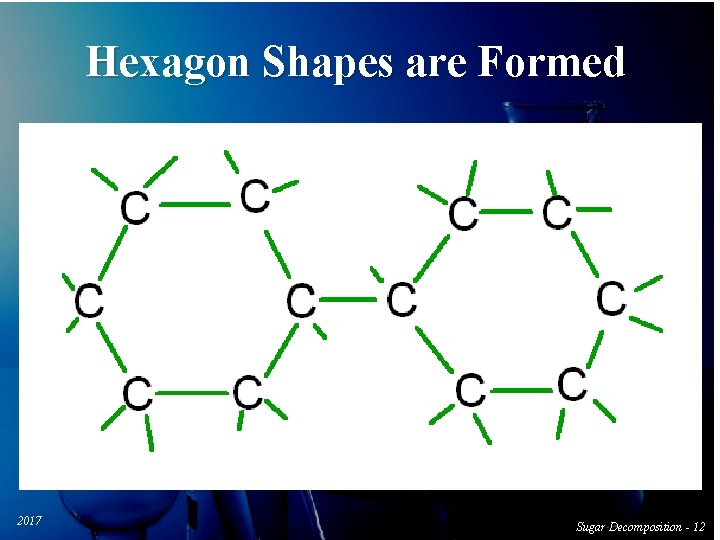
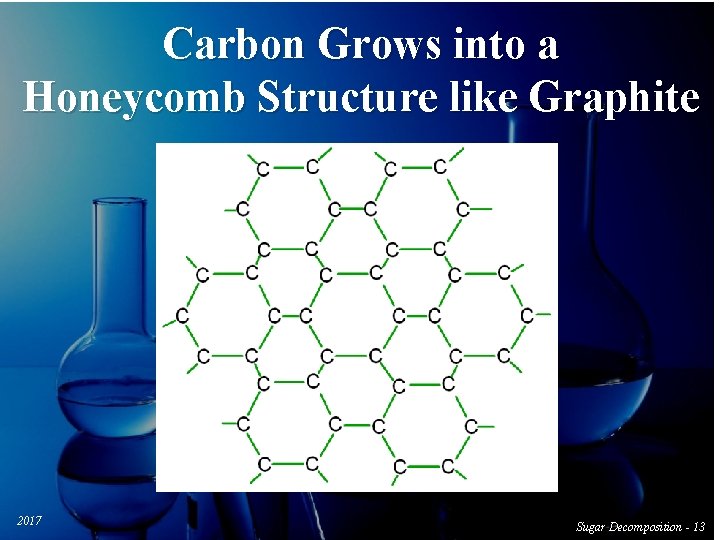
Hexagon Shapes are Formed 2017 Decomposition - 12 12 Sucrose. Sugar Decomposition
Carbon Grows into a Honeycomb Structure like Graphite 2017 Decomposition - 13 13 Sucrose. Sugar Decomposition
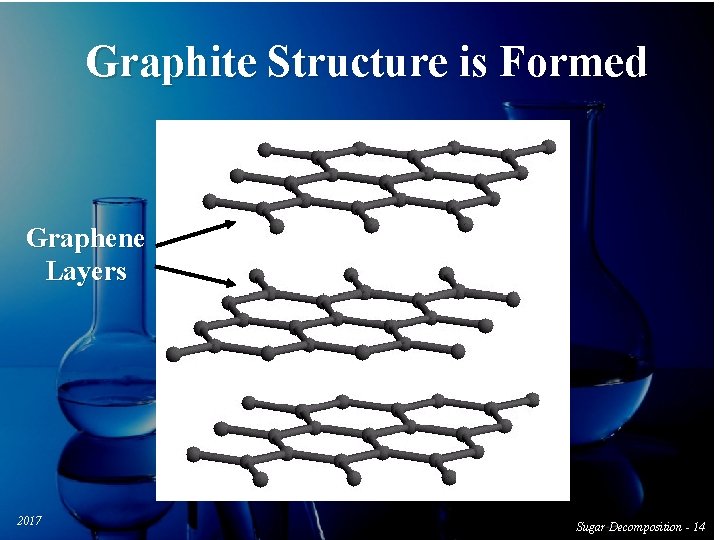
Graphite Structure is Formed Graphene Layers 2017 Decomposition - 14 14 Sucrose. Sugar Decomposition
Summary Ø Decomposition is a process that breaks down molecules into new substances or even individual atoms. Ø Sugar is decomposed by sulfuric acid catalyst into hydrogen and oxygen atoms in the form of water, leaving behind only carbon. Ø This demonstration shows five clues to a chemical change. 2017 Decomposition - 15 15 Sucrose. Sugar Decomposition
This presentation was produced as a public service to help middle school and high school science teachers develop experiments, presentations and demonstrations that can be used in their classes. More science experiments and demonstrations are available on the TOPS of Santa Clara Valley web site: www. topsofscv. org. TOPS (Teaching Opportunities for Partners in Science) is a program aimed at stimulating greater interest in science by middle school students. 2017 Decomposition - 16 16 Sucrose. Sugar Decomposition