
The Declining Quality of FirstWorld Growth From Good

- Slides: 35
The Declining Quality of First-World Growth: From Good to Bad – and Getting Ugly Lloyd Gruber Development Studies Institute The London School of Economics Comments & suggestions welcome: L. Gruber@lse. ac. uk 1
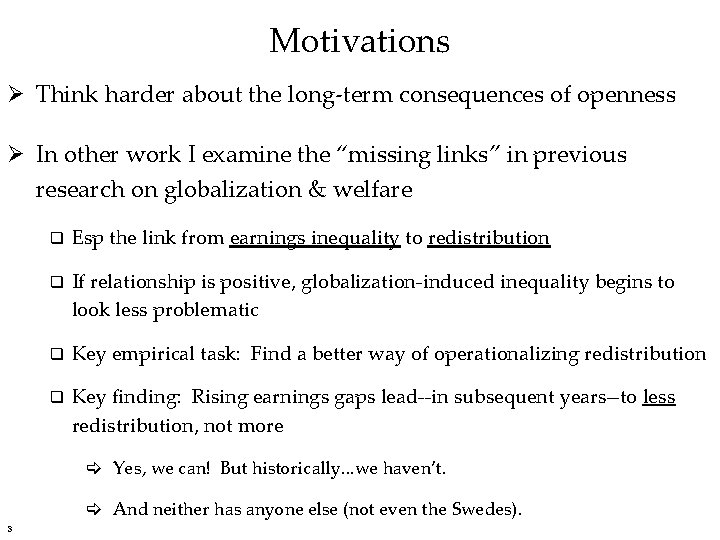
Motivations Ø Think harder about the long-term consequences of openness Ø In other work I examine the “missing links” in previous research on globalization & welfare q Esp the link from earnings inequality to redistribution q If relationship is positive, globalization-induced inequality begins to look less problematic q Key empirical task: Find a better way of operationalizing redistribution q Key finding: Rising earnings gaps lead--in subsequent years--to less redistribution, not more Yes, we can! But historically. . . we haven’t. And neither has anyone else (not even the Swedes). 3
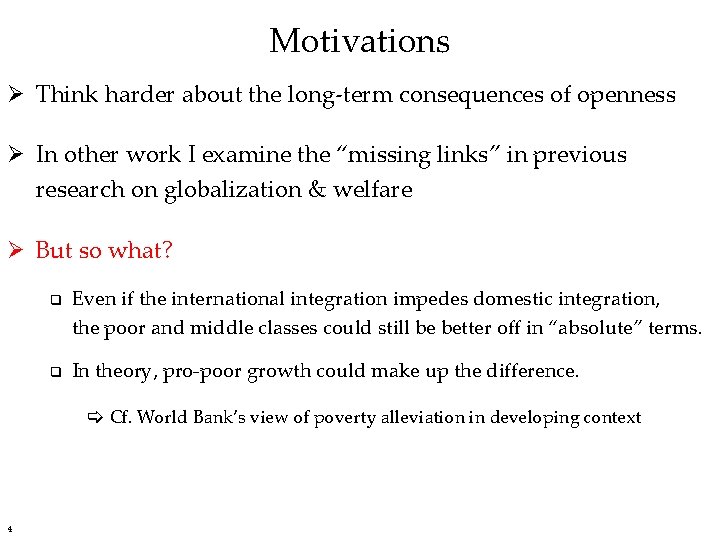
Motivations Ø Think harder about the long-term consequences of openness Ø In other work I examine the “missing links” in previous research on globalization & welfare Ø But so what? q q Even if the international integration impedes domestic integration, the poor and middle classes could still be better off in “absolute” terms. In theory, pro-poor growth could make up the difference. Cf. World Bank’s view of poverty alleviation in developing context 4
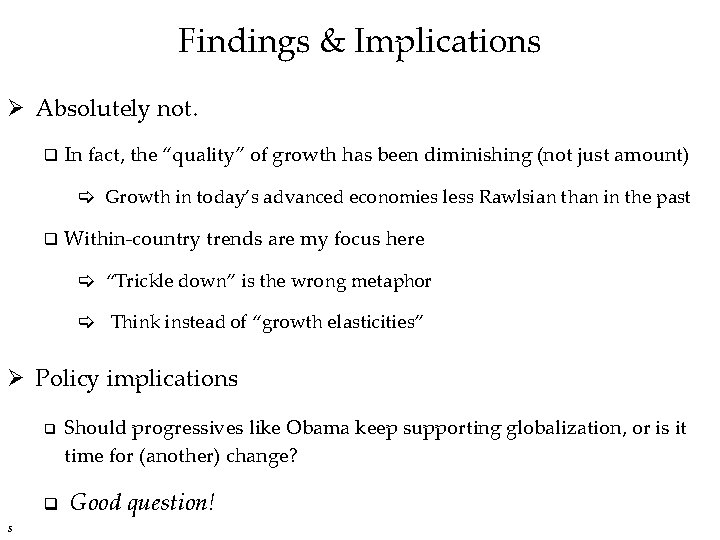
Findings & Implications Ø Absolutely not. q In fact, the “quality” of growth has been diminishing (not just amount) Growth in today’s advanced economies less Rawlsian than in the past q Within-country trends are my focus here “Trickle down” is the wrong metaphor Think instead of “growth elasticities” Ø Policy implications q q 5 Should progressives like Obama keep supporting globalization, or is it time for (another) change? Good question!
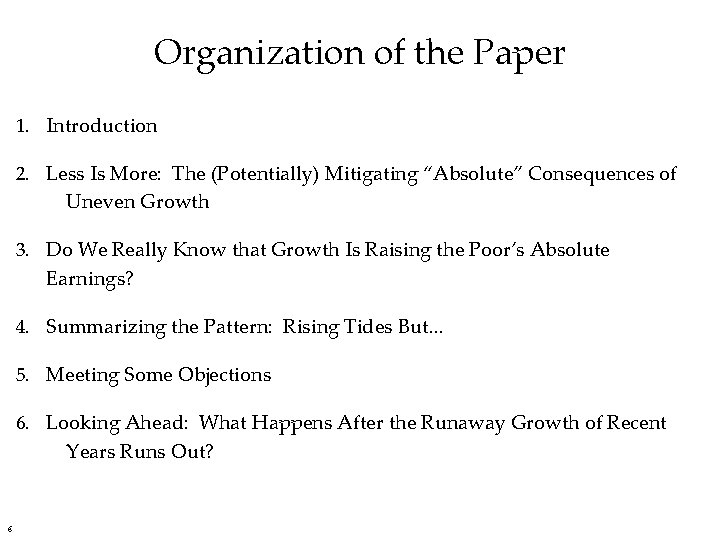
Organization of the Paper 1. Introduction 2. Less Is More: The (Potentially) Mitigating “Absolute” Consequences of Uneven Growth 3. Do We Really Know that Growth Is Raising the Poor’s Absolute Earnings? 4. Summarizing the Pattern: Rising Tides But. . . 5. Meeting Some Objections 6. Looking Ahead: What Happens After the Runaway Growth of Recent Years Runs Out? 6
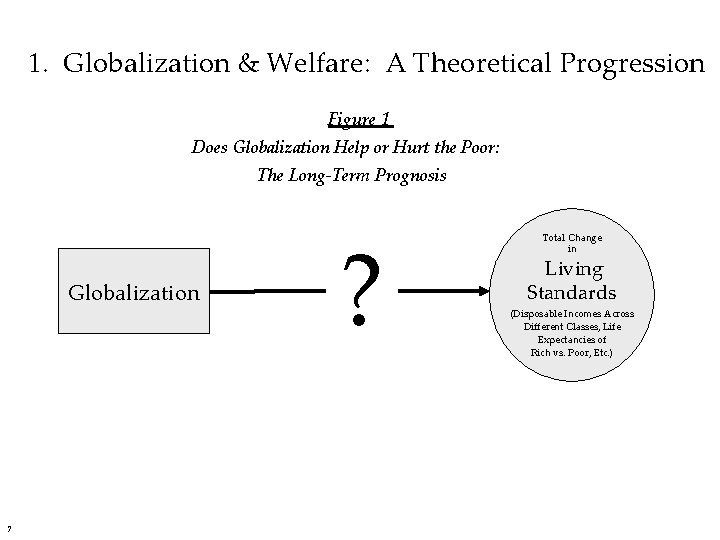
1. Globalization & Welfare: A Theoretical Progression Figure 1 Does Globalization Help or Hurt the Poor: The Long-Term Prognosis Globalization 7 ? Total Change in Living Standards (Disposable Incomes Across Different Classes, Life Expectancies of Rich vs. Poor, Etc. )
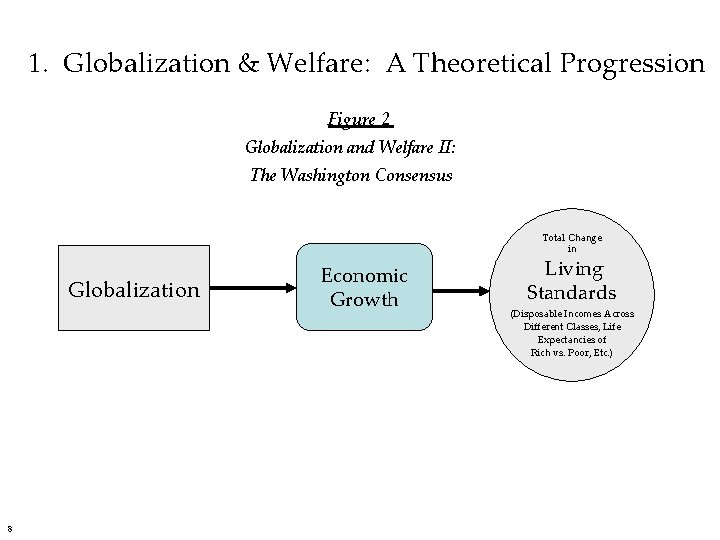
1. Globalization & Welfare: A Theoretical Progression Figure 2 Globalization and Welfare II: The Washington Consensus Total Change in Globalization 8 Economic Growth Living Standards (Disposable Incomes Across Different Classes, Life Expectancies of Rich vs. Poor, Etc. )
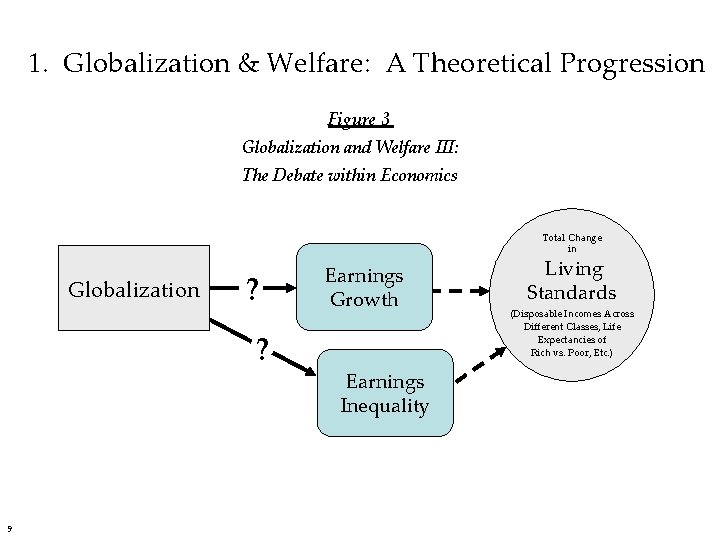
1. Globalization & Welfare: A Theoretical Progression Figure 3 Globalization and Welfare III: The Debate within Economics Total Change in Globalization ? ? 9 Earnings Growth Earnings Inequality Living Standards (Disposable Incomes Across Different Classes, Life Expectancies of Rich vs. Poor, Etc. )
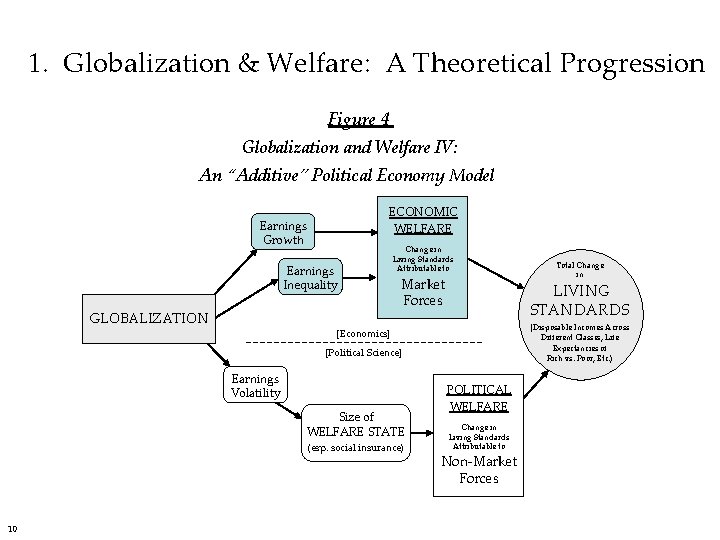
1. Globalization & Welfare: A Theoretical Progression Figure 4 Globalization and Welfare IV: An “Additive” Political Economy Model ECONOMIC WELFARE Earnings Growth Earnings Inequality GLOBALIZATION Change in Living Standards Attributable to Market Forces LIVING STANDARDS (Disposable Incomes Across Different Classes, Life Expectancies of Rich vs. Poor, Etc. ) [Economics] [Political Science] Earnings Volatility Size of WELFARE STATE (esp. social insurance) 10 Total Change in POLITICAL WELFARE Change in Living Standards Attributable to Non-Market Forces
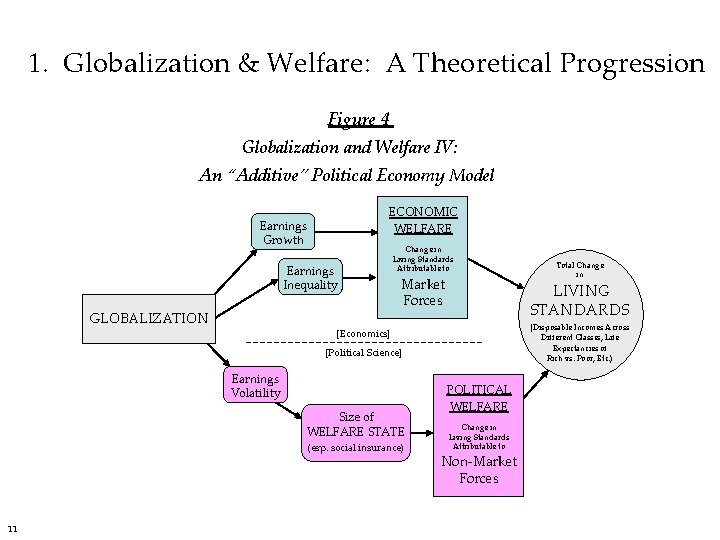
1. Globalization & Welfare: A Theoretical Progression Figure 4 Globalization and Welfare IV: An “Additive” Political Economy Model ECONOMIC WELFARE Earnings Growth Earnings Inequality GLOBALIZATION Change in Living Standards Attributable to Market Forces LIVING STANDARDS (Disposable Incomes Across Different Classes, Life Expectancies of Rich vs. Poor, Etc. ) [Economics] [Political Science] Earnings Volatility Size of WELFARE STATE (esp. social insurance) 11 Total Change in POLITICAL WELFARE Change in Living Standards Attributable to Non-Market Forces
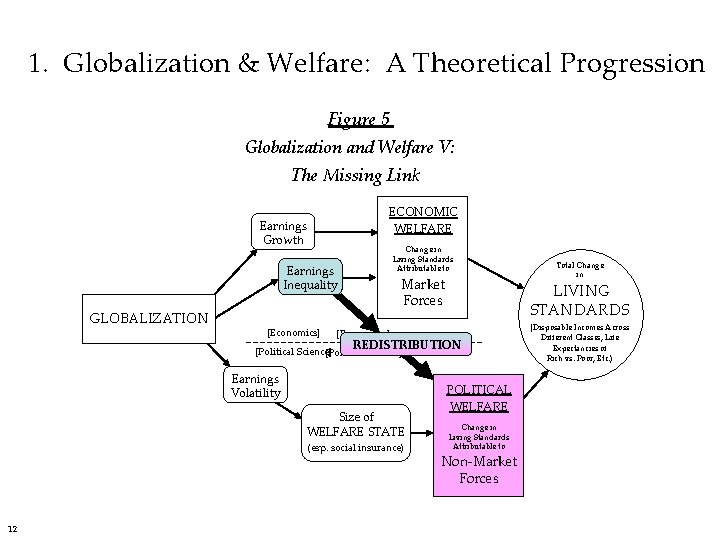
1. Globalization & Welfare: A Theoretical Progression Figure 5 Globalization and Welfare V: The Missing Link ECONOMIC WELFARE Earnings Growth Change in Living Standards Attributable to Earnings Inequality GLOBALIZATION [Economics] Market Forces LIVING STANDARDS [Economics] REDISTRIBUTION [Political Science] Earnings Volatility Size of WELFARE STATE (esp. social insurance) 12 Total Change in POLITICAL WELFARE Change in Living Standards Attributable to Non-Market Forces (Disposable Incomes Across Different Classes, Life Expectancies of Rich vs. Poor, Etc. )
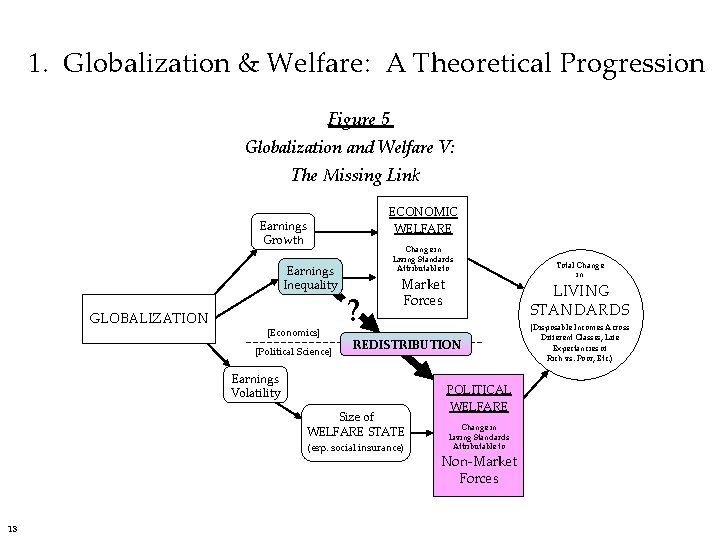
1. Globalization & Welfare: A Theoretical Progression Figure 5 Globalization and Welfare V: The Missing Link ECONOMIC WELFARE Earnings Growth Earnings Inequality GLOBALIZATION [Economics] [Political Science] Change in Living Standards Attributable to ? Market Forces Size of WELFARE STATE (esp. social insurance) 13 LIVING STANDARDS REDISTRIBUTION Earnings Volatility Total Change in POLITICAL WELFARE Change in Living Standards Attributable to Non-Market Forces (Disposable Incomes Across Different Classes, Life Expectancies of Rich vs. Poor, Etc. )
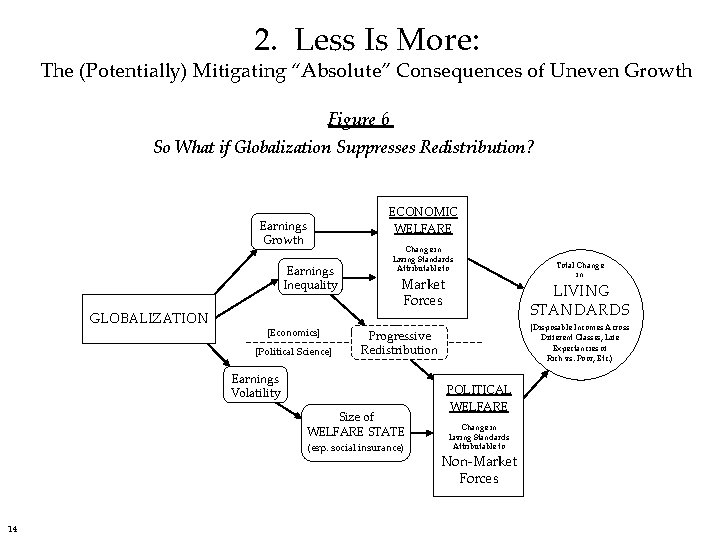
2. Less Is More: The (Potentially) Mitigating “Absolute” Consequences of Uneven Growth Figure 6 So What if Globalization Suppresses Redistribution? ECONOMIC WELFARE Earnings Growth Earnings Inequality GLOBALIZATION [Economics] [Political Science] Change in Living Standards Attributable to Market Forces Size of WELFARE STATE (esp. social insurance) 14 LIVING STANDARDS (Disposable Incomes Across Different Classes, Life Expectancies of Rich vs. Poor, Etc. ) Progressive Redistribution Earnings Volatility Total Change in POLITICAL WELFARE Change in Living Standards Attributable to Non-Market Forces
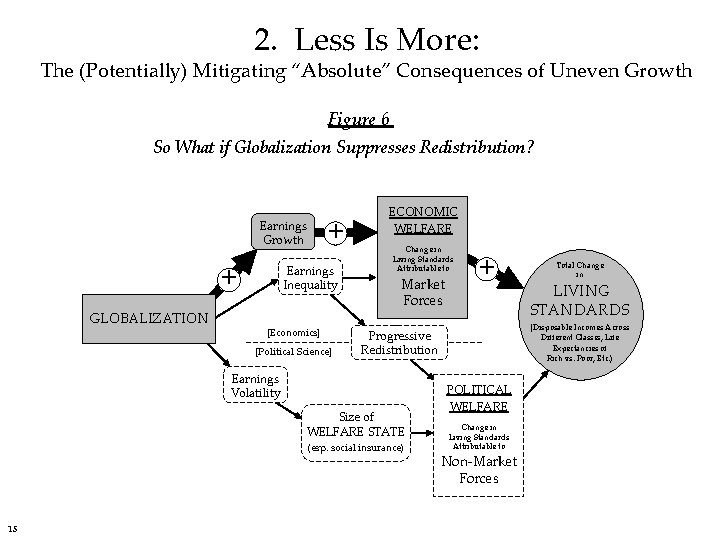
2. Less Is More: The (Potentially) Mitigating “Absolute” Consequences of Uneven Growth Figure 6 So What if Globalization Suppresses Redistribution? Earnings Growth Earnings Inequality + GLOBALIZATION + [Economics] [Political Science] ECONOMIC WELFARE Change in Living Standards Attributable to Market Forces Size of WELFARE STATE (esp. social insurance) Total Change in LIVING STANDARDS (Disposable Incomes Across Different Classes, Life Expectancies of Rich vs. Poor, Etc. ) Progressive Redistribution Earnings Volatility 15 + POLITICAL WELFARE Change in Living Standards Attributable to Non-Market Forces
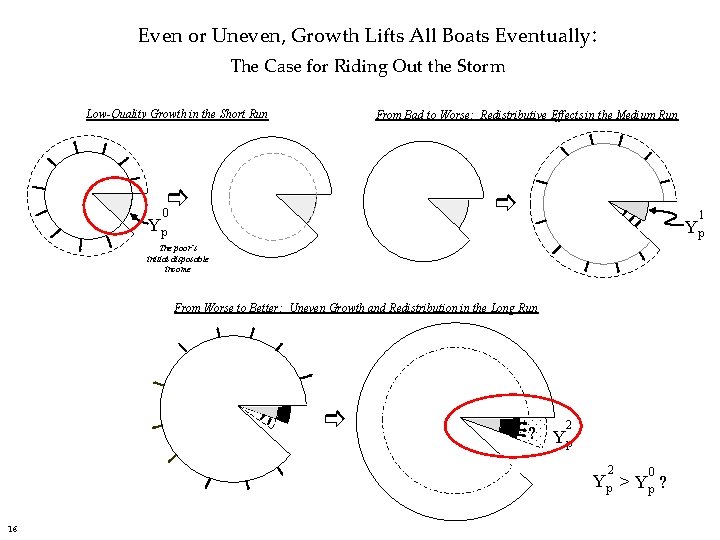
Even or Uneven, Growth Lifts All Boats Eventually: The Case for Riding Out the Storm Low-Quality Growth in the Short Run From Bad to Worse: Redistributive Effects in the Medium Run 0 Yp 1 Yp The poor’s initial disposable income From Worse to Better: Uneven Growth and Redistribution in the Long Run 2 ? Yp 2 0 Yp > Yp ? 16
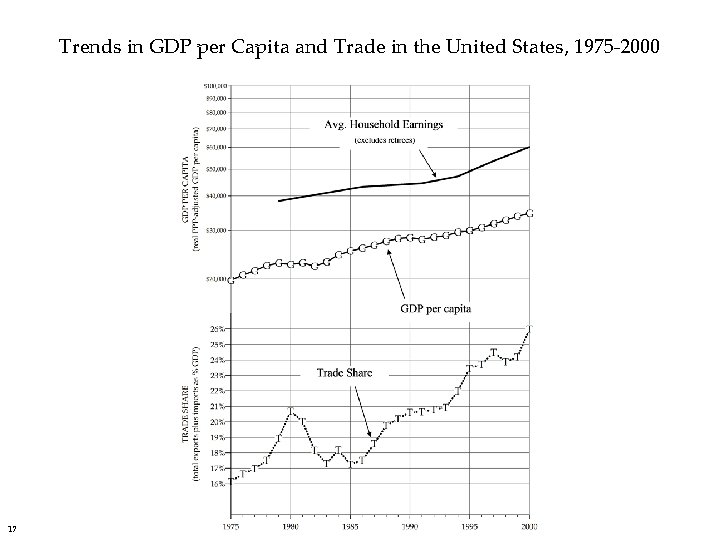
Trends in GDP per Capita and Trade in the United States, 1975 -2000 17
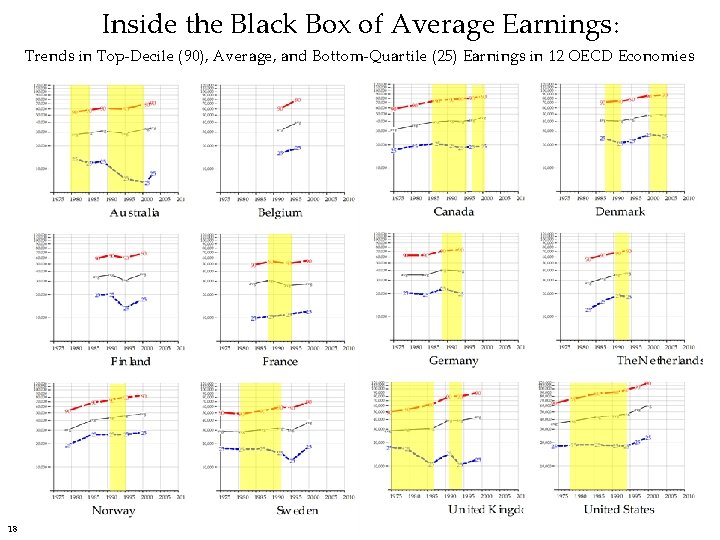
Inside the Black Box of Average Earnings: Trends in Top-Decile (90), Average, and Bottom-Quartile (25) Earnings in 12 OECD Economies 18
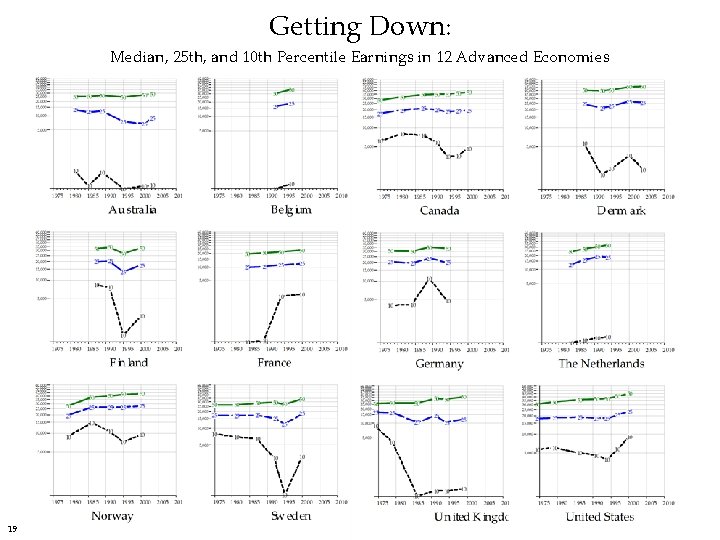
Getting Down: Median, 25 th, and 10 th Percentile Earnings in 12 Advanced Economies 19
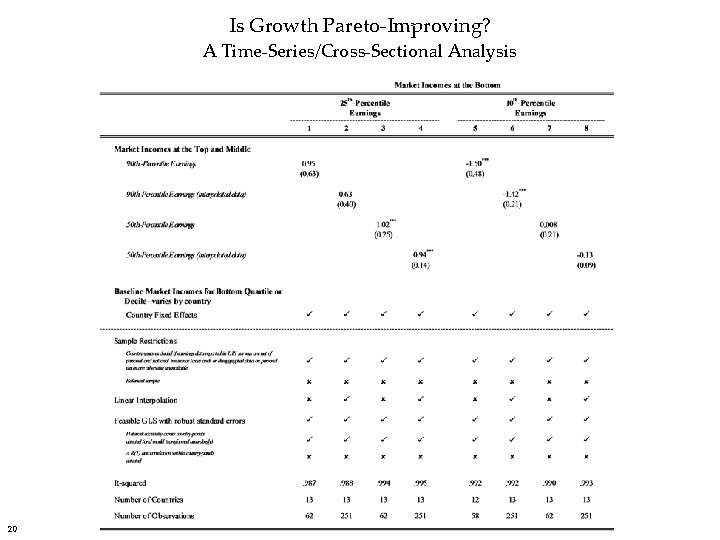
Is Growth Pareto-Improving? A Time-Series/Cross-Sectional Analysis 20
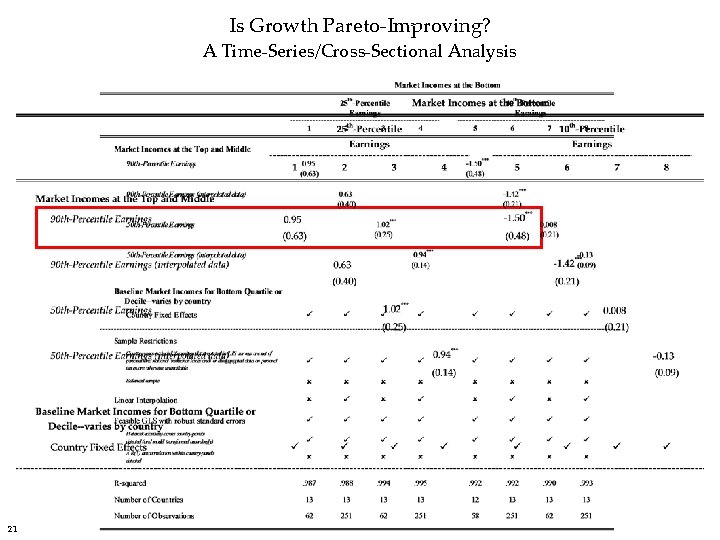
Is Growth Pareto-Improving? A Time-Series/Cross-Sectional Analysis 21
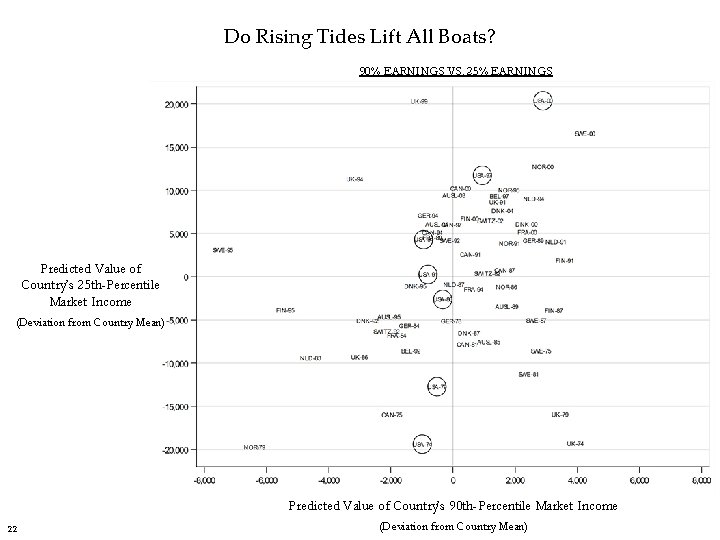
Do Rising Tides Lift All Boats? 90% EARNINGS VS. 25% EARNINGS Predicted Value of Country’s 25 th-Percentile Market Income (Deviation from Country Mean) Predicted Value of Country’s 90 th-Percentile Market Income 22 (Deviation from Country Mean)
Organization of the Paper 1. Introduction 2. Less Is More: The (Potentially) Mitigating “Absolute” Consequences of Uneven Growth 3. Do We Really Know that Growth Is Raising the Poor’s Absolute Earnings? 4. Summarizing the Pattern 5. Meeting Some Objections 6. Looking Ahead: What Happens After the Runaway Growth of Recent Years Runs Out? 23
Organization of the Paper 1. Introduction 2. Less Is More: The (Potentially) Mitigating “Absolute” Consequences of Uneven Growth 3. Do We Really Know that Growth Is Raising the Poor’s Absolute Earnings? 4. Summarizing the Pattern 5. Meeting Some Objections 6. Looking Ahead: What Happens After the Runaway Growth of Recent Years Runs Out? 24
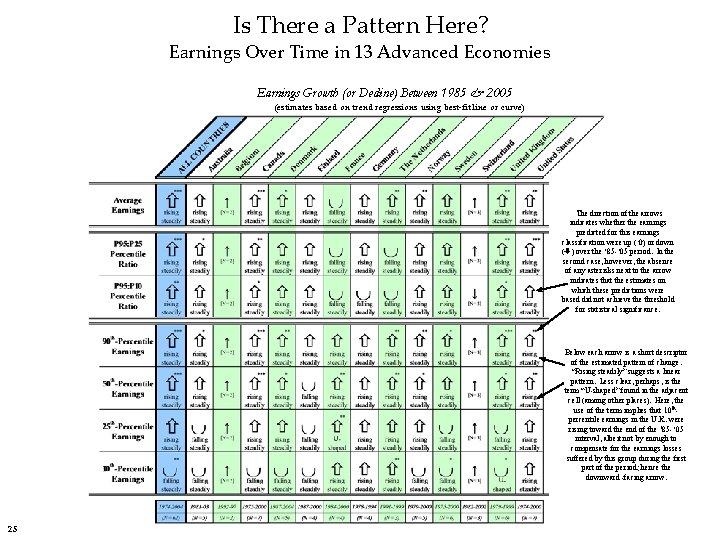
Is There a Pattern Here? Earnings Over Time in 13 Advanced Economies Earnings Growth (or Decline) Between 1985 & 2005 (estimates based on trend regressions using best-fit line or curve) The direction of the arrows indicates whether the earnings predicted for this earnings classification were up ( ) or down ( ) over the ‘ 85 -‘ 05 period. In the second case, however, the absence of any asterisks next to the arrow indicates that the estimates on which these predictions were based did not achieve threshold for statistical significance. Below each arrow is a short descriptor of the estimated pattern of change. “Rising steadily” suggests a linear pattern. Less clear, perhaps, is the term “U-shaped” found in the adjacent cell (among other places). Here, the use of the term implies that 10 thpercentile earnings in the U. K. were rising toward the end of the ’ 85 -‘ 05 interval, albeit not by enough to compensate for the earnings losses suffered by this group during the first part of the period; hence the downward -facing arrow. 25
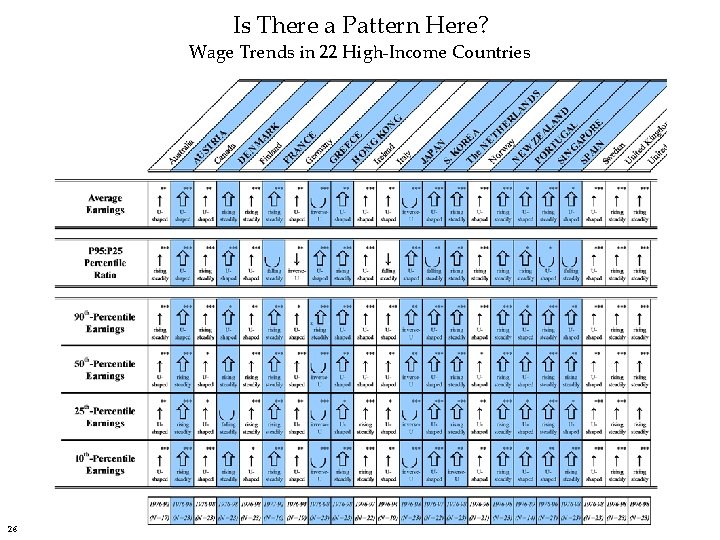
Is There a Pattern Here? Wage Trends in 22 High-Income Countries 26
Organization of the Paper 1. Introduction 2. Less Is More: The (Potentially) Mitigating “Absolute” Consequences of Uneven Growth 3. Do We Really Know that Growth Is Raising the Poor’s Absolute Earnings? 4. Summarizing the Pattern: Rising Tides But. . . 5. Meeting Some Objections 6. Looking Ahead: What Happens After the Runaway Growth of Recent Years Runs Out? 27
Organization of the Paper 1. Introduction 2. Less Is More: The (Potentially) Mitigating “Absolute” Consequences of Uneven Growth 3. Do We Really Know that Growth Is Raising the Poor’s Absolute Earnings? 4. Summarizing the Pattern: Rising Tides But. . . 5. Meeting Some Objections 6. Looking Ahead: What Happens After the Runaway Growth of Recent Years Runs Out? 28
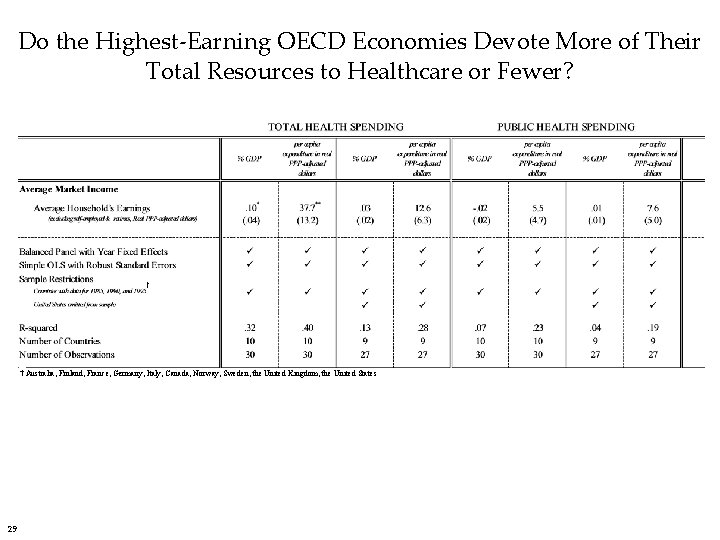
Do the Highest-Earning OECD Economies Devote More of Their Total Resources to Healthcare or Fewer? † ††Australia, Finland, France, Germany, Italy, Canada, Norway, Sweden, the United Kingdom, the United States 29
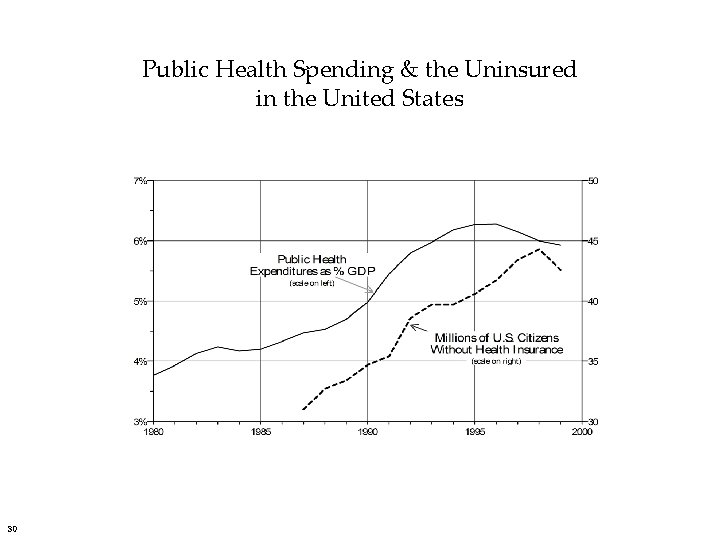
Public Health Spending & the Uninsured in the United States 30
Organization of the Paper 1. Introduction 2. Less Is More: The (Potentially) Mitigating “Absolute” Consequences of Uneven Growth 3. Do We Really Know that Growth Is Raising the Poor’s Absolute Earnings? 4. Summarizing the Pattern: Rising Tides But. . . 5. Meeting Some Objections 6. Looking Ahead: What Happens After the Runaway Growth of Recent Years Runs Out? 31
Organization of the Paper 1. Introduction 2. Less Is More: The (Potentially) Mitigating “Absolute” Consequences of Uneven Growth 3. Do We Really Know that Growth Is Raising the Poor’s Absolute Earnings? 4. Summarizing the Pattern: Rising Tides But. . . 5. Meeting Some Objections 6. Looking Ahead: What Happens After the Runaway Growth of Recent Years Runs Out? 32 q Sinking tides, but. . . q Time to reconsider globalization?
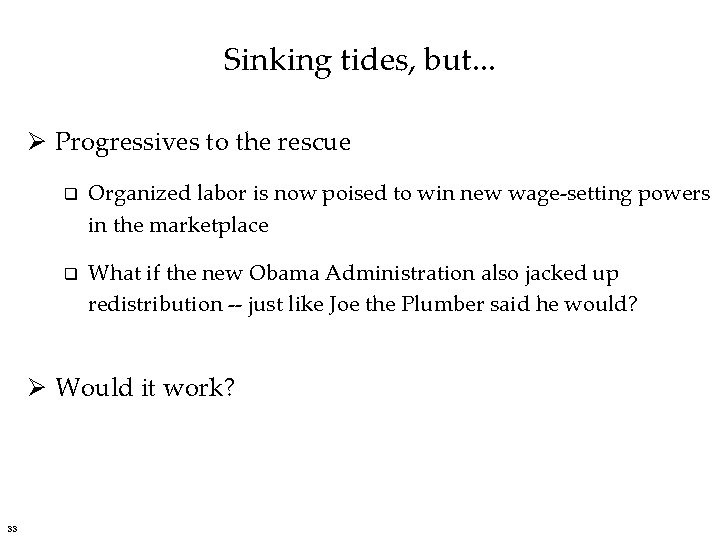
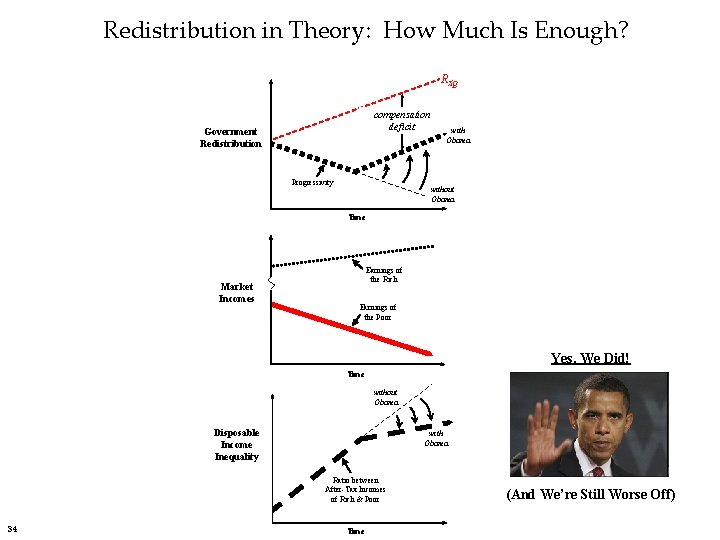
Sinking tides, but. . . Ø Progressives to the rescue q q Organized labor is now poised to win new wage-setting powers in the marketplace What if the new Obama Administration also jacked up redistribution -- just like Joe the Plumber said he would? Ø Would it work? 33
Redistribution in Theory: How Much Is Enough? RSQ compensation deficit Government Redistribution Progressivity with Obama without Obama Time Market Incomes Earnings of the Rich Earnings of the Poor Yes, We Did! Time without Obama Disposable Income Inequality with Obama Ratio between After-Tax Incomes of Rich & Poor 34 Time (And We’re Still Worse Off)
Organization of the Paper 1. Introduction 2. Less Is More: The (Potentially) Mitigating “Absolute” Consequences of Uneven Growth 3. Do We Really Know that Growth Is Raising the Poor’s Absolute Earnings? 4. Summarizing the Pattern: Rising Tides But. . . 5. Meeting Some Objections 6. Looking Ahead: What Happens After the Runaway Growth of Recent Years Runs Out? 35 q Sinking tides, but. . . q Time to reconsider globalization? Absolutely!
36