
The Decline of the UUP an electoral analysis














- Slides: 54
The Decline of the UUP? : an electoral analysis
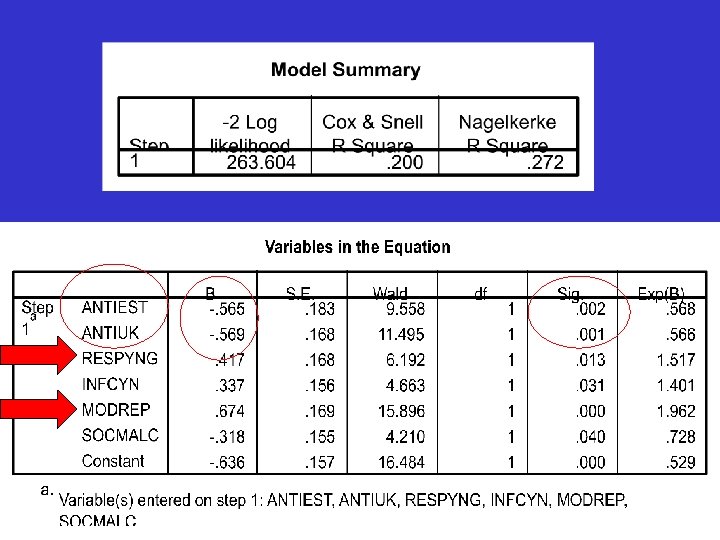
Main Research Questions • What individual characteristics (background, attitudinal) best predict support for the UUP in the Assembly Elections of 2001 [NI Election Study] • What aggregate characteristics (census, electoral, Orange) best predict support for the UUP in District Council elections, 19932001 [Ecological Regression] • Is there an 'Orange vote' and which party benefits [Ecological Regression]
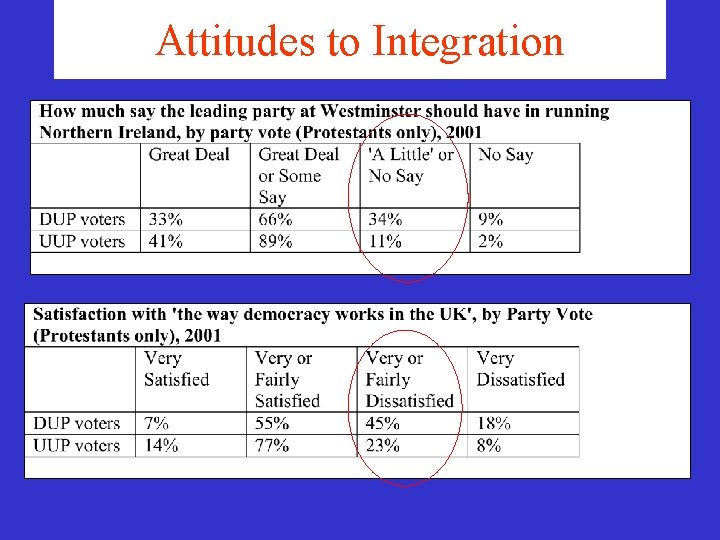
Attitudes to Integration
The Importance of Ideology over Class
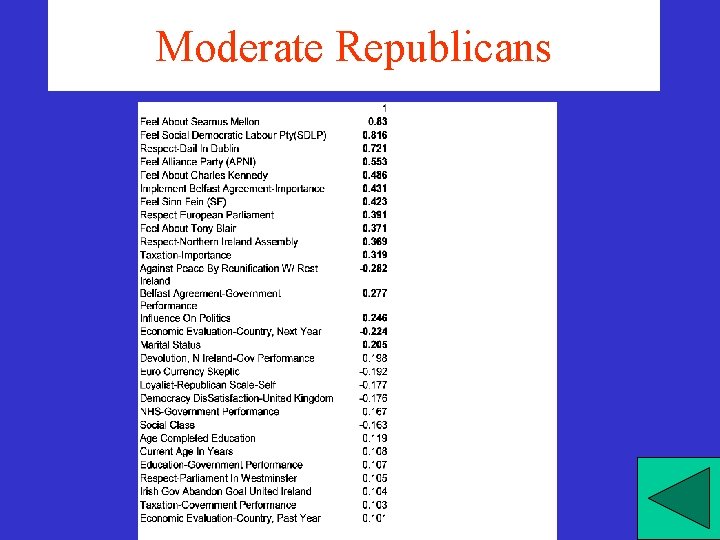
Moderate Republicans
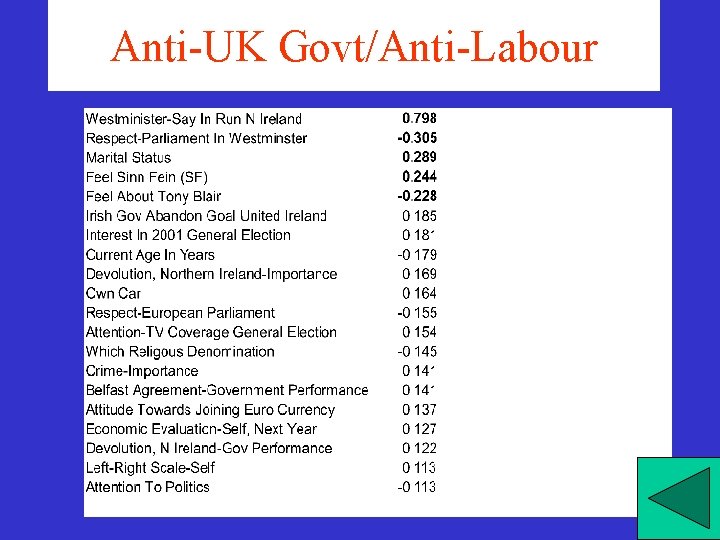
Anti-UK Govt/Anti-Labour
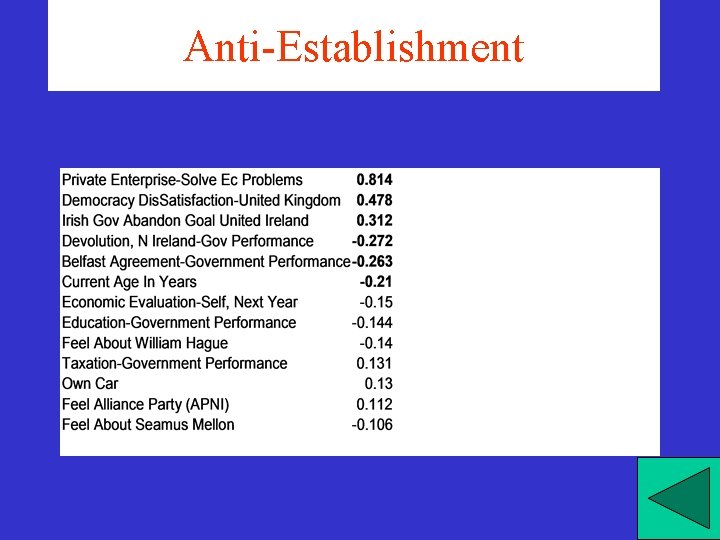
Anti-Establishment
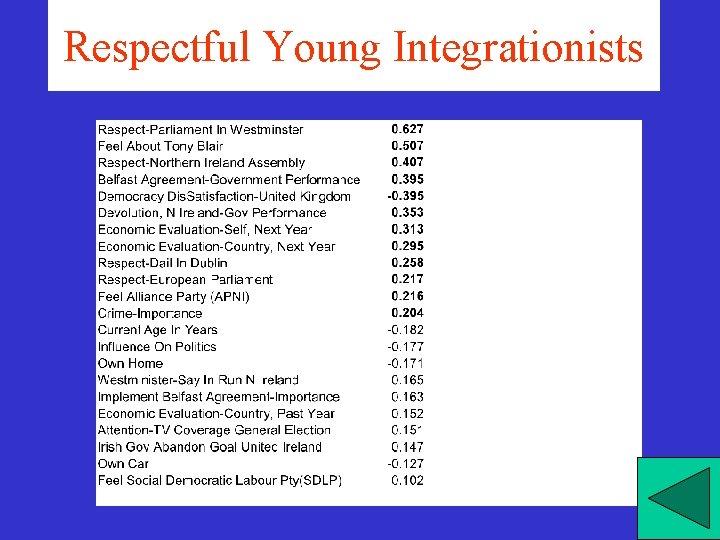
Respectful Young Integrationists
Influential Male Cynics
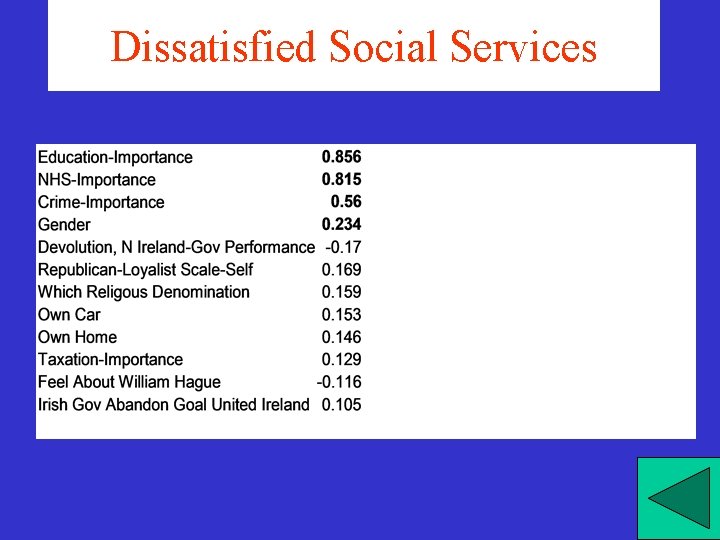
Dissatisfied Social Services
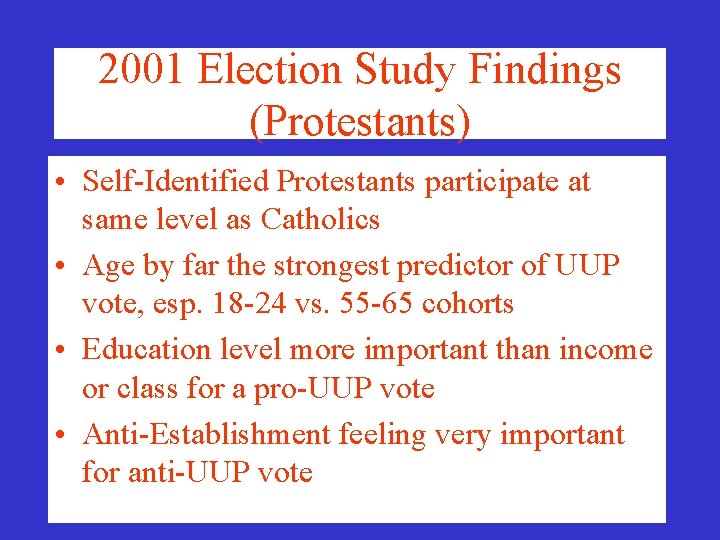
2001 Election Study Findings (Protestants) • Self-Identified Protestants participate at same level as Catholics • Age by far the strongest predictor of UUP vote, esp. 18 -24 vs. 55 -65 cohorts • Education level more important than income or class for a pro-UUP vote • Anti-Establishment feeling very important for anti-UUP vote
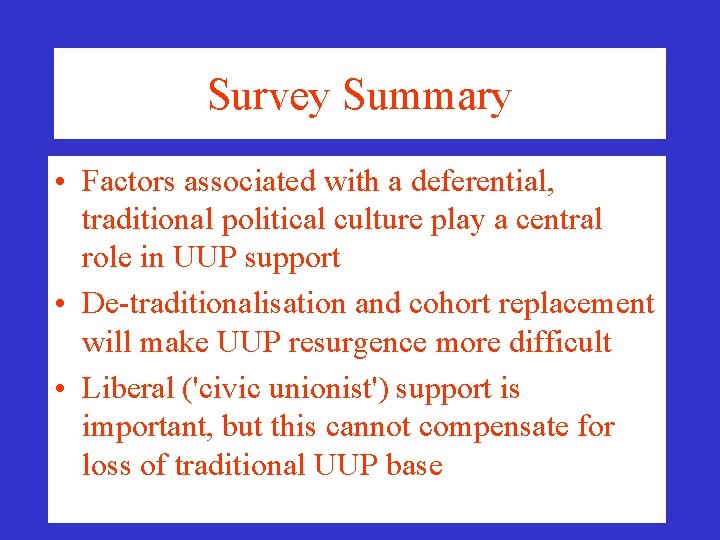
Survey Summary • Factors associated with a deferential, traditional political culture play a central role in UUP support • De-traditionalisation and cohort replacement will make UUP resurgence more difficult • Liberal ('civic unionist') support is important, but this cannot compensate for loss of traditional UUP base
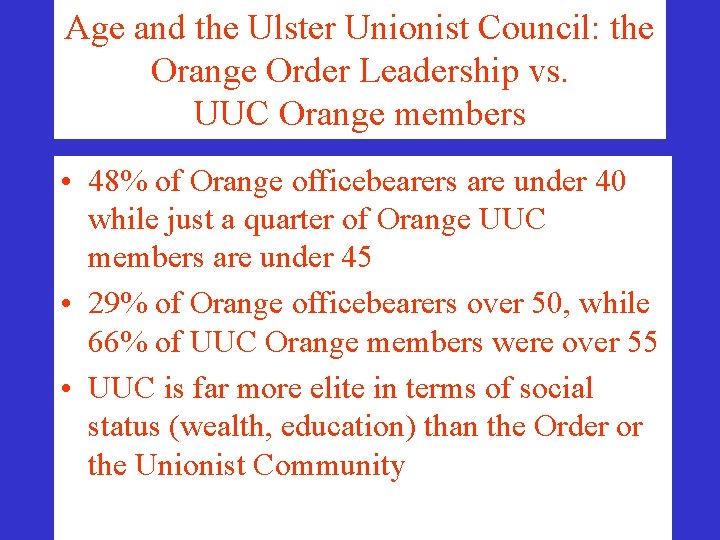
Age and the Ulster Unionist Council: the Orange Order Leadership vs. UUC Orange members • 48% of Orange officebearers are under 40 while just a quarter of Orange UUC members are under 45 • 29% of Orange officebearers over 50, while 66% of UUC Orange members were over 55 • UUC is far more elite in terms of social status (wealth, education) than the Order or the Unionist Community
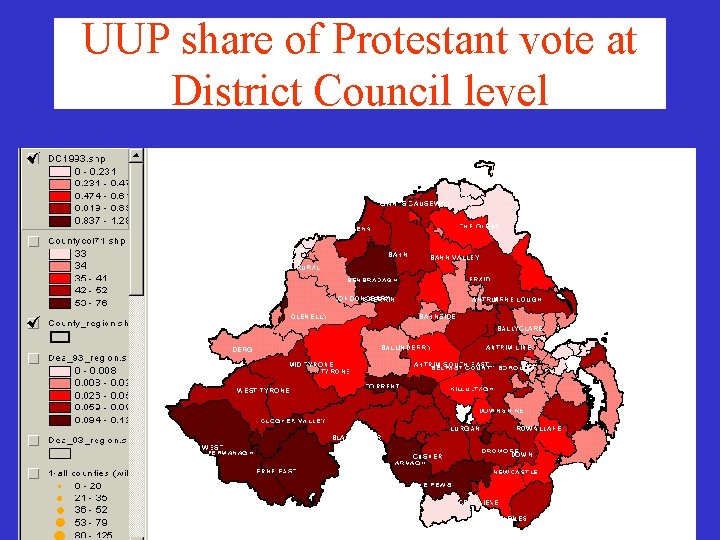
UUP share of Protestant vote at District Council level
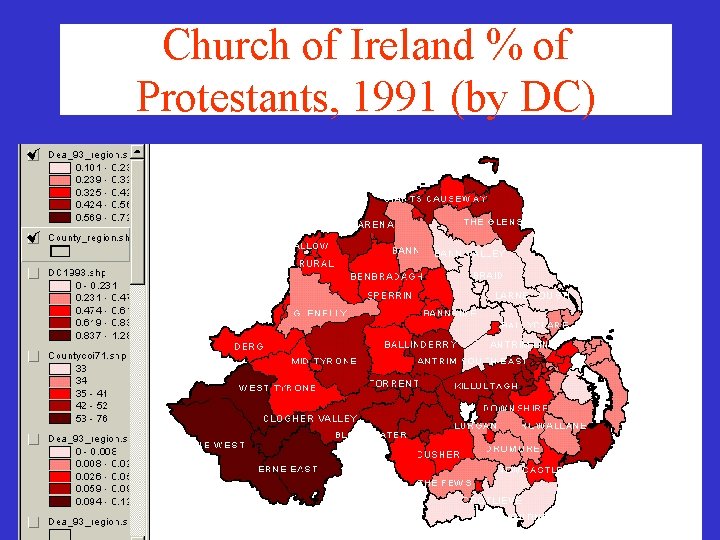
Church of Ireland % of Protestants, 1991 (by DC)
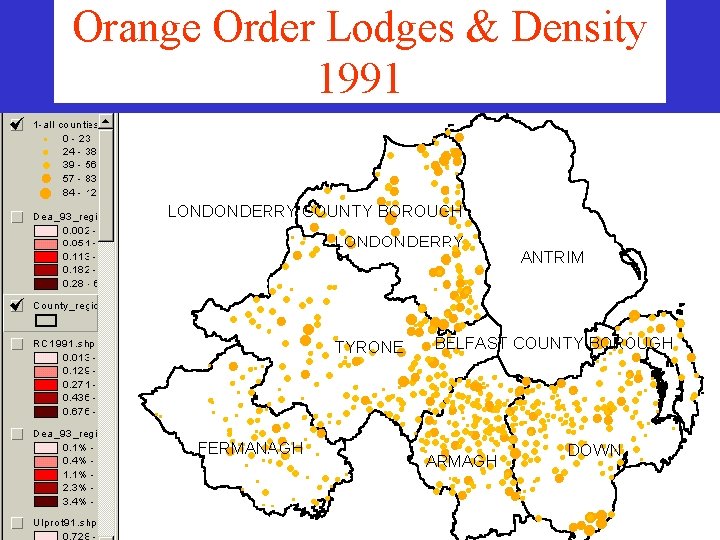
Orange Order Lodges & Density 1991
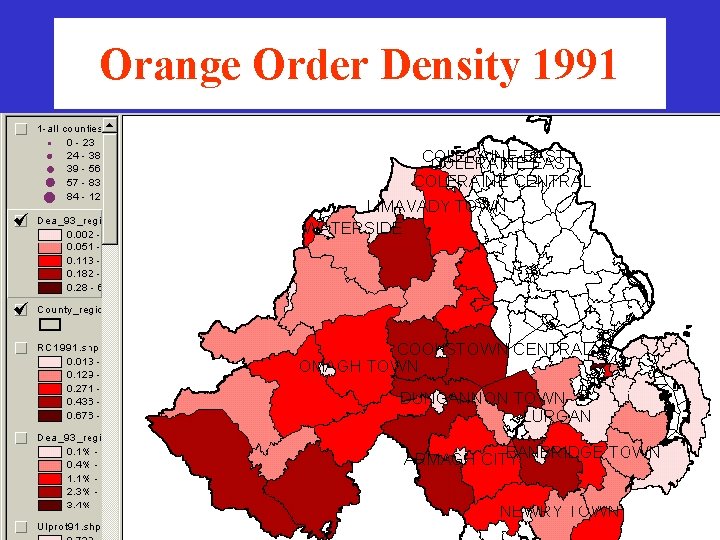
Orange Order Density 1991
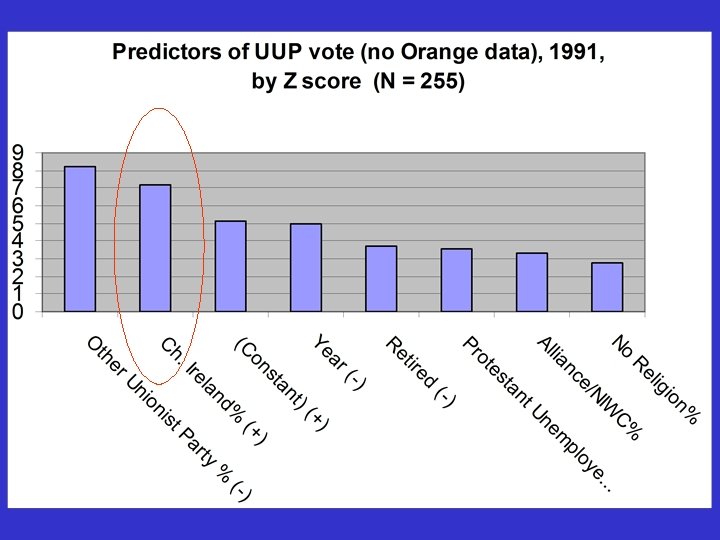
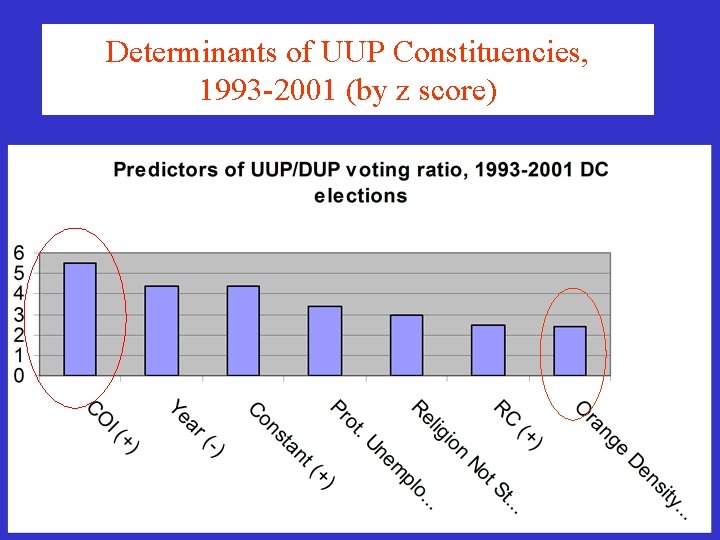
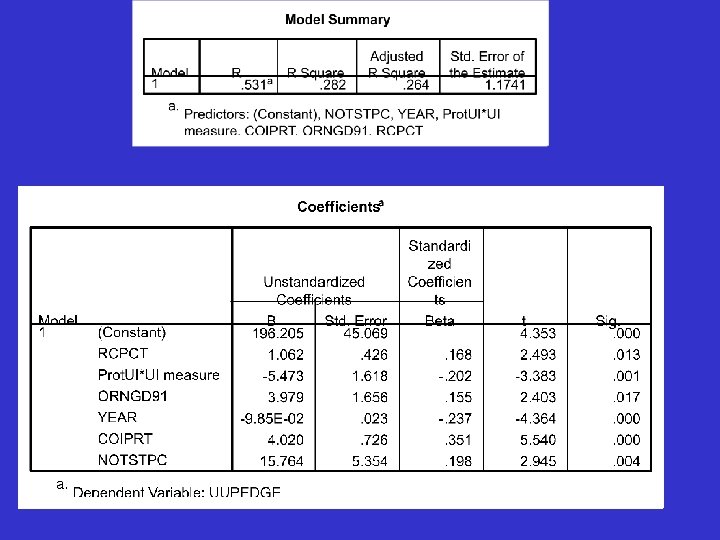
Determinants of UUP Constituencies, 1993 -2001 (by z score)
The Role of Context • Areas of High Protestant Unemployment are likely to be young and anti-Elite in attitude • Church of Ireland Orange counties and councils may be more deferential for historical reasons (these forces may once have shaped local political cultures) Less clear that they do so today.
Conclusion • Importance of 'traditional' vs 'modern' divide (i. e. Older Generation, Church of Ireland, Respect for Institutions and leaders) • 'Civic Unionist' segment exists in metropolitan Belfast but does not counterbalance detraditionalisation in UUP/DUP voting calculus
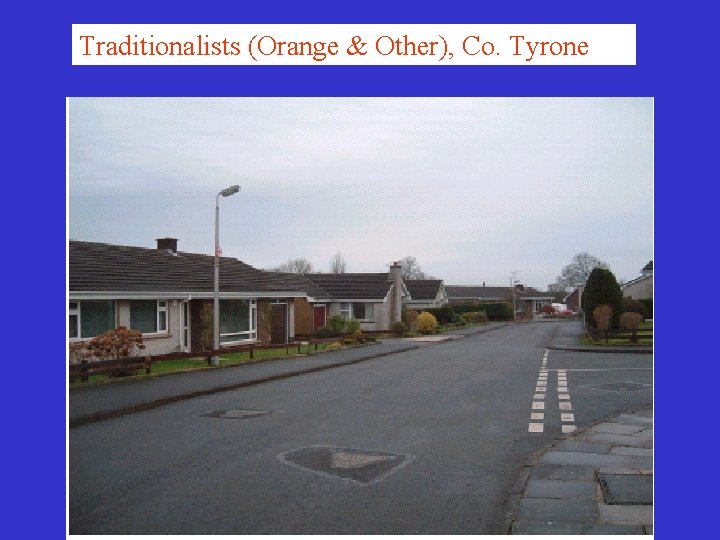
Traditionalists (Orange & Other), Co. Tyrone
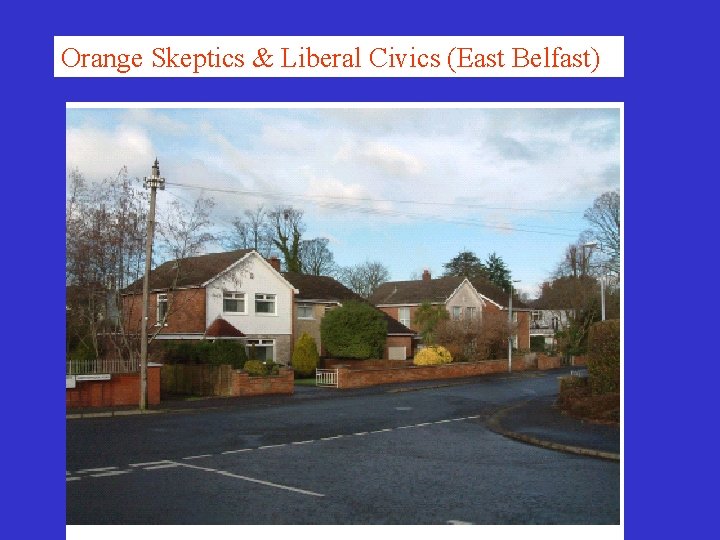
Orange Skeptics & Liberal Civics (East Belfast)
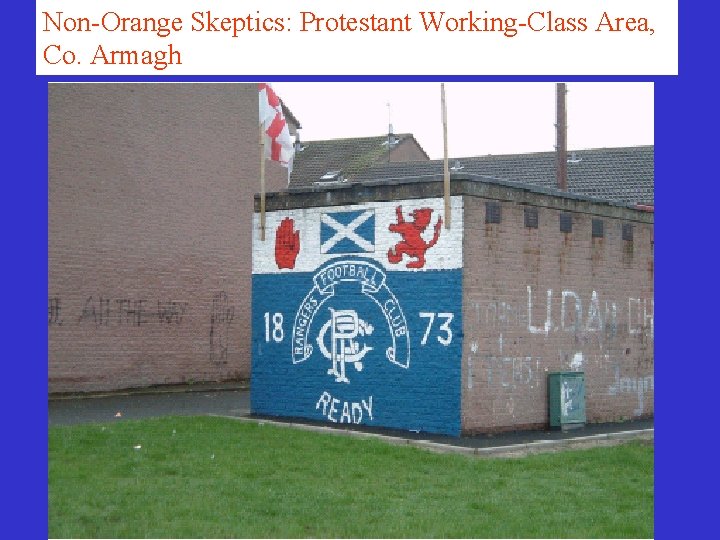
Non-Orange Skeptics: Protestant Working-Class Area, Co. Armagh
END http: //www. kpdata. com/epk/index. html (Follow link 1)
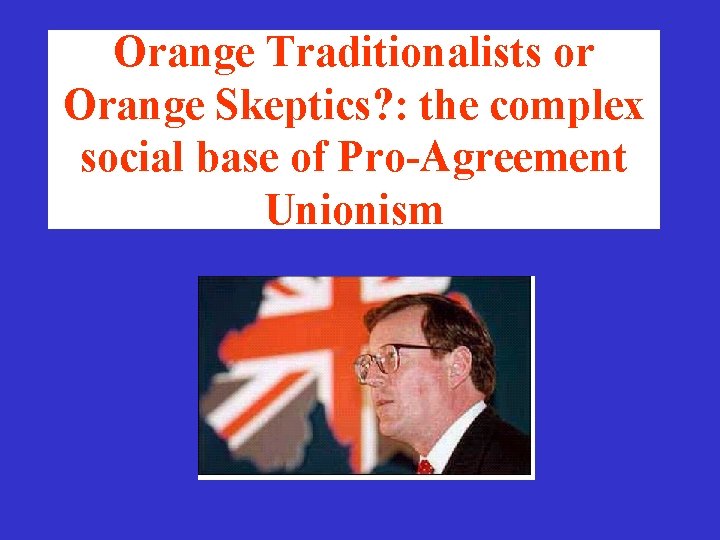
Orange Traditionalists or Orange Skeptics? : the complex social base of Pro-Agreement Unionism
Main Research Questions • What is the social profile of the UUC and how does this differ from that of the Orange Order and the Unionist community as a whole • Which factors best predict support for the Good Friday Agreement within the UUC? • What are the characteristics of pro-UUP constituencies, 1993 -2001[time permitting]
UUC Social Profile: Previous Survey Research • Late 2000 Survey of UUC (Tonge & Evans 2001; 2002). 1/3 response rate • Social Profile in terms of age, education, gender, income, occupation, county of residence • Showed that roughly half the UUC were Orange members
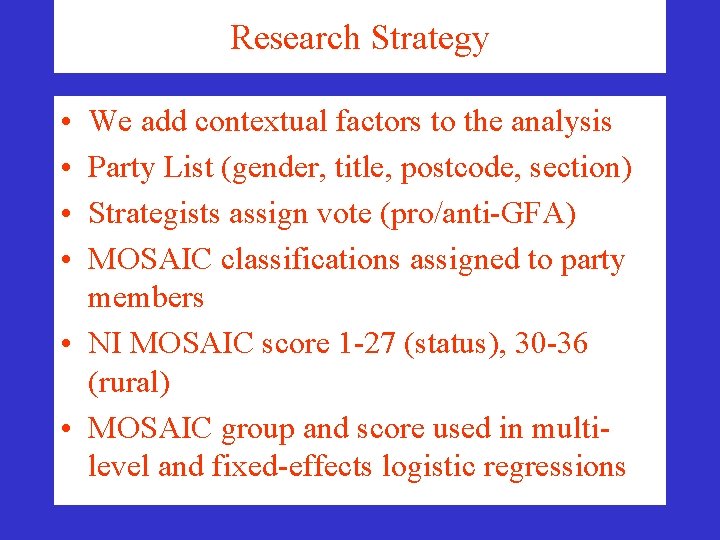
Research Strategy • • We add contextual factors to the analysis Party List (gender, title, postcode, section) Strategists assign vote (pro/anti-GFA) MOSAIC classifications assigned to party members • NI MOSAIC score 1 -27 (status), 30 -36 (rural) • MOSAIC group and score used in multilevel and fixed-effects logistic regressions
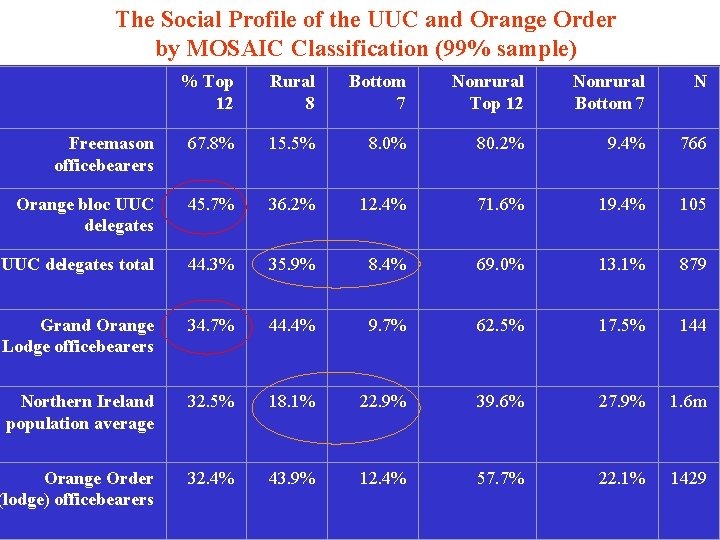
The Social Profile of the UUC and Orange Order by MOSAIC Classification (99% sample) % Top 12 Rural 8 Bottom 7 Nonrural Top 12 Nonrural Bottom 7 N Freemason officebearers 67. 8% 15. 5% 8. 0% 80. 2% 9. 4% 766 Orange bloc UUC delegates 45. 7% 36. 2% 12. 4% 71. 6% 19. 4% 105 UUC delegates total 44. 3% 35. 9% 8. 4% 69. 0% 13. 1% 879 Grand Orange Lodge officebearers 34. 7% 44. 4% 9. 7% 62. 5% 17. 5% 144 Northern Ireland population average 32. 5% 18. 1% 22. 9% 39. 6% 27. 9% 1. 6 m Orange Order (lodge) officebearers 32. 4% 43. 9% 12. 4% 57. 7% 22. 1% 1429
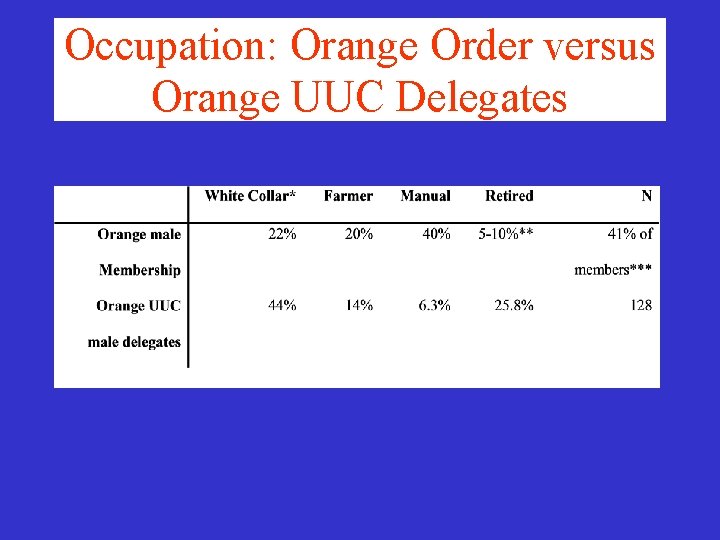
Occupation: Orange Order versus Orange UUC Delegates
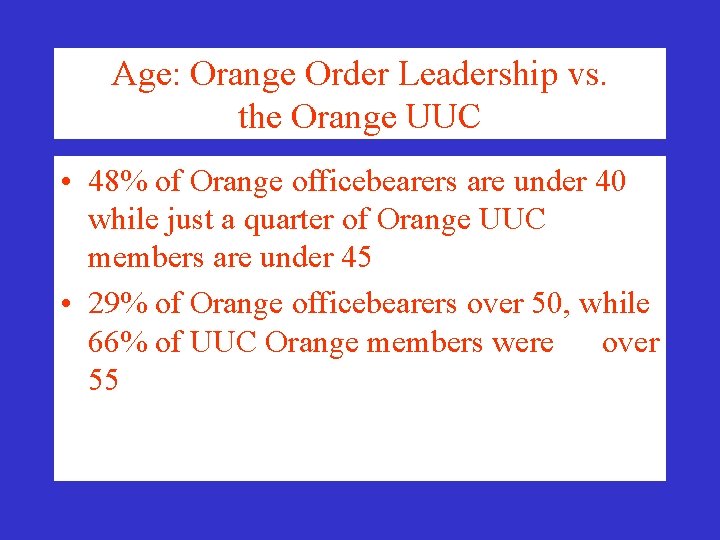
Age: Orange Order Leadership vs. the Orange UUC • 48% of Orange officebearers are under 40 while just a quarter of Orange UUC members are under 45 • 29% of Orange officebearers over 50, while 66% of UUC Orange members were over 55
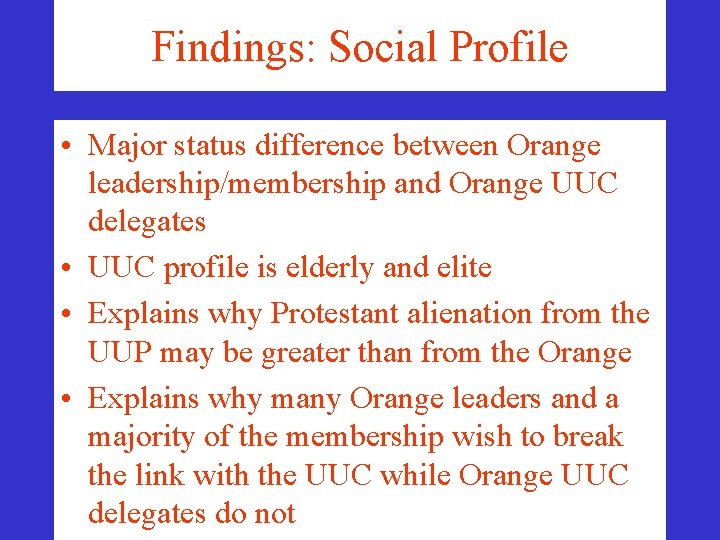
Findings: Social Profile • Major status difference between Orange leadership/membership and Orange UUC delegates • UUC profile is elderly and elite • Explains why Protestant alienation from the UUP may be greater than from the Orange • Explains why many Orange leaders and a majority of the membership wish to break the link with the UUC while Orange UUC delegates do not
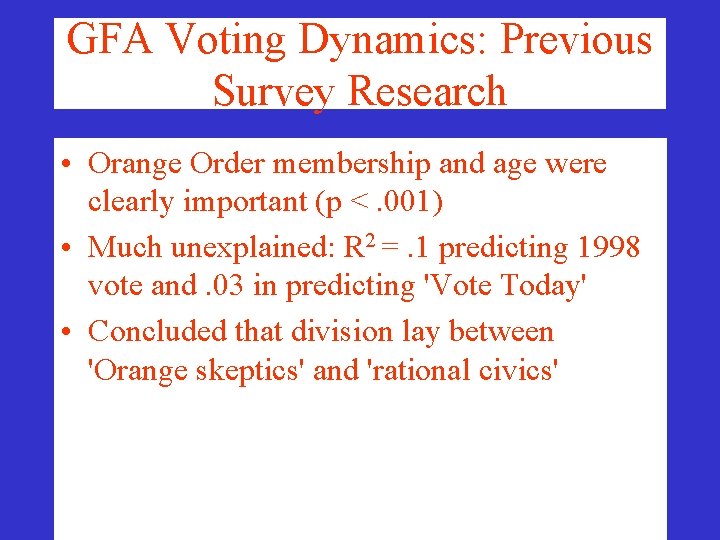
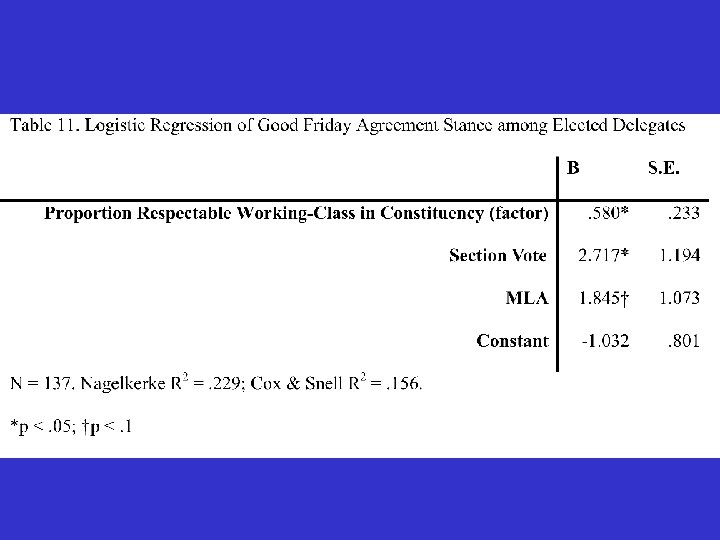
GFA Voting Dynamics: Previous Survey Research • Orange Order membership and age were clearly important (p <. 001) • Much unexplained: R 2 =. 1 predicting 1998 vote and. 03 in predicting 'Vote Today' • Concluded that division lay between 'Orange skeptics' and 'rational civics'
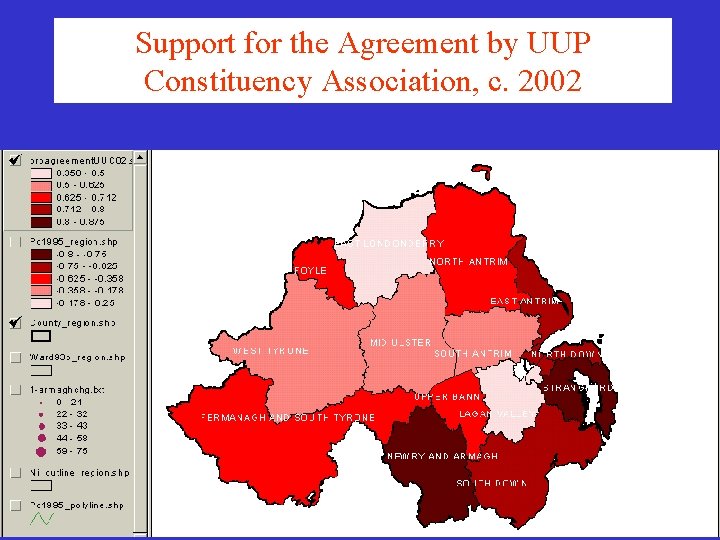
Support for the Agreement by UUP Constituency Association, c. 2002
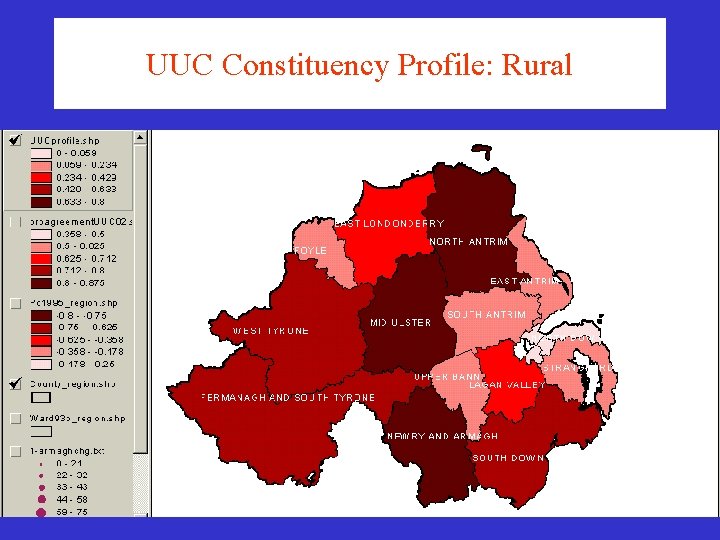
UUC Constituency Profile: Rural
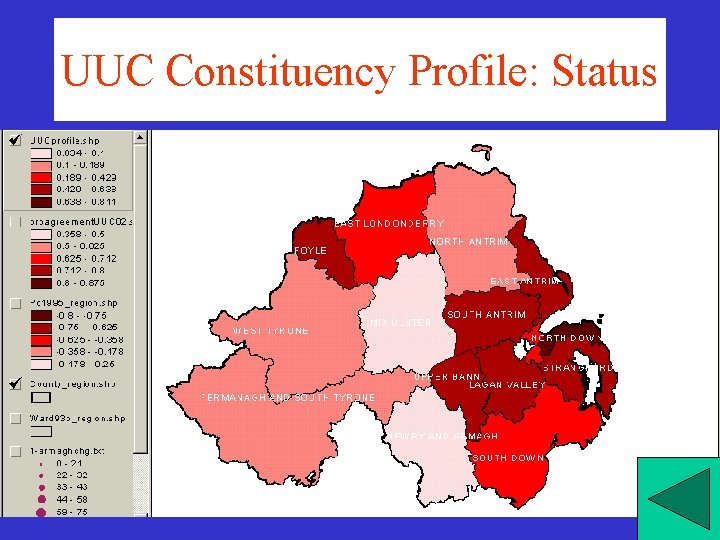
UUC Constituency Profile: Status
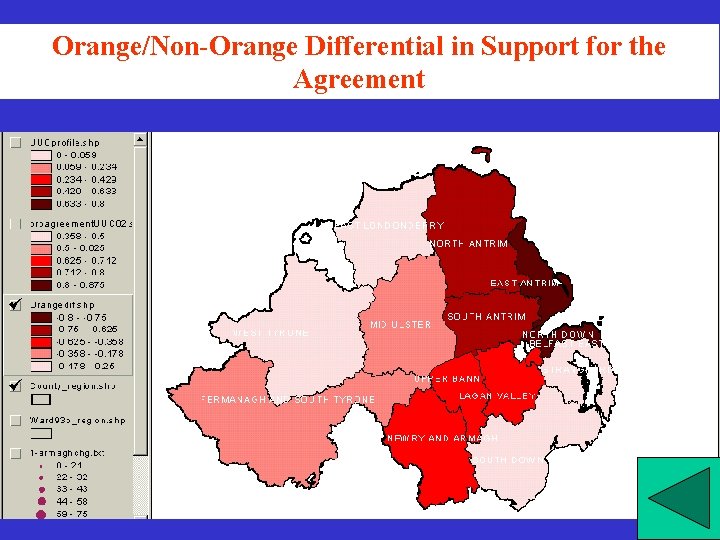
Orange/Non-Orange Differential in Support for the Agreement