
The Daya Bay Experiment to Measure 13 Herbert
The Daya Bay Experiment to Measure 13 Herbert Steiner UC Berkeley & LBNL On behalf of the Daya Bay Collaboration Presented at the Erice School/Workshop on "Neutrinos in Cosmology, in Astro, in Particle and in Nuclear Physics” Erice/Sicily/Italy, September 21, 2009
Outline • Overview • Physics • Detector • Backgrounds • Calibration • Schedule
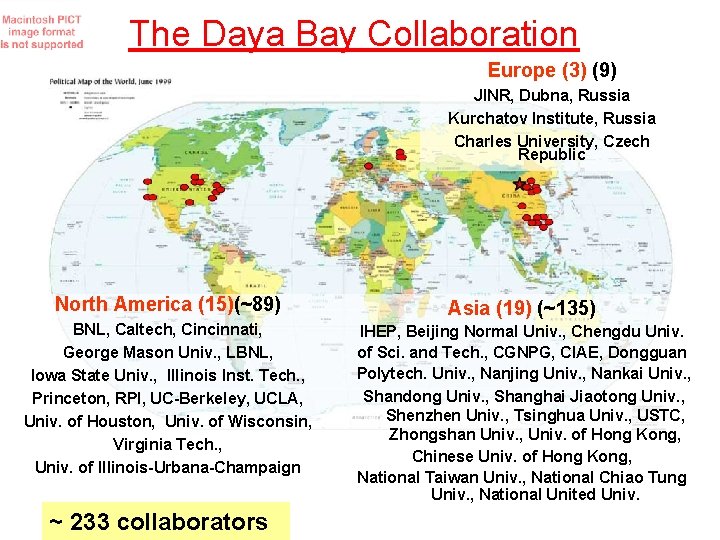
The Daya Bay Collaboration Europe (3) (9) JINR, Dubna, Russia Kurchatov Institute, Russia Charles University, Czech Republic North America (15)(~89) Asia (19) (~135) BNL, Caltech, Cincinnati, George Mason Univ. , LBNL, Iowa State Univ. , Illinois Inst. Tech. , Princeton, RPI, UC-Berkeley, UCLA, Univ. of Houston, Univ. of Wisconsin, Virginia Tech. , Univ. of Illinois-Urbana-Champaign IHEP, Beijing Normal Univ. , Chengdu Univ. of Sci. and Tech. , CGNPG, CIAE, Dongguan Polytech. Univ. , Nanjing Univ. , Nankai Univ. , Shandong Univ. , Shanghai Jiaotong Univ. , Shenzhen Univ. , Tsinghua Univ. , USTC, Zhongshan Univ. , Univ. of Hong Kong, Chinese Univ. of Hong Kong, National Taiwan Univ. , National Chiao Tung Univ. , National United Univ. ~ 233 collaborators
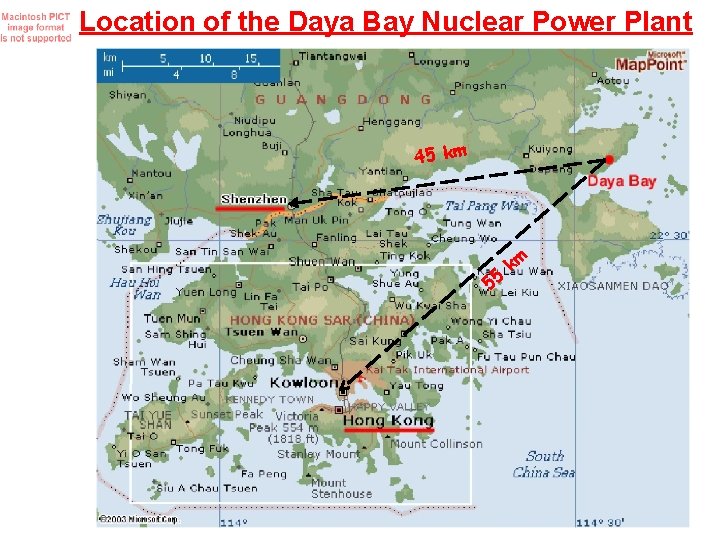
Location of the Daya Bay Nuclear Power Plant 45 km 55 km
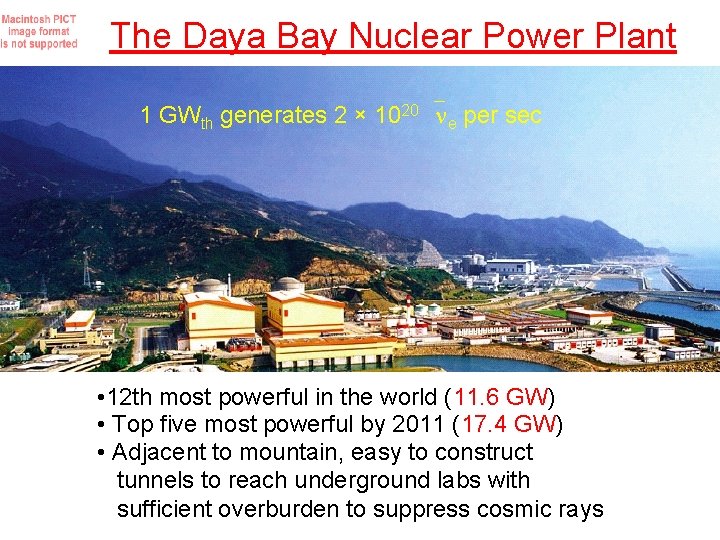
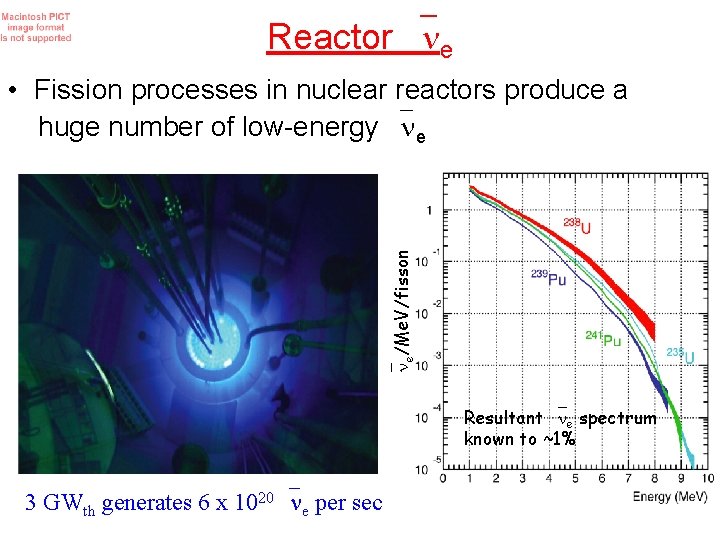
The Daya Bay Nuclear Power Plant 1 GWth generates 2 × 10²⁰ e per sec • 12 th most powerful in the world (11. 6 GW) • Top five most powerful by 2011 (17. 4 GW) • Adjacent to mountain, easy to construct tunnels to reach underground labs with sufficient overburden to suppress cosmic rays
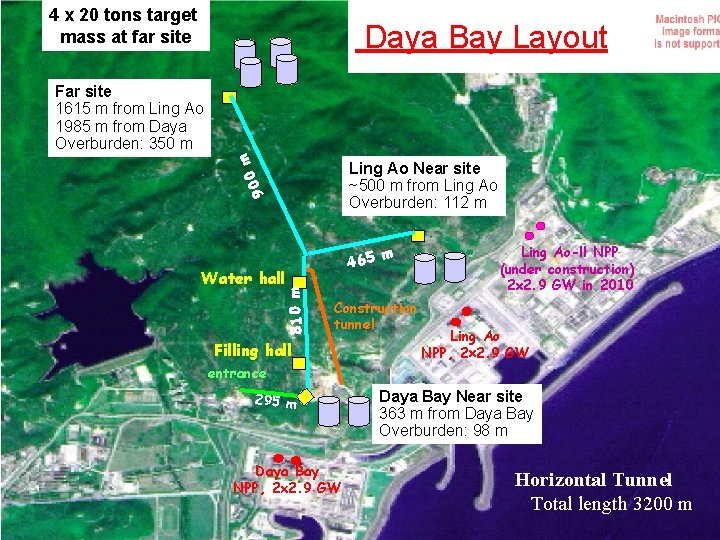
4 x 20 tons target mass at far site Far site 1615 m from Ling Ao 1985 m from Daya Overburden: 350 m m 0 0 9 Daya Bay Layout Ling Ao Near site ~500 m from Ling Ao Overburden: 112 m 465 810 m Water hall m Construction tunnel Filling hall Ling Ao-ll NPP (under construction) 2 2. 9 GW in 2010 Ling Ao NPP, 2 2. 9 GW entrance 295 m Daya Bay NPP, 2 2. 9 GW Daya Bay Near site 363 m from Daya Bay Overburden: 98 m Horizontal Tunnel Total length: ~3100 m Total length 3200 m
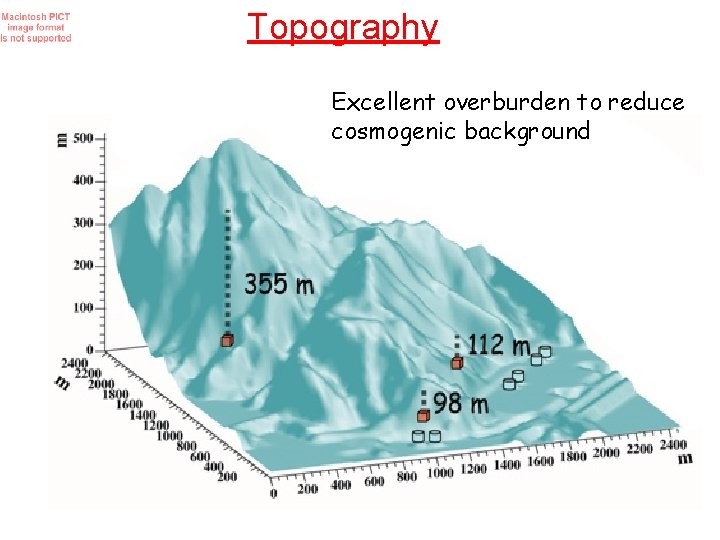
Topography Baselines (m): Excellent overburden to reduce cosmogenic background
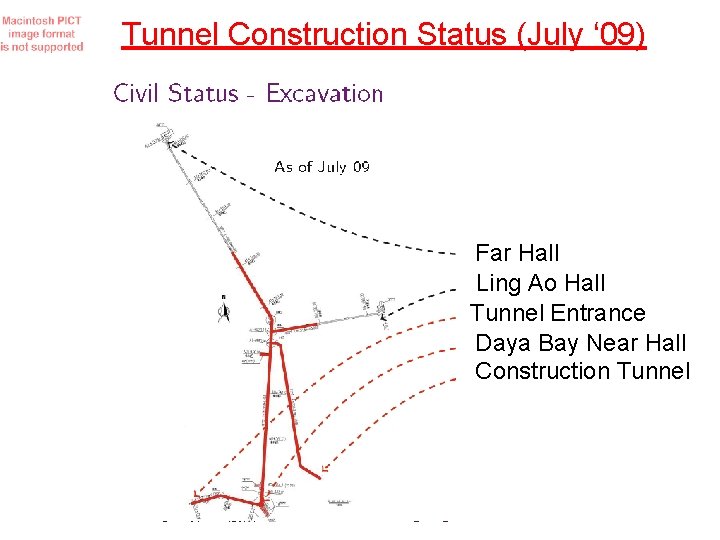
Tunnel Construction Status (July ‘ 09) Far Hall Ling Ao Hall Tunnel Entrance Daya Bay Near Hall Construction Tunnel
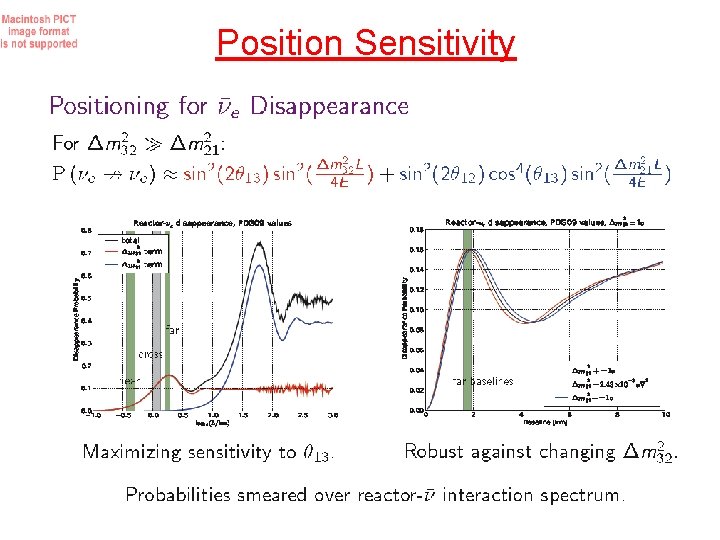
Position Sensitivity
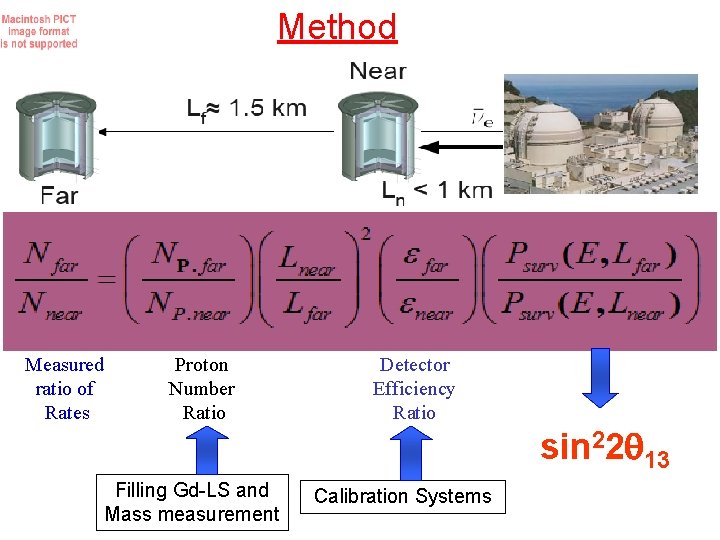
Method How to measure 13? Measured ratio of Rates Proton Number Ratio Detector Efficiency Ratio sin 22 13 Filling Gd-LS and Mass measurement Calibration Systems
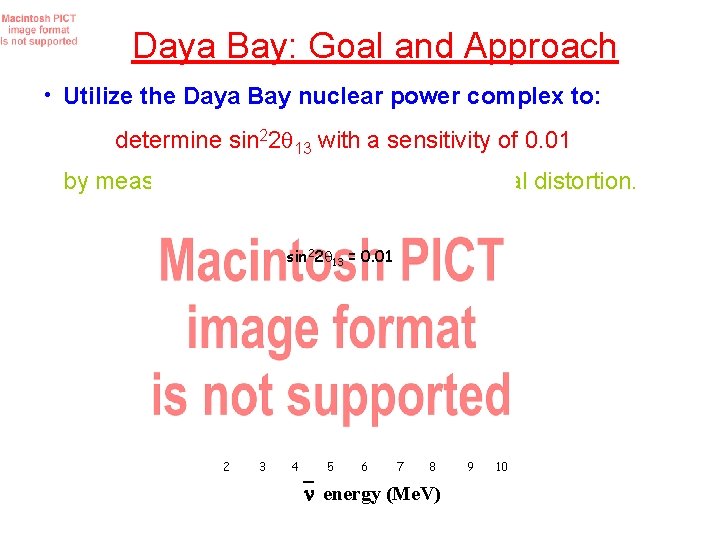
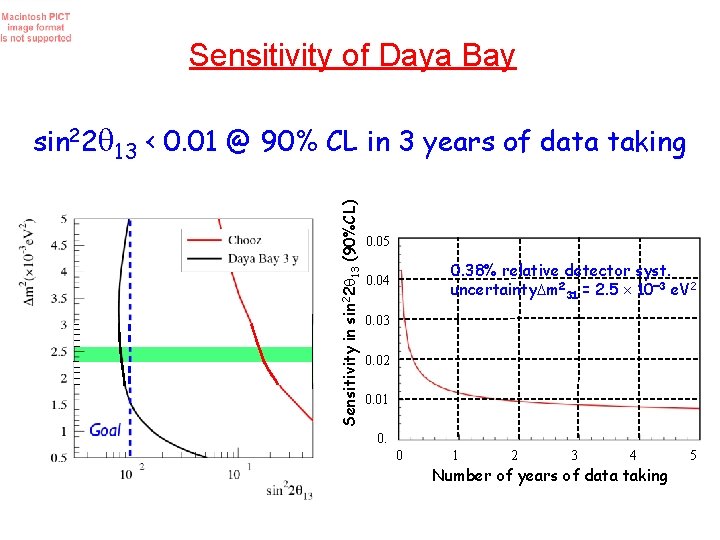
Daya Bay: Goal and Approach • Utilize the Daya Bay nuclear power complex to: determine sin 22 13 with a sensitivity of 0. 01 by measuring deficit in e rate and spectral distortion. sin 22 13 = 0. 01 2 3 4 5 6 7 8 energy (Me. V) 9 10
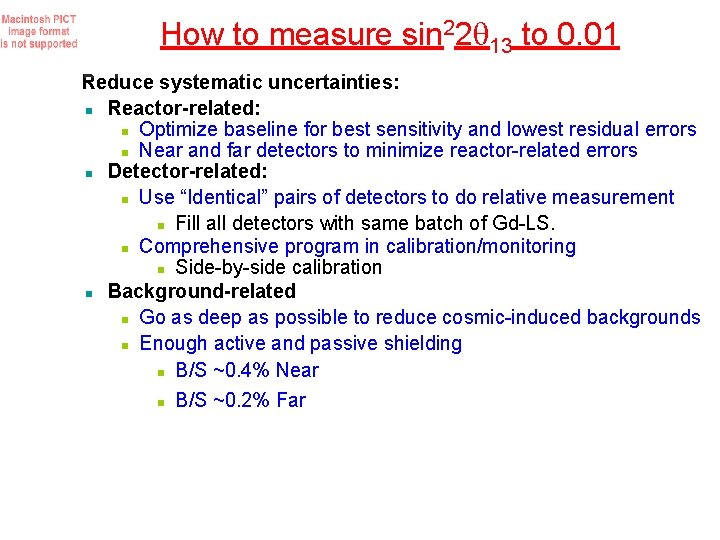
How to measure sin 22 13 to 0. 01 Reduce systematic uncertainties: n Reactor-related: n Optimize baseline for best sensitivity and lowest residual errors n Near and far detectors to minimize reactor-related errors n Detector-related: n Use “Identical” pairs of detectors to do relative measurement n Fill all detectors with same batch of Gd-LS. n Comprehensive program in calibration/monitoring n Side-by-side calibration n Background-related n Go as deep as possible to reduce cosmic-induced backgrounds n Enough active and passive shielding n B/S ~0. 4% Near n B/S ~0. 2% Far
Sensitivity of Daya Bay Sensitivity in sin 22 13 (90%CL) sin 22 13 < 0. 01 @ 90% CL in 3 years of data taking 0. 05 0. 38% relative detector syst. uncertainty m 231 = 2. 5 10 3 e. V 2 0. 04 0. 03 0. 02 0. 01 0. 0 1 2 3 4 Number of years of data taking 5
Reactor e e/Me. V/fisson • Fission processes in nuclear reactors produce a huge number of low-energy e Resultant e spectrum known to ~1% 3 GWth generates 6 x 10²⁰ e per sec
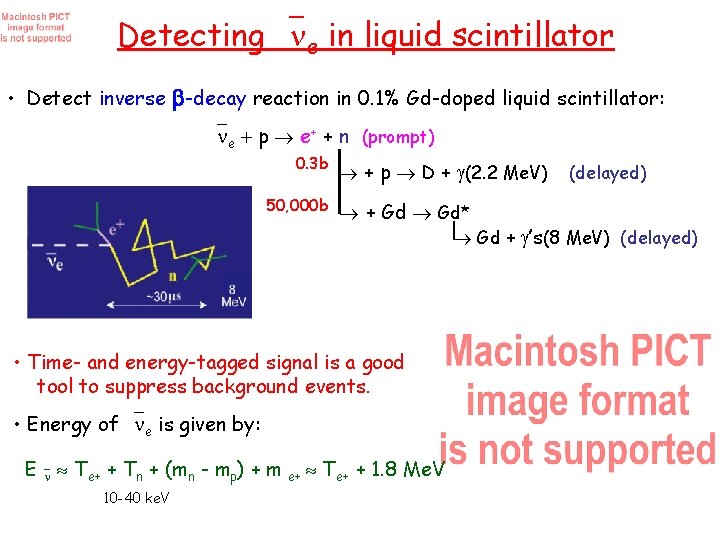
Detecting e in liquid scintillator • Detect inverse -decay reaction in 0. 1% Gd-doped liquid scintillator: e p e+ + n (prompt) 0. 3 b 50, 000 b + p D + (2. 2 Me. V) + Gd Gd* Gd + ’s(8 Me. V) (delayed) • Time- and energy-tagged signal is a good tool to suppress background events. • Energy of e is given by: E Te+ + Tn + (mn - mp) + m 10 -40 ke. V e+ (delayed) Te+ + 1. 8 Me. V
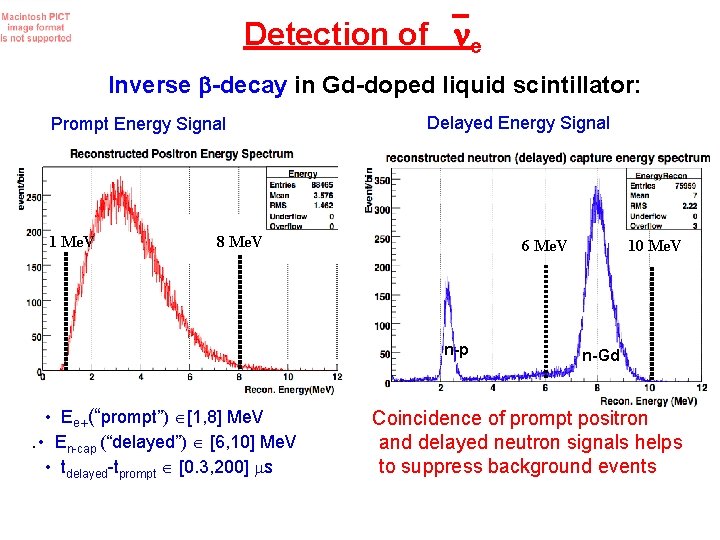
Detection of e Inverse -decay in Gd-doped liquid scintillator: Prompt Energy Signal 1 Me. V Delayed Energy Signal 8 Me. V 6 Me. V n-p • Ee+(“prompt”) [1, 8] Me. V. • En-cap (“delayed”) [6, 10] Me. V • tdelayed-tprompt [0. 3, 200] s 10 Me. V n-Gd Coincidence of prompt positron and delayed neutron signals helps to suppress background events
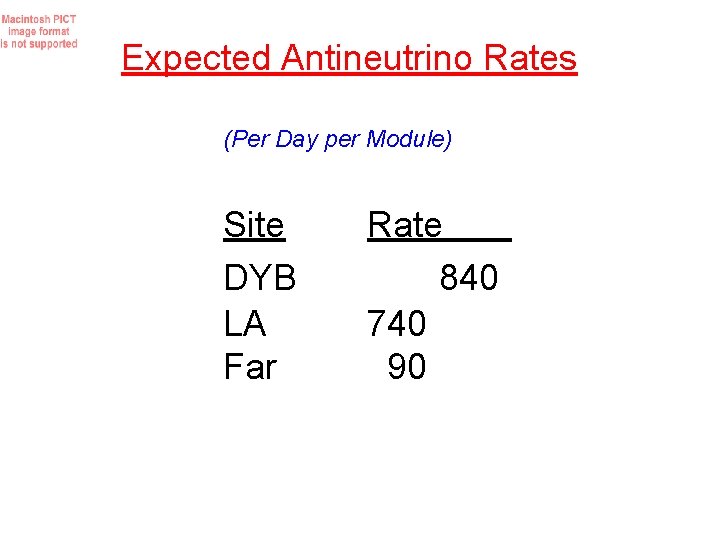
Expected Antineutrino Rates (Per Day per Module) Site DYB LA Far Rate 840 740 90
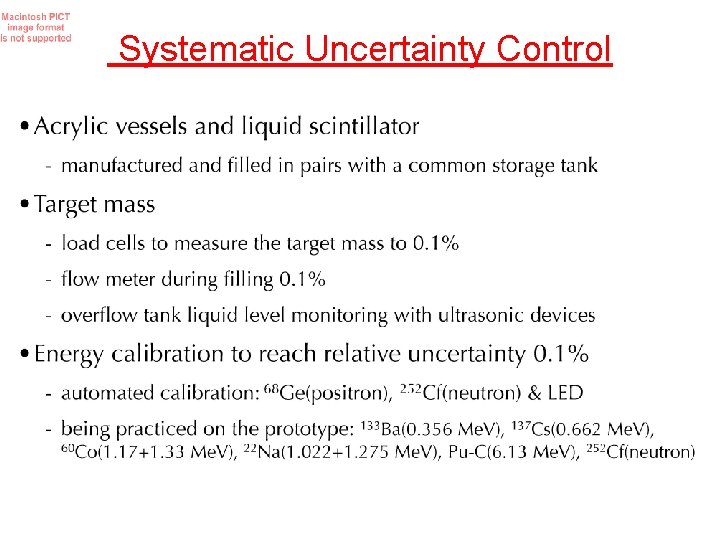
Systematic Uncertainty Control
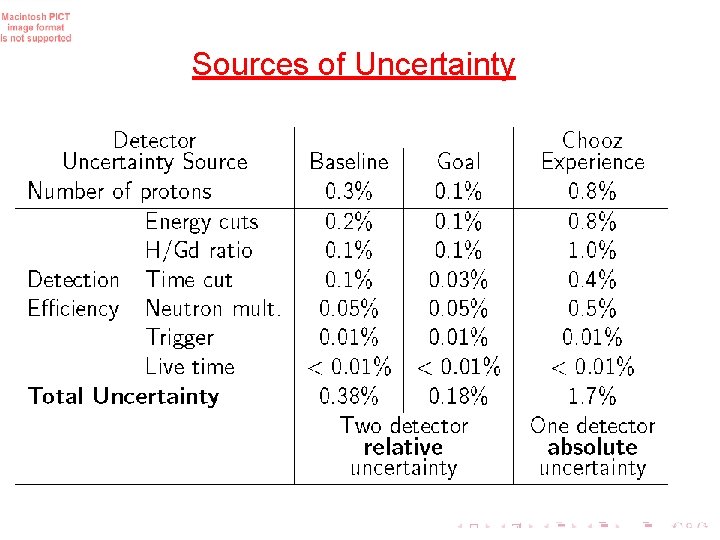
Sources of Uncertainty
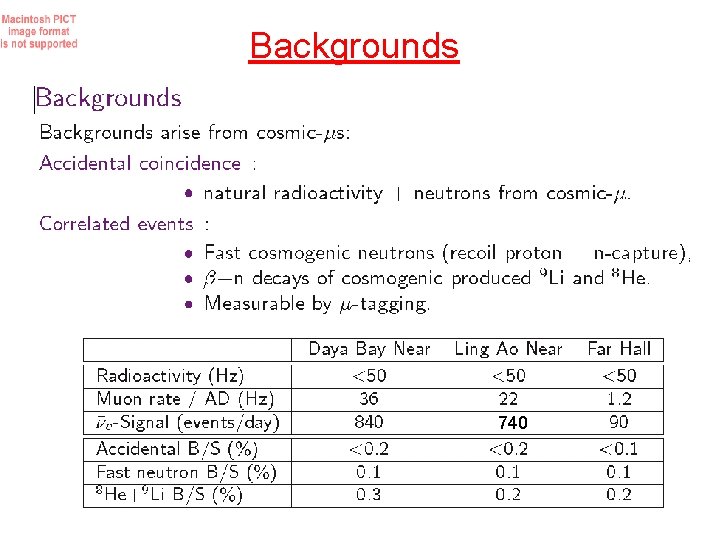
Backgrounds 740
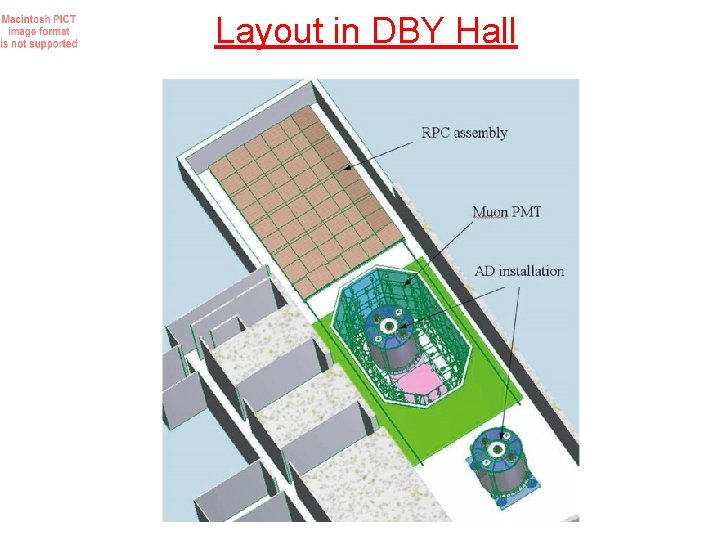
Layout in DBY Hall
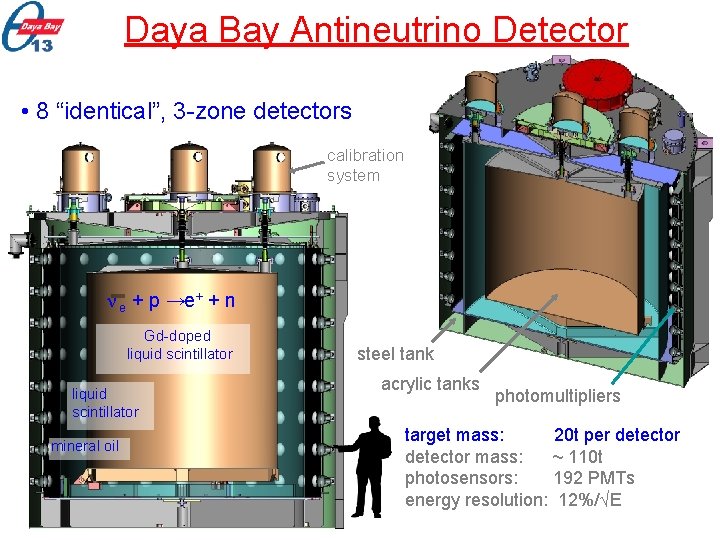
Daya Bay Antineutrino Detector • 8 “identical”, 3 -zone detectors calibration system ν e + p →e+ + n Gd-doped liquid scintillator mineral oil steel tank acrylic tanks photomultipliers target mass: 20 t per detector mass: ~ 110 t photosensors: 192 PMTs energy resolution: 12%/√E
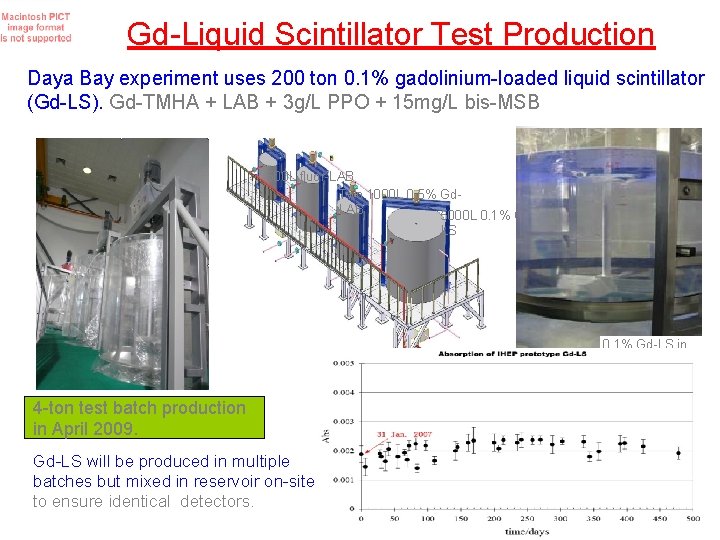
Gd-Liquid Scintillator Test Production Daya Bay experiment uses 200 ton 0. 1% gadolinium-loaded liquid scintillator (Gd-LS). Gd-TMHA + LAB + 3 g/L PPO + 15 mg/L bis-MSB 500 L fluor-LAB Two 1000 L 0. 5% Gd. LAB 5000 L 0. 1% Gd. LS 0. 1% Gd-LS in 5000 L tank 4 -ton test batch production in April 2009. Gd-LS will be produced in multiple batches but mixed in reservoir on-site, to ensure identical detectors. Gd-LS stability in prototype
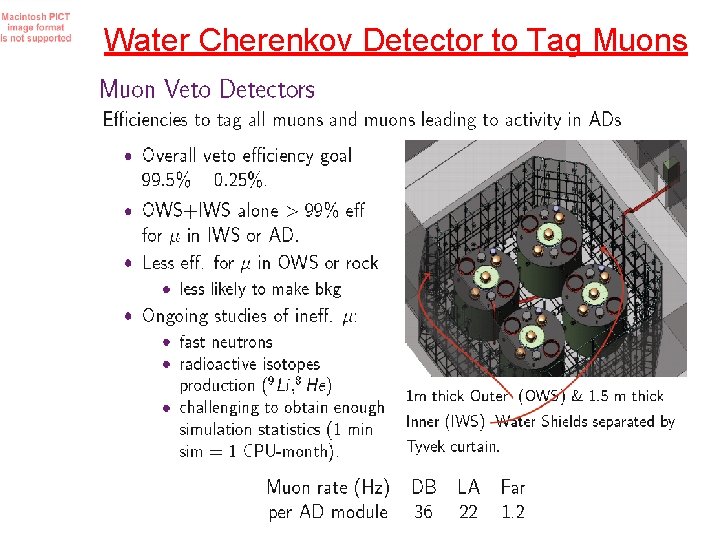
Water Cherenkov Detector to Tag Muons
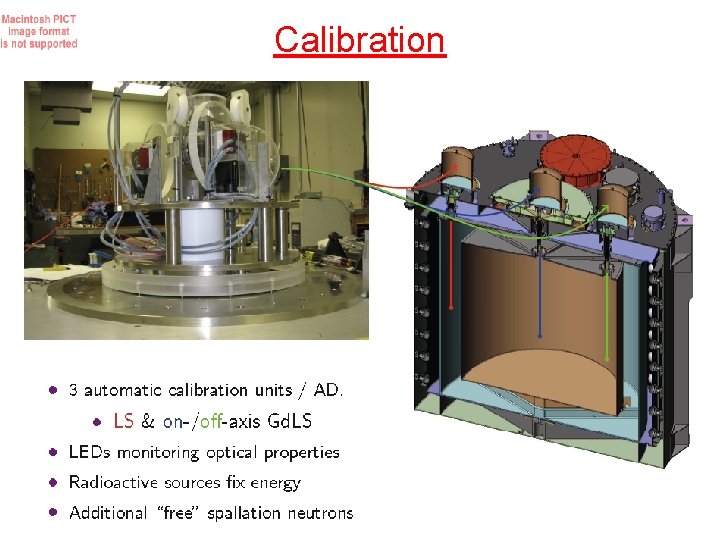
Calibration
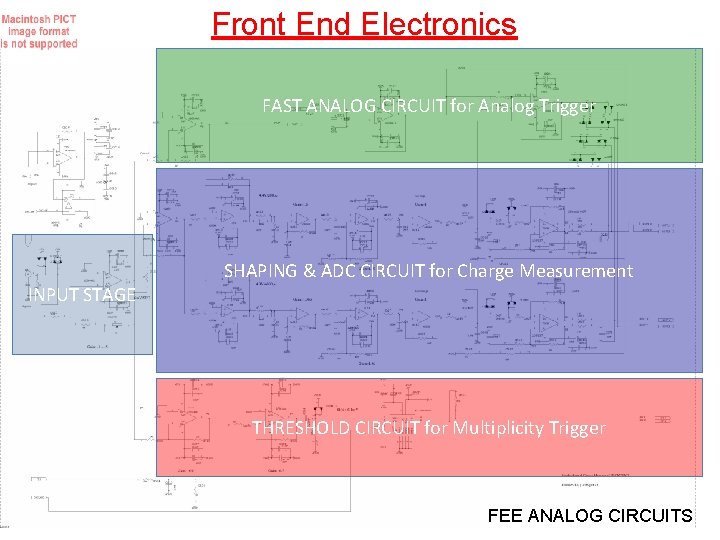
Front End Electronics FAST ANALOG CIRCUIT for Analog Trigger INPUT STAGE SHAPING & ADC CIRCUIT for Charge Measurement THRESHOLD CIRCUIT for Multiplicity Trigger FEE ANALOG CIRCUITS
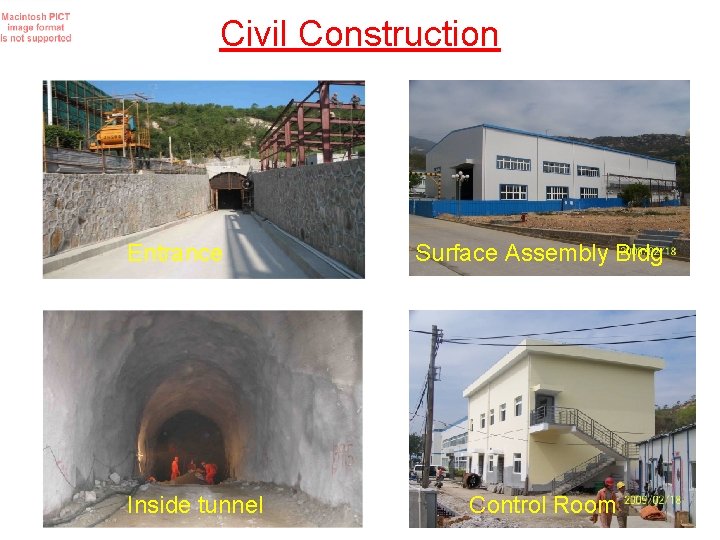
Civil Construction Entrance Inside tunnel Surface Assembly Bldg Control Room
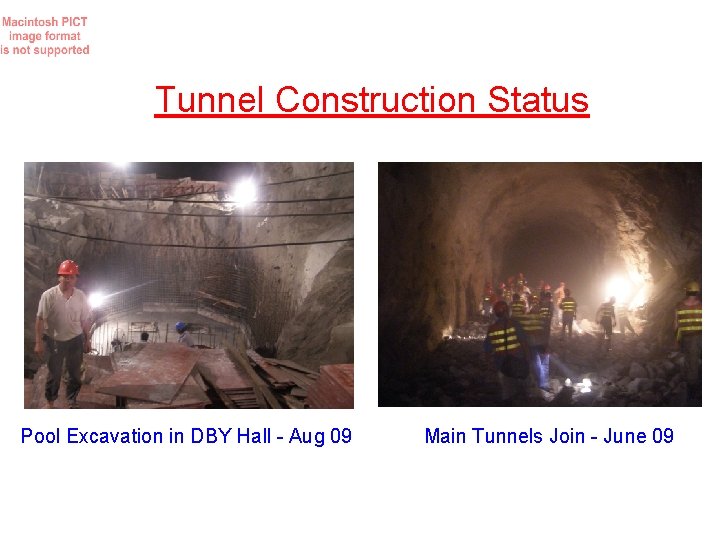
Tunnel Construction Status Pool Excavation in DBY Hall - Aug 09 Main Tunnels Join - June 09
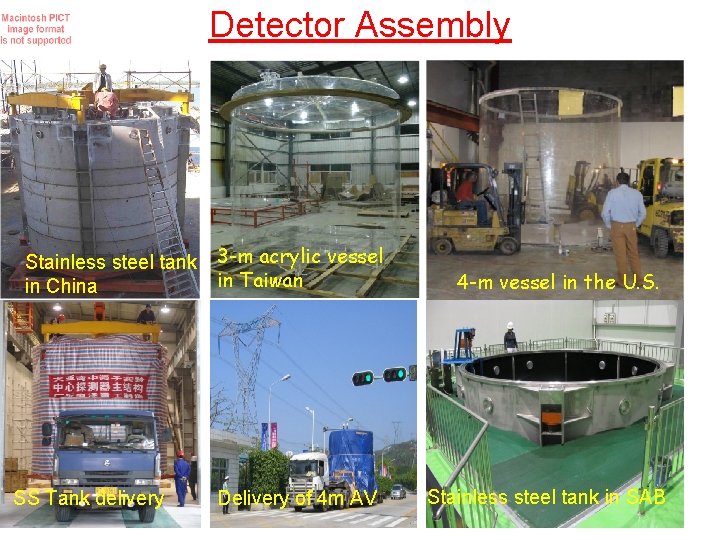
Detector Assembly Stainless steel tank 3 -m acrylic vessel in Taiwan in China SS Tank delivery Delivery of 4 m AV 4 -m vessel in the U. S. Stainless steel tank in SAB
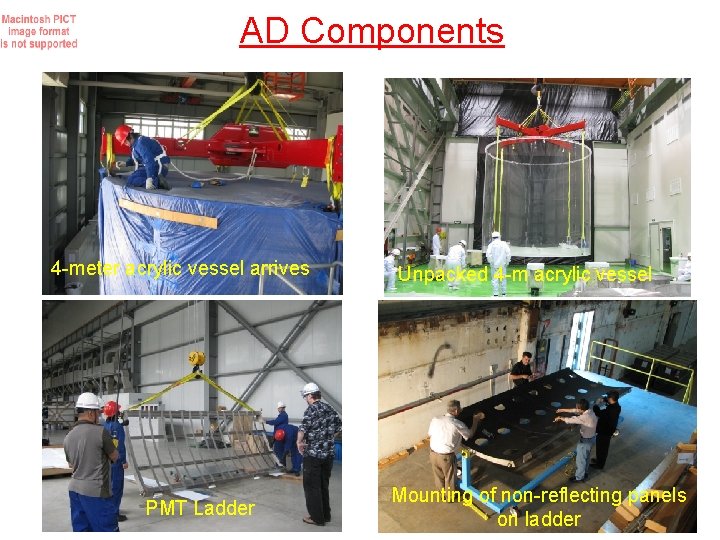
AD Components 4 -meter acrylic vessel arrives PMT Ladder Unpacked 4 -m acrylic vessel Mounting of non-reflecting panels on ladder
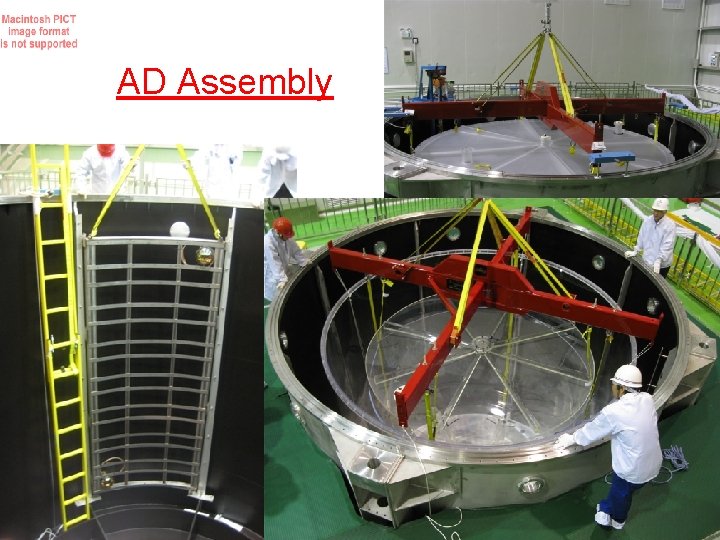
AD Assembly
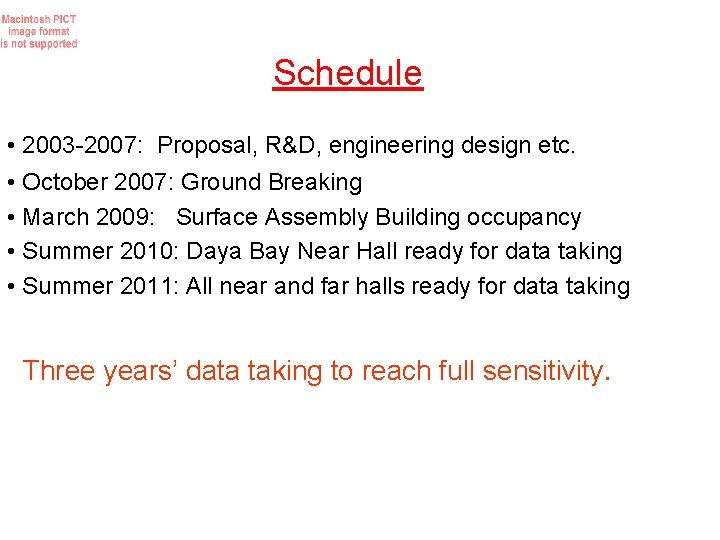
Schedule • 2003 -2007: Proposal, R&D, engineering design etc. • October 2007: Ground Breaking • March 2009: Surface Assembly Building occupancy • Summer 2010: Daya Bay Near Hall ready for data taking • Summer 2011: All near and far halls ready for data taking Three years’ data taking to reach full sensitivity.

Thank You !
- Slides: 33