
The Dawn Of Prevention Fetal Alcohol Syndrome FAS


- Slides: 45
The Dawn Of Prevention Fetal Alcohol Syndrome (FAS) Lauren Yallop © 01/31/2003 Fort Saskatchewan Correctional Centre
This presentation… • Is a collaboration of FAS materials from native resources, community agencies, and provincial and national bodies • Was created out of an expressed need for additional resources that could be used in Aboriginal communities • Includes beautiful illustrations created by Aboriginal artist, Calvin Soosay Lauren Yallop © 01/31/2003 - 1
Introduction • Fetal Alcohol Syndrome can affect all races and cultures • It is an international problem • Hopefully all cultures and races of the world will become educated about FAS Lauren Yallop © 01/31/2003 - 2
A man and a woman welcome the Spirit of the child through Creation. Lauren Yallop © 01/31/2003 - 3
What is Fetal Alcohol Syndrome? • Birth defects caused by drinking while pregnant Lauren Yallop © 01/31/2003 - 4
Additional terms include: • (FASD) Fetal Alcohol Spectrum Disorder • (FAE) Fetal Alcohol Effects • (ARBD) Alcohol Related Birth Defects • (ARND) Alcohol Related Neurodevelopmental Disorder • (PPAE) Possible Prenatal Alcohol Related Effects Lauren Yallop © 01/31/2003 - 5
Additional terms • All of these terms refer to the effect of mother’s drinking on an unborn baby • This presentation will talk about Fetal Alcohol Syndrome (FAS) Lauren Yallop © 01/31/2003 - 6
How is alcohol passed to the baby? • Everything a pregnant mother eats or drinks can be passed on to the baby • Alcohol stunts the baby’s growth • They are born much smaller and are smaller for life Lauren Yallop © 01/31/2003 - 7
When pregnant: • Less alcohol is better • No alcohol is best Lauren Yallop © 01/31/2003 - 8
Alcohol can damage the baby physically • • • Small brain Heart and other organ problems Vision and hearing difficulties Bone malformations Facial features Lauren Yallop © 01/31/2003 - 9
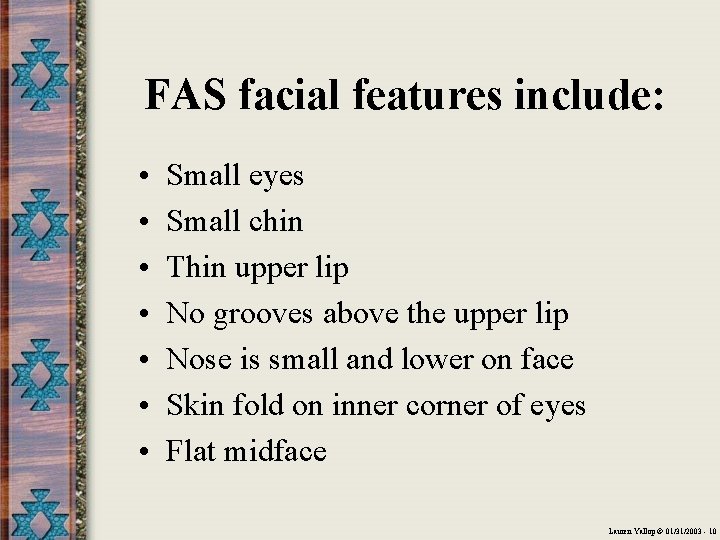
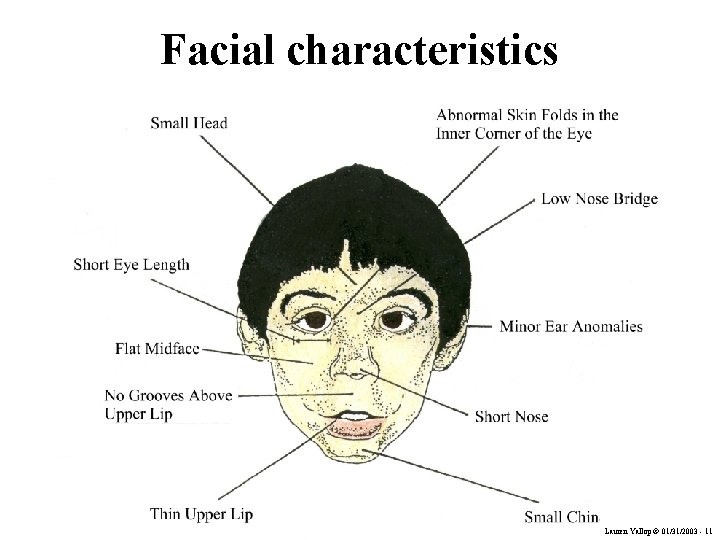
FAS facial features include: • • Small eyes Small chin Thin upper lip No grooves above the upper lip Nose is small and lower on face Skin fold on inner corner of eyes Flat midface Lauren Yallop © 01/31/2003 - 10
Facial characteristics Lauren Yallop © 01/31/2003 - 11
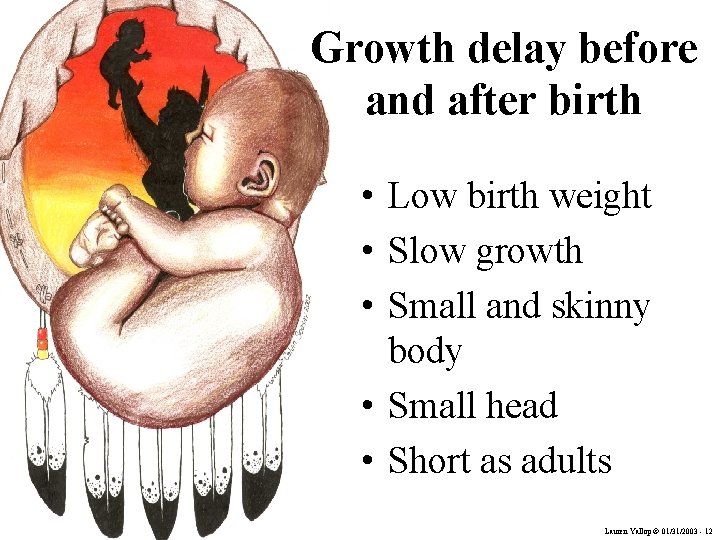
Growth delay before and after birth • Low birth weight • Slow growth • Small and skinny body • Small head • Short as adults Lauren Yallop © 01/31/2003 - 12
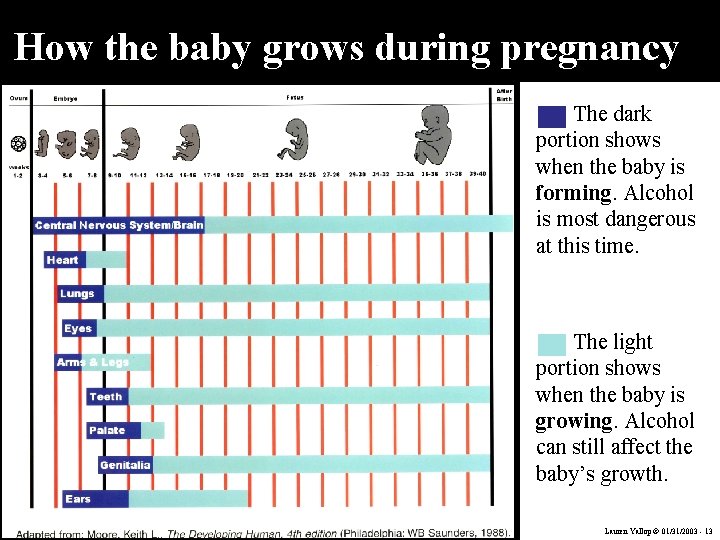
How the baby grows during pregnancy The dark portion shows when the baby is forming. Alcohol is most dangerous at this time. The light portion shows when the baby is growing. Alcohol can still affect the baby’s growth. Lauren Yallop © 01/31/2003 - 13
Differences in effects • Alcohol exposure affects some people more than others • Some people with FAS are able to live productively on their own, while other people with FAS need constant supervision • There are risk factors that may account for these differences Lauren Yallop © 01/31/2003 - 14
Risk factors include: • When the mother drinks during her pregnancy • How much and how often the mother drinks during pregnancy • Overall health of pregnant mother • How the individual baby’s body responds to alcohol Lauren Yallop © 01/31/2003 - 15
Effects of the father’s drinking • Not fully known • Some children have learning and memory problems • Many children are hyperactive • These effects may be caused by a number of reasons Lauren Yallop © 01/31/2003 - 16
These effects may be caused by : • Genes • The child’s environment • Damage to the sperm caused by alcohol • A combination of any of these reasons Lauren Yallop © 01/31/2003 - 17
Men are Protectors Lauren Yallop © 01/31/2003 - 18
What we do know about paternal drinking • Women often drink with their partners • Men may not be supportive of the mother when they are drinking themselves • Creates a poor home environment for the child Lauren Yallop © 01/31/2003 - 19
Will drinking while breast feeding affect the baby? Yes • Alcohol easily enters breast milk • Heavy drinking may reduce milk production • Remember: The baby’s brain is still growing for many years after birth Lauren Yallop © 01/31/2003 - 20
Effects of alcohol on the baby • • • Small birth weight Poor eating habits Poor sleeping habits Failure to grow Fussy behavior Lauren Yallop © 01/31/2003 - 21
Effects of FAS in childhood • • • Hyperactive Impulsive Short attention span Speech problems Clumsiness Lauren Yallop © 01/31/2003 - 22
Effects of FAS in childhood • • Difficulties with learning Problems understanding Small bodies Little or no fear of danger Lauren Yallop © 01/31/2003 - 23
FAS in teens & adults • Troubles with learning and understanding • Impulsive • Difficulties dealing with people • Poor judgement • Troubles with sexual decisions Lauren Yallop © 01/31/2003 - 24
Common problem areas for all people with FAS: • Learning • Memory • Social skills • Language • Attention • Cause and effect thinking • Behavior Lauren Yallop © 01/31/2003 - 26
Strategies for helping FAS affected people 1. Keep instructions simple and brief 2. Break tasks down into small steps 3. Use routines 4. Teach skills in the places where they will be needed Lauren Yallop © 01/31/2003 - 27
Strategies for helping FAS affected people 5. Focus on person’s strengths and interests 6. Supervise carefully 7. Give advanced warnings of change 8. Focus on daily living skills Lauren Yallop © 01/31/2003 - 28
There is no cure for Fetal Alcohol Syndrome The effects of FAS last a lifetime Lauren Yallop © 01/31/2003 - 29
Secondary Conditions • Problems that develop when the original FAS disabilities interact poorly with the person’s life journey Lauren Yallop © 01/31/2003 - 30
Secondary conditions include: • Problems at school (suspensions, quitting) • Mental health problems (e. g. anxiety, depression) • Trouble with the law (jail) • Alcohol and drug problems Lauren Yallop © 01/31/2003 - 31
Secondary conditions include: • • Homelessness & joblessness Having unplanned children Difficulties parenting without support Early death Lauren Yallop © 01/31/2003 - 32
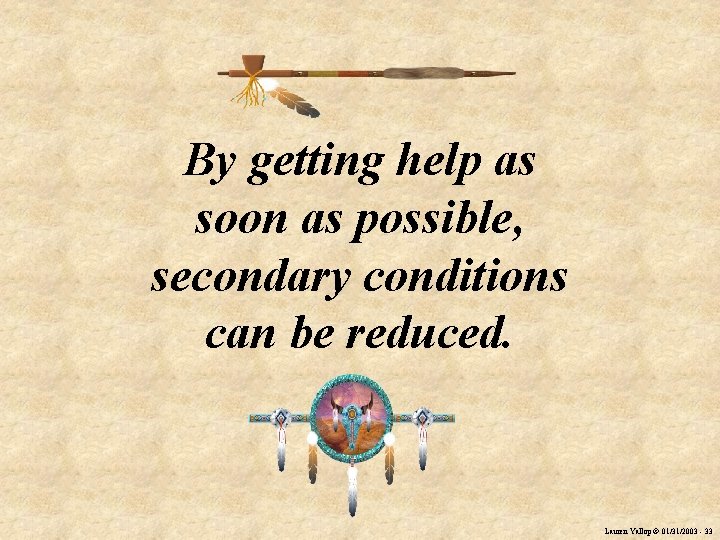
By getting help as soon as possible, secondary conditions can be reduced. Lauren Yallop © 01/31/2003 - 33
Early diagnosis and help are important • Fewer delays in development • Less frustration due to better understanding • Fewer secondary conditions • Affected individuals can benefit from FAS support services in their communities Lauren Yallop © 01/31/2003 - 34
A diagnosis for FAS: • Can improve quality of life at any age • Especially when combined with supportive resources • Can be made by a team of medical professionals • Speak to your CHR (community health representative), nurse, or doctor for more information Lauren Yallop © 01/31/2003 - 35
Needed for diagnosis of FAS: • Problems with brain • Growth problems before and after birth • Particular facial features • Confirmed history of alcohol exposure during pregnancy Lauren Yallop © 01/31/2003 - 36
What we have learned so far… • FAS affected people are disadvantaged • However, each FAS affected person has unique strengths and talents • With early diagnosis and help, FAS people may be able to live more productive and independent lives Lauren Yallop © 01/31/2003 - 37
Positive aspects of children with FAS may include: • • • Energetic, hard working and athletic Artistic, musical and creative Fair and cooperative Highly verbal Kind with younger children and animals Able to participate in problem solving Lauren Yallop © 01/31/2003 - 38
Positive aspects of children with FAS may include: • • • Friendly and happy Caring, kind, loyal, and compassionate Trusting and loving Determined, committed and persistent Curious and involved Cheerful Lauren Yallop © 01/31/2003 - 39
Everyone is different! • Each person with FAS has unique talents, strengths, and gifts Lauren Yallop © 01/31/2003 - 40
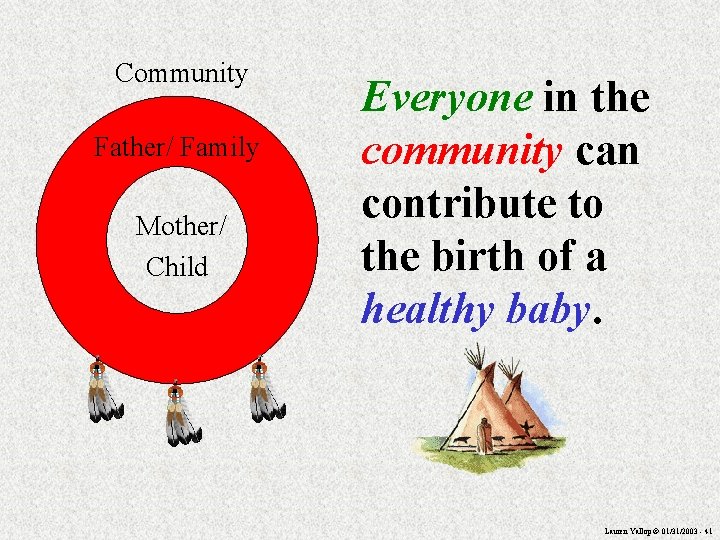
Community Father/ Family Mother/ Child Everyone in the community can contribute to the birth of a healthy baby. Lauren Yallop © 01/31/2003 - 41
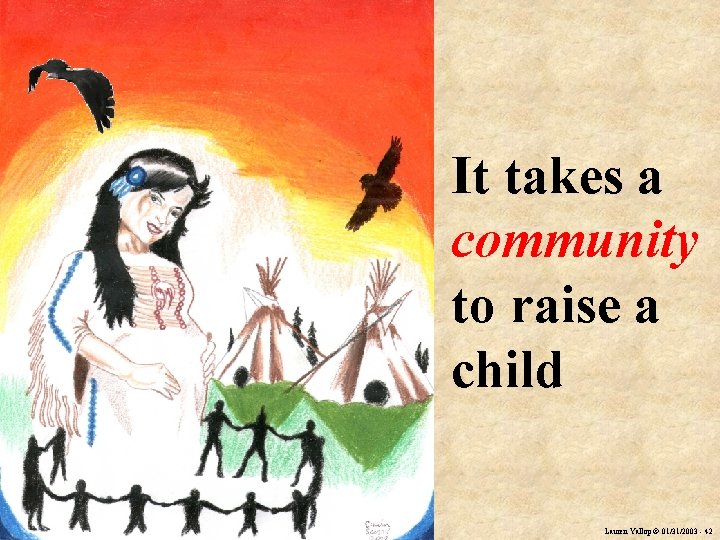
It takes a community to raise a child Lauren Yallop © 01/31/2003 - 42
What is the good news? • FAS is 100% Preventable! • FAS only occurs when a mother drinks while pregnant • With education and support we can work together to build healthy families and communities Lauren Yallop © 01/31/2003 - 43
FAS/FAE Information Service 1 -800 -559 -4514 (toll free) www. ccsa. ca/fasgen. htm Lauren Yallop © 01/31/2003 - 44
What can you do? • Listen, learn, and speak about FAS with other people • Respect, understand, and care for the mothers of your community • Make healthy decisions for yourself and become involved in community wellness Lauren Yallop © 01/31/2003 - 45