
The Dark Ages 500 800 AD Learning Objectives
The Dark Ages 500 – 800 AD
Learning Objectives Students will be able to list three effects Germanic tribes made that contributed to the Dark Ages. Students will identify: Clovis, Charles Martel, Charlemagne, and the Norsemen or Vikings. Key Terms: monastery, feudal system, manor, fief, serf/peasant. Students will identify the Battle of Tours, as well as explore the power and importance of the Christian church during this era. http: //www. history. com/marquee. do? marquee_id=53127
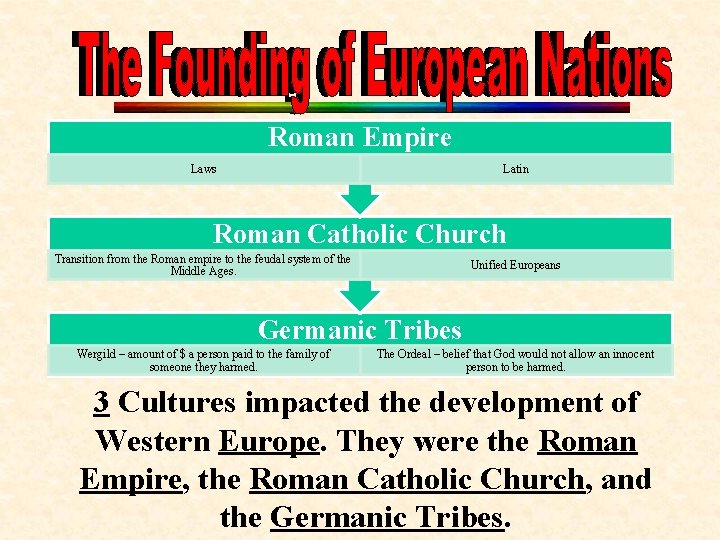
Roman Empire Laws Latin Roman Catholic Church Transition from the Roman empire to the feudal system of the Middle Ages. Unified Europeans Germanic Tribes Wergild – amount of $ a person paid to the family of someone they harmed. The Ordeal – belief that God would not allow an innocent person to be harmed. 3 Cultures impacted the development of Western Europe. They were the Roman Empire, the Roman Catholic Church, and the Germanic Tribes.
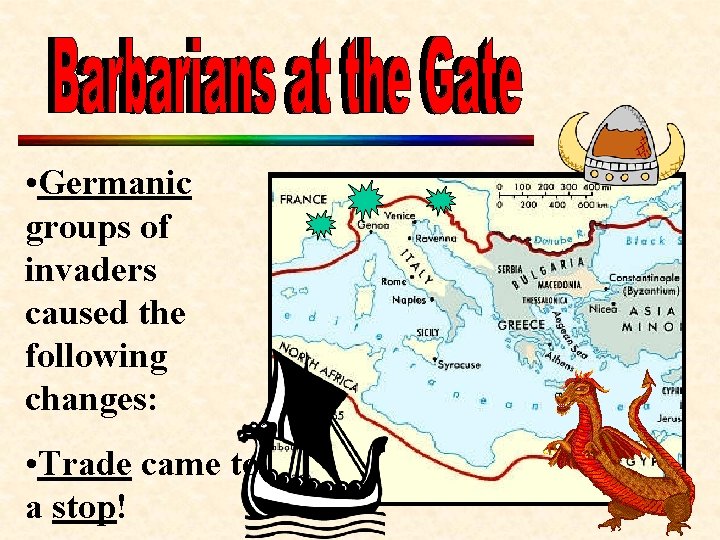
• Germanic groups of invaders caused the following changes: • Trade came to a stop!
“When the barbarians met with no opposition they proved the most brutal of mankind. All the cities …they so destroyed as to leave them unrecognizable, …All the people that came their way, young and old, they killed, sparing neither women nor children. They plundered all the money out of all Europe and…in Rome, they left nothing of value, public or private…” -Procopius, 416 AD
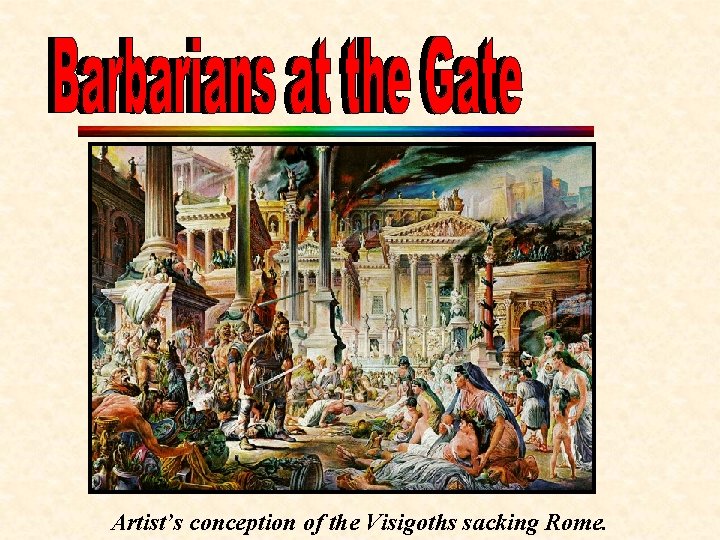
Artist’s conception of the Visigoths sacking Rome.
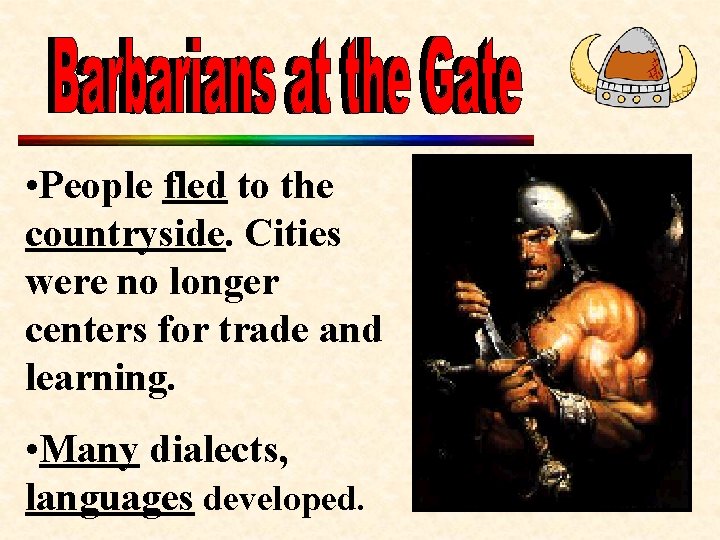
• People fled to the countryside. Cities were no longer centers for trade and learning. • Many dialects, languages developed.
List 3 Effects of the Germanic Tribes/Raiders on the West.
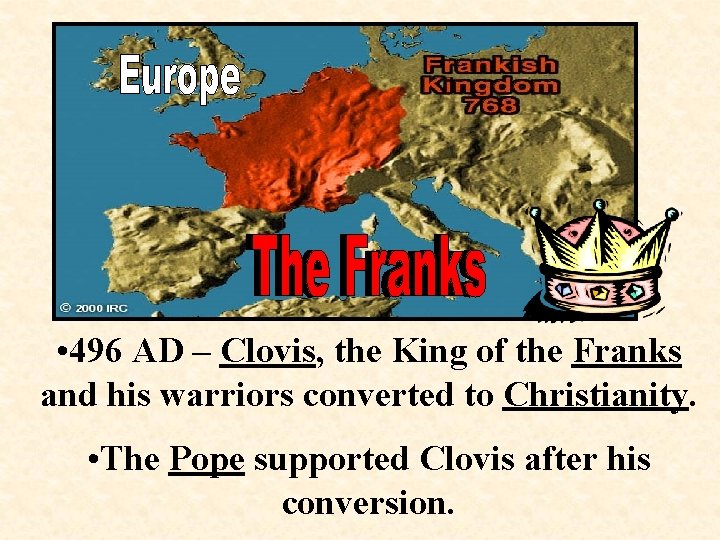
• 496 AD – Clovis, the King of the Franks and his warriors converted to Christianity. • The Pope supported Clovis after his conversion.
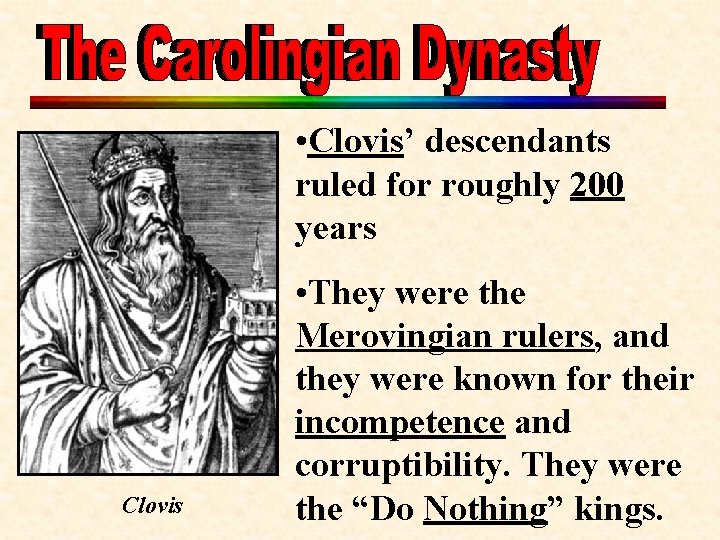
• Clovis’ descendants ruled for roughly 200 years Clovis • They were the Merovingian rulers, and they were known for their incompetence and corruptibility. They were the “Do Nothing” kings.
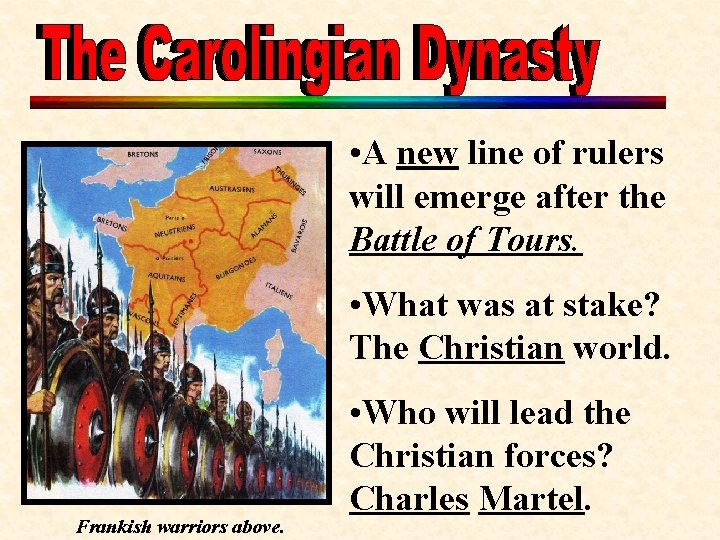
• A new line of rulers will emerge after the Battle of Tours. • What was at stake? The Christian world. Frankish warriors above. • Who will lead the Christian forces? Charles Martel.
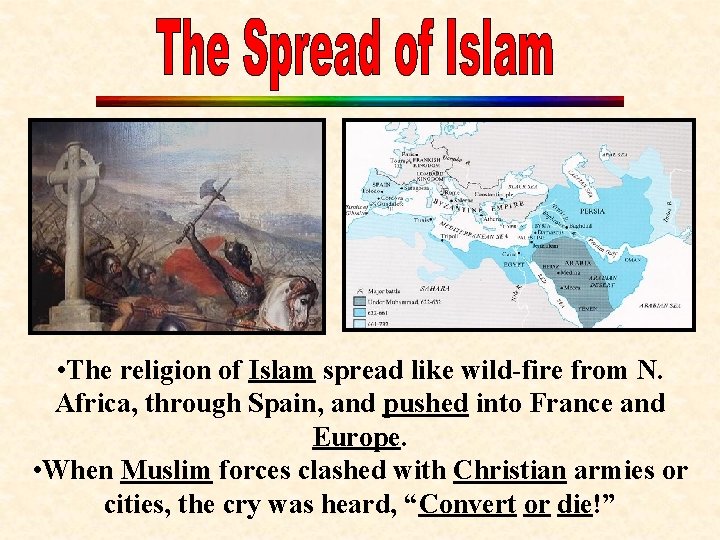
• The religion of Islam spread like wild-fire from N. Africa, through Spain, and pushed into France and Europe. • When Muslim forces clashed with Christian armies or cities, the cry was heard, “Convert or die!”
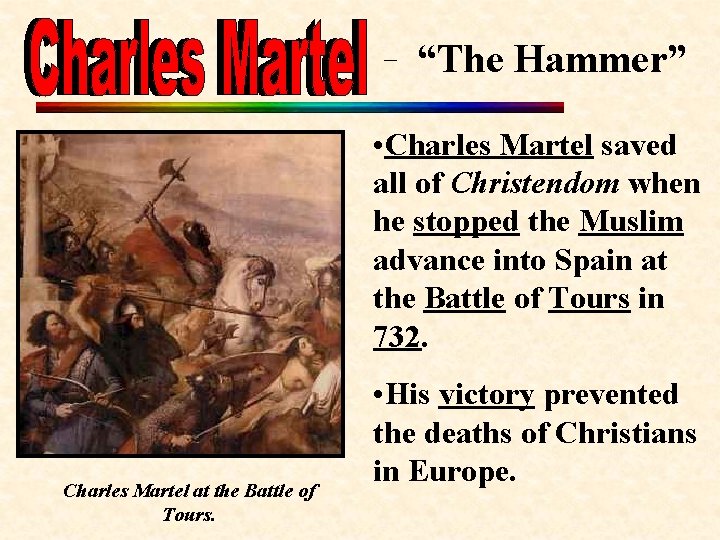
“The Hammer” • Charles Martel saved all of Christendom when he stopped the Muslim advance into Spain at the Battle of Tours in 732. Charles Martel at the Battle of Tours. • His victory prevented the deaths of Christians in Europe.
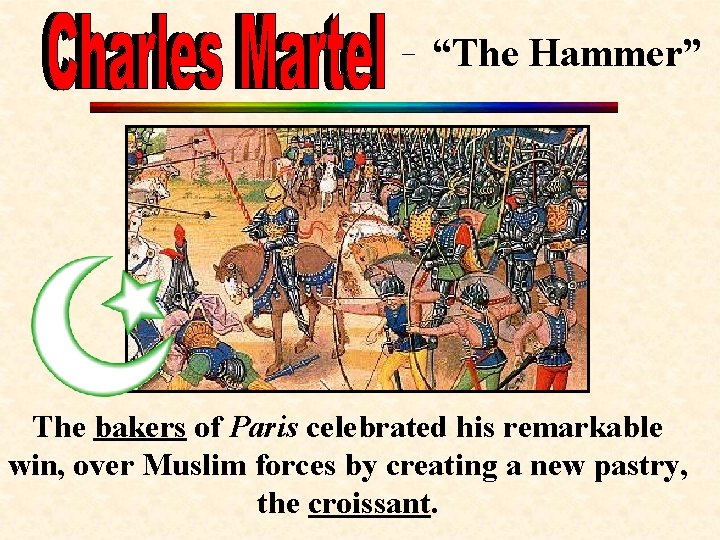
“The Hammer” The bakers of Paris celebrated his remarkable win, over Muslim forces by creating a new pastry, the croissant.
“The Hammer”
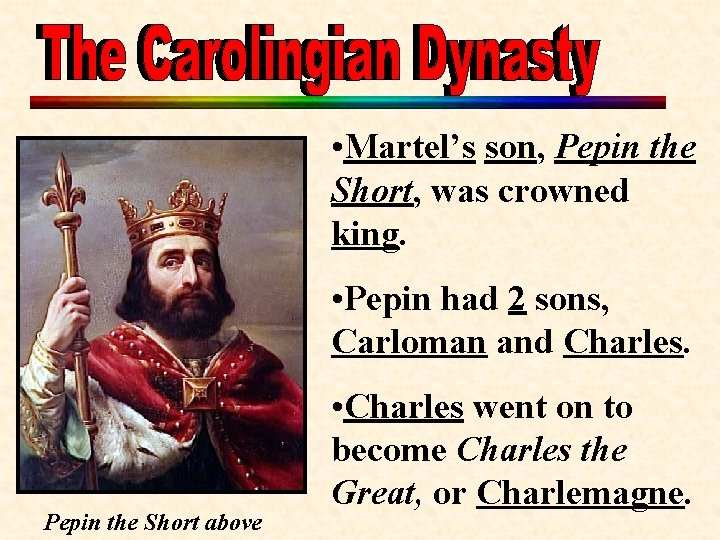
• Martel’s son, Pepin the Short, was crowned king. • Pepin had 2 sons, Carloman and Charles. Pepin the Short above • Charles went on to become Charles the Great, or Charlemagne.
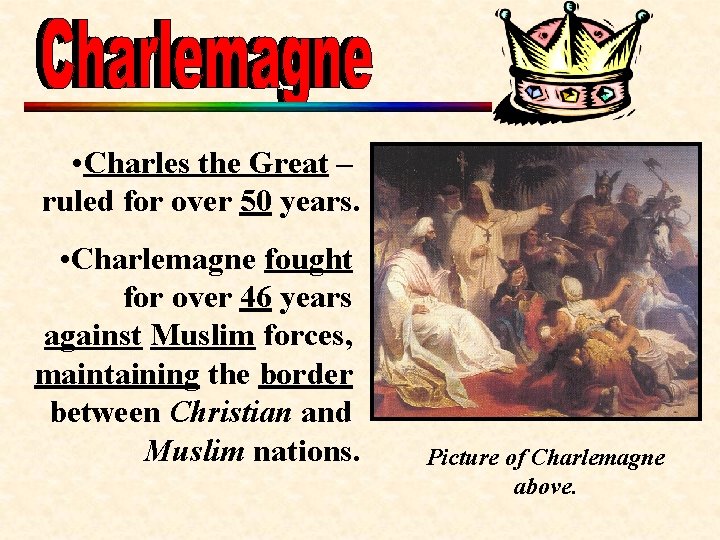
• Charles the Great – ruled for over 50 years. • Charlemagne fought for over 46 years against Muslim forces, maintaining the border between Christian and Muslim nations. Picture of Charlemagne above.
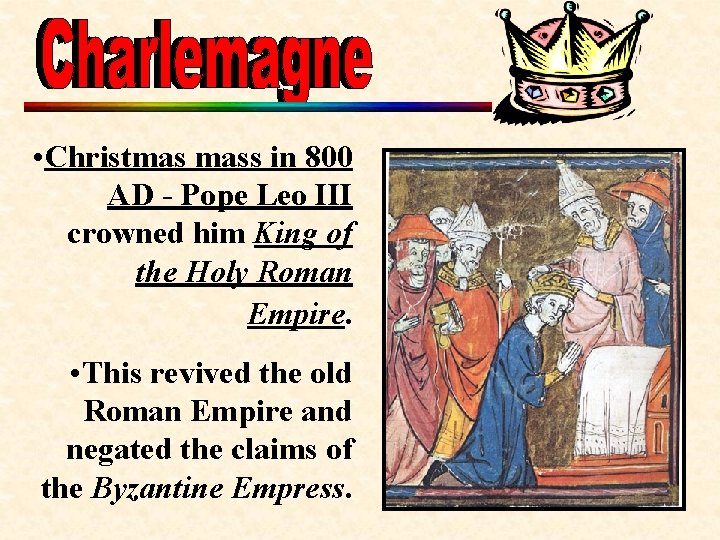
• Christmas mass in 800 AD - Pope Leo III crowned him King of the Holy Roman Empire. • This revived the old Roman Empire and negated the claims of the Byzantine Empress.
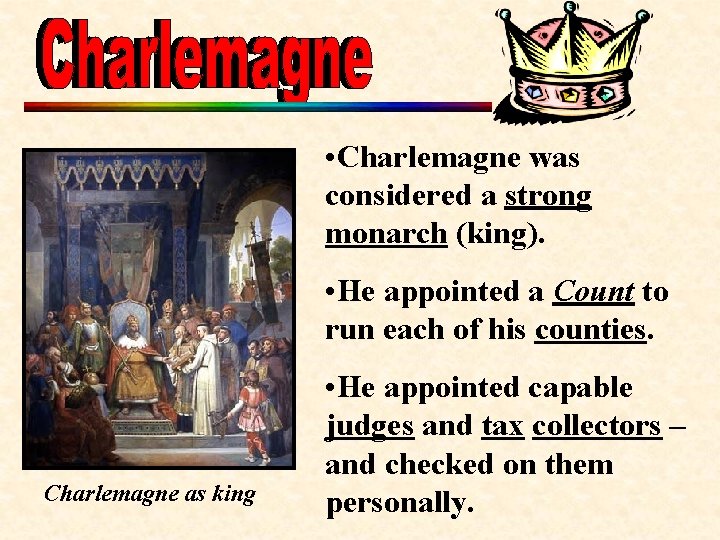
• Charlemagne was considered a strong monarch (king). • He appointed a Count to run each of his counties. Charlemagne as king • He appointed capable judges and tax collectors – and checked on them personally.
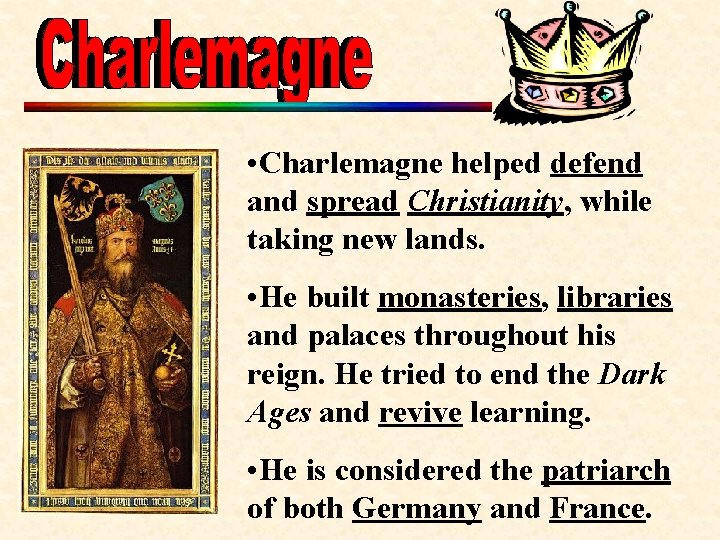
• Charlemagne helped defend and spread Christianity, while taking new lands. • He built monasteries, libraries and palaces throughout his reign. He tried to end the Dark Ages and revive learning. • He is considered the patriarch of both Germany and France.
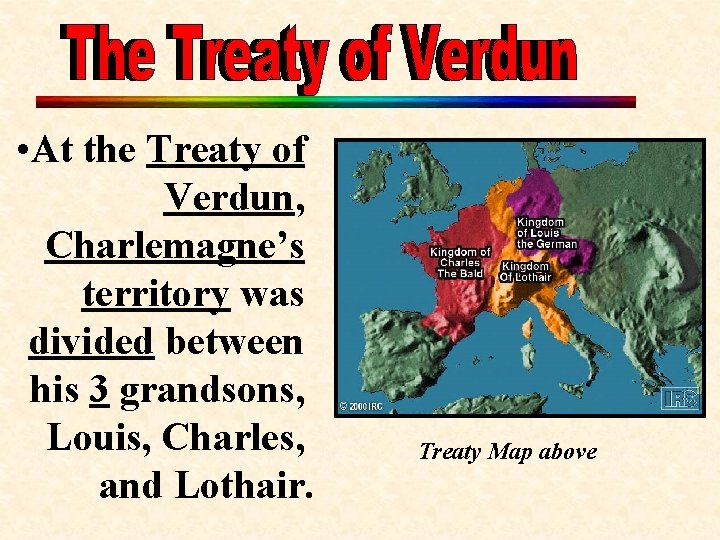
• At the Treaty of Verdun, Charlemagne’s territory was divided between his 3 grandsons, Louis, Charles, and Lothair. Treaty Map above
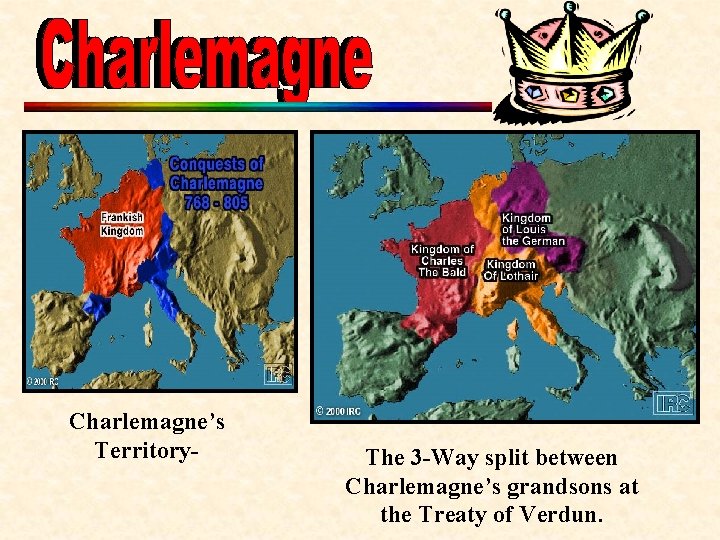
Charlemagne’s Territory- The 3 -Way split between Charlemagne’s grandsons at the Treaty of Verdun.
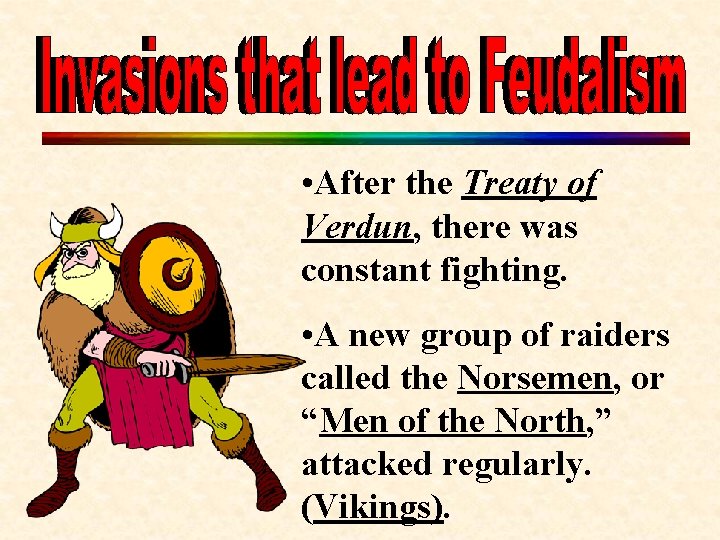
• After the Treaty of Verdun, there was constant fighting. • A new group of raiders called the Norsemen, or “Men of the North, ” attacked regularly. (Vikings).
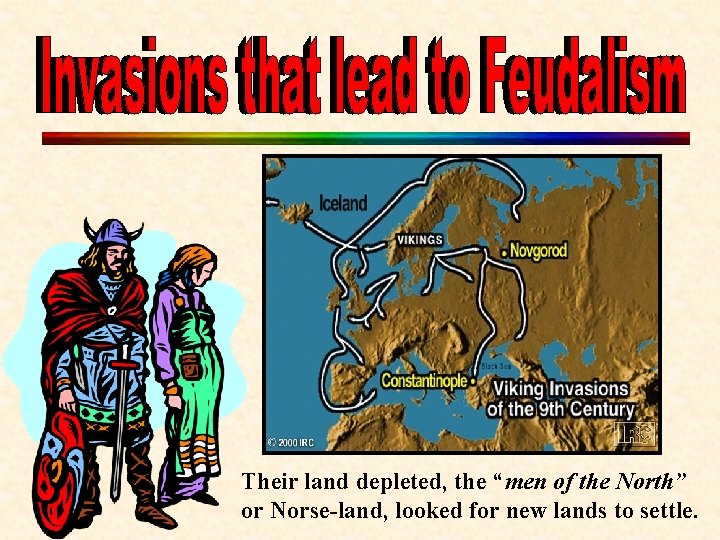
Their land depleted, the “men of the North” or Norse-land, looked for new lands to settle.
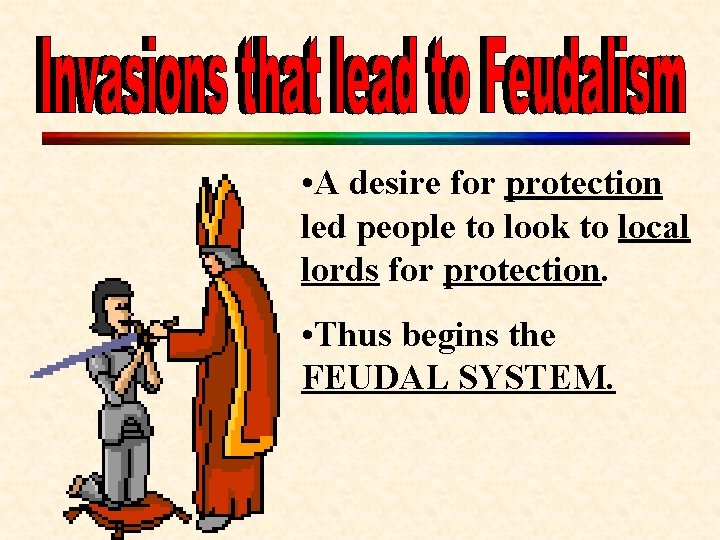
• A desire for protection led people to look to local lords for protection. • Thus begins the FEUDAL SYSTEM.
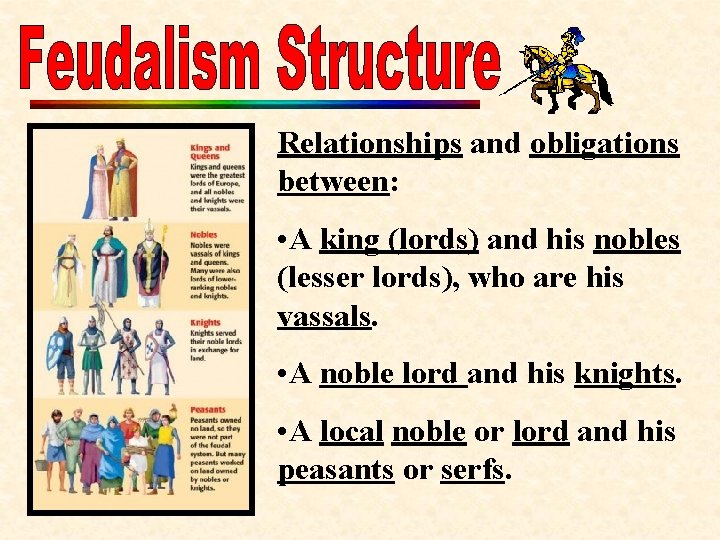
Relationships and obligations between: • A king (lords) and his nobles (lesser lords), who are his vassals. • A noble lord and his knights. • A local noble or lord and his peasants or serfs.
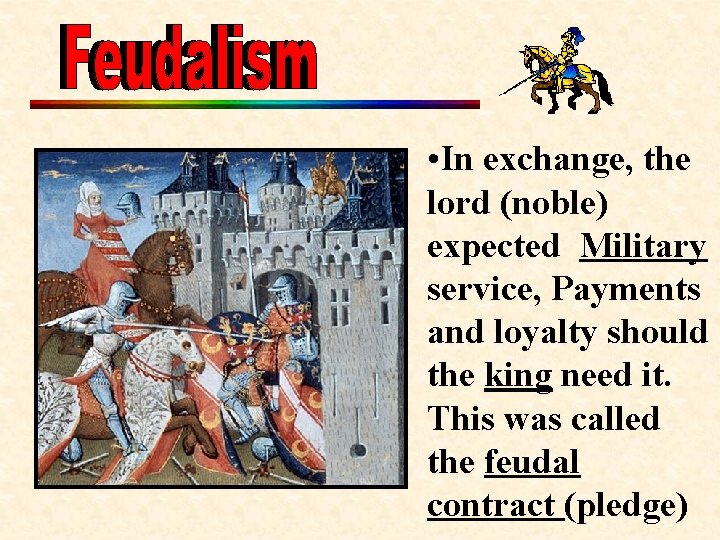
• In exchange, the lord (noble) expected Military service, Payments and loyalty should the king need it. This was called the feudal contract (pledge)
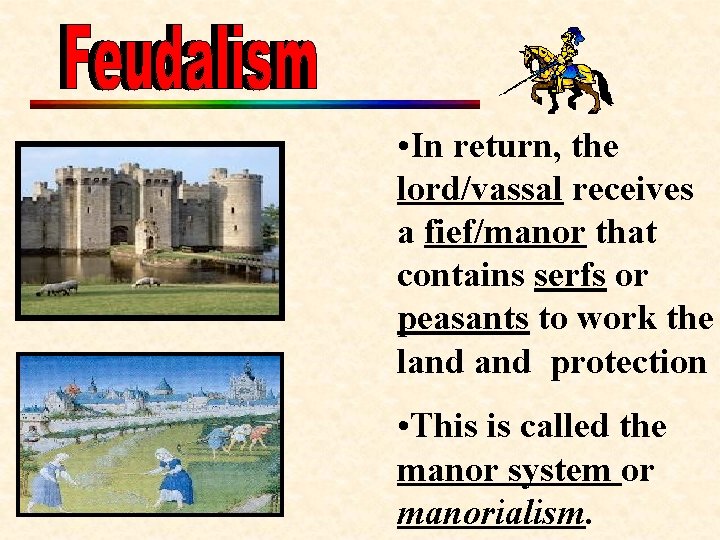
• In return, the lord/vassal receives a fief/manor that contains serfs or peasants to work the land protection • This is called the manor system or manorialism.
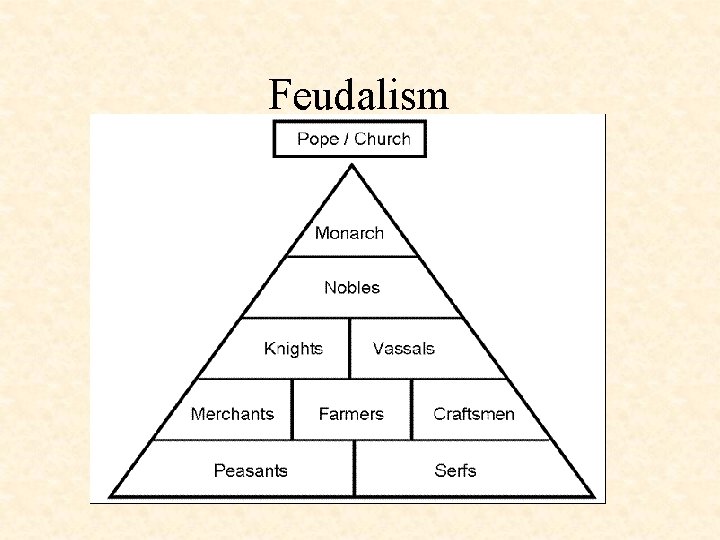
Feudalism
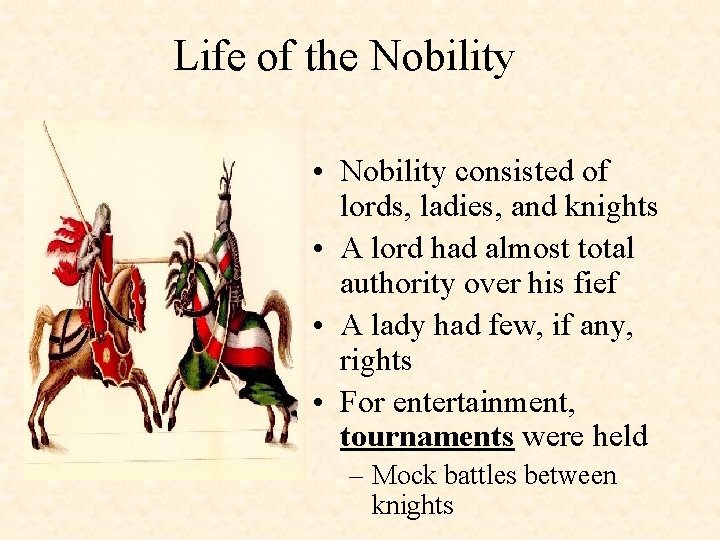
Life of the Nobility • Nobility consisted of lords, ladies, and knights • A lord had almost total authority over his fief • A lady had few, if any, rights • For entertainment, tournaments were held – Mock battles between knights
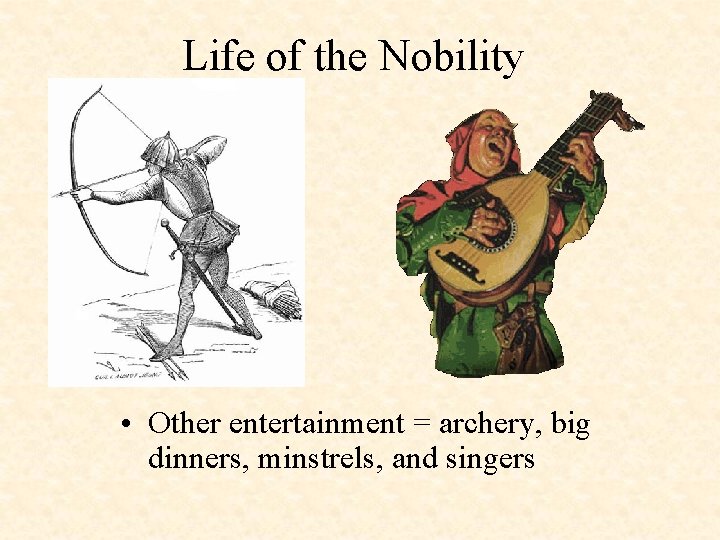
Life of the Nobility • Other entertainment = archery, big dinners, minstrels, and singers
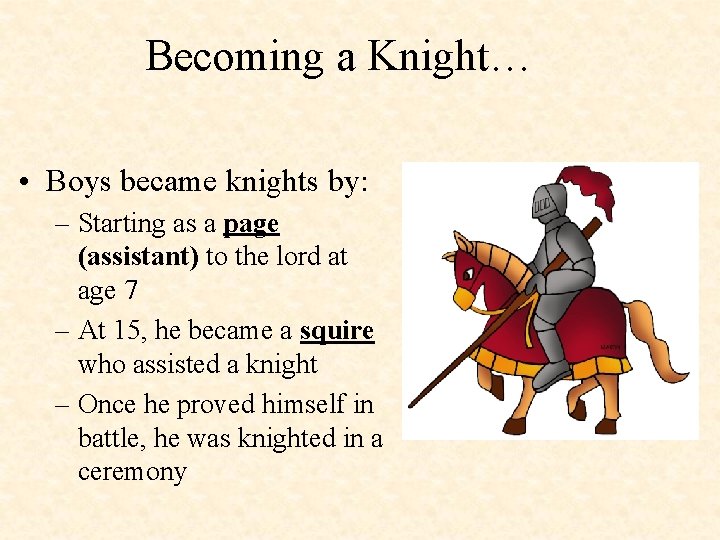
Becoming a Knight… • Boys became knights by: – Starting as a page (assistant) to the lord at age 7 – At 15, he became a squire who assisted a knight – Once he proved himself in battle, he was knighted in a ceremony

Becoming a Knight… • Knights’ behavior was governed by a code of chivalry – This became the basis for good manners in western society
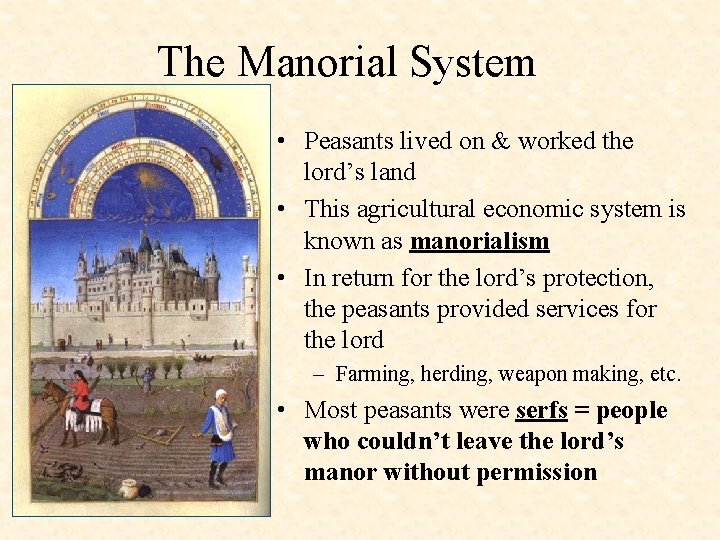
The Manorial System • Peasants lived on & worked the lord’s land • This agricultural economic system is known as manorialism • In return for the lord’s protection, the peasants provided services for the lord – Farming, herding, weapon making, etc. • Most peasants were serfs = people who couldn’t leave the lord’s manor without permission
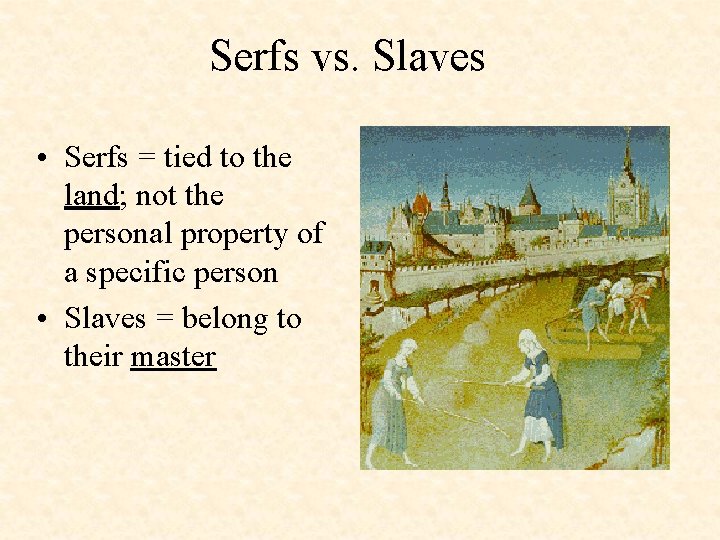
Serfs vs. Slaves • Serfs = tied to the land; not the personal property of a specific person • Slaves = belong to their master
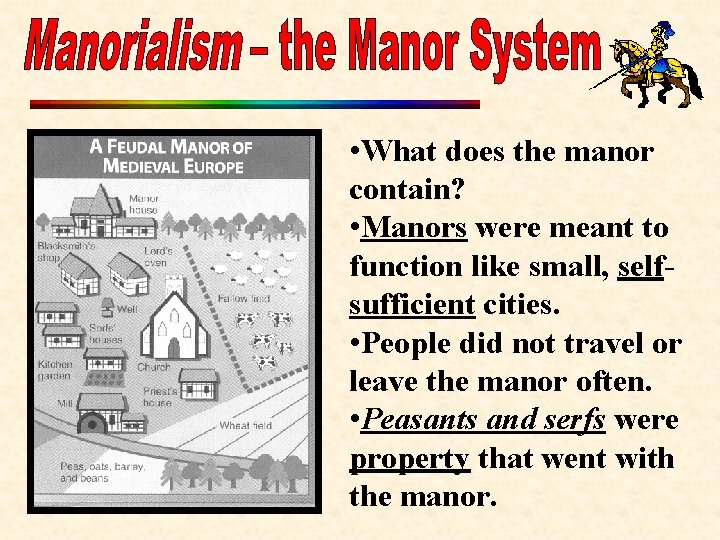
• What does the manor contain? • Manors were meant to function like small, selfsufficient cities. • People did not travel or leave the manor often. • Peasants and serfs were property that went with the manor.
1. Name three famous kings of this era. 2. Who were the “Norsemen? ” 3. What did the Treaty of Verdun accomplish? 4. Of what value was Charles Martel’s win at the Battle of Tours? 5. Describe the Feudal system.
- Slides: 41