
THE DANCE OF SHIVA ANANDA COOMARASWAMY By Bhuvaneswari
THE DANCE OF SHIVA ANANDA COOMARASWAMY By Bhuvaneswari
AUTHOR BIOGRAPHY Ananda Kentish Muthu Coomaraswamy(22 August 1877 − 9 September 1947) was a Sri Lankan Tamil philosopher and metaphysician. As well as a pioneering historian and philosopher of Indian art, particularly art history and symbolism, and an early interpreter of Indian culture to the West.
ABOUT THE AUTHOR › In particular, he is described as "the groundbreaking theorist who was largely responsible for Introducing Ancient Indian Art To The West.
Anand introduced the essence of Ancient Indian Art And Its Principles To The Western World through a number of books and articles.
ABOUT THE BOOK written in the early twentieth century The Dance Of Shiva was a remarkable book for its time. it discussed in depth the unique nature of the Indian ethos understood by so few in the western world and misinterpreted by so many.
A collection of fourteen lectures, these essays on Indian art and culture offer a lucid representation of the opinions and attitudes held by Indian intellectuals during the British raj ranging from topics such as music during Vedic times, Indian attitudes towards family women and love.
And analyses of the symbolism of Nataraja and the many-armed gods of India, to the Indian concept of beauty, The Dance of Shiva is an effervescent account of the Indian experience through the ages.
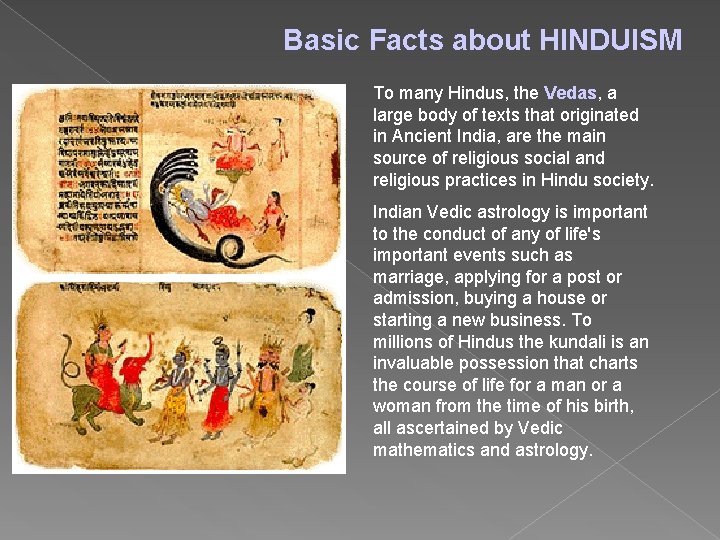
Basic Facts about HINDUISM To many Hindus, the Vedas, a large body of texts that originated in Ancient India, are the main source of religious social and religious practices in Hindu society. Indian Vedic astrology is important to the conduct of any of life's important events such as marriage, applying for a post or admission, buying a house or starting a new business. To millions of Hindus the kundali is an invaluable possession that charts the course of life for a man or a woman from the time of his birth, all ascertained by Vedic mathematics and astrology.
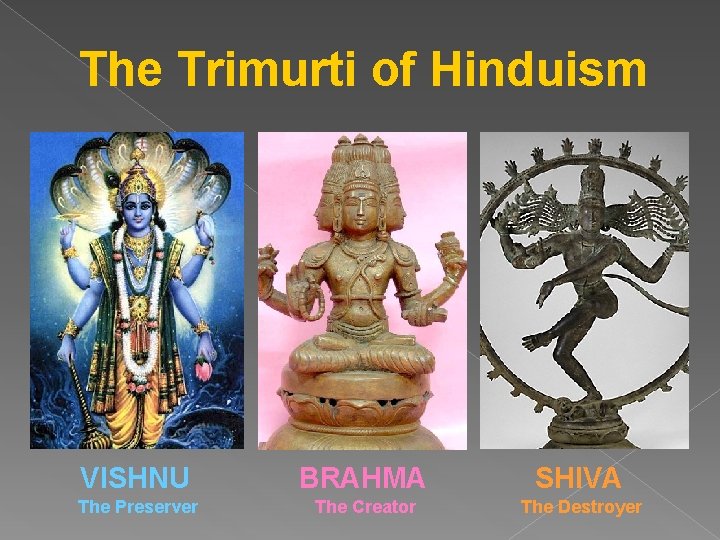
The Trimurti of Hinduism VISHNU BRAHMA SHIVA The Preserver The Creator The Destroyer
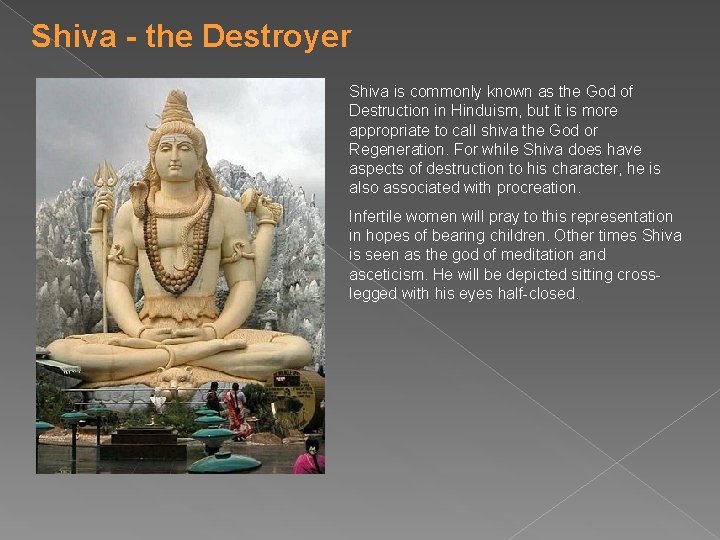
Shiva - the Destroyer Shiva is commonly known as the God of Destruction in Hinduism, but it is more appropriate to call shiva the God or Regeneration. For while Shiva does have aspects of destruction to his character, he is also associated with procreation. Infertile women will pray to this representation in hopes of bearing children. Other times Shiva is seen as the god of meditation and asceticism. He will be depicted sitting crosslegged with his eyes half-closed.
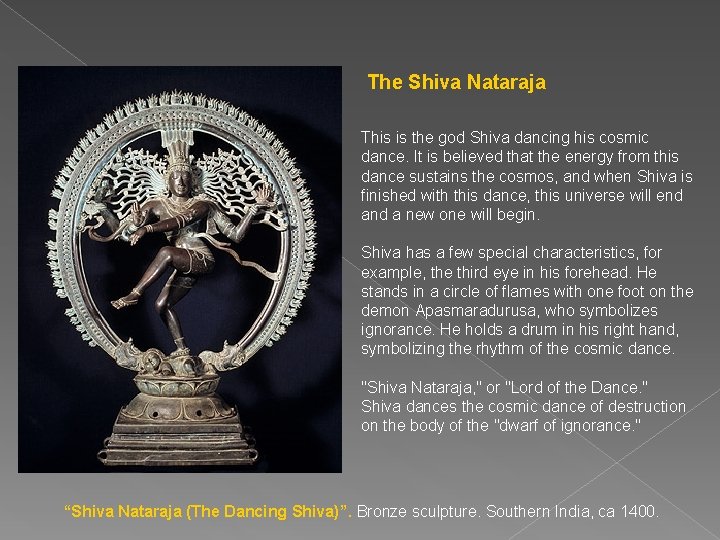
The Shiva Nataraja This is the god Shiva dancing his cosmic dance. It is believed that the energy from this dance sustains the cosmos, and when Shiva is finished with this dance, this universe will end a new one will begin. Shiva has a few special characteristics, for example, the third eye in his forehead. He stands in a circle of flames with one foot on the demon Apasmaradurusa, who symbolizes ignorance. He holds a drum in his right hand, symbolizing the rhythm of the cosmic dance. "Shiva Nataraja, " or "Lord of the Dance. " Shiva dances the cosmic dance of destruction on the body of the "dwarf of ignorance. " “Shiva Nataraja (The Dancing Shiva)”. Bronze sculpture. Southern India, ca 1400.
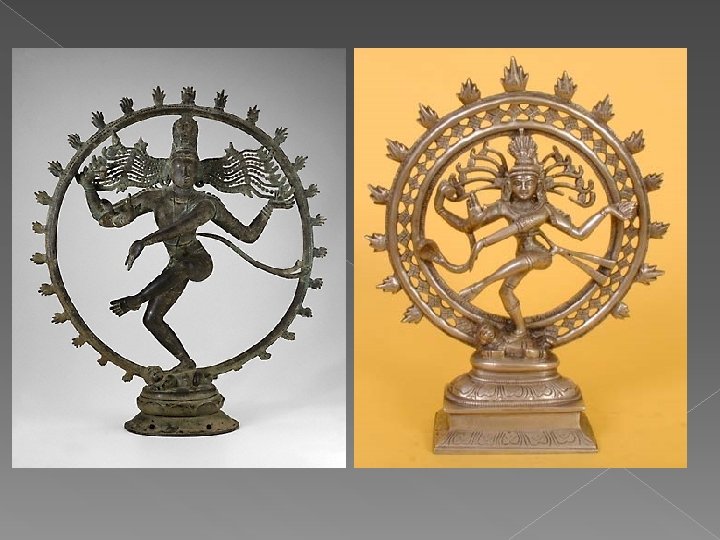
Quote from Thiruvasagam “ The Lord of Tillai’s Court a mystic dance performs; What’s that my dear? ” - Tiruvasagam.
Various dances of shiva The Twilight Dance 2. Tandava 3. Nadanta Dance 1.
The Twilight Dance It described in ‘Shiva Pradosha Stotra’ Shiva dances in kailasa Sarasvathi-Veena Indra-Flute Brahma-Cymbals Lakshmi- Sings Vishnu - Drum
Tandava This dance performed in cemeteries and in burning grounds. Shiva is ten-armed. He dances wildly with Devi and with troops of imps.
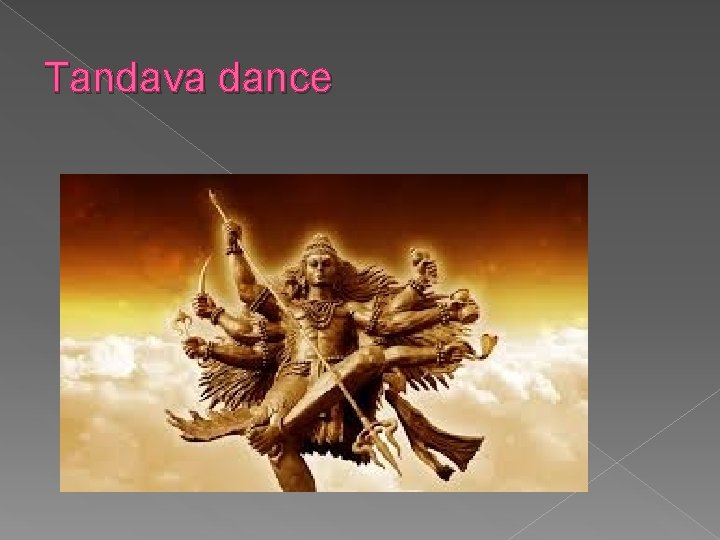
Tandava dance
Nadanta Dance It is perfomed by nataraja before the assembly in the golden hall of chidambaram.
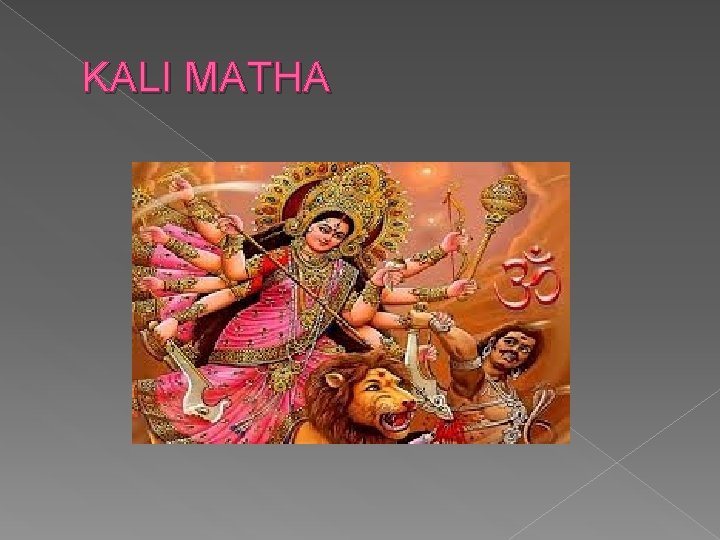
KALI MATHA
Shiva’s 5 Activities 1. Creation (Drum) 2. Preservation (Right Hand) 3. Destruction (fire) 4. Concealment (Lifted foot) 5. Grace (fourth hand pointed to the foot)
These Five act of Shiva explained in 1. Unmai Vilakkam 2. Chidambara Mummanikovai 3. Thirumantram
Who can witness the dance of Shiva Who can conquer 1. Maya (Illusion) 2. Mahamaya (Super-Illusion)
Panchakshara – Shi-va-ya-na-ma Shi- Shiva Va- Shakthi Ya- Soul Na- Anava Mala Ma- Concealing mala
Essential significance of Shiva’s Dance 1. Source of all Movement in cosmos 2. He release from Illusion 3. It is in Everyone’s Heart
- Slides: 24