
The Cycle of Addiction Paul Updike MD Medical

- Slides: 46
The Cycle of Addiction Paul Updike, MD Medical Director for Substance Use Services, CHS Buffalo pupdike@chsbuffalo. org
Objectives • Review the opioid epidemic • Review the pathophysiology and consequences of Opioid Use Disorder • Review effective treatment options for OUD with particular attention to the chronic disease concept • Review special concerns regarding OUD in pregnancy
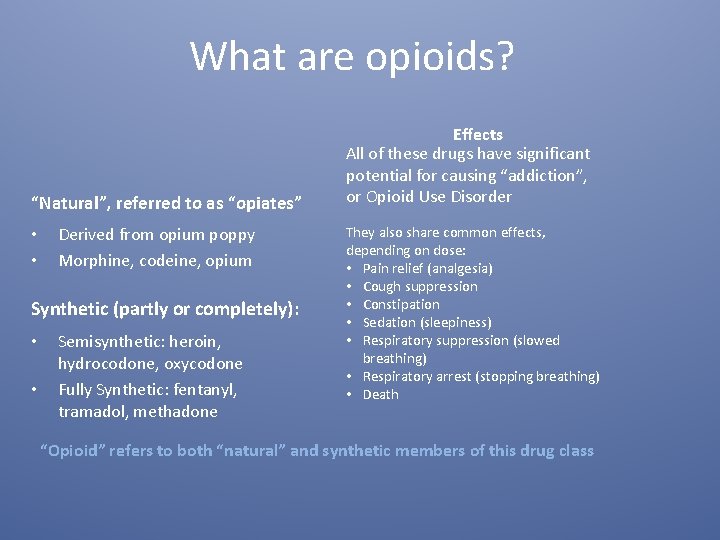
What are opioids? “Natural”, referred to as “opiates” • • Derived from opium poppy Morphine, codeine, opium Synthetic (partly or completely): • • Semisynthetic: heroin, hydrocodone, oxycodone Fully Synthetic: fentanyl, tramadol, methadone Effects All of these drugs have significant potential for causing “addiction”, or Opioid Use Disorder They also share common effects, depending on dose: • Pain relief (analgesia) • Cough suppression • Constipation • Sedation (sleepiness) • Respiratory suppression (slowed breathing) • Respiratory arrest (stopping breathing) • Death “Opioid” refers to both “natural” and synthetic members of this drug class
Historical Perspective on How the Problem Started • Opium poppy cultivated in Mesopotamia in 3400 BC. Referred to as the “joy plant” • 1803: Active ingredient of opium identified-morphine • 1895: Heroin, diacetylmorphine is synthesized and marketed by Bayer as a medication with less side effects than morphine • Early 20 th century: increases in morbidity associated with opioids leads to many countries passing laws restricting their use • Harrison Narcotics Tax Act 1914
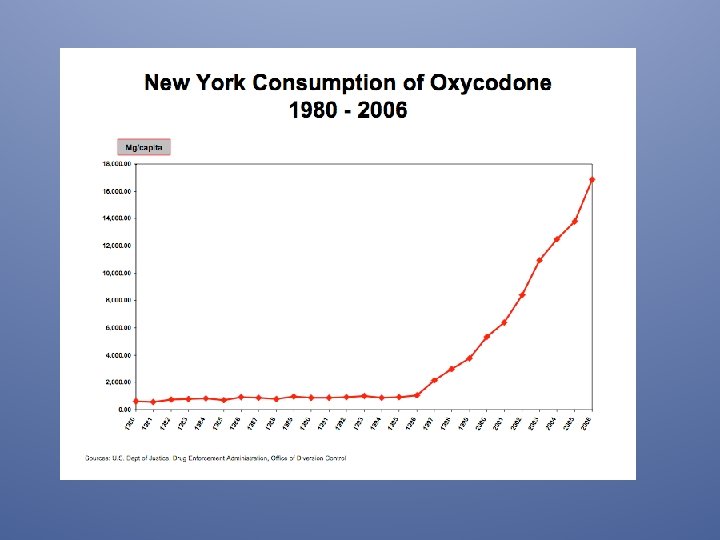
Historical Perspective Continued • Second half of the 20 th century physicians became more comfortable prescribing for acute and cancer pain • 1980’s saw call for broader use for non-malignant chronic pain. Literature report of 38 chronic pain patients concluding opiate use is safe • 1995 - Oxy. Contin introduced • 1990’s – “The Decade of Pain” – Dramatic increase in the use of opiates coincident with the approval of new opioid formulations. Joint commission adapted, federally mandated patient satisfaction surveys based on how pain was addressed • BMJ 2011; 343: d 5142 • From 1997 -2007 the milligram person use of prescription opiates increased 400 percent • Pain Physician. 13; 401 -435. 2010
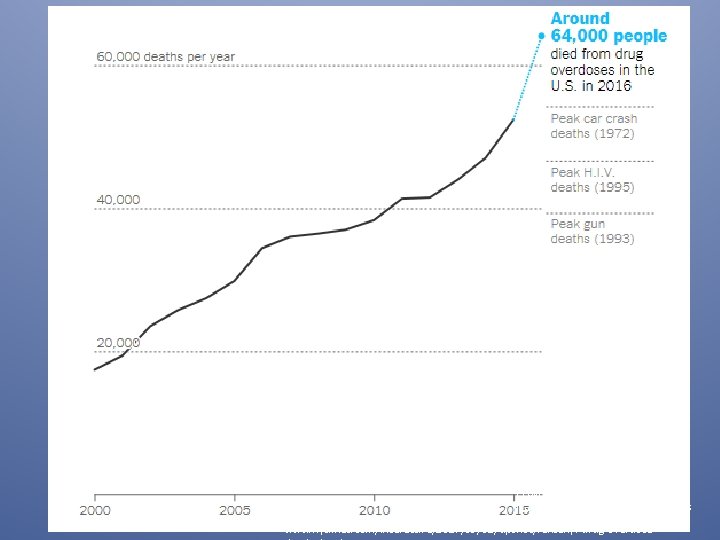
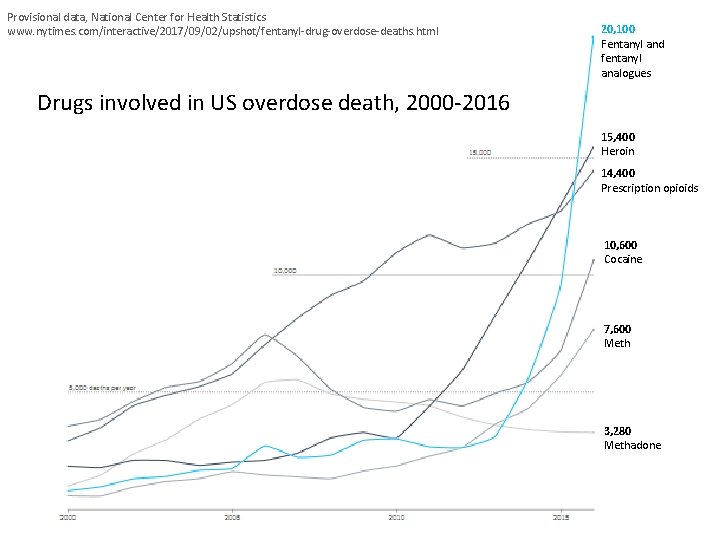
Total U. S. Drug Deaths Provisional data, National Center for Health Statistics www. nytimes. com/interactive/2017/09/02/upshot/fentanyl-drug-overdose-
Provisional data, National Center for Health Statistics www. nytimes. com/interactive/2017/09/02/upshot/fentanyl-drug-overdose-deaths. html 20, 100 Fentanyl and fentanyl analogues Drugs involved in US overdose death, 2000 -2016 15, 400 Heroin 14, 400 Prescription opioids 10, 600 Cocaine 7, 600 Meth 3, 280 Methadone
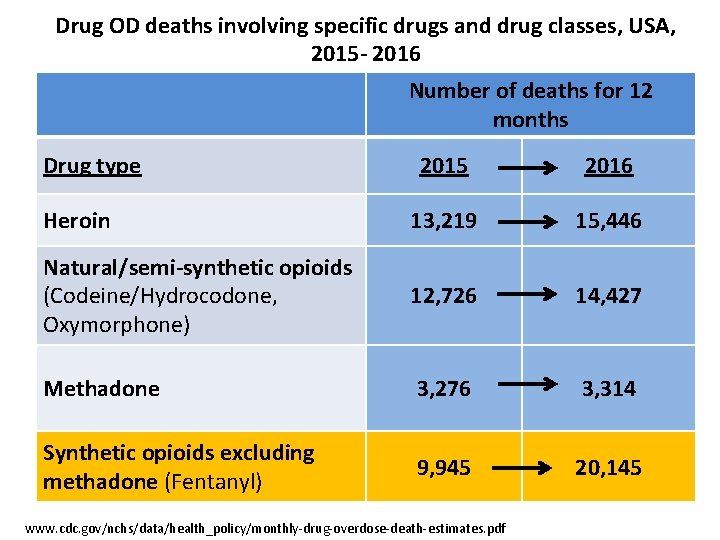
Drug OD deaths involving specific drugs and drug classes, USA, 2015 - 2016 Number of deaths for 12 months Drug type 2015 2016 Heroin 13, 219 15, 446 Natural/semi-synthetic opioids (Codeine/Hydrocodone, Oxymorphone) 12, 726 14, 427 Methadone 3, 276 3, 314 Synthetic opioids excluding methadone (Fentanyl) 9, 945 20, 145 www. cdc. gov/nchs/data/health_policy/monthly-drug-overdose-death-estimates. pdf
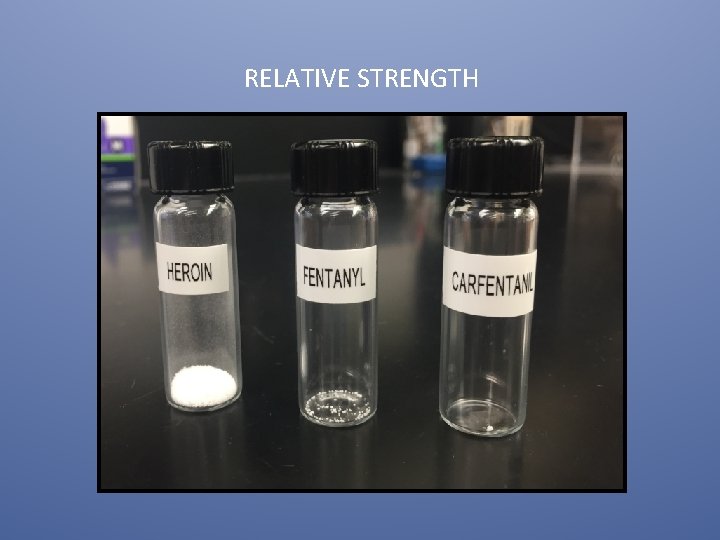
RELATIVE STRENGTH
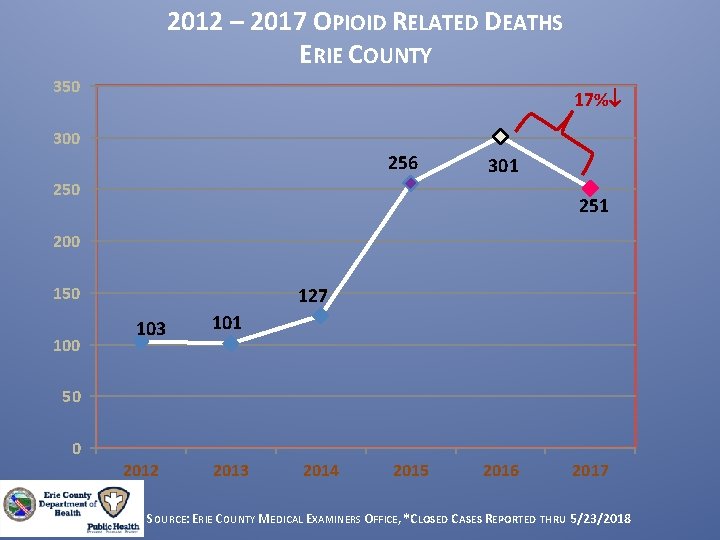
2012 – 2017 OPIOID RELATED DEATHS ERIE COUNTY 350 17% 300 256 301 250 251 200 150 100 127 103 101 50 0 2012 2013 2014 2015 2016 2017 SOURCE: ERIE COUNTY MEDICAL EXAMINERS OFFICE, *CLOSED CASES REPORTED THRU 5/23/2018
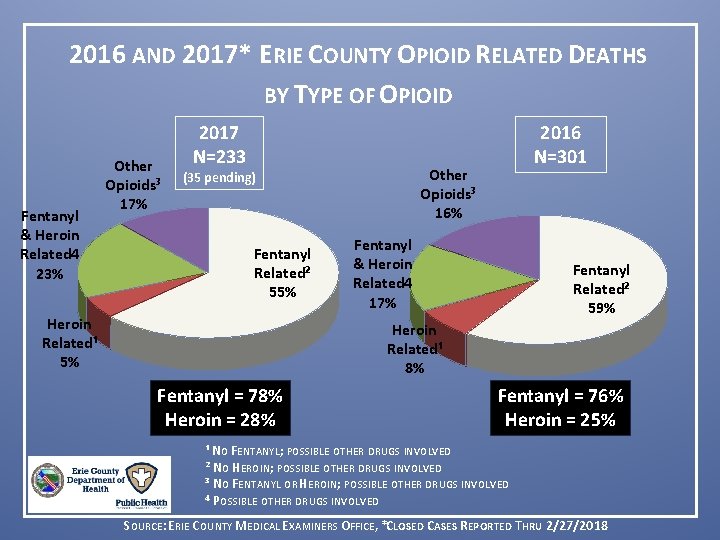
2016 AND 2017* ERIE COUNTY OPIOID RELATED DEATHS BY TYPE OF OPIOID Fentanyl & Heroin Related 4 23% Other Opioids³ 17% 2017 N=233 Other Opioids³ 16% (35 pending) Fentanyl Related² 55% Heroin Related¹ 5% 2016 N=301 Fentanyl & Heroin Related 4 17% Fentanyl Related² 59% Heroin Related¹ 8% Fentanyl = 78% Heroin = 28% Fentanyl = 76% Heroin = 25% ¹ NO FENTANYL; POSSIBLE OTHER DRUGS INVOLVED ² NO HEROIN; POSSIBLE OTHER DRUGS INVOLVED ³ NO FENTANYL OR HEROIN; POSSIBLE OTHER DRUGS INVOLVED 4 POSSIBLE OTHER DRUGS INVOLVED SOURCE: ERIE COUNTY MEDICAL EXAMINERS OFFICE, *CLOSED CASES REPORTED THRU 2/27/2018
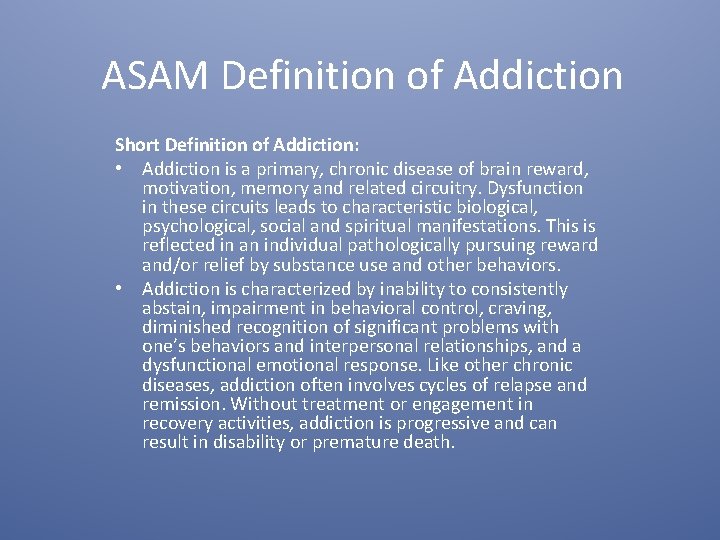
ASAM Definition of Addiction Short Definition of Addiction: • Addiction is a primary, chronic disease of brain reward, motivation, memory and related circuitry. Dysfunction in these circuits leads to characteristic biological, psychological, social and spiritual manifestations. This is reflected in an individual pathologically pursuing reward and/or relief by substance use and other behaviors. • Addiction is characterized by inability to consistently abstain, impairment in behavioral control, craving, diminished recognition of significant problems with one’s behaviors and interpersonal relationships, and a dysfunctional emotional response. Like other chronic diseases, addiction often involves cycles of relapse and remission. Without treatment or engagement in recovery activities, addiction is progressive and can result in disability or premature death.
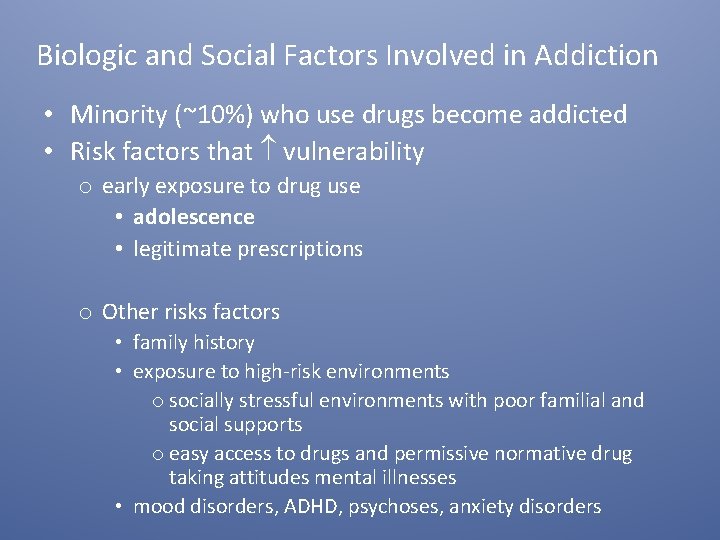
Biologic and Social Factors Involved in Addiction • Minority (~10%) who use drugs become addicted • Risk factors that vulnerability o early exposure to drug use • adolescence • legitimate prescriptions o Other risks factors • family history • exposure to high-risk environments o socially stressful environments with poor familial and social supports o easy access to drugs and permissive normative drug taking attitudes mental illnesses • mood disorders, ADHD, psychoses, anxiety disorders
What is the definition of opioid use disorder? (also know as opioid “addiction”)
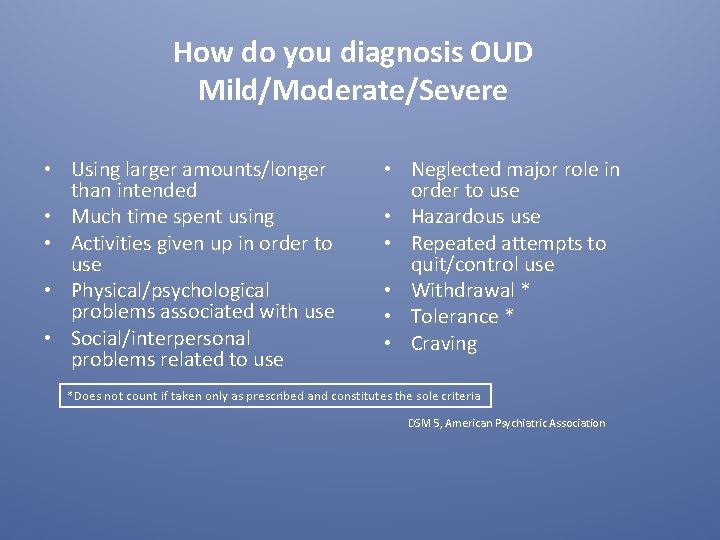
How do you diagnosis OUD Mild/Moderate/Severe • Using larger amounts/longer than intended • Much time spent using • Activities given up in order to use • Physical/psychological problems associated with use • Social/interpersonal problems related to use • Neglected major role in order to use • Hazardous use • Repeated attempts to quit/control use • Withdrawal * • Tolerance * • Craving *Does not count if taken only as prescribed and constitutes the sole criteria DSM 5, American Psychiatric Association
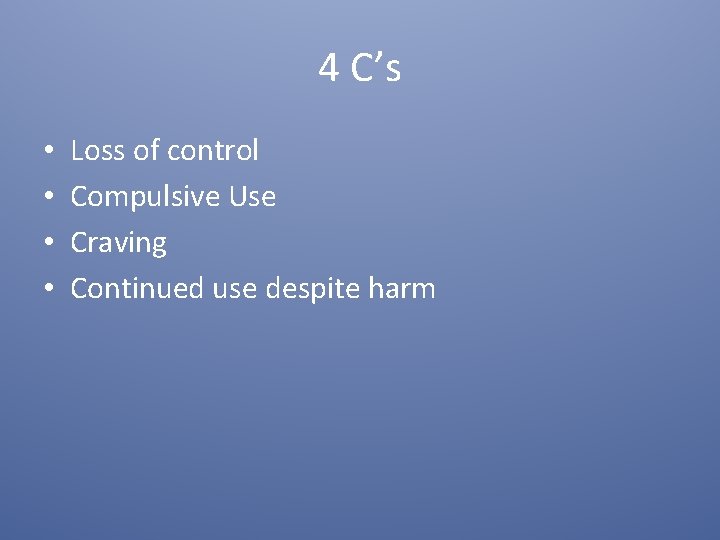
4 C’s • • Loss of control Compulsive Use Craving Continued use despite harm
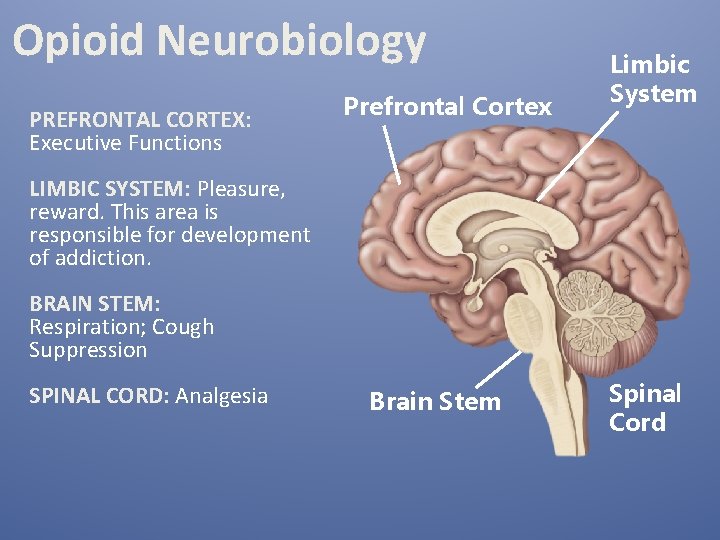
Opioid Neurobiology PREFRONTAL CORTEX: Executive Functions Prefrontal Cortex Limbic System LIMBIC SYSTEM: Pleasure, reward. This area is responsible for development of addiction. BRAIN STEM: Respiration; Cough Suppression SPINAL CORD: Analgesia Brain Stem Spinal Cord
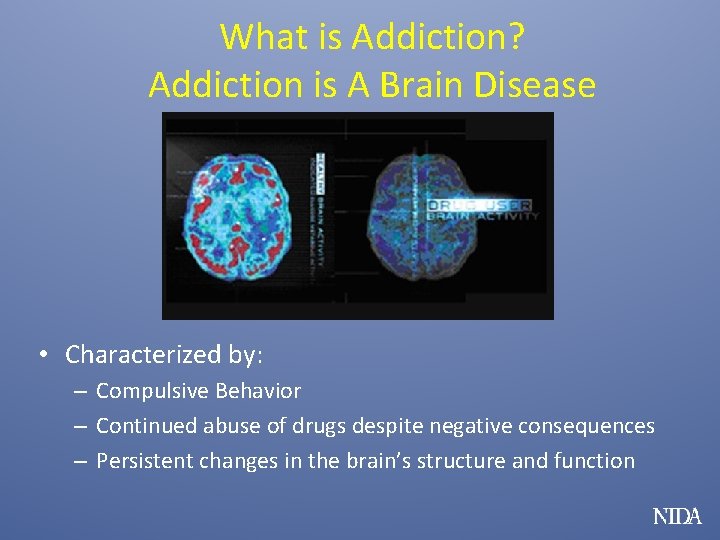
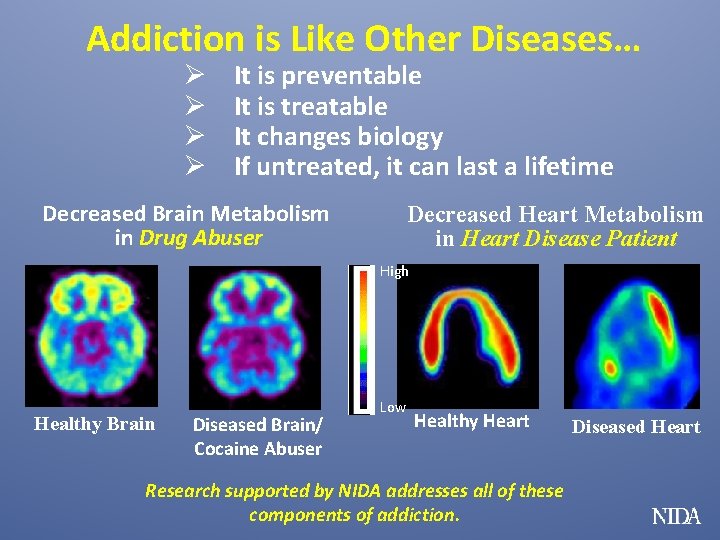
What is Addiction? Addiction is A Brain Disease • Characterized by: – Compulsive Behavior – Continued abuse of drugs despite negative consequences – Persistent changes in the brain’s structure and function
Addiction is Like Other Diseases… Ø Ø It is preventable It is treatable It changes biology If untreated, it can last a lifetime Decreased Brain Metabolism in Drug Abuser Decreased Heart Metabolism in Heart Disease Patient High Healthy Brain Diseased Brain/ Cocaine Abuser Low Healthy Heart Research supported by NIDA addresses all of these components of addiction. Diseased Heart
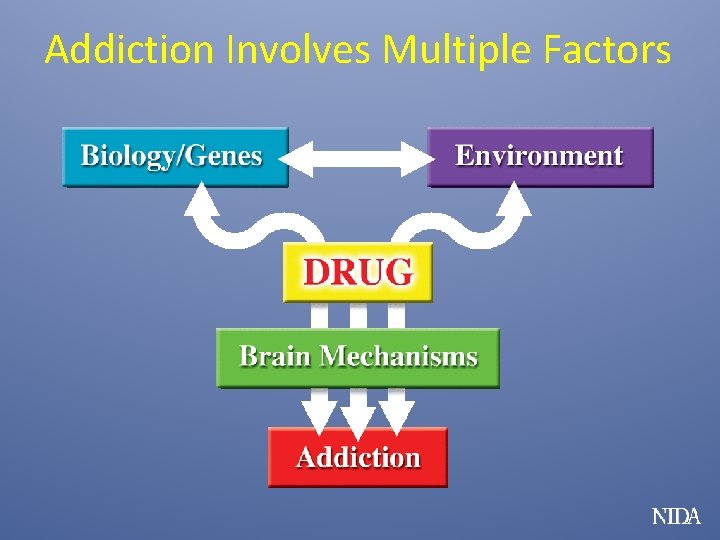
Addiction Involves Multiple Factors
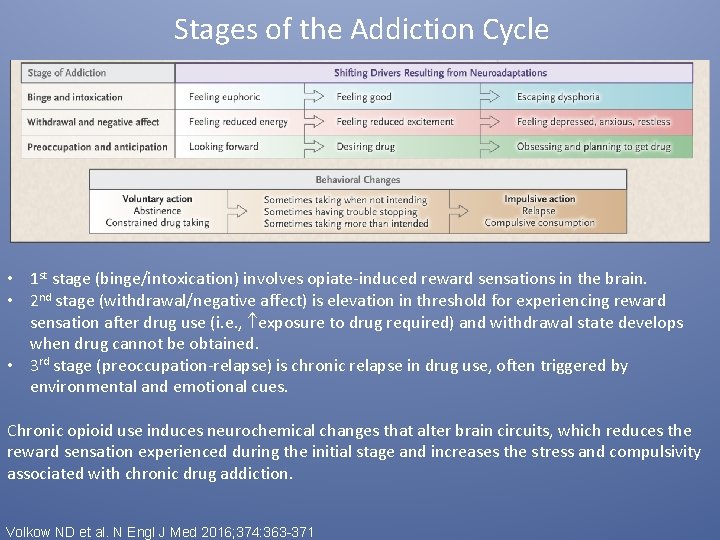
Stages of the Addiction Cycle • 1 st stage (binge/intoxication) involves opiate-induced reward sensations in the brain. • 2 nd stage (withdrawal/negative affect) is elevation in threshold for experiencing reward sensation after drug use (i. e. , exposure to drug required) and withdrawal state develops when drug cannot be obtained. • 3 rd stage (preoccupation-relapse) is chronic relapse in drug use, often triggered by environmental and emotional cues. Chronic opioid use induces neurochemical changes that alter brain circuits, which reduces the reward sensation experienced during the initial stage and increases the stress and compulsivity associated with chronic drug addiction. Volkow ND et al. N Engl J Med 2016; 374: 363 -371
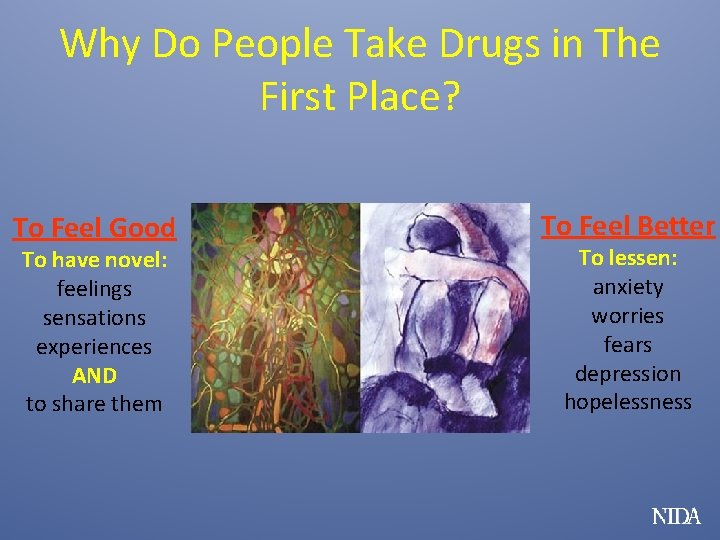
Why Do People Take Drugs in The First Place? To Feel Good To have novel: feelings sensations experiences AND to share them To Feel Better To lessen: anxiety worries fears depression hopelessness
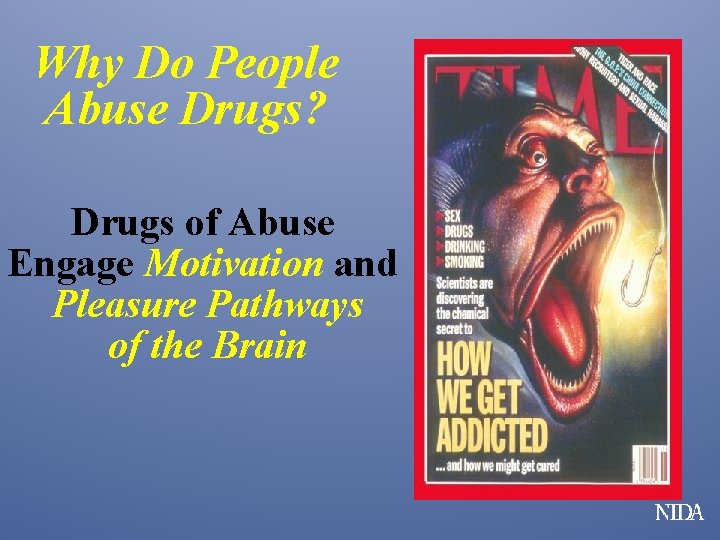
Why Do People Abuse Drugs? Drugs of Abuse Engage Motivation and Pleasure Pathways of the Brain
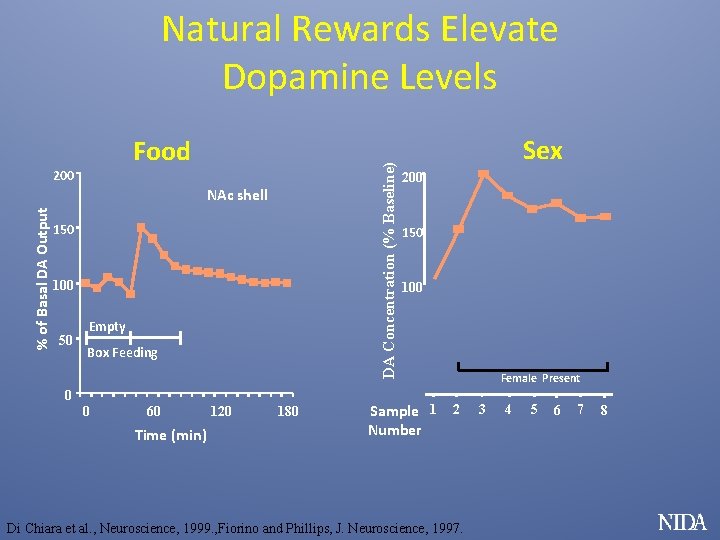
Natural Rewards Elevate Dopamine Levels 200 DA Concentration (% Baseline) Food % of Basal DA Output NAc shell 150 100 50 Empty Box Feeding 0 0 60 Time (min) 120 180 Sex 200 150 100 Sample 1 Number Female Present 2 Di Chiara et al. , Neuroscience, 1999. , Fiorino and Phillips, J. Neuroscience, 1997. 3 4 5 6 7 8
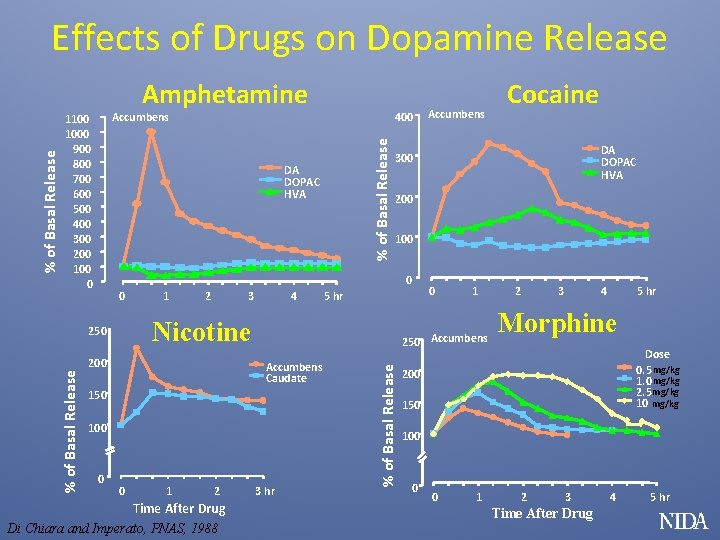
Effects of Drugs on Dopamine Release Accumbens DA DOPAC HVA 0 1 2 3 4 100 5 hr Accumbens Caudate 100 0 1 2 Time After Drug Di Chiara and Imperato, PNAS, 1988 0 1 250 Accumbens 150 0 DA DOPAC HVA 200 Nicotine 200 Accumbens 3 hr Cocaine 300 0 250 % of Basal Release 400 % of Basal Release 1100 1000 900 800 700 600 500 400 300 200 100 0 % of Basal Release Amphetamine 2 3 4 5 hr Morphine Dose 0. 5 mg/kg 1. 0 mg/kg 2. 5 mg/kg 10 mg/kg 200 150 100 0 0 1 2 3 Time After Drug 4 5 hr
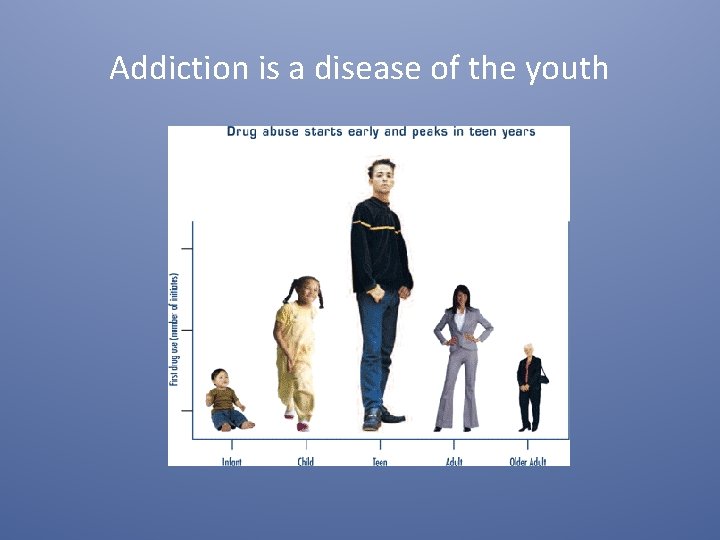
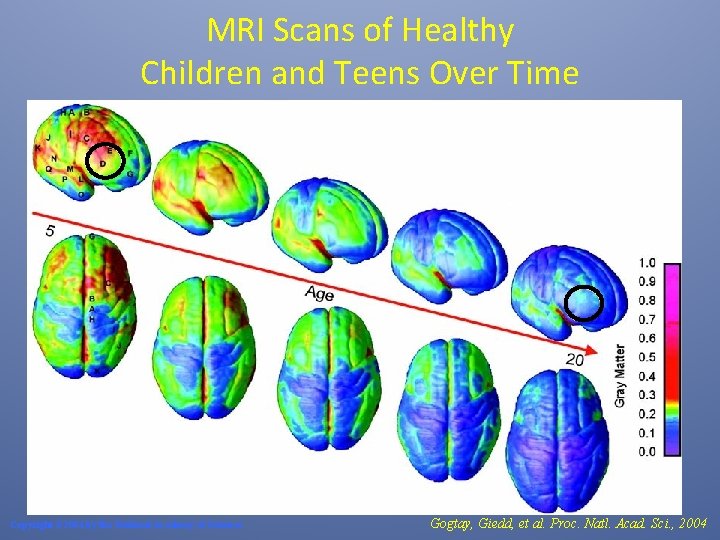
Addiction is a disease of the youth
MRI Scans of Healthy Children and Teens Over Time Copyright © 2004 by the National Academy of Sciences Gogtay, Giedd, et al. Proc. Natl. Acad. Sci. , 2004
Consequences of OUD are Wide Ranging • • Physical (Withdrawal, intoxication, overdose) Medical Psychological Spiritual Social Legal It’s not fun
Behavioral manifestations and complications of addiction, primarily due to impaired control These can include: • • • Excessive use and/or engagement in addictive behaviors, at higher frequencies and/or quantities than the person intended, often associated with a persistent desire for and unsuccessful attempts at behavioral control; Excessive time lost in substance use or recovering from the effects of substance use and/or engagement in addictive behaviors, with significant adverse impact on social and occupational functioning (e. g. the development of interpersonal relationship problems or the neglect of responsibilities at home, school or work); Continued use and/or engagement in addictive behaviors, despite the presence of persistent or recurrent physical or psychological problems which may have been caused or exacerbated by substance use and/or related addictive behaviors; A narrowing of the behavioral repertoire focusing on rewards that are part of addiction; and An apparent lack of ability and/or readiness to take consistent, ameliorative action despite recognition of problems. http: //www. asam. org/for-the-public/definition-of-addiction
Principles of Management • Recovery from addiction is best achieved through a combination of self-management, mutual support, and professional care provided by trained and certified professionals. • As in other health conditions, self-management, with mutual support, is very important in recovery from addiction. • Chronic disease management is important for minimization of episodes of relapse and their impact. Treatment of addiction saves lives http: //www. asam. org/for-the-public/definition-of-addiction
Treatment • • • Is Biopsychosocial-spiritual Addresses the whole person Addresses cross addiction Isn’t necessary to know the total cause Effective treatment acknowledges the brain disease and individualizes care
Accessing Treatment The decision to get help is a big deal! Treatment should be supported Some amount of ambivalence is common Motivation for treatment is not always that important. Usually self directed but can also be through a referral or mandate. • Several attempts are often necessary • Access can be limited • People can and do get better. • •
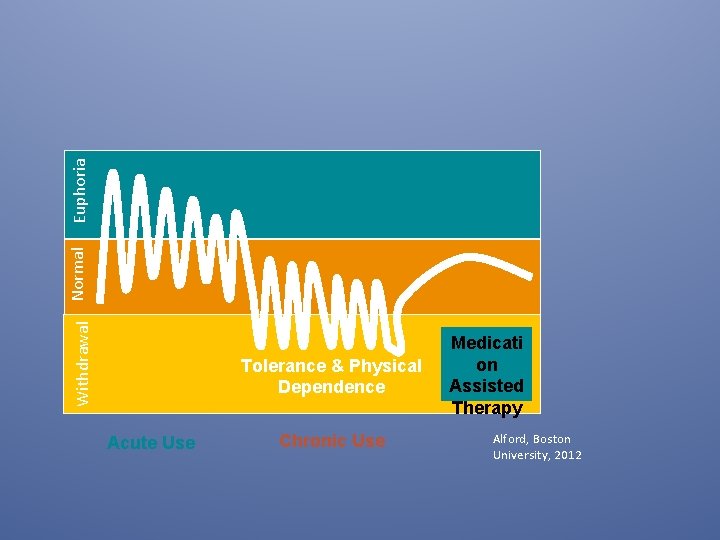
Medication Assisted Treatment • Recognizing that addiction is a chronic brain disease • Dramatically increases the abstinence rates and outcomes for patients vs psychosocial treatments alone • Important tool to aide a patients recovery • Not replacing one addiction for another • Effective for all opiates (prescription and heroin)
Euphoria Normal Withdrawal Tolerance & Physical Dependence Acute Use Chronic Use Medicati on Assisted Therapy Alford, Boston University, 2012
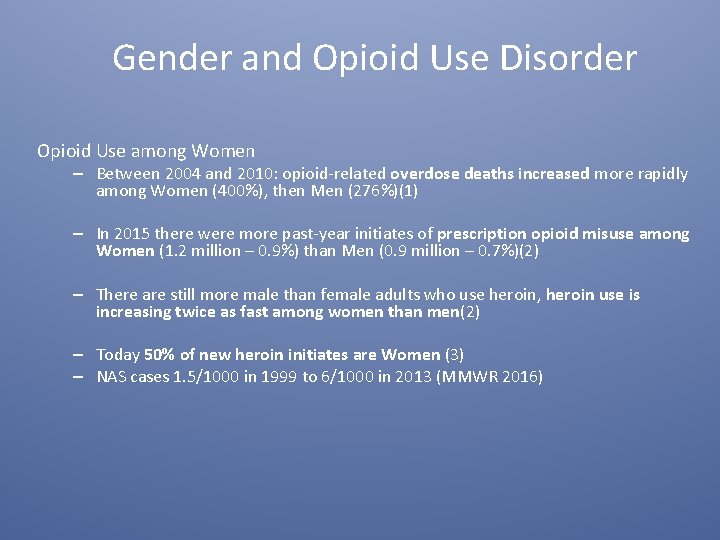
Gender and Opioid Use Disorder Opioid Use among Women – Between 2004 and 2010: opioid-related overdose deaths increased more rapidly among Women (400%), then Men (276%)(1) – In 2015 there were more past-year initiates of prescription opioid misuse among Women (1. 2 million – 0. 9%) than Men (0. 9 million – 0. 7%)(2) – There are still more male than female adults who use heroin, heroin use is increasing twice as fast among women than men(2) – Today 50% of new heroin initiates are Women (3) – NAS cases 1. 5/1000 in 1999 to 6/1000 in 2013 (MMWR 2016)
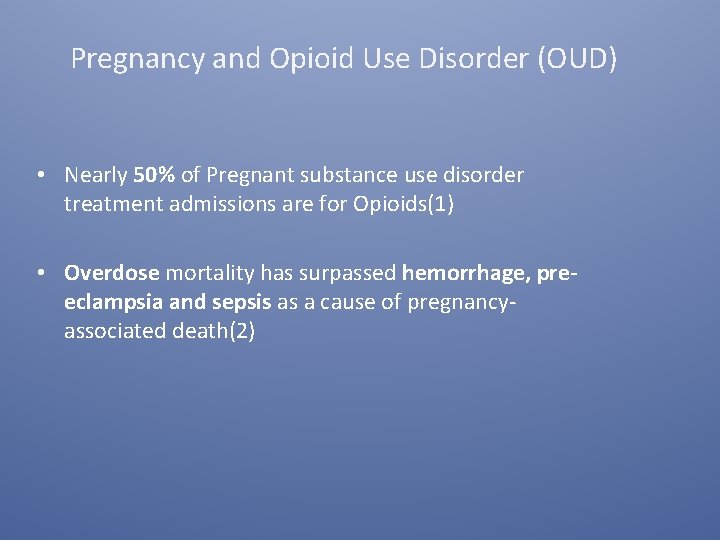
Pregnancy and Opioid Use Disorder (OUD) • Nearly 50% of Pregnant substance use disorder treatment admissions are for Opioids(1) • Overdose mortality has surpassed hemorrhage, preeclampsia and sepsis as a cause of pregnancyassociated death(2)
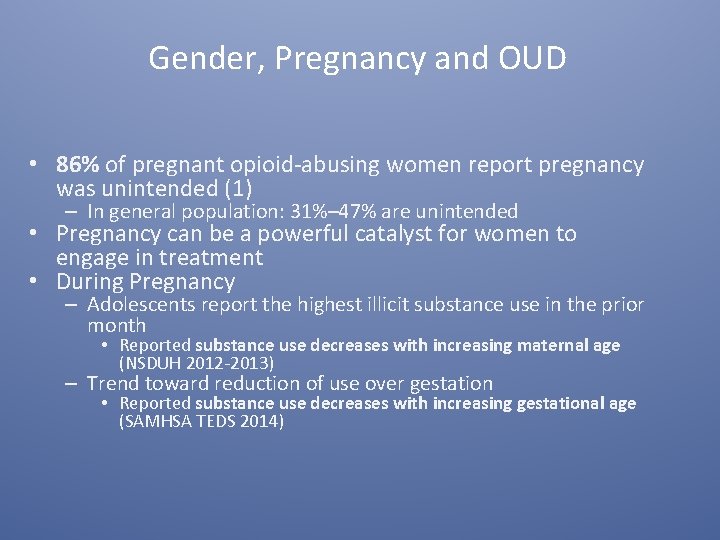
Gender, Pregnancy and OUD • 86% of pregnant opioid-abusing women report pregnancy was unintended (1) – In general population: 31%– 47% are unintended • Pregnancy can be a powerful catalyst for women to engage in treatment • During Pregnancy – Adolescents report the highest illicit substance use in the prior month • Reported substance use decreases with increasing maternal age (NSDUH 2012 -2013) – Trend toward reduction of use over gestation • Reported substance use decreases with increasing gestational age (SAMHSA TEDS 2014)
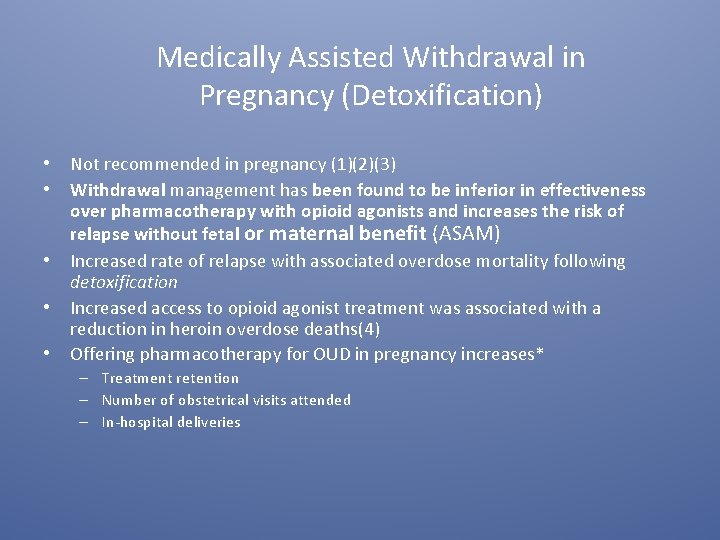
Medically Assisted Withdrawal in Pregnancy (Detoxification) • • • Not recommended in pregnancy (1)(2)(3) Withdrawal management has been found to be inferior in effectiveness over pharmacotherapy with opioid agonists and increases the risk of relapse without fetal or maternal benefit (ASAM) Increased rate of relapse with associated overdose mortality following detoxification Increased access to opioid agonist treatment was associated with a reduction in heroin overdose deaths(4) Offering pharmacotherapy for OUD in pregnancy increases* – Treatment retention – Number of obstetrical visits attended – In-hospital deliveries
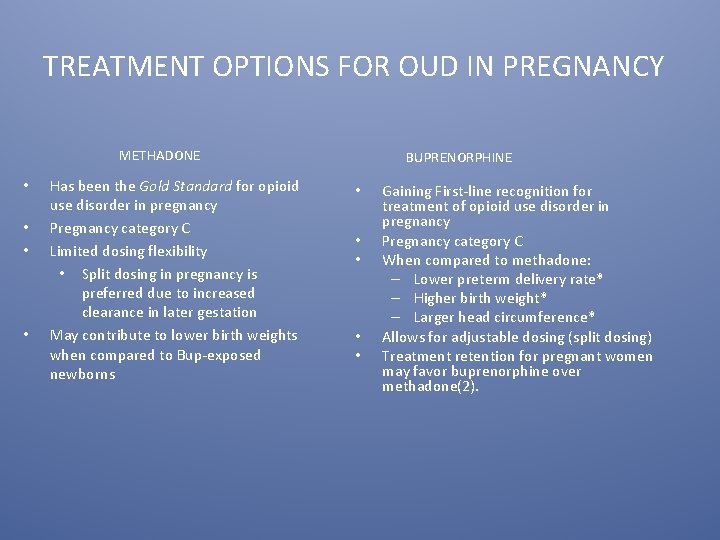
TREATMENT OPTIONS FOR OUD IN PREGNANCY METHADONE • • Has been the Gold Standard for opioid use disorder in pregnancy Pregnancy category C Limited dosing flexibility • Split dosing in pregnancy is preferred due to increased clearance in later gestation May contribute to lower birth weights when compared to Bup-exposed newborns BUPRENORPHINE • • • Gaining First-line recognition for treatment of opioid use disorder in pregnancy Pregnancy category C When compared to methadone: – Lower preterm delivery rate* – Higher birth weight* – Larger head circumference* Allows for adjustable dosing (split dosing) Treatment retention for pregnant women may favor buprenorphine over methadone(2).
Medication Assisted Treatment Should be Continued after the Delivery
Breastfeeding Methadone and buprenorphine are safe for breastfeeding <1% of maternal opioid intake transmitted to breastmilk (1) *Published guidelines from the American Academy of Pediatrics (AAP), the American College of Obstetricians and Gynecologists (ACOG), and the Academy of Breastfeeding Medicine (ABM) all support breastfeeding for women on opioid pharmacotherapy • Maternal benefits: increased oxytocin levels are linked to lower stress, increased maternalinfant bonding both lower the risk of postpartum relapse (2) • Newborn benefits: reduction in pharmacologic treatment for NAS, shorter hospital stays (2)
Reducing stigma • Individuals with substance use disorders (SUDs) are highly stigmatized • Although addiction is a brain disease, people with SUDs are often regarded as simply needing more willpower, rather than treatment • Language use perpetuates stigma in healthcare and in society at large • Stigma prevents people from seeking care • Health care teams can send a powerful message by avoiding stigmatizing language and behavior
Summary • Addiction is a complicated biopsychosocial disease • There are effective treatments that dramatically decrease the harms associated with untreated addiction • Treatment of addiction during pregnancy while potentially complicated is very effective and rewarding.