
The curious alpha prime phase of plutonium J

- Slides: 31
The curious alpha prime phase of plutonium J. Gal Jd. A 2005
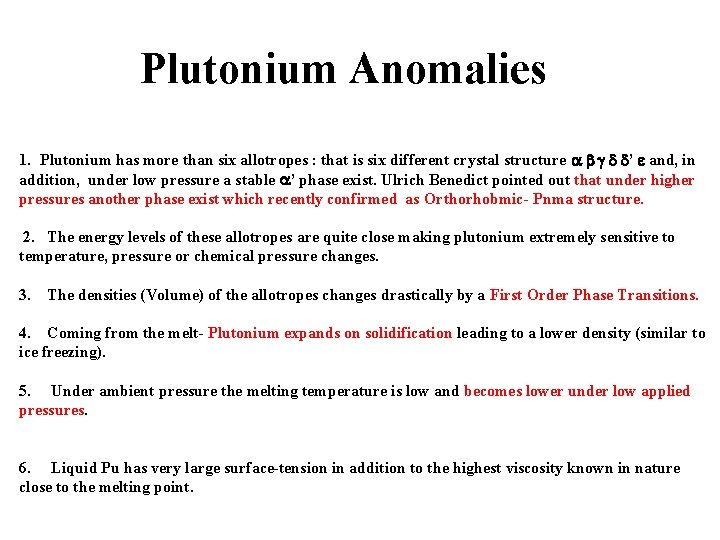
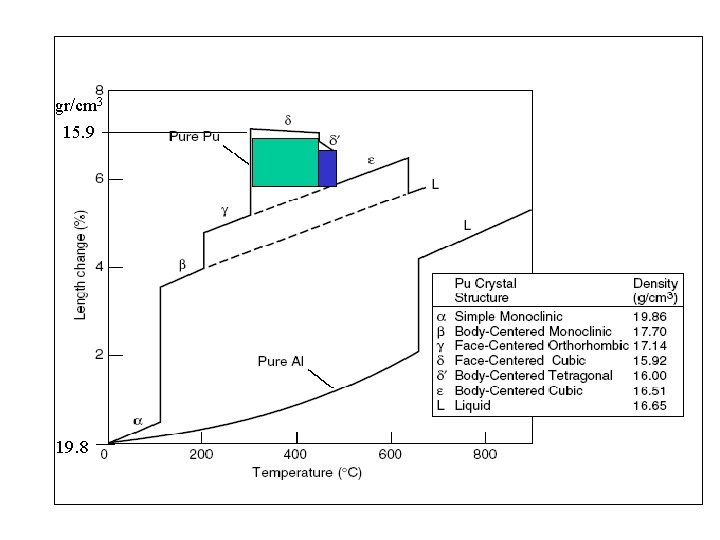
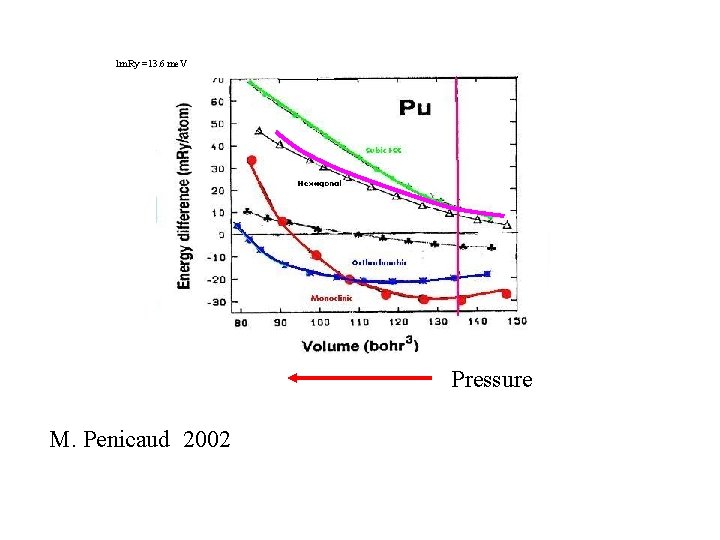
Plutonium Anomalies 1. Plutonium has more than six allotropes : that is six different crystal structure ’ and, in addition, under low pressure a stable ’ phase exist. Ulrich Benedict pointed out that under higher pressures another phase exist which recently confirmed as Orthorhobmic- Pnma structure. 2. The energy levels of these allotropes are quite close making plutonium extremely sensitive to temperature, pressure or chemical pressure changes. 3. The densities (Volume) of the allotropes changes drastically by a First Order Phase Transitions. 4. Coming from the melt- Plutonium expands on solidification leading to a lower density (similar to ice freezing). 5. Under ambient pressure the melting temperature is low and becomes lower under low applied pressures. 6. Liquid Pu has very large surface-tension in addition to the highest viscosity known in nature close to the melting point.
gr/cm 3 15. 9 19. 8
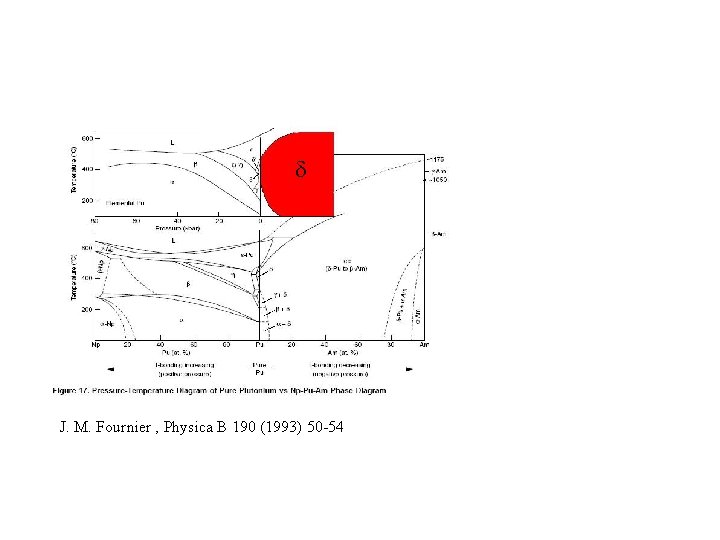
J. M. Fournier , Physica B 190 (1993) 50 -54
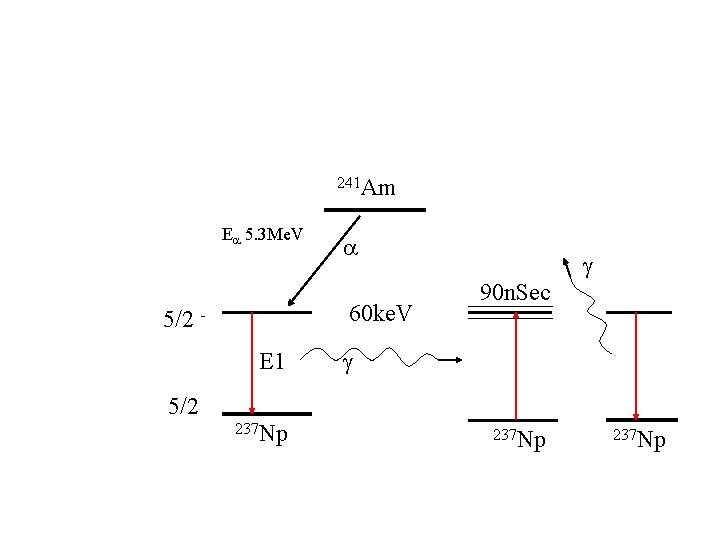
241 Am E 5. 3 Me. V 60 ke. V 5/2 E 1 90 n. Sec 5/2 237 Np
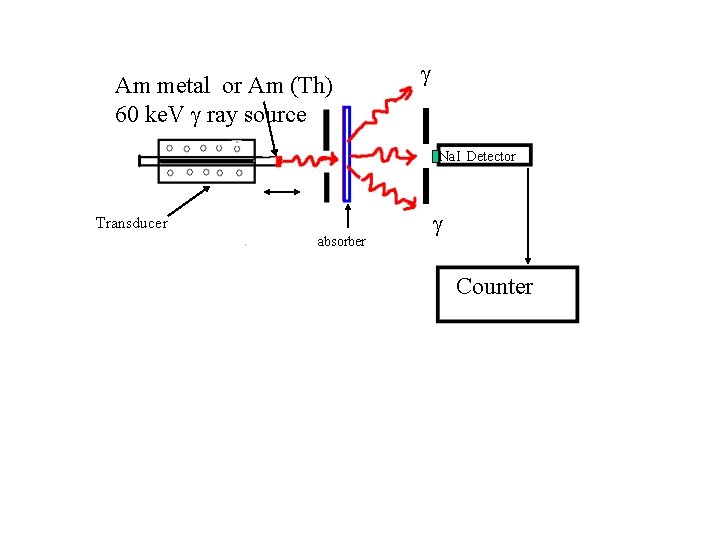
Am metal or Am (Th) 60 ke. V ray source Na. I Detector Transducer absorber Counter
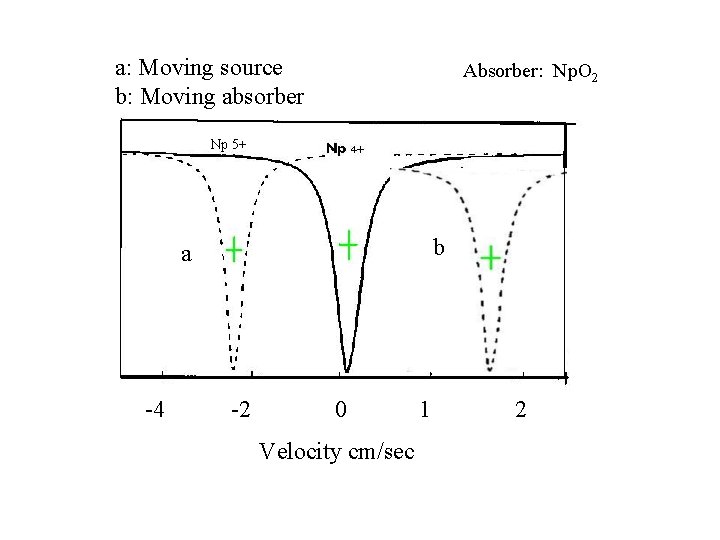
a: Moving source b: Moving absorber Absorber: Np. O 2 Np 5+ b a -4 -2 0 Velocity cm/sec 1 2
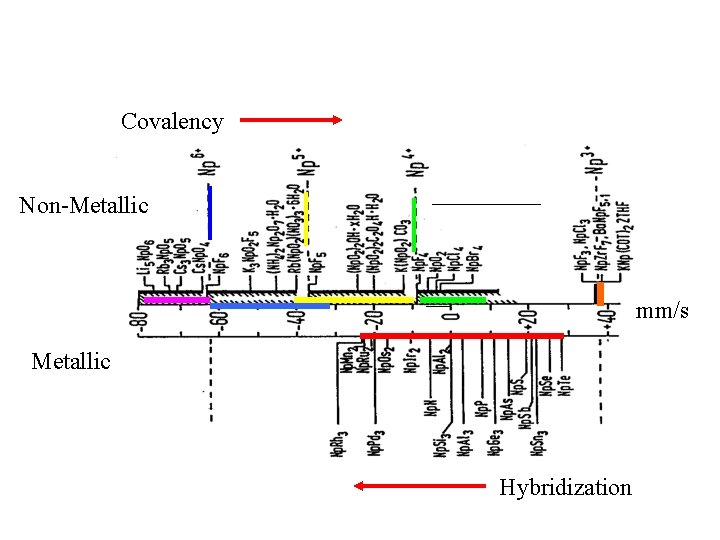
Covalency Non-Metallic mm/s Metallic Hybridization
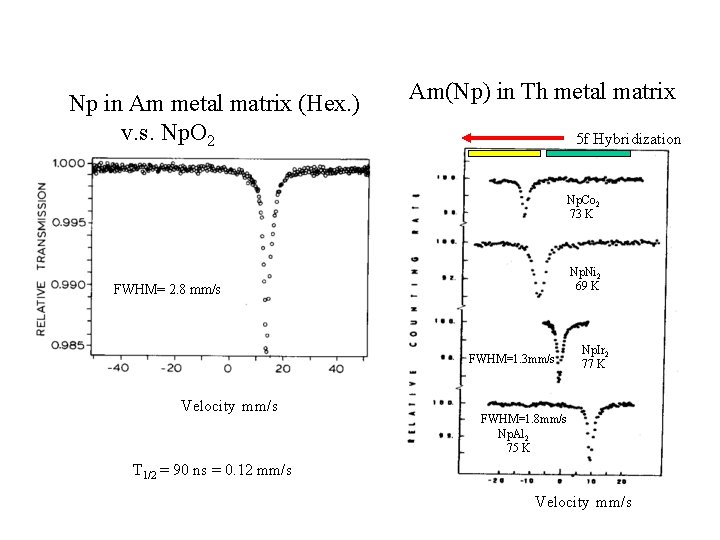
Np in Am metal matrix (Hex. ) v. s. Np. O 2 Am(Np) in Th metal matrix 5 f Hybridization Np. Co 2 73 K Np. Ni 2 69 K FWHM= 2. 8 mm/s FWHM=1. 3 mm/s Velocity mm/s Np. Ir 2 77 K FWHM=1. 8 mm/s Np. Al 2 75 K T 1/2 = 90 ns = 0. 12 mm/s Velocity mm/s
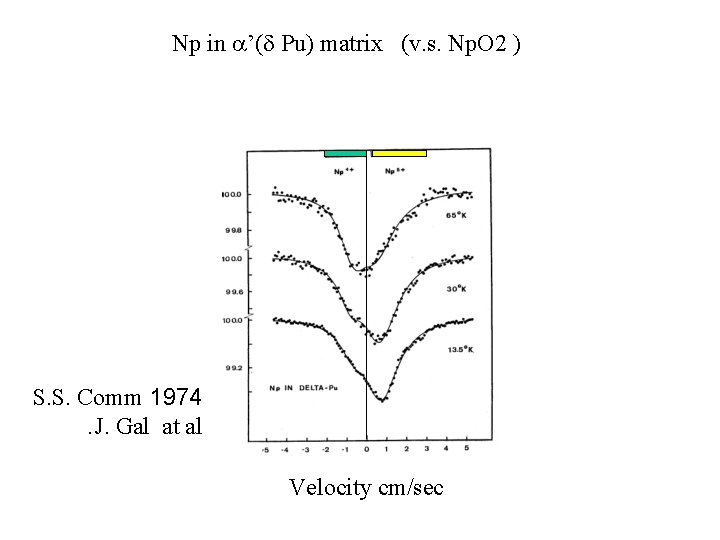
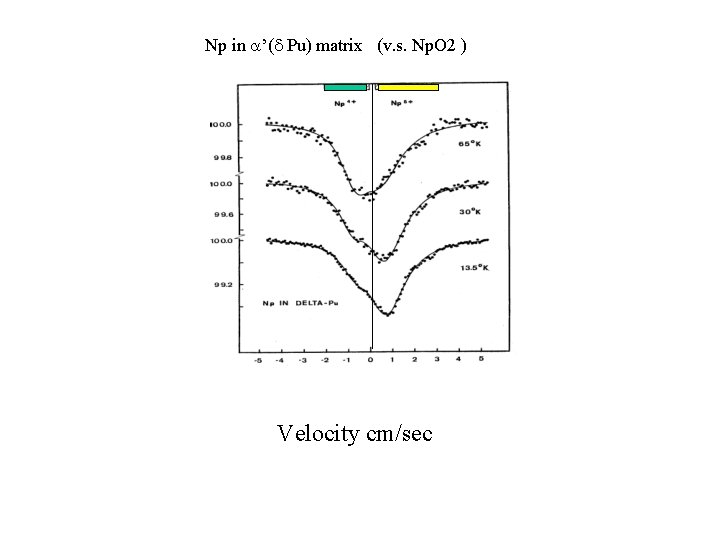
Np in ’( Pu) matrix (v. s. Np. O 2 ) S. S. Comm 1974. J. Gal at al Velocity cm/sec
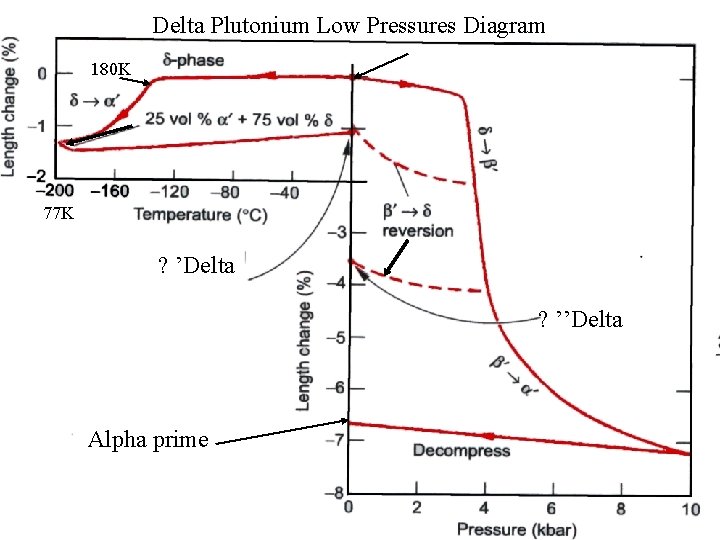
Delta Plutonium Low Pressures Diagram 180 K 77 K ? ’Delta ? ’’Delta Alpha prime
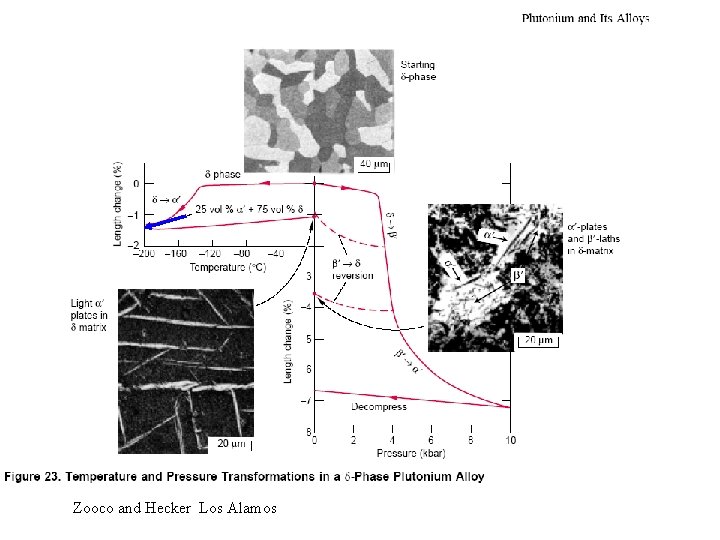
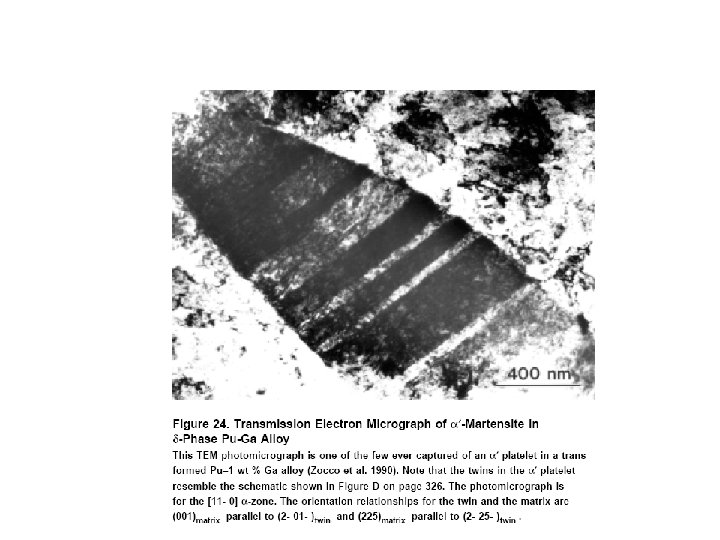
Zooco and Hecker Los Alamos
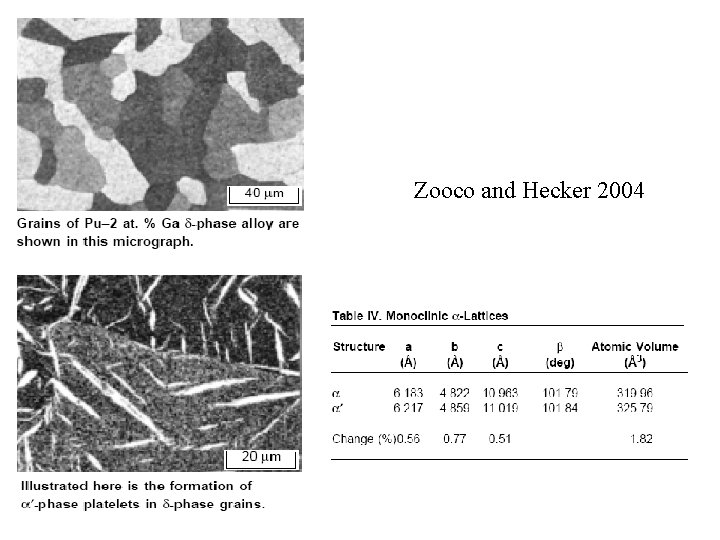
Zooco and Hecker 2004
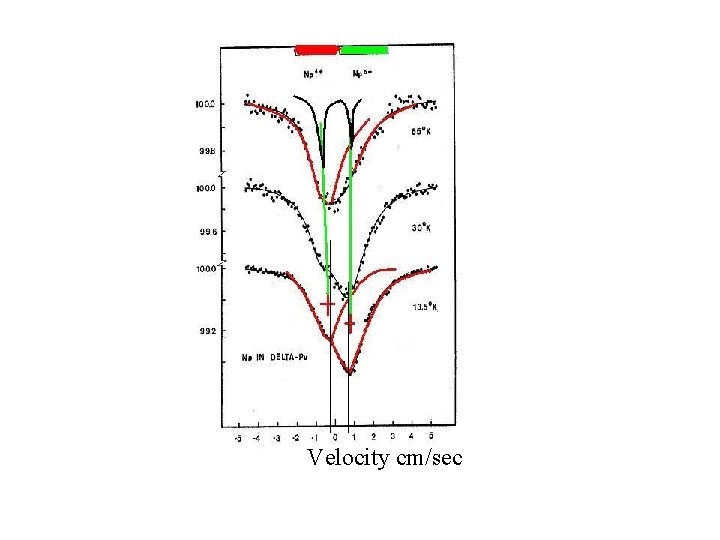
Np in ’( Pu) matrix (v. s. Np. O 2 ) Velocity cm/sec
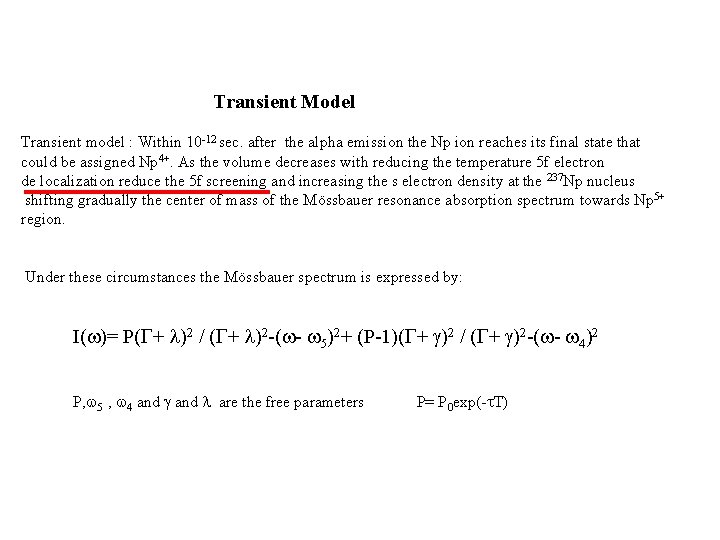
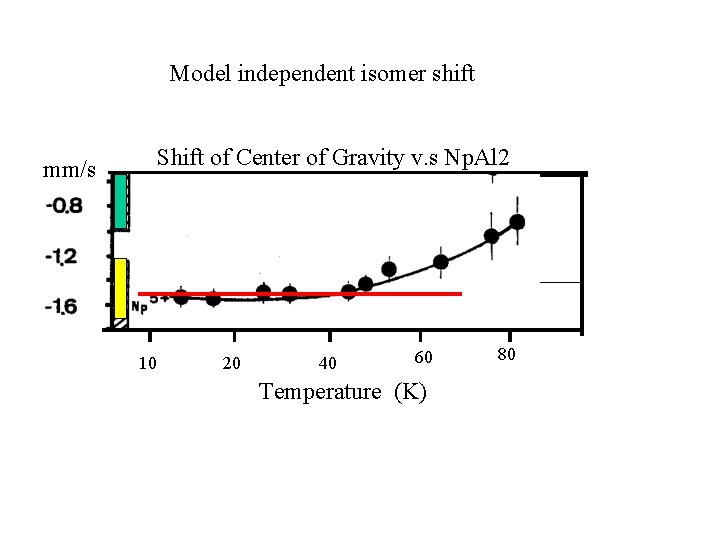
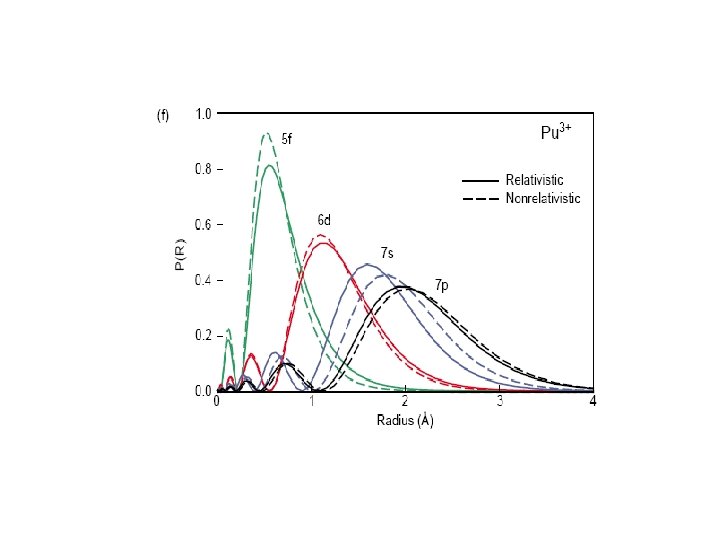
Transient Model Transient model : Within 10 -12 sec. after the alpha emission the Np ion reaches its final state that could be assigned Np 4+. As the volume decreases with reducing the temperature 5 f electron de localization reduce the 5 f screening and increasing the s electron density at the 237 Np nucleus shifting gradually the center of mass of the Mössbauer resonance absorption spectrum towards Np 5+ region. Under these circumstances the Mössbauer spectrum is expressed by: I( )= P( + )2 / ( + )2 -( - 5)2+ (P-1)( + )2 / ( + )2 -( - 4)2 P, 5 , 4 and are the free parameters P= P 0 exp(- T)
Velocity cm/sec
Model independent isomer shift Shift of Center of Gravity v. s Np. Al 2 mm/s Np 4+ 10 20 40 60 Temperature (K) 80
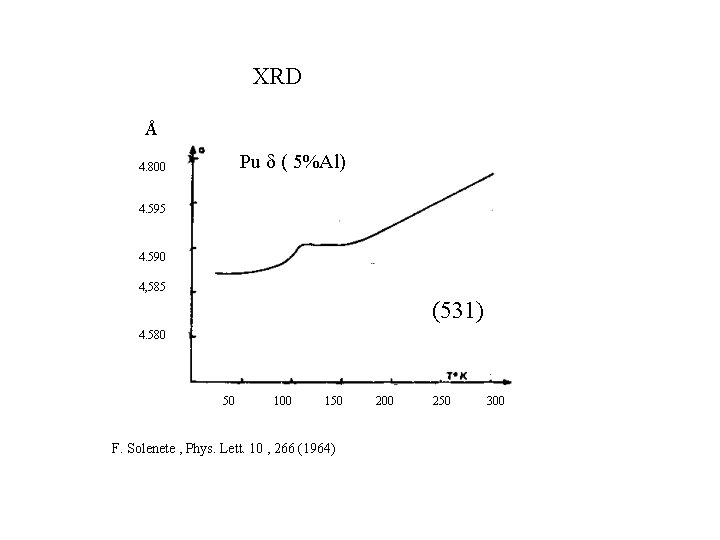
XRD Å Pu ( 5%Al) 4. 800 4. 595 4. 590 4, 585 (531) 4. 580 50 100 150 F. Solenete , Phys. Lett. 10 , 266 (1964) 200 250 300
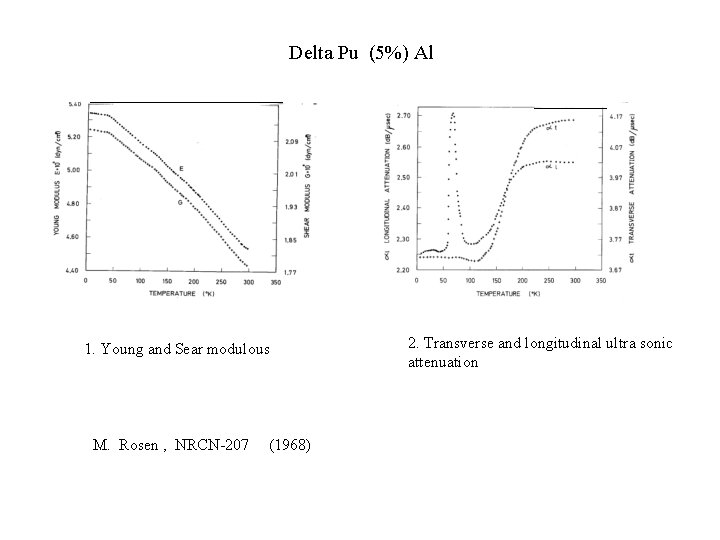
Delta Pu (5%) Al 1. Young and Sear modulous M. Rosen , NRCN-207 (1968) 2. Transverse and longitudinal ultra sonic attenuation
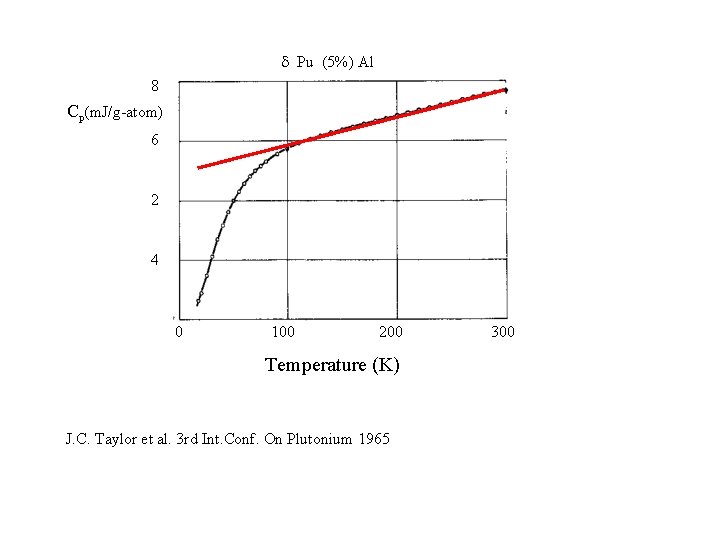
Pu (5%) Al 8 Cp(m. J/g-atom) 6 2 4 0 100 200 Temperature (K) J. C. Taylor et al. 3 rd Int. Conf. On Plutonium 1965 300
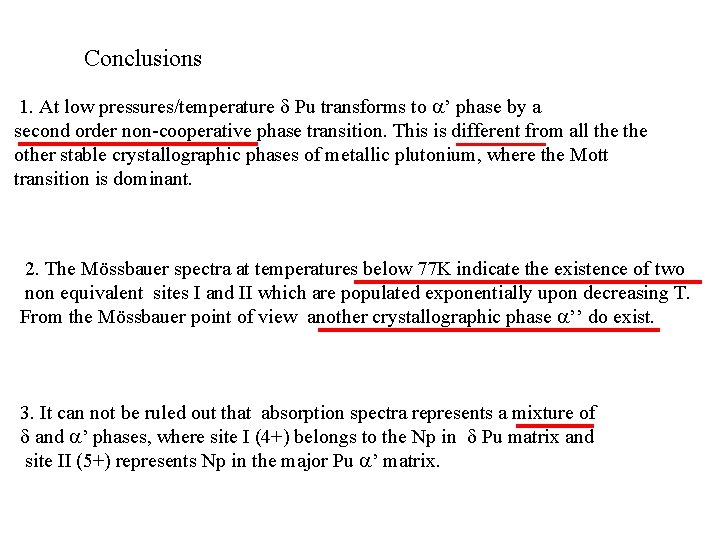
Conclusions 1. At low pressures/temperature Pu transforms to ’ phase by a second order non-cooperative phase transition. This is different from all the other stable crystallographic phases of metallic plutonium, where the Mott transition is dominant. 2. The Mössbauer spectra at temperatures below 77 K indicate the existence of two non equivalent sites I and II which are populated exponentially upon decreasing T. From the Mössbauer point of view another crystallographic phase ’’ do exist. 3. It can not be ruled out that absorption spectra represents a mixture of and ’ phases, where site I (4+) belongs to the Np in Pu matrix and site II (5+) represents Np in the major Pu ’ matrix.
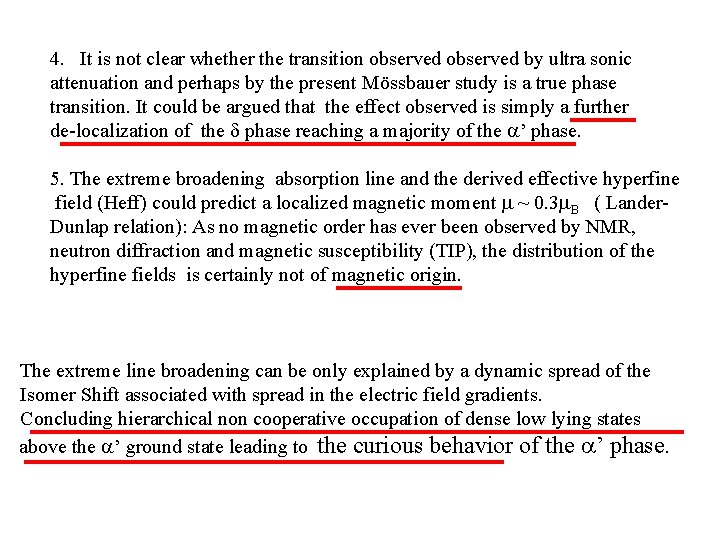
4. It is not clear whether the transition observed by ultra sonic attenuation and perhaps by the present Mössbauer study is a true phase transition. It could be argued that the effect observed is simply a further de-localization of the phase reaching a majority of the ’ phase. 5. The extreme broadening absorption line and the derived effective hyperfine field (Heff) could predict a localized magnetic moment ~ 0. 3 B ( Lander. Dunlap relation): As no magnetic order has ever been observed by NMR, neutron diffraction and magnetic susceptibility (TIP), the distribution of the hyperfine fields is certainly not of magnetic origin. The extreme line broadening can be only explained by a dynamic spread of the Isomer Shift associated with spread in the electric field gradients. Concluding hierarchical non cooperative occupation of dense low lying states above the ’ ground state leading to the curious behavior of the ’ phase.
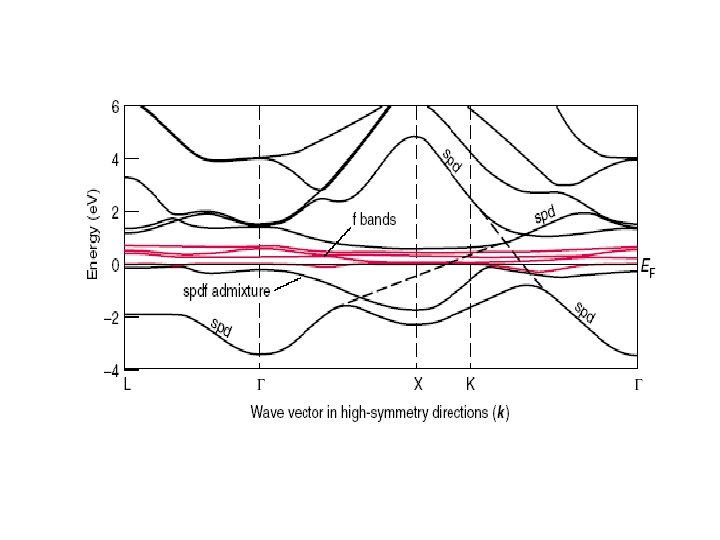
1 m. Ry =13. 6 me. V Pressure M. Penicaud 2002
Thanks for your attention comments ?