
The Cultural Interface An Indigenous Standpoint Theory Prof

![An Indigenous standpoint theory and some foundational principles � “[f]irst the social position of](https://slidetodoc.com/presentation_image_h2/08fd3b0095351e9fb5a32e1ecfa87ee8/image-5.jpg "An Indigenous standpoint theory and some foundational principles � “[f]irst the social position of")


- Slides: 10
The Cultural Interface An Indigenous Standpoint Theory Prof N M Nakata (B. Ed. Hons. Ph. D) Chair of Australian Indigenous Education University of Technology, Sydney. Australia
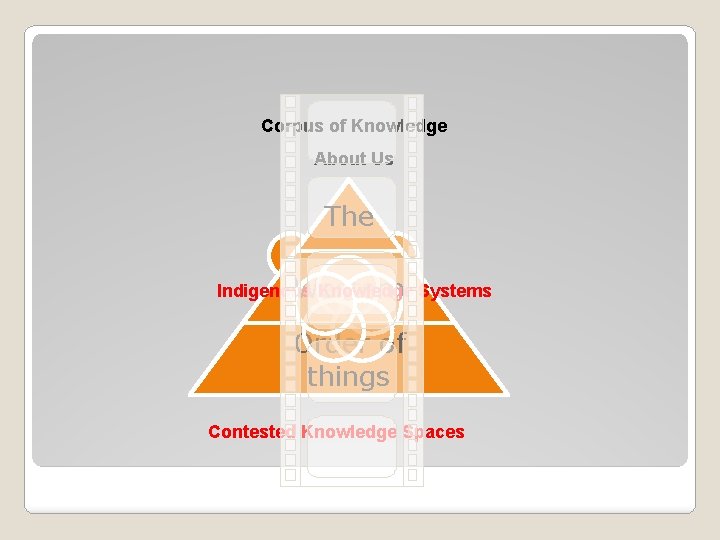
Corpus of Knowledge About Us The Indigenous Knowledge Systems Western Order of things Contested Knowledge Spaces
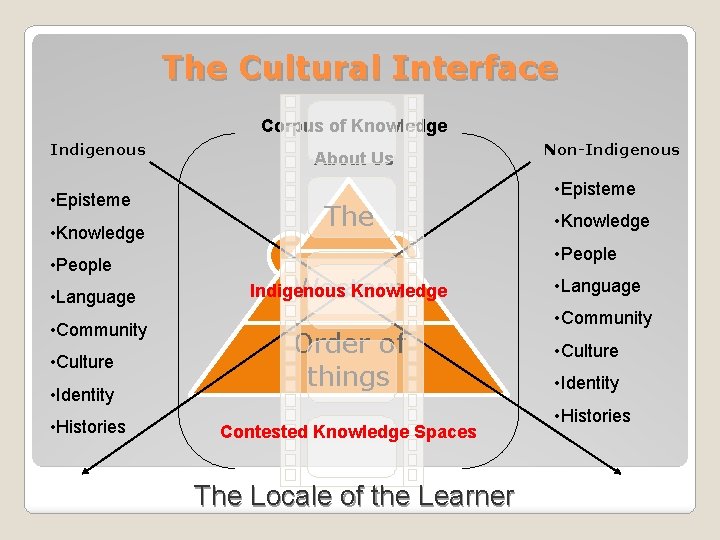
The Cultural Interface Corpus of Knowledge Indigenous • Episteme • Knowledge • People • Language • Community • Culture • Identity • Histories About Us Non-Indigenous • Episteme The • Knowledge • People Indigenous Knowledge Western Order of things Contested Knowledge Spaces The Locale of the Learner • Language • Community • Culture • Identity • Histories
An Indigenous standpoint theory and some foundational principles � “[f]irst the social position of the knower is epistemically significant; where the knower is socially positioned will both make possible and delimit knowledge. Second, more objective knowledge is not a product of mere observation or a disinterested perspective on the world, but is achieved by struggling to understand one’s experience through a critical stance on the social order within which knowledge is produced. ” (Pohlhaus, 2002, p. 285) � “being… [an Indigenous knower] does not yield a readymade critical stance on the world, but rather the situation of… [Indigenous knowers] provides the questions from which one must start in order to produce more objective knowledge. ” (Pohlhaus, 2002, p. 287).
An Indigenous standpoint theory and some foundational principles � Contested knowledge space at the cultural interface � Agency along a continuum as constantly present between Indigenous and non-Indigenous positions � We need to see the tensions that results from this double bind as sitting in our constellation as a priori conditions to our decision-making process, as also informing & limiting what we choose to say, do, act, be…
An Indigenous standpoint theory and some foundational principles � Locale � Agency � Tension
We are in a closed box and wait for the lid to be taken off. (Torres Strait Islander to Deputy Chief Protector in Report 22 February 1936, p. 3)
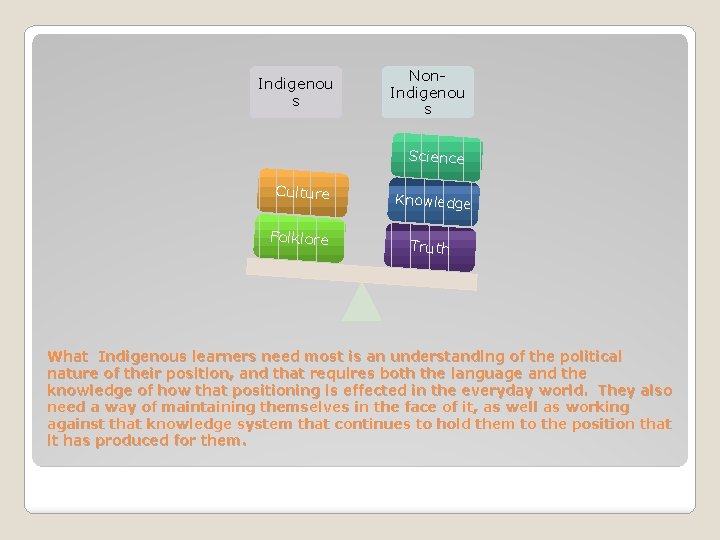
Indigenou s Non. Indigenou s Science Culture Folklore Knowledge Truth What Indigenous learners need most is an understanding of the political nature of their position, and that requires both the language and the knowledge of how that positioning is effected in the everyday world. They also need a way of maintaining themselves in the face of it, as well as working against that knowledge system that continues to hold them to the position that it has produced for them.