
The CSR Plan Company Background Situational Analysis Corporate
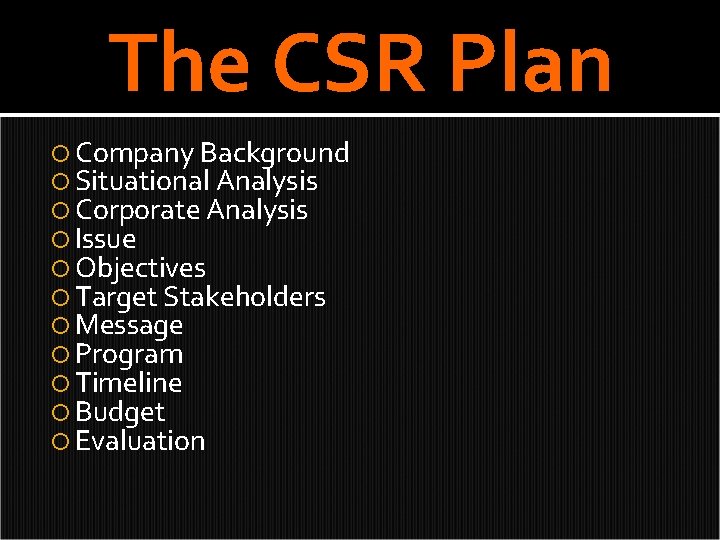
The CSR Plan Company Background Situational Analysis Corporate Analysis Issue Objectives Target Stakeholders Message Program Timeline Budget Evaluation
Company Background Company name Vision and Mission Nature of business Environmental Scanning
Situational Analysis Facts Progress points Problem areas Industry survey What’s being done? What’s not being done?
Corporate Analysis
Issue Trim the problems down to one Consider… What the company can do In line with the business goals What others have not done (1) issue
Objectives What would the company want to achieve? State in MEASURABLE terms Related to the Evaluation section
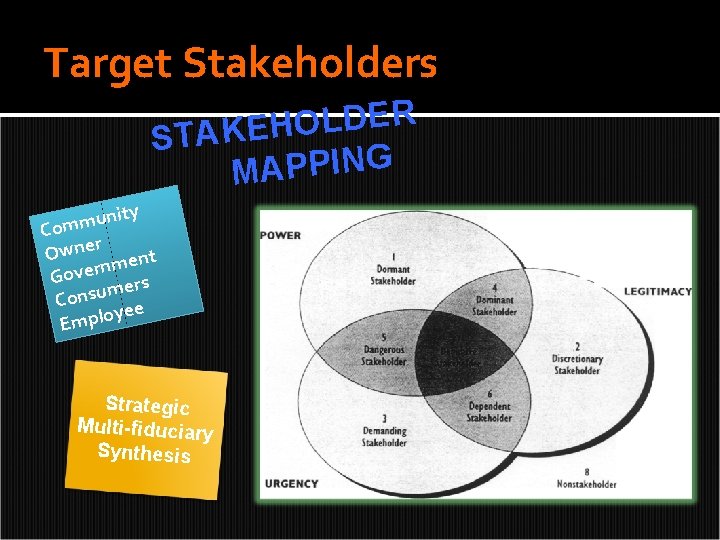
Target Stakeholders R E D L O H STAKE G N I P P A M ity n u m Com r Owne nt e m n r Gove ers m u s n Co ee y o l p Em Strategic Multi-fiduciary Synthesis
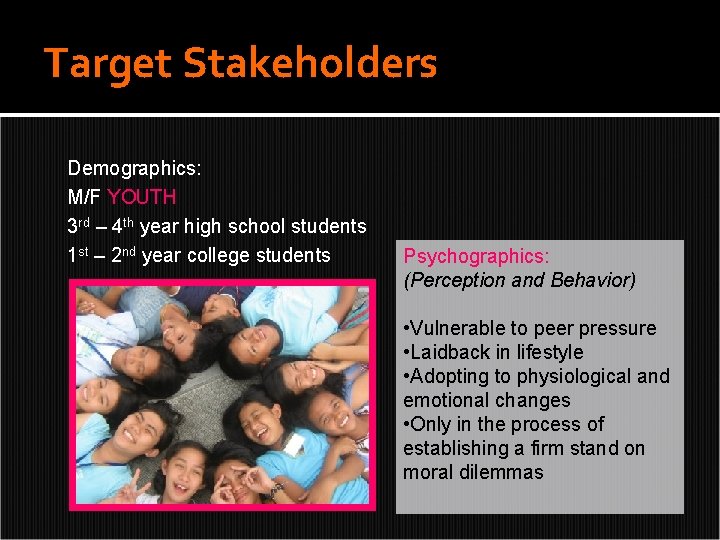
Target Stakeholders Demographics: M/F YOUTH 3 rd – 4 th year high school students 1 st – 2 nd year college students Psychographics: (Perception and Behavior) • Vulnerable to peer pressure • Laidback in lifestyle • Adopting to physiological and emotional changes • Only in the process of establishing a firm stand on moral dilemmas
Message e m e h t e z i r a m m Su e n i l e ) 1 m ( e e h t on e h t r o e l t i t The n a l p e of th
Program Determine type of response How will the goals be achieved? Details should be unified. Program Project Long-term Consider: ▪ ▪ one-time initiative Focused (does not distract the core business) Effective (goal-oriented and standard-based) Realistic (budget and time) Authentic (believable)
Timeline 2 -year plan Gantt chart
Budget Expenses How much is the company willing to spend? What other resources can the company allocate? Perceived Savings
Evaluation What results should come about from the implementation of the plan? Set the standards to define whether desired change has occurred
. l a o G. e c n e i d u A. e g a s s e M. n o i t u c e Ex ONE GAME.
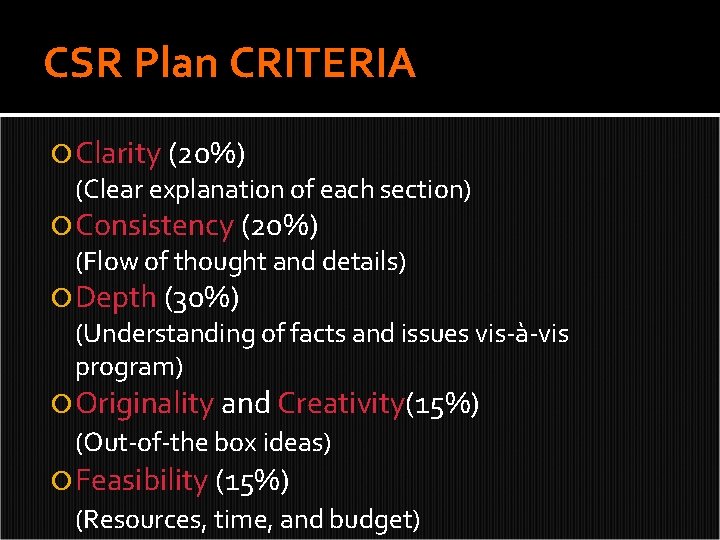
CSR Plan CRITERIA Clarity (20%) (Clear explanation of each section) Consistency (20%) (Flow of thought and details) Depth (30%) (Understanding of facts and issues vis-à-vis program) Originality and Creativity(15%) (Out-of-the box ideas) Feasibility (15%) (Resources, time, and budget)
- Slides: 16