
The Crisis Cycle Understanding your reactions in a
- Slides: 21
The Crisis Cycle Understanding your reactions in a crisis situation
What is a crisis? § A time of great difficulty or danger § Can happen anywhere– at school, at home, in public, etc. Spectrum Academy’s Crisis Definition §Continuous aggression (violence towards others) §Continuous self-injury (violence towards self) §Continuous high-magnitude disruption (actions that make the classroom unsafe and a place where others cannot learn)
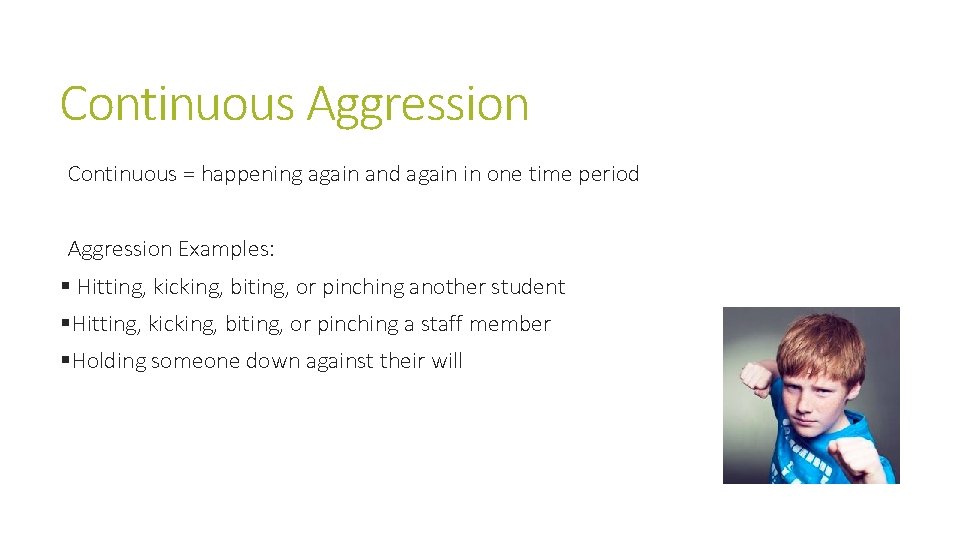
Continuous Aggression Continuous = happening again and again in one time period Aggression Examples: § Hitting, kicking, biting, or pinching another student §Hitting, kicking, biting, or pinching a staff member §Holding someone down against their will
Do these fit the definition of “crisis”? 1. https: //www. youtube. com/watch? v=7 Uyvwvv. Xmq. A (stop at 30 seconds) 2. https: //www. youtube. com/watch? v=Jt. Hvo. Q 3 FQqk 3. https: //www. youtube. com/watch? v=ms. Haa 3 p 4 o-A (stop at 20 seconds)
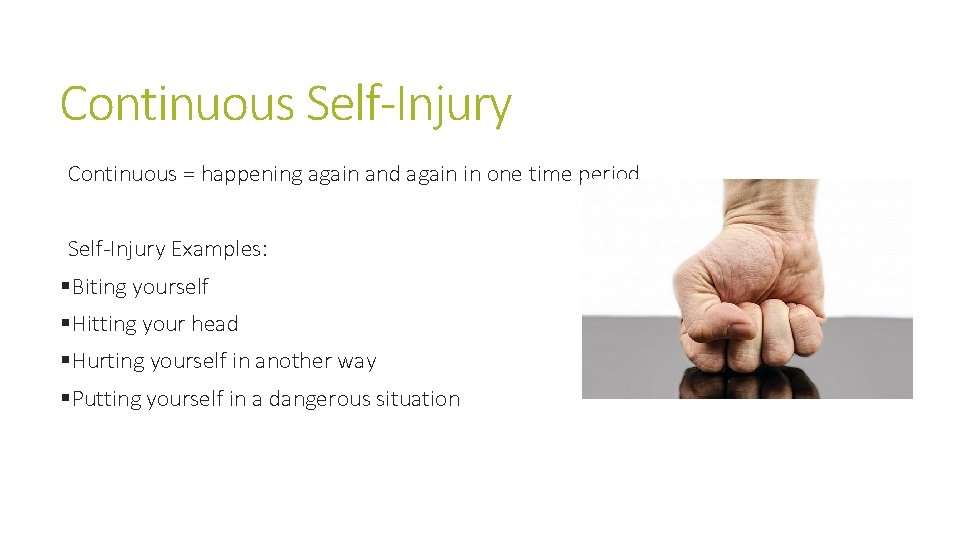
Continuous Self-Injury Continuous = happening again and again in one time period Self-Injury Examples: §Biting yourself §Hitting your head §Hurting yourself in another way §Putting yourself in a dangerous situation
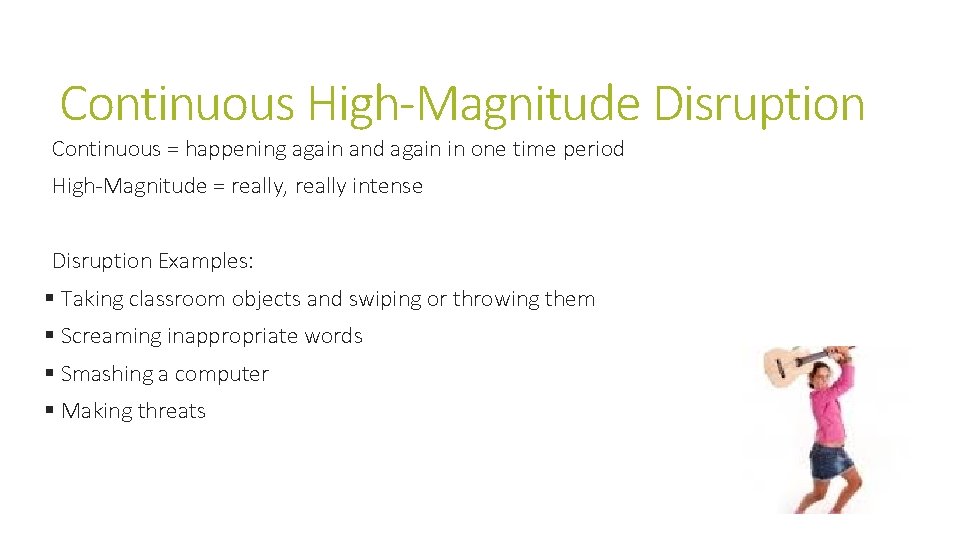
Continuous High-Magnitude Disruption Continuous = happening again and again in one time period High-Magnitude = really, really intense Disruption Examples: § Taking classroom objects and swiping or throwing them § Screaming inappropriate words § Smashing a computer § Making threats
When is this high-magnitude disruption? 1. https: //www. youtube. com/watch? v=IFEPe. T 6 k 8 m. E (stop at 50 seconds) 2. https: //www. youtube. com/watch? v=LRUJUOKme. Ls (stop at 48 seconds)
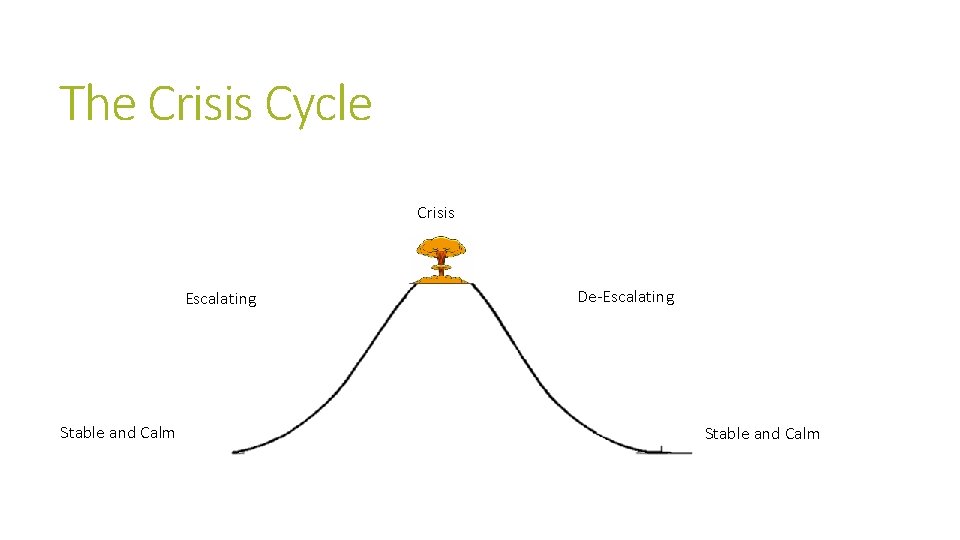
The Crisis Cycle describes the physical and emotional changes we go through when becoming upset, having a crisis, and calming down. By understanding the Crisis Cycle, we can understand: § How to prevent reaching the level of crisis § How others will react to us during a crisis § How to recover from a crisis
The Crisis Cycle Crisis Escalating Stable and Calm De-Escalating Stable and Calm
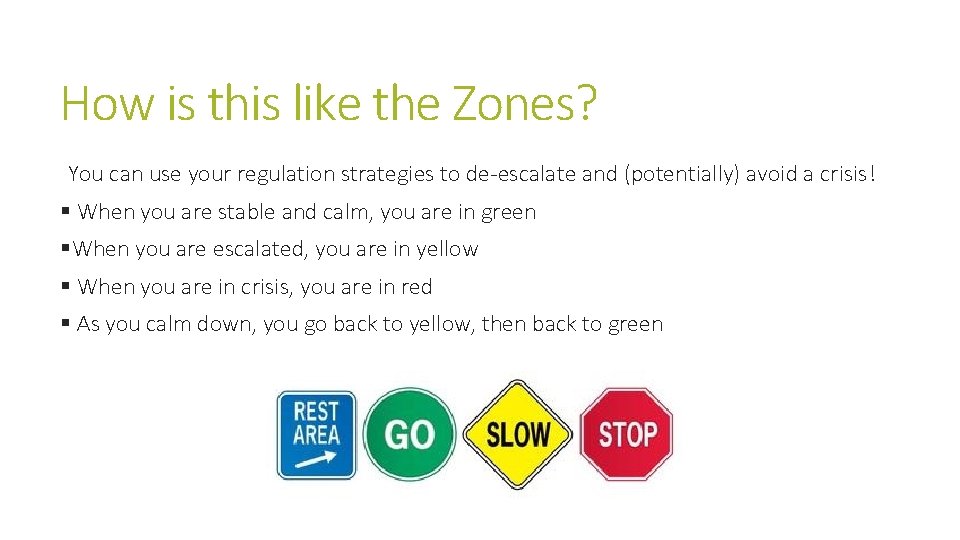
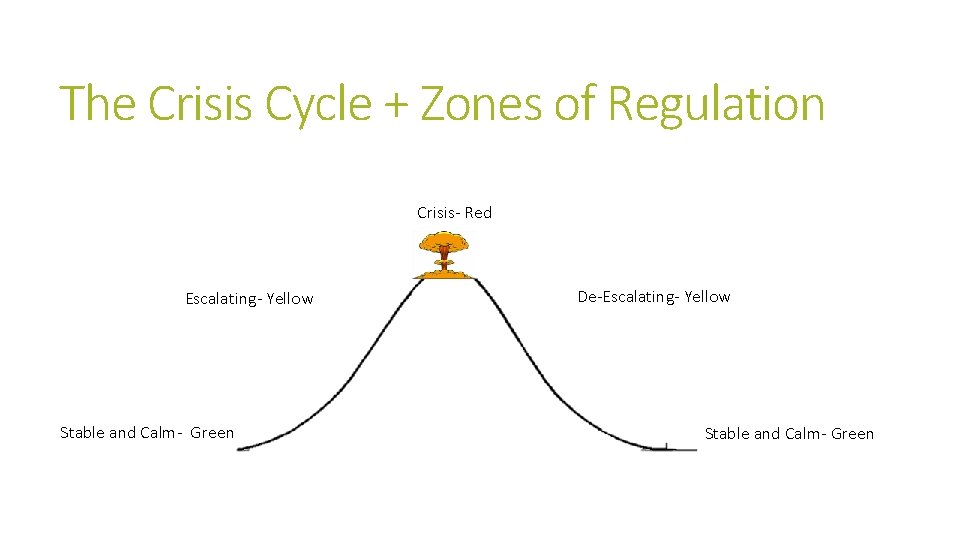
How is this like the Zones? You can use your regulation strategies to de-escalate and (potentially) avoid a crisis! § When you are stable and calm, you are in green §When you are escalated, you are in yellow § When you are in crisis, you are in red § As you calm down, you go back to yellow, then back to green
The Crisis Cycle + Zones of Regulation Crisis- Red Escalating- Yellow Stable and Calm- Green De-Escalating- Yellow Stable and Calm- Green
Stable and Calm LOOKS LIKE/SOUNDS LIKE § On-task behavior § Reasonable thinking § Feelings are appropriate to the situation § Relaxed body STRATEGIES TO STAY STABLE AND CALM § Ask for clarification on confusing instructions §Think before you act § Do at first request § Show respect to all § Have a listening body
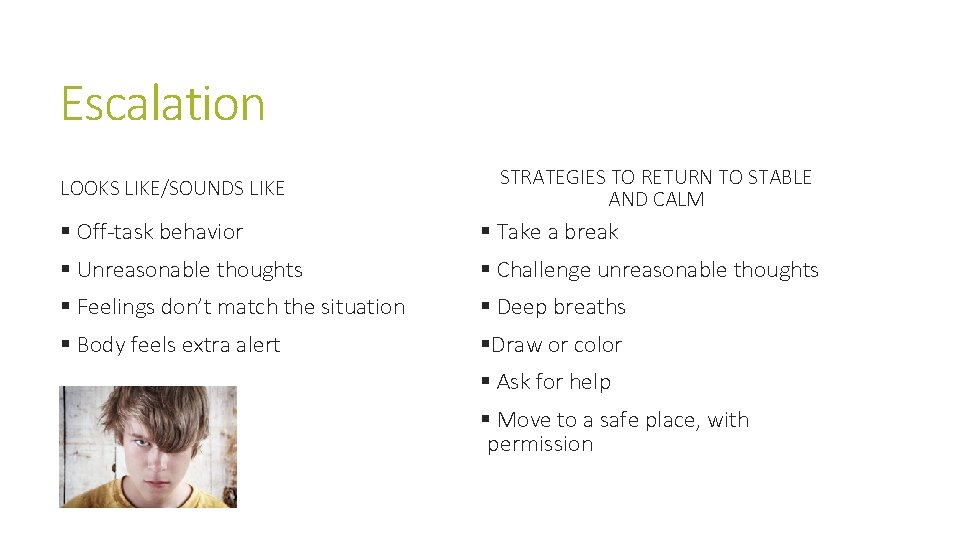
Escalation LOOKS LIKE/SOUNDS LIKE STRATEGIES TO RETURN TO STABLE AND CALM § Off-task behavior § Take a break § Unreasonable thoughts § Challenge unreasonable thoughts § Feelings don’t match the situation § Deep breaths § Body feels extra alert §Draw or color § Ask for help § Move to a safe place, with permission
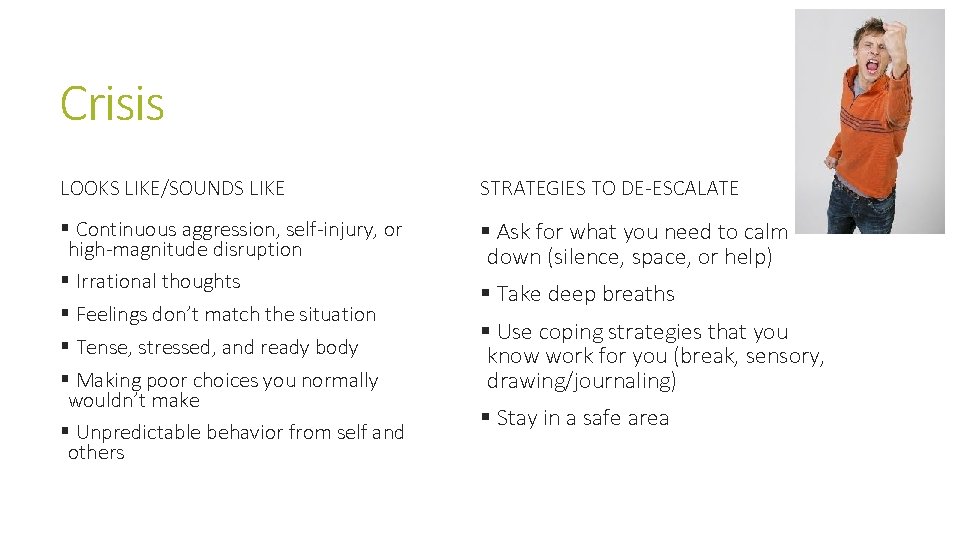
Crisis LOOKS LIKE/SOUNDS LIKE STRATEGIES TO DE-ESCALATE § Continuous aggression, self-injury, or high-magnitude disruption § Irrational thoughts § Feelings don’t match the situation § Tense, stressed, and ready body § Making poor choices you normally wouldn’t make § Unpredictable behavior from self and others § Ask for what you need to calm down (silence, space, or help) § Take deep breaths § Use coping strategies that you know work for you (break, sensory, drawing/journaling) § Stay in a safe area
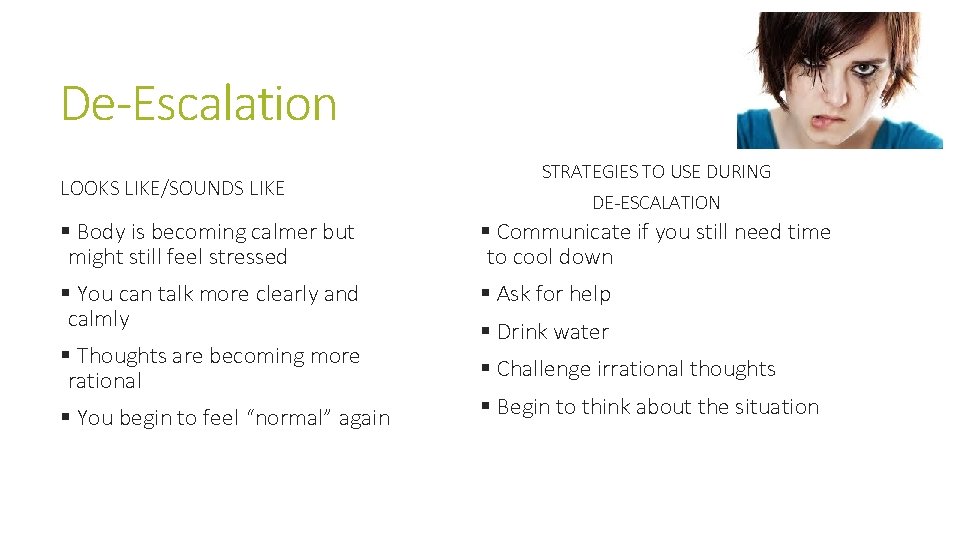
De-Escalation LOOKS LIKE/SOUNDS LIKE STRATEGIES TO USE DURING DE-ESCALATION § Body is becoming calmer but might still feel stressed § Communicate if you still need time to cool down § You can talk more clearly and calmly § Ask for help § Thoughts are becoming more rational § You begin to feel “normal” again § Drink water § Challenge irrational thoughts § Begin to think about the situation
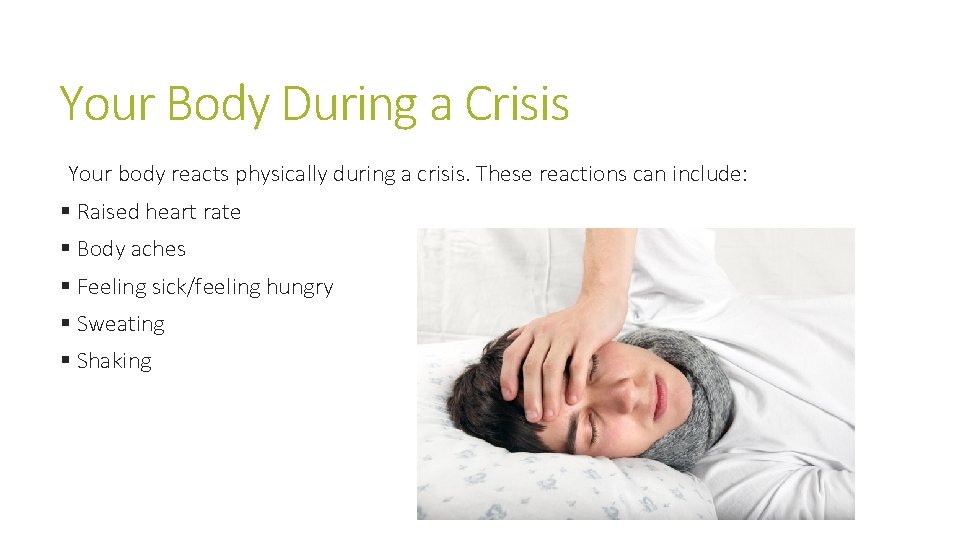
Your Body During a Crisis Your body reacts physically during a crisis. These reactions can include: § Raised heart rate § Body aches § Feeling sick/feeling hungry § Sweating § Shaking
Responding to a Crisis: Others As friends/classmates, sometimes we can help during a crisis and sometimes we should not. § Stable/Calm: Help each other stay calm by being respectful and kind. § Escalating: Help a friend if they ask (like giving them a pencil to journal or giving them personal space). Don’t point out someone else’s escalation. § Crisis: Give friends space (no talking, touching, or following) during a crisis. Let adults help. § De-escalation: Help a friend if they ask. Be respectful and kind. Adults respond to help students stay safe in a crisis. § If you are in crisis, expect someone to come help you. §If someone else is in a crisis, follow the directions of all adults immediately to stay safe.
Responding to a Crisis: You After you go through the crisis cycle, you might feel: § Embarrassed § Still angry §Nervous §Confused
Responding to a Crisis: You should… § Process (talk about) the crisis with a trusted adult. §Apologize if needed (in a note or in person). §Accept consequences appropriately. §Make strategies for de-escalation if something similar happens again. Then, restart! We make mistakes in life and learn from every experience. Your teachers and parents love you and want you to succeed. You are always welcome back.
Preventing a Crisis We want to work to prevent a crisis from happening. This week, we will talk about strategies that will help us prevent a crisis. Preventing crises is crucial! It can help you maintain friendships and other relationships It will help you avoid legal trouble now and when you are an adult- hurting others/destroying the stuff of others is against the law! It will help you be more successful at school and keep a future job
So Basically… • Crises happen, and are serious, but they aren’t the end of the world • We can react appropriately when others are in crisis • We can try to prevent crises/de-escalate by using strategies that work for us