
The Criminal Code of Canada Criminal Code of

- Slides: 14
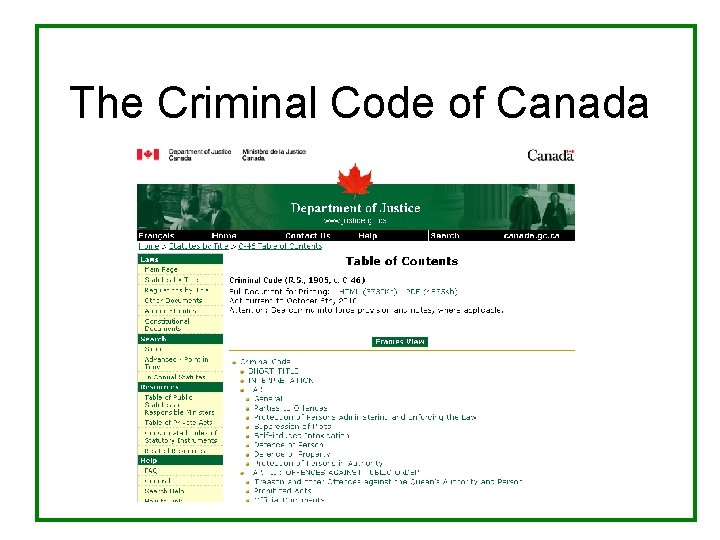
The Criminal Code of Canada
Criminal Code of Canada: History • England resistant to codification, colonies experimented • including India, Honduras, Tobago St Lucia, Jamaica • Canada’s Efforts • 1867 - Codification a goal of Sir John A Macdonald • 1869 - set out explicit authority to federal government consolidation in coinage offenses, forgery, larceny, personal, property, perjury, procedure. • 1892 - Original Criminal Code achieved • "Just think of it Canada in the van! The first to enact a complete codification. It is far and away the best measure of the kind ever submitted to any legislature. "
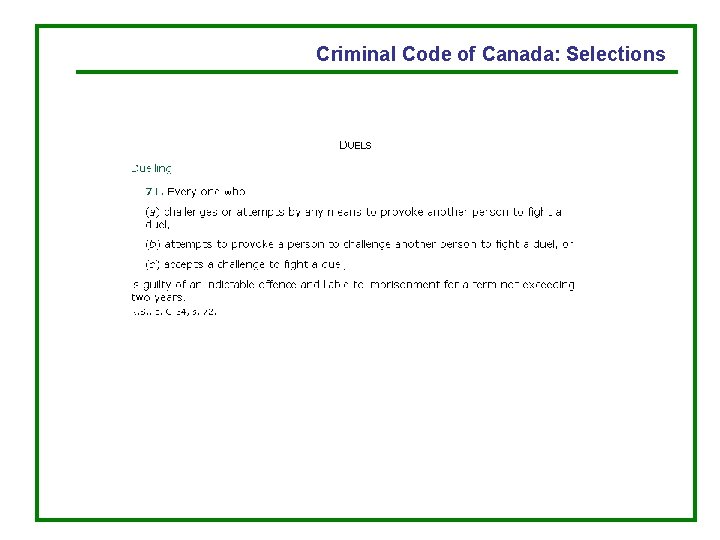
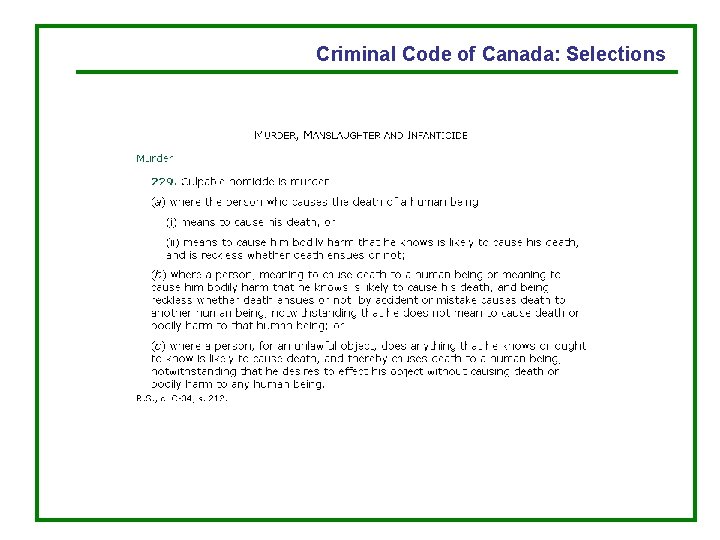
Criminal Code of Canada: Selections
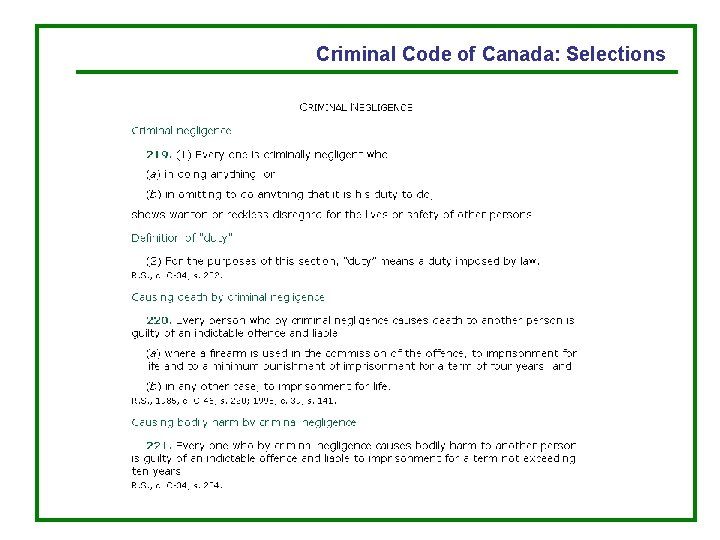
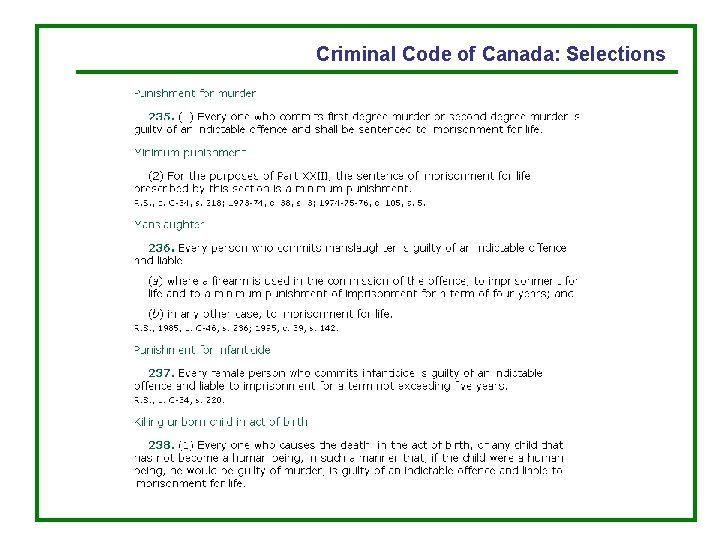
Criminal Code of Canada: Selections
Criminal Code of Canada: Selections
Criminal Code of Canada: Selections
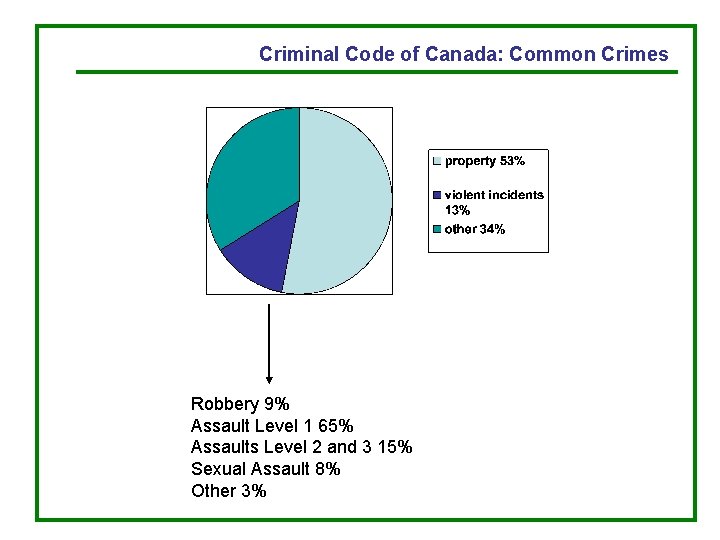
Criminal Code of Canada: Common Crimes Robbery 9% Assault Level 1 65% Assaults Level 2 and 3 15% Sexual Assault 8% Other 3%
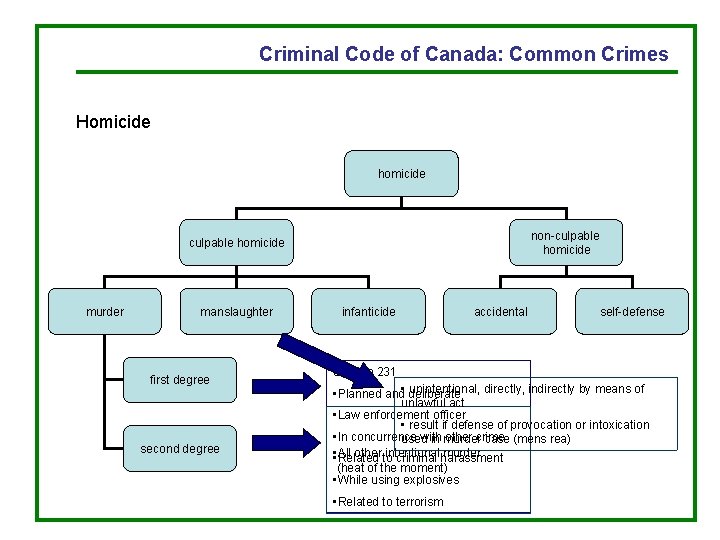
Criminal Code of Canada: Common Crimes Homicide homicide non-culpable homicide murder manslaughter first degree second degree infanticide accidental self-defense Section 231 unintentional, directly, indirectly by means of • Planned and • deliberate unlawful act • Law enforcement officer • result if defense of provocation or intoxication • In concurrence with other crime used in murder case (mens rea) • • All other to intentional murder Related criminal harassment (heat of the moment) • While using explosives • Related to terrorism
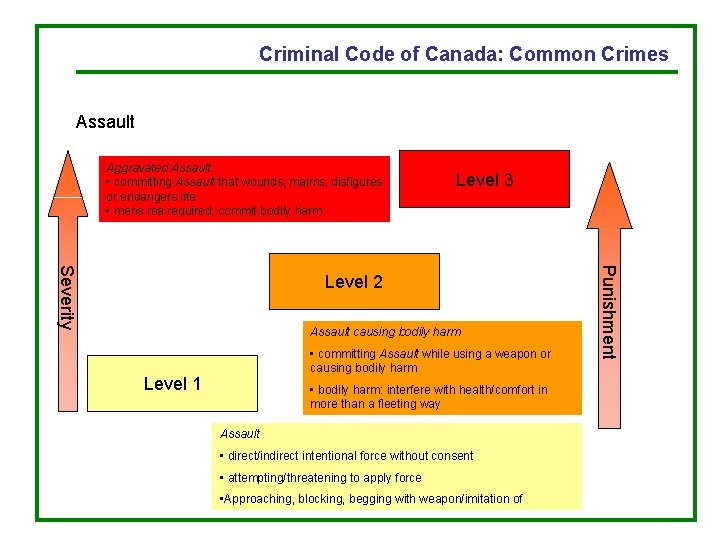
Criminal Code of Canada: Common Crimes Assault Aggravated Assault • committing Assault that wounds, maims, disfigures or endangers life • mens rea required: commit bodily harm Level 3 Assault causing bodily harm • committing Assault while using a weapon or causing bodily harm Level 1 • bodily harm: interfere with health/comfort in more than a fleeting way Assault • direct/indirect intentional force without consent • attempting/threatening to apply force • Approaching, blocking, begging with weapon/imitation of Punishment Severity Level 2
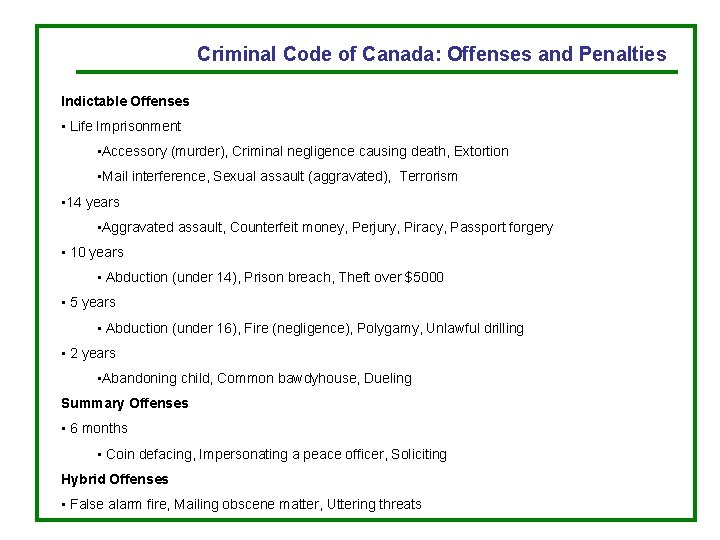
Criminal Code of Canada: Offenses and Penalties Indictable Offenses • Life Imprisonment • Accessory (murder), Criminal negligence causing death, Extortion • Mail interference, Sexual assault (aggravated), Terrorism • 14 years • Aggravated assault, Counterfeit money, Perjury, Piracy, Passport forgery • 10 years • Abduction (under 14), Prison breach, Theft over $5000 • 5 years • Abduction (under 16), Fire (negligence), Polygamy, Unlawful drilling • 2 years • Abandoning child, Common bawdyhouse, Dueling Summary Offenses • 6 months • Coin defacing, Impersonating a peace officer, Soliciting Hybrid Offenses • False alarm fire, Mailing obscene matter, Uttering threats
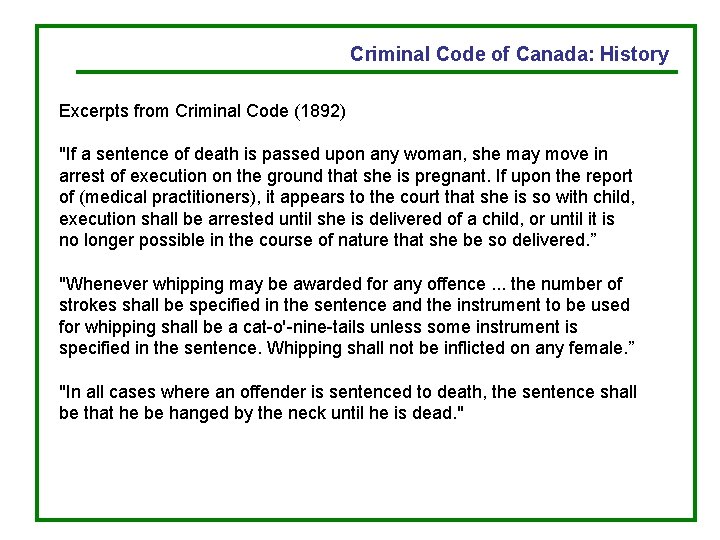
Criminal Code of Canada: History Excerpts from Criminal Code (1892) "If a sentence of death is passed upon any woman, she may move in arrest of execution on the ground that she is pregnant. If upon the report of (medical practitioners), it appears to the court that she is so with child, execution shall be arrested until she is delivered of a child, or until it is no longer possible in the course of nature that she be so delivered. ” "Whenever whipping may be awarded for any offence. . . the number of strokes shall be specified in the sentence and the instrument to be used for whipping shall be a cat-o'-nine-tails unless some instrument is specified in the sentence. Whipping shall not be inflicted on any female. ” "In all cases where an offender is sentenced to death, the sentence shall be that he be hanged by the neck until he is dead. "
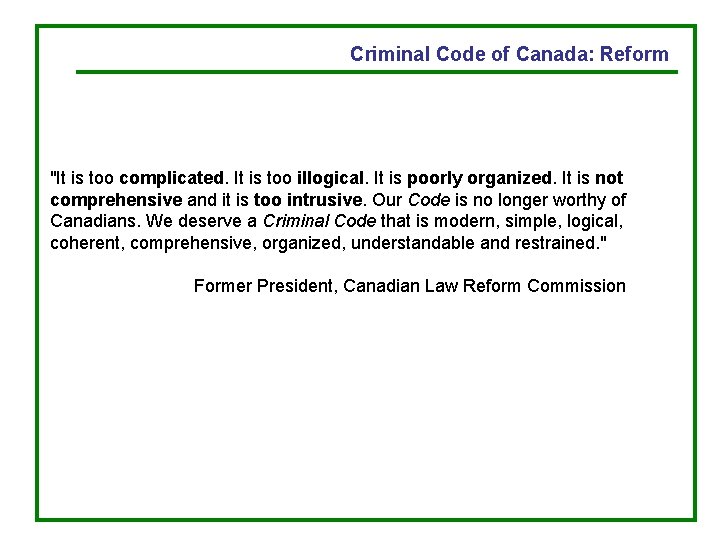
Criminal Code of Canada: Reform "It is too complicated. It is too illogical. It is poorly organized. It is not comprehensive and it is too intrusive. Our Code is no longer worthy of Canadians. We deserve a Criminal Code that is modern, simple, logical, coherent, comprehensive, organized, understandable and restrained. " Former President, Canadian Law Reform Commission
Legal Research
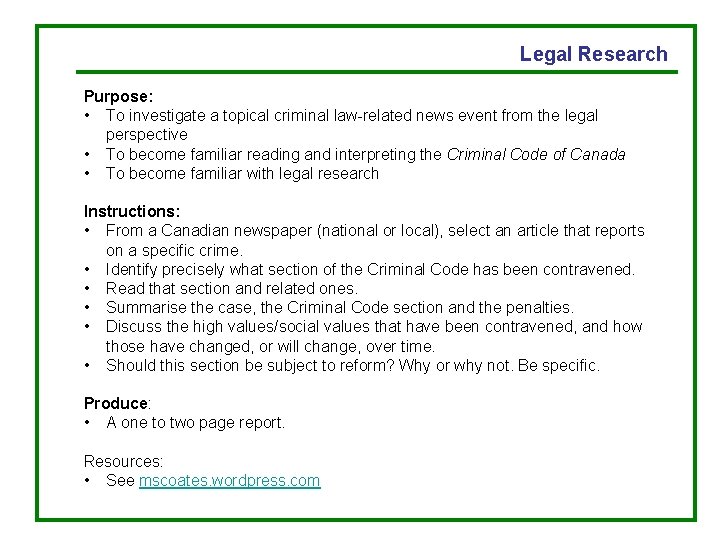
Legal Research Purpose: • To investigate a topical criminal law-related news event from the legal perspective • To become familiar reading and interpreting the Criminal Code of Canada • To become familiar with legal research Instructions: • From a Canadian newspaper (national or local), select an article that reports on a specific crime. • Identify precisely what section of the Criminal Code has been contravened. • Read that section and related ones. • Summarise the case, the Criminal Code section and the penalties. • Discuss the high values/social values that have been contravened, and how those have changed, or will change, over time. • Should this section be subject to reform? Why or why not. Be specific. Produce: • A one to two page report. Resources: • See mscoates. wordpress. com