
The Covered Wagon Westward Expansion American History Group

- Slides: 7
The Covered Wagon & Westward Expansion American History Group 16 th February 2021 1
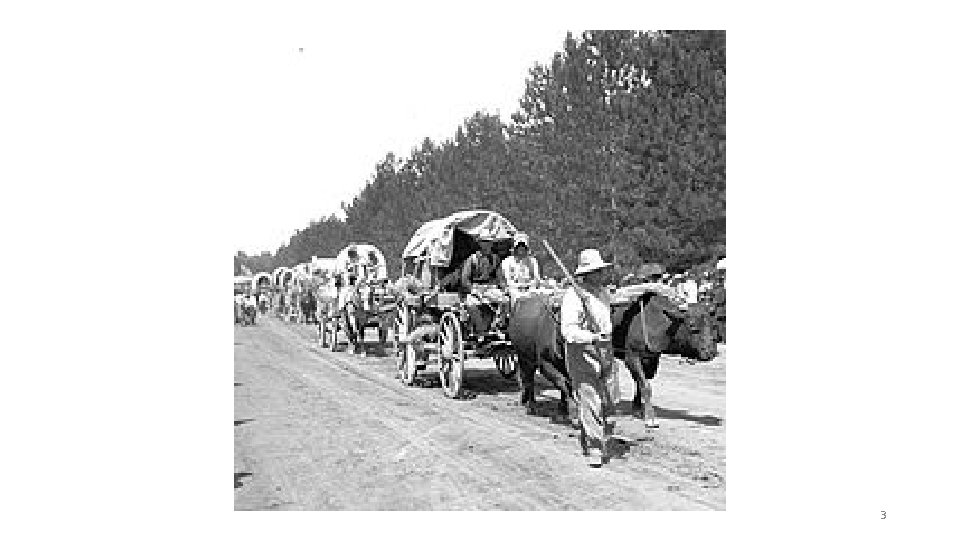
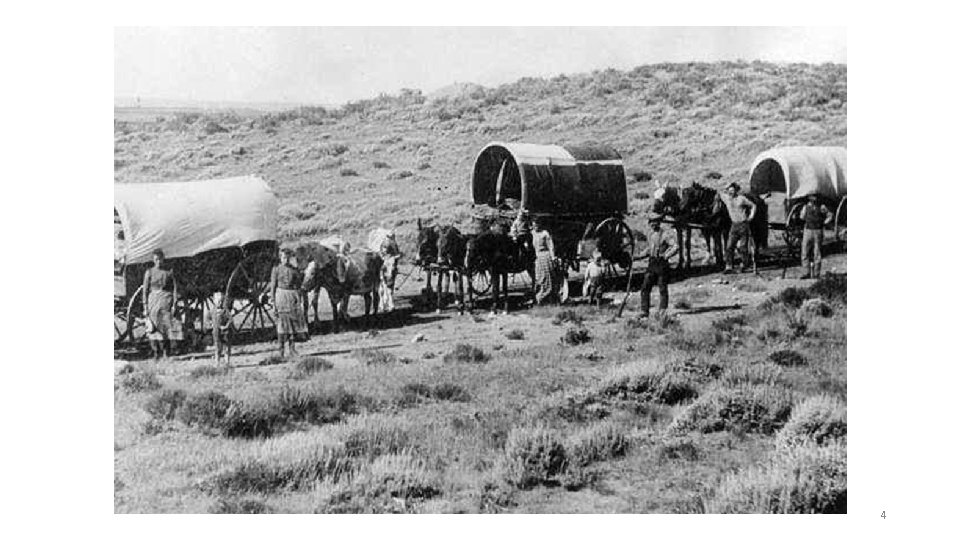
The Covered Wagons • Every movie and television show about the old west and the pioneer days includes covered wagons. • As kids we made some models in elementary school, and played "Oregon Trail" (we played cowboys & Indians as well). • These canvas-topped, horse-drawn wagons have become a symbol of the pioneering spirit of Americans during the westward expansion of the 1800’s – it was the covered wagon that moved the country west. • Prairie Schooners were not the ideal form of transportation, but for the pioneers of the 1800’s, it was their only real option. Despite the images we see on TV, the Prairie Schooners were slow, bone-jarring, cramped wagons. • They carried the family’s belongings over great distances. It was called the Prairie Schooner because the white canvas covers looked like the sails of schooner ships from a distance. 2
3
4
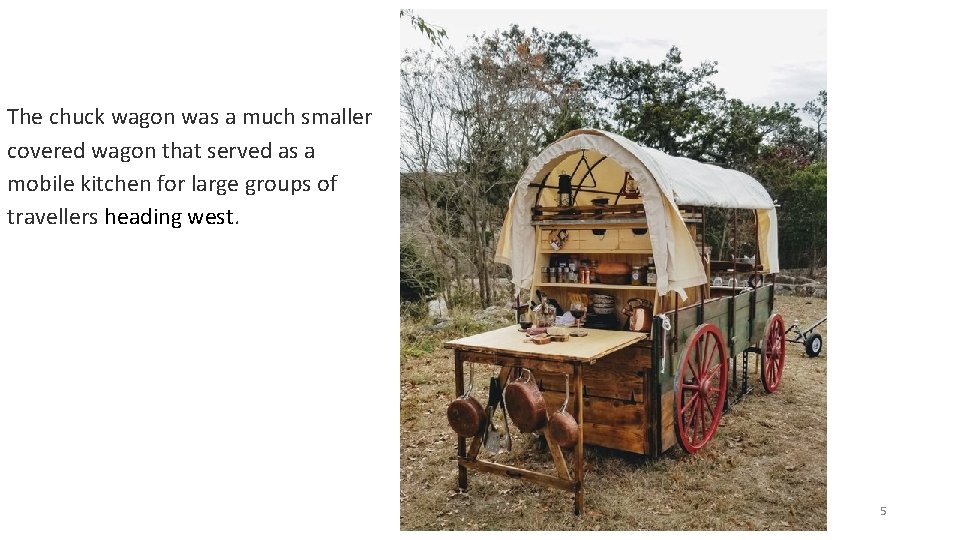
The chuck wagon was a much smaller covered wagon that served as a mobile kitchen for large groups of travellers heading west. 5
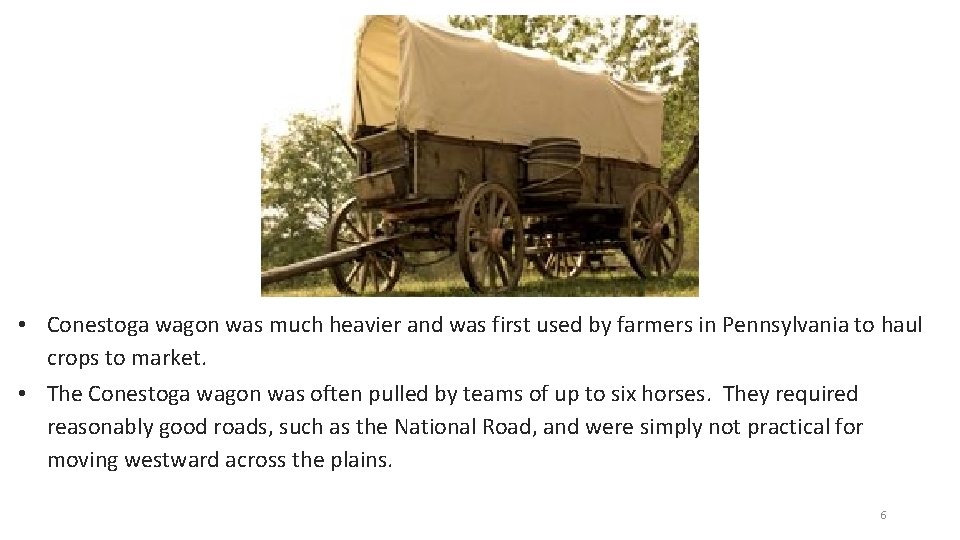
• Conestoga wagon was much heavier and was first used by farmers in Pennsylvania to haul crops to market. • The Conestoga wagon was often pulled by teams of up to six horses. They required reasonably good roads, such as the National Road, and were simply not practical for moving westward across the plains. 6
The Prairie Schooner • The prairie schooner was a lighter wagon designed to travel great distances on rough prairie trails. • It could be pulled by a single team of horses (or even one horse) or most often by oxen or mules. • They would be packed very carefully, with heavy pieces of furniture, or crates of supplies, placed low in the wagon box to keep the wagon from tipping on rough trails. With the possessions of a typical family stowed aboard the wagon, there generally wasn't much room to ride inside. • The wagons were surprisingly small, measuring only about four feet wide and eight or nine feet long. That means the entire wagon was narrower than a full-size bed and only a little bit longer. • All of the family’s belongings had to be packed into the wagon, leaving no room for beds. • The ride was often pretty rough, as the suspension was minimal. • Many "emigrants" heading westward would simply walk alongside the wagon, with only children or the elderly riding inside. • When stopped for the night, families tended to sleep under the stars. In rainy weather, families would seek to stay dry by huddling under the wagon, rather than inside it. • To repair a broken wheel, all the belongings had to be removed – an arduous task. 7