
The Courtship of a Major Gift Launching Major
- Slides: 30
The Courtship of a Major Gift Launching Major Gifts Programs at UCP Amy Simons UCP of Los Angeles, Ventura and Santa Barbara Counties April 2013
What to expect Evaluating your organization and donors to see if you are ready for a Major Gifts campaign Who is involved in the Major Gifts team and their roles Defining a campaign Cultivating donor relationships
Is your organization ready for a Major Gifts program Manage Expectations Focus on organization’s Mission Strategic Plan Realistic goals Set Priorities Identify and assess Capacity Inclination
Managing Expectations Getting the most from available resources Identifying the members and roles of your Major Gifts team Provide strong, reliable development support and structure Evaluate existing donors and their stewardship Be realistic about the time it takes members of the major gift team to build a lasting relationship with a donors
Set Priorities Which campaign comes first? Annual Fund Capital Campaign Major Gifts
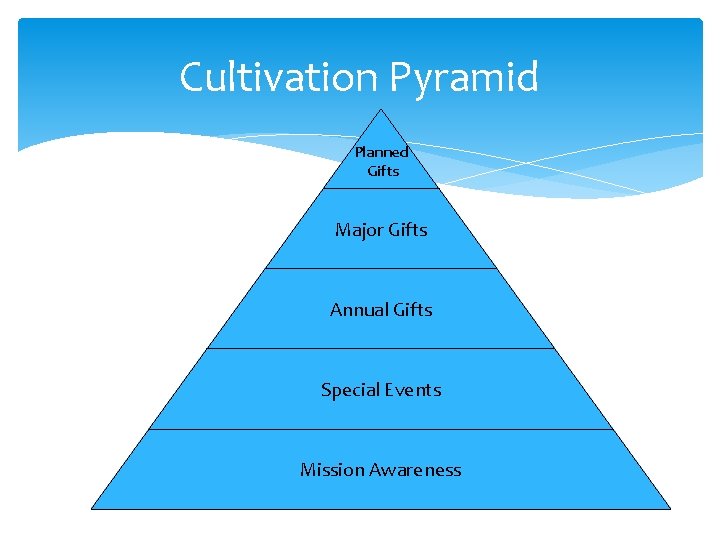
Cultivation Pyramid Planned Gifts Major Gifts Annual Gifts Special Events Mission Awareness
Establish Major Gift Goals Identify funding goals Fundraising Goal Timeline
Establish Major Gift Goals Create Gift Chart Identify Lead Gifts Multi-year gifts Identify prospective donors Prospective families Donor recognition Naming opportunities
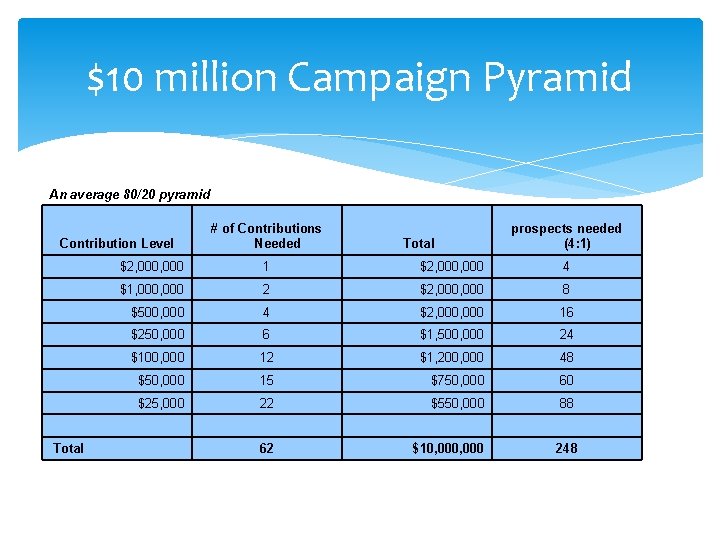
$10 million Campaign Pyramid An average 80/20 pyramid Contribution Level Total # of Contributions Needed Total prospects needed (4: 1) $2, 000 1 $2, 000 4 $1, 000 2 $2, 000 8 $500, 000 4 $2, 000 16 $250, 000 6 $1, 500, 000 24 $100, 000 12 $1, 200, 000 48 $50, 000 15 $750, 000 60 $25, 000 22 $550, 000 88 62 $10, 000 248
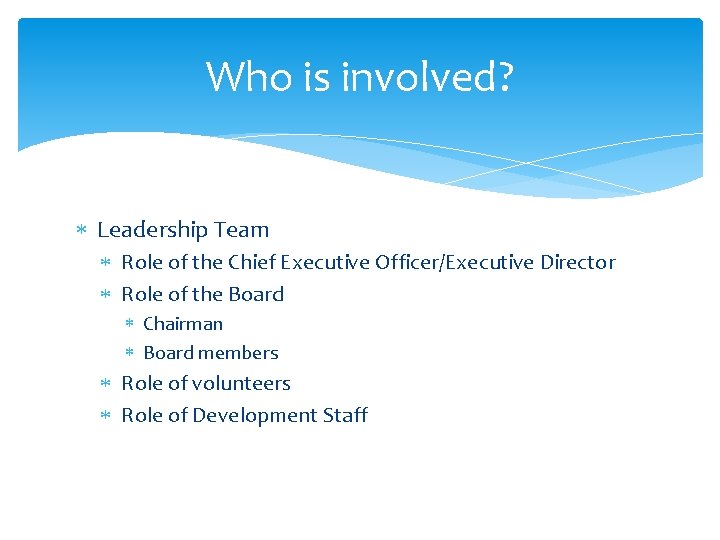
Who is involved? Leadership Team Role of the Chief Executive Officer/Executive Director Role of the Board Chairman Board members Role of volunteers Role of Development Staff
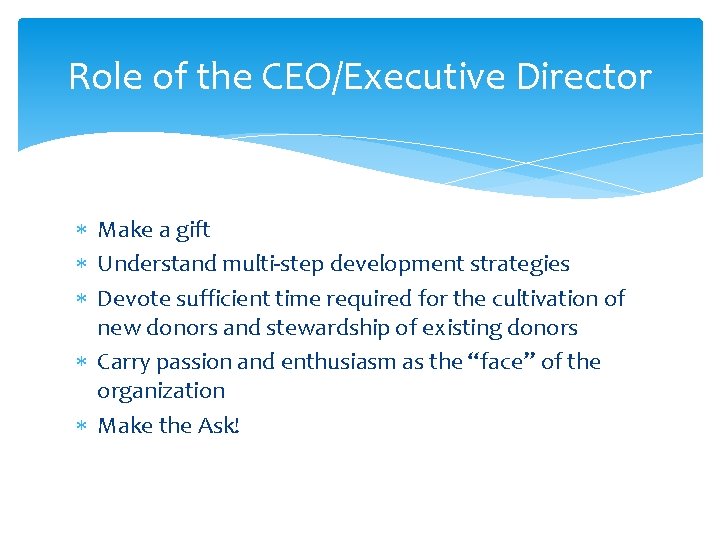
Role of the CEO/Executive Director Make a gift Understand multi-step development strategies Devote sufficient time required for the cultivation of new donors and stewardship of existing donors Carry passion and enthusiasm as the “face” of the organization Make the Ask!
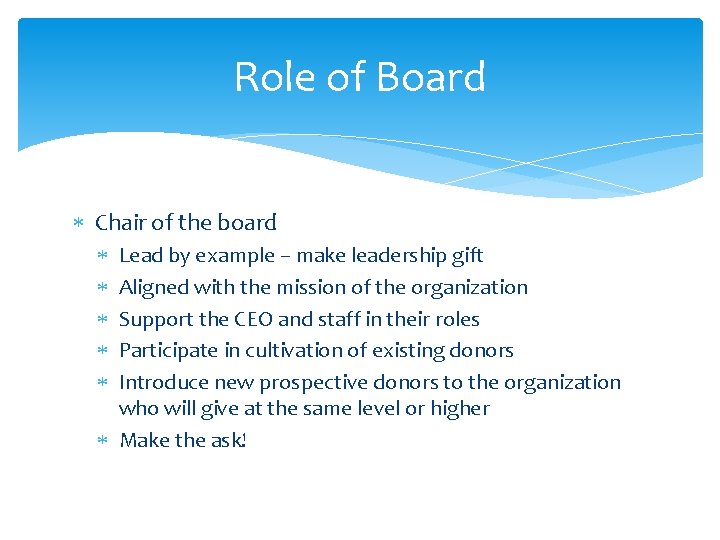
Role of Board Chair of the board Lead by example – make leadership gift Aligned with the mission of the organization Support the CEO and staff in their roles Participate in cultivation of existing donors Introduce new prospective donors to the organization who will give at the same level or higher Make the ask!
Role of Board members Make leadership gift Participate in cultivation of existing donors Introduce new prospective donors to the organization Align with the mission of the organization and show enthusiasm for their ability to continue their mission Ask!
Role of the Volunteer Aligned with the mission of the organization Make a leadership gift Participate in cultivation of existing donors Introduce new prospective donors to the organization who will give at the same level or higher Ask!
Role of Staff The Development staff provide essential leadership for the campaign Staff members are the strategists for the major gift Identify creative ways to approach donors Ensure proper stewardship Work with Major Gift team members to solve potential problems Know the longevity of the campaign How to keep team motivated Celebrating each gift until the goal is realized
What is a Case Statement? It is the core document that defines the campaign goals and strategy.
Crafting a Case Statement What is the need? Evidence of the urgency of the need Your organization’s unique qualifications to address the need What are the benefits to a donor aligning with the cause? What are the negative consequences for not acting?
Identifying your prospects Donor who connect to your organization Frequency of gifts to the organization Pattern of making gifts increasing in size Align with your mission and believe in the organization’s ability to sustain results Capacity to make a significant gift Engage the right people for the cultivation
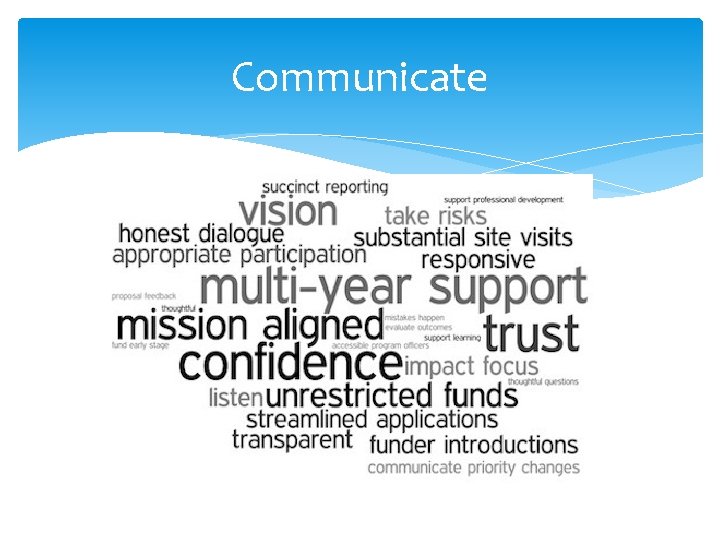
Communicate
Factors that influence donor charitable Decision making Personal Experience with an organization Charity’s connection to you, family or friends Knowledge of the organization How the organization communicates about the use of funds raised Recommendations from family, friend, or advisors How the organization communicates the ways they are carrying out the mission Third Party ratings about an organization Opinion of religious leaders
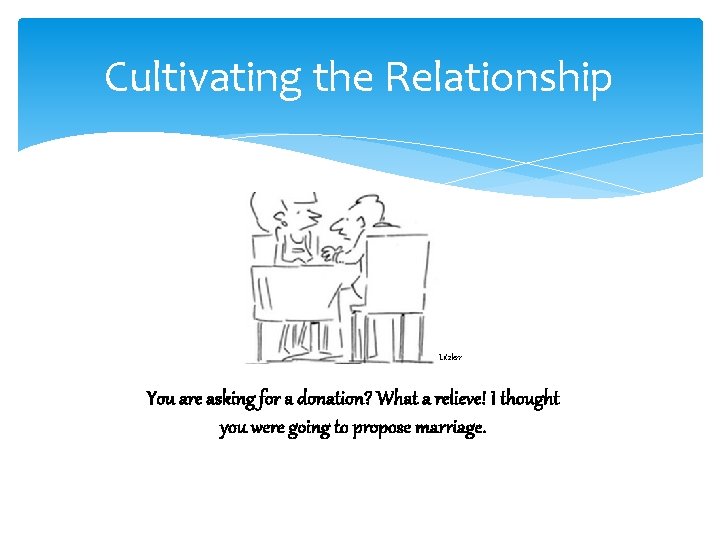
Cultivating the Relationship Litzlerr You are asking for a donation? What a relieve! I thought you were going to propose marriage.
Courting the Donor Use two people teams Don’t ask for funds at the first meeting! You don’t ask someone to marry you on the first date. Importance of Stewardship Rule of thumb is to “touch” donors seven times annually Personal meeting Prompt handwritten thank you notes tour of programs highlighting new projects Annual Report Personal Stories Phone calls Newsletters Etc.
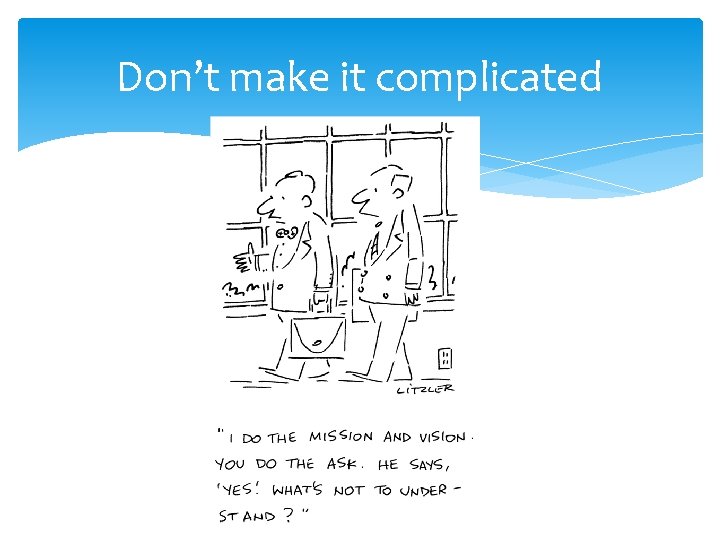
Don’t make it complicated
The art of cultivating a relationship “I have grown to respect the importance of spending time with people. There is no substitute for people spending time together. All the technology in the world doesn’t replace that. You have to interact with each other. That doesn’t happen through emails. ” Kyle Zimmer
Don’t Rush Rome was not built in a day
Going in for the “ask” Summarize Note the prospective donors interests – the interests of their family - how they connect with the organization Reflect on the donor’s commitment shown through prior gifts to the organization Talk about the impact the organization has through personal stories Make the ask! Be quiet – silence can be golden.
Manage Expectations Communicate, Communicate Expectations--theirs and yours Priorities--theirs and yours
Celebrate Victories It is important to take a moment to celebrate Recognize progress made Give proper recognition Recalibrate
In Conclusion Plan Set Goals Strategize Relationship building – giving is a personal act Ask! Celebrate
Thank you Amy Simons Chief Development Officer asimons@ucpla. org phone: (818) 782 -2211 www. ucpla. org