
The Corps of Discovery Journey In The Making
- Slides: 43
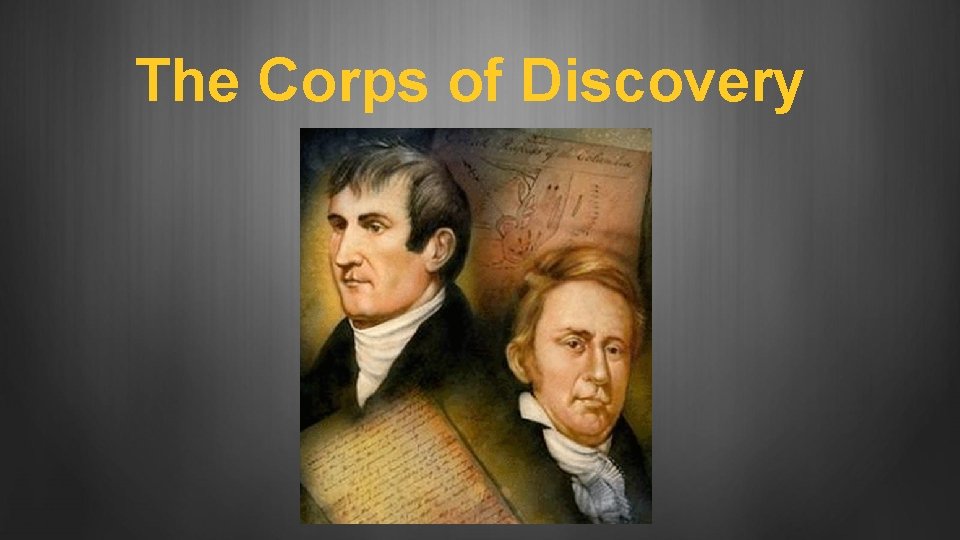
The Corps of Discovery
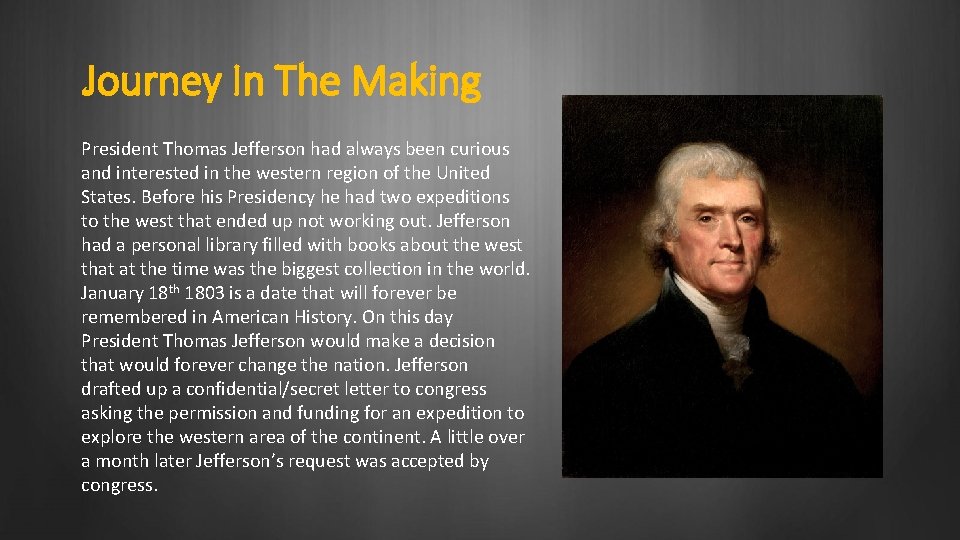
Journey In The Making President Thomas Jefferson had always been curious and interested in the western region of the United States. Before his Presidency he had two expeditions to the west that ended up not working out. Jefferson had a personal library filled with books about the west that at the time was the biggest collection in the world. January 18 th 1803 is a date that will forever be remembered in American History. On this day President Thomas Jefferson would make a decision that would forever change the nation. Jefferson drafted up a confidential/secret letter to congress asking the permission and funding for an expedition to explore the western area of the continent. A little over a month later Jefferson’s request was accepted by congress.
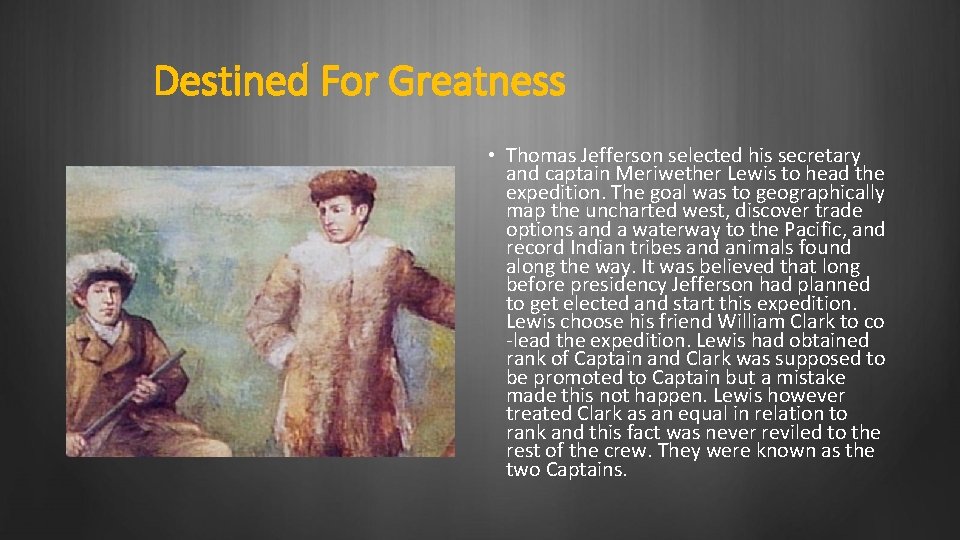
Destined For Greatness • Thomas Jefferson selected his secretary and captain Meriwether Lewis to head the expedition. The goal was to geographically map the uncharted west, discover trade options and a waterway to the Pacific, and record Indian tribes and animals found along the way. It was believed that long before presidency Jefferson had planned to get elected and start this expedition. Lewis choose his friend William Clark to co -lead the expedition. Lewis had obtained rank of Captain and Clark was supposed to be promoted to Captain but a mistake made this not happen. Lewis however treated Clark as an equal in relation to rank and this fact was never reviled to the rest of the crew. They were known as the two Captains.
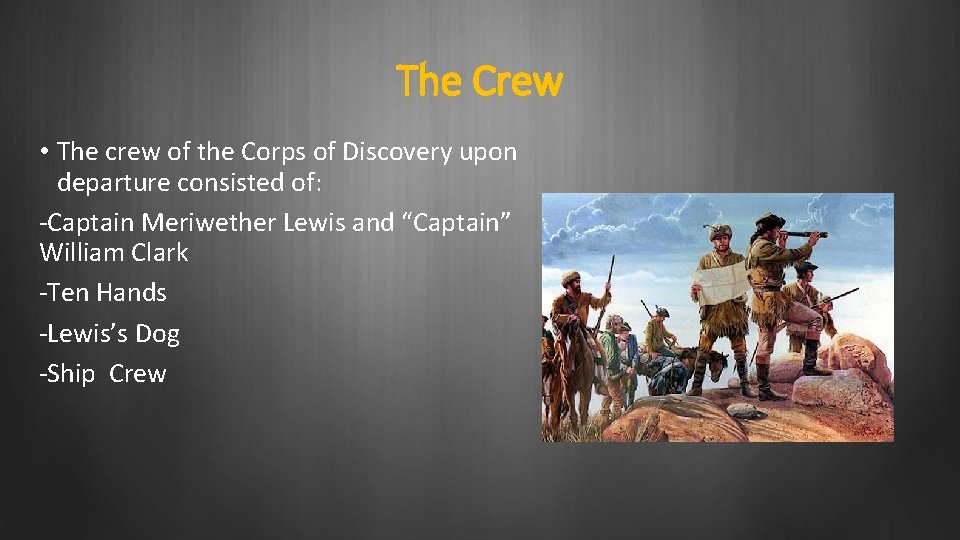
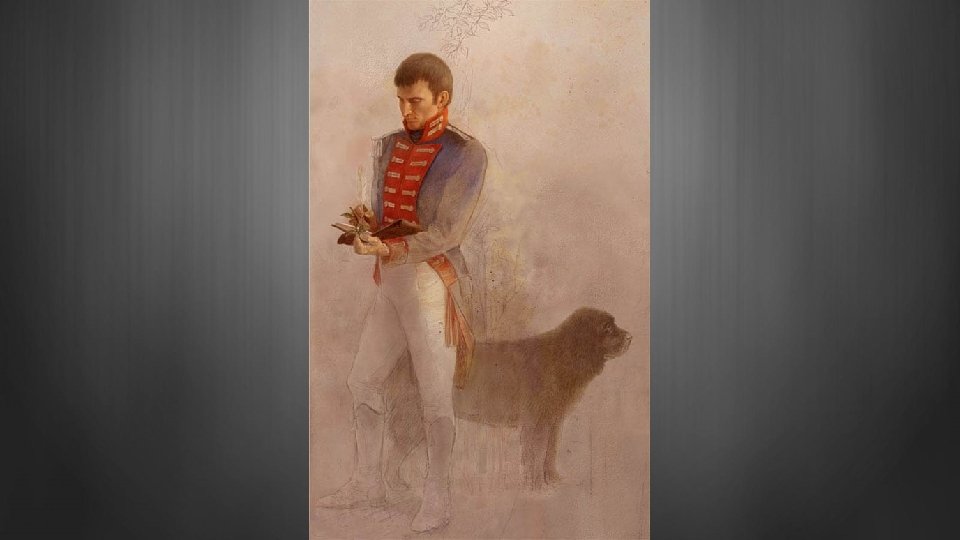
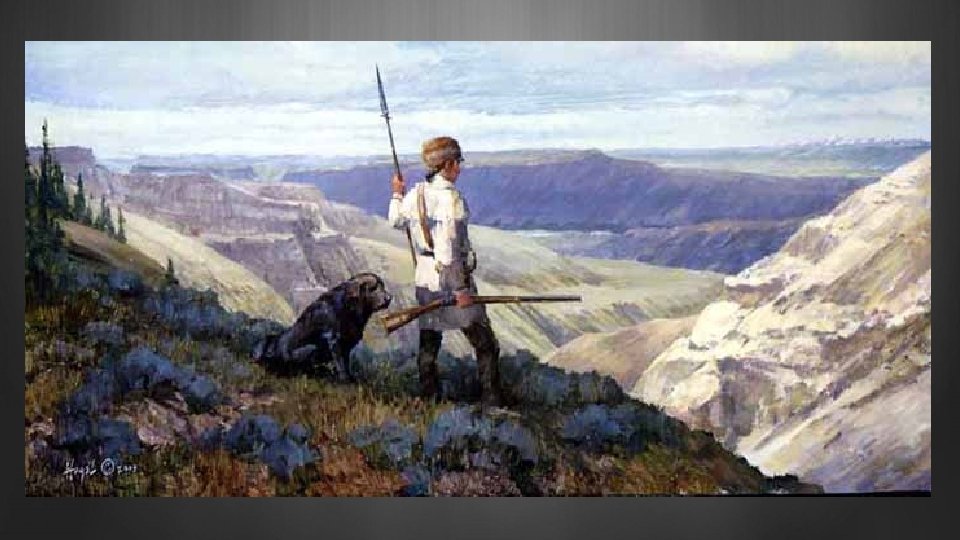
The Crew • The crew of the Corps of Discovery upon departure consisted of: -Captain Meriwether Lewis and “Captain” William Clark -Ten Hands -Lewis’s Dog -Ship Crew
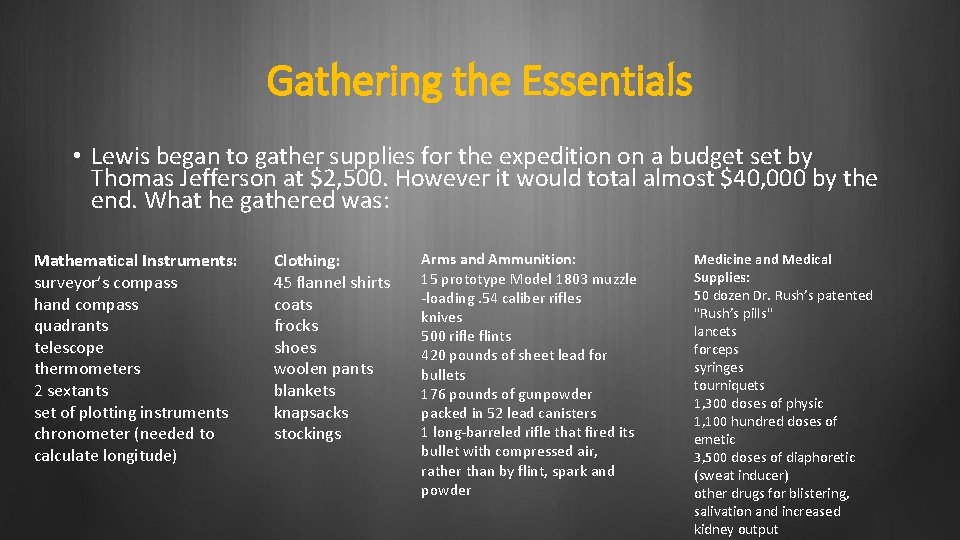
Gathering the Essentials • Lewis began to gather supplies for the expedition on a budget set by Thomas Jefferson at $2, 500. However it would total almost $40, 000 by the end. What he gathered was: Mathematical Instruments: surveyor’s compass hand compass quadrants telescope thermometers 2 sextants set of plotting instruments chronometer (needed to calculate longitude) Clothing: 45 flannel shirts coats frocks shoes woolen pants blankets knapsacks stockings Arms and Ammunition: 15 prototype Model 1803 muzzle -loading. 54 caliber rifles knives 500 rifle flints 420 pounds of sheet lead for bullets 176 pounds of gunpowder packed in 52 lead canisters 1 long-barreled rifle that fired its bullet with compressed air, rather than by flint, spark and powder Medicine and Medical Supplies: 50 dozen Dr. Rush’s patented "Rush’s pills" lancets forceps syringes tourniquets 1, 300 doses of physic 1, 100 hundred doses of emetic 3, 500 doses of diaphoretic (sweat inducer) other drugs for blistering, salivation and increased kidney output
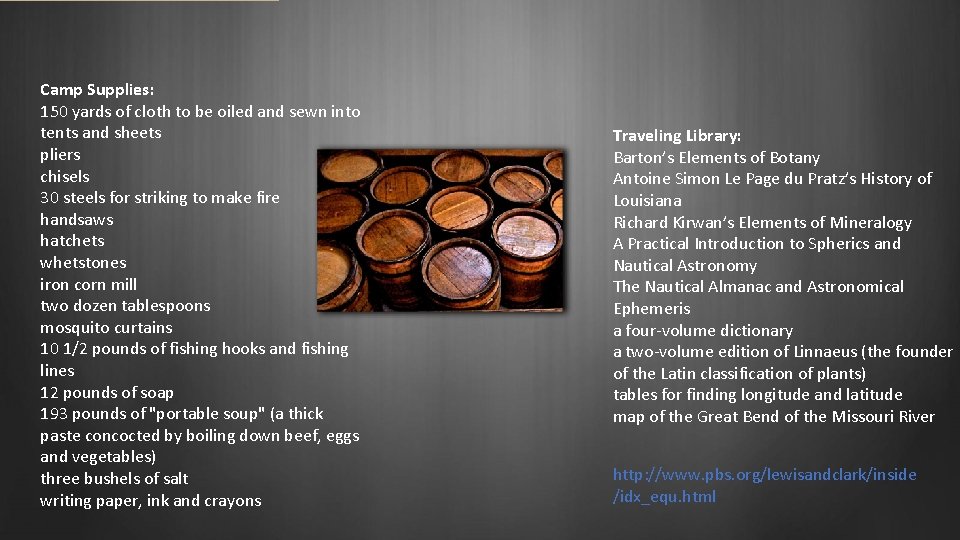
Camp Supplies: 150 yards of cloth to be oiled and sewn into tents and sheets pliers chisels 30 steels for striking to make fire handsaws hatchets whetstones iron corn mill two dozen tablespoons mosquito curtains 10 1/2 pounds of fishing hooks and fishing lines 12 pounds of soap 193 pounds of "portable soup" (a thick paste concocted by boiling down beef, eggs and vegetables) three bushels of salt writing paper, ink and crayons Traveling Library: Barton’s Elements of Botany Antoine Simon Le Page du Pratz’s History of Louisiana Richard Kirwan’s Elements of Mineralogy A Practical Introduction to Spherics and Nautical Astronomy The Nautical Almanac and Astronomical Ephemeris a four-volume dictionary a two-volume edition of Linnaeus (the founder of the Latin classification of plants) tables for finding longitude and latitude map of the Great Bend of the Missouri River http: //www. pbs. org/lewisandclark/inside /idx_equ. html
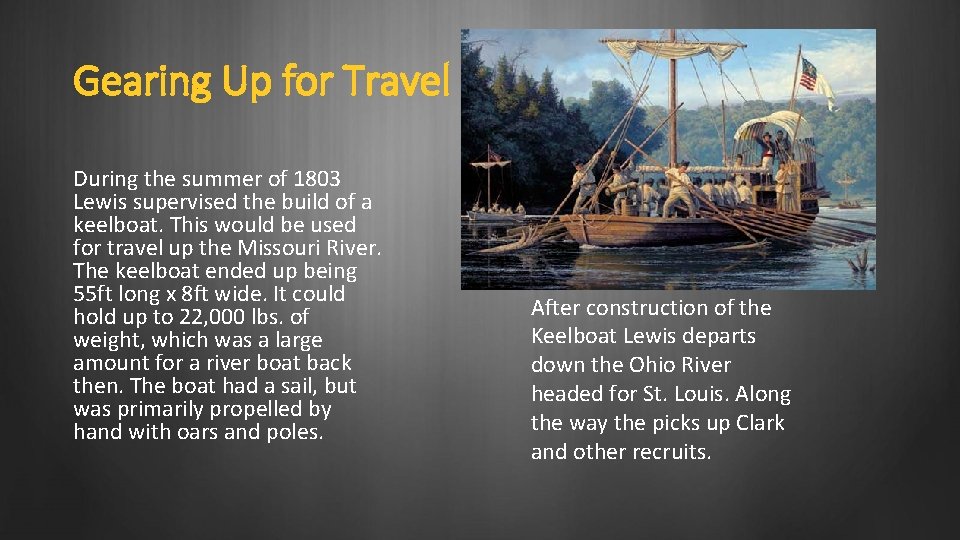
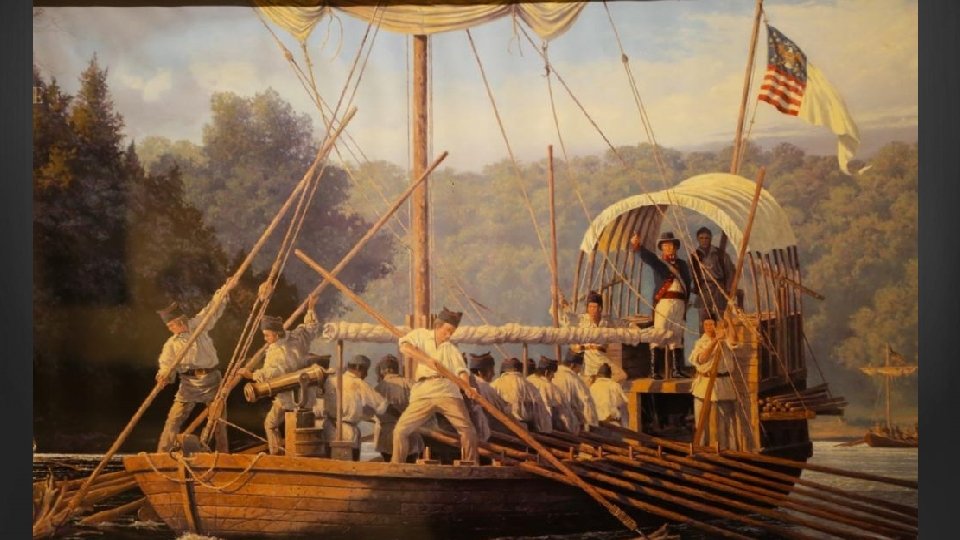
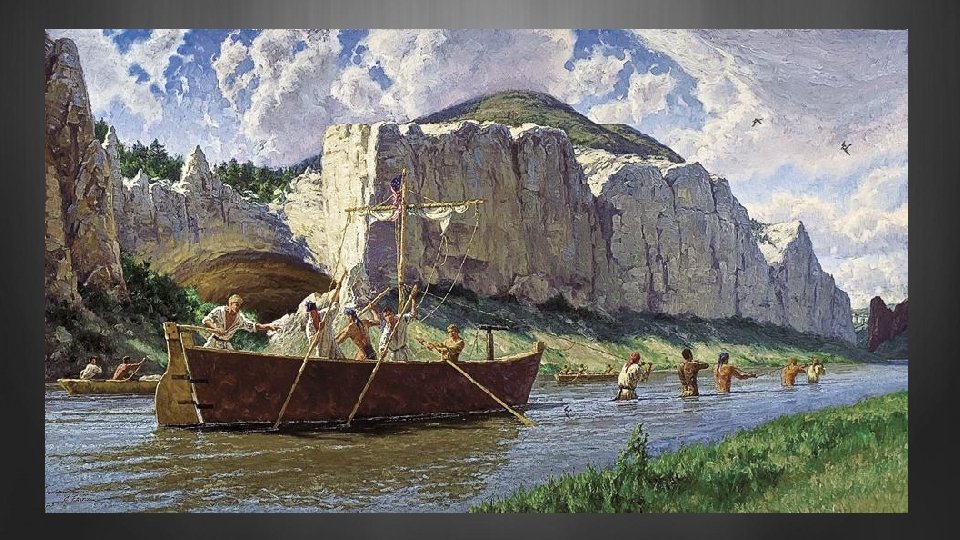
Gearing Up for Travel During the summer of 1803 Lewis supervised the build of a keelboat. This would be used for travel up the Missouri River. The keelboat ended up being 55 ft long x 8 ft wide. It could hold up to 22, 000 lbs. of weight, which was a large amount for a river boat back then. The boat had a sail, but was primarily propelled by hand with oars and poles. After construction of the Keelboat Lewis departs down the Ohio River headed for St. Louis. Along the way the picks up Clark and other recruits.
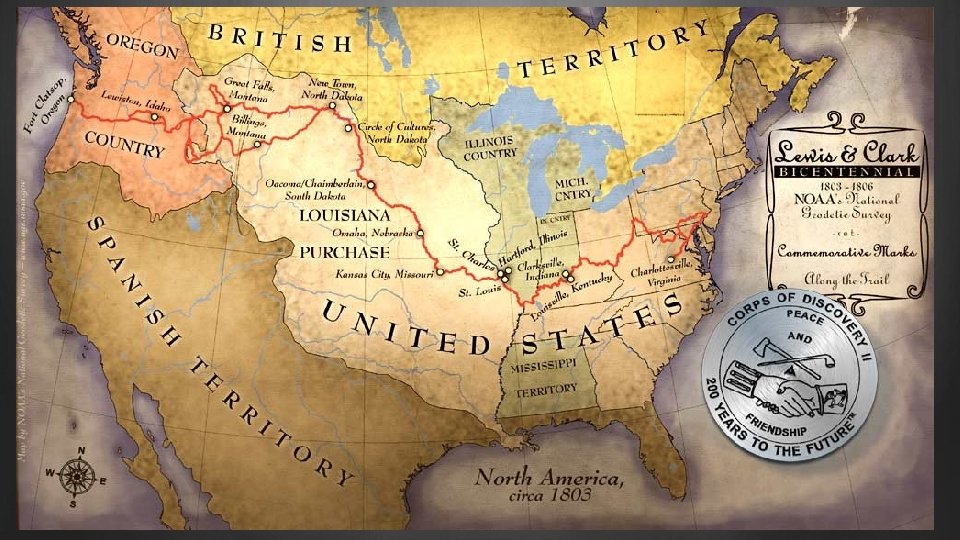
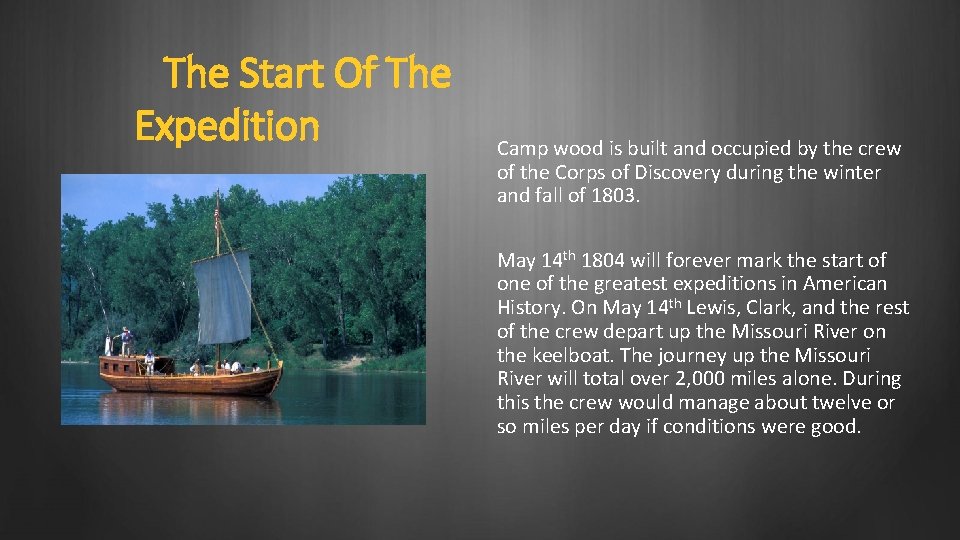
The Start Of The Expedition Camp wood is built and occupied by the crew of the Corps of Discovery during the winter and fall of 1803. May 14 th 1804 will forever mark the start of one of the greatest expeditions in American History. On May 14 th Lewis, Clark, and the rest of the crew depart up the Missouri River on the keelboat. The journey up the Missouri River will total over 2, 000 miles alone. During this the crew would manage about twelve or so miles per day if conditions were good.
Forth of July On July 4 th 1804 the Corps decide to celebrate their patriotism. They started to celebrate by taking out extra whiskey rations and started drinking. The boat was equipped with a cannon that they proceeded to fire along with their rifles. They also decided to name a creek that was passed. The Corps called it Independence creek, which goes along great with events that were taking place. They made camp at an abandoned Indian village and fired the cannon once more at sundown.
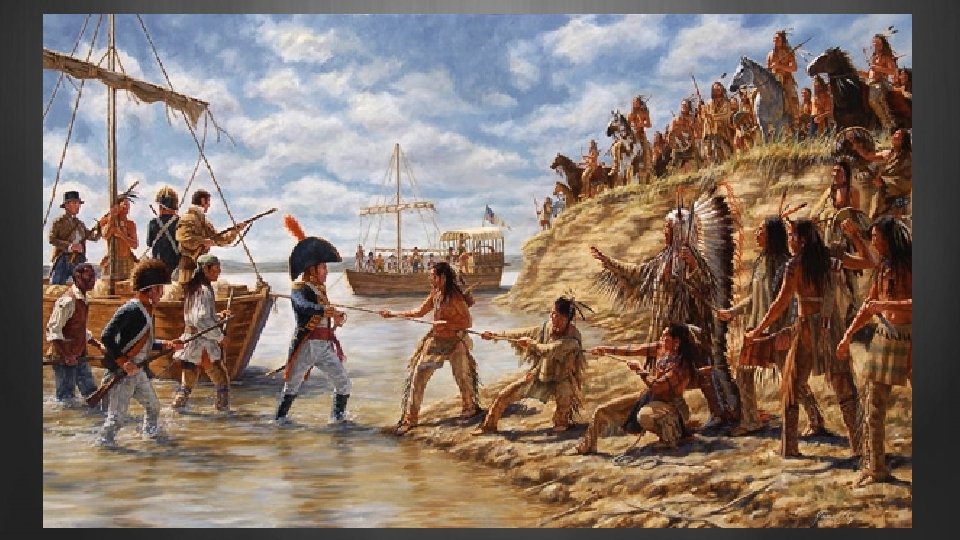
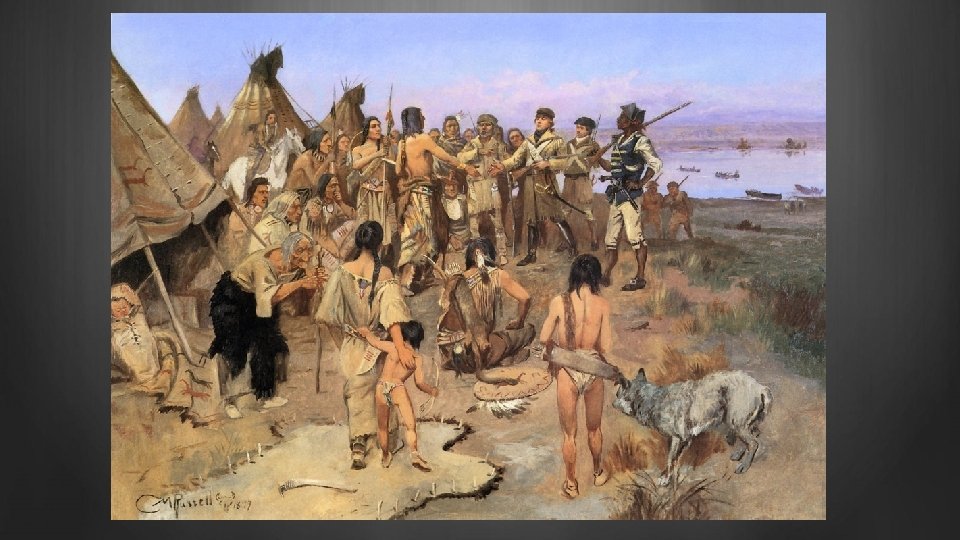
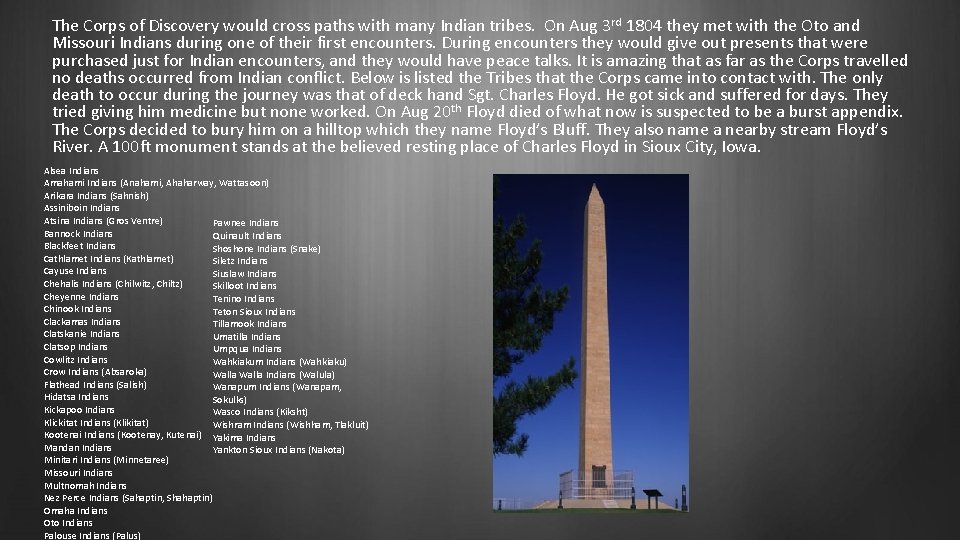
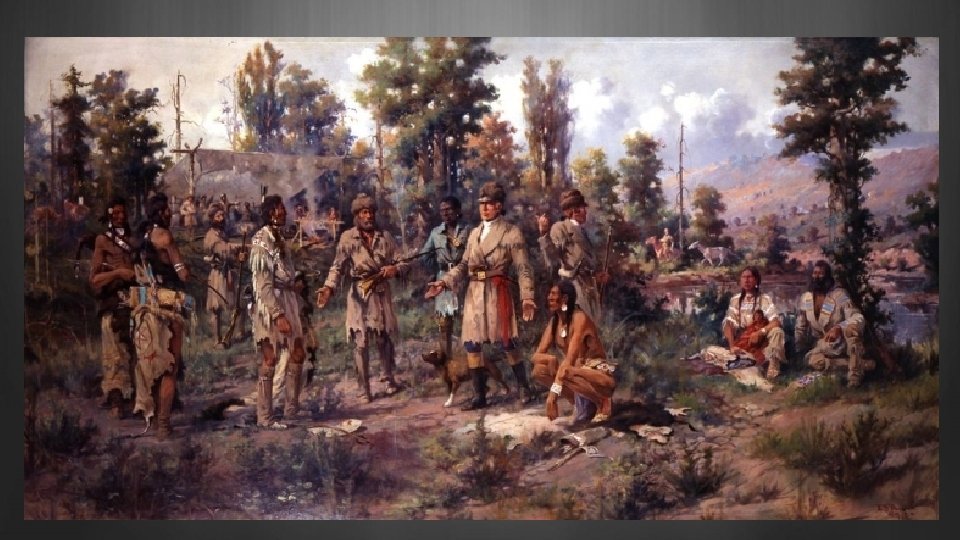
The Corps of Discovery would cross paths with many Indian tribes. On Aug 3 rd 1804 they met with the Oto and Missouri Indians during one of their first encounters. During encounters they would give out presents that were purchased just for Indian encounters, and they would have peace talks. It is amazing that as far as the Corps travelled no deaths occurred from Indian conflict. Below is listed the Tribes that the Corps came into contact with. The only death to occur during the journey was that of deck hand Sgt. Charles Floyd. He got sick and suffered for days. They tried giving him medicine but none worked. On Aug 20 th Floyd died of what now is suspected to be a burst appendix. The Corps decided to bury him on a hilltop which they name Floyd’s Bluff. They also name a nearby stream Floyd’s River. A 100 ft monument stands at the believed resting place of Charles Floyd in Sioux City, Iowa. Alsea Indians Amahami Indians (Anahami, Ahaharway, Wattasoon) Arikara Indians (Sahnish) Assiniboin Indians Atsina Indians (Gros Ventre) Pawnee Indians Bannock Indians Quinault Indians Blackfeet Indians Shoshone Indians (Snake) Cathlamet Indians (Kathlamet) Siletz Indians Cayuse Indians Siuslaw Indians Chehalis Indians (Chilwitz, Chiltz) Skilloot Indians Cheyenne Indians Tenino Indians Chinook Indians Teton Sioux Indians Clackamas Indians Tillamook Indians Clatskanie Indians Umatilla Indians Clatsop Indians Umpqua Indians Cowlitz Indians Wahkiakum Indians (Wahkiaku) Crow Indians (Absaroka) Walla Indians (Walula) Flathead Indians (Salish) Wanapum Indians (Wanapam, Hidatsa Indians Sokulks) Kickapoo Indians Wasco Indians (Kiksht) Klickitat Indians (Klikitat) Wishram Indians (Wishham, Tlakluit) Kootenai Indians (Kootenay, Kutenai) Yakima Indians Mandan Indians Yankton Sioux Indians (Nakota) Minitari Indians (Minnetaree) Missouri Indians Multnomah Indians Nez Perce Indians (Sahaptin, Shahaptin) Omaha Indians Oto Indians Palouse Indians (Palus)
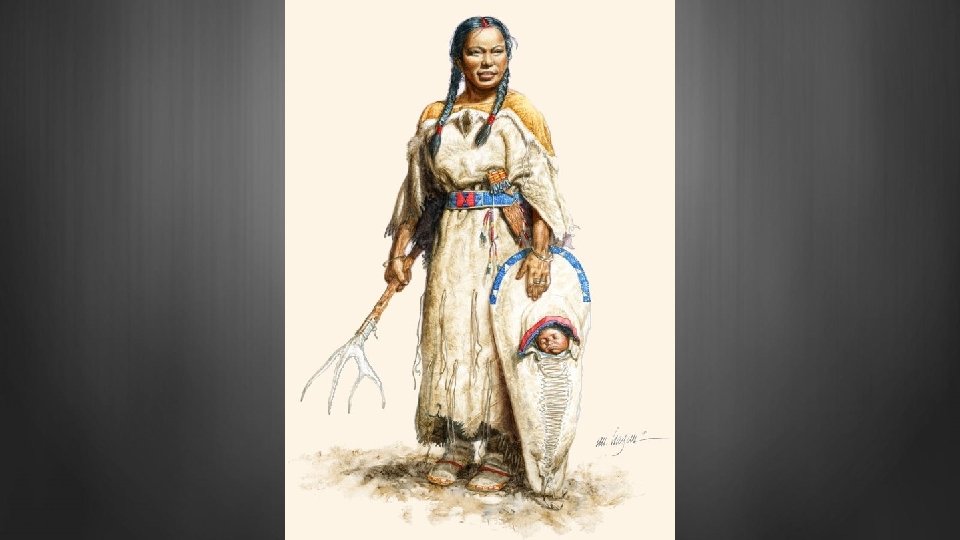
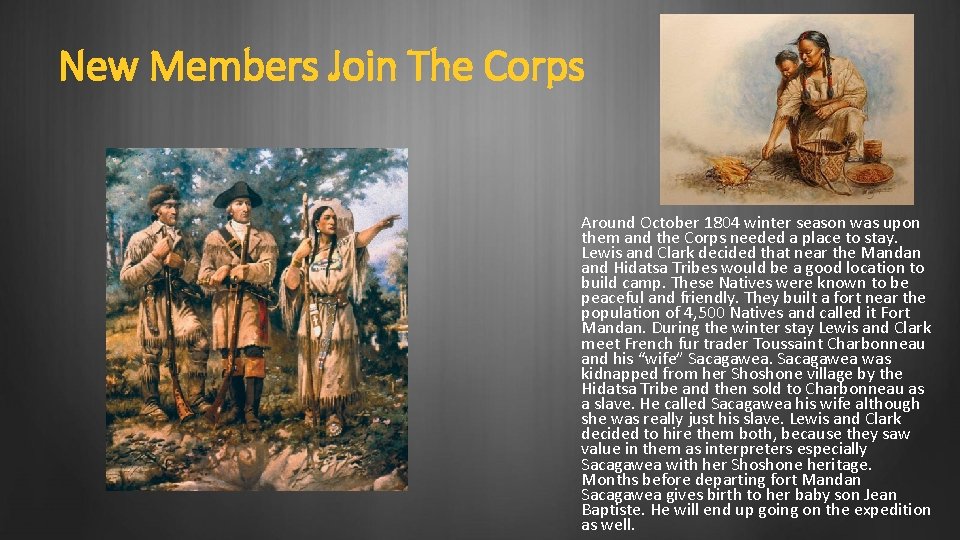
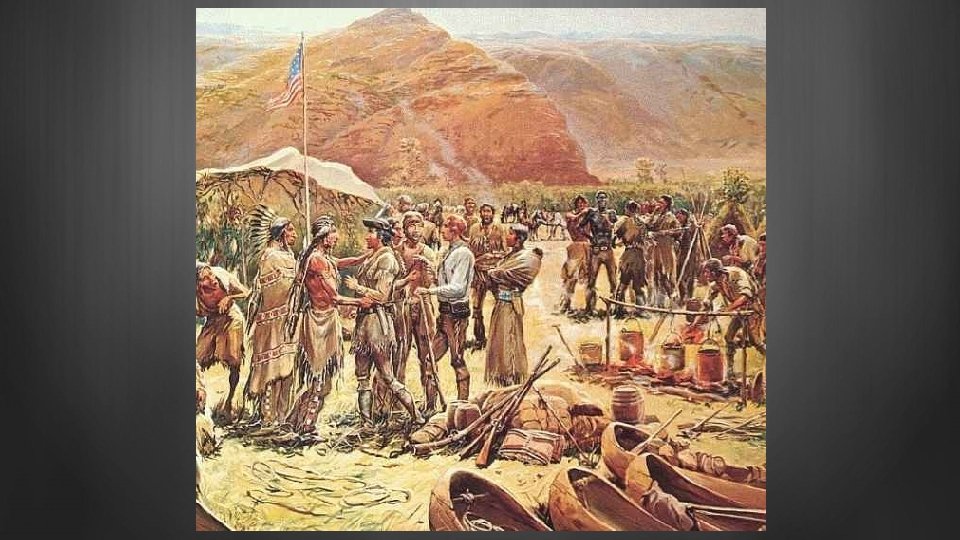
New Members Join The Corps Around October 1804 winter season was upon them and the Corps needed a place to stay. Lewis and Clark decided that near the Mandan and Hidatsa Tribes would be a good location to build camp. These Natives were known to be peaceful and friendly. They built a fort near the population of 4, 500 Natives and called it Fort Mandan. During the winter stay Lewis and Clark meet French fur trader Toussaint Charbonneau and his “wife” Sacagawea was kidnapped from her Shoshone village by the Hidatsa Tribe and then sold to Charbonneau as a slave. He called Sacagawea his wife although she was really just his slave. Lewis and Clark decided to hire them both, because they saw value in them as interpreters especially Sacagawea with her Shoshone heritage. Months before departing fort Mandan Sacagawea gives birth to her baby son Jean Baptiste. He will end up going on the expedition as well.
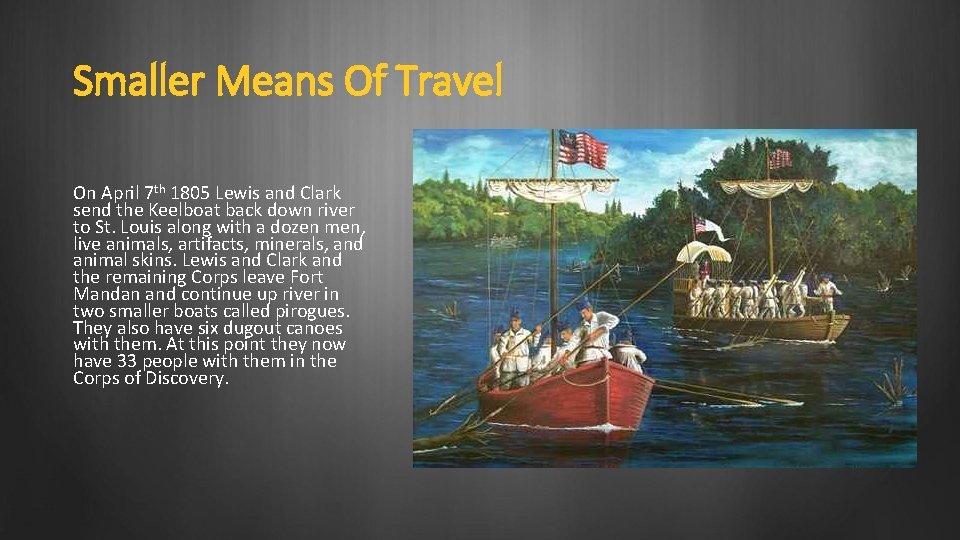
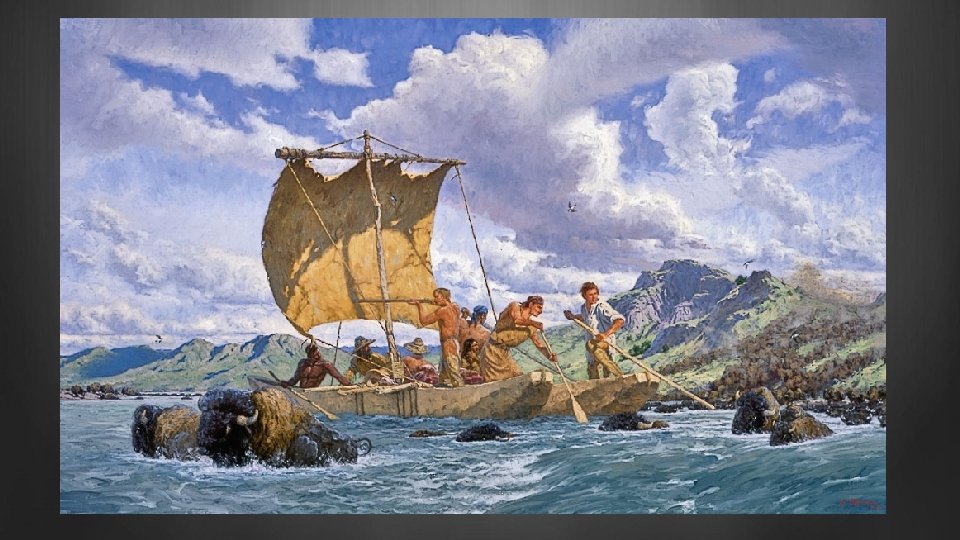
Smaller Means Of Travel On April 7 th 1805 Lewis and Clark send the Keelboat back down river to St. Louis along with a dozen men, live animals, artifacts, minerals, and animal skins. Lewis and Clark and the remaining Corps leave Fort Mandan and continue up river in two smaller boats called pirogues. They also have six dugout canoes with them. At this point they now have 33 people with them in the Corps of Discovery.
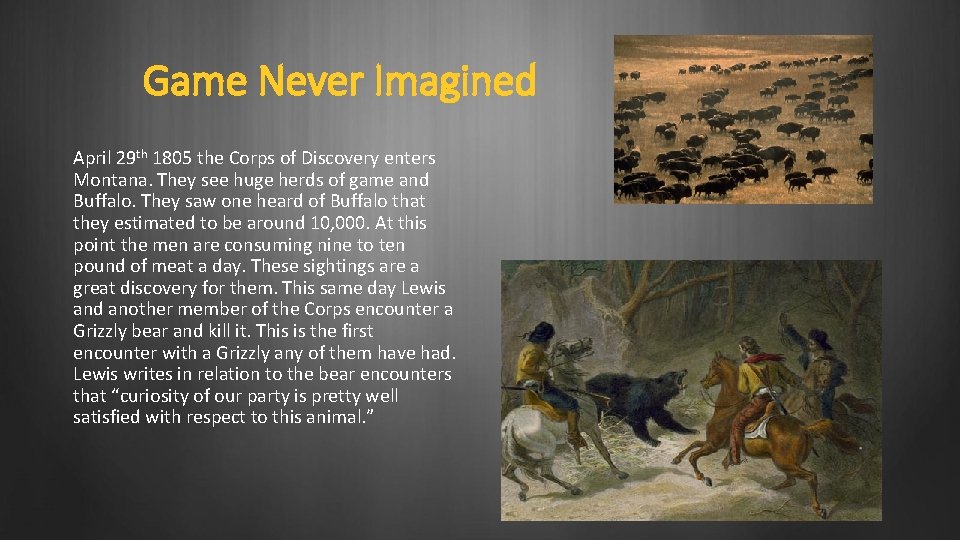
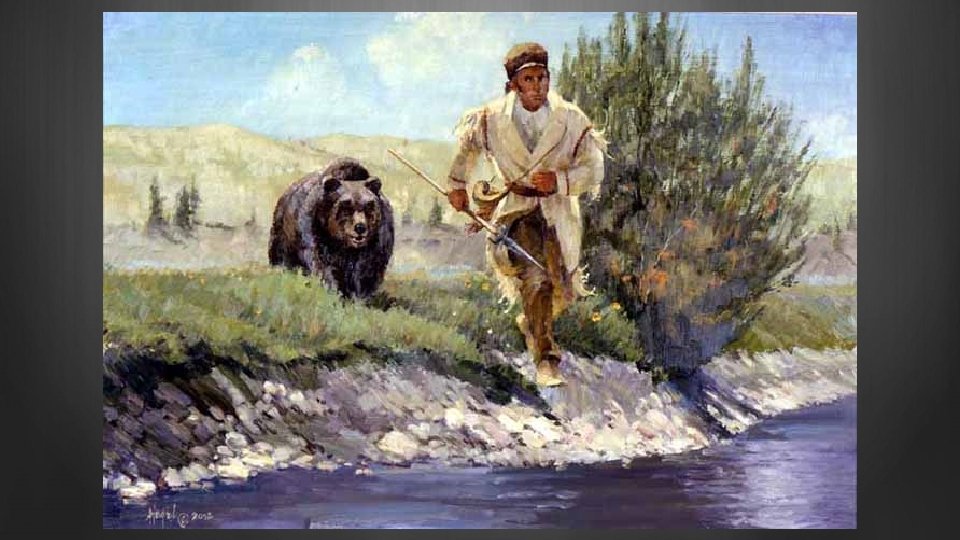
Game Never Imagined April 29 th 1805 the Corps of Discovery enters Montana. They see huge herds of game and Buffalo. They saw one heard of Buffalo that they estimated to be around 10, 000. At this point the men are consuming nine to ten pound of meat a day. These sightings are a great discovery for them. This same day Lewis and another member of the Corps encounter a Grizzly bear and kill it. This is the first encounter with a Grizzly any of them have had. Lewis writes in relation to the bear encounters that “curiosity of our party is pretty well satisfied with respect to this animal. ”
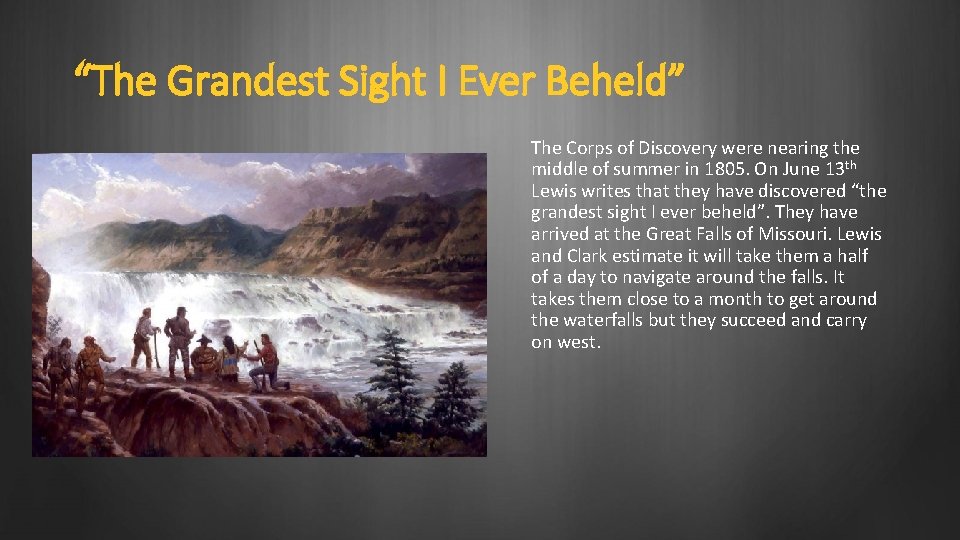
“The Grandest Sight I Ever Beheld” The Corps of Discovery were nearing the middle of summer in 1805. On June 13 th Lewis writes that they have discovered “the grandest sight I ever beheld”. They have arrived at the Great Falls of Missouri. Lewis and Clark estimate it will take them a half of a day to navigate around the falls. It takes them close to a month to get around the waterfalls but they succeed and carry on west.
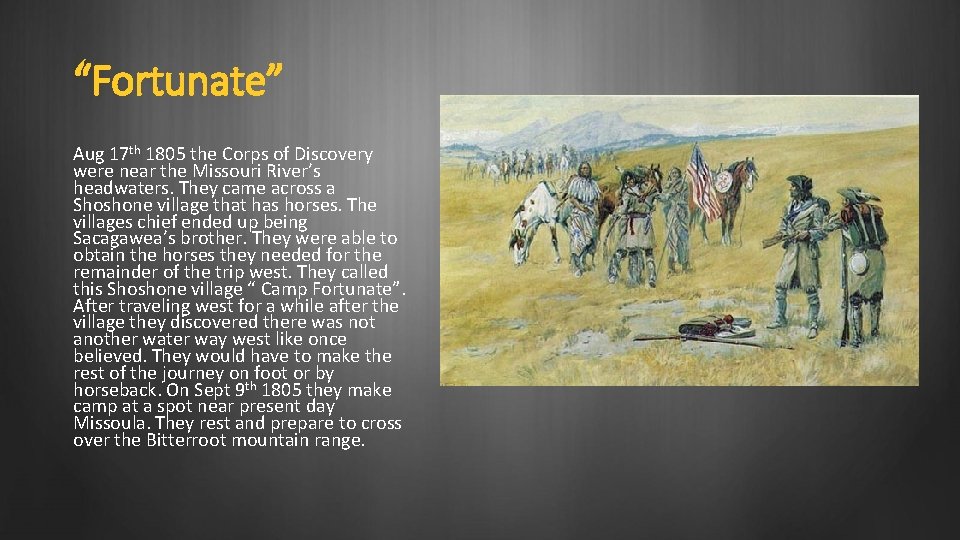
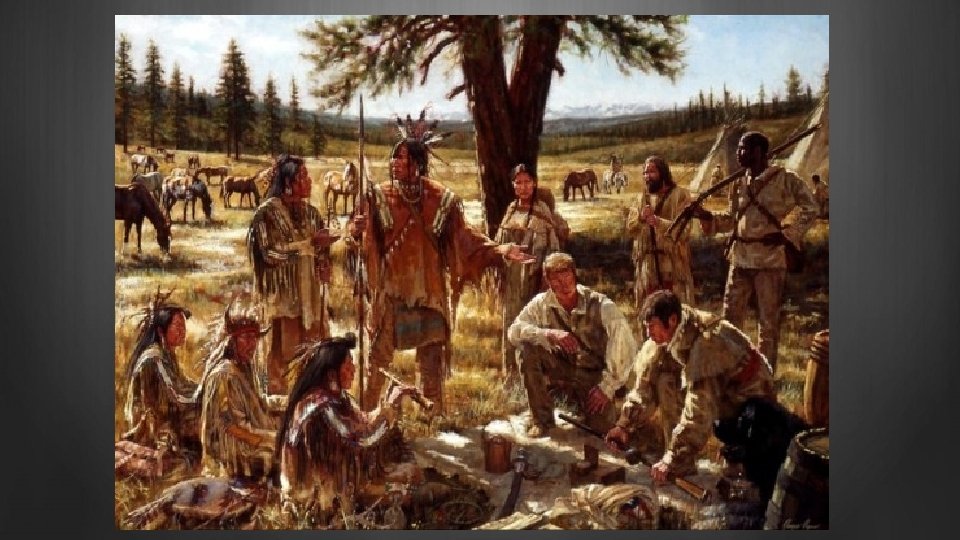
“Fortunate” Aug 17 th 1805 the Corps of Discovery were near the Missouri River’s headwaters. They came across a Shoshone village that has horses. The villages chief ended up being Sacagawea’s brother. They were able to obtain the horses they needed for the remainder of the trip west. They called this Shoshone village “ Camp Fortunate”. After traveling west for a while after the village they discovered there was not another water way west like once believed. They would have to make the rest of the journey on foot or by horseback. On Sept 9 th 1805 they make camp at a spot near present day Missoula. They rest and prepare to cross over the Bitterroot mountain range.
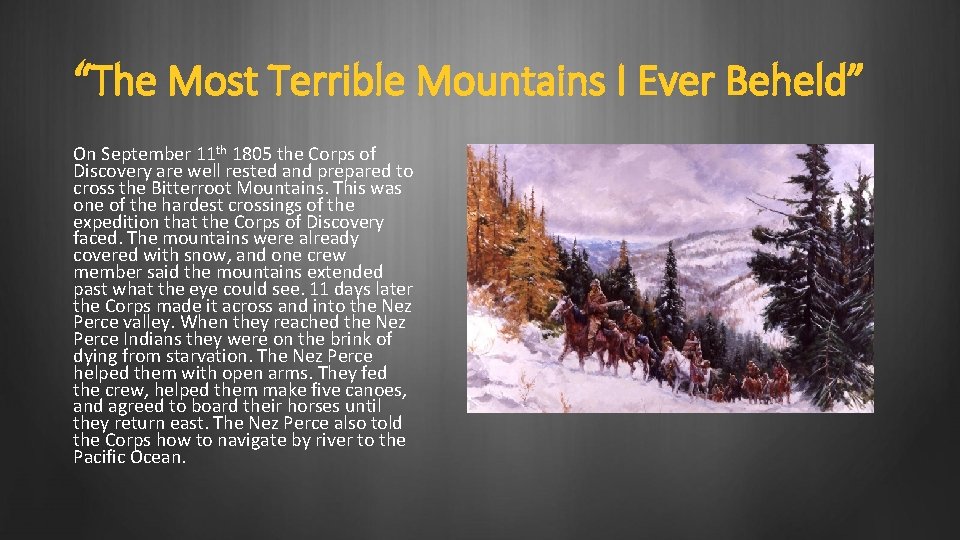
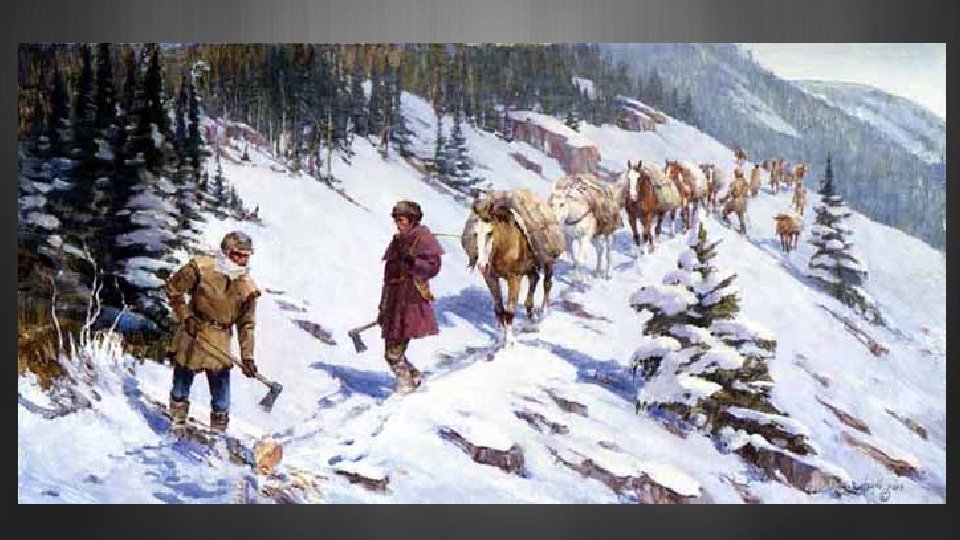
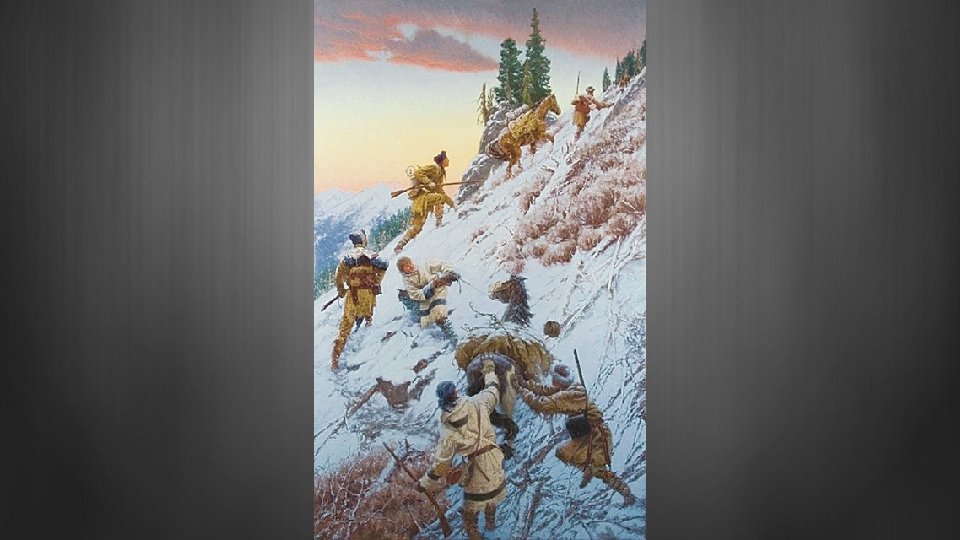
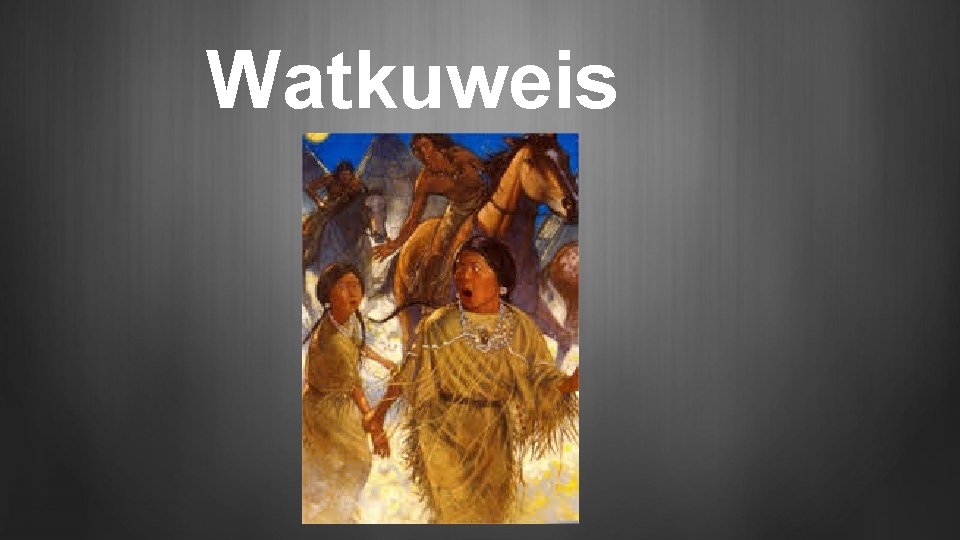
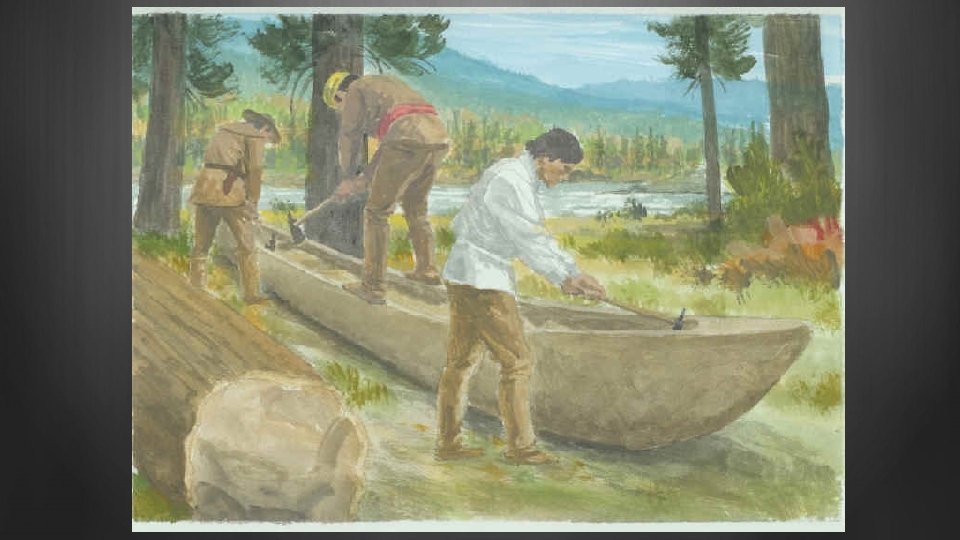
“The Most Terrible Mountains I Ever Beheld” On September 11 th 1805 the Corps of Discovery are well rested and prepared to cross the Bitterroot Mountains. This was one of the hardest crossings of the expedition that the Corps of Discovery faced. The mountains were already covered with snow, and one crew member said the mountains extended past what the eye could see. 11 days later the Corps made it across and into the Nez Perce valley. When they reached the Nez Perce Indians they were on the brink of dying from starvation. The Nez Perce helped them with open arms. They fed the crew, helped them make five canoes, and agreed to board their horses until they return east. The Nez Perce also told the Corps how to navigate by river to the Pacific Ocean.
Watkuweis
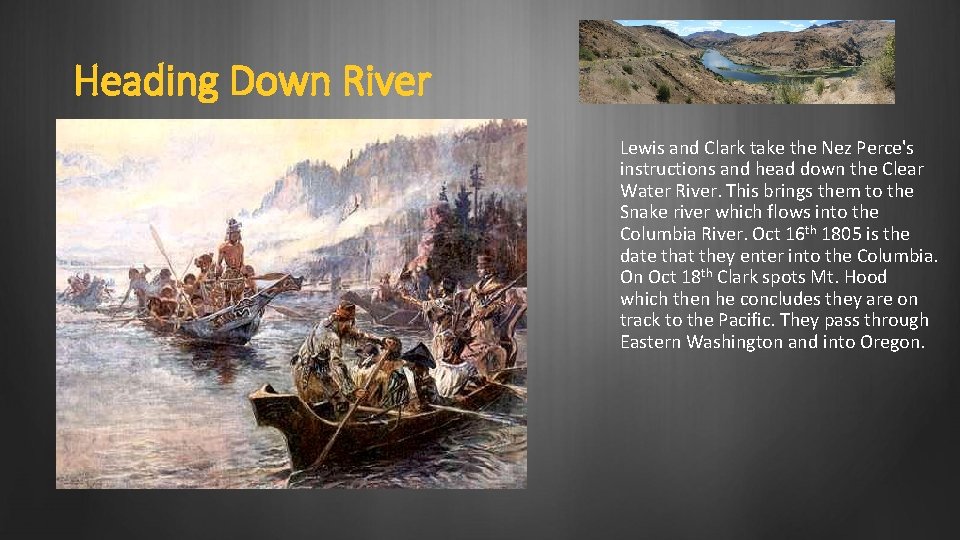
Heading Down River Lewis and Clark take the Nez Perce's instructions and head down the Clear Water River. This brings them to the Snake river which flows into the Columbia River. Oct 16 th 1805 is the date that they enter into the Columbia. On Oct 18 th Clark spots Mt. Hood which then he concludes they are on track to the Pacific. They pass through Eastern Washington and into Oregon.
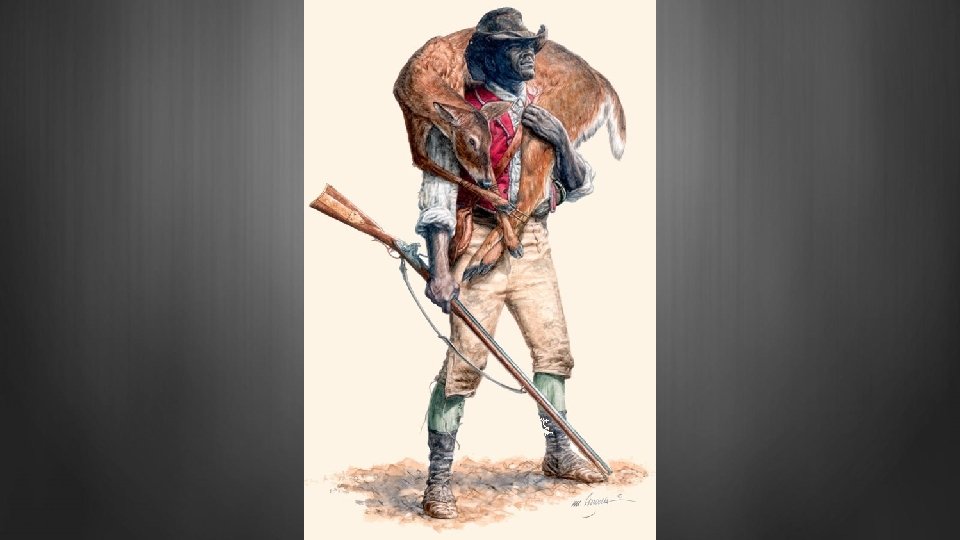
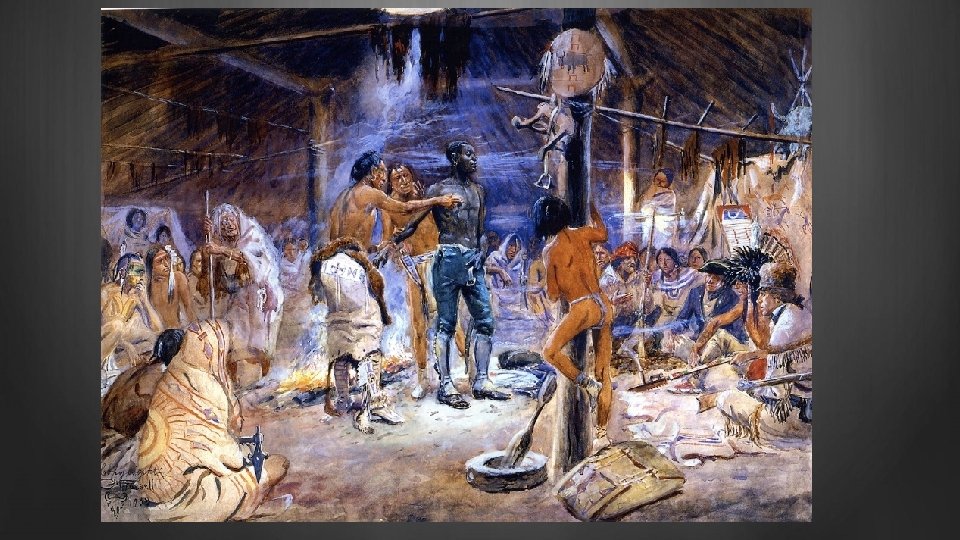
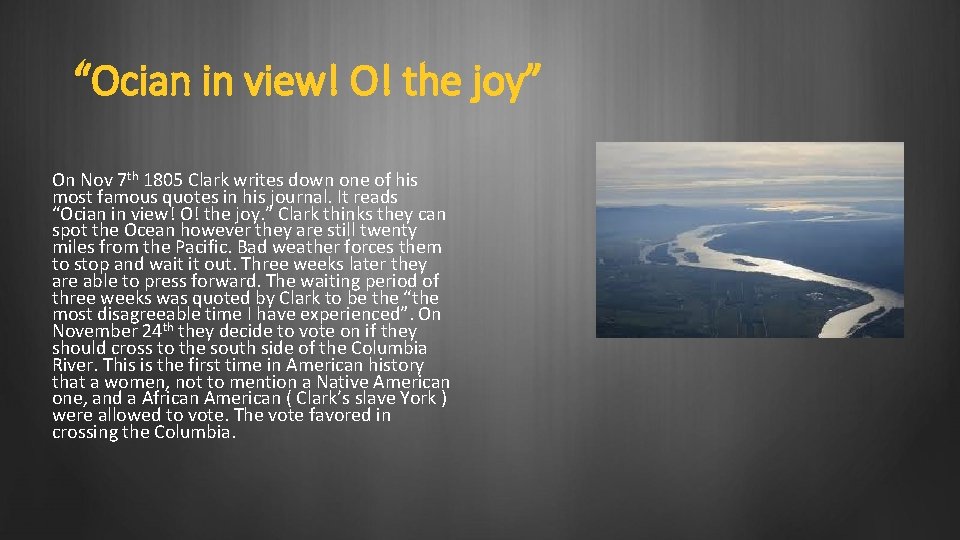
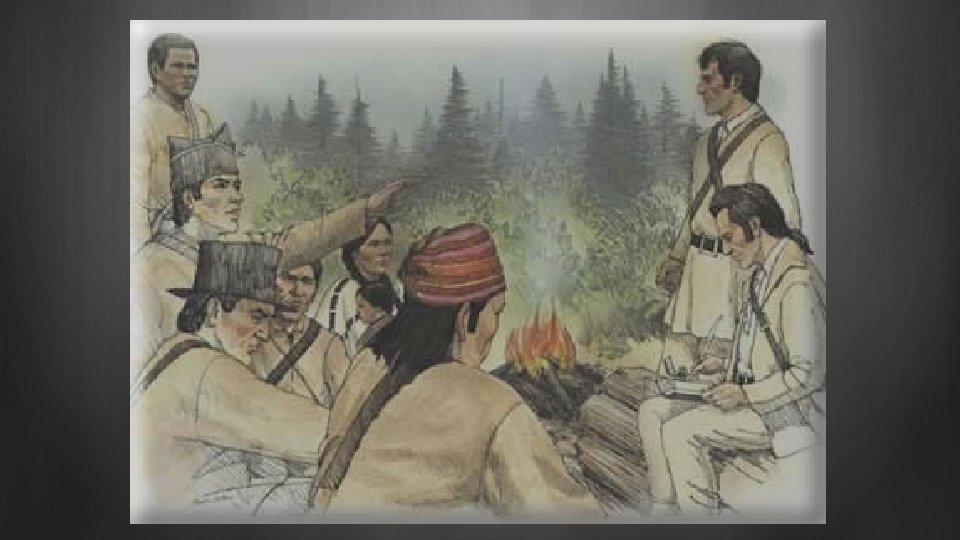
“Ocian in view! O! the joy” On Nov 7 th 1805 Clark writes down one of his most famous quotes in his journal. It reads “Ocian in view! O! the joy. ” Clark thinks they can spot the Ocean however they are still twenty miles from the Pacific. Bad weather forces them to stop and wait it out. Three weeks later they are able to press forward. The waiting period of three weeks was quoted by Clark to be the “the most disagreeable time I have experienced”. On November 24 th they decide to vote on if they should cross to the south side of the Columbia River. This is the first time in American history that a women, not to mention a Native American one, and a African American ( Clark’s slave York ) were allowed to vote. The vote favored in crossing the Columbia.
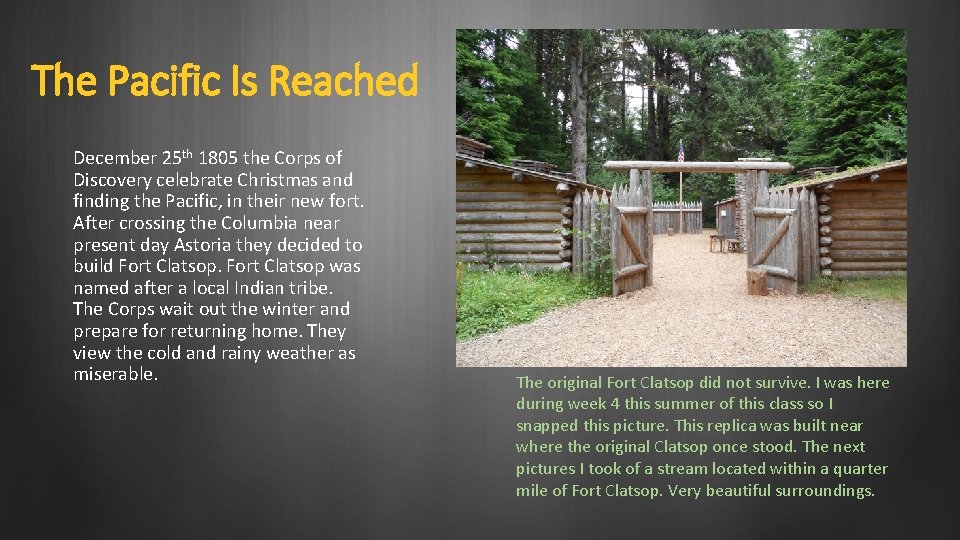
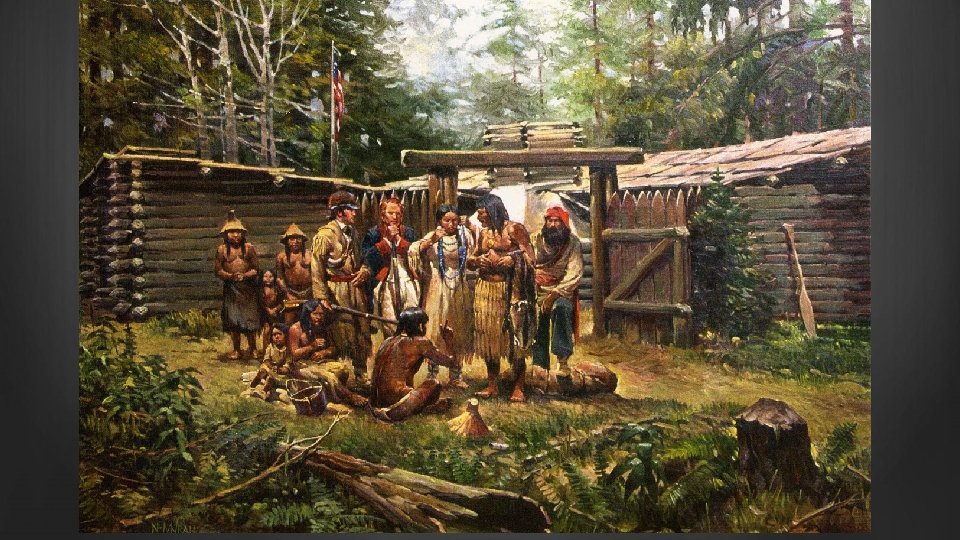
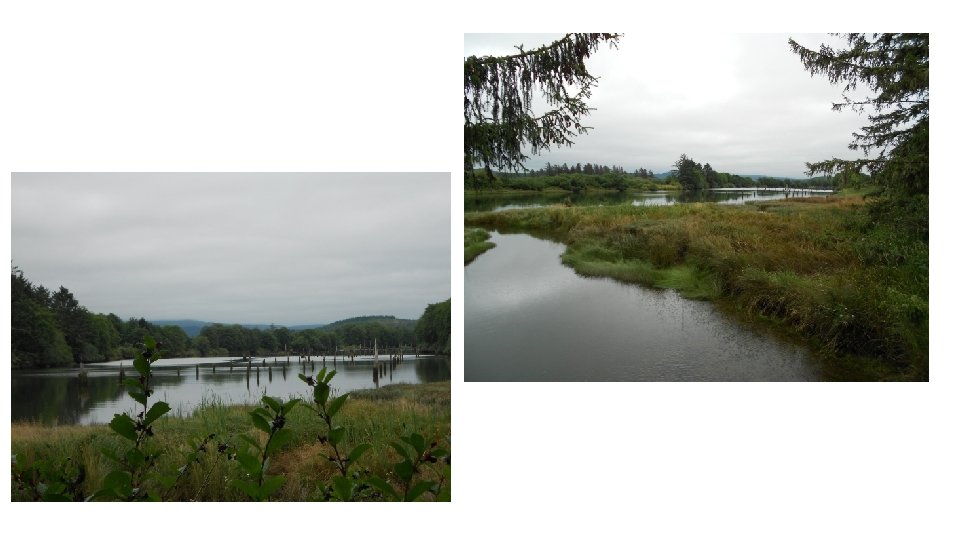
The Pacific Is Reached December 25 th 1805 the Corps of Discovery celebrate Christmas and finding the Pacific, in their new fort. After crossing the Columbia near present day Astoria they decided to build Fort Clatsop was named after a local Indian tribe. The Corps wait out the winter and prepare for returning home. They view the cold and rainy weather as miserable. The original Fort Clatsop did not survive. I was here during week 4 this summer of this class so I snapped this picture. This replica was built near where the original Clatsop once stood. The next pictures I took of a stream located within a quarter mile of Fort Clatsop. Very beautiful surroundings.
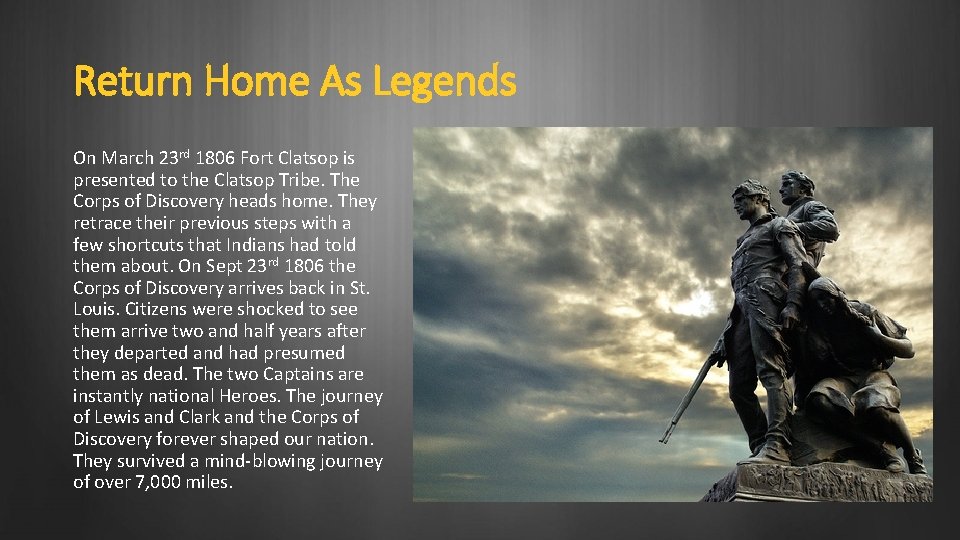
Return Home As Legends On March 23 rd 1806 Fort Clatsop is presented to the Clatsop Tribe. The Corps of Discovery heads home. They retrace their previous steps with a few shortcuts that Indians had told them about. On Sept 23 rd 1806 the Corps of Discovery arrives back in St. Louis. Citizens were shocked to see them arrive two and half years after they departed and had presumed them as dead. The two Captains are instantly national Heroes. The journey of Lewis and Clark and the Corps of Discovery forever shaped our nation. They survived a mind-blowing journey of over 7, 000 miles.