
The Control system of CEPC Presented by Gang
The Control system of CEPC Presented by Gang Li Nov. 14 th, 2018

Outline l. Requirement and Scope of the CEPC control system l. Challenges and design considerations l. The control system of CEPC TDR l. Summary
Requirement of the Control System • Stability • Availability • Real Time • Flexibility • Extendibility

Scope of the Control System • • • Control Platform Center Control System: computers, servers, etc Network System Timing System Post Mortem System Machine Protection System Power Supply Control System Vacuum Control System Linac Control System Temperature Monitoring System Integration of other system: LLRF, Cryogenic system, Injection/Extraction system etc. Others
Challenges and design considerations l. The choice of Large scale control platform l. Synchronized acceleration in the booster ring. l. Large scale and high accuracy timing. l. Machine protection system. l. Post mortem recording and analysis. l. Others.
Challenges and design considerations Large scale control platform l. The Choice of Control Platform ØCERN: PVSSII ØEuropean Accelerator facility: TANGO ØAmerican/European/Asian…facility: EPICS

Challenges and design considerations Large scale control platform l. PVSSII(Process Visualization and Steuerung (Control) System ) l. PVSS->PVSSII European
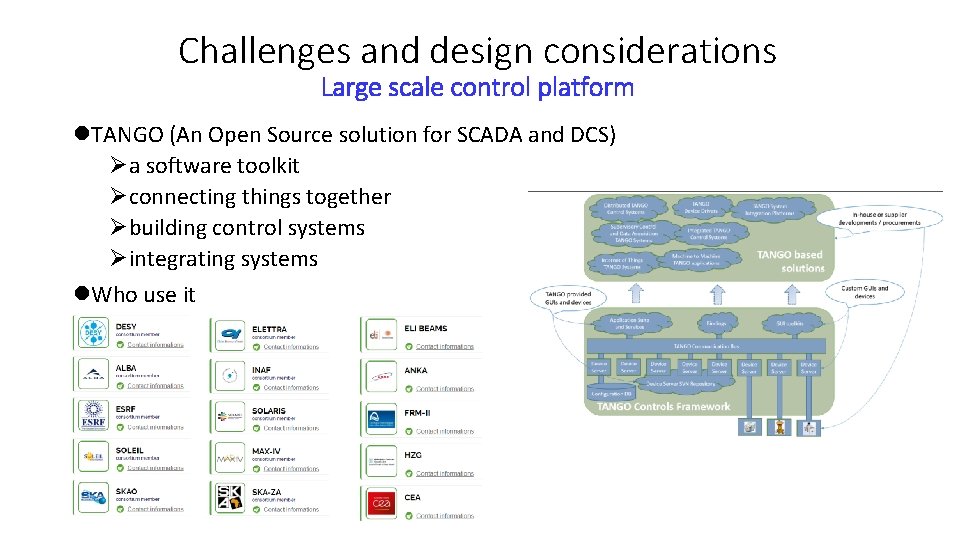
Challenges and design considerations Large scale control platform l. TANGO (An Open Source solution for SCADA and DCS) Øa software toolkit Øconnecting things together Øbuilding control systems Øintegrating systems l. Who use it

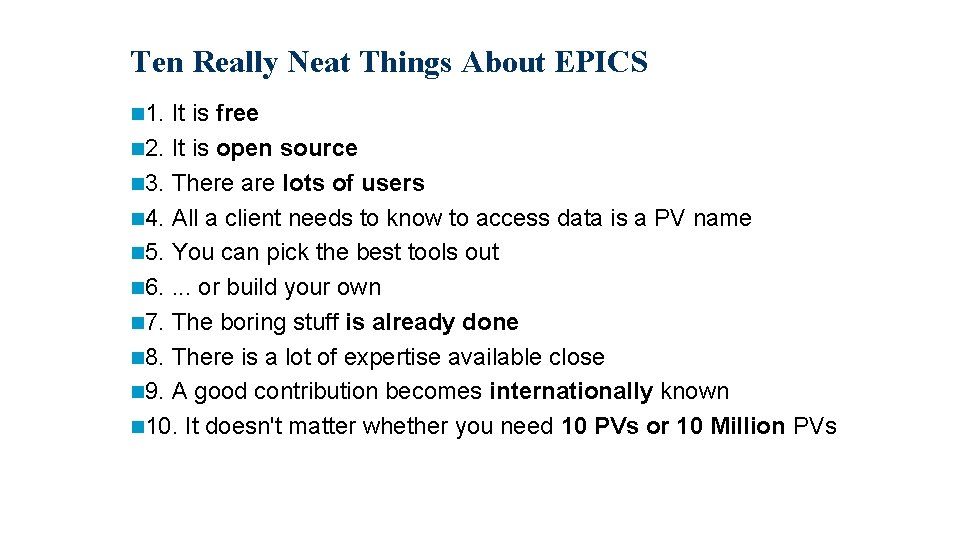
Challenges and design considerations Large scale control platform l. EPICS (Experimental Physics and Industrial Control System) l. Open Source software toolkit l. To create distributed soft real-time control systems l particle accelerators l Telescopes l other large scientific experiments l. Version: l V 3. 13 ->V 3. 14 -->V 3. 15 ->V 3. 16 -->V 4 ->V 7…. l BEPCII: V 3. 13 l CSNS: V 3. 14 l HEPS: V 3. 15(16…) l CEPC: Vxnn(X>=7) IHEP, Beijing
Ten Really Neat Things About EPICS 1. It is free 2. It is open source 3. There are lots of users 4. All a client needs to know to access data is a PV name 5. You can pick the best tools out 6. . or build your own 7. The boring stuff is already done 8. There is a lot of expertise available close 9. A good contribution becomes internationally known 10. It doesn't matter whether you need 10 PVs or 10 Million PVs

Challenges and design considerations Large scale control platform Fig. 1 Overall architecture of the control system
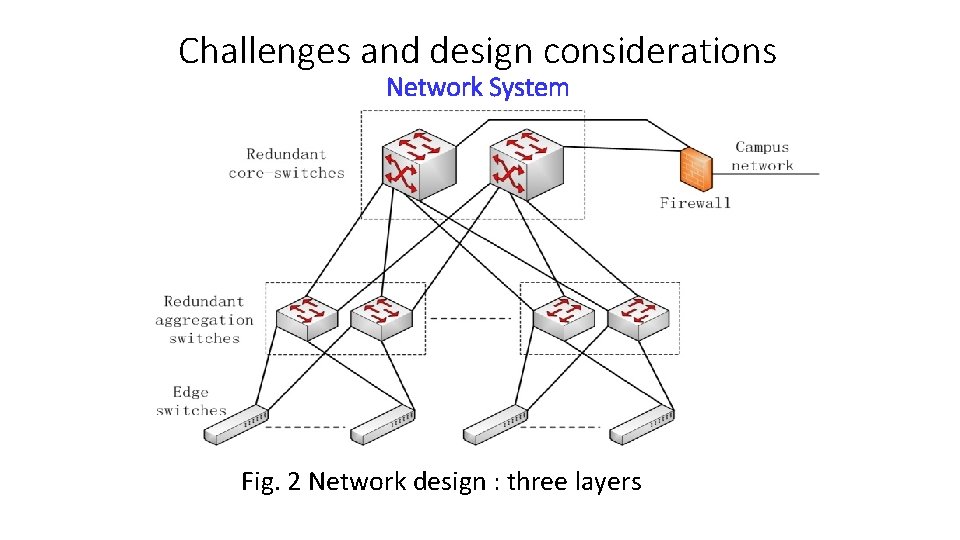
Challenges and design considerations Network System Fig. 2 Network design : three layers

Challenges and design considerations High-Level software-Database l. High-level software : database and CA interface l. Any important data throughout the entire life cycle of an accelerator should be captured systematically and stored persistently High-Level software Architecture
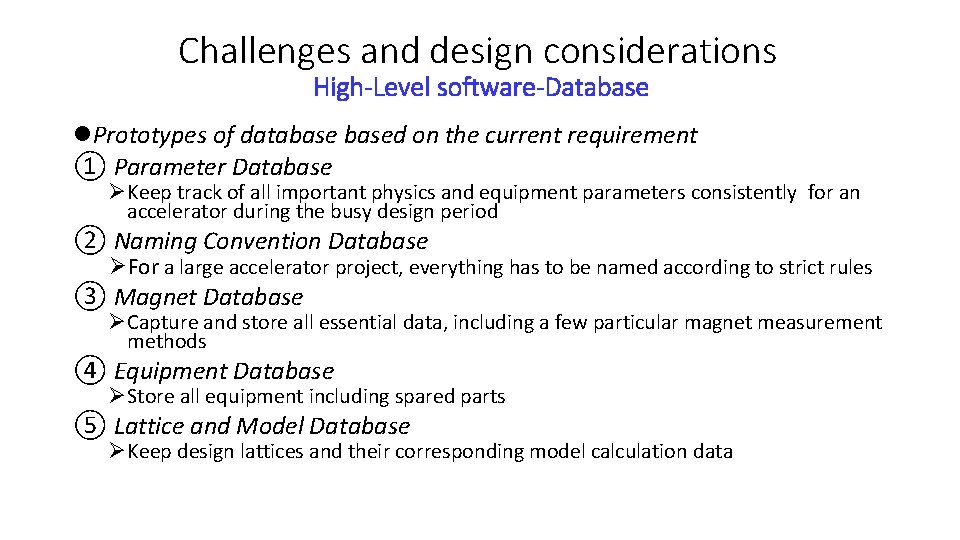
Challenges and design considerations High-Level software-Database l. Prototypes of databased on the current requirement ① Parameter Database ØKeep track of all important physics and equipment parameters consistently for an accelerator during the busy design period ② Naming Convention Database ØFor a large accelerator project, everything has to be named according to strict rules ③ Magnet Database ØCapture and store all essential data, including a few particular magnet measurement methods ④ Equipment Database ØStore all equipment including spared parts ⑤ Lattice and Model Database ØKeep design lattices and their corresponding model calculation data
Challenges and design considerations Synchronized acceleration in the booster ring l. Accelerate from 10 Ge. V to 120 Ge. V. l. Magnets’ power supply co-ramping within an accuracy of tens of s. l. Two methods of PS ramping l. Waveform can be pre-downloaded into the front end controller, then coramping starts with an synchronized signal. l. Waveform can be written into the front end controller in real time with an deterministic latency. l. High reliability and high availability (Redundancy).
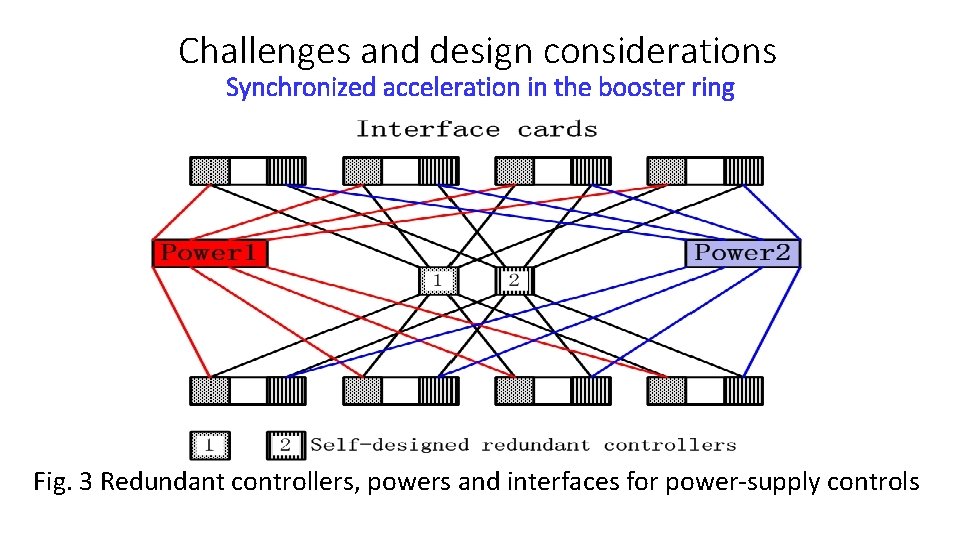
Challenges and design considerations Synchronized acceleration in the booster ring Fig. 3 Redundant controllers, powers and interfaces for power-supply controls
Challenges and design considerations Large scale and high accuracy timing l. An maximum distance of about 50 km (about half ring). l. Latency change due to temperature variations(compensation) l. An accuracy of tens of ps l. Event based digital timing system will be designed. l. Precise timestamp will be provided.
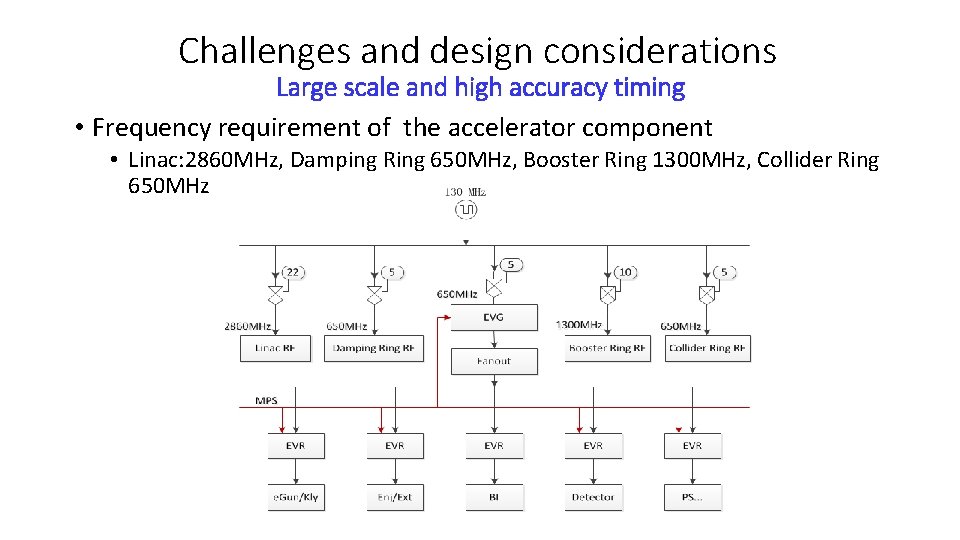
Challenges and design considerations Large scale and high accuracy timing • Frequency requirement of the accelerator component • Linac: 2860 MHz, Damping Ring 650 MHz, Booster Ring 1300 MHz, Collider Ring 650 MHz
Challenges and design considerations Machine protection system l. Tightly related to the accelerator design l. Stop beam or steer beam to dump, when key device or sub-system is a fault or abnormal l. Generally, the structure of MPS=EPS (PLC)+FPS (FPGA)
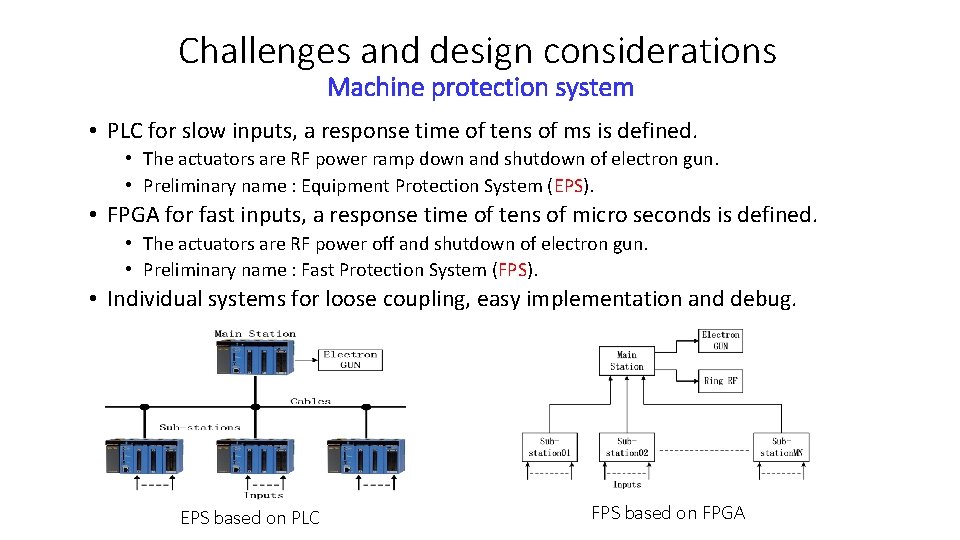
Challenges and design considerations Machine protection system • PLC for slow inputs, a response time of tens of ms is defined. • The actuators are RF power ramp down and shutdown of electron gun. • Preliminary name : Equipment Protection System (EPS). • FPGA for fast inputs, a response time of tens of micro seconds is defined. • The actuators are RF power off and shutdown of electron gun. • Preliminary name : Fast Protection System (FPS). • Individual systems for loose coupling, easy implementation and debug. EPS based on PLC FPS based on FPGA
Challenges and design considerations Post mortem recording and analysis l. For fast and accurate fault diagnostics. l. Both hardware and software works. l. Tightly related to the devices’ controls. l. Accurate timestamp needed. l. Global trigger, global clocks, global timing, analysis software …
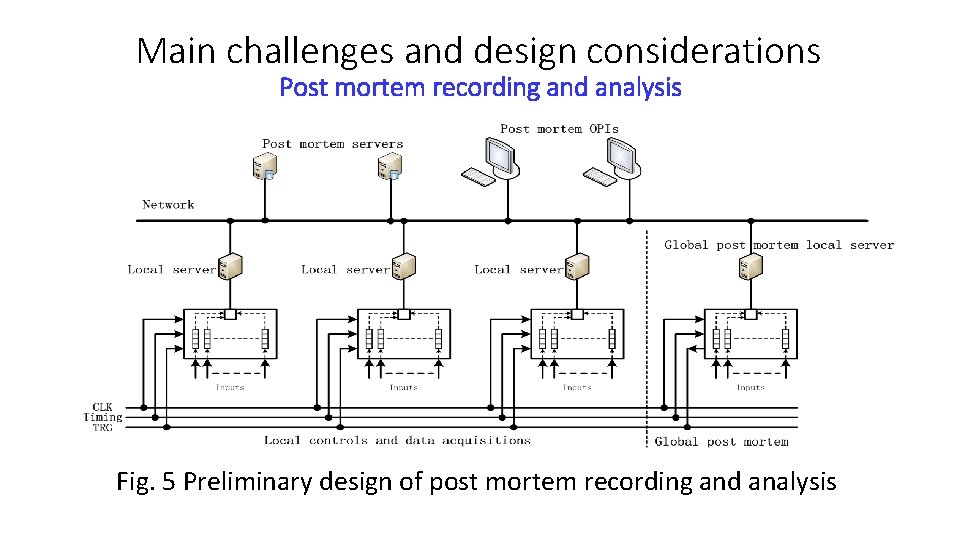
Main challenges and design considerations Post mortem recording and analysis Fig. 5 Preliminary design of post mortem recording and analysis
Routine control and design considerations l. Vacuum control l. Temperature monitoring of the vacuum chamber and environment l. Integration of other system control, such as RF, Cryogenic system, etc. l. Video monitoring. l…

TDR: Control System of CEPC Cooperate with other accelerator complex (CSNS, HEPS, …) l. Management and design of Database l. BOFB(Beam Orbit Feedback)
TDR:Management and design of Database l. Databased on the user’s requirement Parameter Database Magnet Database Lattice and Model Database Log and trouble tracking Management of Cable and device Configuration of Security database Etc. . Naming Convention Database Equipment Database Management of File Alignment Database Alarm database MPS and interlock database More and more Database will be designed with the progress of the Project

TDR:Management and design of Database l. The structure of RDB database
TDR:BOFB(Beam Orbit Feedback) l. The stability of beam orbit üMisalignment üRipple of Power supply üVibration of the earth üTemperature drift and so on
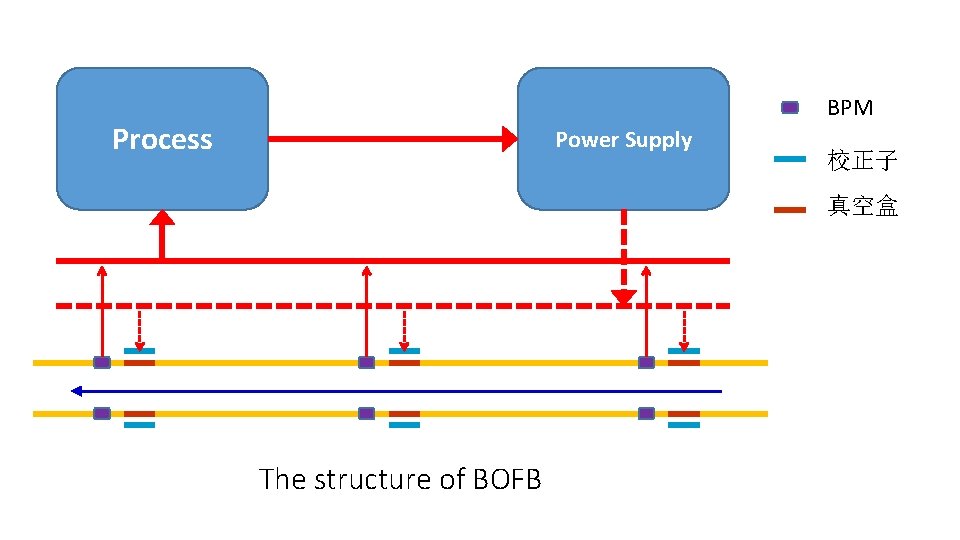
BPM Process Power Supply 校正子 真空盒 The structure of BOFB
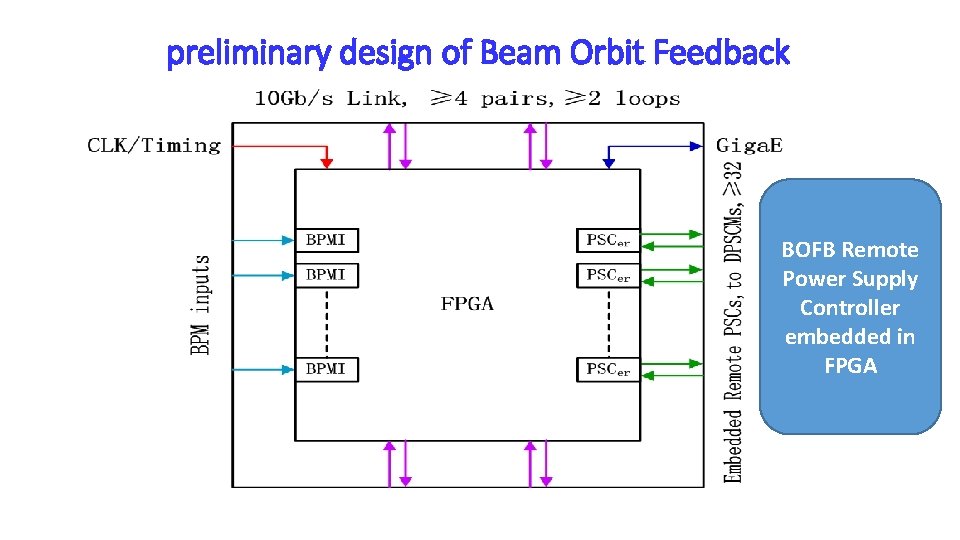
preliminary design of Beam Orbit Feedback BOFB Remote Power Supply Controller embedded in FPGA
Summary l. The control system of CEPC CDR has been completed. l. More detailed requirements should be made clear with the progress of CEPC TDR. l. More discussions with the individual systems are needed in the future. Thanks a lot!
- Slides: 30