
The control of blood glucose levels and treating
The control of blood glucose levels and treating diabetes Use the orange slides and your own research to help you answer the questions on the green slides. Video: https: //www. youtube. com/watch? v=aq 4 Mv 0 qq. We 0
Blood glucose questions 1. What is diabetes and what is the differences between the 2 types (1 and 2)? 2. What two hormones does the pancreas produce? 3. What are the functions of these hormones? 4. Why can't glucose be stored? 5. Why can glycogen be stored? 6. Where is glycogen stored? 7. Why does insulin have to be injected? Why couldn't it be taken as a pill? 8. What would cause blood sugar levels to CHANGE? 9. What are the symptoms of low blood sugar levels?
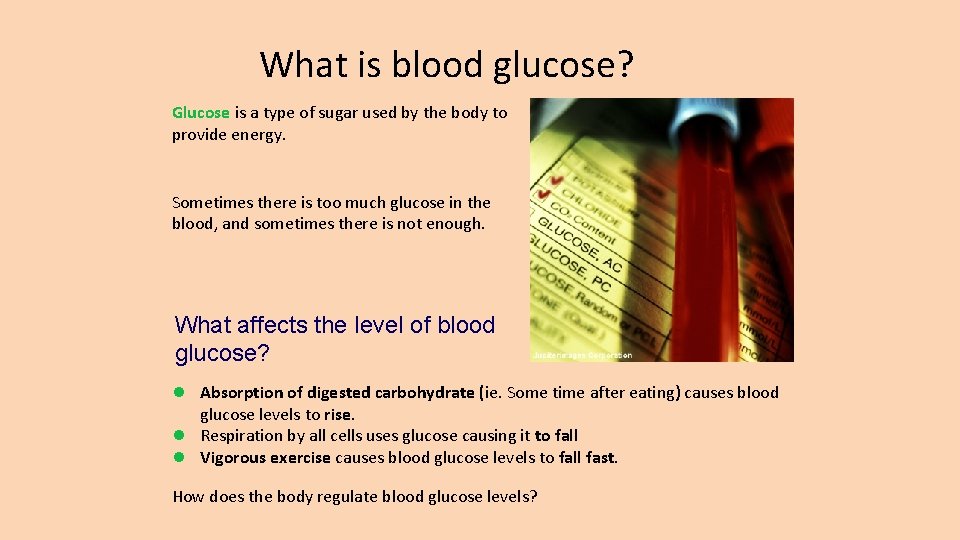
What is blood glucose? Glucose is a type of sugar used by the body to provide energy. Sometimes there is too much glucose in the blood, and sometimes there is not enough. What affects the level of blood glucose? l Absorption of digested carbohydrate (ie. Some time after eating) causes blood glucose levels to rise. l Respiration by all cells uses glucose causing it to fall l Vigorous exercise causes blood glucose levels to fall fast. How does the body regulate blood glucose levels?
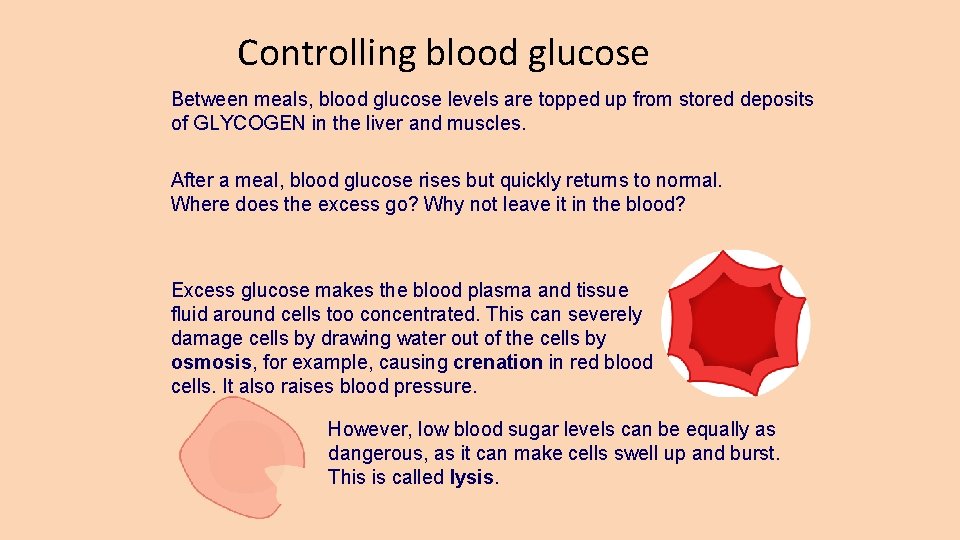
Controlling blood glucose Between meals, blood glucose levels are topped up from stored deposits of GLYCOGEN in the liver and muscles. After a meal, blood glucose rises but quickly returns to normal. Where does the excess go? Why not leave it in the blood? Excess glucose makes the blood plasma and tissue fluid around cells too concentrated. This can severely damage cells by drawing water out of the cells by osmosis, for example, causing crenation in red blood cells. It also raises blood pressure. However, low blood sugar levels can be equally as dangerous, as it can make cells swell up and burst. This is called lysis.
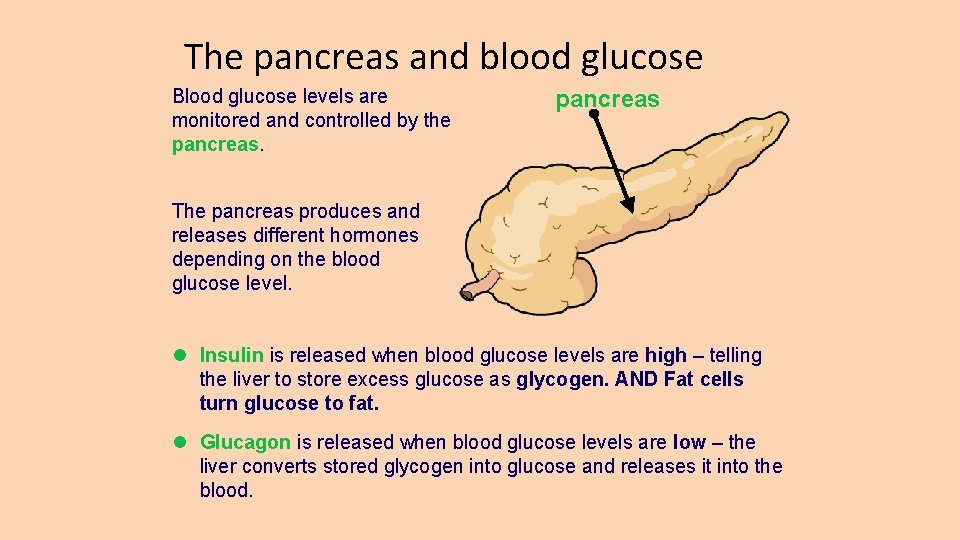
The pancreas and blood glucose Blood glucose levels are monitored and controlled by the pancreas The pancreas produces and releases different hormones depending on the blood glucose level. l Insulin is released when blood glucose levels are high – telling the liver to store excess glucose as glycogen. AND Fat cells turn glucose to fat. l Glucagon is released when blood glucose levels are low – the liver converts stored glycogen into glucose and releases it into the blood.
Maintaining safe glucose levels
- Slides: 6