
The Contribution Of Central And Peripheral Vision To
The Contribution Of Central And Peripheral Vision To The Postural Sway Response Elicited By Moving Visual Environments In Healthy Children Aged 8 -12 Sparto PJ, Brown KE, Redfern MS, Furman JM, Casselbrant ML, Mandel EM Department of Otolaryngology University of Pittsburgh, PA, USA Sponsors: Eye and Ear Foundation, NIH: DC 02490, DC 05205, 1 K 25 AG 001049 -01 A 1
Introduction • Otitis media with effusion appears to affect balance function in children aged 1 -9 years • Effects of otitis media on balance in older children are not as well known • Previously our group has explored the effect of optic flow environments on balance in children aged 3 -9 • Pilot experiment to obtain normative balance data children aged 8 -12
Purpose • Compare magnitude of postural sway in healthy children aged 8 -12 with healthy adults to examine the visual dependence of children in this age group • Examine if children utilize peripheral and central fields of view to control balance in a similar manner as adults
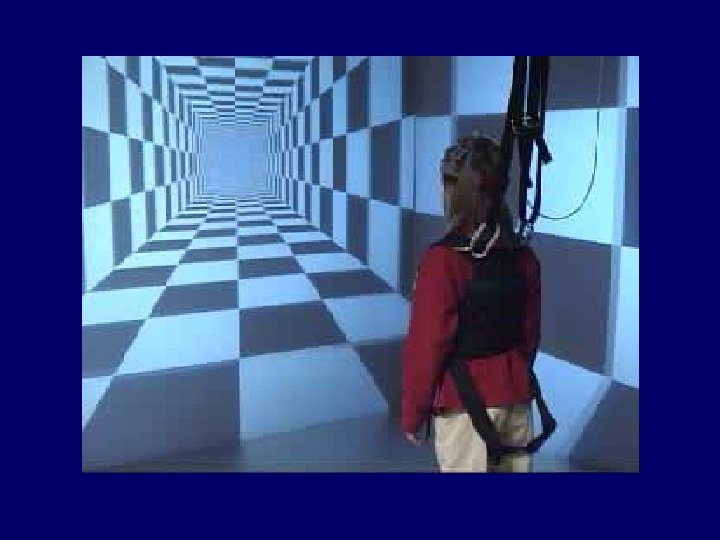
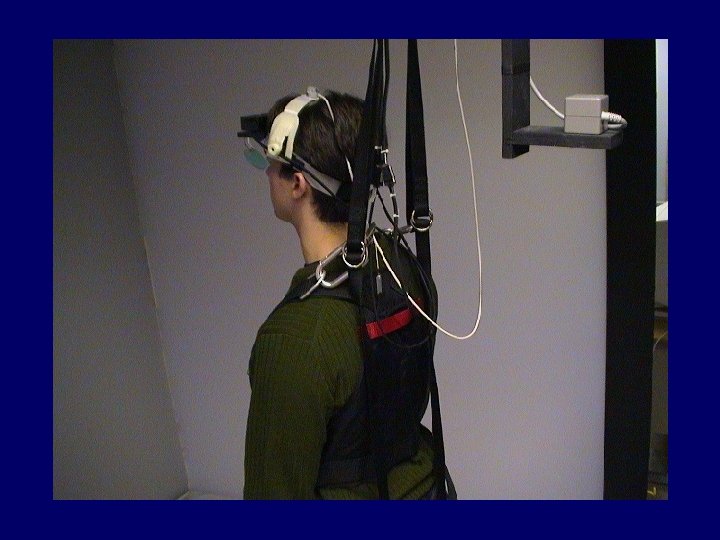
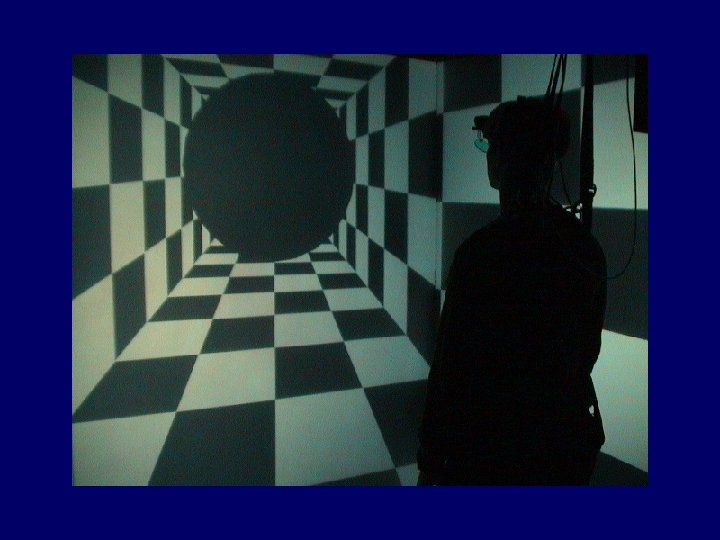
Balance NAVE Automatic Virtual Environment (BNAVE) • Virtual Reality Facility used to generate moving visual environments • Can control many factors: • Field of view • Spatial and temporal characteristics of movement • Texture complexity • Monoscopic vs. stereoscopic

Experimental Design • Independent Variables • Subject Age Group • Field of View • Frequency of Moving Visual Field Stimulation • Dependent Variable • Anterior – Posterior (A-P) Head Sway
Subjects • Children • 5 Males, 5 Females • Age 8 - 12 years, mean 9. 9 + 1. 2 yrs • Adults • 5 Males, 6 Females • Age 32 - 66 years, mean 49 + 11 yrs • No abnormalities on clinical vestibular tests
Repeated Measures • Field of View • Full – full visual field stimulation • Peripheral – central 30 o occluded • Central – complement of peripheral • Frequency of Movement • 0. 1 Hz • 0. 25 Hz • RMS velocity was 1. 2 m/s for both freq.
Procedure • 6 trials of standing quietly while viewing: • Each trial was 80 seconds long • 10 sec no tunnel movement • 60 sec tunnel movement • 10 sec no tunnel movement
Data Analysis • A-P Head Position sampled at 20 Hz using electromagnetic tracker • Data processed using phaseless digital bandpass filter • 0. 1 or 0. 25 Hz, depending on stimulus • RMS sway computed for 60 sec of moving visual stimulus • ANOVA • Age, Field of View, Frequency
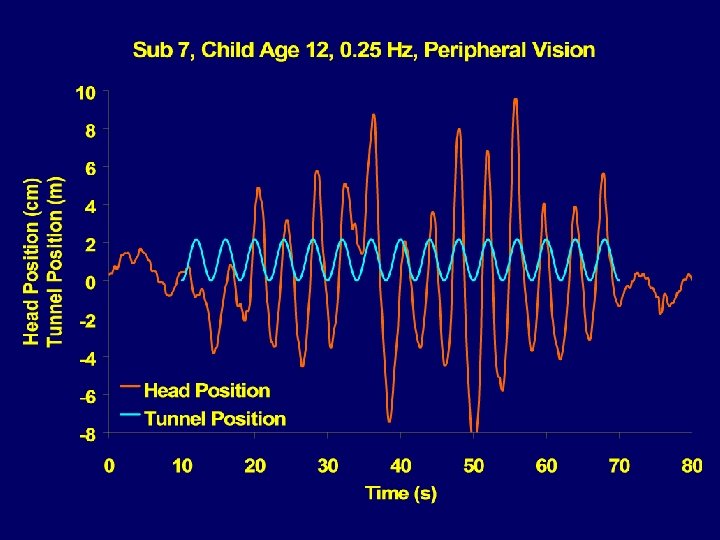
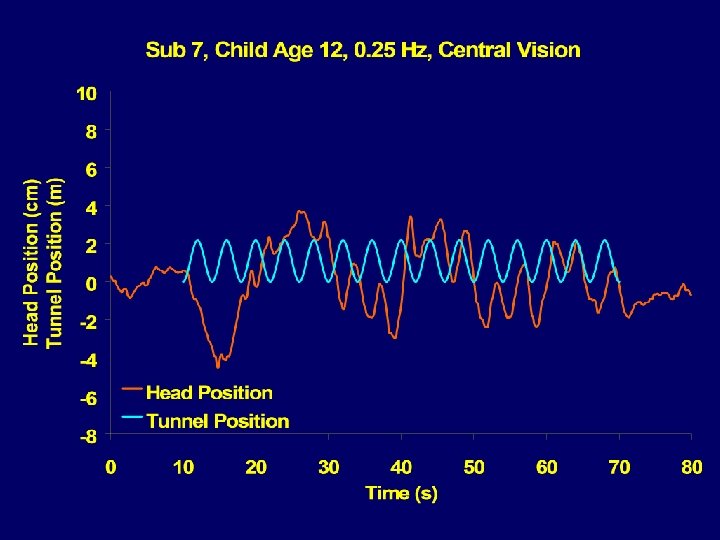
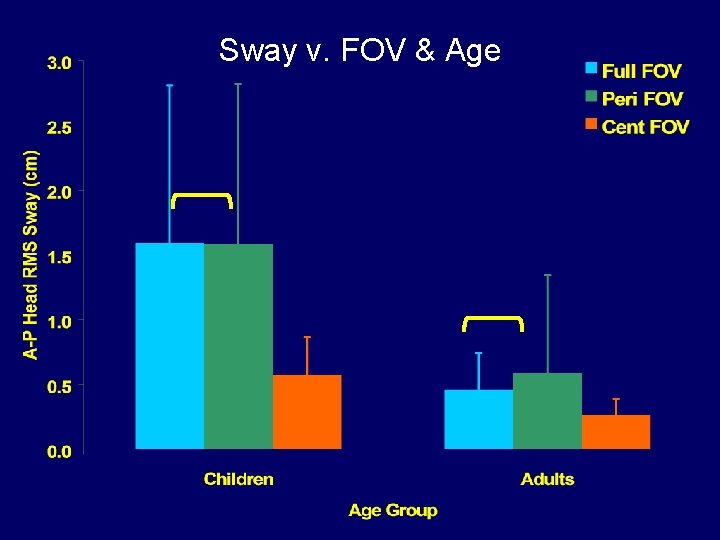
Sway v. FOV & Age
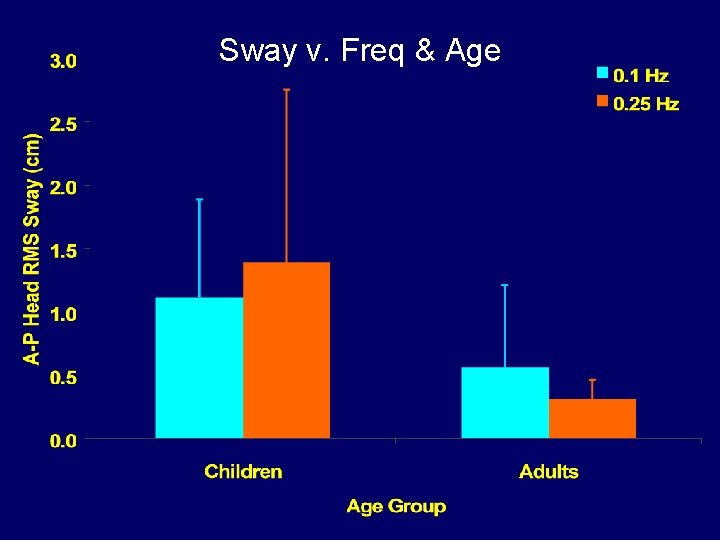
Sway v. Freq & Age
Discussion • Moving visual environments generate more sway in children aged 8 -12 vs. adults • Children more visually dependent – transitioning to adult patterns of vestibular and proprioceptive feedback
Discussion • Greater sway with full/peripheral field of view in both children and adults • Due to optic flow field - peripheral retina sensitive to lamellar component
Discussion • Children sway more at 0. 25 Hz vs. 0. 1 Hz • Children have higher natural frequency of sway - easier to induce sway • More visually dependent at higher frequencies because integration of vestibular and proprioceptive systems at these frequencies has not been completed

- Slides: 21