
The Consultation Skills By Dr Hamza Abdulghani DPHC
The Consultation Skills By Dr. Hamza Abdulghani DPHC, ABFM, FRCGP (UK), Med. Ed (U of Dundee) Professor of Medical Education & Family Medicine DEPT. OF MEDICAL EDUCATION COLLEGE OF MEDICINE KING SAUD UNIVERSITY
Objectives q. Define the Consultation q. Discuss the benefits of good Consultation skills q. Identify why & when pts Decide to consult q. Discuss the Model of consultation -Stott & Davis -Roger Neighbour -Pendleton q. Identify how we can improve consultation skills q. Summary q. Perform well in a simulated clinical situation (Role Play)
The Consultation& Communication Part-One q. Introduction ( a case) q. Components of Consultation skills q. Decision of consultation q. Model of consultation -Stott & Davis -Roger Neighbour -Pendleton q. Part-Two Preparation of second session
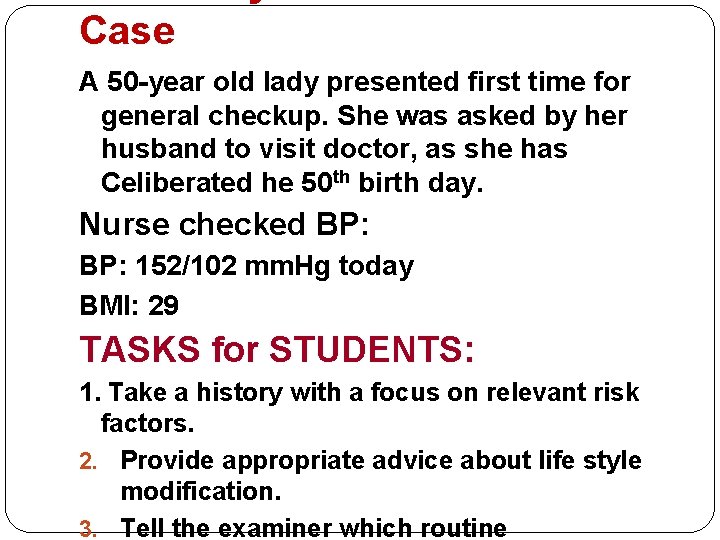
Case A 50 -year old lady presented first time for general checkup. She was asked by her husband to visit doctor, as she has Celiberated he 50 th birth day. Nurse checked BP: 152/102 mm. Hg today BMI: 29 TASKS for STUDENTS: 1. Take a history with a focus on relevant risk factors. 2. Provide appropriate advice about life style modification. 3. Tell the examiner which routine
Important information in Pt history Ø Not known to have any chronic diseases Ø Teacher at primary school, lots of work stress. Ø She has sedentary life style, no exercise. Ø Eats anything and every thing. No dietary control. Ø Gained weight about four Kg over the last few months. Ø Menopause at the age of 48 year. Ø Mother is hypertensive past 10 years, and alive.
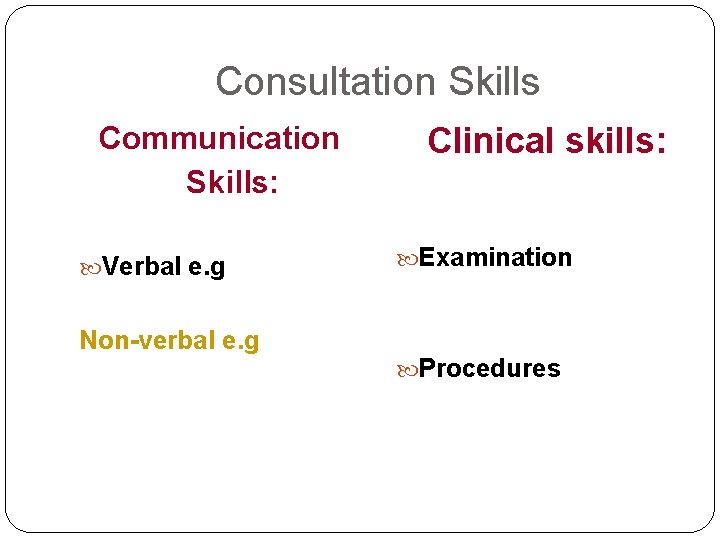
Consultation Skills Communication Skills: Verbal e. g Non-verbal e. g Clinical skills: Examination Procedures
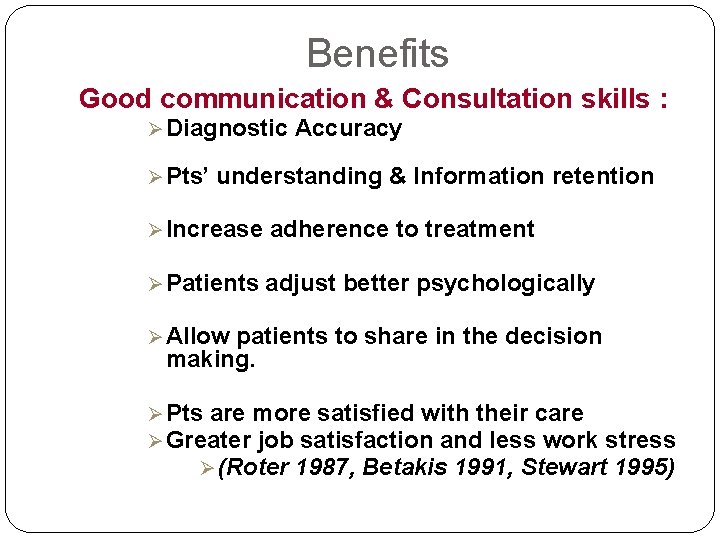
Benefits Good communication & Consultation skills : Ø Diagnostic Ø Pts’ Accuracy understanding & Information retention Ø Increase adherence to treatment Ø Patients adjust better psychologically Ø Allow patients to share in the decision making. Ø Pts are more satisfied with their care Ø Greater job satisfaction and less work stress Ø (Roter 1987, Betakis 1991, Stewart 1995)
Effect on Health Outcomes Reduction of anxiety. Reduction of psychological distress. Pain relief. Symptom resolution. Mood improvement. Reduction of high blood pressure. (Stewart 1995).
Effective Consultation Skills (Models)
CONSULTATION? ?
DEFINITION? ? The occasion when, a person who is ill, or believes himself to be ill, seeks the advice of a doctor whom he trust. (Wright &Macadam) q
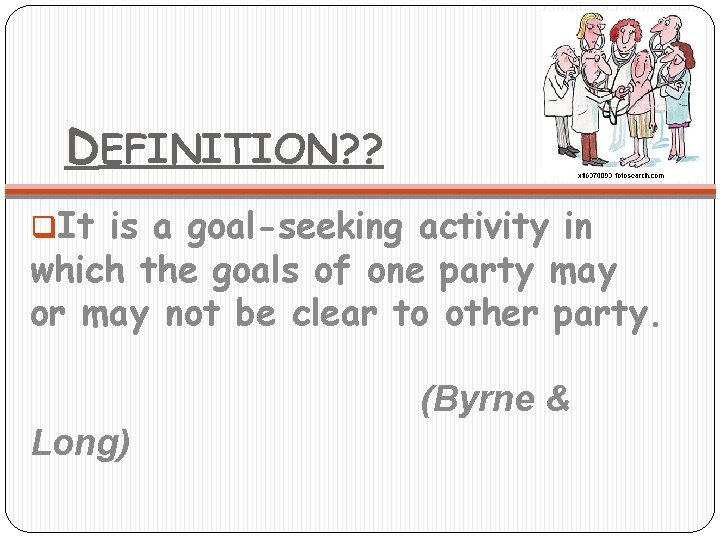
DEFINITION? ? q. It is a goal-seeking activity in which the goals of one party may or may not be clear to other party. (Byrne & Long)
CONSULTATION IN PHC Vs CONSULTATION IN HOSPITAL
CONSULTATION SKILLS q. Involve: * * Interviewing skills History taking skills Physical examination skills Problem-solving skills
Patient-Centered Care Patients as partners Involve them in decision making Enlist their sense of responsibility for their care Respect their individual values and concerns
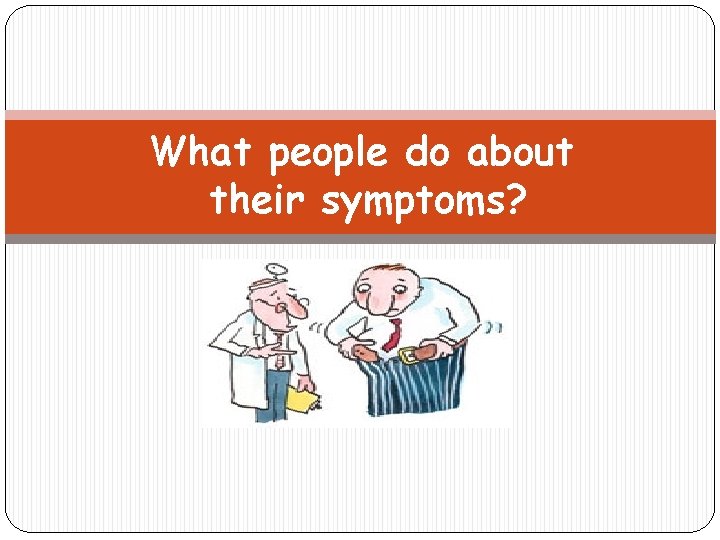
What people do about their symptoms?
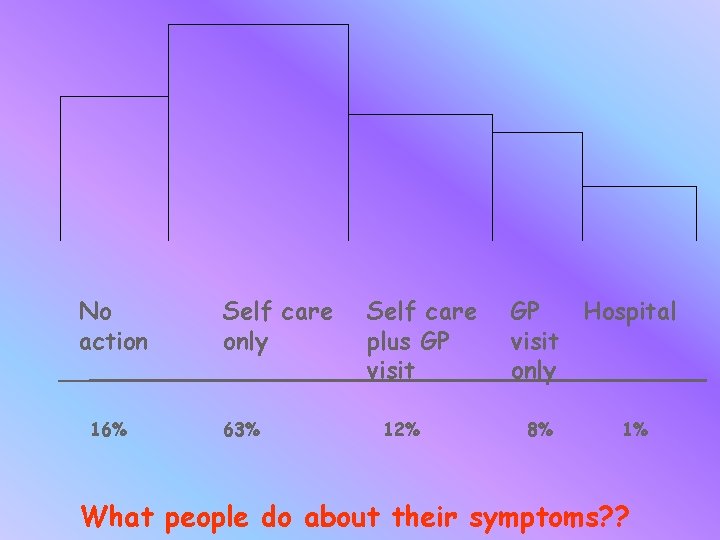
No action __ 16% Self care only 63% Self care plus GP visit 12% GP Hospital visit only_____ 8% 1% What people do about their symptoms? ?
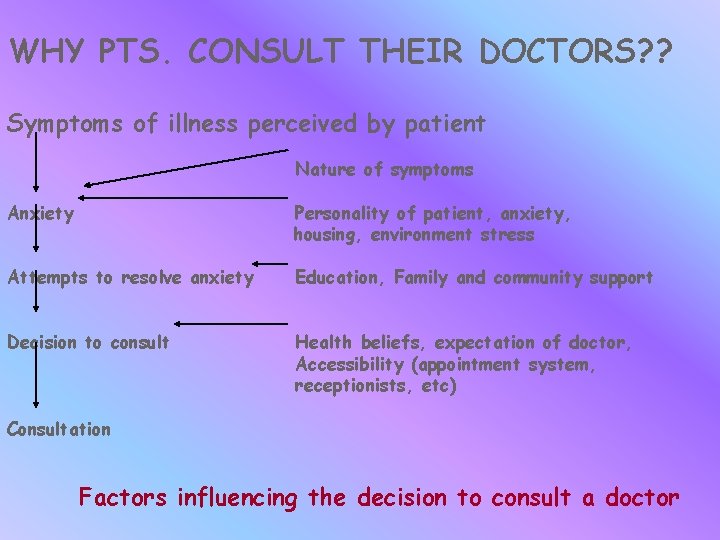
WHY PTS. CONSULT THEIR DOCTORS? ? Symptoms of illness perceived by patient Nature of symptoms Anxiety Personality of patient, anxiety, housing, environment stress Attempts to resolve anxiety Education, Family and community support Decision to consult Health beliefs, expectation of doctor, Accessibility (appointment system, receptionists, etc) Consultation Factors influencing the decision to consult a doctor
Case ØJamila 55 years old Saudi female, presented with history of low back pain, irregular uterine bleeding and tiredness of four weeks duration. ØShe was diagnosed earlier to have IBS. She claimed that she has files in many hospitals. ØShe request that to be referred to specialist for further investigations of her problem ØWhat could be done for the patient?
MODELS OF CONSULTATION
Models of Consultation 1 - Stott & Davis 3 - Roger Neighbour 4 - Pendleton
Stott and Davis
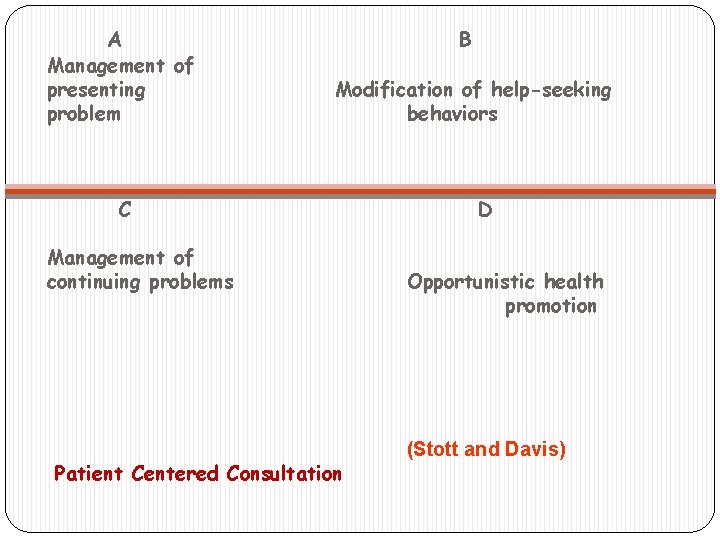
A Management of presenting problem B Modification of help-seeking behaviors C Management of continuing problems Patient Centered Consultation D Opportunistic health promotion (Stott and Davis)
Roger Neighbour
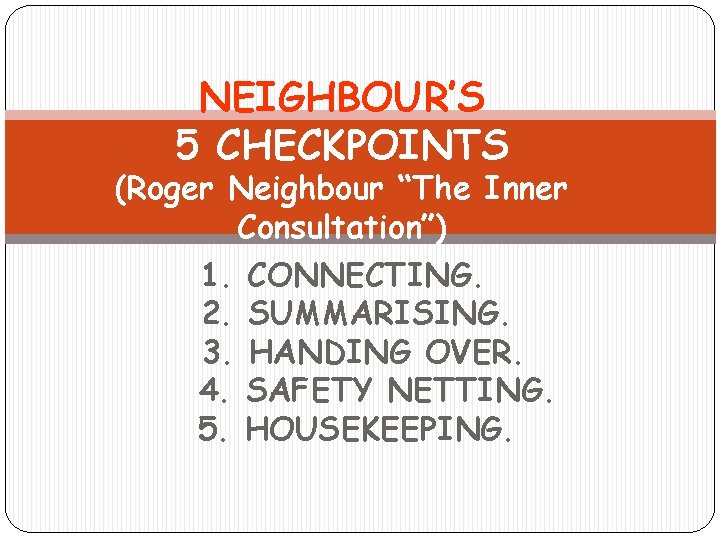
NEIGHBOUR’S 5 CHECKPOINTS (Roger Neighbour “The Inner Consultation”) 1. 2. 3. 4. 5. CONNECTING. SUMMARISING. HANDING OVER. SAFETY NETTING. HOUSEKEEPING.
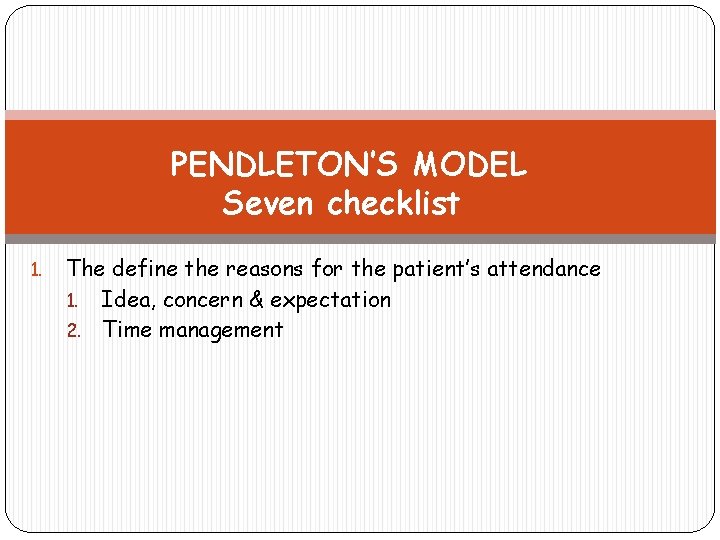
PENDLETON’S MODEL Seven checklist 1. The define the reasons for the patient’s attendance 1. Idea, concern & expectation 2. Time management
PITFALLS in Communication
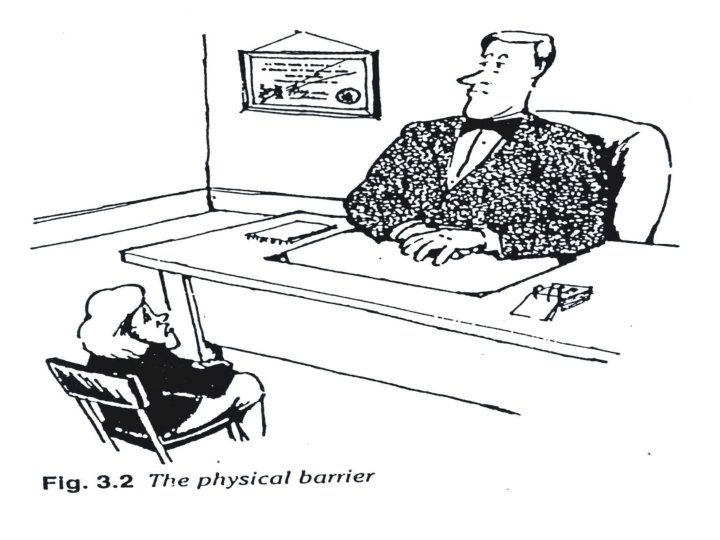
Blocking behavior Interrupting Offering advice and reassurance before the main problems have been identifiedl Lack of concern Attending to physical aspects only Switching the topic
Reasons for patients not disclosing problems Belief that nothing can be done Reluctance to burden the doctor Desire not to seem pathetic or ungrateful Worry that their fears of what is wrong with them will be confirmed Doctors' blocking
IMPROVING CONSULTATION SKILLS
IMPROVING CONSULTATION SKILLS q. Clinical reasoning & Problem Solving q. Constant Learning and Practice q. Feed Back: - q Self monitoring/Peer review Role play Audio-visual technique
The Conclusion 1. Consultation skills are learnt behavior. 2. For beginner a model to be kept in mind 3. The consultation should be a discussion and sharing of ideas between two experts. 4. Each consultation should be tailored to fit the different need of each patient. 5. Patient-centered consultation. Vs Doctor-centered consultation.

- Slides: 35