
The Constitutional Convention Who were the leading delegates
- Slides: 15
The Constitutional Convention • Who were the leading delegates to the Constitutional Convention? • What were the main differences between the two rival plans for the new Constitution? • What compromises did the delegates have to reach before the Constitution could be signed?
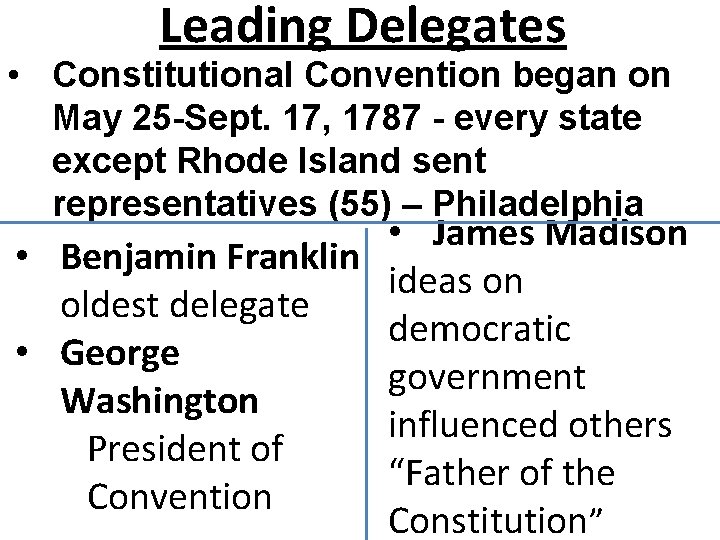
Leading Delegates • Constitutional Convention began on May 25 -Sept. 17, 1787 - every state except Rhode Island sent representatives (55) – Philadelphia • James Madison • Benjamin Franklin ideas on oldest delegate democratic • George government Washington influenced others President of “Father of the Convention Constitution”
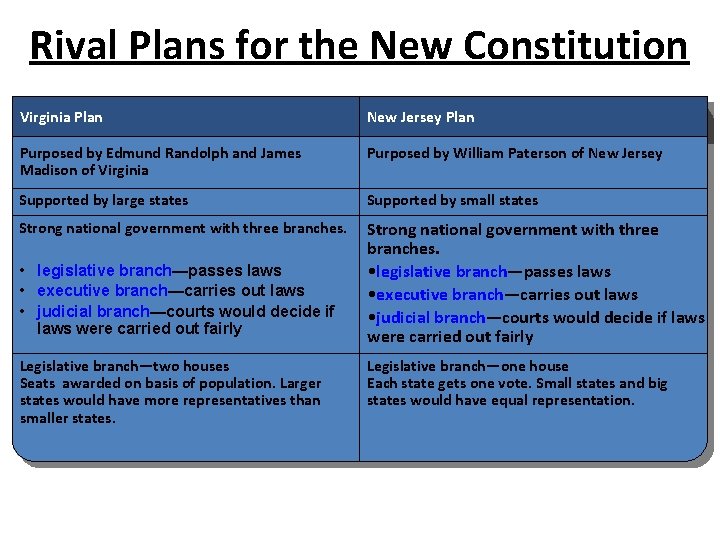
Rival Plans for the New Constitution Chapter 7, Section 2 Virginia Plan New Jersey Plan Purposed by Edmund Randolph and James Madison of Virginia Purposed by William Paterson of New Jersey Supported by large states Supported by small states Strong national government with three branches. • legislative branch—passes laws • executive branch—carries out laws • judicial branch—courts would decide if laws were carried out fairly Legislative branch—two houses Seats awarded on basis of population. Larger states would have more representatives than smaller states. Legislative branch—one house Each state gets one vote. Small states and big states would have equal representation.
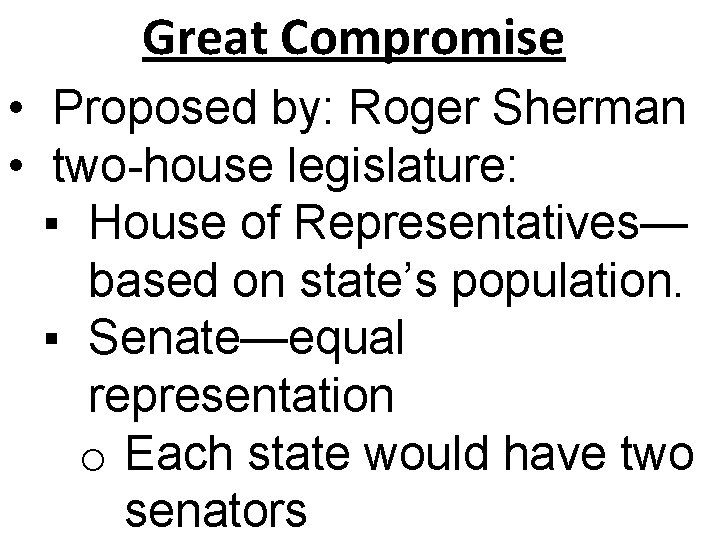
Great Compromise • Proposed by: Roger Sherman • two-house legislature: ▪ House of Representatives— based on state’s population. ▪ Senate—equal representation o Each state would have two senators
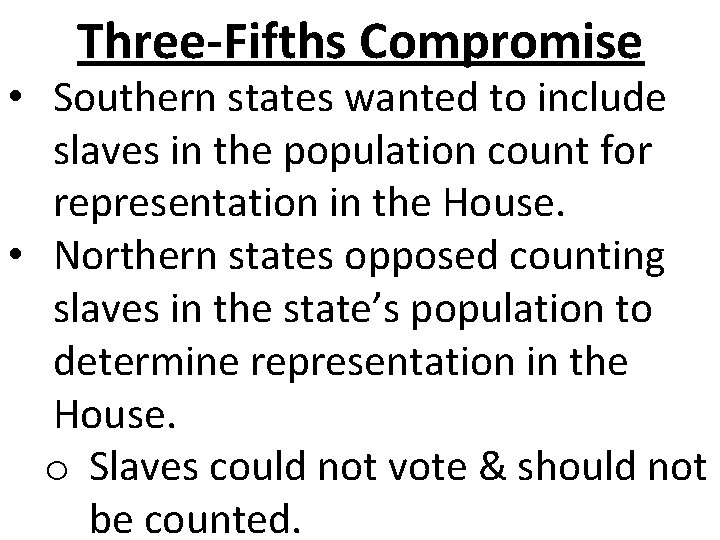
Three-Fifths Compromise • Southern states wanted to include slaves in the population count for representation in the House. • Northern states opposed counting slaves in the state’s population to determine representation in the House. o Slaves could not vote & should not be counted.
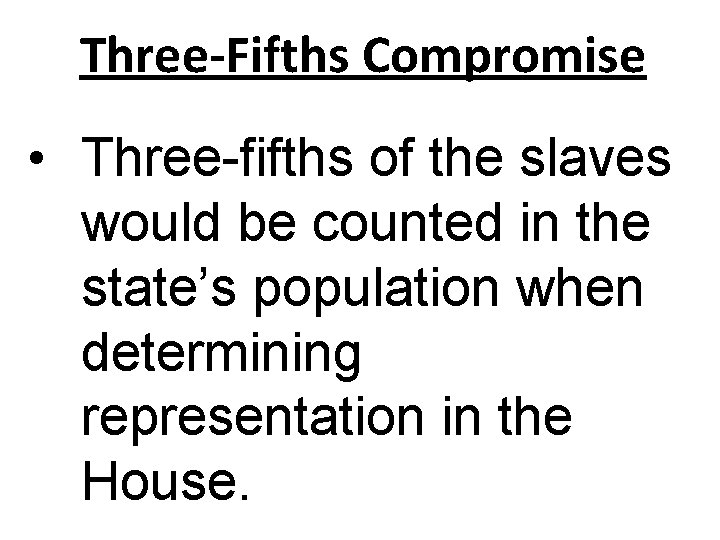
Three-Fifths Compromise • Three-fifths of the slaves would be counted in the state’s population when determining representation in the House.
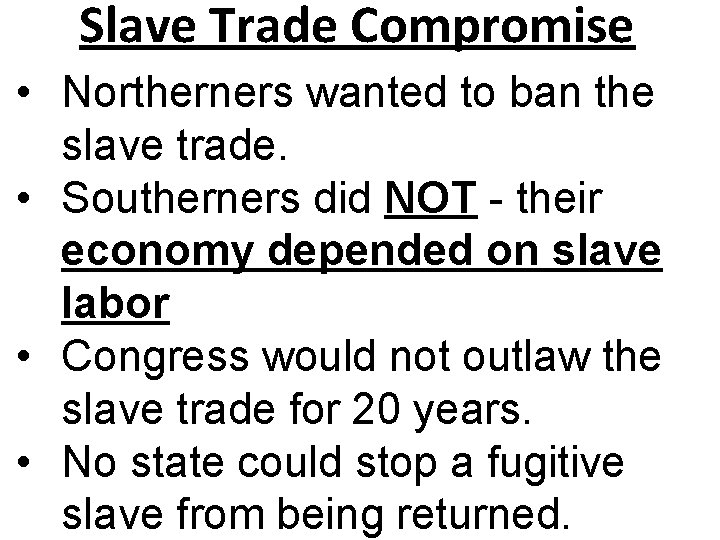
Slave Trade Compromise • Northerners wanted to ban the slave trade. • Southerners did NOT - their economy depended on slave labor • Congress would not outlaw the slave trade for 20 years. • No state could stop a fugitive slave from being returned.
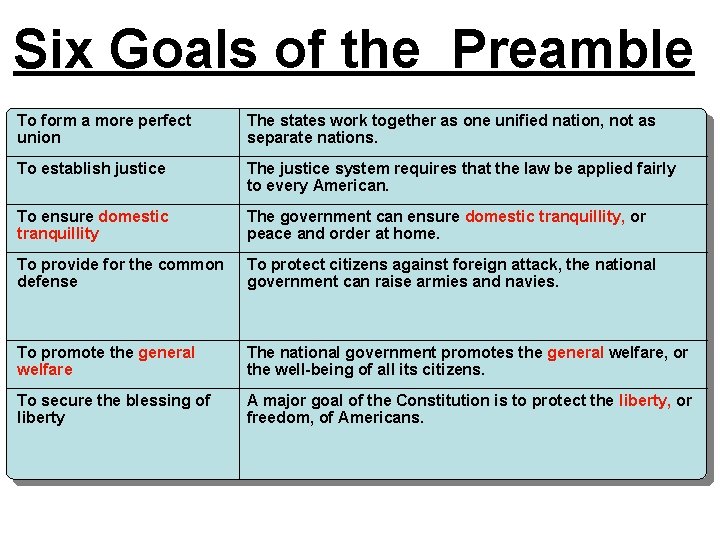
Six Goals of the Preamble To form a more perfect union The states work together as one unified nation, not as separate nations. To establish justice The justice system requires that the law be applied fairly to every American. To ensure domestic tranquillity The government can ensure domestic tranquillity, or peace and order at home. To provide for the common defense To protect citizens against foreign attack, the national government can raise armies and navies. To promote the general welfare The national government promotes the general welfare, or the well-being of all its citizens. To secure the blessing of liberty A major goal of the Constitution is to protect the liberty, or freedom, of Americans.
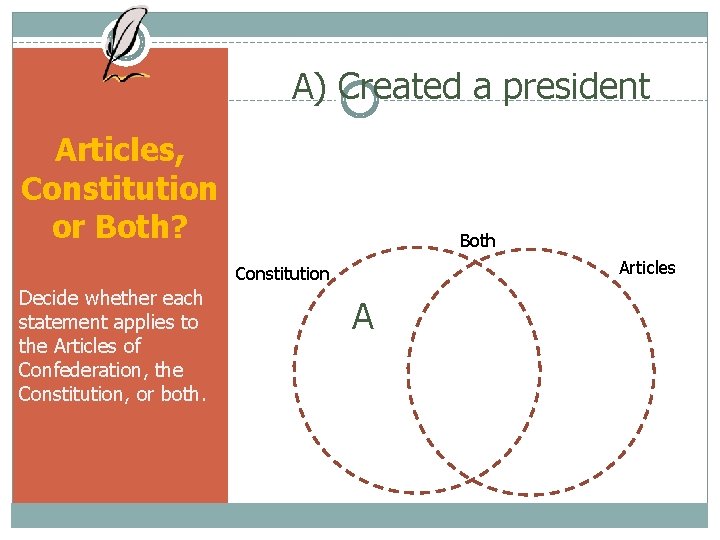
A) Created a president Articles, Constitution or Both? Both Articles Constitution Decide whether each statement applies to the Articles of Confederation, the Constitution, or both. A
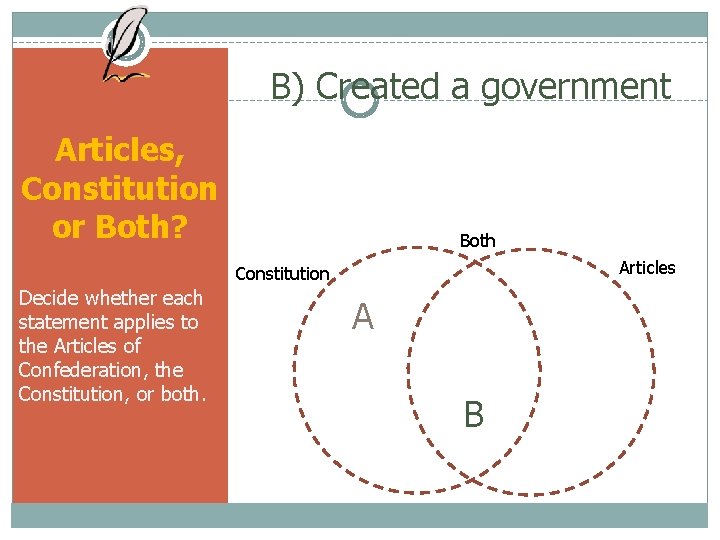
B) Created a government Articles, Constitution or Both? Both Articles Constitution Decide whether each statement applies to the Articles of Confederation, the Constitution, or both. A B
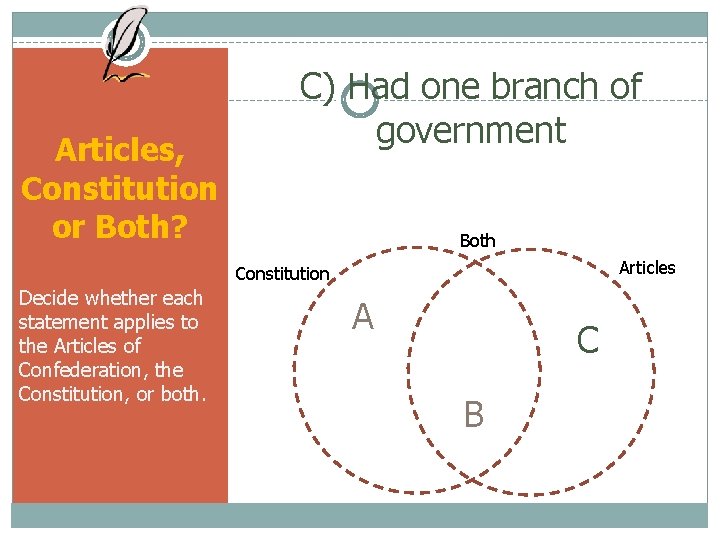
Articles, Constitution or Both? C) Had one branch of government Both Articles Constitution Decide whether each statement applies to the Articles of Confederation, the Constitution, or both. A C B
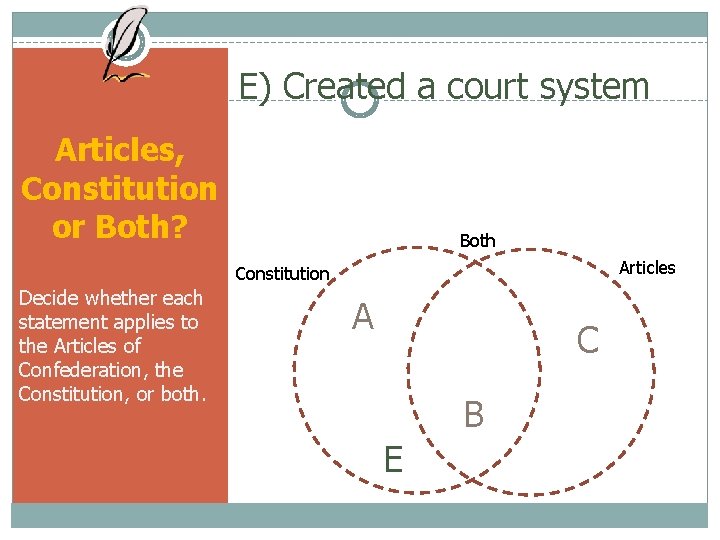
E) Created a court system Articles, Constitution or Both? Both Articles Constitution Decide whether each statement applies to the Articles of Confederation, the Constitution, or both. A C B E
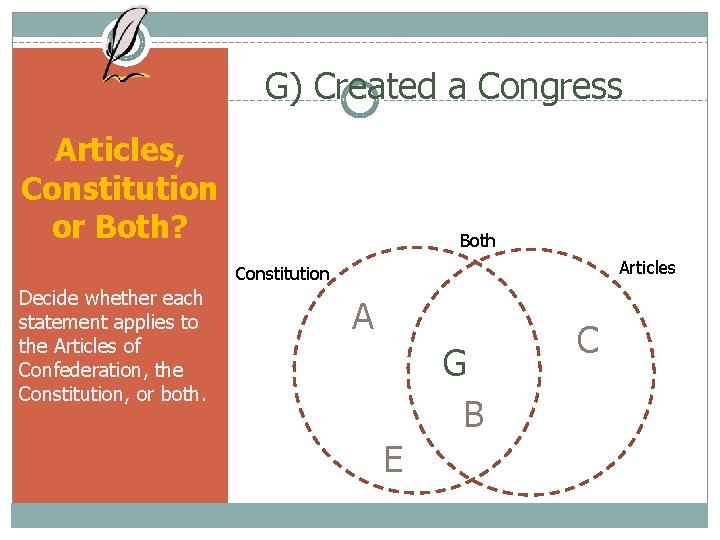
G) Created a Congress Articles, Constitution or Both? Both Articles Constitution Decide whether each statement applies to the Articles of Confederation, the Constitution, or both. A G B E C
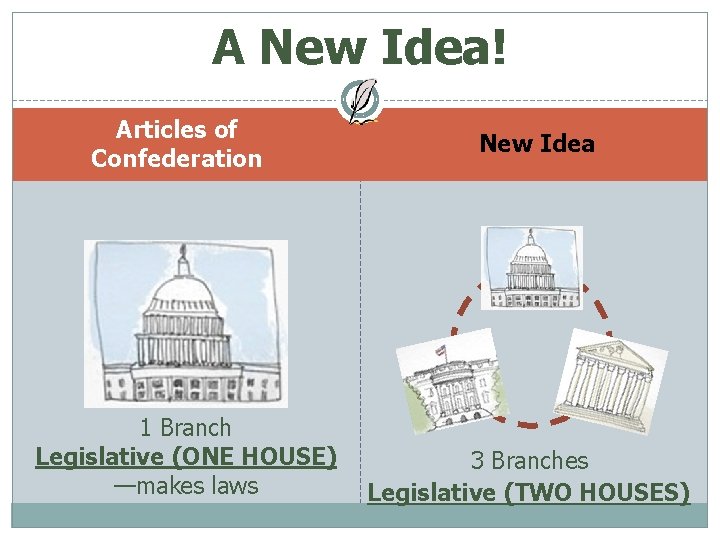
A New Idea! Articles of Confederation 1 Branch Legislative (ONE HOUSE) —makes laws New Idea 3 Branches Legislative (TWO HOUSES)
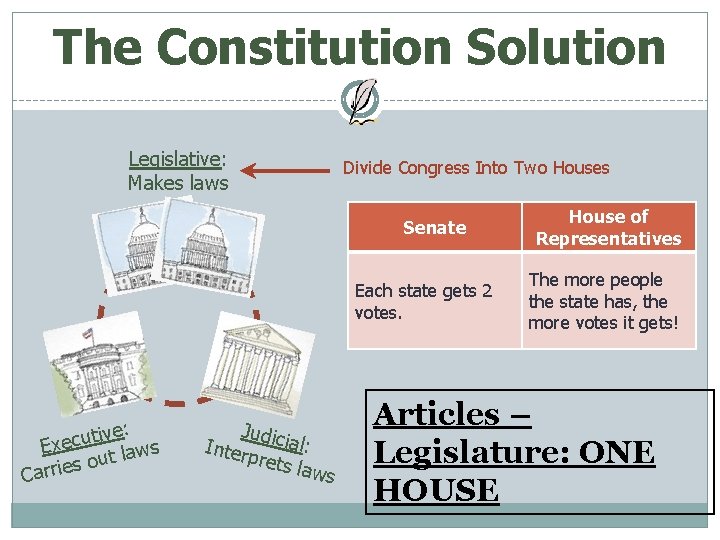
The Constitution Solution Legislative: Makes laws Divide Congress Into Two Houses Senate Each state gets 2 votes. C tive: u c e x E ws a l t u o arries Judic ial: Inter prets laws House of Representatives The more people the state has, the more votes it gets! Articles – Legislature: ONE HOUSE