
The Constitutional Convention The Philadelphia Convention which later
- Slides: 22
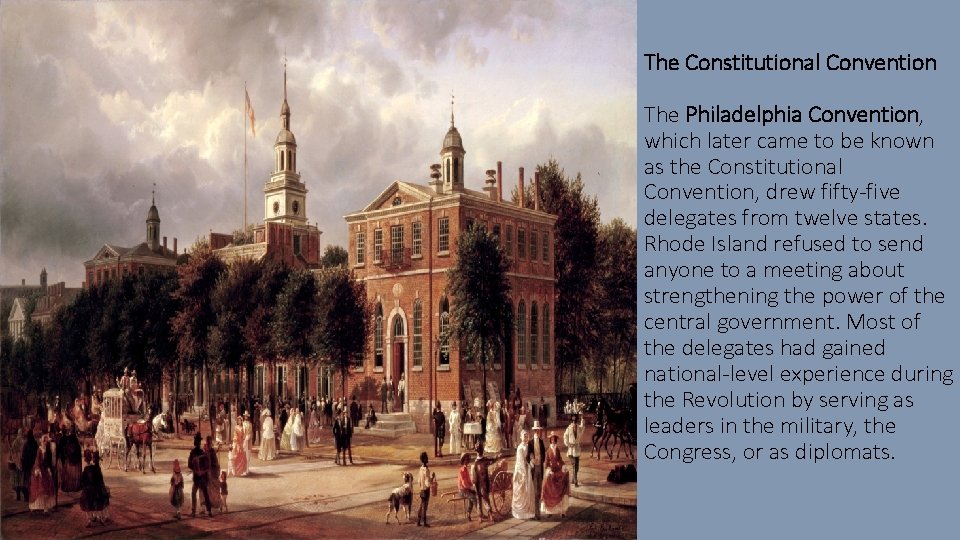
The Constitutional Convention The Philadelphia Convention, which later came to be known as the Constitutional Convention, drew fifty-five delegates from twelve states. Rhode Island refused to send anyone to a meeting about strengthening the power of the central government. Most of the delegates had gained national-level experience during the Revolution by serving as leaders in the military, the Congress, or as diplomats.
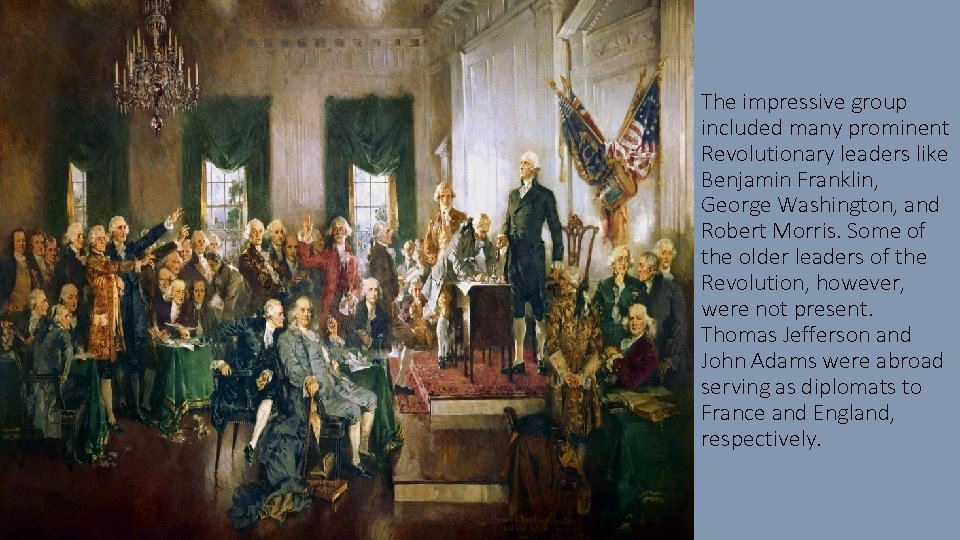
The impressive group included many prominent Revolutionary leaders like Benjamin Franklin, George Washington, and Robert Morris. Some of the older leaders of the Revolution, however, were not present. Thomas Jefferson and John Adams were abroad serving as diplomats to France and England, respectively.
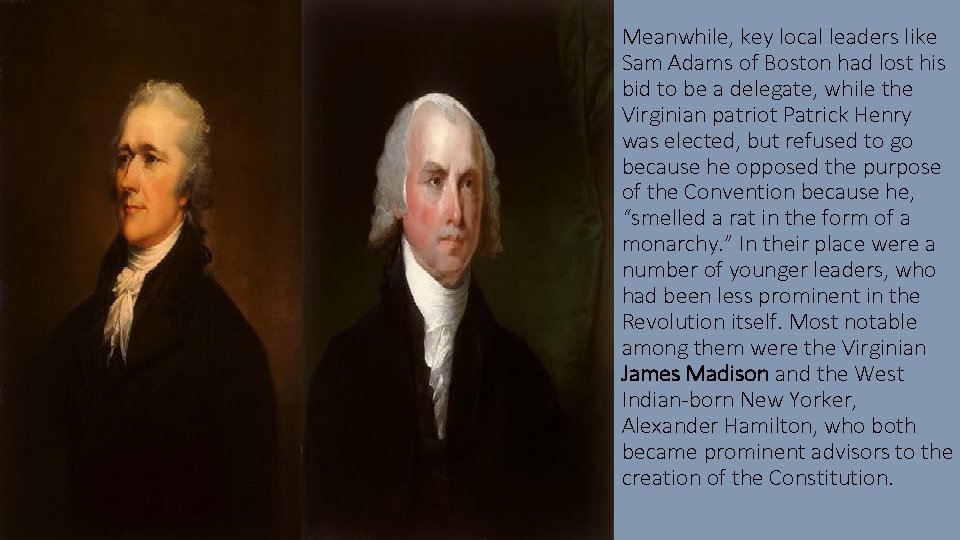
Meanwhile, key local leaders like Sam Adams of Boston had lost his bid to be a delegate, while the Virginian patriot Patrick Henry was elected, but refused to go because he opposed the purpose of the Convention because he, “smelled a rat in the form of a monarchy. ” In their place were a number of younger leaders, who had been less prominent in the Revolution itself. Most notable among them were the Virginian James Madison and the West Indian-born New Yorker, Alexander Hamilton, who both became prominent advisors to the creation of the Constitution.
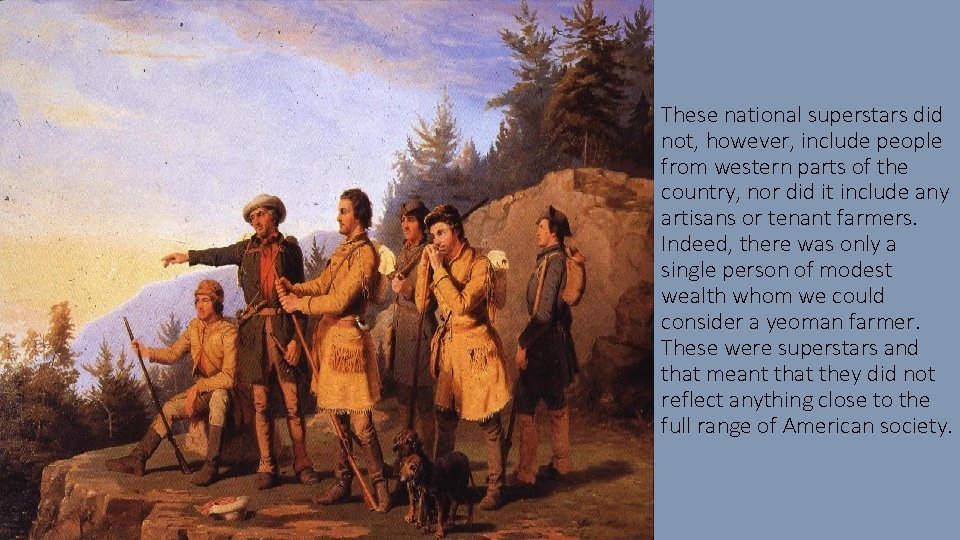
These national superstars did not, however, include people from western parts of the country, nor did it include any artisans or tenant farmers. Indeed, there was only a single person of modest wealth whom we could consider a yeoman farmer. These were superstars and that meant that they did not reflect anything close to the full range of American society.
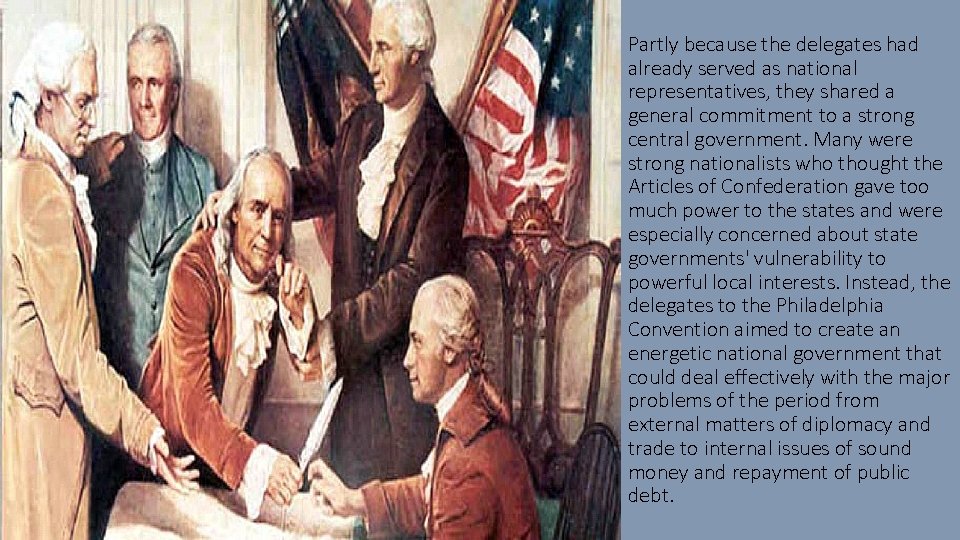
Partly because the delegates had already served as national representatives, they shared a general commitment to a strong central government. Many were strong nationalists who thought the Articles of Confederation gave too much power to the states and were especially concerned about state governments' vulnerability to powerful local interests. Instead, the delegates to the Philadelphia Convention aimed to create an energetic national government that could deal effectively with the major problems of the period from external matters of diplomacy and trade to internal issues of sound money and repayment of public debt.
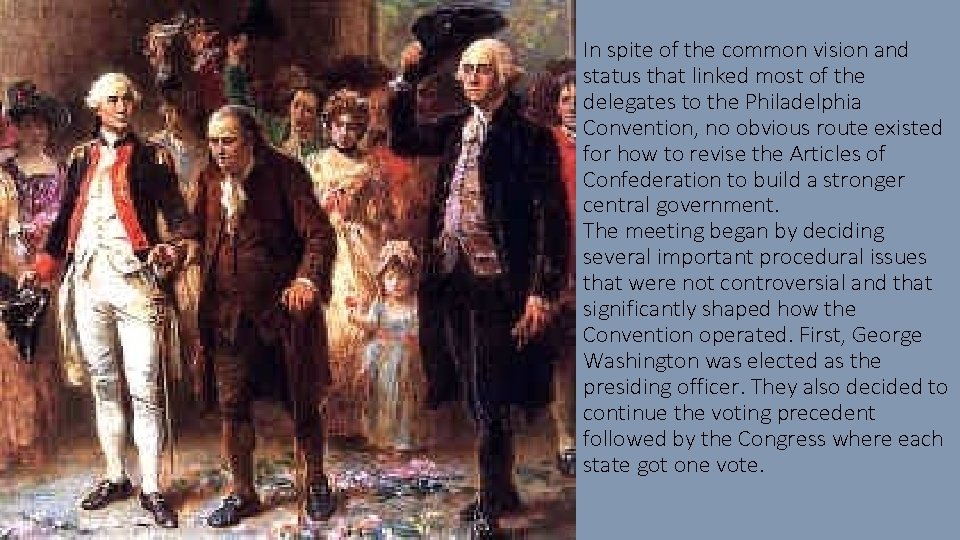
In spite of the common vision and status that linked most of the delegates to the Philadelphia Convention, no obvious route existed for how to revise the Articles of Confederation to build a stronger central government. The meeting began by deciding several important procedural issues that were not controversial and that significantly shaped how the Convention operated. First, George Washington was elected as the presiding officer. They also decided to continue the voting precedent followed by the Congress where each state got one vote.
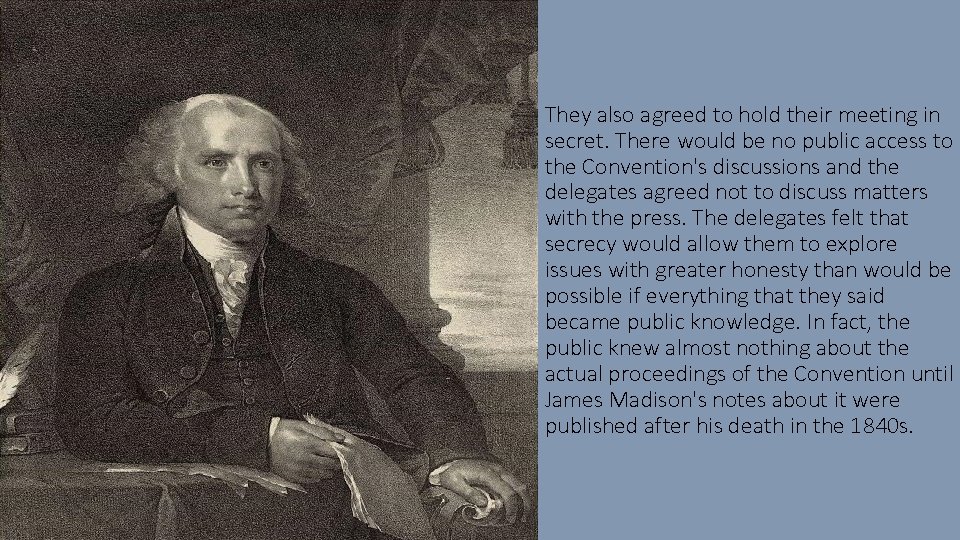
They also agreed to hold their meeting in secret. There would be no public access to the Convention's discussions and the delegates agreed not to discuss matters with the press. The delegates felt that secrecy would allow them to explore issues with greater honesty than would be possible if everything that they said became public knowledge. In fact, the public knew almost nothing about the actual proceedings of the Convention until James Madison's notes about it were published after his death in the 1840 s.
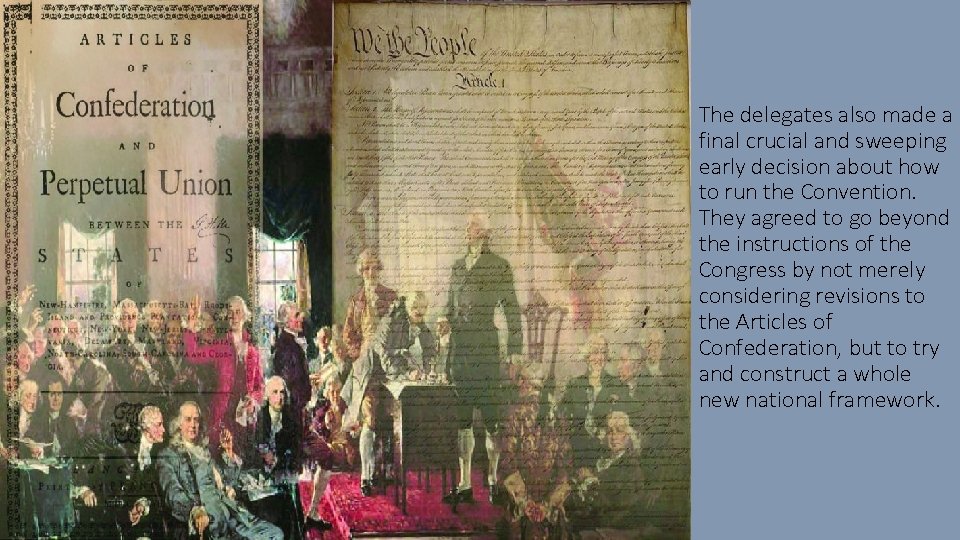
The delegates also made a final crucial and sweeping early decision about how to run the Convention. They agreed to go beyond the instructions of the Congress by not merely considering revisions to the Articles of Confederation, but to try and construct a whole new national framework.
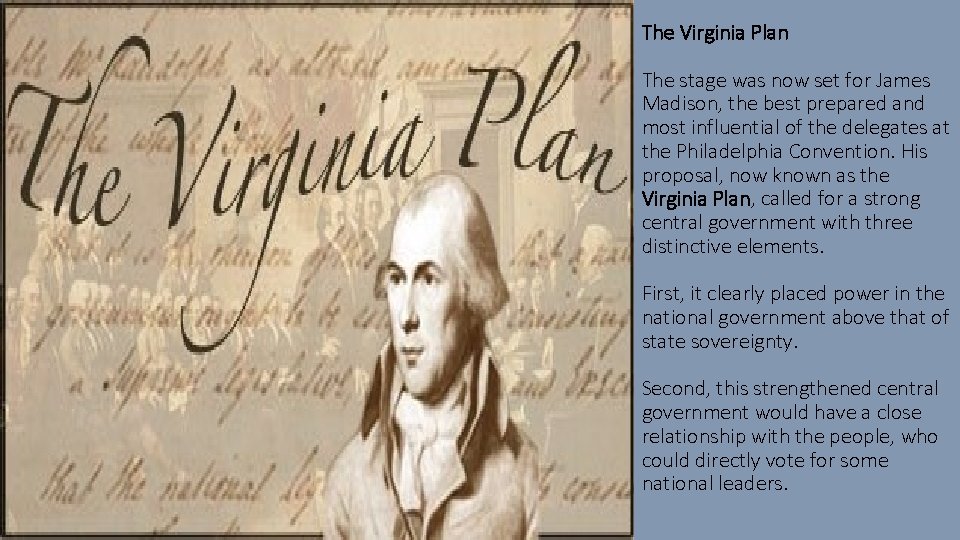
The Virginia Plan The stage was now set for James Madison, the best prepared and most influential of the delegates at the Philadelphia Convention. His proposal, now known as the Virginia Plan, called for a strong central government with three distinctive elements. First, it clearly placed power in the national government above that of state sovereignty. Second, this strengthened central government would have a close relationship with the people, who could directly vote for some national leaders.
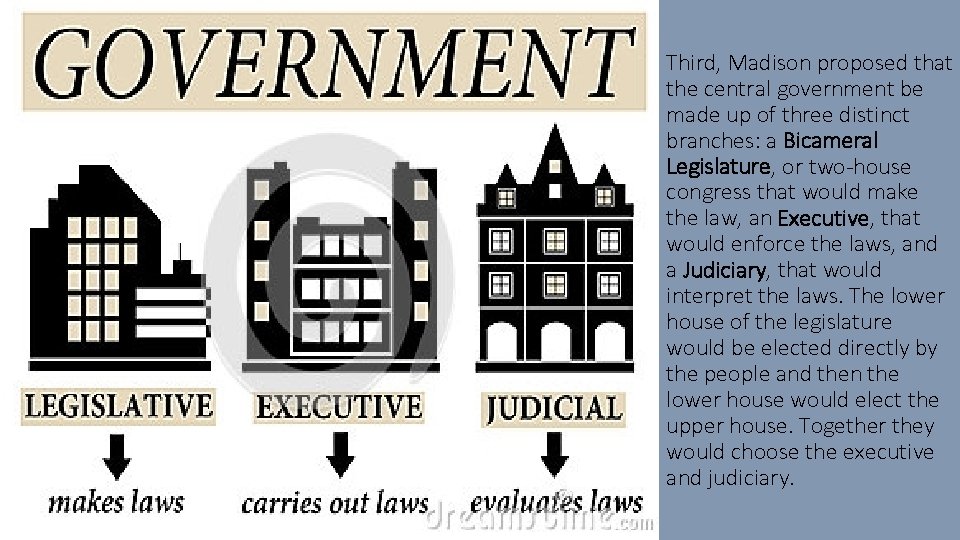
Third, Madison proposed that the central government be made up of three distinct branches: a Bicameral Legislature, or two-house congress that would make the law, an Executive, that would enforce the laws, and a Judiciary, that would interpret the laws. The lower house of the legislature would be elected directly by the people and then the lower house would elect the upper house. Together they would choose the executive and judiciary.
By having the foundational body of the proposed national government elected by the people at large, rather than through their state legislatures, the national government would remain a republic with a direct link to ordinary people even as it expanded its power.
Madison's Virginia Plan was bold and creative. Further, it established a strong central government, which most delegates supported. Nevertheless, it was rejected at the Convention by opposition from delegates representing states with small populations. These small states would have their national influence dramatically curbed in the proposed move from one-state one-vote, as under the Articles, to general voting for the lower legislative house where overall population would be decisive.
The Virginia Plan was unacceptable to all the small states, who countered with another proposal, dubbed the New Jersey Plan, which would continue more along the lines of how Congress already operated under the Articles. This plan called for a unicameral legislature with the one vote per state formula still in place. Although the division between large and small states might seem simplistic, it was the major hurdle that delegates to the Convention needed to overcome to design a stronger national government, which they all agreed was needed.
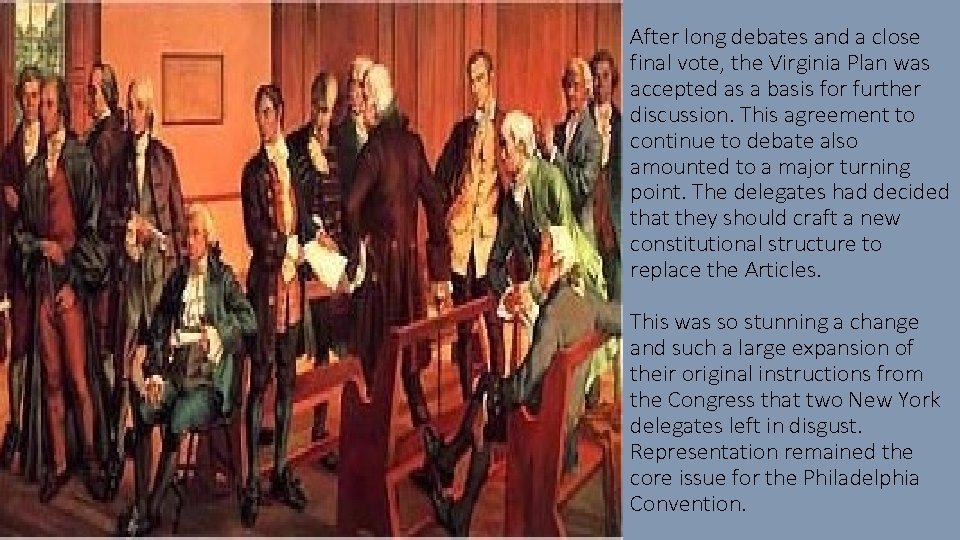
After long debates and a close final vote, the Virginia Plan was accepted as a basis for further discussion. This agreement to continue to debate also amounted to a major turning point. The delegates had decided that they should craft a new constitutional structure to replace the Articles. This was so stunning a change and such a large expansion of their original instructions from the Congress that two New York delegates left in disgust. Representation remained the core issue for the Philadelphia Convention.
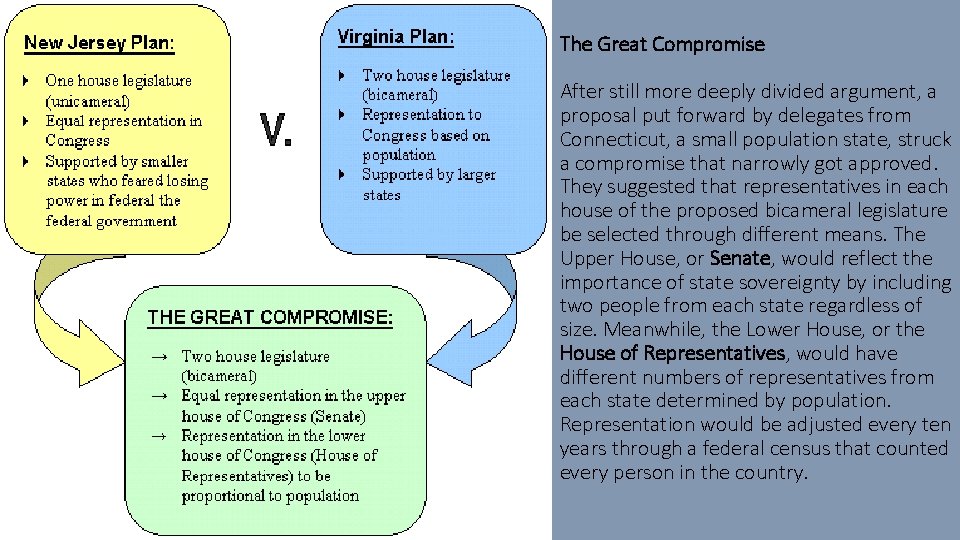
The Great Compromise After still more deeply divided argument, a proposal put forward by delegates from Connecticut, a small population state, struck a compromise that narrowly got approved. They suggested that representatives in each house of the proposed bicameral legislature be selected through different means. The Upper House, or Senate, would reflect the importance of state sovereignty by including two people from each state regardless of size. Meanwhile, the Lower House, or the House of Representatives, would have different numbers of representatives from each state determined by population. Representation would be adjusted every ten years through a federal census that counted every person in the country.
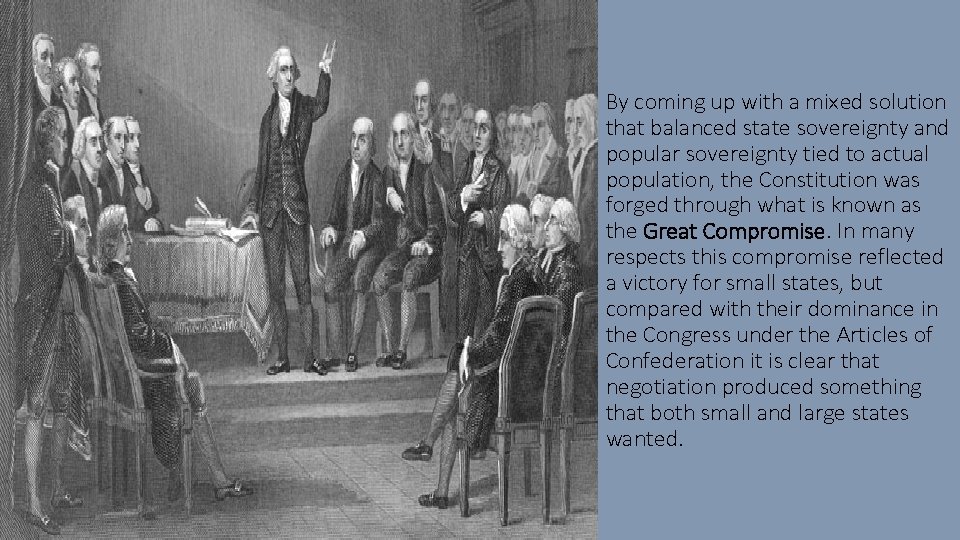
By coming up with a mixed solution that balanced state sovereignty and popular sovereignty tied to actual population, the Constitution was forged through what is known as the Great Compromise. In many respects this compromise reflected a victory for small states, but compared with their dominance in the Congress under the Articles of Confederation it is clear that negotiation produced something that both small and large states wanted.
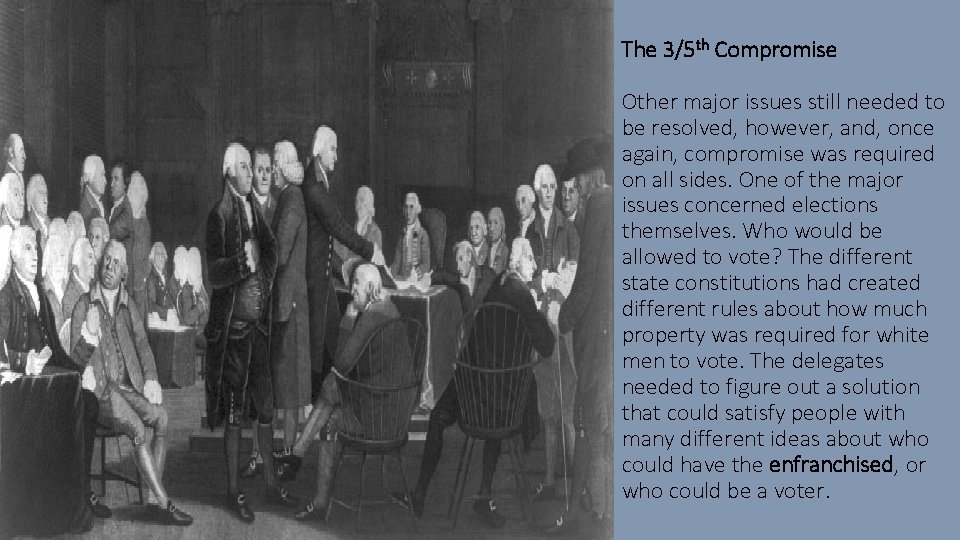
The 3/5 th Compromise Other major issues still needed to be resolved, however, and, once again, compromise was required on all sides. One of the major issues concerned elections themselves. Who would be allowed to vote? The different state constitutions had created different rules about how much property was required for white men to vote. The delegates needed to figure out a solution that could satisfy people with many different ideas about who could have the enfranchised, or who could be a voter.
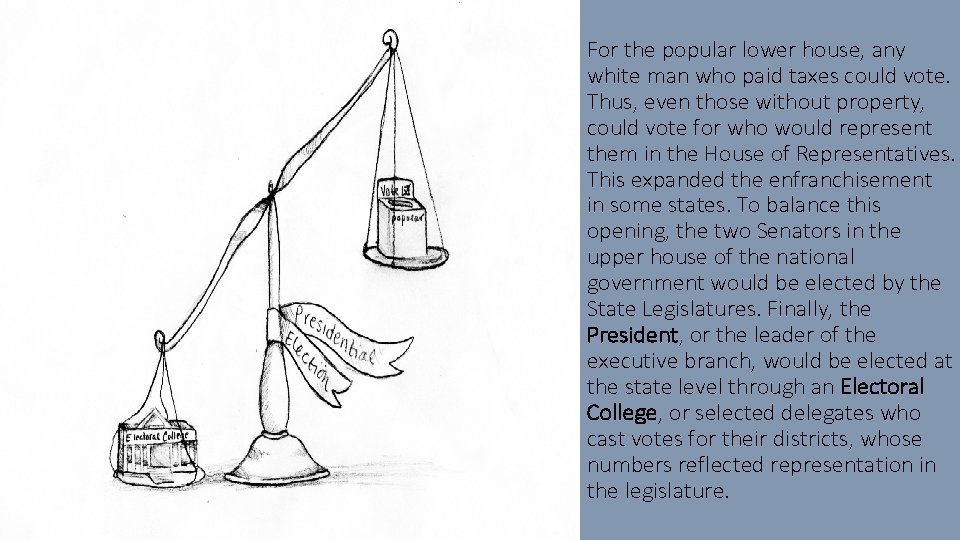
For the popular lower house, any white man who paid taxes could vote. Thus, even those without property, could vote for who would represent them in the House of Representatives. This expanded the enfranchisement in some states. To balance this opening, the two Senators in the upper house of the national government would be elected by the State Legislatures. Finally, the President, or the leader of the executive branch, would be elected at the state level through an Electoral College, or selected delegates who cast votes for their districts, whose numbers reflected representation in the legislature.
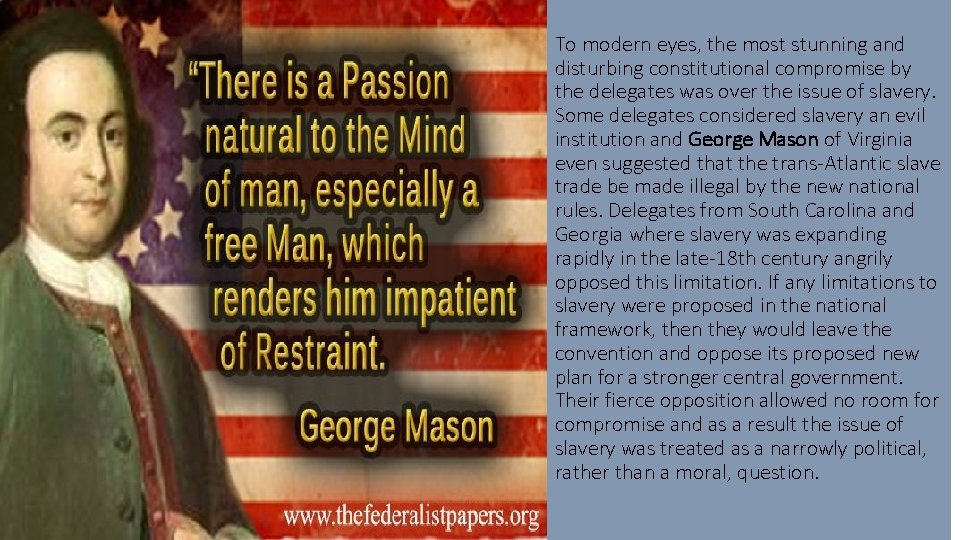
To modern eyes, the most stunning and disturbing constitutional compromise by the delegates was over the issue of slavery. Some delegates considered slavery an evil institution and George Mason of Virginia even suggested that the trans-Atlantic slave trade be made illegal by the new national rules. Delegates from South Carolina and Georgia where slavery was expanding rapidly in the late-18 th century angrily opposed this limitation. If any limitations to slavery were proposed in the national framework, then they would leave the convention and oppose its proposed new plan for a stronger central government. Their fierce opposition allowed no room for compromise and as a result the issue of slavery was treated as a narrowly political, rather than a moral, question.
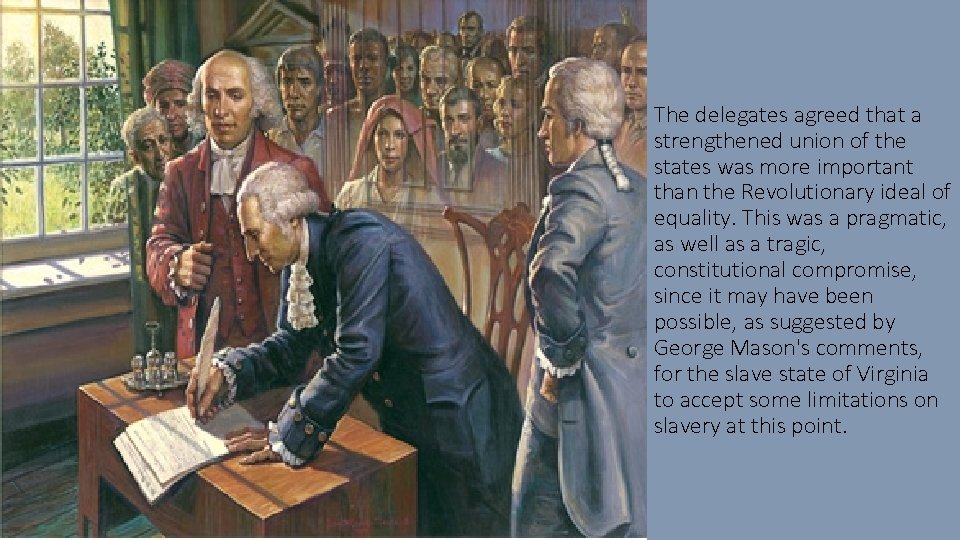
The delegates agreed that a strengthened union of the states was more important than the Revolutionary ideal of equality. This was a pragmatic, as well as a tragic, constitutional compromise, since it may have been possible, as suggested by George Mason's comments, for the slave state of Virginia to accept some limitations on slavery at this point.
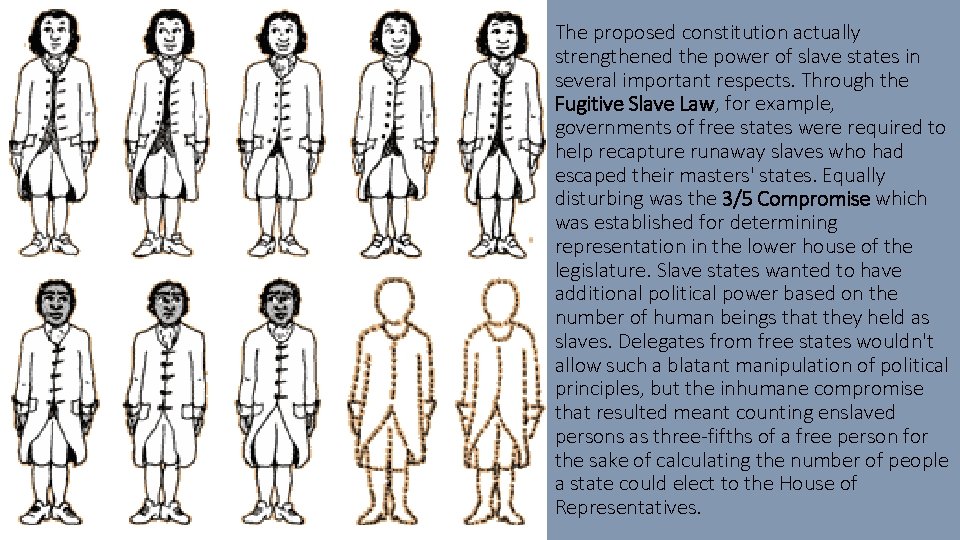
The proposed constitution actually strengthened the power of slave states in several important respects. Through the Fugitive Slave Law, for example, governments of free states were required to help recapture runaway slaves who had escaped their masters' states. Equally disturbing was the 3/5 Compromise which was established for determining representation in the lower house of the legislature. Slave states wanted to have additional political power based on the number of human beings that they held as slaves. Delegates from free states wouldn't allow such a blatant manipulation of political principles, but the inhumane compromise that resulted meant counting enslaved persons as three-fifths of a free person for the sake of calculating the number of people a state could elect to the House of Representatives.
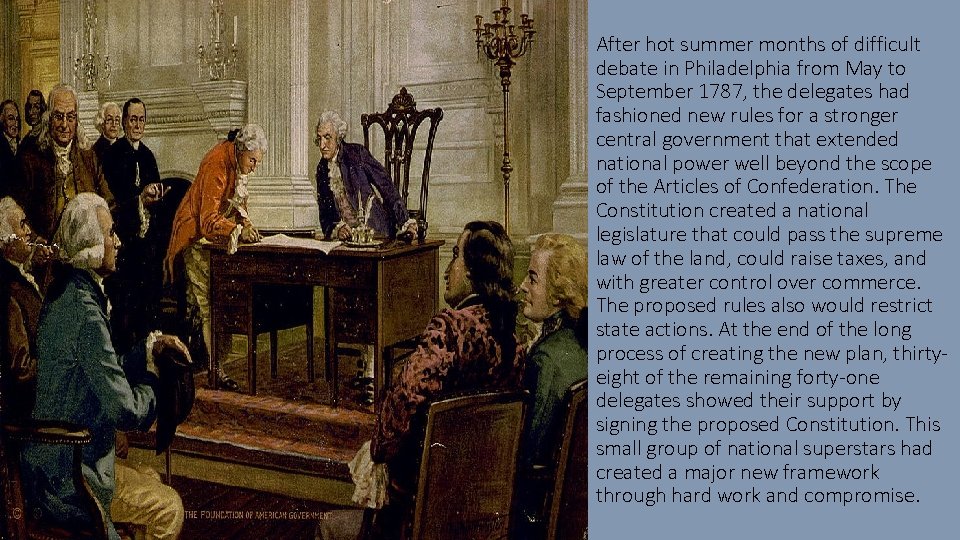
After hot summer months of difficult debate in Philadelphia from May to September 1787, the delegates had fashioned new rules for a stronger central government that extended national power well beyond the scope of the Articles of Confederation. The Constitution created a national legislature that could pass the supreme law of the land, could raise taxes, and with greater control over commerce. The proposed rules also would restrict state actions. At the end of the long process of creating the new plan, thirtyeight of the remaining forty-one delegates showed their support by signing the proposed Constitution. This small group of national superstars had created a major new framework through hard work and compromise.