
The Constitutional Convention May 1787 Philadelphia Pennsylvania Who
- Slides: 18
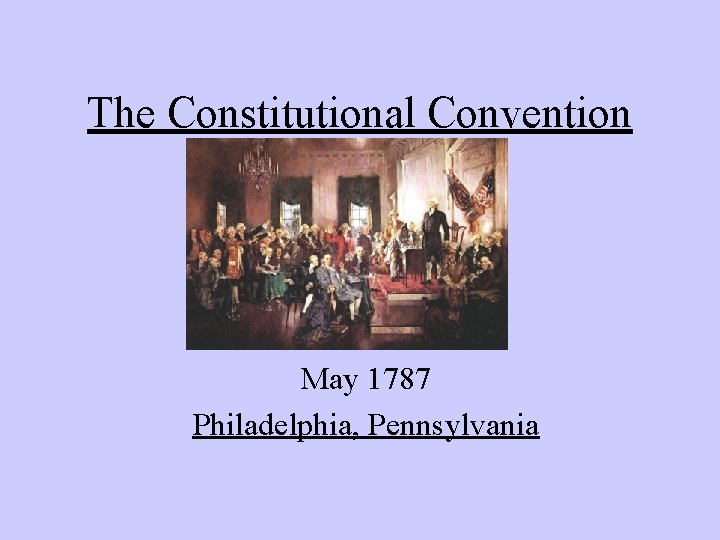
The Constitutional Convention May 1787 Philadelphia, Pennsylvania
Who was there? • 55 delegates • Lawyers, physicians, generals, governors, planters, and a college president • Well educated • All states represented, except Rhode Island
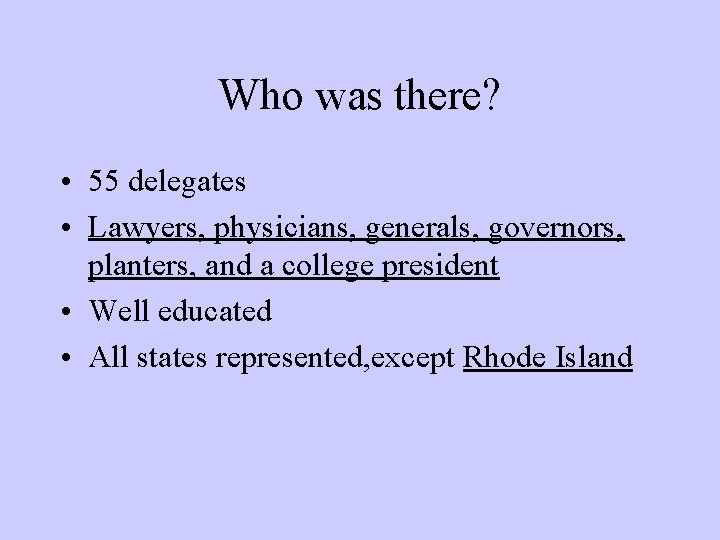
George Washington • Presided over meeting • Gave the meeting greater significance • Would later become the first president of the United States
Benjamin Franklin • Oldest delegate (80 years old) • Like Washington, was well respected and added a positive presence to the meetings
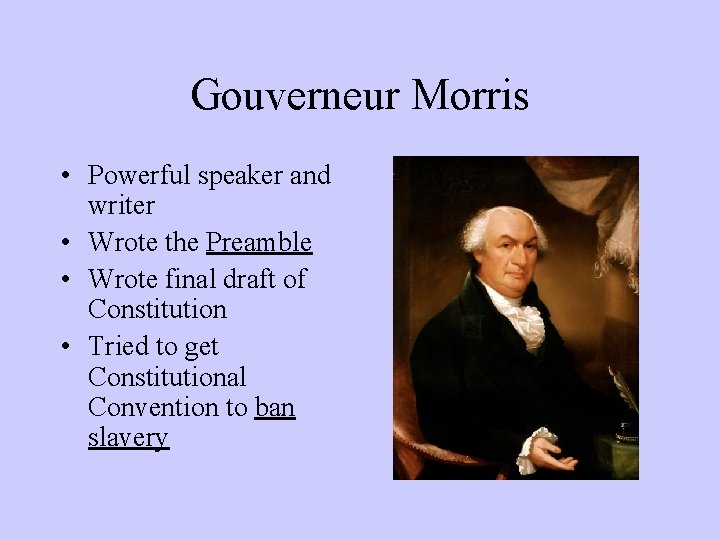
Gouverneur Morris • Powerful speaker and writer • Wrote the Preamble • Wrote final draft of Constitution • Tried to get Constitutional Convention to ban slavery
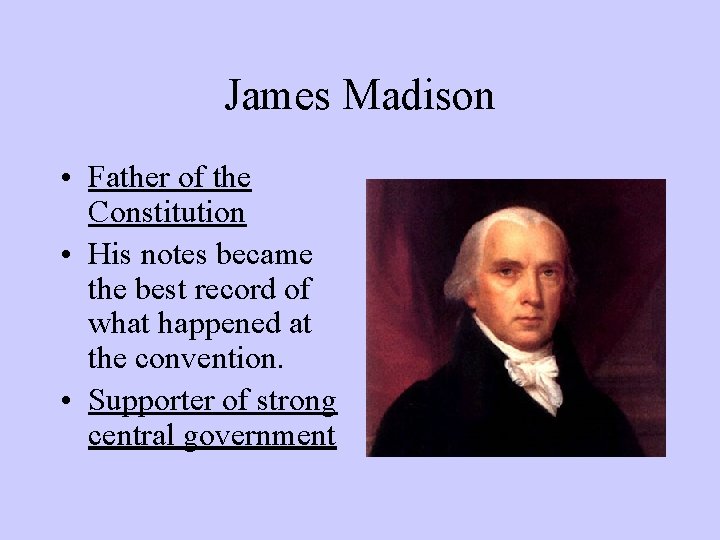
James Madison • Father of the Constitution • His notes became the best record of what happened at the convention. • Supporter of strong central government
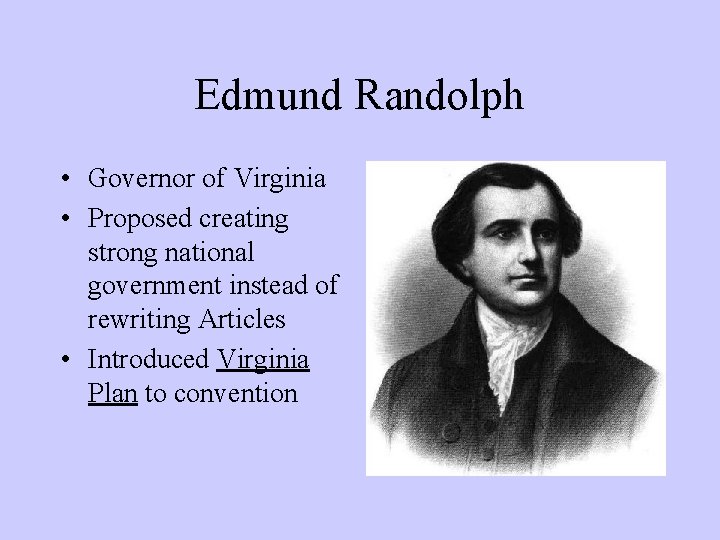
Edmund Randolph • Governor of Virginia • Proposed creating strong national government instead of rewriting Articles • Introduced Virginia Plan to convention
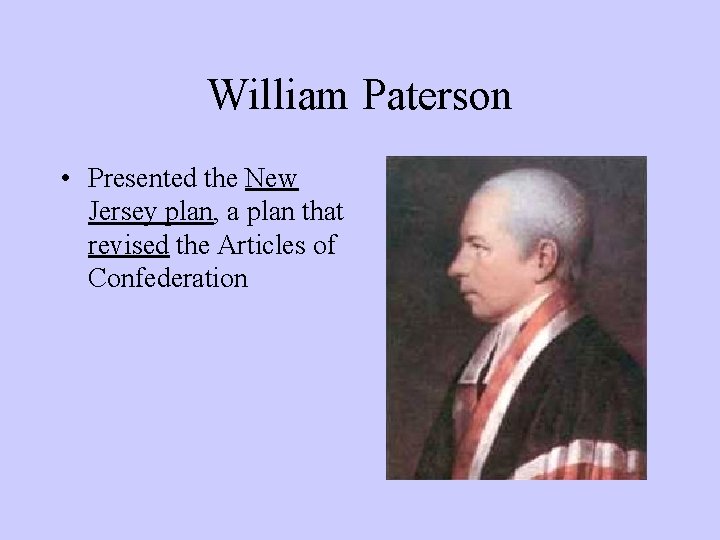
William Paterson • Presented the New Jersey plan, a plan that revised the Articles of Confederation
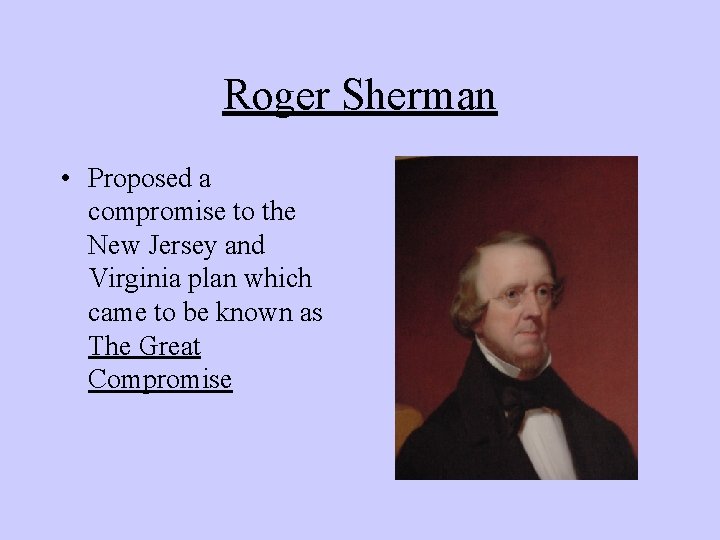
Roger Sherman • Proposed a compromise to the New Jersey and Virginia plan which came to be known as The Great Compromise
What Influenced the Framers? • English Parliamentary Traditions – The Magna Carta (1215) – The English Bill of Rights (1689) • Enlightenment Thinkers – John Locke • Natural Rights – Baron de Montesquieu • Separation of Powers
Debates, Decisions and Compromises • Convention began by choosing George Washington to preside over meetings. • Each state would have one vote on all questions. • The delegates decided to keep all the sessions secret. This made it possible for the delegates to talk freely.
The Virginia Plan • Proposed by Edmund Randolph • Two-house (bicameral) legislature • Members of the lower house elected by the people • Members of the upper house elected by the lower house • Number of representatives would be proportional to the population of each state
The New Jersey Plan • Proposed by William Paterson • Kept Confederation’s One-House legislature • Gave Congress the power to tax and regulate trade • Congress would elect a weak executive branch consisting of more than one person
The Great Compromise • Suggested by Roger Sherman • Two-House legislature • Lower House (House of Representatives) – Membership would be proportional to population of the state • Upper House (Senate) – Each state would have two members
Slavery Issue • Northern states wanted to ban slavery throughout the nation • Southern states considered slavery essential to their economies • It was agreed that Congress would not interfere with the slave trade until 1808
The 3/5 Compromise • Southern states wanted slaves to be counted as population for the purpose of representation in the House of Representatives • Northerners wanted slaves to be counted as property and taxed • Compromise—slaves would be counted as 3/5 of a free person for the purpose of taxation AND representation
Ratification • 9 out of 13 states had to ratify (approve) the Constitution • Federalists-supporters of the Constitution – James Madison, Alexander Hamilton and John Jay defended the Constitution in The Federalist Papers • Anti-Federalists-opposed ratification – Lacked a bill of rights to protect individual freedoms
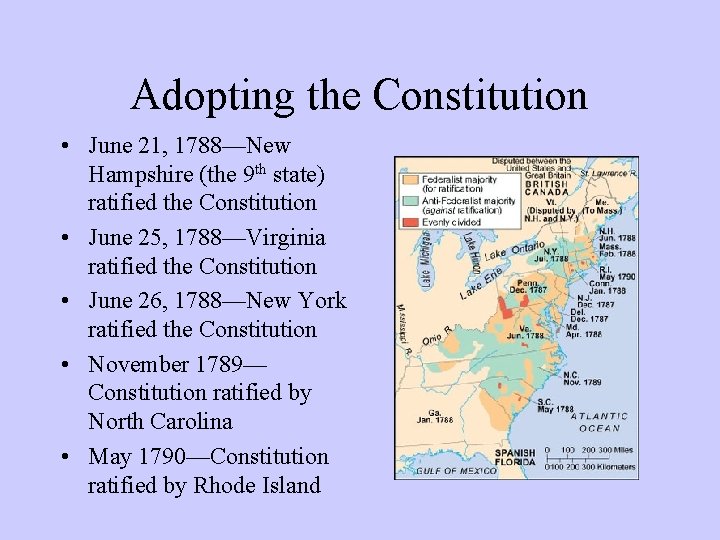
Adopting the Constitution • June 21, 1788—New Hampshire (the 9 th state) ratified the Constitution • June 25, 1788—Virginia ratified the Constitution • June 26, 1788—New York ratified the Constitution • November 1789— Constitution ratified by North Carolina • May 1790—Constitution ratified by Rhode Island