
THE CONSTITUTION Six Key Constitutional Principles Concept 1

- Slides: 12
THE CONSTITUTION Six Key Constitutional Principles
Concept 1: Separation of Powers A way of dividing power among three branches of government in which members of the House of Representatives, the Senate, the president, and the federal courts are selected by and responsible to different constituencies.
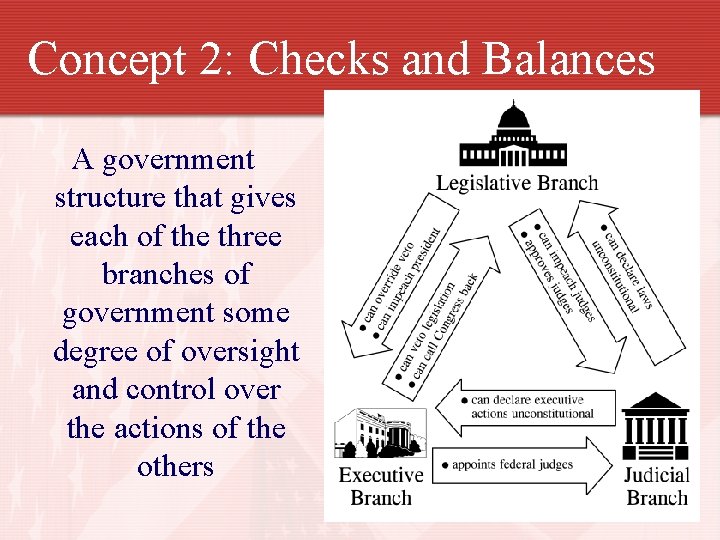
Concept 2: Checks and Balances A government structure that gives each of the three branches of government some degree of oversight and control over the actions of the others
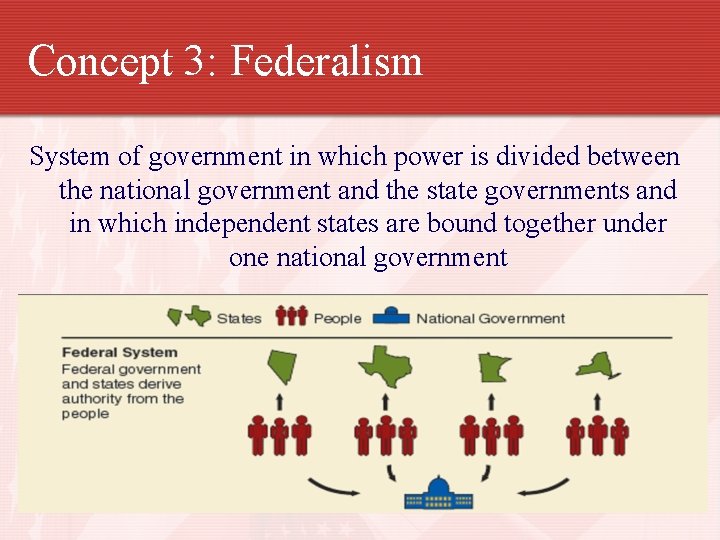
Concept 3: Federalism System of government in which power is divided between the national government and the state governments and in which independent states are bound together under one national government
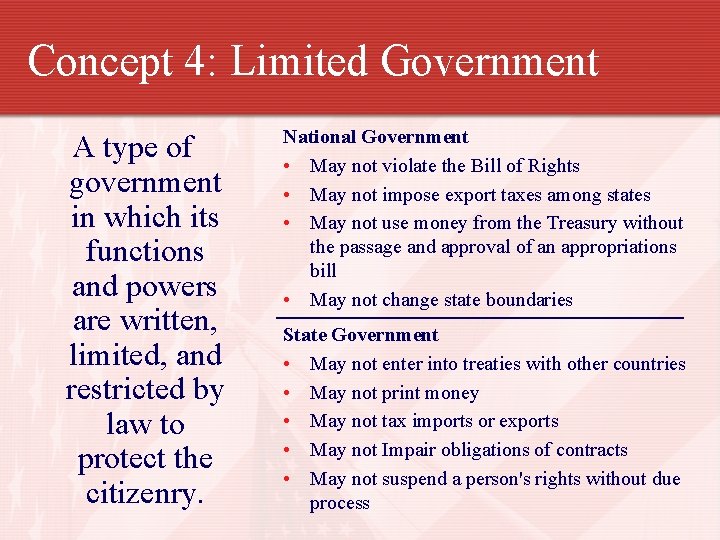
Concept 4: Limited Government A type of government in which its functions and powers are written, limited, and restricted by law to protect the citizenry. National Government • May not violate the Bill of Rights • May not impose export taxes among states • May not use money from the Treasury without the passage and approval of an appropriations bill • May not change state boundaries State Government • May not enter into treaties with other countries • May not print money • May not tax imports or exports • May not Impair obligations of contracts • May not suspend a person's rights without due process
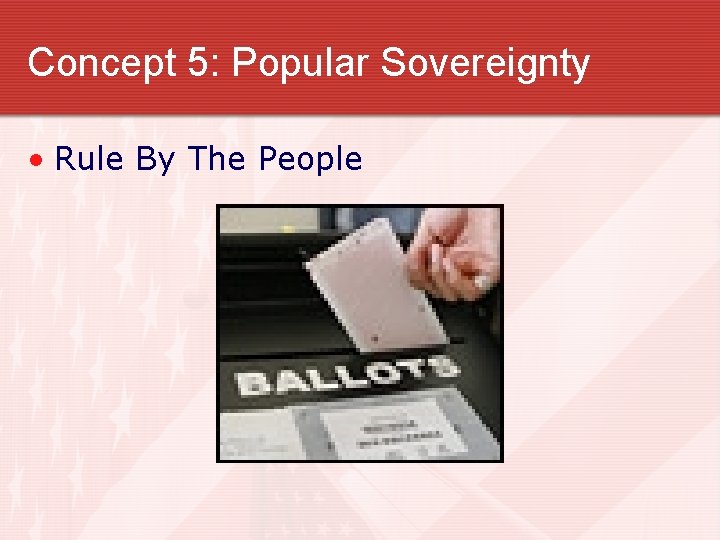
Concept 5: Popular Sovereignty • Rule By The People
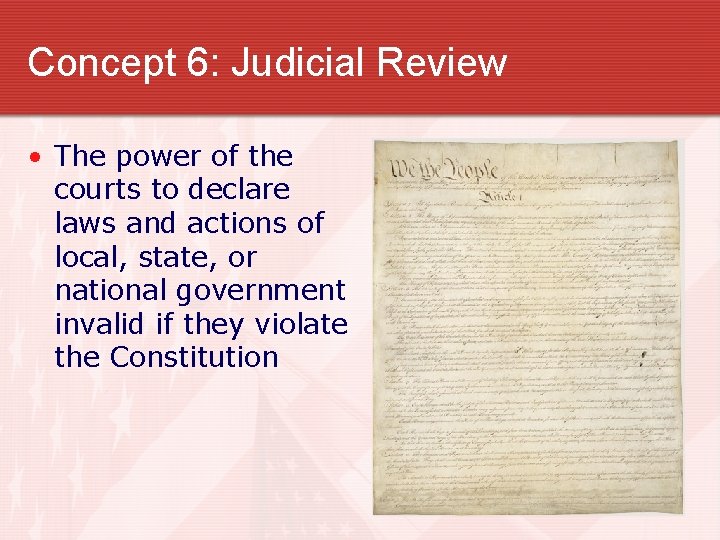
Concept 6: Judicial Review • The power of the courts to declare laws and actions of local, state, or national government invalid if they violate the Constitution
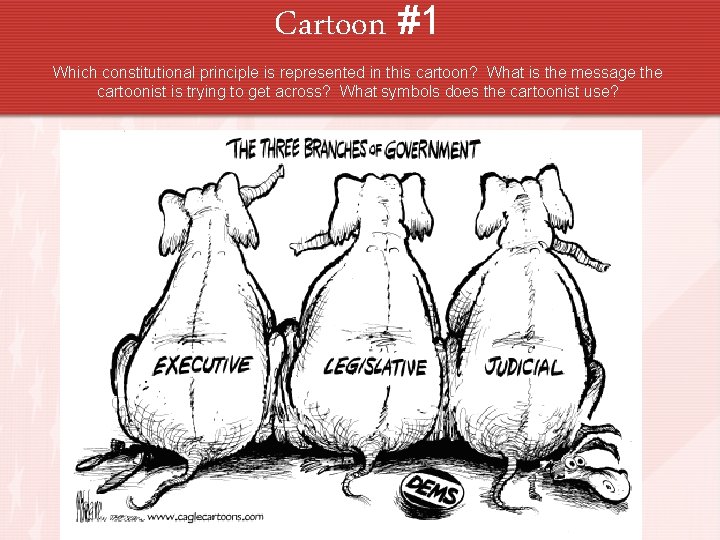
Cartoon #1 Which constitutional principle is represented in this cartoon? What is the message the cartoonist is trying to get across? What symbols does the cartoonist use?
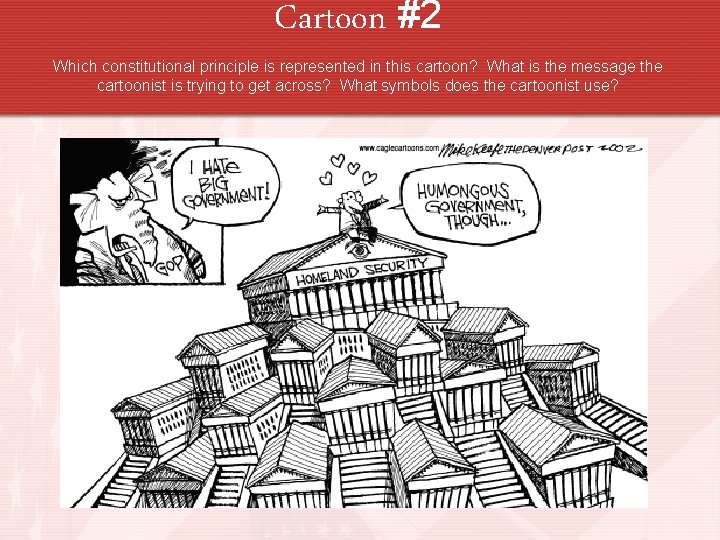
Cartoon #2 Which constitutional principle is represented in this cartoon? What is the message the cartoonist is trying to get across? What symbols does the cartoonist use?
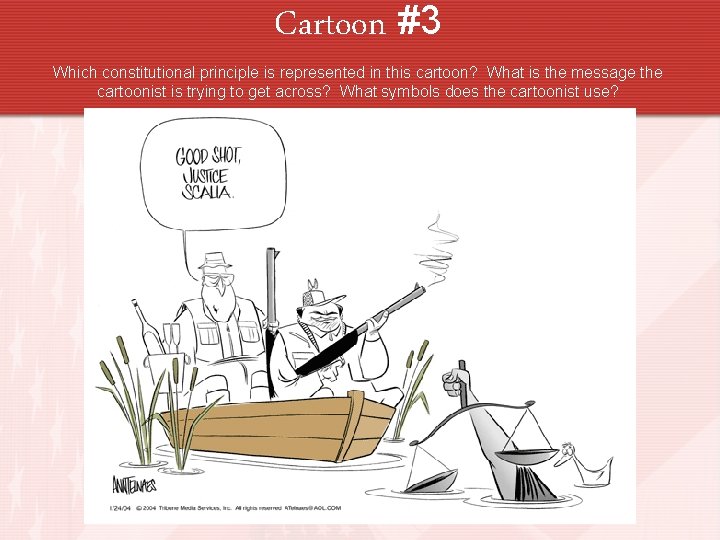
Cartoon #3 Which constitutional principle is represented in this cartoon? What is the message the cartoonist is trying to get across? What symbols does the cartoonist use?
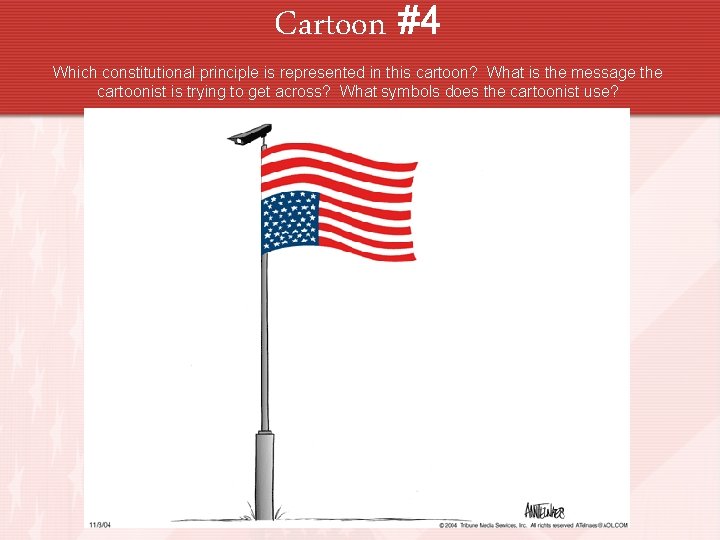
Cartoon #4 Which constitutional principle is represented in this cartoon? What is the message the cartoonist is trying to get across? What symbols does the cartoonist use?
Cartoon #5 Which constitutional principle is represented in this cartoon? What is the message the cartoonist is trying to get across? What symbols does the cartoonist use?